Terry Allen, For All Reasons

(Editor’s Note: Below, singer-songwriter and filmmaker Scott Ballew reflects on his relationship with legendary Texan musician Terry Allen for an exclusive BGS op-ed. Ballew, who directed a 2019 documentary about Allen’s life and music, Everything For All Reasons, will release a brand new album, Rio Bravo, on March 29 via La Honda Records.)

I moved back to my hometown of Austin, Texas in 2016 after 10 years of treading water in LA. California never felt like a permanent home to me, but over the course of a decade out there I was finally able to become ME. Part of that process was accepting that I was, in fact, a Texan and learning how to celebrate that.

Terry Allen’s cult album, Juarez, was reissued in 2016 around the same time I crossed state lines. It was given to me by a friend as a welcome home present. At the time, I embarrassingly only knew of Terry as the man who wrote “Amarillo Highway” as covered by Robert Earl Keen. Juarez was the first record I put on my turntable once I finally set everything up in my new south-Austin house, and it stayed there for four years. I was doing a lot of traveling back then making documentaries, and Terry’s voice traveled with me as “Cortez Sail” and “Dogwood” blared through my rental car speakers while driving through New Mexico, Colorado, Montana, and beyond.

Where had this been all my life? Was this written specifically for me? Who is Terry Allen? And how can I find him?

After a few years being back in Austin, I started a songwriting documentary series with Ryan Bingham. As the format started to take shape, we began talking about potential guests and Ryan casually mentioned he was very close with Terry and that he might be a great option. Holy shit. There wasn’t another name on the planet he could have mentioned that would have made me more excited than Terry’s.

Making The Midnight Hour was the first time the adage “don’t meet your heroes” proved to be false for me. Terry was kind, genuine, and funny. Terry reminded me that it’s ok to be Texan. And it’s ok to be creative.

Other things I’ve picked up from Terry along the way are:

  • The audience is irrelevant.
  • You have to fight for love.
  • Take care of your Art and your Art will take care of you.
  • You can have more than one calling.
  • Be kind.

I went on to make a longer documentary about Terry called Everything For All Reasons. I learned more about him during that process and came out liking him even more (not the case with most film projects). I tried to get David Byrne to address how unique and creative Terry was and David chose instead to focus on Terry’s family life, as that seemed more unique to him than anything else these days. He was right, and that ended up being the heartbeat of the entire film. 

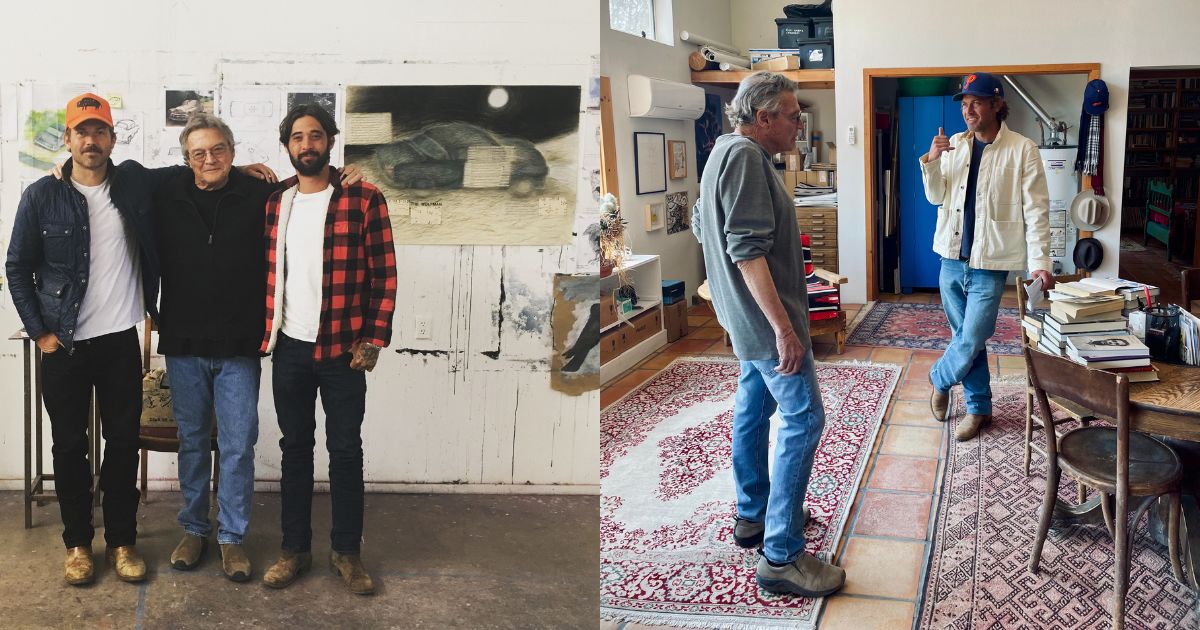
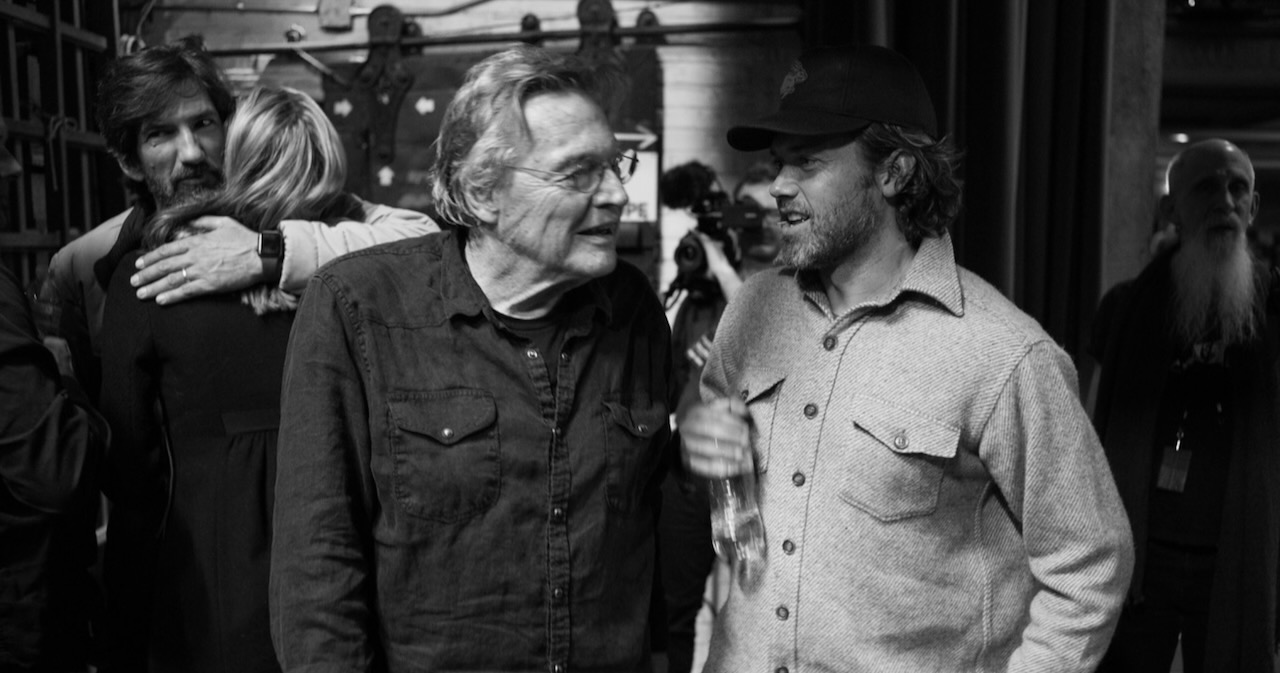
L: Scott Ballew, Terry Allen, and Ryan Bingham. R: Terry Allen with Scott Ballew.

At this point I like to think of Terry as my creative Godfather and someone I can always reach out to when I need a nudge to have some guts and do the right thing. He is the sole reason I started writing songs and why I had the naïve confidence to follow through and actually record them. Thank you Terry, for everything.


All photos courtesy of Scott Ballew. Lead image by Greg Giannukos.

Women’s History Spotlight: Hazel & Alice, Dale Ann Bradley, and More

March is Women’s History Month, and BGS, Good Country, and Real Roots Radio have partnered to highlight a variety of our favorite women in country, bluegrass, and roots music with our Women’s History Spotlight.

Each weekday in March at 11AM Eastern (8AM Pacific) on Real Roots Radio, host Daniel Mullins will be celebrating a powerful woman in roots music during the Women’s History Spotlight segment of The Daniel Mullins Midday Music Spectacular. You can listen to Real Roots Radio online 24/7 or via their FREE app for smartphones or tablets.

Then, we will have a Friday recap here on BGS featuring the artists highlighted throughout the previous week. No list is comprehensive, but we hope to feature some familiar favorites as well as some trailblazers whose music and impact might not be as familiar to you.

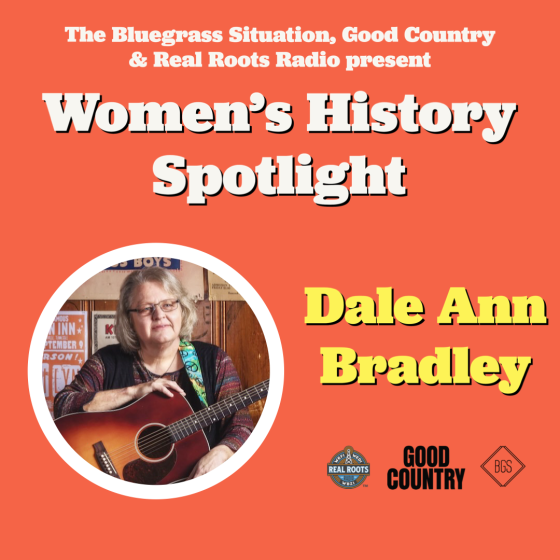
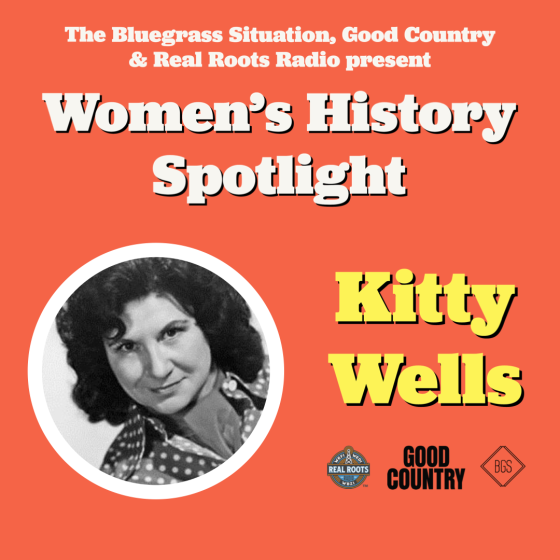
This week’s edition of our Women’s History Spotlight features musicians and artists like IBMA Award winner Dale Ann Bradley, the legendary Dolly Parton, Bluegrass Music Hall of Fame inductees Hazel Dickens & Alice Gerrard, early country hitmaker Kitty Wells, and Kentuckian-West Virginian Molly O’Day. Tune in next week for the final installment of our Women’s History Spotlight!

Dolly Parton

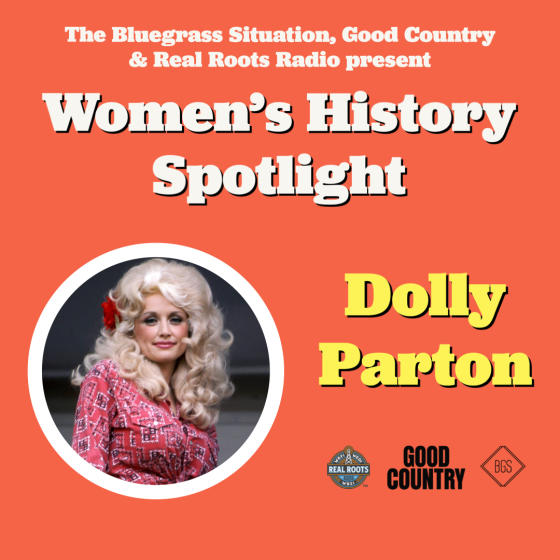
You knew it was coming. You can’t tell the story of country music (or American pop culture) without Dolly Parton. Growing up in Sevier County, Tennessee, she is not just the Queen of the Smoky Mountains, but quite possible the Queen of the Universe (if there was such a ridiculous title). Her rags-to-riches story will continue to be told and re-told for generations. Aside from her beautiful voice and philanthropic work (the millions of books that she gives to children through Dolly Parton’s Imagination Library is her proudest achievement), there are numerous other aspects about Dolly Parton that are remarkable.

Her business acumen is frequently praised, but it still bears repeating. Aside from her numerous endeavors (including Dollywood), it’s often worth remembering that she fought to regain control of her own career and decision-making from Porter Wagoner after her star began shining brighter than his scope of influence. (Remember, it was the ending of this business relationship that was the impetus behind Dolly writing one of her most famous songs, “I Will Always Love You.”) Call it a business decision or just genius, but Dolly’s ability to juggle embracing her role as an undeniable sex symbol and avoiding being labeled as “unwholesome” by conservative crowds has to be one of the most difficult tightrope walks in American entertainment.

Vanity Fair’s 1991 article “Good Golly, Miss Dolly“ did a deep dive into the dichotomy of Dolly’s role as a sort of clean sex symbol: “Dolly, in her openness, demystifies sex. ‘One of the things that makes the image work is that people understand that I look one way, but am another, that there’s a very real person underneath this artificial look,’ she theorizes. ‘It’s not like I am a joke. People can laugh at me, but they don’t make fun.’ … Indeed, Dolly Parton has become the billboard for sex without being the product itself.”

It is the way that she ensures that the “very real person” that is Dolly Rebecca Parton doesn’t get lost in the glitz, glamor, and boob jokes that is part of the reason why she is so endearing and universally beloved by folks from all walks of life; in a world where polarization is en vogue, Dolly is one of the few topics on which everyone agrees! She epitomizes the best of us.


Hazel Dickens & Alice Gerrard

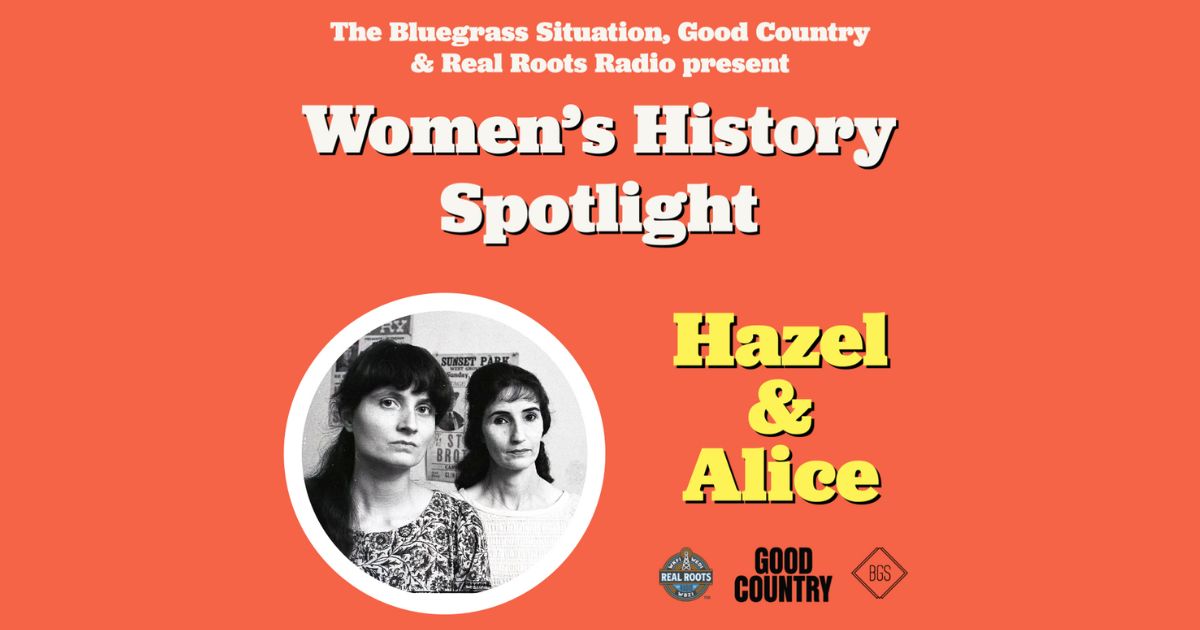
Members of the Bluegrass Music Hall of Fame, Hazel Dickens & Alice Gerrard were an unlikely pair who blasted down doors for women in bluegrass. Hazel hailed from the mountains of West Virginia, while Alice was from across the country in Seattle, Washington. Alice attended Antioch College in Yellow Springs, Ohio, where she was exposed to folk and bluegrass music. While a student there, she helped coordinate bringing The Osborne Brothers to the Antioch campus, making history as the first major bluegrass concert held on a college campus! After college, she wound up in the D.C. area, becoming active in their flourishing bluegrass scene, where she became friends and musical partners with Hazel Dickens – who had moved to the region with her family to find factory work years earlier.

Hazel & Alice became some of the first female bluegrass bandleaders and recorded some classic albums for Smithsonian Folkways and Rounder Records before embarking on successful solo careers by the mid-’70s. With Hazel’s mountain sound and Alice’s more folk-oriented sensibilities, their music appealed to both traditional bluegrass fans and those who were being introduced to the genre via the Folk Revival. Their original material which highlighted a woman’s perspective were critical in bringing a voice to women in the bluegrass canon. Decades later, their music and legacy is still rippling across American roots music, with artists as diverse as Rhiannon Giddens and Dudley Connell still celebrating their influence and impact.


Molly O’Day 

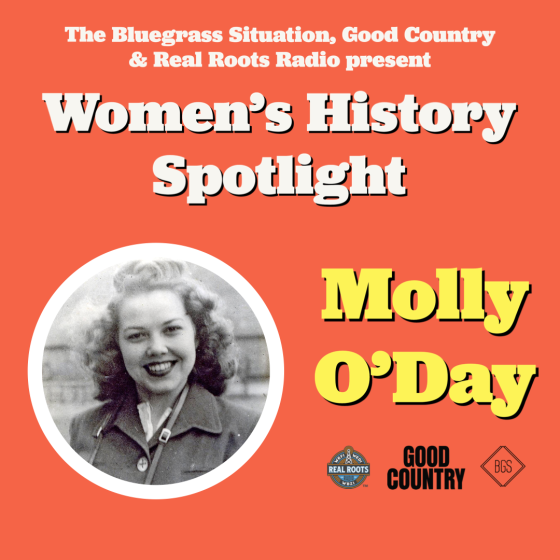
Born Lois LaVerne Williamson, country pioneer Molly O’Day was born in Pike County, Kentucky. She would become a popular radio star in West Virginia by the early 1940s, eventually leading Molly O’Day & The Cumberland Mountain Folks. Her band crossed paths with Hank Williams on the radio circuit and Molly even sang quite a few of his songs on radio and later in the recording studio. Molly learned “Tramp On The Street” from Hank Williams and it would land her a recording contract with Columbia Records. (Fun Fact: Her band at the time of her first Columbia recording session featured a young Mac Wiseman on bass!)

In an era when the term “hillbilly music” was still commonly used, Molly’s music, retroactively, could have country and bluegrass labels applied to it. Her powerful voice felt just as at home on an ancient balled like “Poor Ellen Smith” as it did on soul-stirring gospel songs like “Matthew 24.” By the early 1950s, Molly and her husband grew weary of life in the limelight and essentially retired from the music business, both dedicating their life to ministry. She would record a few gospel albums for some small record labels in the ensuing years, but her final album was released in 1960. She would pass away in the late 1980s, but she left a mark on country music and earned the respect of her peers at a time when the list of female country pioneers was relatively short.


Dale Ann Bradley

Revered as one of the most heartfelt bluegrass singers of her generation, this Kentucky songbird’s career started in earnest as a member of the Renfro Valley cast in her home state of Kentucky. The Renfro Valley Barn Dance was an extremely popular barn-dance style radio program in the 1930s and it spurred the creation of Renfro Valley as a country music entertainment destination in Kentucky. This helped kickstart the careers of folks like Steve Gulley, Jeff Parker, Dale Ann Bradley, and more by the 1990s.

While at Renfro Valley, Bradley would eventually join The New Coon Creek Girls, one of bluegrass’s only “all-girl” bands at the time, and aptly named after The Coon Creek Girls, a pioneering female string band of the 1930s who also started on The Renfro Valley Barn Dance.

Dale Ann’s soulful voice, largely influence by the Primitive Baptist tradition which she grew up around, quickly gripped the bluegrass world, leading to a successful solo career for the last three decades. In addition to recording songs that hearken to those familiar with mountain people and mountain ways, the appeal of Dale Ann’s voice has led her to adapt songs from outside of the genre to her style of bluegrass, tackling tunes from Tom Petty, Bobbie Gentry, The Grateful Dead, Jim Croce, and everyone in-between! Her diverse material has led me (and many others) to the conclusion that no matter the material, if Dale Ann is singing it, I already know I’m going to like it!


Kitty Wells

Hailed as the original Queen of Country Music, Kitty Wells hit a massive reset button on the role of women in country music after the massive success of her breakthrough hit, “It Wasn’t God Who Made Honky Tonk Angels.” Written by J.D. Miller, it was penned as the antithesis of Hank Thompson’s hit, “The Wild Side of Life.” After writing the song, the search began for a woman to sing it. Kitty Wells had pursued a country career, to little avail, and had essentially consented that maybe it wasn’t in the cards for her, when she was contacted to record the song. “It Wasn’t God Who Made Honky Tonk Angels” would become the first Number One hit by solo female in country music history, and its status as one of the most iconic country songs of all time only grows.

This explosion of success led to many other hit records by Kitty Wells, and opened the doors for those who would follow in her wake like Jean Shepard, Loretta Lynn, Dolly Parton and more! You can’t celebrate Women’s History Month without honoring the gal who famously sang the line, “It’s a shame that all the blame is on us women!” (Still kind of bummed that Margot Robbie didn’t sing that line in Barbie. Seems like a missed opportunity to me!)

As an added bonus, here’s another cool version from 1993, where Dolly Parton, Loretta Lynn, and Tammy Wynette recruited Kitty Wells to join them on a new version of this country classic on their collaborative album, appropriately entitled Honky Tonk Angels.


You Gotta Hear This: New Music From Aisha Badru, Benson, and More

Aren’t Fridays the best day of the week? And no, not just because of the five-day work week, but really because it’s New Music Friday, of course!

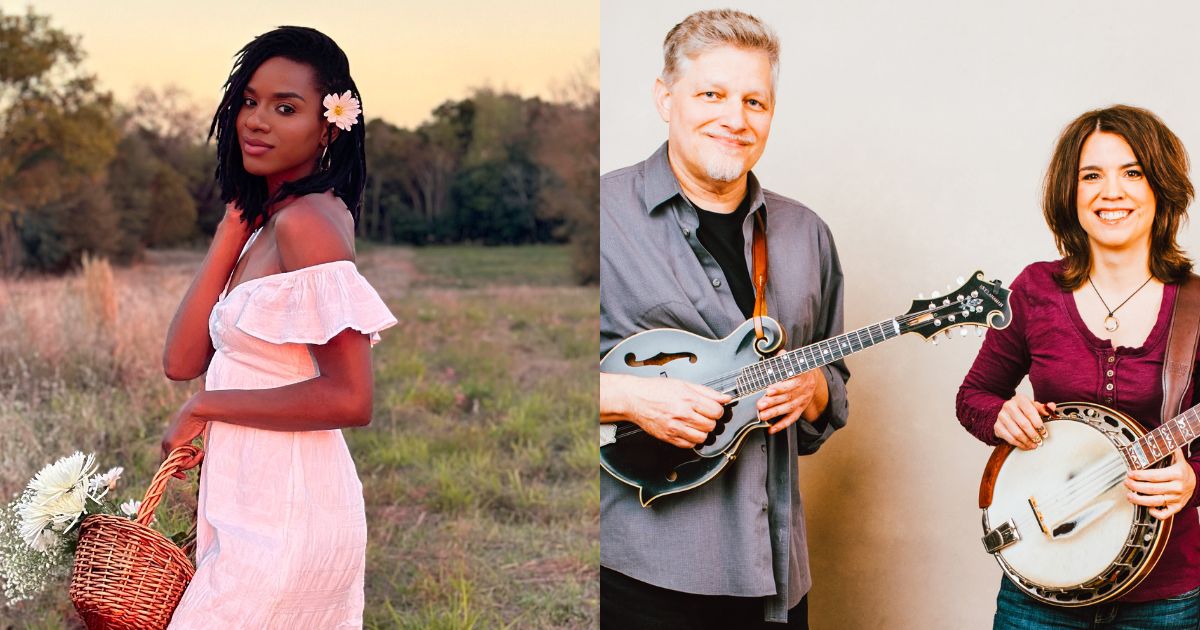
This week, we’re featuring premieres like a thoughtful and introspective number from singer-songwriter Aisha Badru, a Bonnie Raitt cover from husband-and-wife bluegrass duo Benson with Keith Garrett lending lead vocals, a thoughtful track about cyclical national, cultural, and romantic traumas from Jessye DeSilva, and Lynne Hanson brings a new song about how some folks are just plain rotten.

There’s a little bit of everything for every kind of roots music fan, and if we do say so ourselves, You Gotta Hear This!


Aisha Badru, “Life to Live”

Artist: Aisha Badru
Hometown: Yonkers, New York
Song: “Life to Live”
Label: Nettwerk Music Group

In Their Words: “‘Life To Live’ is a song deeply rooted in my personal journey. It explores the importance of introspection and understanding what truly brings us joy and fulfillment. For me, that meant leaving the traditional path of college to pursue music, even if it wasn’t initially supported by my family. This song isn’t just about following our dreams, it’s about the growth and self-discovery that happens along the way.” – Aisha Badru


Benson, “Louise”

Artist: Benson
Hometown: Boiling Springs, South Carolina
Song: “Louise”
Release Date: March 22, 2024
Label: Mountain Home Music Company

In Their Words:“We’ve always been big fans of Keith Garrett. He’s got such a warm vocal tone and always chooses a great way of delivering the song. We were excited to have him sing a couple and felt really lucky that he said yes.” – Kristin Scott Benson

“Back in the early 1990s, I heard Bonnie Raitt’s album, Luck of the Draw. After becoming a fan and going back to her earlier projects, I came across a live video with her version of ‘Louise.’ I always thought it would make a fun bluegrass song because of the chord progression and I think Keith and Dustin sang it great.” – Wayne Benson

Track Credits:
Wayne Benson – Mandolin
Kristin Scott Benson – Banjo
Cody Kilby – Acoustic guitar
Tony Creasman – Drums
Kevin McKinnon – Bass
Keith Garrett – Lead vocal
Dustin Pyrtle – Harmony vocals


Jessye DeSilva, “Gallows Tree”

Artist name: Jessye DeSilva
Hometown: Boston, Massachusetts
Song: “Gallows Tree”
Release Date: March 22, 2024

In Their Words: “‘Gallows Tree’ is all about the ghosts of our traumas and our misdeeds and what happens when we leave things unsaid. In the U.S. particularly, I think there is a sickening and cyclical nature to the things we repress and rebrand in denial. White couples rent plantations as backdrops for their quaint country weddings where Black bodies were broken not so long ago. We refuse to learn from the mistakes of our parents and remain complicit in the face of brutal inhumanity. In ‘Gallows Tree,’ a pastoral scene of a romantic picnic is painted, where two lovers sip iced tea on a blanket beneath the shade of a tree, while something simmers unspoken just beneath the surface. This could easily be a song about love left to dry with the years, but the lovers are all of us who remain reticent with hearts tight as fists. And now a tire swings gently from the gallows tree.” – Jessye DeSilva

Track Credits:
Music and lyrics by Jessye DeSilva and Alex Calabrese.
Jessye DeSilva – Vocals, piano
Alex Calabrese – Acoustic guitar, background vocals
Joe Dunn – Producer, bass, electric guitar, banjo, percussion programming


Lynne Hanson, “Outlaw Lover”

Artist: Lynne Hanson
Hometown: Ottawa, Ontario, Canada
Song: “Outlaw Lover”
Album: Just A Poet
Release Date: March 22, 2024 (single); May 24, 2024 (album)
Label: Panda Cave Records

In Their Words: “Some people are just rotten to the core. For this song, I really wanted to paint a picture of the ultimate heartbreak artist, someone callous and uncaring who leaves a trail of victims in their wake. The kind of person your mother warned you to stay away from.

“It was a lot of fun to arrange this song in the studio. We chose an almost hypnotic groove to really give it a sexy, black-leather swagger, and the song hits its bad attitude crescendo with the nasty fuzz of Blair Michael Hogan’s guitar solo. I actually wrote this song by starting with the lyrics first, which is the opposite of my normal songwriting process. It was a real challenge to come up with the music, and I had three versions of the song before I finally settled on this one.” – Lynne Hanson

Track Credits:
Written by Lynne Hanson.

Lynne Hanson – lead vocal
Jim Bryson – acoustic guitar, electric guitars, piano, organ, mellotron
Blair Michael Hogan – electric guitar, slide guitar
Philippe Charbonneau – bass
Marshall Bureau – drums

Jim Bryson – recording engineer
Recorded at Fixed Hinge Studios, Stittsville, Ontario.
Produced by Jim Bryson.
Mastered by Phil Shaw Bova, Bova Lab Studio, Ottawa, Ontario.
Mixed by Jim Bryson, Fixed Hinge Studios.


Photo Credit: Aisha Badru by Jeffery Trapani; Benson by Sandlin Gaither. 

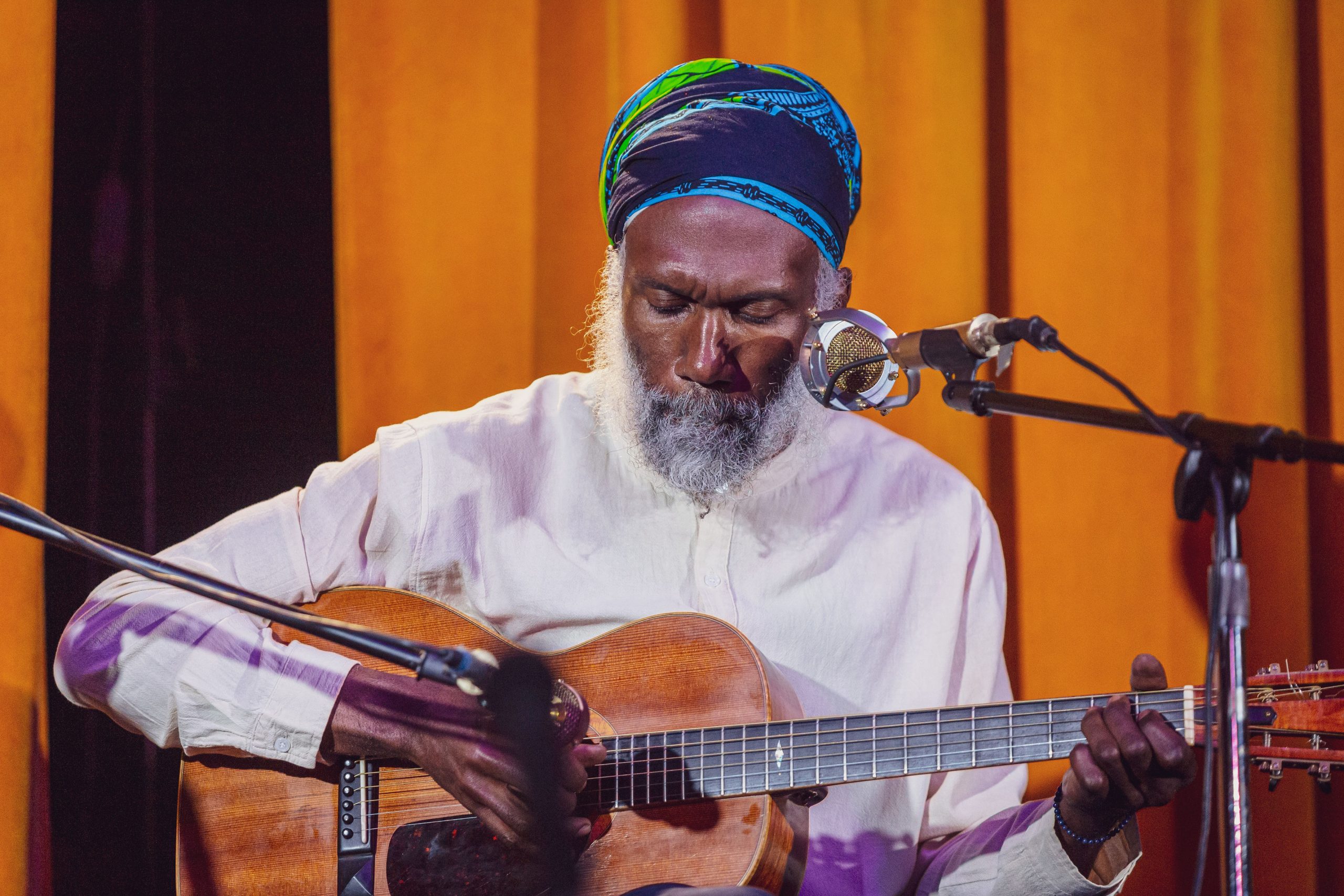
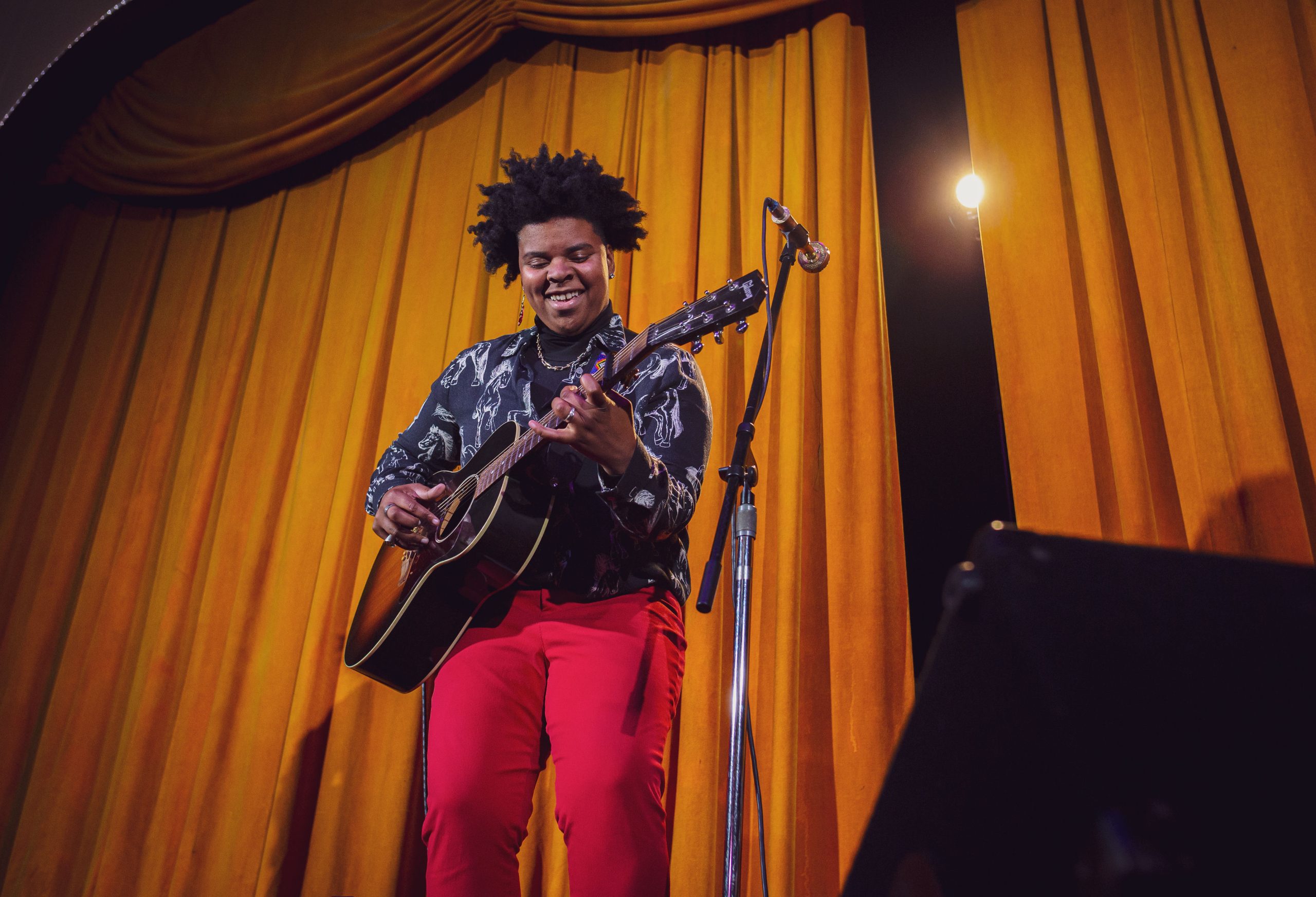
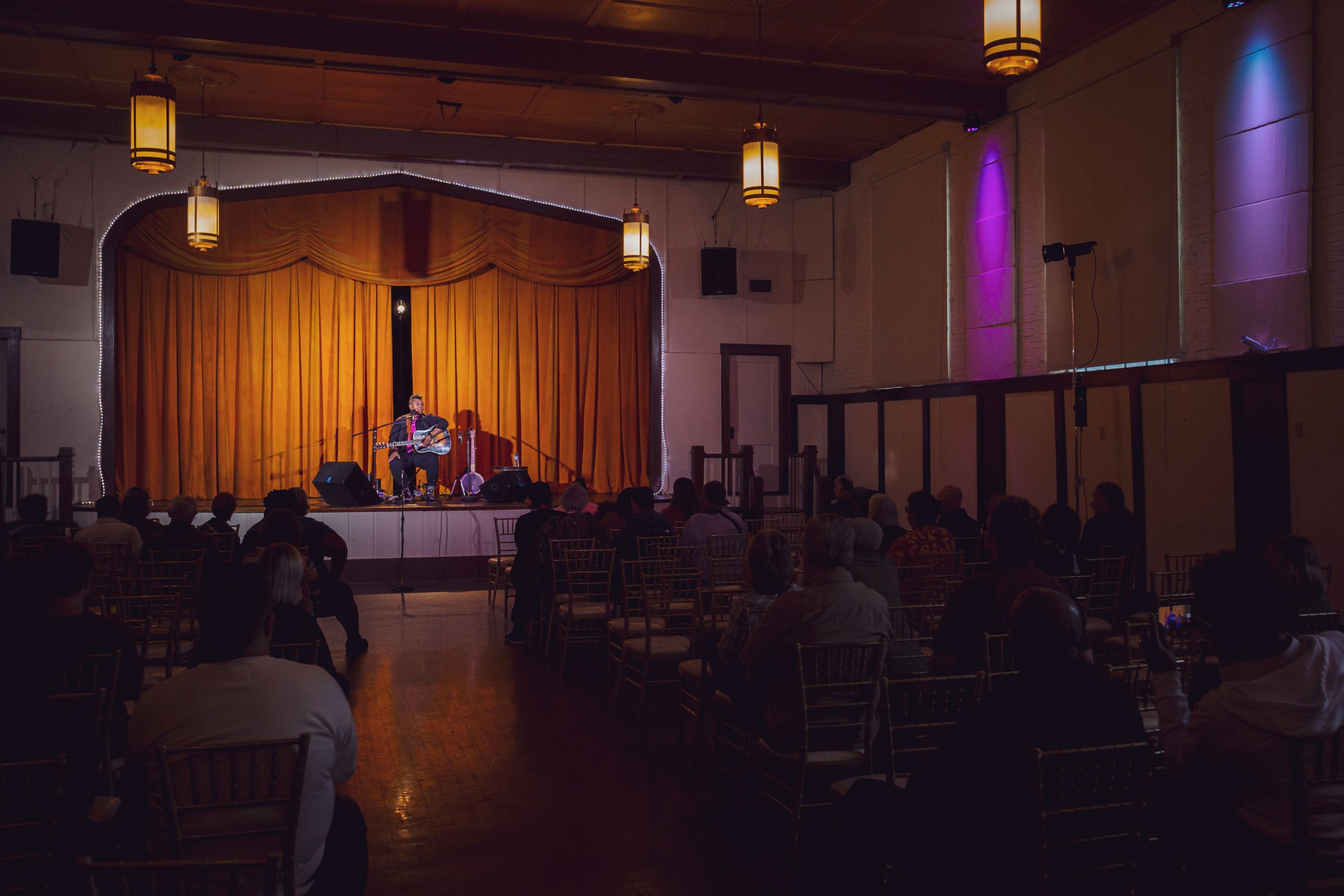
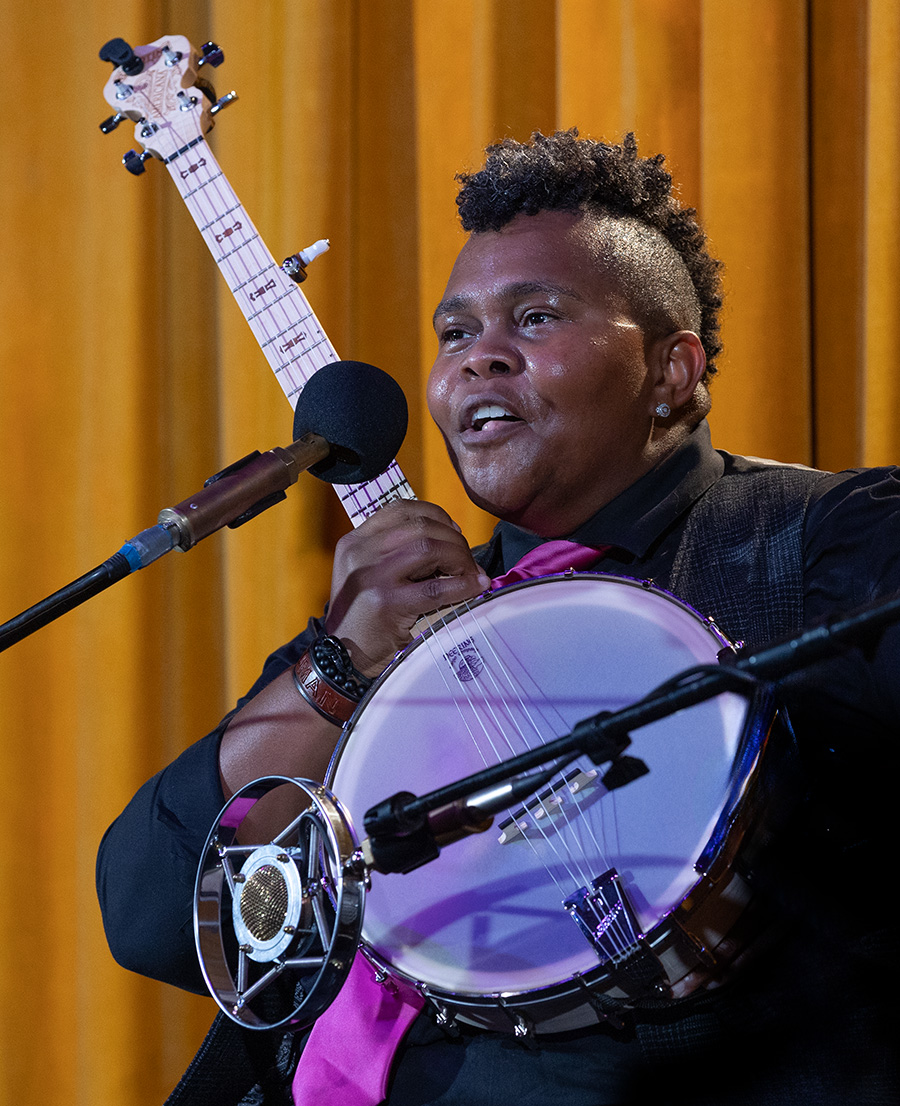
PHOTOS: Our Recap of the Fort Worth African American Roots Music Festival

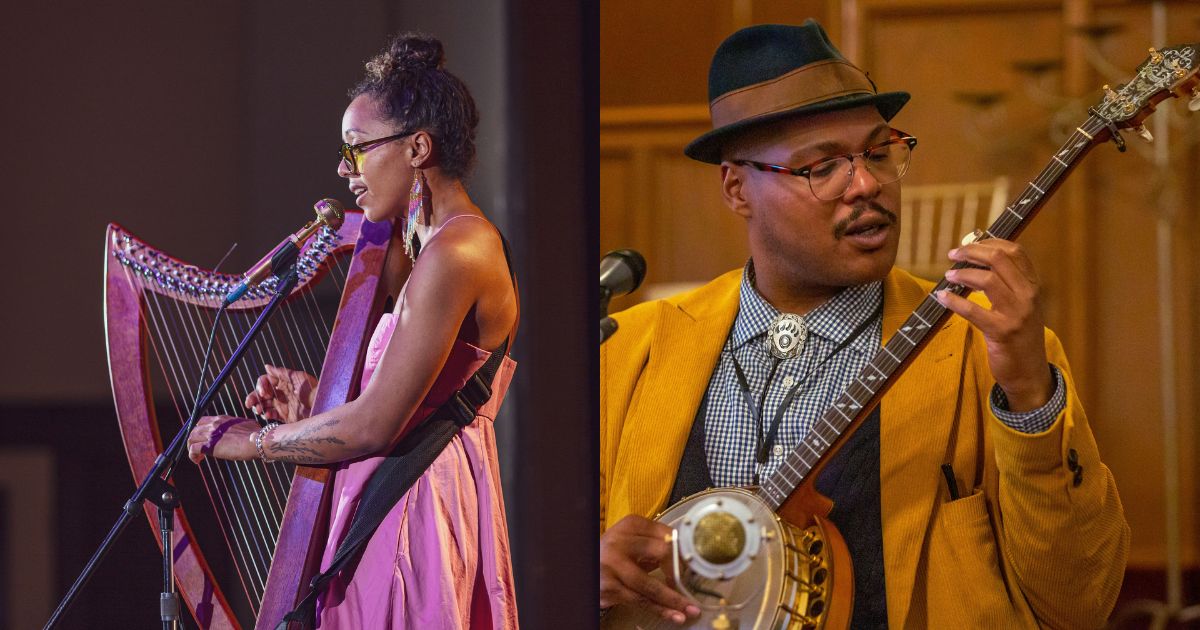
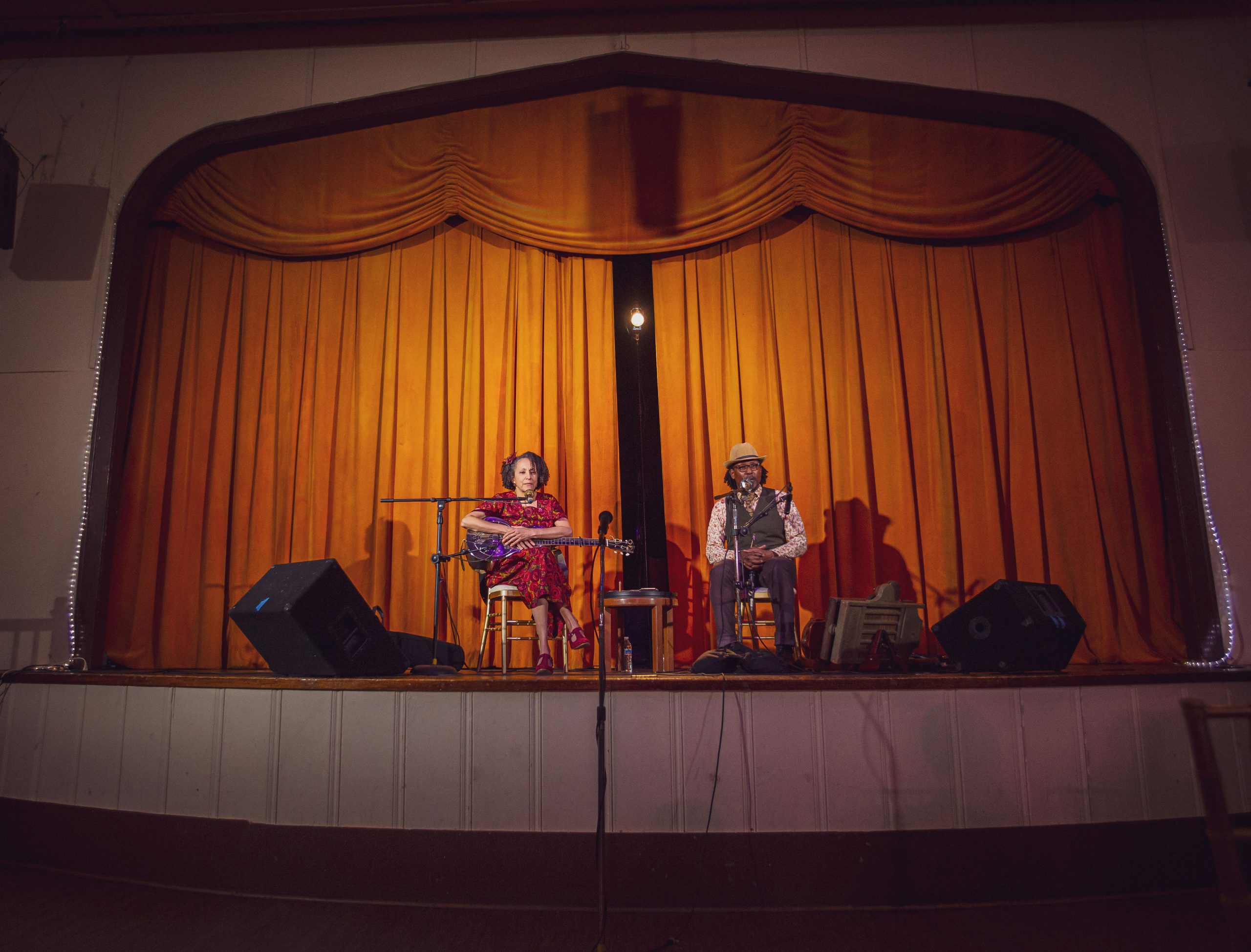
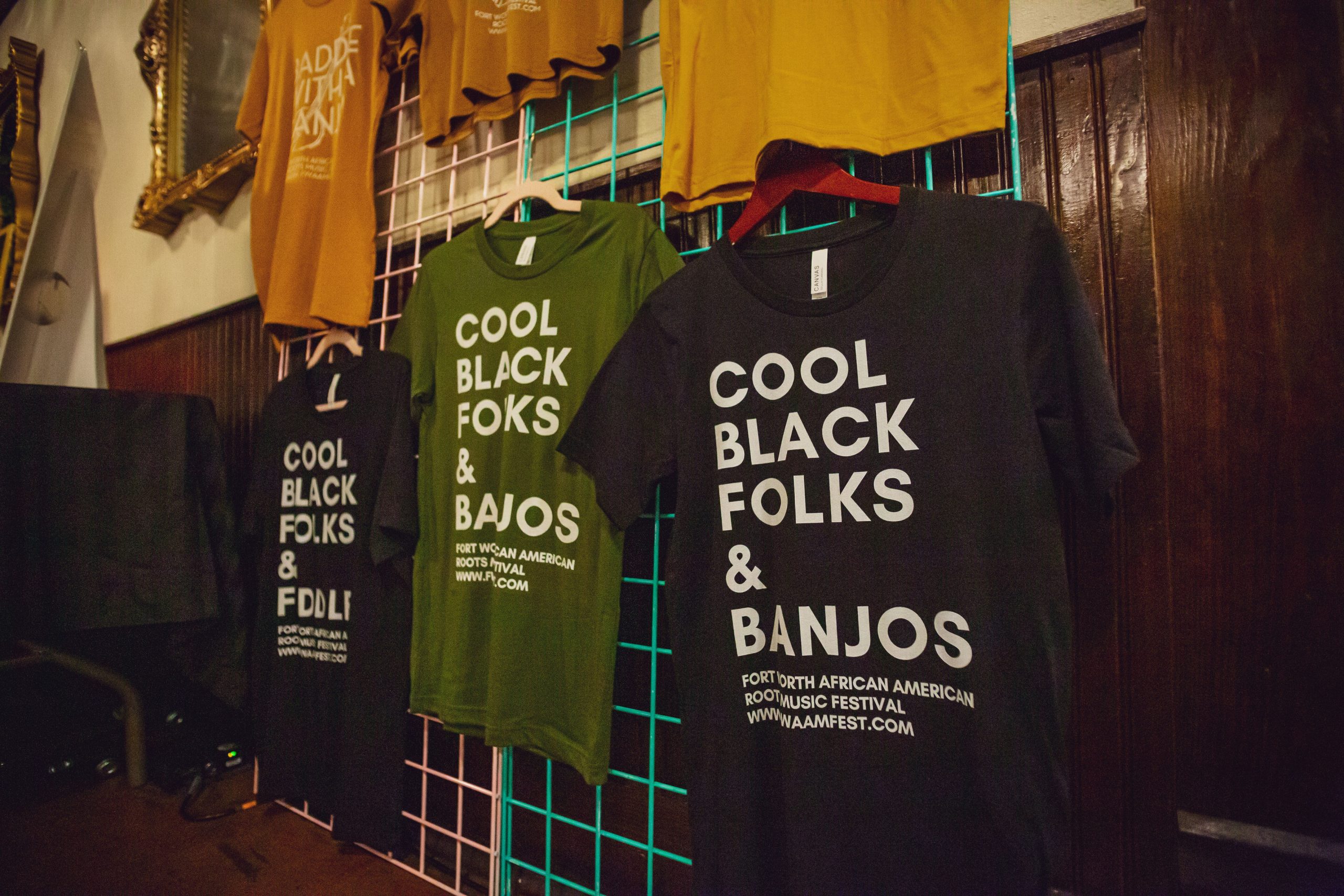
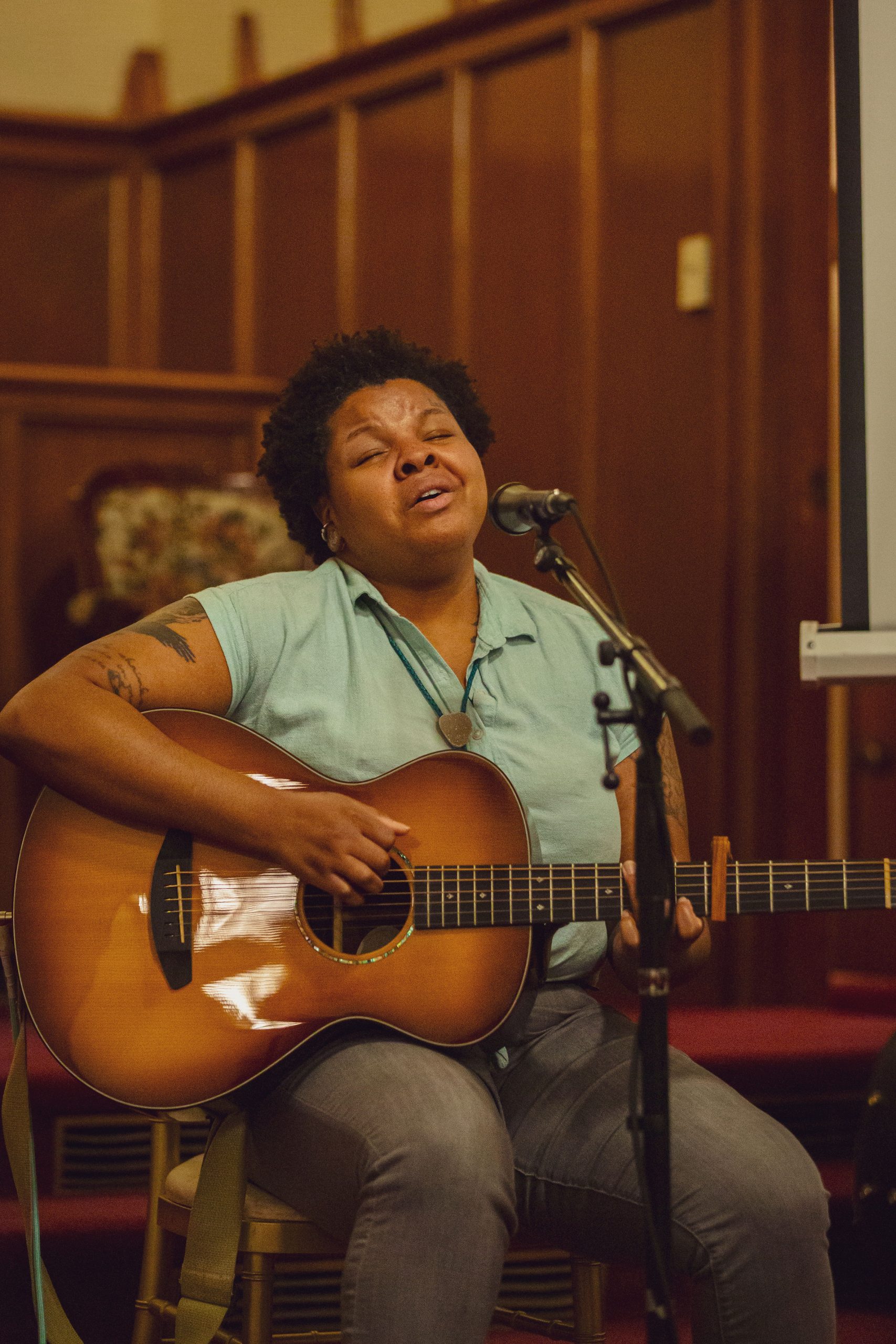
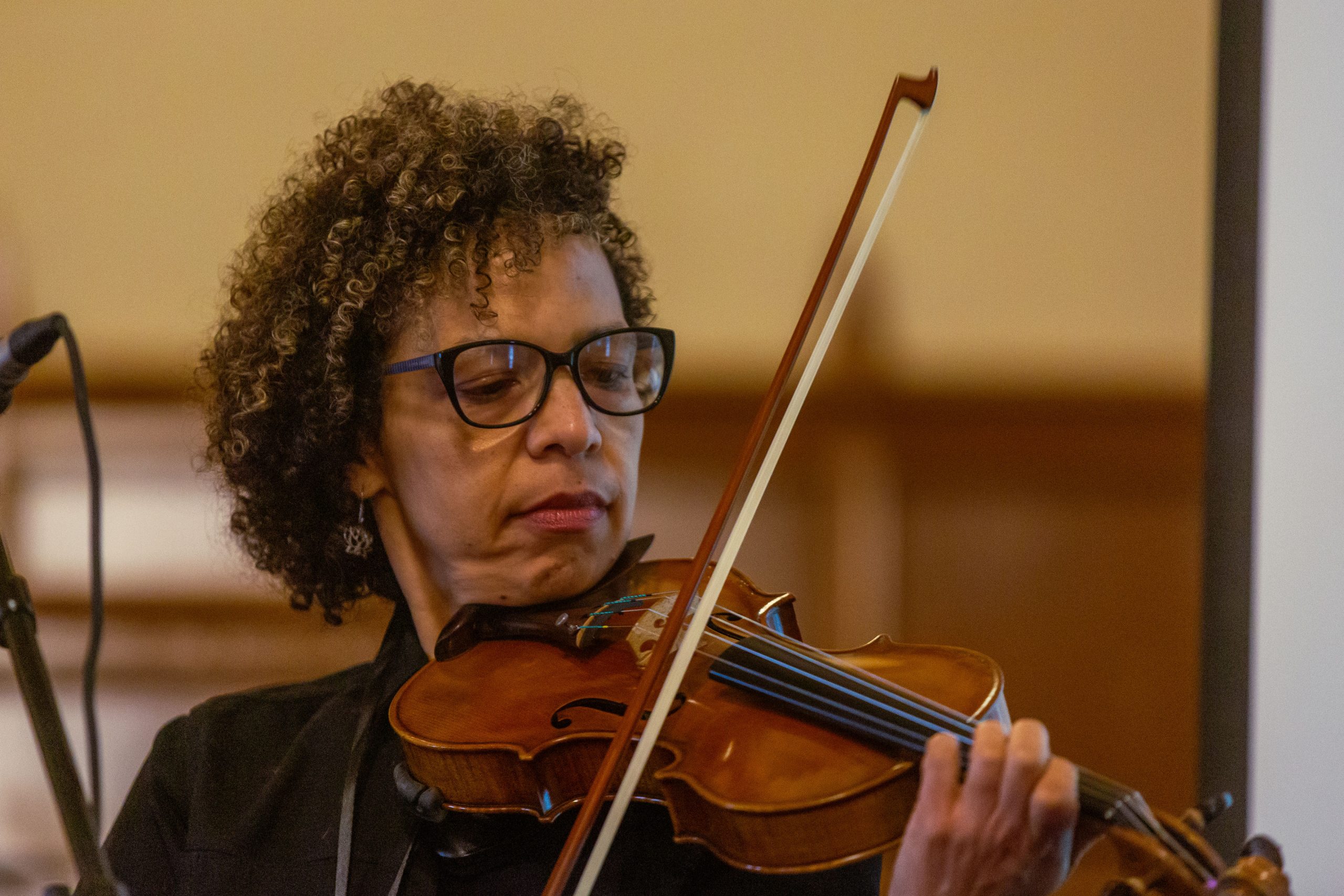
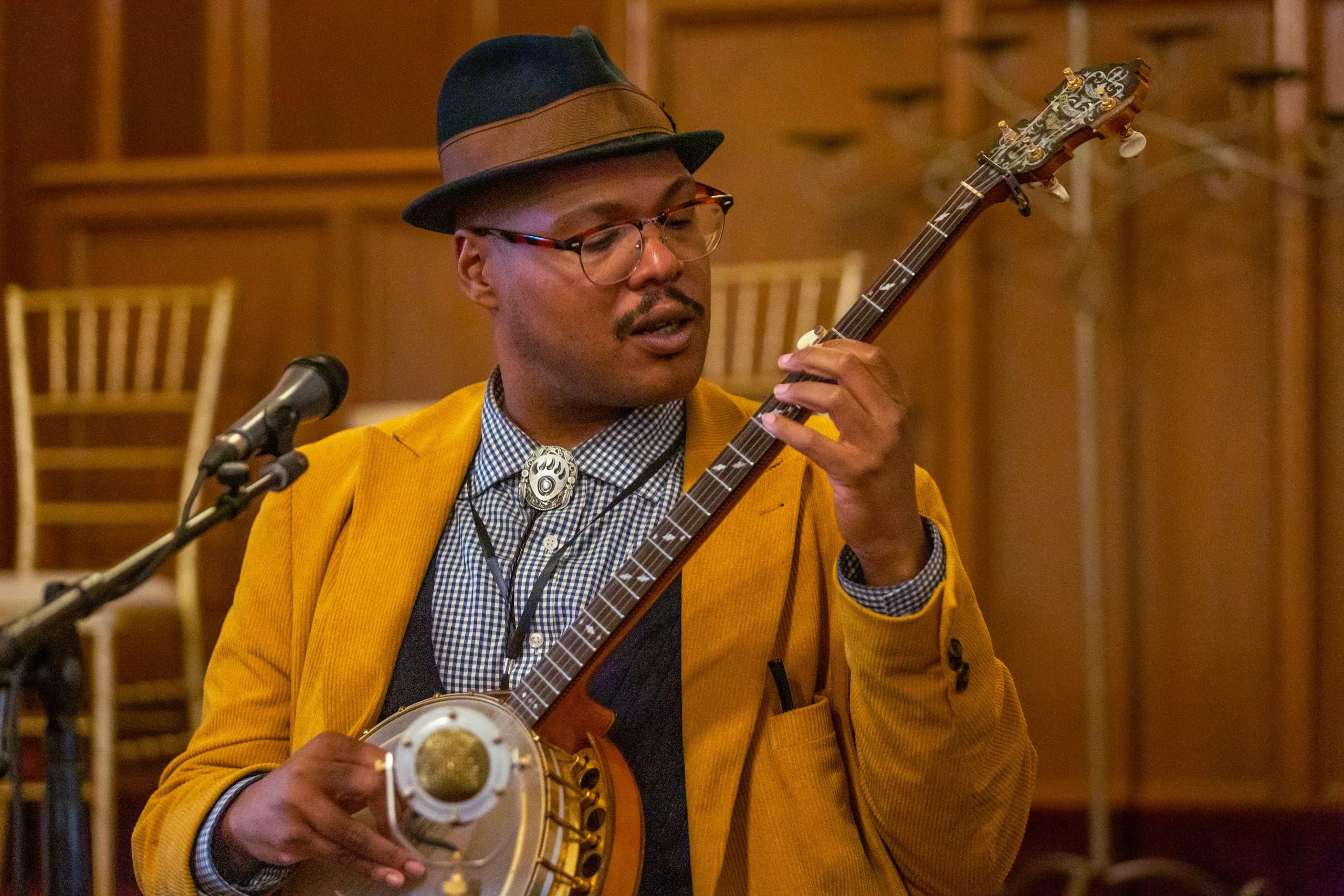
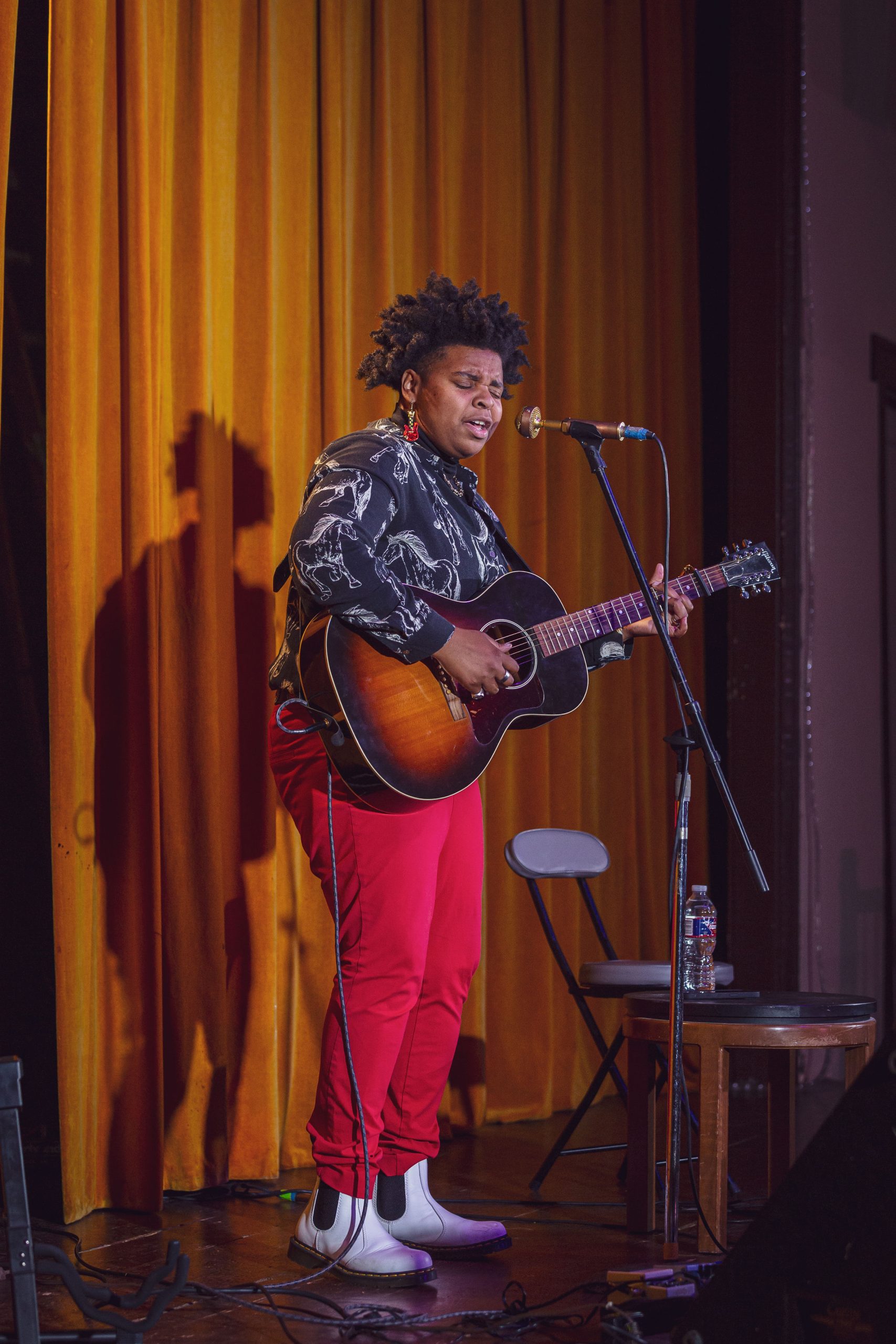
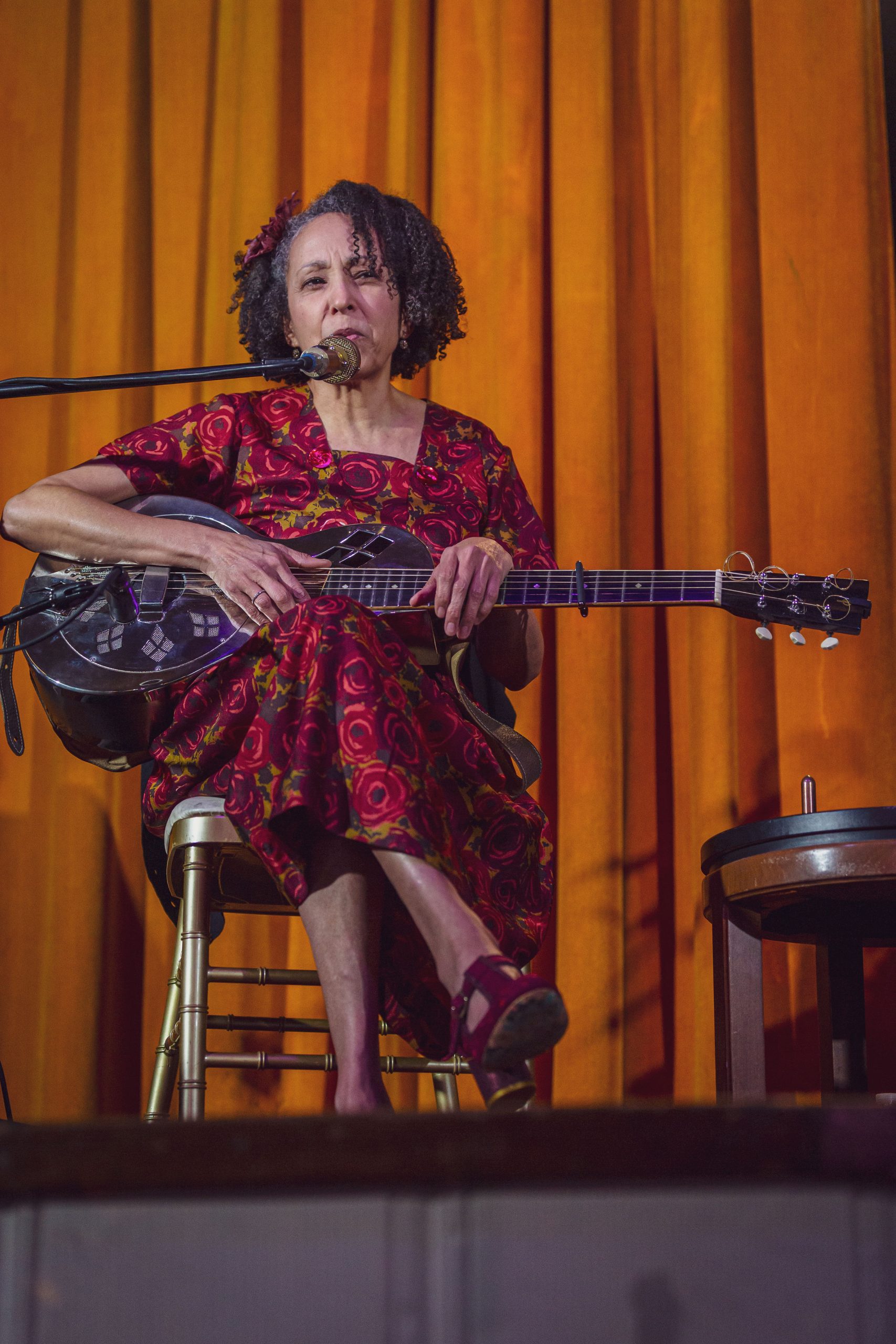
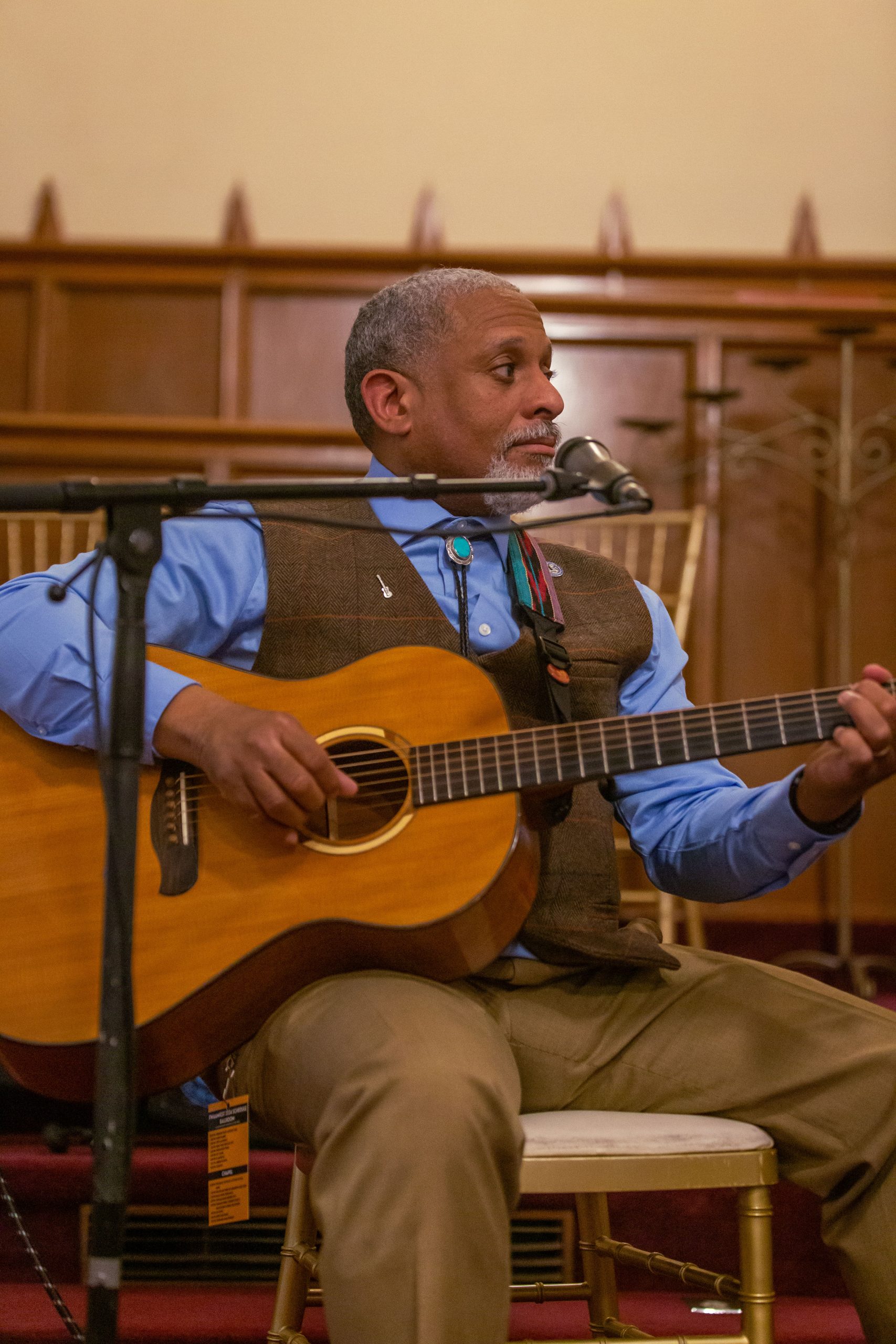
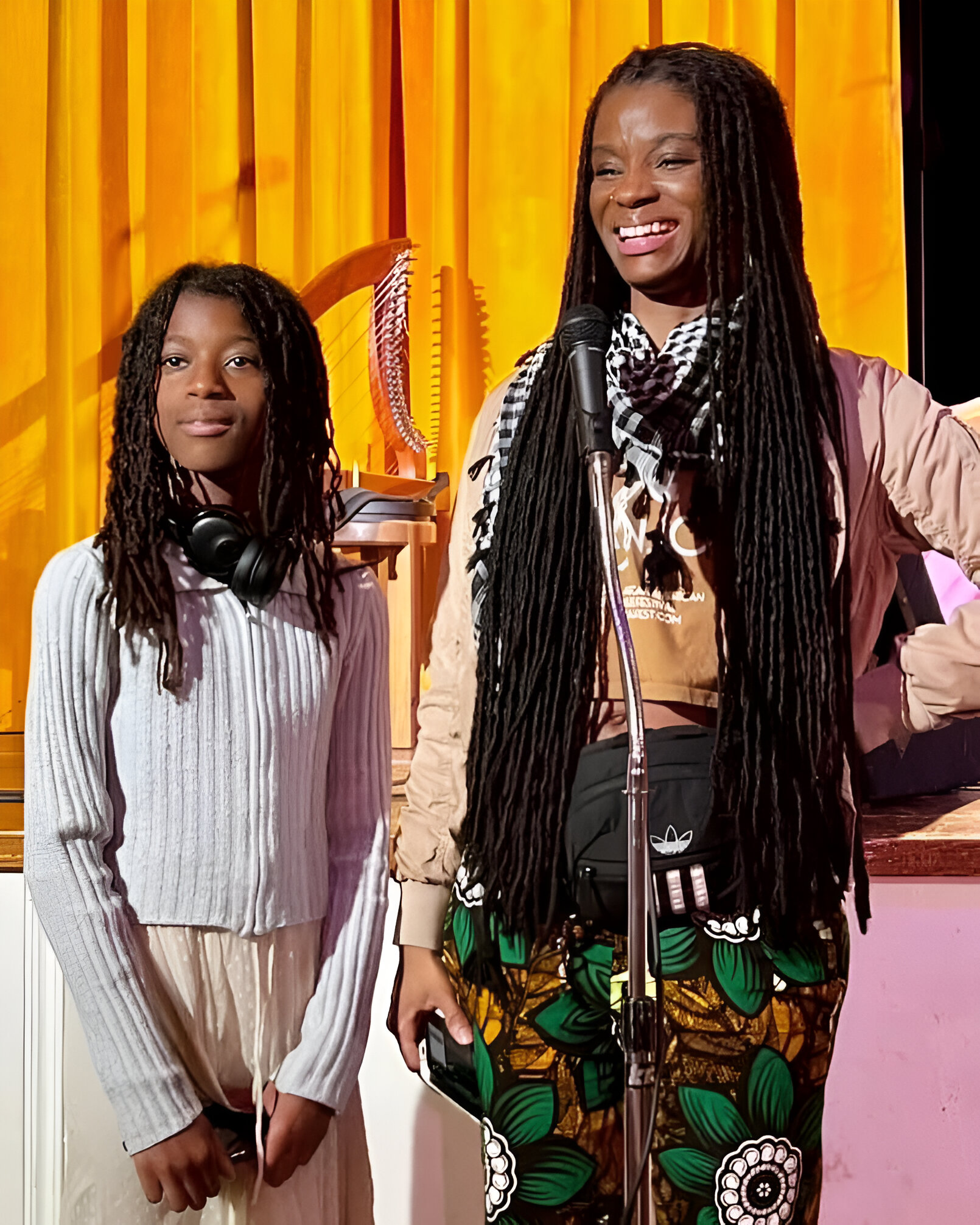
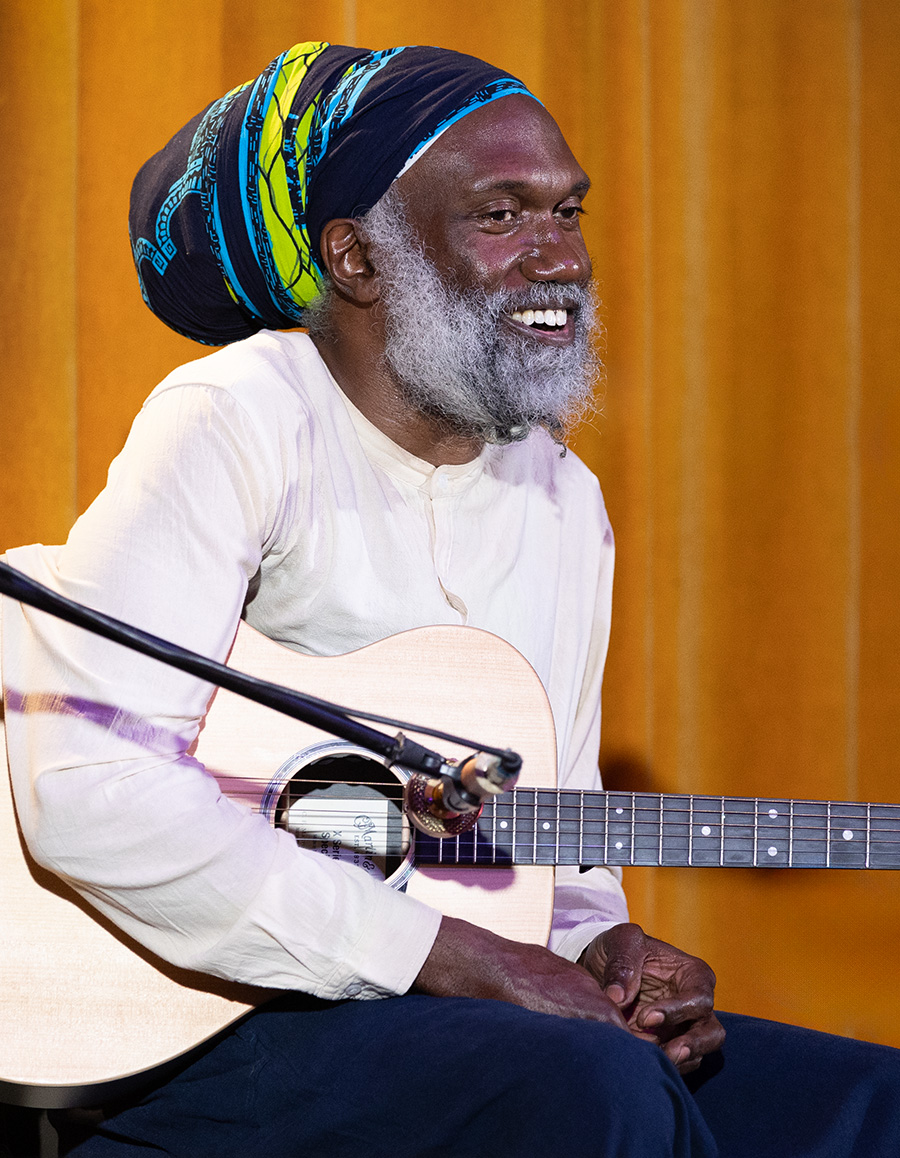
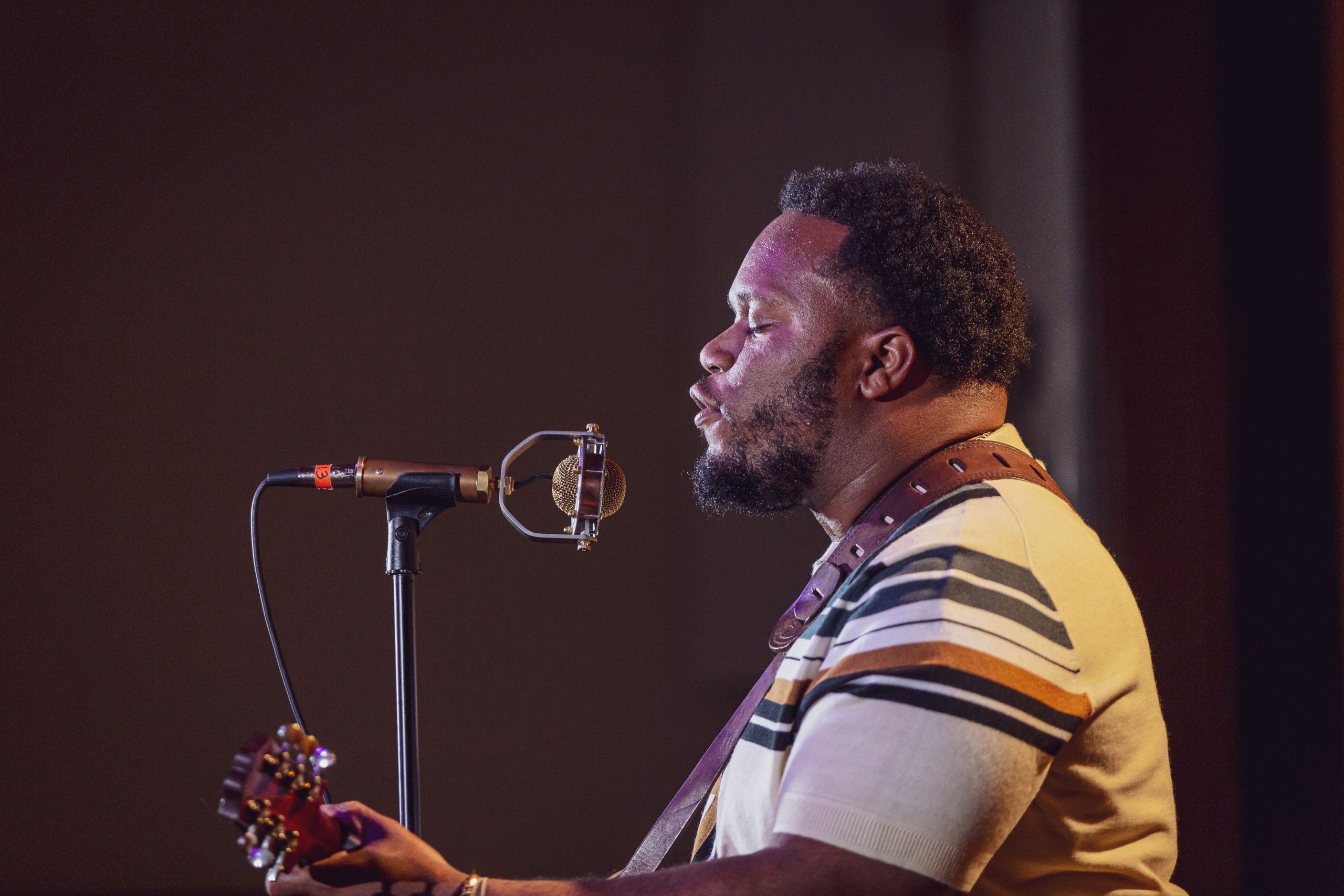
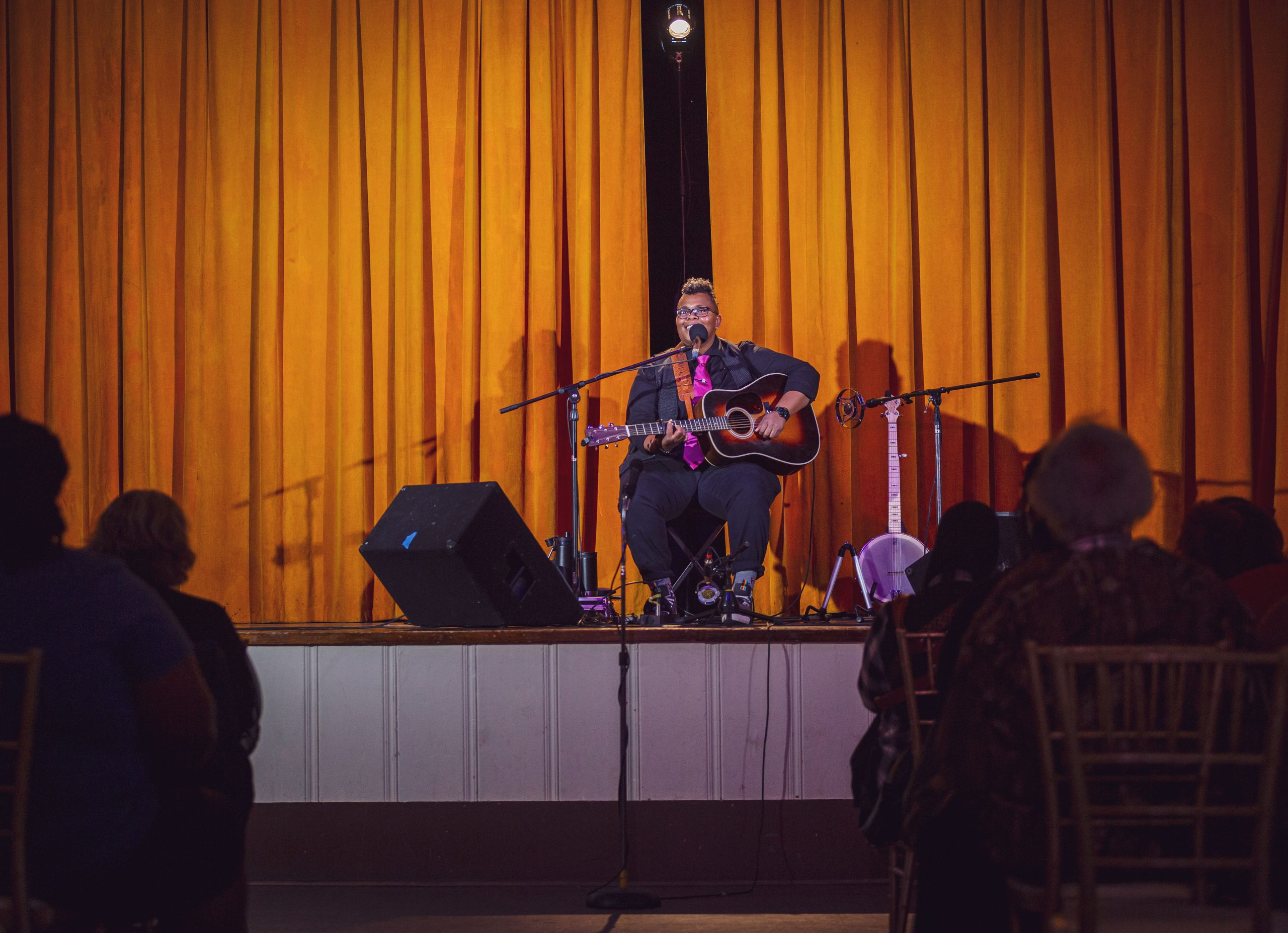
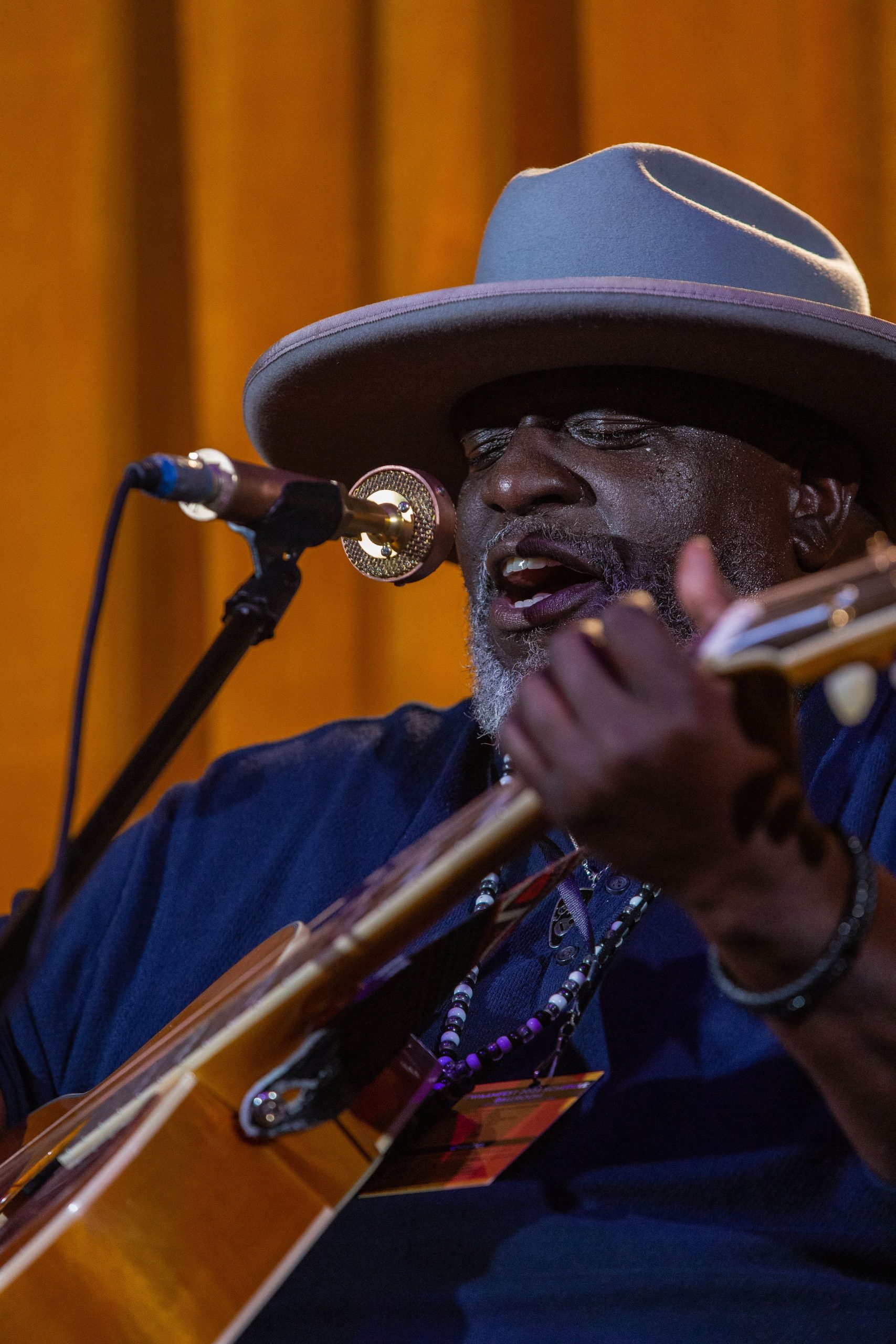
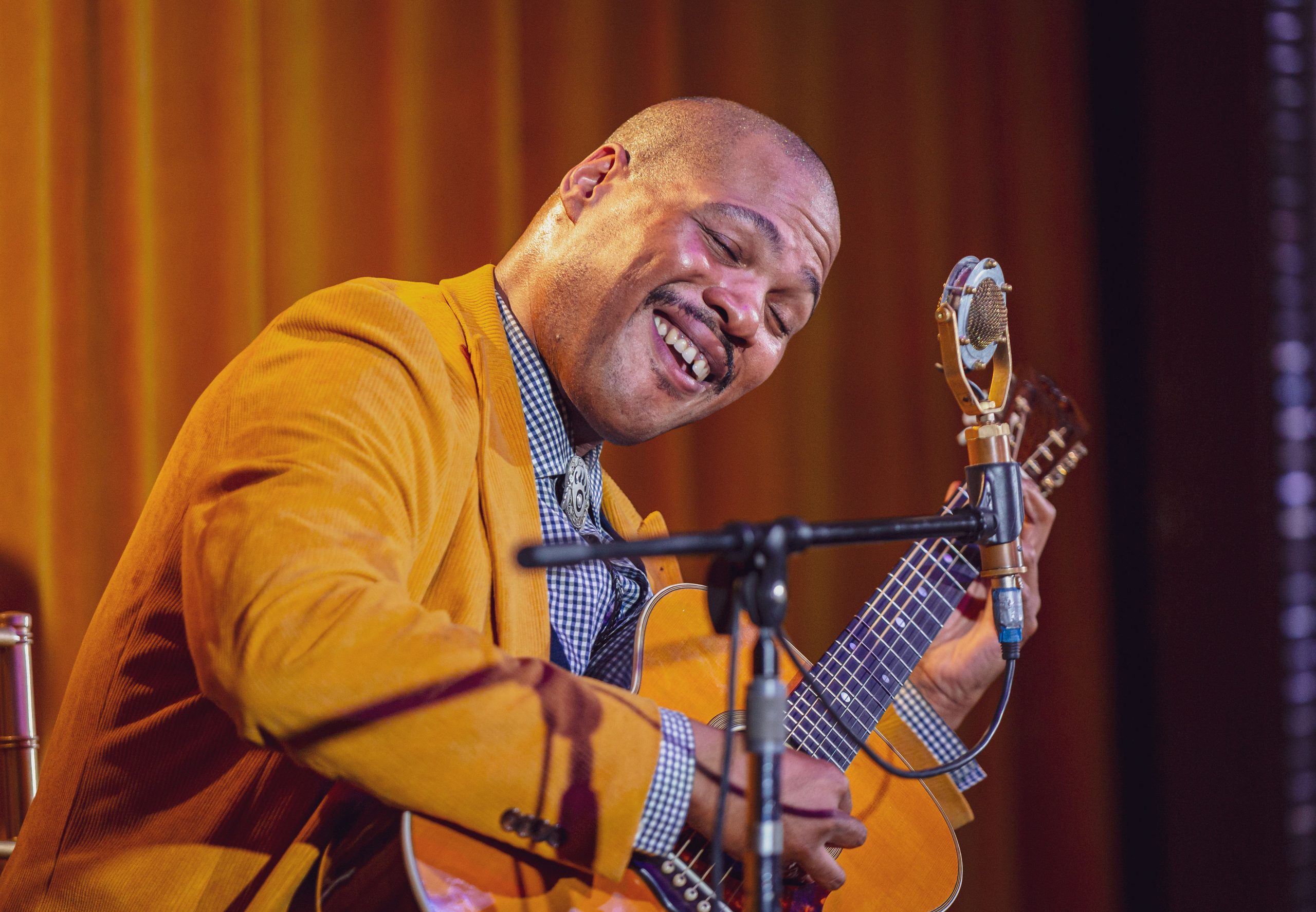
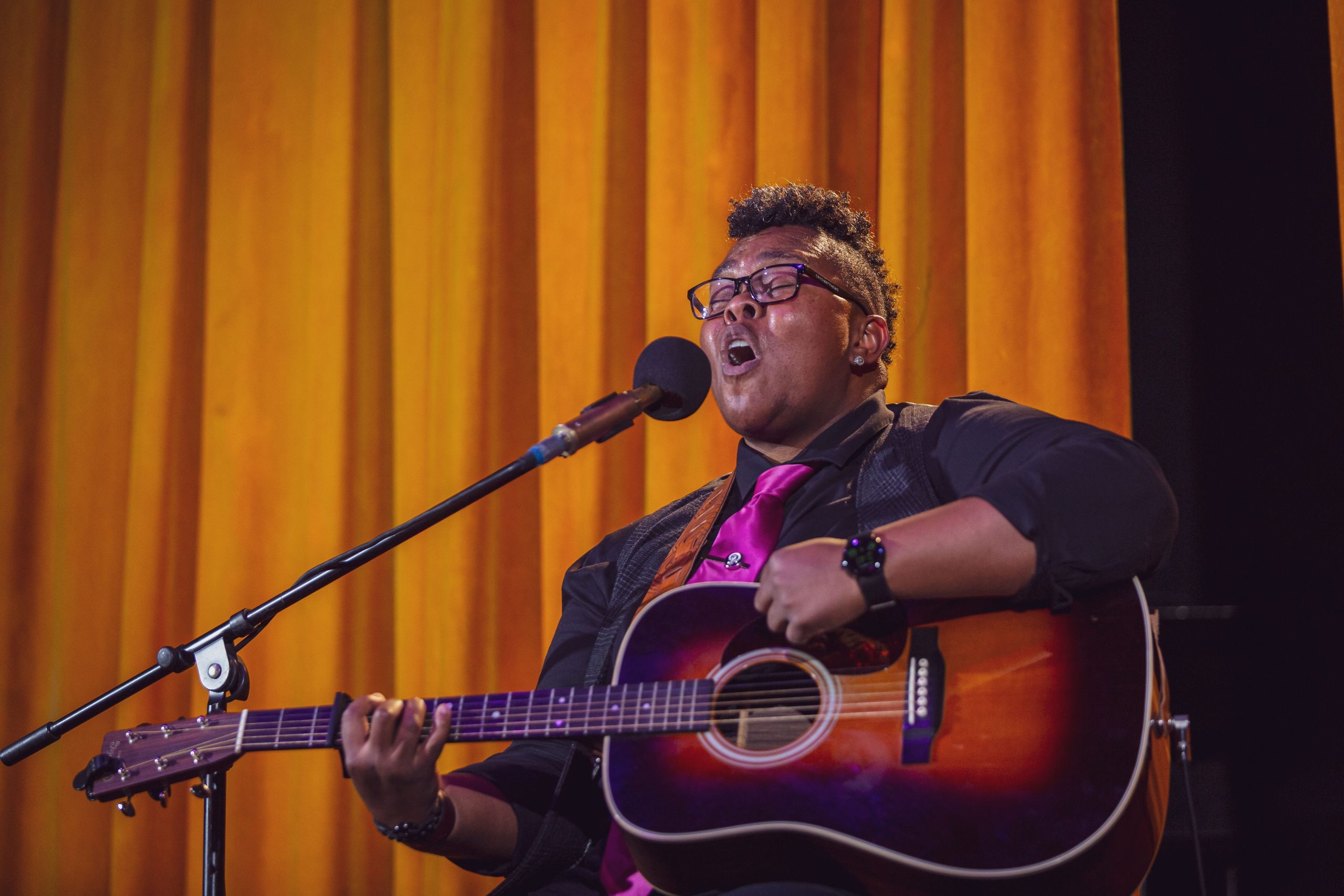
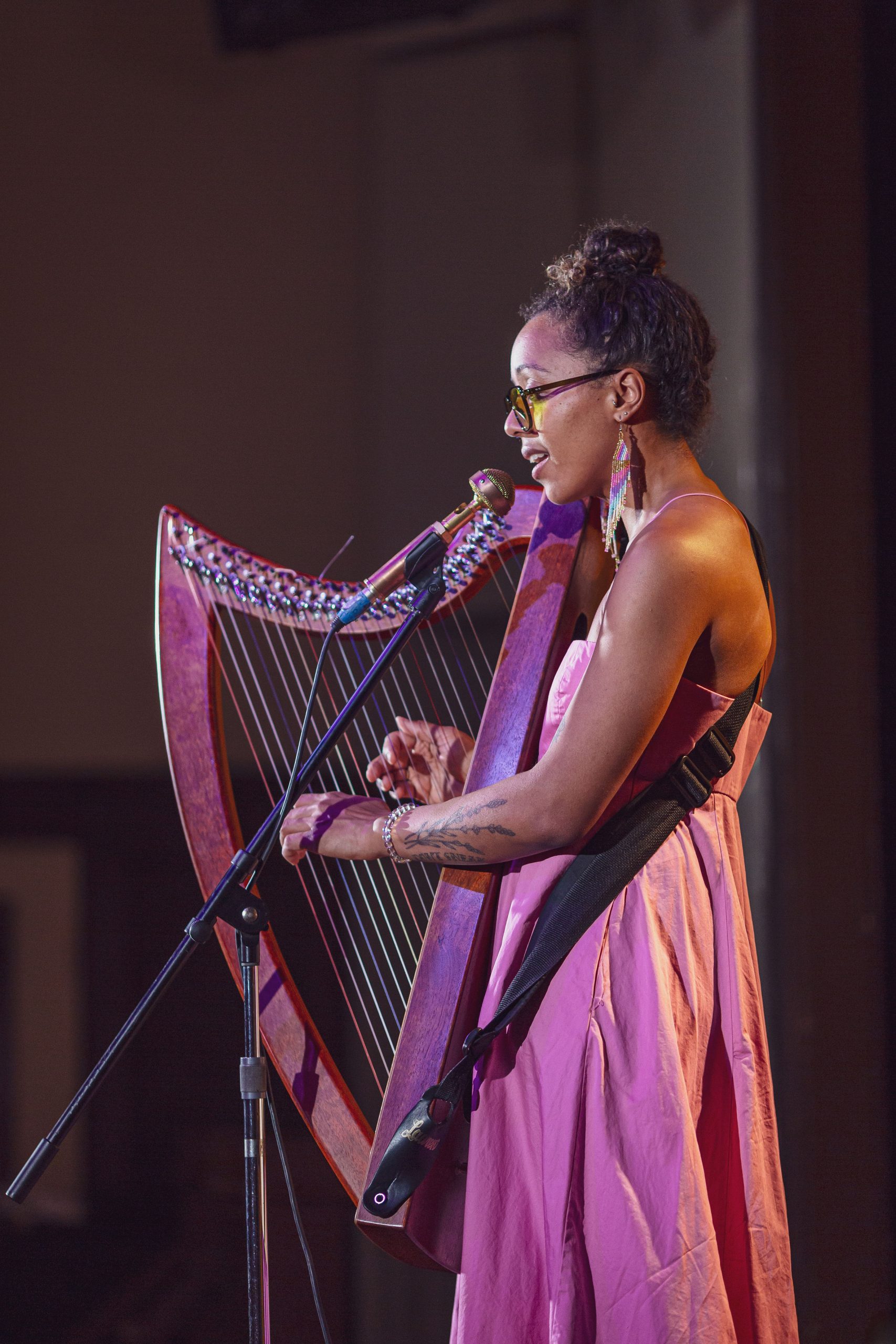
Last weekend, on March 16, musicians and artists from across the country descended on Fort Worth’s Southside Preservation Hall for the 2024 edition of the Fort Worth African American Roots Music Festival – known affectionately as FWAAMFest. This year’s event was the biggest yet in the annual festival’s four-year run, boasting a lineup of country, old-time, blues, ragtime, folk, Americana, and so much more.

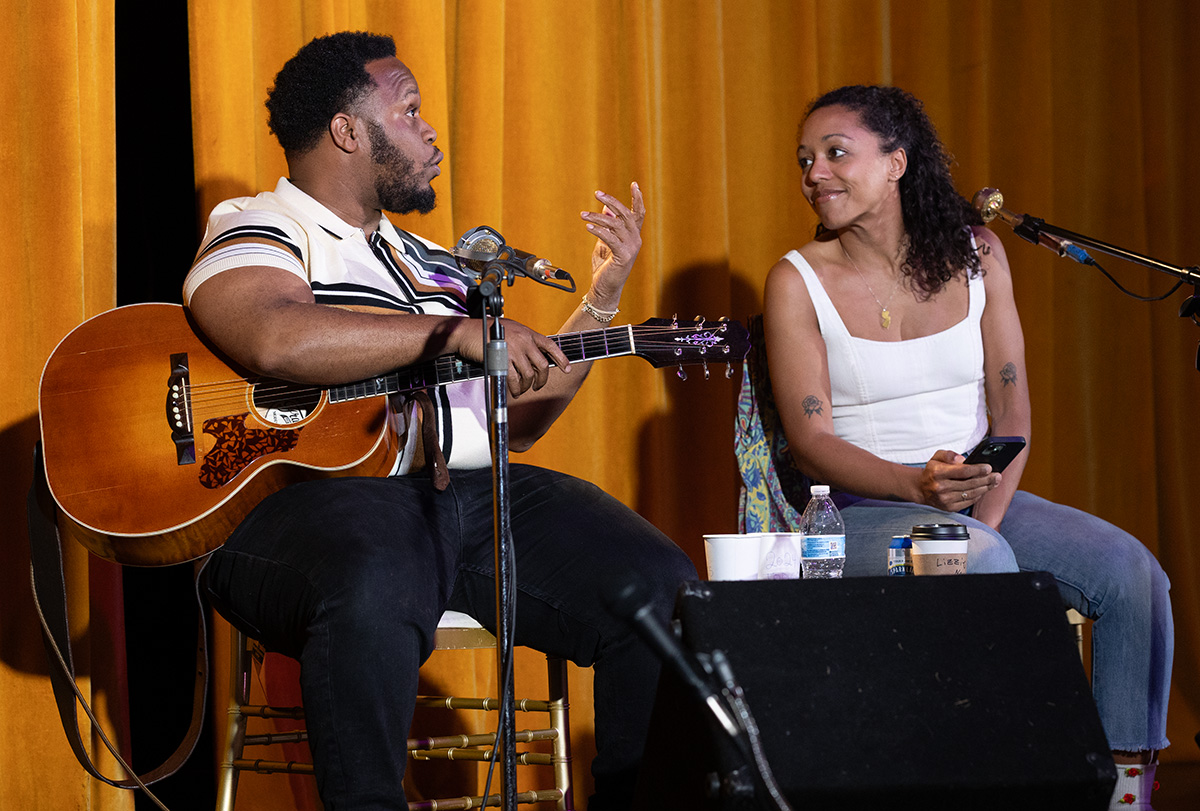
Below, check out select photos from FWAAMFest that highlight the mission and scope of this quickly up-and-coming festival and community-building event. There’s truly something for everyone at FWAAMFest, including workshops and lectures on pre-World War I banjo playing, a live taping of BGS’s and Folk Alley’s podcast, Basic Folk, delicious soul food and ice cream provided by Carpenter’s Cafe & Catering, Lil Boy Blu, and Cow Tipping Creamery, and a superlative lineup of musicians, artists, songwriters, and instrumentalists. (Learn more about the artists on the lineup here.)

FWAAMFest is programmed and presented by Decolonizing the Music Room, a non-profit organization founded by festival director Brandi Waller-Pace. DtMR has a mission of building more equitable futures in music education, music performance, ethnomusicology, and beyond. As such, their success – and the continuation of the remarkable FWAAMFest – is dependent upon the generosity of roots music fans such as yourself.

If you believe in the future of FWAAMFest and Decolonizing the Music Room and want to help it continue into the future, you can donate now on the official festival website. Additionally, banjo player, songwriter, and scholar Rhiannon Giddens has pledged a $5,000 matching donation if two or more high level donors give at that dollar amount. If you have the resources, consider devoting funds to the important and vital mission of FWAAMFest and DtMR.

As you will see from our photo recap below, this is an event worth investing in. Make plans now to attend FWAAMFest in the future and, if you’re able, donate!


All photos by Justin Ikpo Photography unless otherwise noted. Additional photos by Ben Noey Jr. and IJ Routen.

Learn more about the artists on the FWAAMFest lineup here.

Ed’s Picks: Pickers Galore

(Editor’s note: Each issue of Good Country, our co-founder Ed Helms will share a handful of good country artists, albums, and songs direct from his own earphones in Ed’s Picks. 

Sign up here to receive Good Country issues when they launch, direct to your inbox.)

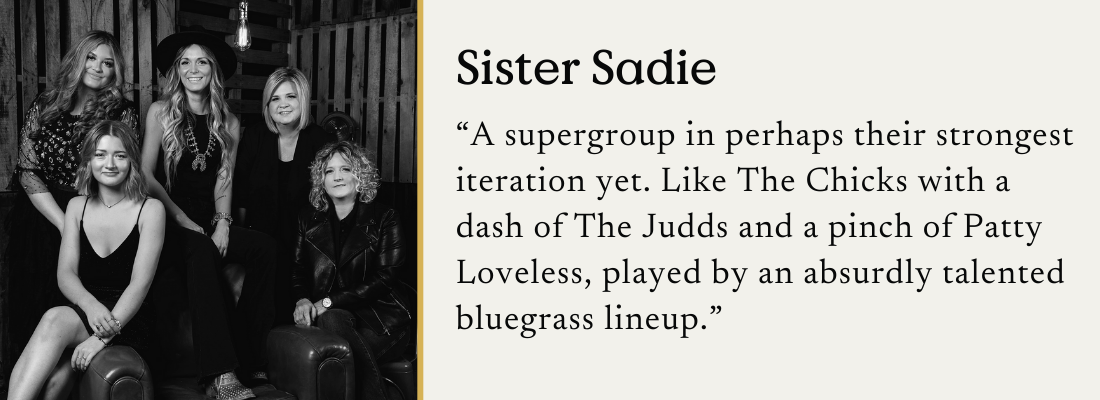
Sister Sadie

An image of bluegrass band Sister Sadie with the text: "A supergroup in perhaps their strongest iteration yet. Like The Chicks with a dash of The Judds and a pinch of Patty Loveless, played by an absurdly talented bluegrass lineup."


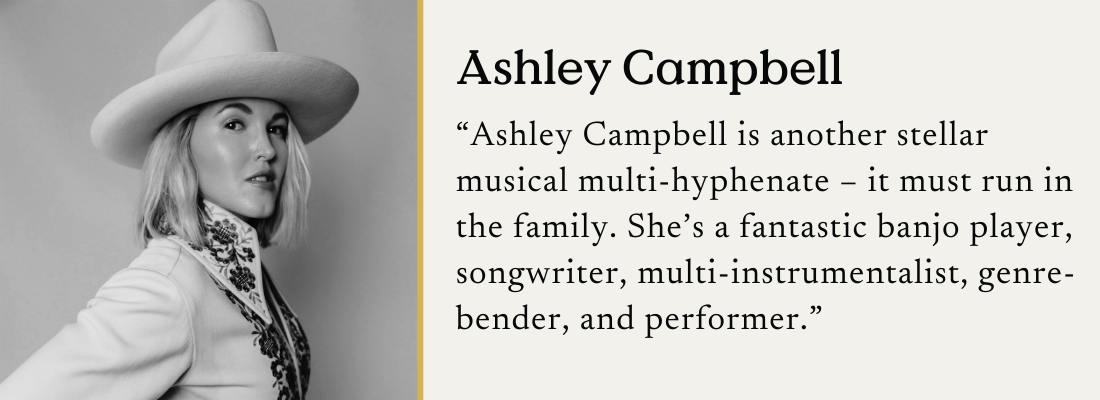
Ashley Campbell

An image of Ashley Campbell in a cowboy hat with the text: "Ashley Campbell is another stellar musical multi-hyphenate – it must run in the family. She's a fantastic banjo player, songwriter, multi-instrumentalist, genre-bender, and performer."


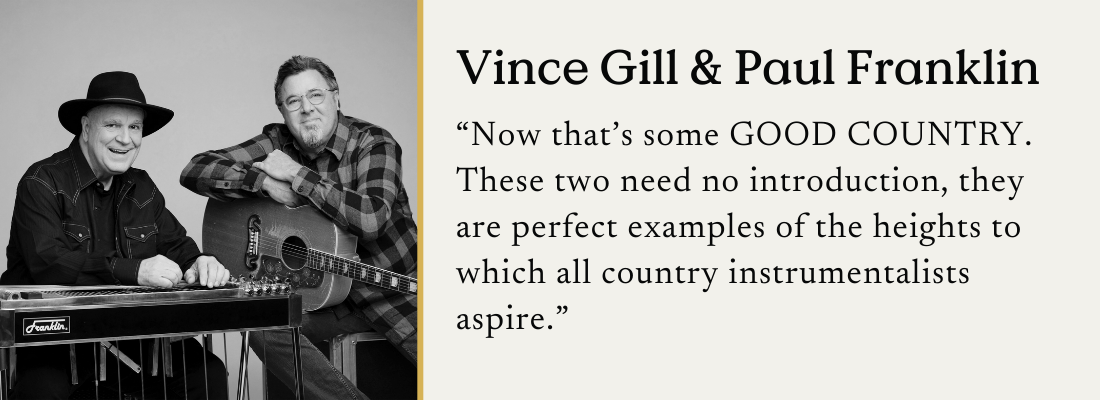
Vince Gill & Paul Franklin

An image of Vince Gill & Paul Franklin with their instruments, including the text: "Now that's some GOOD COUNTRY. These two need no introduction, they are perfect examples of the heights to which all country instrumentalists aspire."


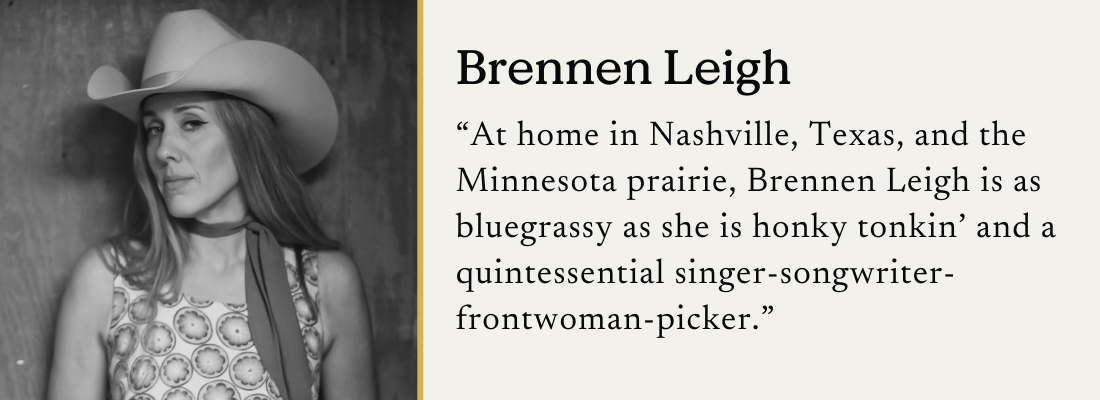
Brennen Leigh

Brennen Leigh in a cowboy hat and patterened sleeveless top, with the caption: "At home in Nashville, Texas, and the Minnesota prairie, Brennen Leigh is as bluegrassy as she is honky tonkin' and a quintessential singer-songwriter-frontwoman-picker."


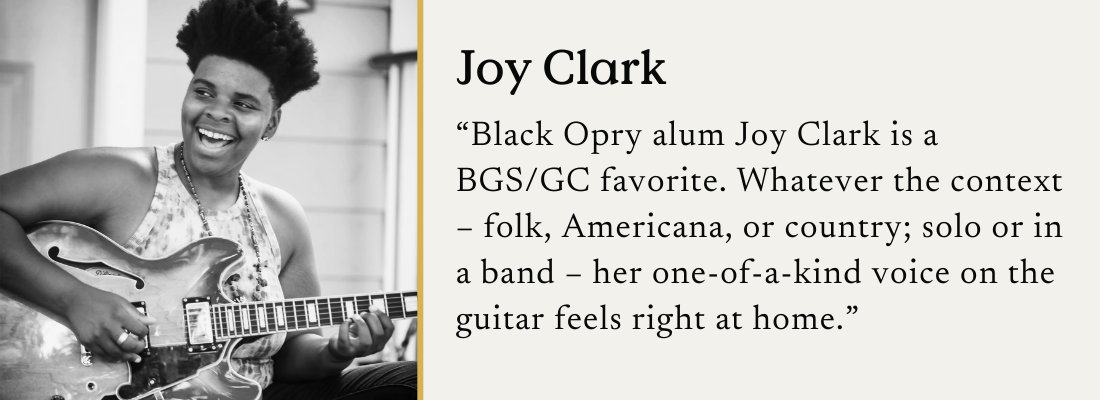
Joy Clark

Joy Clark is pictured with a hollow body electric guitar and the text: "Black Opry alum Joy Clark is a BGS/GC favorite. Whatever the context – folk, Americana, or country; solo or in a band – her one-of-a-kind voice on the guitar feels right at home.


Country Pickers, Center Stage

(Editor’s Note: Sign up here to receive Good Country issues when they launch, direct to your inbox.)

Double-, triple-, quadruple-threats are not uncommon in country music, not in the least. It’s a frequent occurrence, tripping over or into a country artist that’s a songwriter, vocalist, multi-instrumentalist, writer, thinker, and so much more. In fact, until more recent decades, wearing many hats was seen as a sort of prerequisite to making hillbilly music. After all, this is “just” country music, it’s got a wide and deep DIY tradition, and the folks who make it often have to also load in the gear, sell the merch, post on social media, and produce the albums, play the demos and scratch tracks, write the lyrics, and otherwise steer the creative ship.

Some of the most successful artists and most original voices in country music are perfect examples of how multifaceted skill sets translate directly to star power. You may not need to be a Telecaster shredder to make it onto the radio or you may not need to be able to pick like Mother Maybelle to make a living, but if you can back up your songs with mighty playing, it certainly translates with audiences.

From Chet Atkins, Dolly Parton, and Wanda Jackson to Charlie Daniels, Willie Nelson, and Bonnie Raitt, here are just a few legendary examples of hugely successful country artists who are or were excellent musicians and instrumentalists, too.

Chet Atkins

A record company executive, producer, and pioneer of the “Nashville Sound,” Chet Atkins was also a one-of-a-kind guitar picker, renowned across the globe for his unique style – which was inspired by Merle Travis. Atkins certainly made “Travis picking” his own, arguably eclipsing all of his predecessors and continuing to influence guitarists today. An inductee of the Country Music, Rock and Roll, and Musicians’ Halls of Fame, Atkins’ impact is hard to understate and his resume includes work with Dolly Parton, Elvis Presley, Hank Snow, Waylon Jennings, and countless others.

DeFord Bailey

One of the first superstars of the Grand Ole Opry, DeFord Bailey was a world-class harmonica player who was also the first Black performer on WSM’s fabled stage. Some sources also credit Bailey as being the first musician to record music in Nashville. However you approach his career and music, Bailey was a seismic presence in the earliest days of country. Born in 1899, Bailey faced constant racism, bigotry, and marginalization on the Opry, in Nashville, and as he traveled and performed. He passed away in 1982 and was posthumously inducted into the Country Music Hall of Fame in 2005.

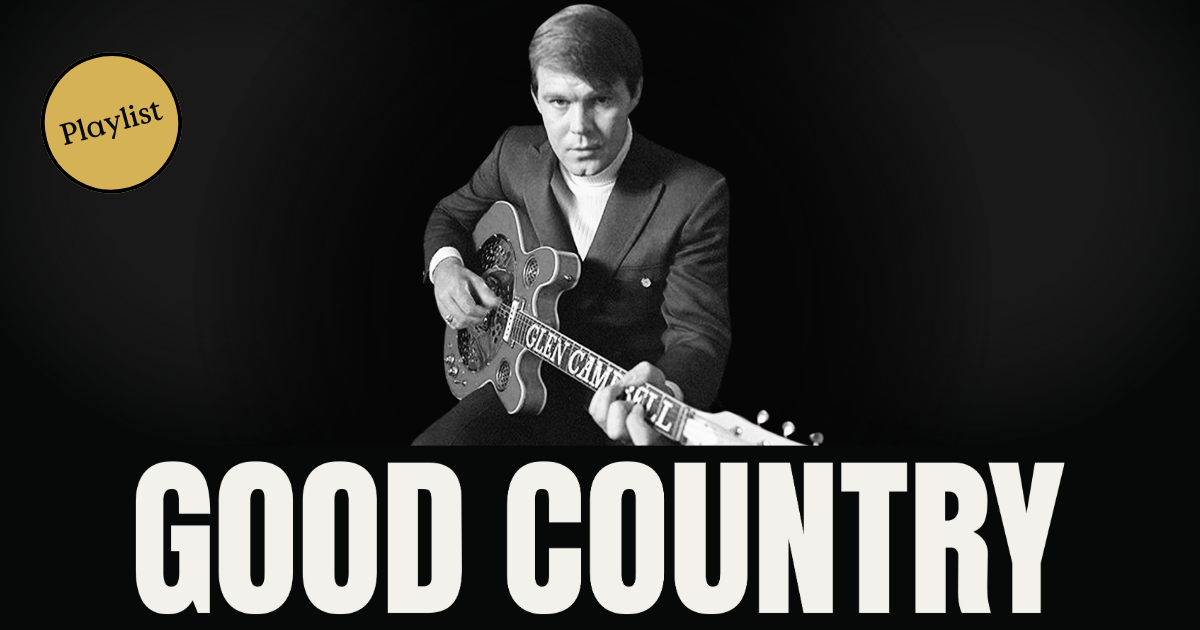
Glen Campbell

Even at the highest heights of Glen Campbell’s superstardom, he refused to let his superlative instrumental skill take a backseat to his roles as frontman, songwriter, Hollywood actor, TV star, and tabloid veteran. Campbell’s approach to country music as a true multi-hyphenate celebrity bridged generations, connecting the hardscrabble, DIY generations where multiple skills were necessary to make a living to the modern era, where he helped pave a way for famously multi-talented picker/singer/writers like Vince Gill and Brad Paisley to not be pigeonholed as one thing or the other.

Ray Charles

Any conversation around or collection of superlative country pickers and musicians would be glaringly incomplete without the inclusion of Ray Charles. His incursions and experimentations in country music are many and infamous. His 1962 album, Modern Sounds in Country and Western Music is routinely listed as one of the best country albums of all time. He’s worked with and performed with Willie Nelson, Merle Haggard, Ricky Skaggs, Travis Tritt, Johnny Cash, Glen Campbell, and many, many more. Plus, his country forays demonstrate a deep, holistic understanding of the genre. Charles is a quintessential country multi-hyphenate and country-soul in the modern era would feel especially lacking without his seminal contributions to that tradition.

Charlie Daniels

It’s hard not to wonder what young, hippie, “long-haired,” Vietnam War-opposing fiddler Charlie Daniels would have thought of his older self, and his more harebrained and often hateful beliefs later in life. But the controversial and outspoken musician, at all points of his career, was a picker’s picker. Over the course of his life he performed and recorded with Earl Scruggs, Bob Dylan, Leonard Cohen, and many more. But his chief contribution to American roots music may just be his fiery, unhinged fiddling on “The Devil Went Down to Georgia.” Just wander down Lower Broadway in Nashville on any given Saturday night to feel the impact of that particular show-stopper. In this clip, he chats and performs “Uncle Pen” with Scruggs and Del McCoury.

Vince Gill

That buttery voice, that stank-face inducing chicken pickin’, that high, lonesome sound – Vince Gill is all at once country and bluegrass, Nashville and Oklahoma, western swing and old-time fiddle. Whether with The Eagles, preeminent pedal steel guitarist Paul Franklin, the Time Jumpers, or so many other outfits, bands, and iterations, Gill is simply right at home. Because, at his core, he’s just a picker. He may play arenas, but he knows he belongs at 3rd & Lindsley or the Station Inn. Or Bluegrass Nights at the Ryman. A quintessential picker-singer-frontman, Gill continues to define the myriad ways country stars can maintain their selfhood and personality – instrumentally and otherwise – even in their wild successes.

Merle Haggard

Speaking of chicken pickin’, country’s most famous Okie was a shredder, too. A sad song, a glass of (misery and) gin, a Telecaster, and the Hag – that’s all we need, right there. Merle’s playing style, even at its most technical and impressive, was simple and down to earth. You could tell he cut his teeth playing bars, fairs, and honky tonks. You could almost hear him pulling himself up by his bootstraps as he played.

Wanda Jackson

The Queen of Rockabilly has been slaying rock and roll, hillbilly music, and the guitar for more than seventy years. In 2021 she released her final album, Encore, when she was 84 years old. It features her signature passion and fire – and performances by Elle King, Joan Jett, Angaleena Presley, and more. Jackson has been representing the vital contributions of women to rockabilly and rock and roll for her entire career, just as often commanding the stage with her growly, entrancing voice and her powerful right hand.

Willie Nelson

Who would Willie Nelson be without Trigger? Without a tasty, less-is-more, nylon-string guitar solo? For decades, Nashville, Music Row, and guitar players around the world have been emulating his particular sound as a guitarist – whether they know it or not. Sure, he’s a hit songwriter, a star and front-person, a collaborator of Snoop Dogg and Frank Sinatra, and a connoisseur of fine bud, but perhaps more than all of these accomplishments, Willie is an impeccable picker. He can hold his own with the best of the best, because he is the best of the best.

Brad Paisley

Brad Paisley’s fame crested at perhaps the perfect time for him in country music, combining a rip-roarin’ guitar playing style with a sound that was entirely trad while carrying touches of the bro country wave that was about to inundate the genre. As such, he was able to build a career on the diversity of his skill set, before Music Row and the power behind it began prioritizing music that didn’t need to be musical and voices that didn’t need to be singular. Luckily, Paisley is both those things and more, and despite the many eyebrow raising moments across his career, our faces more often show shock at his mind-bending skill as a guitarist than anything else.

Dolly Parton

How is it that Dolly Parton can play so many instruments so impeccably with those iconic acrylic nails!? Nowadays, you are just as likely to hear Dolly performing to a track – yes, she does lip sync and pantomime playing along with recordings – but don’t get it twisted, she absolutely can play a passel of instruments from her beloved “mountain music” traditions. She plays guitar, banjo, auto-harp, dulcimer, and has even been known to pick up a bedazzled saxophone from time to time – though we can’t guarantee she actually knows how to play that one, we’re still blown away.

And what about thatone viral video with Patti LaBellewhere they play their acrylics like washboards? Dolly can make music with just about any instrument.

Bonnie Raitt

How many people do you think enjoy Bonnie Raitt’s soulful blues and Southern rock sounds without knowing she’s also often the one playing the guitar solos and making that bottleneck slide weep? Raitt is a Grammy winning songwriter, a fantastic vocalist and song interpreter/collector, and – above all, in this writer’s opinion – a superb guitar picker, especially playing slide. She can hold her own with just about anyone, and she has. Her phrasing and use of melodic space demonstrates that she’s been honing her craft for her entire life. That taste can’t be taught, it has to be found. Boy, has she found it.

Marty Stuart

Marty Stuart’s long, fabulous, superlative career began with him filling the role of sideman for such luminaries as Lester Flatt, Johnny Cash, Vassar Clements, and Doc Watson. He plays guitar and mandolin, working up his chops as a youngster with pickers like Roland White as his mentors. When his solo career took off after his Columbia debut in the mid-eighties, his ear for fine picking remained present throughout his music – however far afield from those early bluegrass and country days he may have traveled, stylistically. Whether bringing in psychedelic surf sounds or Indigenous flavors of the American West, Stuart’s catalog of music centers virtuosity that’s never gratuitous. And his band, the Fabulous Superlatives, featuring crack guitarist Kenny Vaughan and multi-instrumentalist Chris Scruggs, represent a high level of picking prowess, too.

Tedeschi Trucks Band

By many measures, Derek Trucks is the world’s foremost living slide guitarist, but don’t overlook powerhouse vocalist and co-band leader, Susan Tedeschi in order to venerate Trucks! Both started playing as youngsters – Trucks when he was a kid and Tedeschi when she attended Berklee College of Music. These two are guitar and blues royalty, helming one of the most impactful modern blues and Southern rock orchestras on the planet. They’re consummate musicians, knowing just how to surround themselves by players who support and challenge, both. Even with their laundry list of personal accomplishments, together, Tedeschi & Trucks – who are also married – are so much greater than the sum of their parts.

Keith Urban

Keith Urban brings a scruffy, down to earth guitar playing style to his polished and glam mainstream country sound. Yes, even as far away as Australia, having instrumental chops means having country currency. When he moved to Nashville in the early ‘90s, with a few Australian radio hits and awards under his belt, he immediately found work as a side musician and co-writer in Music City. It wasn’t long until his star ascended stateside, too – and then, as quickly, around the world – bolstered by arena-ready guitar. Now readying his first album since 2020, Urban shows no signs of slowing down, with the music or the picking!


Photo of Glen Campbell courtesy of the artist.

Editor’s Note: Sign up here to receive Good Country issues when they launch, direct to your inbox.

Mississippi Multi-Hyphenates

(Editor’s Note: Sign up here to receive Good Country issues when they launch, direct to your inbox.)

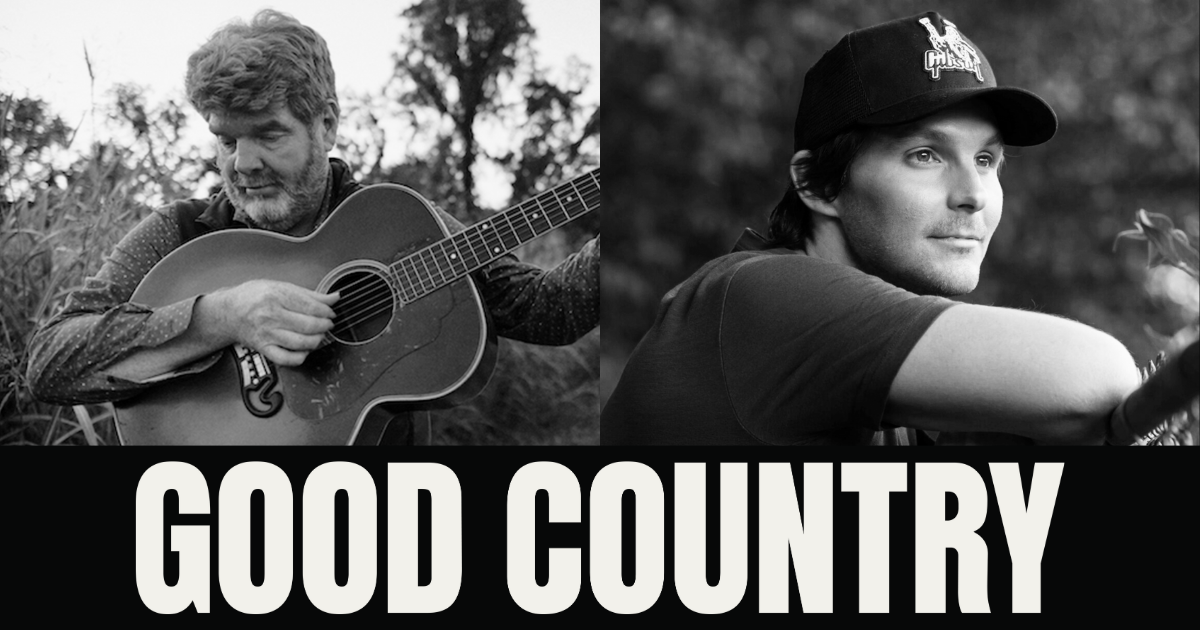
Mississippi is well-known for storytellers who craft in multiple mediums. From songwriter-guitar shredder-photographer Marty Stuart, to filmmaker-actor-business owner Morgan Freeman, to author-TV personality-business magnate Oprah Winfrey, the list of multi-hyphenates originating in the state is formidable. Hailing from different parts of the state and from different generations, Charlie Worsham and Mac McAnally are both known as consummate songwriters, instrumentalists, storytellers, singers, producers, and prolific performers. 

McAnally frequently jokes that spare time is the chief export of the state of Mississippi, and while hyperbolic, this does underline the fact that it takes time and space to become an expert music creator. Whether Mississippi afforded them both the opportunity to develop their crafts or whether their own obsessions forced them to carve pathways to success for themselves, we’ll never know. 

The way the pair speak about playing instruments is reminiscent of the youthful compulsion with which some people describe playing video games or sports. Both Worsham and McAnally started very young. By age 12, Worsham was on the Grand Ole Opry’s hallowed stage. McAnally grew up playing in bars and honky tonks on the Tennessee state line and started playing sessions in Muscle Shoals studios by his early teen years. 

In an industry rife with surly personalities, both McAnally and Worsham have reputations of kindness that precede them. It is no coincidence that both of their calendars are fully booked with tours, both solo and in support of other artists and acts, studio work, and various and sundry creative projects. Worsham’s most recent solo release, Compadres, is a who’s who of modern Nashville duet partners; he’s also a current member of Dierks Bentley’s band. McAnally has a fully packed solo tour schedule after losing his long-time collaborator and Coral Reefer Band leader, Jimmy Buffett, just last year and is currently collaborating with Disney on updating the Country Bear Jamboree. 

Good Country spoke with Worsham and McAnally from their homes in Nashville. Worsham was making Valentine’s Day memes, preparing for a run of solo shows, and balancing it all with a toddler in the house. McAnally was fresh off a week-long run of shows in Hawaii co-headlining with fellow multi-hyphenate, Jake Shimabukuro, and gearing up for a run of solo shows himself.

The discussion was a mutual admiration society as they are clearly big fans of each other’s work. They talked about their progressions to becoming multi-hyphenates, the benefits of being able to pivot, what their younger selves would think about their careers, and in a Substack-exclusive epilogue, they paid tribute to the fellow multi-hyphenate greats that we lost this past year, Jimmy Buffett and Toby Keith. 

As you both became multi-hyphenate creators, were there people in your pasts who either discouraged you from this or encouraged you towards this?

Mac McAnally: Well, I began just by being pretty much fascinated with everything. As far as the multi-instrumentalist part of it, that came from my dad, because he kept the books at an auction and he came home every week with some musical instrument, and it wouldn’t be connected to the last one that he brought. He was just fascinated with music, too, so he would trade up a saxophone one week. He’d have a clarinet the next week, a fiddle the next week. And then drums, which he was kind of glad I didn’t stick with. I was always interested and fascinated by what kind of sounds they made, whether I could help make them or not. 

When it became the studio application, I don’t wanna say I was discouraged, but my application in Muscle Shoals was that there wasn’t really a dedicated acoustic guitar player. There was a rhythm section at every studio. Broadway had a rhythm section. Fame had a rhythm section. Muscle Shoals Sound had a rhythm section. Wishbone, where I was working mainly, had a rhythm section. But none of them had a dedicated acoustic player, so it allowed me to go cross-pollinate those different rhythm sections and learn with different producers. 

I wouldn’t say I was discouraged, but initially, I was encouraged to be primarily an acoustic player. But I think just because I’m so fascinated with all of it, I was paying attention to all of those jobs; to what the engineers were doing, to what the producers were doing. And then, as I began to have opportunities to do some of those other jobs later on, I certainly believe that having done a few of them gave me more consideration or compassion for everybody that was doing them. I think that it is a good thing to go through life with respect for everybody, and how they’re doing their job. So the more jobs you’ve done, the more you can identify with individual situations of those jobs. 

Charlie Worsham: I couldn’t agree more on that last statement. You know, I always have felt that way, and all my favorite people in music are people who have worn different hats over the years, because they have that added perspective and appreciation. And I think it was similar for me, Mac. I was curious. I wasn’t really good at sports, so for me instead of picking up a new sport, it was picking up a new instrument. I was fortunate to have supportive parents who would help me acquire that instrument and acquire a connection to someone who could give me lessons, or a book or video tapes to learn from, or whatever, or just be playing along to records.

That was a big driver for me – and I don’t think anyone ever discouraged me in a similar way. It wasn’t discouragement so much as an encouragement in the other direction, which was because I was a bluegrass kid. There were a handful of people in the bluegrass world who sort of said, “Hey, if you want to be a fiddler, or if you want to be a banjo player, you need to dedicate everything you got to that one instrument,” and I figured out pretty early on I that I was too curious about the full picture, like you said. I wanted to get a little bit of understanding about it all, especially once I got the bug for recording equipment.

I had a chance to come to Nashville when I was 13 and make a bluegrass record. And this guy named Bobby Clark, who played mandolin with Mike Snider at the time, had a 2-inch tape machine in the guest bedroom. I walked in, saw that thing, and I was hooked. It was game over. And so, of course, my new mission became that I had this room full of instruments and I needed a way to record them. That’s what got me into being a songwriter. It all kind of snowballed, because I ran out of fiddle tunes to record. I was like, well, I need to write something now that I’m running out of material to record. By the time I got to Nashville, my motto in those early years was, “Say yes, ‘til you can afford to say no.”

I really wanted to be the big ol’ electric solo rippin’ guitar player. But everybody was an electric guitar player, like you said. A lot of times they needed an acoustic player or the band needed a harmony singer and someone who could play mandolin. So it was a way to always be able to pay the rent. And then, as I got more and more connections, and I guess my stock rose, then I could afford to choose a little bit more what I wanted to do specifically. Looking back, I wouldn’t have wanted to do it any other way, because I love being able to pivot.

I have a question for your 16-year-old selves. What hat do you wear today that you would be most surprised about?

CW: So if 16-year-old us popped into the future and said, “Wow, I didn’t see that coming?” Man! What’s yours, Mac?

MM: I probably didn’t understand what record production was, so it would have seriously surprised my 16-year-old self. A), That there was a job that was really what this is, and B), I wanted to do it. My 16-year-old self just wanted to be a guitar player in a band. At the time I was kind of having to be a piano player in the band, because I knew the notes on the piano and that pretty much disqualified me as a guitar player. Everybody played a little guitar in North Mississippi and almost nobody played the keyboard. If you had a keyboard, you were a keyboard player. I had a Fender Rhodes, which meant I was gonna load it by myself every night and blow my back out by the time I was 20.

I didn’t want to be a singer. I didn’t think I could sing. I wanted to be a guitar player, and I didn’t even want to be the guy playing the solo. I honestly think that’s probably what’s got me so many gigs in bands, because I would always just sit and play rhythm for two hours while somebody jammed over “Down By the River.” I was just trying to make it groove.

My adult self is fueled a little bit by my ignorant teenage self, and like you, I wasn’t necessarily inclined to sports, but I was a big enough guy that they expected me to play football in Belmont, Mississippi. I was blessed by the fact that Belmont, Mississippi did not own a helmet that would go on my head – even in junior high school. My head is huge, and the high school coach took me into the equipment room and said, “Son, see if you get any of these high school helmets on that head of yours. You’re a big boy, and we’d love to have you out on that field.” And I sat and mashed as hard as I could. It looked like Mr. Peanut. I went trotting out on the field, and the coach said, “No, that ain’t on, son.”  The face mask was still over my hairline, you know, so I didn’t get to play football. 

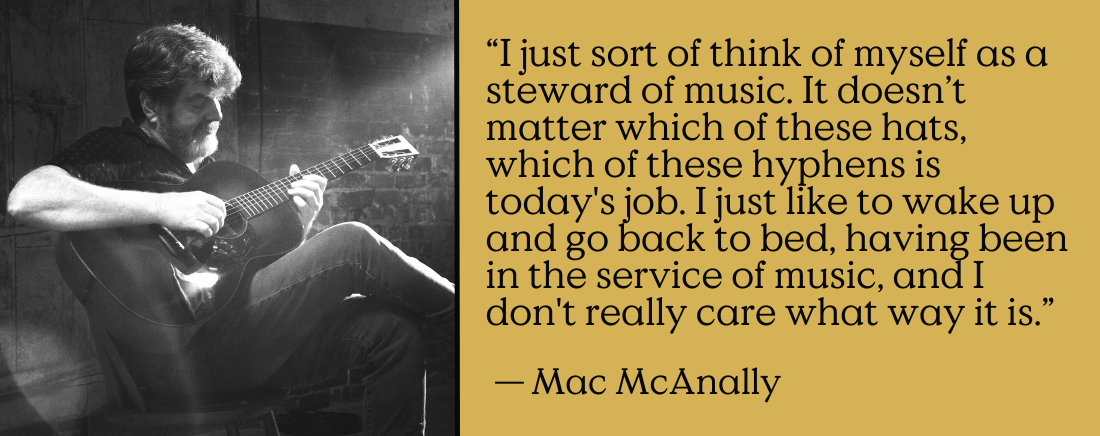
But a record producer, somebody that is in the service of the music and in the service of helping somebody’s dream come true, I didn’t understand what that job was. I don’t view myself as particularly good at it, but I relish the fact that I get to do that on occasion. I just sort of think of myself as a steward of music. It doesn’t matter which of these hats, which of these hyphens is today’s job. I just like to wake up and go back to bed, having been in the service of music, and I don’t really care what way it is.

CW: It’s interesting, because I think I’m closer in my mindset today, for the first time, to my 16-year-old self than I’ve been since then. In that, like you, I just wanted to be where the music was. I wanted to be involved. By my early twenties, there was a part of me that if I brought my 22-year-old self to the present he’d be going, “Where’s the building you own on Music Row? And where’s your wall full of plaques and all your 10 number ones?” I was pretty fired up by then to go out and change the world and be a star. But at 16, I just wanted to be around the music. I wanted to get to Nashville and be in those rooms. I think that the part of me that’s fueled by gratitude and excitement, that 16-year-old self, would be blown away by how much music I get to make and the people who I get to make it with. And the fact that the liner notes legends that I revered and learned from know me and that people like Vince Gill, who were my ultimate North Star and still are, that they would know me, and even respect what I do, and want me to be around to help.

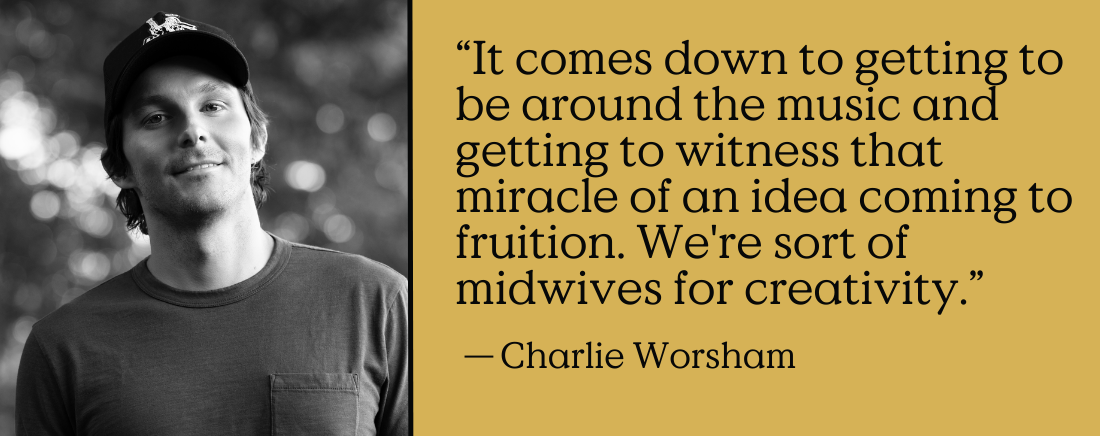
That early 20s self, who just thought I had to have the number ones and thought I had to have it a certain way, has given way to realizing that it’s unfolded in a much cooler way. Had I had that one hyphen, the guy in the spotlight, and if everything had gone the way I thought I wanted it to go, I would not have gotten the chance to do all these other things. Being a big star means that’s really all you have time to do. I’ve had the chance to be on the tour bus with Vince, with Old Crow Medicine Show, or right now with the Dierks Bentley gig. And I’m still hungry for certain things in the spotlight part of the hyphen, but it’s way cooler now – and I have so much more perspective and gratitude. It comes down to getting to be around the music and getting to witness that miracle of an idea coming to fruition. We’re sort of midwives for creativity. 

MM: That’s well said, and I almost bet as many of these multi-hyphenates as you talk to, they are gonna have that in common. I didn’t even desire to get a record deal, but I got a record deal when I was 19 and I had a record on the charts when I was 19. I was just really on a dare out there. I was like, “They’re gonna send me back home within 6 months.” I didn’t have any ambition to be in the middle of the stage at all. And still don’t. It’s Old Testament miracles, daisy-chained together, that I ever got a record deal, because I never even played my songs to my parents. I was so bashful.

But had the record deal been a big blow-up kind of deal, as you said, Charlie, it takes up all your time, and it also can shorten your career.

CW: So true.

MM: You can only take the hard spotlight for a few years and then people kinda want you out of their living room. 

Charlie, you’re actually a few decades closer to your 16-year-old self than I am. I still have the mindset of that, and I’m grateful every day, really, that I didn’t blow up when I was 19, because I didn’t have a clue how to handle that. It allowed me to watch a bunch more people, how they do it, how they make records to get to play along with a bunch of people, and, as you said so well, I got to play with heroes of mine that I would never dream to be even shaking hands with. All of that is partly a result of not being a big deal when I was 19. 

CW: We do it backward, right? Because I think when people hit about 40, that’s when they’re actually finally prepared to be a big star and they’re at their peak. That’s one of the best pieces of wisdom I’ve been fortunate to glean from Vince in particular, as the great mentor that he is. He’s making the best records he’s ever made now, and that’s my own hope, too, that every 10 years I can be proud of the music I’m making today, and I can look back at the music I made 10 years ago. I’ll still be proud, but also part of me cringes a little bit, because that means I’m growing. That’s the dream really.

MM: I couldn’t say it better. 

Can you both talk about what being from Mississippi means to you as music makers and in terms of how you developed as music creators?

CW: The older I get, the more I recognize that you can tell the whole story of America, and particularly American music, through the lens of Mississippi. All the really inspiring parts and all the really scary parts and tragic parts of it, too. It’s all wrapped up there, and somehow, it just seems like the folks who came out of Mississippi with music in their heart did just a bang-up job of documenting all of that.

I think back to when I first acquired an electric guitar. It took me a while. I had the banjo, I had the mandolin, and I was playing all the acoustic and bluegrass instruments. But I still wanted to be Vince Gill or Marty Stuart. And I finally got that electric, and it was B.B. King records that I used to learn first. The reason was I thought, “Oh, he didn’t play that many notes. I’ll figure all this out in no time. One weekend and I’ll be playing like B.B. King.” I very quickly learned, no. He might only be playing one note, but the way that he bends a note is like watching Mozart compose. 

Growing up [in Mississippi], there was that factor of seeing Marty Stuart on TV, knowing he grew up where I grew up. Same with B.B. King and Pops Staples. And same with you, Mac. I’ve always looked up to you, as well. If there’s anything I know about Mississippi, I know the only thing bigger than our mosquitoes are our stories. We really know how to tell a story.

MM: It is the truth. I got to run around with Jimmy Buffett for years, he was a Mississippi guy who had done well and I respected him. And the same with all of the blues guys. I wasn’t so much a student of blues, but I knew that the blues essentially came out of our delta. I appreciate and honor the fact that it came out of our soil there. 

Our home state is fiftieth in most things. We’re the poorest and the least educated, and the most overweight. We get the number 50 a lot. But I also think that the spirit of community– when everyone’s kind of close to one another because nobody’s that far apart. The poor and middle class are almost everybody. So you kinda know your situation and how everything you do affects everybody you know. It gives you a big picture from a small town. That is a big picture that applies to the whole world. There’s a ripple of good or bad, according to whether you’re doing good or bad, it goes out through your community. That, I think, informs our storytelling nature. 

If you had to boil it down today and you could only pick one thing that you do, what would you choose? 

CW: Today? There’s a part of me that wants to say, “Play mandolin,” as crazy as that sounds. It’s probably number six on the list of things I do. I learned over the years that being on tour and playing that two hours of music every night doesn’t necessarily mean that you keep your chops, because you’re playing the same two hours of material. And so over the last few years, I’ve sort of set a mission ahead of every tour: I want to pick a music nerd project – and last year it was mandolin. So I try to put in a couple of hours every day out on the road, learning solos I always wanted to learn, or just playing along, or jamming with the other guys in the band.

Since I’m sort of in the middle of a mandolin renaissance, there’s a part of me that would be relieved to just go, “Oh, that’s all I’m gonna do is just go get really good at mandolin right now.” Just because it’s what’s fueling my curiosity and my creativity. I also think it’d be impossible for me to not pick songwriting, especially off the heels of us talking about being from Mississippi and the fact that we’re kind of born into telling stories growing up there.

I process so much of my life and my feelings through writing songs. If I don’t get it out, it builds up and it comes out all sideways. One of my life’s mantras is “I ain’t right if I can’t write.”

But most days, to make a long story short, I just want to play guitar. You give me a guitar and I just want to play, and that’s fine by me. 

MM: You could just superimpose my voice on what Charlie said pretty much. I love everything that I do. But I just came home from working every day for a long time and literally, before I took my shoes off, I was playing a guitar. Like you said, Charlie, on tour you play what you already know how to play. You don’t really challenge yourself, because you’re spending two hours just trying to make that show be as good as you can. 

But I know that I still want to get better. At a certain age, you also want to maintain. I’ve got arthritis in my hands. I remember my grandmother, who was a musician as well, she crocheted all the time, and she crocheted things that we didn’t need, because she was afraid to stop. She was afraid her hands would lock up if she stopped, so we got sweaters and doilies and blankets and bedspreads. She was really just trying to keep her hands active. There’s an element of that in what I’m doing, too. But it also lights me up. I can’t imagine being separated from a guitar for any long period of time. That’s sort of terrifying.

CW: I brought a guitar on my honeymoon. That tells you how bad it is.

MM: Yeah, I was just all week last week with my buddy Jake Shimabukuro, and he’s blessed by the fact that his passion is the ukulele. He literally doesn’t go to dinner without it. Anytime we get in the van to ride from the airport to the hotel, I make a personal bet with myself whether we get to the first speed bump on the way out of the airport before he’s playing. He’s still just as fired up about it as ever, and that’s inspiring to a 66-year-old. And I hope there’s some 78-year-old that’s looking at me going, “Look at that idiot! He’s playing guitar before he sets his suitcase down!”

Even though you’re in different generations, the modern-day music business is so different from when either of you guys were coming up. And there’s a lot of extra hats that you guys are having to wear. Given that it is a different landscape, do you have advice for people coming up who aspire to do what you two do?

CW: Most of it is stuff I’m passing on secondhand. I’d love to start by saying I believe we are in the best time in my lifetime to go into this world of music with this multi-hyphenate mindset. My dad was a banker and my mom was a teacher, both professions that they held for decades. I grew up with this message from the world that this is kind of how it works, right? You get a job, and you keep that one job, and that’s what your job is. That has kind of gone away. I’m actually particularly grateful now that I never had a plan to stay on one track. Generally music, yes. But I was always prepared to pivot. Looking at where we are now, I think that the ability to pivot is going to be the most important skill someone could have, especially in music going into the future. 

I could give you tons of great advice from other people like, never be the best musician in your band, because then you don’t have anything to learn. You’re gonna learn more if you’re the weak link in that band. 

But in terms of personal advice that I can give, I think it’s figure out how to have a sustainable and not-so-toxic relationship with your public-facing platform, most of the time that’s going to be through whatever social media is happening. And you can count on that changing. It’s TikTok today. It’ll be something else in a couple of years. But I have found success in finding something that I know I can commit to, that I know I can be consistent with, and that isn’t going to just drain my soul. 

You know, the definition of integrity I keep is that the insides match the outside. If it’s guitar nerd stuff, I know there are other guitar nerds out there, and I know that’s something I can always put 10 minutes of my time into. I do believe that our presence online, in so many ways, is becoming the currency of the future. I mean, even for songwriters, even for session players. You know, if someone heard your name twenty years ago, they’d pick up the phone and call a musician they trust and say, “Hey, have you heard about this kid? What are they like? Have you worked with them?” And basically, that was your best shot at getting called by that person. But now they’re more likely to just search you online and look at your YouTube or your Instagram. Iif you’re there and you have a consistent presentation of who you are, they can get to know you really quickly. You also have to keep in mind that it isn’t everything. There are seasons in life where it’s okay to let that go and shut it down and focus on something else. But it is something you kind of have to at least keep on the back burner.

Ultimately, if it ain’t who you really are, it’s just not gonna work long term. And if there’s anything I’ve learned, it’s that if you can’t pull it off long term, it’s not worth doing. Like Mac said earlier in this conversation, being a big star isn’t made for thirty years. You’re not meant to stand in that bright of a light for a long time. The real trick is being able to run the full marathon. With social media, you have to really be careful not to lose your spirit in it.

MM: I have missed my opportunity to take some of your good advice, because social media came too late into my life. I’m probably not ever gonna be anybody that posts a lot, but I will say just in general, whatever the new thing is tomorrow, that was the old thing yesterday.

What I would say to folks starting out is to widen the lens, to dream wider. When you are a teenager, when you’re full of hormones, you tend to dream narrow. There’s so many rewarding aspects of what’s available to us that you don’t know about in your teen years and if you narrow your dreams down to where all bands suck except the one you like, you eliminate not only a lot of career opportunities, but you eliminate a whole bunch of joy that’s just sitting there waiting in the music.

There are just all sorts of payoffs to leaving everything as a possibility. And then, besides that, I would just say, in the context of all success, in all the ways that we measure it and quantify it, if you can just remember that the music is the reward. It is the primary reward. Everything else, as wonderful as everything else is, is secondary to the music itself. Nothing will ever compete with that to me. The things that I’ve gotten to be part of, or play on, or make a little bit better just because I was there, that is the most career reward that I’ll ever have, regardless of how much revenue I ever generate or how many people mistake me for the musician of the year, or whatever songwriting accolades that we get. All of those are great, but they’re secondary to the work. The work is the reward.

CW: That is incredibly profound and true. I relate to that every day these days. It calls to mind for me, too, that when we talk about awards, number ones, or getting big checks in the mail, you don’t often in those kinds of conversations hear people talk about respect. I’ve found that the work is the reward. But to feel the respect of people that you admire and look up to, respect is about as sweet a feeling as anything you could get. 

MM: It is awesome

CW: And it’s also kind of a hedge against hard seasons. If you operate with empathy and respect for others, one of the best ways to get respect is to respect other people in the first place.

MM: Absolutely

CW: It is a bit of insurance, I think, against hard times, because it means in your lowest point you got people you can call who are gonna shoot you straight, who are gonna help in any way they can. There are people with big mansions and number ones, and all the things who don’t necessarily have respect, and if I had to pick one or the other, I’d rather have the respect and not have all the rest than have all the rest, and not have respect.

MM: No, that’s correct. And there is no hard turn or dark corner that music can’t get you out of. Not necessarily financial and success-wise, but whatever headspace you’re in, music can turn bad into good. There aren’t many things that do that and we’re connected to one of those. The worst thing that ever happens to you can become a song that makes somebody else’s life better who is going through a similar thing. And they couldn’t articulate it. They couldn’t speak it. But we can help with that and help ourselves at the same time.


Read our Substack exclusive epilogue to Mac and Charlie’s conversation, including their chat about Jimmy Buffett’s recent passing, here.

Editor’s Note: Longtime BGS and GOOD COUNTRY contributor Erin McAnally is the daughter of Mac McAnally.

Sign up here to receive Good Country issues when they launch, direct to your inbox.

Photo Credit: Mac McAnally courtesy of the artist; Charlie Worsham by Jess Williams.
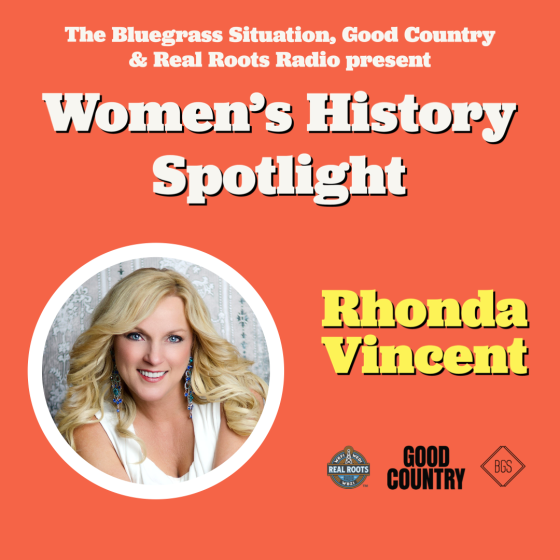
Women’s History Spotlight: Rhonda Vincent, Rissi Palmer, and More

March is Women’s History Month, and BGS, Good Country, and Real Roots Radio have partnered to highlight a variety of our favorite women in country, bluegrass, and roots music with our Women’s History Spotlight.

Each weekday in March at 11AM Eastern (8AM Pacific) on Real Roots Radio, host Daniel Mullins will be celebrating a powerful woman in roots music during the Women’s History Spotlight segment of The Daniel Mullins Midday Music Spectacular. You can listen to Real Roots Radio online 24/7 or via their FREE app for smartphones or tablets.

Then, we will have a Friday recap here on BGS featuring the artists highlighted throughout the previous week. No list is comprehensive, but we hope to feature some familiar favorites as well as some trailblazers whose music and impact might not be as familiar to you.

This week’s edition of our Women’s History Spotlight features musicians and artists like Jean Shepard, Rissi Palmer, Tammy Wynette, Rhonda Vincent, and Leona Williams. Tune in next week for more accomplished and impactful women of roots music!
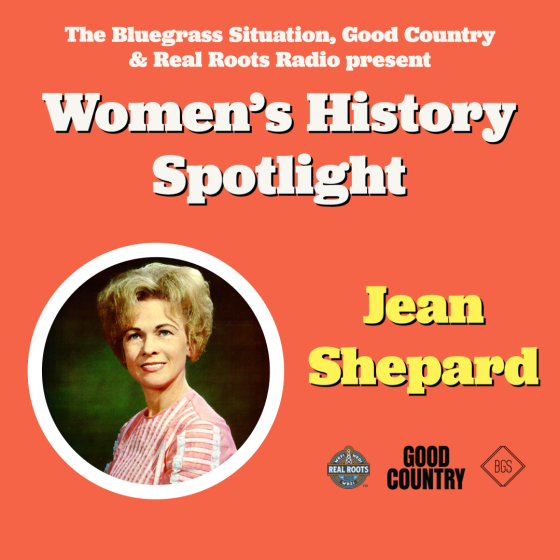
Jean Shepard

Jean Shepard was a boss. She was the first female country artist to have a million-selling single after World War II with the smash hit, “Dear John Letter” (featuring Ferlin Husky), which was also a Top 5 hit on the Billboard Pop charts. Her debut album, Songs of A Love Affair, may very well be country music’s first concept album – and certainly the first by a female country artist. Her feisty spirit came across in her honky-tonk sound.
Tall tales abound about Jean’s moxy, including her being the only artist on a big package tour who was brave enough to call out George Jones for his drunkenness embarrassing the entire troupe (supposedly, he sobered up quick rather than face her wrath again). Her straight ahead country sound can be heard on such hits as “Slippin’ Away,” “Second Fiddle (To An Old Guitar),” “A Satisfied Mind,” and more.

In a career spanning seven different decades, she was the first female Grand Ole Opry member to remain active for 60 consecutive years, and she was inducted into the Country Music Hall of Fame in 2011 (decades late according to some, myself included). Jean married fellow country star Hawkshaw Hawkins in 1960, and was widowed after only three years of marriage as Hawkshaw passed away in the same plane crash that took the lives of Patsy Cline and Cowboy Copas. She would remarry to Benny Birchfield (who appeared on countless classic recordings by The Osborne Brothers), and they would be a quintessential country couple until her passing in 2016.


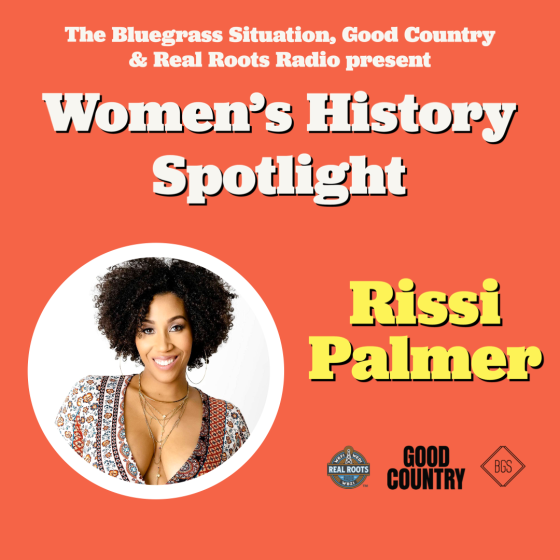
Rissi Palmer

In 2007, Rissi Palmer ended a 20 year drought, during which a woman African-American country artist had not appeared on the country charts. Her debut single, the catchy as heck “Country Girl,” marked the occasion and since then she has continued to be an advocate for Black women in country music spaces. The Pittsburgh native was largely influenced by Patsy Cline (whose “Leavin’ On Your Mind” was beautifully covered by Palmer on her debut album). For over a decade and a half, she has been a leader for Black voices in country, illuminating the stories of Black country artists — past and present — with her Apple Music Radio show, Color Me Country, named after the debut album of country trailblazer Linda Martell, who Beyoncé recently just overtook as the highest charting African-American woman on the Billboard country charts. Palmer’s most personal song, “You Were Here” has encouraged women worldwide, as it deals openly and honestly with miscarriage.

“This song was written for and to the child I lost at 3 months pregnant in the Summer of 2018, who would have been named Sage. I dedicate this song to anyone who has suffered a miscarriage or loss of any kind. You aren’t alone…” — Rissi Palmer


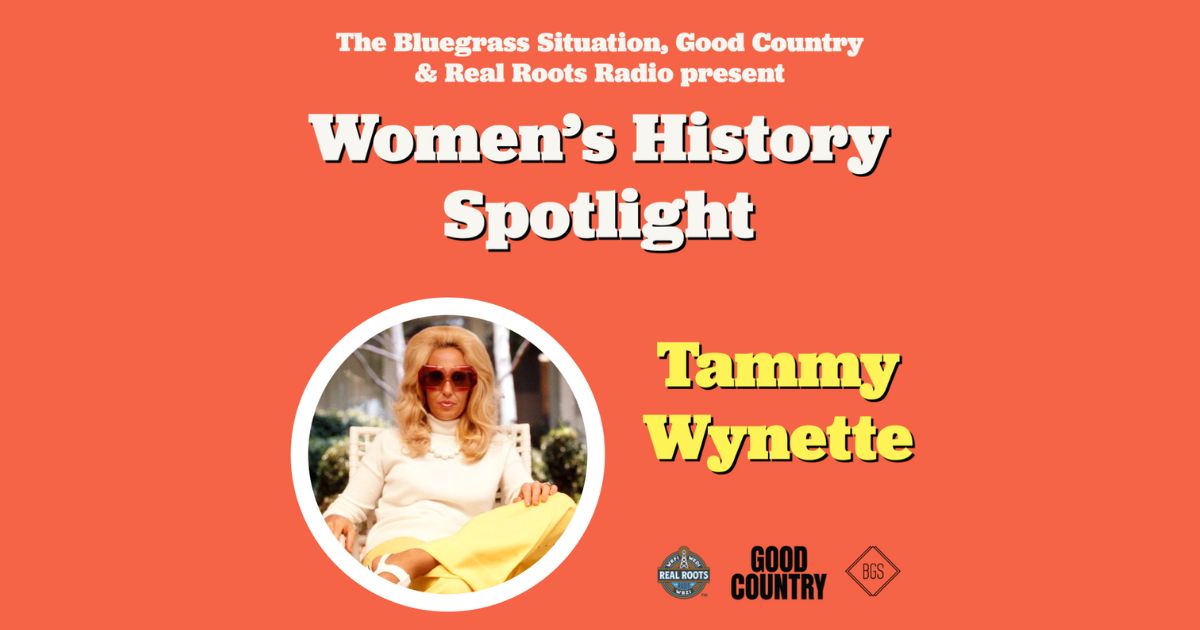
Tammy Wynette

Known was “The First Lady of Country Music,” Tammy Wynette’s life was filled with tragic twists and turns. Born Virginia Wynette Pugh in Itawamba County, Mississippi, she became a massive country music star shortly following the release of her debut single, “Apartment No. 9.” Her working relationship with producer Billy Sherrill (who came up with the stage name “Tammy” and paired it with her middle name, Wynette) was one of the most fruitful artist-producer pairings in the country music history, resulting in such massive hits as “Your Good Girl’s Gonna Go Bad,” “I Don’t Wanna Play House,” “D-I-V-O-R-C-E,” and dozens more.

Her signature song, “Stand By Your Man,” was viewed as an anti-feminist anthem when it was released. Topping the country charts and reaching the Top 20 on the Billboard Hot 100, the popularity of “Stand By Your Man” catapulted Wynette’s career to another level, including Grand Ole Opry membership and a slew of awards. Ironically, the “Stand By Your Man” singer’s personal life was tabloid fodder for decades, as she was married five times (including famously to George Jones, with whom she released some of the most iconic country duet hits of all time).

Tragically, the public stigma of having been divorced four times was a contributing factor to her not leaving her last husband, George Richey. Wynette’s toxic relationship with Richey resulted in her (presumably) faking her own kidnapping to cover up signs of abuse, expedited her decline into drug abuse, and ended with her mysterious passing at only 55 years of age. She was inducted into the Country Music Hall of Fame in 1998, the same year as her passing.


Rhonda Vincent

The undisputed “Queen of Bluegrass,” Rhonda Vincent grew up performing with her family band, The Sally Mountain Show. This Missouri family band performed frequently at Silver Dollar City and was a popular bluegrass festival act, also including Rhonda’s younger brother, Darrin Vincent of Dailey & Vincent. In the 1980s, she would be hired by country music legend Jim Ed Brown. (When she went on the road with Jim Ed Brown, The Sally Mountain Show hired a young Illinois girl named Alison Krauss to fill Rhonda’s shows for their summer festival schedule.)

Rhonda would release some solo bluegrass projects for Rebel Records in the early 1990s before signing a country deal with Giant Records. Her country records in the mid-’90s are phenomenal, but unfortunately for Rhonda, the fickle winds of music industry trends shifted to a more pop sound at the same time she was releasing these great traditional country records, resulting in a lack of commercial success. As the new millennium dawned, Rhonda Vincent triumphantly returned to bluegrass in 2000 with the release of Back Home Again on Rounder Records, and hasn’t looked back.

The All-American Bluegrass Girl has certainly been one of the genre’s biggest stars for the last few decades, with no signs of slowing down, winning her first Grammy and joining the Grand Ole Opry in recent years. She is also a popular collaboration partner both inside and outside of bluegrass, including recordings with Gene Watson, Daryle Singletary, Cody Johnson, Dolly Parton, Bobby Osborne, and many more. Her influence is felt all over bluegrass — heck, one of the most popular bluegrass Instagram accounts, Bluegrass Barbie, is practically a Rhonda Vincent stan account, and we’re here for it.

Bluegrass fans are blessed to live in a time where this future member of the Bluegrass Music Hall of Fame is still in her prime – enjoy it because your future great-grandchildren will want to hear about it someday.

See if you can recognize the future superstar that makes a brief appearance in this 2003 Rhonda Vincent music video.


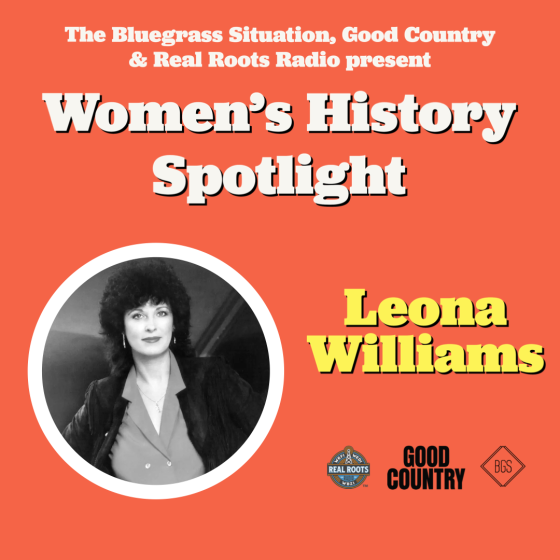
Leona Williams

Another Missouri gal, Leona Williams is one of the best traditional country singers with whom you may not be as familiar. She has been making country music for over 65 years! Early in her career, she played bass and sang backup on the road with Loretta Lynn, before releasing her own solo records. She had modest success with “Country Girl With Hot Pants On” and “Once More,” but her signature song, the now classic, “Yes Ma’am, He Found Me In A Honky Tonk,” never charted.

Leona also became the first female country artist to release a live prison album with 1976’s San Quentin’s First Lady. Many may remember Leona for her duet recordings with Merle Haggard (like “The Bull and The Beaver”); they were married for five years. Leona penned some major hits for her ex-husband, like “Some Day When Things Are Good” and “You Take Me For Granted,” the latter of which she supposedly wrote about her rocky relationship with The Hag and sang to him to express how she was feeling. She also wrote hits for Connie Smith and Loretta Lynn. Leona continues to record and tour. Having seen her in concert just a few years ago, be sure to catch her live show if you are in need of pure country music from a living legend!

Last week we included a bonus video of Jessie the Yodeling Cowgirl. No beloved Pixar characters are included this week, but hopefully Tammy Wynette’s guest appearance with The KLF in the hit music video, “Justified & Ancient,” will suffice:


You Gotta Hear This: New Music From Wood Box Heroes, Ashby Frank, and More

This week, our premiere round-up is chock-full of amazing new music. From a Chris Stapleton co-write from bluegrass-meets-country supergroup Wood Box Heroes to a Terry Baucom tribute from bluegrasser Ashby Frank, plus songs from Americana singer-songwriter Jack McKeon, guitarist Yann Falquet, and Asheville’s Holler Choir.

Plus, don’t miss exclusive premieres from banjo magnates Alison Brown and Steve Martin, and a posthumous release from Chick Corea with his friend and collaborator Béla Fleck.

It’s all right here on BGS – and really, You Gotta Hear This!

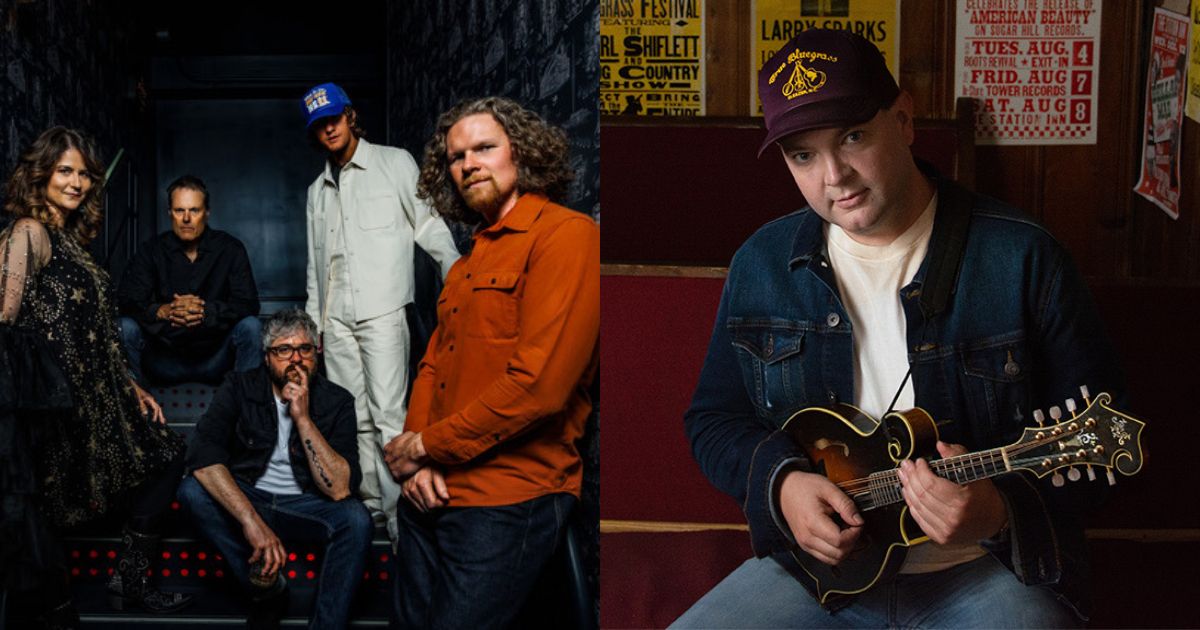
Wood Box Heroes, “Cannonball”

Artist: Wood Box Heroes
Hometown: Nashville, Tennessee
Song: “Cannonball”
Album: 444
Release Date: March 15, 2024 (single)

In Their Words: “‘Cannonball’ is a song I wrote a while back with Chris Stapleton. I was trying to figure out a new way to talk about the ‘love and war/love as war/love is war’ theme and of course, Chris helped to bring that to life so well. I never made a demo, just the voice memo. Hearing Chris’s amazing singing on it could be a daunting thing for lots of artists to get past, but I knew Josh Martin could handle it, so I pitched it to the Heroes for this project. It took a while to sink in with them, but I’m beyond thrilled with the treatment they gave it!” – Barry Bales

Track Credits:

Barry Bales – upright bass, vocals
Jenee Fleenor – fiddle, vocals
Josh Martin – guitar, vocals
Matt Menefee – banjo
Seth Taylor – mandolin, vocals

Produced by Wood Box Heroes.
Recorded by Brandon Bell at Sound Emporium; Nashville, Tennessee.
Mixed by Brandon Bell.
Mastered by Eric Conn at Independent Mastering; Nashville, Tennessee.


Ashby Frank, “Knee Deep in Bluegrass”

Artist: Ashby Frank
Hometown: Nashville, Tennessee
Song: “Knee Deep In Bluegrass”
Release Date: March 15, 2024
Label: Mountain Home Music Company

In Their Words: “‘Knee Deep in Bluegrass’ is a tune written and originally recorded by my friend and former Mashville Brigade bandmate, banjo legend Terry Baucom. Sadly, Terry passed away in December. When we recently gathered to start recording my next album, it happened to be the day after his funeral. All of us had Bauc and his wife, Cindy, on our minds. Remembering this song, I messaged Cindy, asking if it would be ok to record a slightly modified version of ‘Knee Deep’ as a tribute to him and she graciously approved. Bauc was performing at the first festival I ever attended in Denton, NC. His style and persona has been an inspiration to me ever since that first meeting. I think Matt Menefee, Travis Anderson, Jim Van Cleve, Seth Taylor, and Tony Creasman really nailed their parts on the tune. I hope our recording brings back fond memories for anyone who knew Terry and will honor him as he so richly deserves.” – Ashby Frank


Jack McKeon, “Last Slice of Heaven”

Artist: Jack McKeon
Hometown: Chatham, New York; currently residing in Nashville, Tennessee
Song: “Last Slice of Heaven”
Album: Talking to Strangers
Release Date: June 21, 2024

In Their Words: “I was working at a house in Williamson County, on a stretch of road that is flanked by two separate but equally cookie-cutter developments. Across from this house and squarely in the middle of all this new, was a vacant field, a decrepit barn festering in the corner. At some point that field must have meant food, crops, and a living. Now it seems to only conjure the image of an older person sitting on a potential windfall when they sell out to a developer. But with all that money comes the death of the beautiful things that made that life worth living. My boss noticed me looking at this field and facetiously said, ‘Oh, didn’t you know? These developments all come with their own complimentary field to look at.’ I wrote this song to give a voice to the person I imagined holding on to this ‘Last Slice of Heaven,’ a character at odds with the transformation around him who’s fighting to hold on to his own identity in spite of ‘a world that’s always changing what it means to be the same.'” – Jack McKeon

Track Credits:

Jack McKeon – Guitar/vocal
Ashby Frank – Mandolin/harmony vocal
Vickie Vaughn – Upright bass/harmony vocal
Christian Sedelmyer – Fiddle
Justin Moses – Banjo
Engineered by Sean Sullivan at the Tractor Shed Goodlettsville, Tennessee.
Mastered by Justin Perkins at Mystery Room Mastering.

Video Credit: Brooke Stevens


Yann Falquet, “Courage”

Artist: Yann Falquet
Hometown: Brattleboro, Vermont
Song: “Courage”
Album: Les secrets du ciel
Release Date: March 15, 2024 (single); May 3, 2024 (album)

In Their Words: “I moved from Québec to New England a couple of years ago. My instrumental background was compatible with the fiddle styles I encountered here (Appalachian, Irish, Scottish, etc.), but I quickly realized that I had to rethink the way I approached songs. Back in French Canada, traditional singers often perform unaccompanied, and rely heavily on others in the room to participate in the ‘response’ part of call-and-response songs. For this project, I began reframing these songs into a more English or American ‘folk singer’ format, and had a lot of fun coming up with interesting guitar parts in DADGAD tuning. I then collaborated with producer Quinn Bachand and a bunch of fantastic musicians to add extra musical layers to the song.

“‘Courage’ comes from the repertoire of the Voyageur folks who paddled across North America, using songs to keep paddling in rhythm. It tells the story of a young soldier who abandons war for the pursuit of love, knowing well the consequences if he gets caught.” – Yann Falquet

Track Credits:

Yann Falquet – Guitar, voice
Julia Friend – Voice
Keith Murphy – Pump organ
Trent Freeman – Violin
Quinn Bachand – Violin, bass pedal

Quinn Bachand – Producer, engineer
Charles-Émile Beaudin – Mixing engineer
Philip Shaw Bova – Masterin engineer


Holler Choir, “Hamlet Blues”

Artist: Holler Choir
Hometown: Asheville, North Carolina
Song: “Hamlet Blues”
Album: Songs Before They Write Themselves
Release Date: January 12, 2024

In Their Words: “I can’t speak to everyone else’s tastes, but for the purpose of songs that I perform and have written, ‘Hamlet Blues’ is my most timeless song. I know this because 10 years after having written it, it’s just now seeing a definitive release, and it feels no less personally relevant than the day I wrote it.

“There’s a very intentional juxtaposition between the carefree energy of the music and the existential crisis portrayed in the lyrics. It’s a cognitive dissonance that I’ve experienced in different settings many times in life, and I chose to channel that energy into this song. There’s a smiling nihilism that can be found at any college bar. Kids drinking to excess, with little regard for what’s happening tomorrow. Seemingly happy people, sitting on a fault line that is long overdue. I wanted to capture the dread that was the humming drone in my head beneath whatever pop song was blaring over the bar speakers at the time. I don’t find this sentiment any less relevant for bars I go into as an adult.” – Clint Roberts


Alison Brown & Steve Martin, “Bluegrass Radio”

Artist: Alison Brown & Steve Martin
Hometown: La Jolla, California (Alison); Waco, Texas (Steve)
Song: “Bluegrass Radio”
Release Date: March 15, 2024
Label: Compass Records

In Their Words: “This little tune brings a ton of joy to me. Alison’s playing is flawless, and my singing is flaw-full.” – Steve Martin

Read more here.


Chick Corea & Béla Fleck, “Remembrance”

Artist: Chick Corea & Béla Fleck
Hometown: Nashville, Tennessee
Song: “Remembrance”
Album: Remembrance
Release Date: May 10, 2024
Label: Béla Fleck Productions (Thirty Tigers)

In Their Words: “’Remembrance’ is one of the last pieces of music Chick ever recorded. It’s just one of those perfect Chick Corea tunes. It sounds to me like a New Orleans funeral march, even though it has a Latin component, like everything he did tended to.” – Béla Fleck

More here.


Photo Credits: Wood Box Heroes by Eric Ahlgrim; Ashby Frank by Melissa DuPuy

BGS Bytes: Your Roots Music Social Media Round-Up

Welcome to BGS Bytes! Our shiny new column has one goal: to bust – or enable – your social media scrolling habit by rounding up all the most important bluegrass and roots music related posts in one place. Give your thumbs a break — we’ll post all the hot goss and goings-on every month.

In no particular order, let’s take a look back at everything that happened in bluegrass social circles in February!

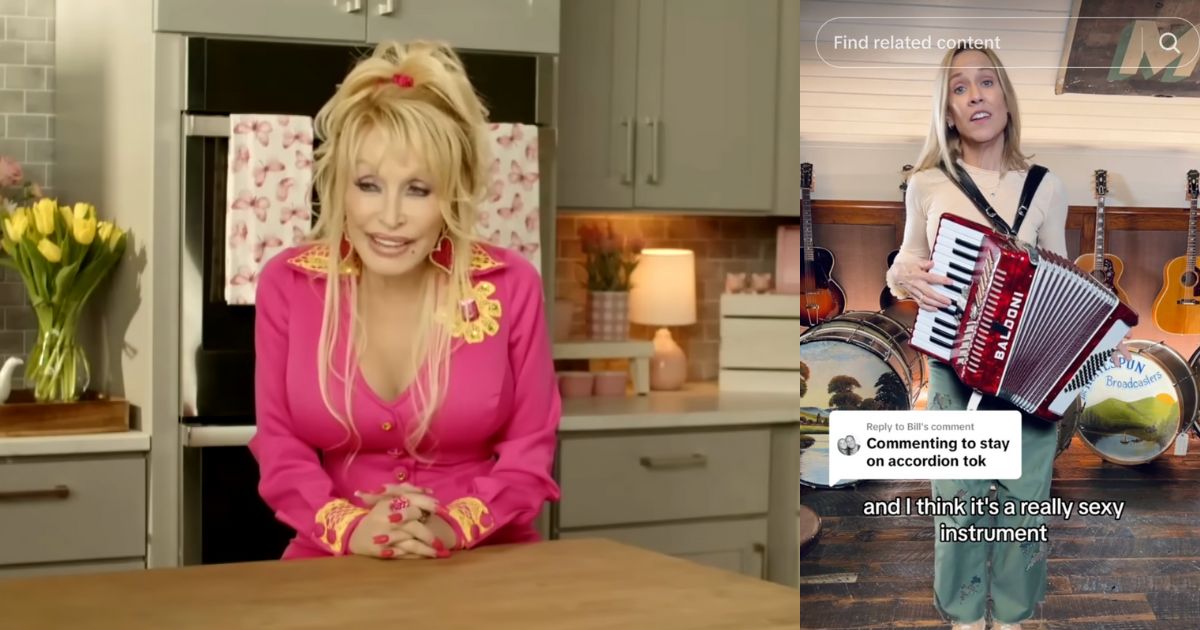
Dolly Parton Responded Gracefully to Elle King’s Grand Ole Opry Debacle

In a positive conclusion to a social media fiasco that lit up news feeds, Dolly Parton responded to Elle King’s controversial January Grand Ole Opry performance. The “Ex’s & Oh’s” singer appeared on the Opry stage January 19 as part of birthday celebration for Parton, who was turning 78. King, however, was quite inebriated and made comments that left some ticket holders and several social media commenters upset at her behavior. In February, though, Parton did an interview with E! News and encouraged everyone to show King support instead of condescension.

“Elle King is a doll,” Parton told the news outlet. “I called her, and I said, ‘You know, there are many F-words. Why don’t we use the right one? Forgiveness, friends, forget it.’ She feels worse about it than anybody. She’s going through some hard times, and I think she just had a little too much to drink and then that just hit her. So, we need to get over that, because she’s a great artist and a great person.”

If only everybody online was as gracious!


Sheryl Crow Plays Her Songs on TikTok Following UMG’s Decision to Pull Their Catalog

@sherylcrow

Anyone else have a Favorite Mistake? 🙋🏼‍♀️ #fyp #favoritemistake #acoustic #acousticcovers

♬ original sound – Sheryl Crow

It’s probably nobody’s favorite mistake — we’re talking about Universal Music Group choosing to remove many of their most popular tunes from TikTok, which is arguably one of the most important marketing tools for musicians currently. Understandably, many artists were upset. Some began to record live performances of their music to share on the app so fans can go on recording videos with their “sounds.”

Sheryl Crow joined the crowd making their songs available in other formats, and the “Soak Up the Sun” singer recorded acoustic versions of songs like “My Favorite Mistake” and “Strong Enough.” Many of the tunes she picked are requests, including “The First Cut is the Deepest.”


After the Tennessee Legislature Refused to Acknowledge Allison Russell, Celebs Voiced Support Online

In February, Tennessee State Rep. Justin Jones proposed resolutions to the Tennessee General Assembly designed to honor both Paramore — who won a Grammy for Best Rock Album and Best Alternative Music Performance — and Allison Russell, who took home her first Grammy for Best Americana Performance. Unfortunately, Tennessee House Republicans allowed the resolution honoring Paramore to pass, but blocked the similar measure honoring Russell, who is Black and won for her song, “Eve Was Black.”

Russell took to Twitter (now known as X) to respond:


“I take as a compliment,” Russell tweeted. “Their bigotry, sadly, is on relentless display. We have a chance this year to make a real change in TN.”

The clearly prejudiced act was at least answered online by celebrity support. Brandi Carlile posted on Twitter that the TN GOP is “scared of” Russell.

Paramore’s Hayley Williams also responded, taking the TN GOP on in media interviews.


Holly G of Black Opry Celebrated Beyoncé’s ‘Act II’

Highlighting everyone from Frankie Staton to Rhiannon Giddens, Miko Marks to The Kentucky Gentlemen, Black Opry co-founder Holly G recently took us all back to school. Class was in session on Twitter as Holly counted down some prolific Black country artists to celebrate Beyoncé’s upcoming album, Act II: Cowboy Carter.


Everyone and Their Mamas Are Line-Dancin’ on TikTok

Speaking of Beyoncé, her new single, “Texas Hold ‘Em,” is only one of many, many popular line dance tunes on TikTok right now. Whether it’s a duo gettin’ down on the pavement outside, or a group boot-stompin’ in a downtown Broadway bar, line dancing is officially cool again!

@lavbbe

This aint Texas 🤠 DC: Us ( me & @jacob.fj ) 🤎

♬ TEXAS HOLD ‘EM – Beyoncé


Willow Avalon Went Viral for New Single

Willow Avalon, an up-and-coming country singer-songwriter, went viral for debuting her new single, “Getting Rich Going Broke,” on TikTok. This tune also comes with a line dance — we told y’all this trend is on fire!

@willowavalon

Do y’all actually want this? #countrymusic #lorettalynn #dollyparton #oldcountry

♬ Getting Rich Going Broke – Willow Avalon


The Super Bowl Got Country-fied!

This year’s Super Bowl halftime show might’ve been dominated by Usher, but our favorite bits of the biggest sports event of the year happened before the game even began. Rapper Post Malone donned a clearly Western-inspired outfit and sang a stunning, acoustic version of “America the Beautiful.”

@postmalone

America The Beautiful 🇺🇸 #SuperBowl #SBLVIII

♬ original sound – Post Malone

And we’d be remiss to leave out Reba McEntire’s excellent version of “The Star Spangled Banner”!

@nfl

Reba McEntire performs the Star Spangled Banner 🇺🇸 #rebamcentire #nfl #superbowl

♬ original sound – NFL


Marcus King Celebrated Molly Tuttle’s Grammy Win With a Sharp Cover on TikTok

Last, but most certainly not least, alt-country singer-songwriter Marcus King gave an excellent cover performance of “Down Home Dispensary” online to celebrate Molly Tuttle‘s Grammy win. Tuttle even responded, commenting that he “crushed” the song — and we agree!

@marcusking

@MollyTuttle congrats on bringing home the Grammy for best bluegrass album! Well deserved!

♬ original sound – Marcus King

So, a lot happened in January, February, and the beginnings of March! We’ll continue rounding up the hottest social media conversations and goings-on for BGS readers every month — let us know on social media and tag us in a post if you think something deserves to make the list!