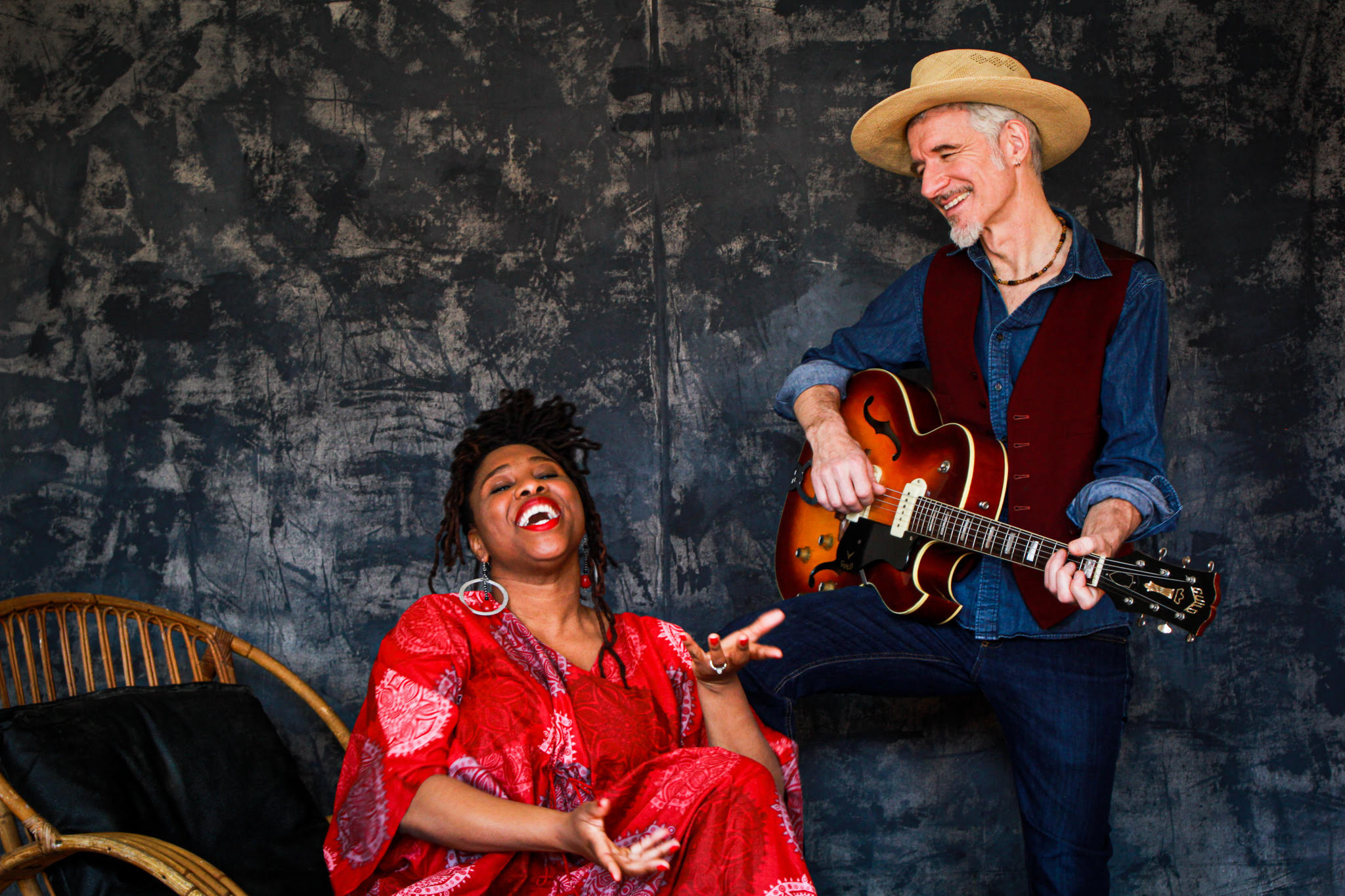
LISTEN: Rod Gator, “Out Here in Echo Park”

Artist: Rod Gator (aka Rod Melancon)
Hometown: Wright, Louisiana
Song: “Out Here in Echo Park”
Album: For Louisiana
Release Date: September 17, 2021
Label: Blue Élan Records

In Their Words: “I wrote ‘Out Here in Echo Park’ during my last year living in Echo Park. Every evening I’d walk five miles down to the L.A. River and sit along the bank. It was one of the most peaceful times of my life. During the walk I’d hear Spanish music playing from windows and watch the sun slowly set. East L.A. means a lot to me. It’s where I go in my mind when I feel overwhelmed. I picture myself sitting along the L.A. River. I miss Echo Park everyday. It’s the place where I finally began to feel comfortable in my own skin.” — Rod Gator


Photo credit: David McClister

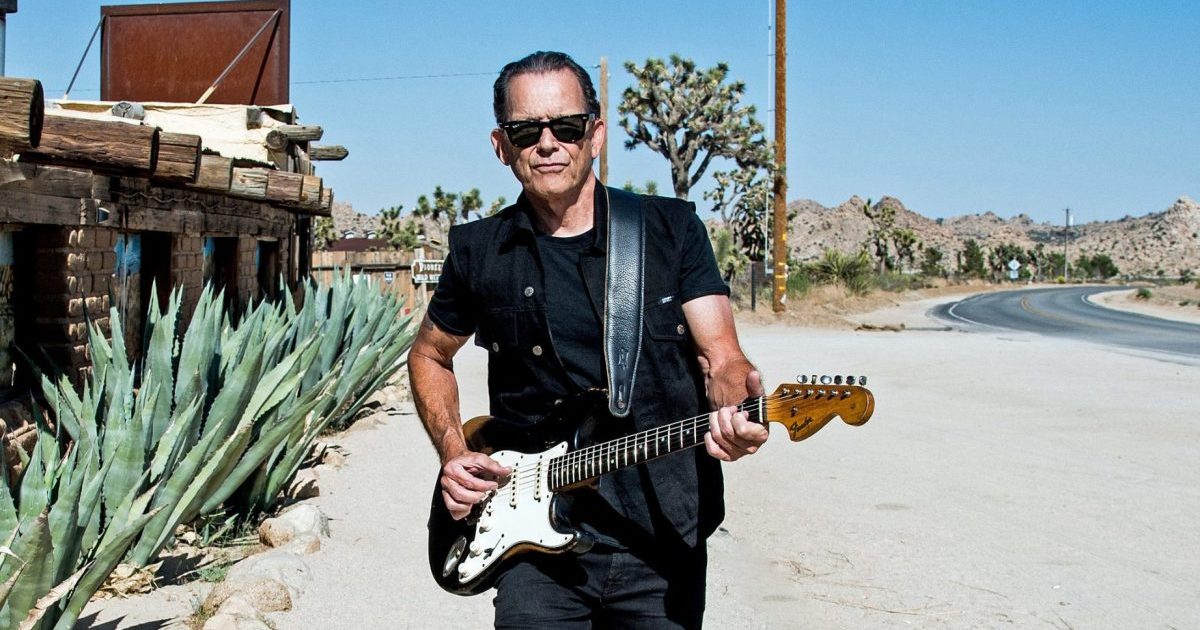
LISTEN: Tommy Castro, “I Caught a Break”

Artist: Tommy Castro
Hometown: San Jose, California
Song: “I Caught a Break”
Album: Tommy Castro Presents A Bluesman Came To Town
Release Date: September 17, 2021
Label: Alligator Records

In Their Words: “‘I Caught a Break’ is part of the story that is A Bluesman Came to Town. It came out of a writing session with Tom Hambridge and Richard Fleming. After much hard work and few setbacks the young man in the story finally has some success. It’s a classic rock ‘n’ roll tune. I can hear the influence of cats like Chuck Berry, Keith Richards, and maybe even a little Jimmy Vaughan on this. This was a fun track to play guitar and sing. It comes along in the story right when we needed a shift in tempo and groove.” — Tommy Castro


Photo credit: Victoria Smith

The BGS Radio Hour – Episode 218

Welcome to the BGS Radio Hour! Since 2017, this weekly radio show and podcast has been a recap of all the great music, new and old, featured on the digital pages of BGS. This week we have a vertigo-inducing bluegrass whirlwind from our Artist of the Month Béla Fleck and an all-star lineup, we take a listen to some energetic and ethereal — yet totally traditional — bluegrass banjo from Jeremy Stephens, we dive into the latest from Watchhouse’s new release, and much more!

APPLE PODCASTS, SPOTIFY

Watchhouse – “New Star”

We’ve watched Andrew Marlin and Emily Frantz go through quite a few changes throughout their career in music, but one of the most joyful to watch has been their journey as parents. Even with COVID-19 halting touring for more than a year, their young daughter Ruby has already been to 34 U.S. states and nine different countries!

After their pandemic hiatus, the family of three is back on the road again as Watchhouse, the duo formerly known as Mandolin Orange, touring their new self-titled album. And Ruby, now a toddler, has perhaps transitioned back to road life even more smoothly than her father, who admits he’s still “struggling to find my sea legs.” For a recent Cover Story we spoke to Marlin about their name change, their new album, creativity through the pandemic, parenthood, and oh so much more.

Bobby & Teddi Cyrus and Billy Ray Cyrus – “Roll That Rock”

Husband and wife duo Teddi & Bobby Cyrus are joined by Bobby’s cousin, Billy Ray Cyrus, on “Roll That Rock,” a grooving bluegrass gospel song that they wrote together. According to Billy Ray, “When I started singing ‘Roll That Rock’ my inner spirit said Bobby Cyrus will know exactly what to do with this. He did. He wrote the gospel truth and then sang the daylights out of it with Teddi and a killer bluegrass band reminiscent of Earl Scruggs and Bill Monroe.”

AJ Lee & Blue Summit – “Monongah Mine”

A new favorite of BGS, California-based bluegrass band AJ Lee & Blue Summit tell the story of the 1907 Monongah, West Virginia mining disaster in this new track.

Béla Fleck – Vertigo

20 years since his last bluegrass album, Béla Fleck just returned this past week with My Bluegrass Heart . Home is where the heart is, after all! All September we’re celebrating Béla as our #ArtistOfTheMonth! Hear tracks from the new project — featuring an all-star lineup — and more on our Essentials Playlist, including this song featuring Sam Bush, Stuart Duncan, Bryan Sutton, and Edgar Meyer.

Paul Thorn – “Sapalo”

In this track with an R&B groove, Mississippi’s Paul Thorn turns the contents of a YouTube video of James Brown high on PCP into a song of redemption. Yes, you read that right! As he puts it, “It’s about being optimistic with whatever time you’ve got left.”

Elder Jack Ward – “The Way Is Already Made”

Elder Jack Ward puts his God-given talents to work on a new album that’s full of joyful gospel and sacred soul — as evidenced on its title track, “The Way Is Already Made.”

“If you’ve got that God-given gift you can do it — your choice if you want to sing rock ‘n’ roll, blues, gospel — but I choose the right side.”

The Grascals – “Maybelle”

“Maybelle” is a song that sounds like it came from deep within the mountains — exactly what The Grascals were looking for. From the haunting words to the clawhammer banjo and fiddle, “Maybelle” will grab your attention.

Hiss Golden Messenger – “Sanctuary”

On a recent episode of The Show On The Road, host Z. Lupetin dials in to North Carolina to chat with Grammy-nominated songwriter MC Taylor, who for the last decade and a half has created heart-wrenchingly personal and subtly political music fronting Hiss Golden Messenger.

The Way Down Wanderers – “Everything’s Made out of Sand”

The Way Down Wanderers recorded “Everything’s Made Out of Sand” in one take, belting and stomping into one antique microphone. The song’s lyric, music, and sonic landscape all capture the inspiration they gathered from the temporary nature of all things.

Seth Mulder & Midnight Run – “Carolina Line”

Seth Mulder & Midnight Run recorded “Carolina Line” with an Osborne Brothers-inspired arrangement that represents many of their various musical influences.

Matthew Fowler – “Going Nowhere”

In a recent edition of 5+5, Matthew Fowler spoke on the bold authenticity of Glen Hansard, a memorable birthday show in his hometown, Orlando, putting himself in the “hot seat” of a song, and much more.

The Felice Brothers – “To-Do List”

The Felice Brothers chose the very first take of “To-Do List” as the keeper, capturing the loose, playful quality of the group just getting the tune under their fingers. “The song was originally a slow waltz with the lyrics: ‘Into the fire that burns them/that’s how the idiots run,’ but I didn’t know where to go from there. I had written down a to-do list on the adjacent page and began to sing it and it seemed to work well with the phrasing. I wrote down many pages of ridiculous things and chopped them up into the melody. This is how the song came into being.”

Mike Younger – “Killing Time”

The lyrics of Mike Younger Music’s “Killing Time” take comfort in the remembrance of past friendships forged in the fire of struggle. Younger believes that artists have nothing to lose by speaking their truth and doing so unapologetically through song. “I greatly admire those writers and creative people in general, who, through their work, have lent their voices to the struggle for equity in our society, like John Lennon, Woody Guthrie, Bob Dylan, Joni Mitchell, Nina Simone, Marvin Gaye, Bob Marley, and others.”

Jeremy Stephens – “Sockeye”

Banjo player and multi-instrumentalist Jeremy Stephens (co-founder of High Fidelity) has an old school, traditional approach to bluegrass that’s anything but backward. His new solo album, How I Hear It, includes several instrumentals that demonstrate this fact. “Sockeye” captures the energy and ethereal quality of Stephens’ live playing in a way many more sterile bluegrass albums, and purposefully more modern sounding records, can only aspire to.


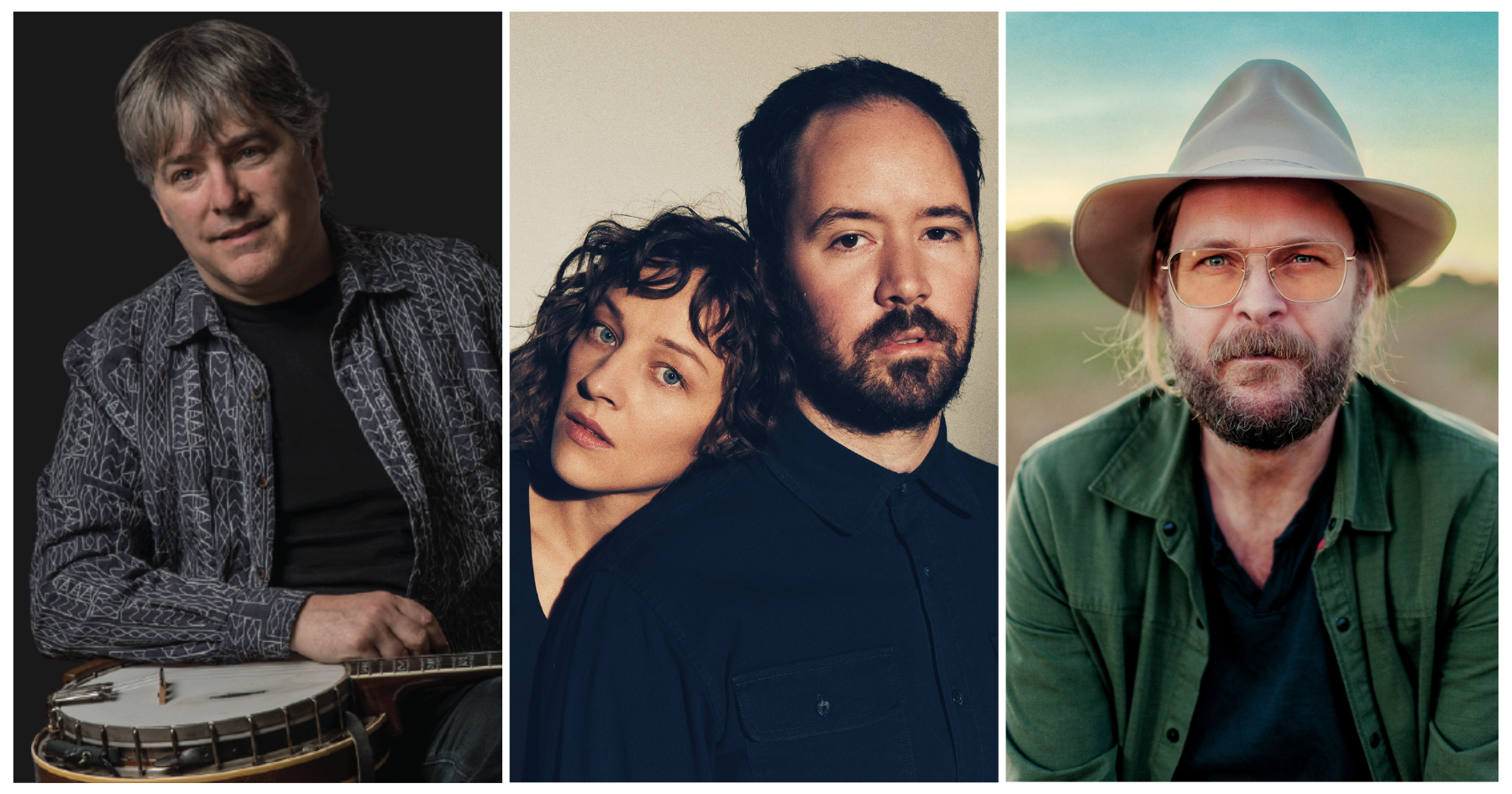
Photos: (L to R) Béla Fleck by Alan Messer; Watchhouse by Shervin Lainez; Hiss Golden Messenger by Chris Frisina

LISTEN: The Barefoot Movement, “Back Behind the Wheel”

Artist: The Barefoot Movement
Hometown: Nashville, Tennessee
Song: “Back Behind the Wheel”
Album: Pressing Onward
Release Date: September 17, 2021
Label: Bonfire Music Group

In Their Words: “‘Back Behind the Wheel’ is basically a dialogue with myself where I’m expressing my fears and then bolstering myself up. This is a theme in a lot of my songs, and especially on this album. I am by nature a pretty hopeful person; even when I allow myself to feel the full weight of whatever I’m despairing over, somehow I just can’t let that part of me be the ultimate winner. So it’s that idea of letting yourself feel what you need to feel, but not allowing that to be the end of the journey. Because unless you just give up, the only way to move is forward. I wrote the song about my experiences in the music industry, but I think it’s a universal concept. The chorus says, ‘When it comes to this, I don’t know what it means to quit.’ The listener can allow the ‘this’ in the line to represent whatever matters to them!” — Noah Wall, The Barefoot Movement


Photo credit: Workshop Media

MIXTAPE: Dori Freeman’s Waltzes for Dreamers and Losers in Love

Waltzes are my favorite. Can’t explain why, but they touch me in a way that other songs don’t. In honor of my album, Ten Thousand Roses, and its title track, here are twelve of my favorite waltzes — some by dear friends and some by long-gone greats. — Dori Freeman

Erin Rae – “June Bug”

Erin is one of my favorite artists — I just love her voice and the style of her records. This song is so simple (my favorite kind of song), but so sweet and effective lyrically and in the arrangement. The last minute or so of the melody being played on piano is particularly lovely.

Kacy & Clayton – “Down at the Dance Hall”

Kacy and Clayton are dear personal friends and some of the most genuine and truly original people I’ve ever met. This is such a classic-sounding waltz it’s hard to believe it was written only a few years ago. Kacy is also one of my favorite singers *of all time.*

Ric Robertson – “Julie”

Ric is another good friend of mine and easily one of the best songwriters of the time. He writes with a vulnerability and honesty that most people are afraid to share. I also had the privilege of singing harmony on this lovely track with my friend Gina Leslie.

Teddy Thompson – “Over and Over”

I have to include a Teddy song on this playlist since he’s been such a big part of my own music. He produced my first three records and continues to be such a kindred spirit in music making. This song has such a heartbreaking honesty lyrically and a truly haunting arrangement.

Iris Dement – “Sweet Is the Melody”

Iris has one of the most instantly recognizable and unique voices in music. I had this album on cassette tape and used to listen to it driving around in my old Subaru when I was like 19. Such a tender song.

John Hartford/ Tony Rice/ Vassar Clements – “Heavenly Sunlight”

My husband introduced this song to me a few years ago and we’ve been performing it at shows ever since. I never get tired of singing this beautiful song and this is my all-time favorite version. A good gospel waltz is hard to beat.

Linda Ronstadt/ Dolly Parton/ Emmylou Harris – “Hobo’s Meditation”

This song is twofold in its importance to me. First, these are three of the most talented singers ever singing together on one album. All three of these women have had a huge influence on me individually and I think you’d be hard-pressed to find another country singer who wouldn’t say the same. This is also a song that my dad’s band performed and recorded when I was a child. I can vividly remember sitting in the audience listening to them play this song.

The Louvin Brothers – “Blue”

If you want a master class in harmony singing, the Louvin Brothers are it. I love to listen to them dance around each other when they sing, jumping all over the place with grace and finesse. This waltz is a classic heartbreaker with lots of tender swooning falsetto.

George Jones – “Don’t Stop the Music”

Another one of our greatest singers, George Jones. This is one of my husband’s favorite waltzes and makes the cut for me, too. That jump up to the sixth he sings right in the opening gets me every time.

Rufus Wainwright – “Sally Ann”

Most people familiar with my music know that Rufus Wainwright’s music is very dear to my heart. He has a couple beautiful waltzes to choose from, but I included this one from his first record. A weird thing to note perhaps, but I love that you can hear each breath Rufus takes before singing on his recordings.

Lee Ann Womack – “Prelude: Fly”

This album was on heavy rotation when I met my husband in 2016 so when I hear this song I’m reminded of how sweet a time that was. It’s got a special place in my heart. And Lee Ann is one of those singers who makes me cry every time.

Richard Thompson – “Waltzing’s for Dreamers”

My daughter used to like this song when she was littler so that makes it an especially sweet one for me. It has one of my favorite lines — “waltzing’s for dreamers and losers in love.” So funny, so sad, so true.


Photo credit: Kristen Crigger

WATCH: Kirby Brown, “Ashes and Leaves”

Artist: Kirby Brown
Hometown: Nashville, Tennessee
Song: “Ashes and Leaves”
Album: Break Into Blossom
Release Date: September 17, 2021
Label: Self-released via Soundly Music

In Their Words: “Sometimes, we are the ones being left — by lovers, friends, family, etc. At other times, we are the leavers. Maybe this is one of the inevitable arrangements of life. No matter which side of that bargain we find ourselves on, I believe there’s a resolve that comes when we are able to let go of our control, our power, our solutions. ‘Ashes and Leaves,’ at least as it appears to me, is a song about that sacrament of open-handed release: ‘They say you never know ‘til it’s too late / But you say it like you know it now / Life is full of aches that you just can’t shake / Full of things you learn to do without.’ It’s a meditation on acceptance. Even if nothing stays the same, everything (and everyone) finds a home in its own way. Even if that’s a moving target, there’s a kind of peace that comes in letting go and leaning into perpetual motion.” — Kirby Brown


Photo credit: Jordan Sirek

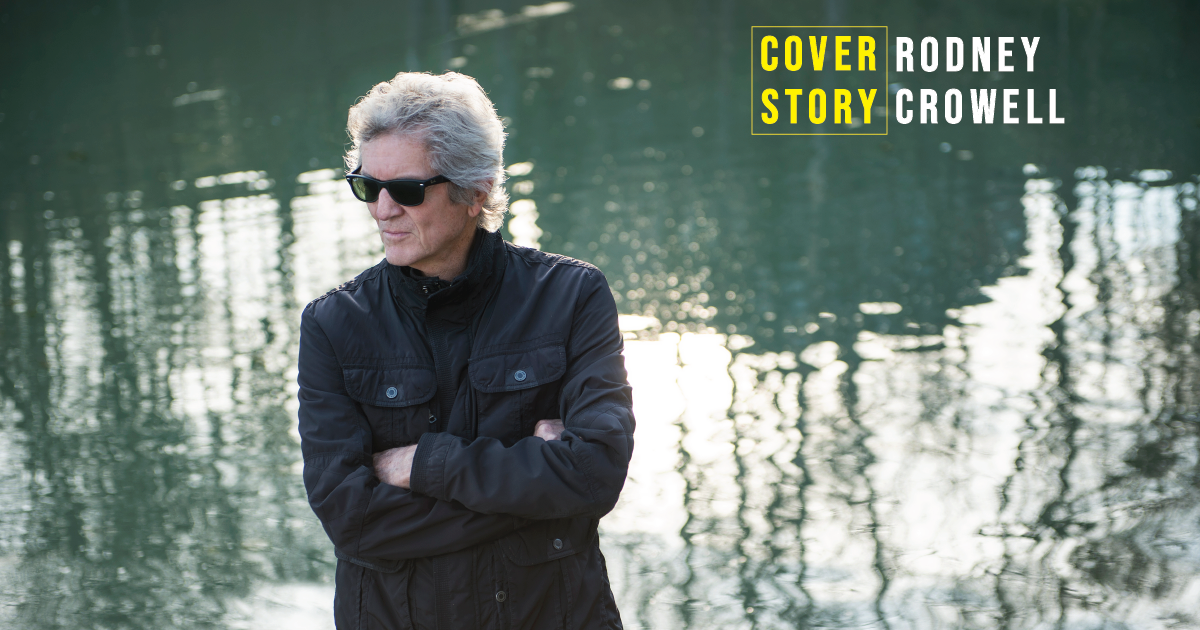
Rodney Crowell’s ‘Triage’ Is All About Love, Mortality, and Making Amends

Heartbreak songs, political takedowns, pronunciations of judgment — on his 18th album, Triage, Rodney Crowell doesn’t indulge much in any of them, with the possible exception of judging his own foibles as he burrows deep into his psyche, hoping to extract whatever nuggets of wisdom might still be buried there.

To help in the trenches, he enlisted son-in-law Dan Knobler, a rising talent who produced one of Crowell’s current favorite albums: Allison Russell’s Outside Child. “I respect him, and I learn from him,” Crowell says. “I learn from young people around me. You kiddin’? They’re on to things that I’m not on to, and they have information that I need.”

Knobler’s not the only family tie: another young artist, Jakob Leventhal, sings backing vocals on “Hymn #43,” a track that also contains contributions from his parents, John Leventhal and Rosanne Cash — Crowell’s ex-wife and mother of Knobler’s wife, Carrie. And though it’s “aimed more at the universal than the personal,” there is an homage to Joe Henry, who produced three Crowell albums: Sex & Gasoline, Kin: Songs by Mary Karr & Rodney Crowell, and The Traveling Kind, his second collection of duets with Emmylou Harris.

“I have a deep abiding love for Joe,” Crowell says. “I wrote the song ‘Triage’ for and to Joe, because the conversations we had when he was in the darkest part of coming to grips with a pretty shocking [cancer] diagnosis, his vulnerability and his courage and willingness to embrace everything about it inspired me, and I wanted to make a song based on the inspiration that I got from Joe’s courage and truthfulness.”

Courage and truthfulness. Those qualities permeate the entire album; in fact, it’s safe to say they’ve guided Crowell’s entire career.

BGS: Reviews are saying Triage is one of your most personal albums, and you referred to making amends in an NPR interview. But I suspect your use of “triage” has more to do with the global state of affairs than the need to address any personal sort of emergency at this stage of your life. Is that a reasonable assumption?

Crowell: Yeah, that’s most reasonable. I think the conversation with NPR started with the opening song [“Don’t Leave Me Now”], which is basically an attempt at amends, and it went from there. But the broader stroke on the album, and in my contemplation as I was writing the song, was how do I weigh in without dating myself? If you go political, or if you go topical in the moment, six months from now … you know, unless you write “Blowin’ in the Wind” or “This Land is Your Land,” you’re not timeless.

So my overview is that I want to write about, say, climate change, and I want to write about a monotheistic approach to livin’ my life, and instead of writing about boy/girl love, to write about a higher love — as Steve Winwood sang, “Bring me a higher love.” That’s what I had in mind, so I spent a lot of time revising all of the songs, checking and double-checking to make sure that I was grounding the language, because I was reaching into that place that’s very hard to define.

And yet, you do go topical on “It’s All About Love,” referring to Greta Thunberg and others, in that kind of talking-blues list style that you do so well. You often throw in pop-cultural references; how do you choose what works?

Well, when COVID happened, I got to slow down a bit and not try to race to make a release date, which allowed me to go back through the songs … you know the old saying, “Show, don’t tell”? I was able to go back through and say, “Oh, here I’m telling. I need to bounce this out of here,” and to stay in the show part of it, which is whatever metaphorical angle you take or however you ground the language in such a way that you can’t be accused of thinking you know better than everybody else.

It’s tongue in cheek for me to stick Donald Trump and Vladimir Putin and Greta Thunberg and Jessica Biel and the devil all in one stanza; honestly, I’m giggling to myself. They might not get it; they may take me literally, but this is humor.

You touch on religion repeatedly, and at one point in “I’m All About Love,” you chant the names of the lord, so to speak, so the sense is acceptance. Yet you mentioned monotheistic love, and the notion that there is one particular God seems to be expressed here, regardless of which one.

My mother was quite religious in the Pentecostal, speaking-in-tongues, emotional religious paradigm, and even as a child, it didn’t serve me. I just sensed something was amiss with it. I’ve always felt that way. Religion, I mistrust; the creator of it all, I do trust. Whether that creator of it all is a team, or whatever that is, I don’t really know. But I feel it. And hopefully, as I’m writing the songs and exploring that, I’m not saying that I really know, because I don’t. I can’t tell you anything about your god, and I really can’t tell you a lot about mine. But I sure do have a feeling.

When you’re writing songs, in some cases, you must have specific people or incidents in mind. But you also want to get them to the point where they have that universal feeling, where the listener can relate it to something in their own life. How do you strike that balance of not revealing too much about what’s going on in your life, while alluding to enough of it that it does personalize the lyric and make it touching?

I learned a long time ago, if it’s coming from my own experience, there’s a good chance I’m a step closer to true. And I can mine my personal truth, but confessional only goes so far. I’ve tried to walk that line; if I can carefully write about my own experience and put it in a broader perspective, then [for] the listener, it becomes their experience. It’s no longer my experience. That’s why I feel like I have to be really careful; if I make it too much about my experience, then I start to tread on the listener’s experience. The goal is to get it in such a way where — and there again, it’s the “show, don’t tell” — if it’s show, you show somebody their emotion, their experience. If you tell, you’re tellin’ ’em about you. And down there somewhere in the gravel of it all, I’m telling you about me.

But you’re actually not revealing that much, even though it comes across that way. I can’t listen to this and guess what’s happening in your life, even though I can sense what has happened, possibly.

Well, there you go. If that’s your experience, then I’ve succeeded, because I don’t want [the song] to be about me. I want it to be about it.

Other songs here, like “One Little Bird” and “Girl on the Street,” seem to be written for your children, or specific children. Am I close?

Yeah, you are, in a way. “Girl on the Street,” it’s something that happened in San Francisco. I met a girl and … however she could get money off me for drugs, she was willing to go there. And she was young and beautiful and reminded me of my own children. That was why the regret that the narrator has in the song is like, “I could have done more.” I could have bought her a room for the night where she could get a shower and a good night’s sleep. Or I could have taken her and bought her something to eat and sent her on her way, but no; I gave her 45 cents. So I really failed as an adult on the street. And that’s what I hope the song says.

Regarding amends, who in your life do you feel you haven’t apologized to that you still need to?

I’ve apologized to everybody that needs to be apologized to. But that doesn’t mean everybody accepted. And I have to live with that. If you look closely, in “One Little Bird,” it’s in there. I’ve been rebuffed.

You hit that one high note in “One Little Bird,” that falsetto, that I don’t think I’ve heard you do before. It’s evident that there’s definitely some change in your vocal style; that it’s actually expanding with age, which is interesting, because one would not expect that. Are you doing more training, or just finding ways to do that yourself?

I’m learning; as a matter of fact, I retired “Shame on the Moon” from my performances for years because Bob Seger sang it so damned well. And I’ve reinstated it into my live shows for the first time since ’84. I got an outro that will stand alongside Bob Seger’s now, as far as I’m concerned. I can ad-lib the outros in a way where I feel like, “OK, this is my song again.”

You took possession back.

Yes. I’ve repossessed “Shame on the Moon.” [Laughs] But I had to grow as a vocalist to where I could legitimately reclaim it. So that’s cool, I mean, from my perspective, to want to grow to become better. If I know that I’m getting better on that front, I’ll keep on writing songs because I’ll want to continue to experiment with what I can do.

I wanted to address the issue of mortality a bit. Let’s face it, we’re not all that young anymore, but it sounds as if you’ve still got a lot of plans. So how do you regard life now that there’s plenty of it in the rearview mirror, but you’re not ready to sign off?

Now that time is compressed? [Laughs]

Yes.

As a younger artist, quote/unquote, I was quite comfortable with broad-stroke; I wrote “Please Remember Me” and “Making Memories of Us” and those broad-stroke love songs because I was experiencing life in a way that I was trying to express myself outward, to understand how I fit into that world out there. And now as I age and become a septuagenarian, I made Triage as the kind of record it is because I am facing mortality. As you realize that the time out in front of you is a lot shorter than the time behind you, rather than going for those broad-stroke love songs to send out there into the world to find out who you are, I’m writing about my interior life, because I think, to prepare myself to leave this planet, I have to have a better understanding of my interior self.

What would you still like to achieve that you haven’t yet?

Mmmm, that’s interesting. Well, I’m working on achieving certain things as a singer that continue to reveal themselves to me. I’ve become a better singer and I’m continuing to develop as a vocalist. That makes me happy, because for a long time, I was very unhappy on that front. As I age, the more singular my sensibility becomes about my interior experience; I’m also arrogant enough to think that’s worth sharing out there with these records that I make. But I may yet open up onto another plateau where I’ve examined mortality enough that, hey, it’s time to celebrate a little bit, and I’m gonna make a blues record, or I want to make a honky-tonk record that sounds like 1954. Who knows? I’m pretty much free to do exactly what I want to do.


Photo credit: Sam Esty Rayner Photography
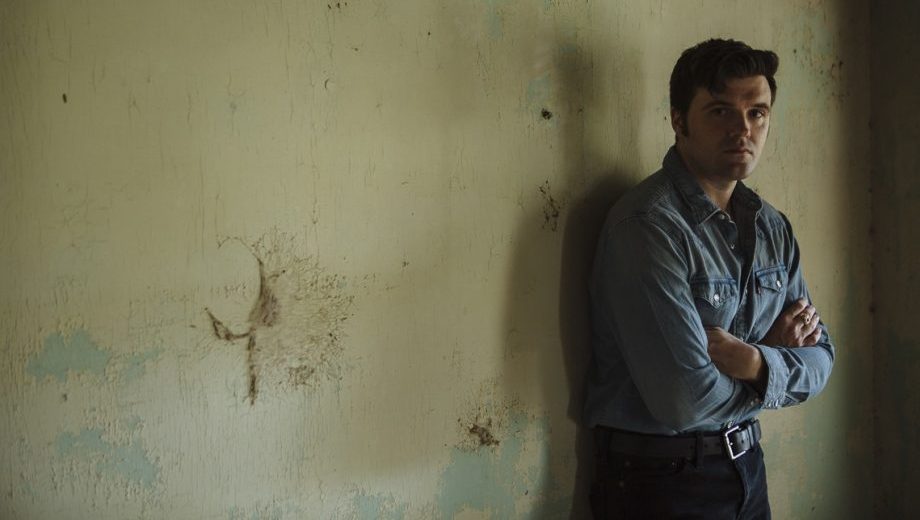
WATCH: Dan + Claudia Zanes, “Let Love Be Your Guide (for John Lewis)”

Artist: Dan + Claudia Zanes
Hometown: Baltimore, Maryland
Song: “Let Love Be Your Guide (for John Lewis)”
Album: Let Love Be Your Guide
Release Date: September 10, 2021
Label: Smithsonian Folkways

In Their Words: “The part that says ‘for John Lewis’ tells you how this song originated…. In March of 2020, when the national state of emergency was declared, we started a Social Isolation Song Series. It felt like the right thing to do, release a performance of a song a day until things calmed down. The calming down hasn’t really happened yet, but we did manage to go for 200 straight days releasing a new video every afternoon. Along the way we started having trouble finding songs to say what was on our hearts and we began writing more and more.

“John Lewis died on July 17th. His funeral was held on July 30th at the Ebenezer Baptist Church in Atlanta. We watched the service on TV and read his op-ed in the New York Times that same morning. As everyone remembers, racial justice was at the forefront of the national conversation last summer. For many, this was a time of awakening. For others it was a time of confusion. For many more, a time of frustration. And here was John Lewis, once again at the center of it all encouraging us to ‘walk with the wind, brothers and sisters, and let the spirit of peace and the power of everlasting love be your guide.’

We sat at the dining room table and wrote ‘Let Love Be Your Guide’ in about 20 minutes. After a quick change into some clean clothes, recorded it for the series and put it out there. We can never sing this song without mentioning John Lewis and his legacy of non-violence, the guiding principal that he called ‘love in action.’ We wanted this video — made with friends from our neighborhood — to be about pure love, joy, and community.” — Dan + Claudia Zanes


Photo credit: Xavier Plater

Emmylou Harris Revisits “Roses in the Snow” in Lost Concert, Vintage Video

The year was 1990, and after more than a decade with the celebrated Hot Band, Emmylou Harris hit the road with a group of bluegrass all-stars — Sam Bush, Roy Huskey Jr., Larry Atamanuik, Al Perkins, and Jon Randall Stewart — and called them the Nash Ramblers. Although the group represents only a small portion of Harris’s decorated career, the music they made was exciting and powerful. After the band’s first year together, they recorded At the Ryman, a 1992 project that not only won a Grammy but also helped bring about a second life for the Ryman Auditorium as a premier concert venue.

It was in the band’s earliest days, at the conclusion of their first tour in 1990, that the Nash Ramblers made their Nashville debut. The performance was recorded at the Tennessee Performing Arts Center on September 28, 1990, and until now, has never been released to the public. In September, Nonesuch Records issued it after its discovery by Rhino Records’ James Austin. The live album, titled Ramble in Music City: The Lost Concert features a slew of songs that were not performed on At the Ryman.

Harris says, “When James Austin, in my humble opinion, the world’s best and certainly most devoted music archeologist, unearthed the tapes of this ‘lost’ concert, I was taken aback by their very existence, like finding some cherished photograph misplaced so long ago the captured moment had been forgotten. Then the memories came flooding in, of the Nash Ramblers, hot off the road from our first tour, ready to rock and bringing their usual A-game to the hometown turf.”

She continues, “It only took one listen to realize not a single note was out of place or in need of repair, a truly extraordinary performance by these gifted musicians. What a joy it was to share the stage with them.”

In promotion of the album release, Austin City Limits shared its own video of the ensemble performing “Roses in the Snow” on the celebrated Texas stage in 1993. (The title track from Harris’ 1980 beloved bluegrass album leads the live record, too.) Enjoy this vintage video from Emmylou Harris & the Nash Ramblers and their timeless musicianship.


Photo credit: Paul Natkin/Getty Images, circa 1997

WATCH: Katie Callahan, “Lullaby”

Artist: Katie Callahan
Hometown: I grew up in Honolulu, Hawaii, but currently live in Baltimore, Maryland.
Song: “Lullaby”
Album: The Water Comes Back
Release Date: October 22, 2021.

In Their Words: “‘Lullaby’ was written on the edge of the pandemic, before any of us could’ve imagined the way parenting and work and school and home could be enmeshed so completely. I’m the default parent in our home, and as our time in quarantine wore on, the need for me to have projects and goals and work became more and more evident, and this song became a bit of a meditation for me. It reminded me to be kind to myself and name the courage in those trying to pursue their creativity in the margins of these days that feel both ordinary and overwhelming.

“A friend from my Catholic middle school days, Erin Bagwell, is a filmmaker, and we’d reconnected a few years back. Her latest film (Year One) chronicles her first year of motherhood and her journey with postpartum depression, and I felt like ‘Lullaby’ fit right into her narrative. I shared the song with her and we began constructing the idea for this video: a clearly timestamped snapshot of people doing their best to care for those around them — in work, in the home, wherever — and finding moments of peace, clarity, and purpose in the margins. It’s the arc of a day, at once complicated and simple, an affirmation for those — like me — who need to be reminded that pursuing purpose is courageous, and no matter how anxious the moment, peace is in those quiet, still times of mothering ourselves to bits.” — Katie Callahan


Photo credit: Quinn Struke