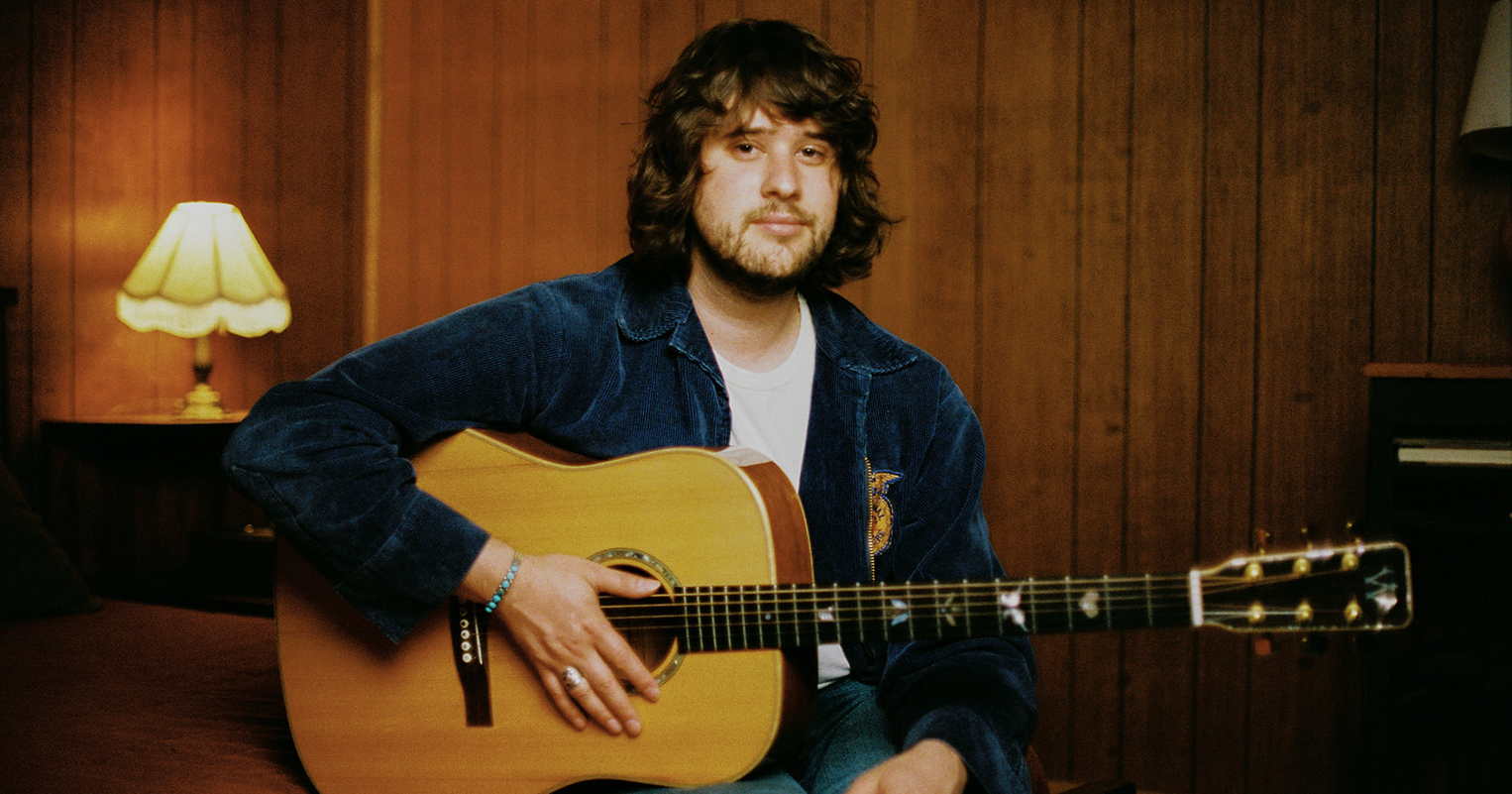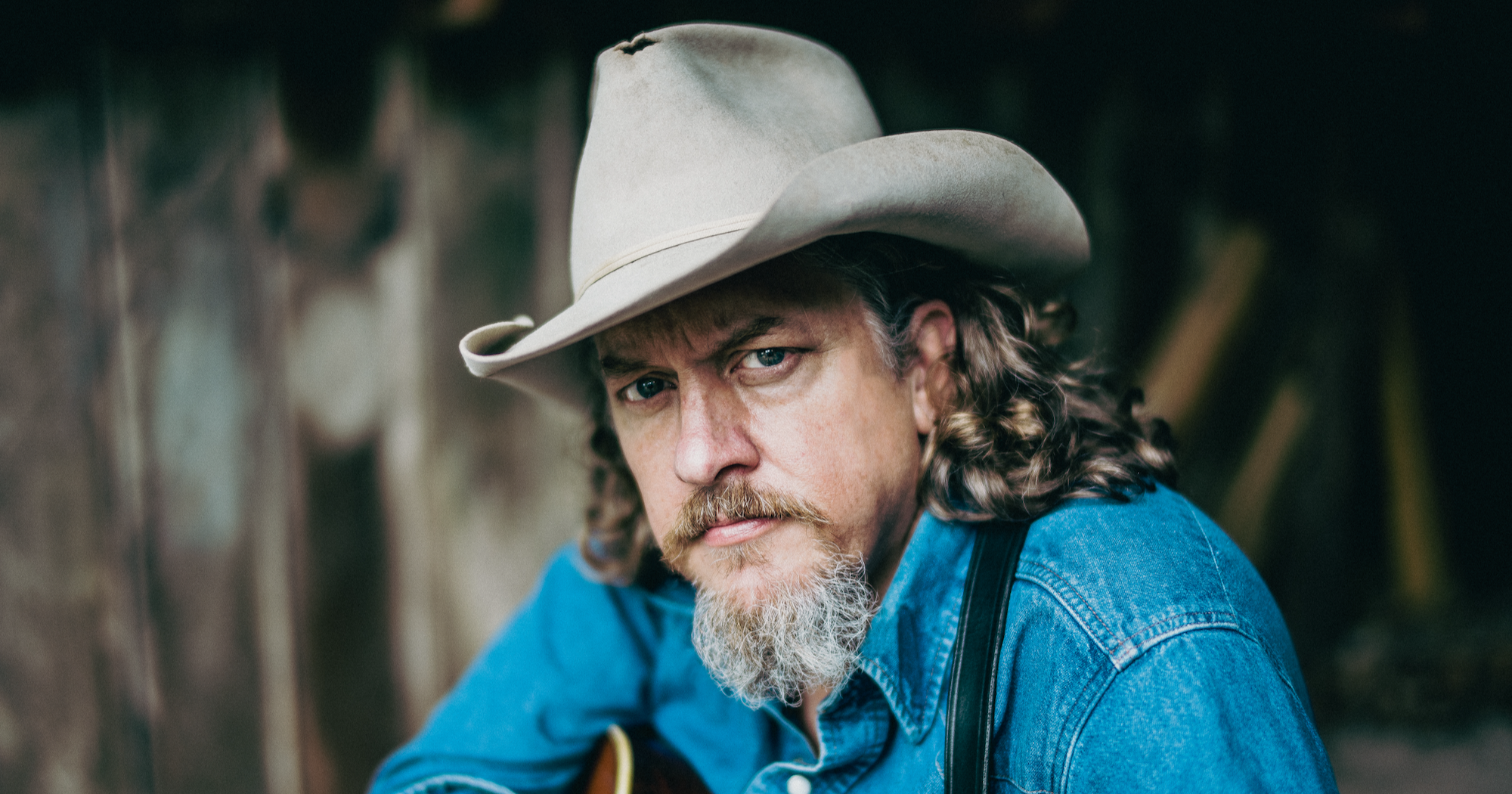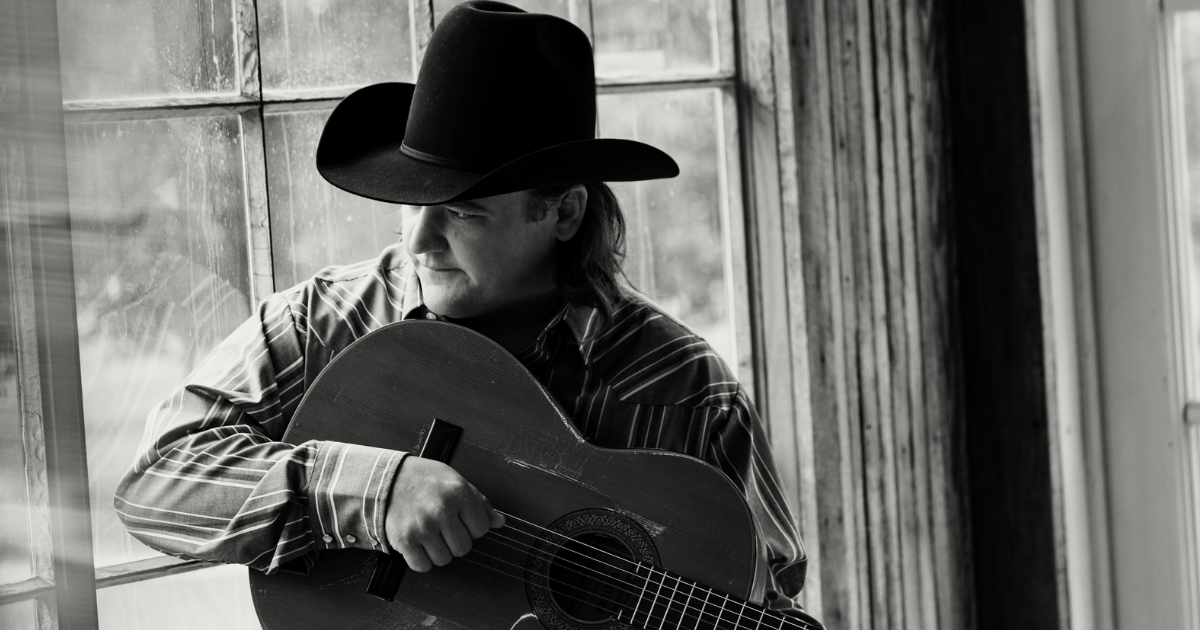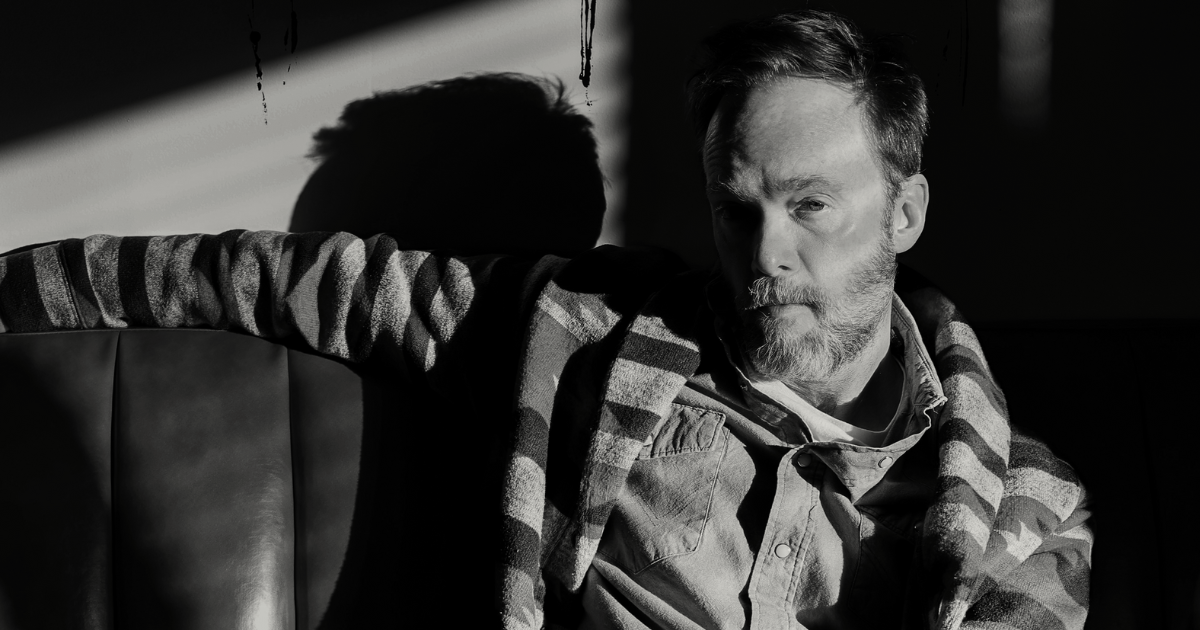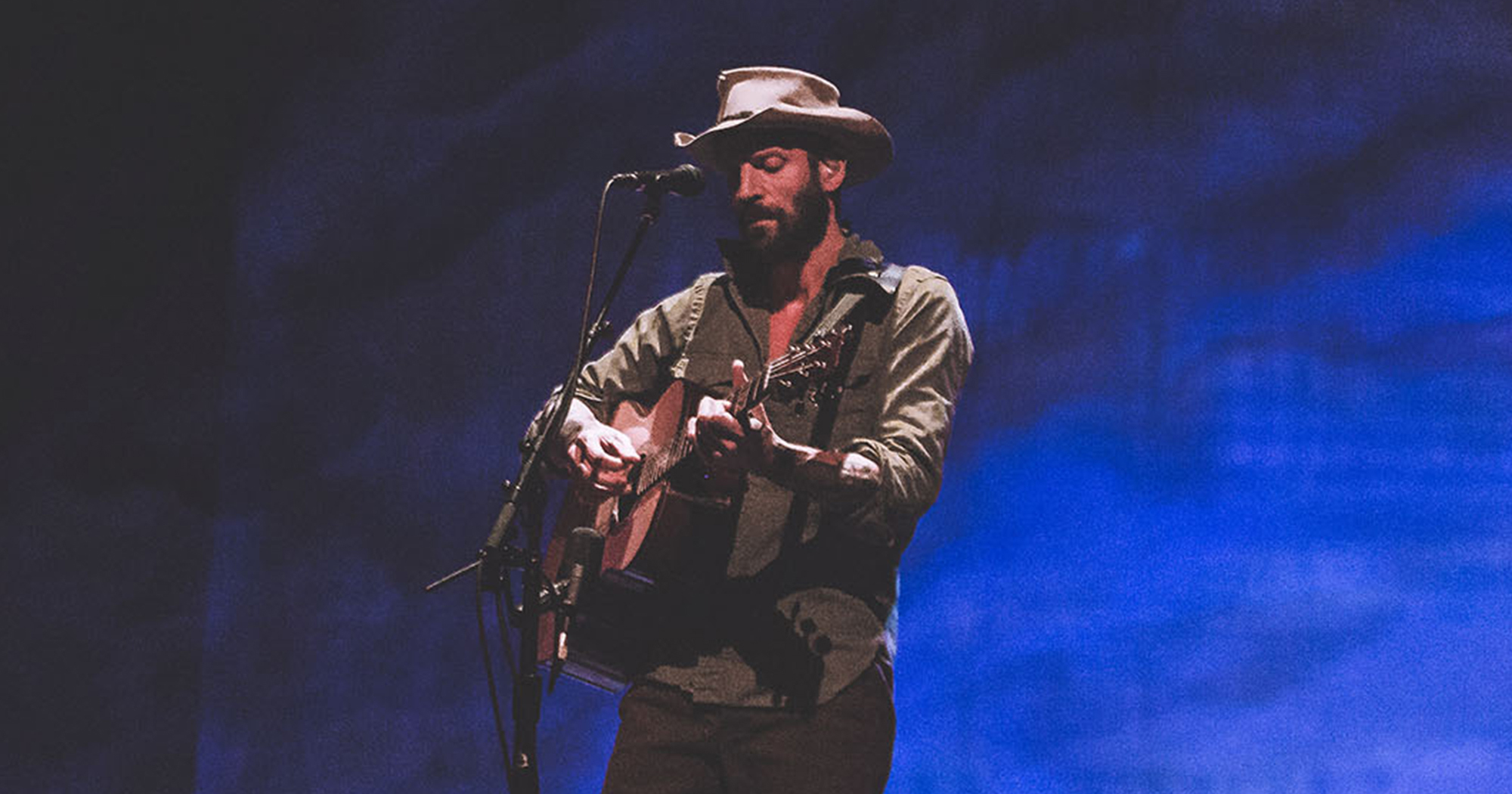
Ray LaMontagne After 20 Years of Trouble

In the fall of 2004, it seemed like everybody was getting into Trouble. Even with that major label debut album, Ray LaMontagne managed to keep a low personal profile while maintaining the rigorous pace of a promising new artist. Meanwhile, the title track of Trouble got covered by that season’s winner of American Idol and ended up in an inescapable but kinda cute insurance commercial. Other cuts on the album ended up in films such as The Devil Wears Prada, Prime, and She’s the Man. In addition, Zac Brown Band recorded “Jolene” and Kelly Clarkson often performed “Shelter” in her shows (and recently revived it for Kellyoke.)

Now, LaMontagne is bringing Trouble back around for a 20th anniversary remaster and re-release (which dropped this summer) and North American and European tour dates set for 2026. He’ll be singing every song on the record to commemorate the collection two decades after its release.

“It’ll be interesting to see how my spirit reacts to learning these songs again, to going back and listening to them again in that way, to bring it to people again,” LaMontagne tells BGS. “I’m looking forward to it. And I feel like it’s important to do to mark this moment, because these are the songs that brought people to my music in the first place.

“Listening to it again now after all these years, I’m very proud of my younger self, for having the strength of will amidst all the pressures of the music business at the time, and about my writing and the way I wrote, to make the record that I did, and to leave the songs the way I wrote them and not take any advice.”

What was your day-to-day life like before Trouble was released?

Ray LaMontagne: Well, we lived off the grid. I was already married for six or seven years at that point. My two boys were five and three and we lived on a piece of land I bought in Maine. I had built a small cabin on it and we had a hand-dug well that we used for water. We had an outhouse. It was back-to-the-land living and that was just because I couldn’t stand renting. I wanted to have my own piece of ground. But it was really hand to mouth, and we were broke. And that’s putting it mildly. I mean, we were broke, broke, broke. I was working carpentry, sometimes seven days a week, because I would take anything I could get on the weekends just to get a little extra money, because I constantly was trying to improve the cabin. And I never had a car that ran.

You’d made some independent records before Trouble and I’ve read a couple of accounts of how you got your music in front of Chrysalis Music. How did that actually happen?

Someone heard me at a festival and they gave a disc to a college friend who was in the music business. Then he brought it to his boss. I went out and met with Hollywood Records first. I felt that I was in a room with a bunch of cynical people who made me feel kind of gross. I went back home and that guy called and said, “I think they’re gonna offer you a record deal.” And I said, “I don’t want to do it.” He said, “Are you crazy? What do you mean, you don’t want to do it? They’re gonna give you a record deal!” And I was like, “I didn’t like them. They made me feel gross.” So I went back to being a carpenter again, as I was, and went back to my life.

Then it was close to a year later when that guy called me again and said he had gone to a different company. Now he was with a publisher and that was Chrysalis. He said, “I played your stuff for my boss and he really likes your songs and is interested in you as a songwriter. Would you come out and meet my boss?” I talked to my wife about it and then I said, “Okay, I’ll come out.” I went out and I met his boss and played a couple songs in the office. We talked about songwriting and he said, “We want to help you as a songwriter.”

So, they were looking at you as a songwriter rather than as an artist.

And that’s how I got into the studio to make this record, because I was supposed to go in and make demos. What happened was, Ethan [Johns, who produced Trouble] and I met each other for the first time. We’re very different people and we couldn’t quite read each other. Especially at that time, I was very much a closed book, very much an observer. And he’s a type A personality, big ego, big presence, loves to talk – mostly about himself. And I don’t say that critically, I say it with humor! Anyone who knows Ethan will agree with me!

So anyway, it was this strange thing, but I began to realize as we were starting to record demos or talk about songs, that they didn’t really feel like these songs were finished. They thought they were promising. But I was getting a lot of input coming at me very quickly about, “This song doesn’t have a bridge. This song is just two verses. Is that even a song? This song just has four verses and then it ends. Is that a song?” And it was like that right down the line.

The first demo we recorded was “Hold You in My Arms.” We got to a point in the song where Ethan stopped me and said, “This song is just not finished. It needs a bridge.” He started throwing lyrics at me for this bridge and my shield started to go up. I thought, “These lyrics, first of all, aren’t right…” I was resisting and resisting, and he was getting more frustrated with me. He said, “I’m gonna go make a cup of tea. You write a bridge.” So, he went to make a cup of tea and I wrote an instrumental bridge by the time he got back. I said, “It’s just gonna go into an instrumental bridge and then back into the chorus again.” And he said, “OK. I’ve always been told you gotta do this in the moment. So how many points do you think that’s worth?”

I knew nothing about the way these things happen, but in that moment I knew what was going on and I knew why I was there. From that moment on, I was a brick wall. Nothing was changing. I was changing nothing. I’m recording the songs exactly as I had written them and then I’m going home. If you like them and you want to shop them around, great. If you don’t like them, I’m still going home. It doesn’t matter to me, but I’m not playing this game. So that’s what we did. We recorded this record, which is basically the demos the way I wrote them.

How did the recordings go from demos into becoming the Trouble album?

Six months easily passed and the publisher called me and said, “You know, the songs are just… no one wants to sing the songs. No other artists are gravitating towards the songs, but weirdly, record labels are coming forward because they like your voice and they like what they’re hearing, but they like it delivered by you. It works when you sing it, but it’s not working for any other artist.” And that led to the next step of going back and meeting record labels and talking to people about me as a performer, which was not even on my radar.

So it was a whole other challenge. It was like me against my biggest fear. I was much more interested in being a songwriter at that time. So, that’s how it happened. Slowly, and one step at a time, and one thing led to another, and led to another. But again, that’s why, when I hear these songs at this point in my life, listening to it again for the first time, it really hits me, just where that 28- or 29-year-old guy had that strength of will to know at a gut level that what I was doing had value. Just me being me had some value and I wanted to protect that. And it just makes me very proud of him.

It’s interesting to hear that no other artists wanted to record your songs, because when this record came out, a lot of people were singing these songs. What’s the personal reward for you as a songwriter when someone does take one of these songs from the album and makes it their own?

I really like that. It always makes me happy. I think any songwriter would be happy if even one song gets covered by someone else. You feel lucky if one song you wrote even makes it into people’s lives in some meaningful way. If you’re a songwriter and that happens to you once, you’re grateful. I mean, it’s just the truth of it. It’s like any other art form. It’s not easy, and it either will work or it won’t work, because music is a complex language. … It’s probably the same with painters, with dancers, with writers. You just don’t know if it’s going to connect to people, or if people are going to understand what you’re saying, or if it’s going to speak to them in a real way, speak to their spirit in some way. So I’m very grateful. I’m so glad that there are people in the world, all over the world, who understand my language.

Something that struck me about this record, then and now, is that dynamic in your voice. At what point did you become aware of that range, that you could go loud when it when you needed to?

I don’t really know. I feel like I learned to sing just by doing it. There’s some truth to this, that I really didn’t know how to sing even when I went in to make the record. But I was learning by doing it. I had gotten to a certain point where I knew when I was singing incorrectly because I would be uncomfortable or something would hurt in my throat. And I knew that that wasn’t the right way to do it. At some point, I realized you had to really breathe and sing from your gut.

In 2004, before streaming and social media, how did you find an audience?

It was just live shows. I mean, I toured a lot. A lot. And in the beginning, even being signed, I was still just like anyone. I was in a rental car, just me and my guitar, a box of harmonicas, and getting myself from one gate to the next. Those early shows, again, it’s no different than anyone. It’s two or three people and the next year you go back and there’s 20 people and the next year you go back, there’s a hundred people. When people connect to what you’re doing, they will tell their friends about it, and they’ll bring them the next time you come around. But there’s nothing anyone can do outside of yourself to make that happen. It either works – people connect to what you’re doing, to your performance, to the music, and then they’ll tell their friends – or it doesn’t work. But being signed to a record label doesn’t mean anything. It just means they’re investing and they’re gambling. And if you build a career for yourself, then they win that bet, and if you don’t, then they move on.

I’ve read that you saw Townes Van Zandt play a show in the mid ‘90s and I wondered how much of an influence did he have on your writing and your musical direction for Trouble?

I don’t think he had a real heavy influence. I wouldn’t say that, especially at that time. It was too early. I just remember being really moved by watching him play, for a few different reasons. It’s kind of tragic in some ways. He was right at the end, but I could hear the poetry in the songs. That’s what moved me the most, to hear a song and be so close to somebody, eight feet away from him, and hear “Pancho and Lefty.” That story was completely immersive and took me somewhere else. That was really the most powerful thing I took from that particular night. He transported me. That’s powerful. Music can be really powerful if you’re receptive.

To me, your song “Narrow Escape” feels like a spiritual brother to “Pancho and Lefty.”

Yeah, I’m sure it is. I mean, it’s my take on a story song of this kind. They’re very different stories, but I’m sure that’s my “Pancho and Lefty.”

There’s a reference to “Liula” in that song and I noticed that fictional town shows up again, now, as the name of your own record company. So, are you fully independent these days?

I am, yeah. I still have all my same team around me, but I’m making records on my own and releasing them on my own. That’s a natural progression, too, in the way the music business has changed. It was a very different business when I entered it and at this point, especially for me, there’s no reason to be with a publisher or a record label at all. I left my publisher a long time ago, 10 years ago probably, and the record label followed.

I did want to ask about the illustration on the cover of Trouble. It’s not a picture of you. It’s this beautiful image from Jason Holley. What was it about that image that worked for you?

I just thought it was poetic. I saw the poetry in it. You can take lots of different things from that image, but it’s also just a powerful image. And of course, I have always been reticent to have my photograph taken, or to use my photos anywhere. Which, you know, we all have these things. If you’re comfortable doing it, that’s great. If you’re not comfortable, you should feel you have the right to say no.

Other than seeing you in concert, I don’t know that I really saw your face that much back then, when Trouble was out.

I remember telling my manager, “I want to be like the Lone Ranger. I don’t need to be seen and to be known. Just leave them with the music. And that’s it.” You can imagine how that went over. It was really, really difficult, and there were a lot of frustrated people, I’m sure, at the record label and with management. It frustrated a lot of people because they felt like I missed a lot of opportunities that I could have otherwise had. I knew that at the time as well.

But I’ve always felt like I know who I am. I could say no to a magazine cover back then because I know that that’s going to be a day out of my life where I’m going to be miserable, and it’s going to make me uncomfortable. … I’ve never felt like anyone in the press or who had a camera really cares about you as a person. They’re not sensitive to you, and your well-being doesn’t matter to them. They’re just doing their job. And whatever they capture there, they choose what they want. If you have your head in your hands, if you’re doing this, if you’re looking miserable. That’s power and they’re going to use it.

So, I turned down all of that stuff. You lose that opportunity, but I felt, well, I’ll lose that opportunity, true, but you know what? I’ve got a show tomorrow night, and I’m going to sing my ass off, and people are going to feel it. And if they feel it, they’ll come back next time. That’s what’s important, to build a career that is sustainable. And to do that, you need people to fill the seats. If they don’t come out to see you live, you have no career. That’s all there is to it. So that’s the most important thing. And that was then, and it still is.


Photo Credit: Brian Stowell

You Gotta Hear This: New Music From Brit Taylor, Benson, and More

We’re back with another excellent edition of our weekly roundup of new music, fresh videos, and sneak previews of tracks to yet to come.

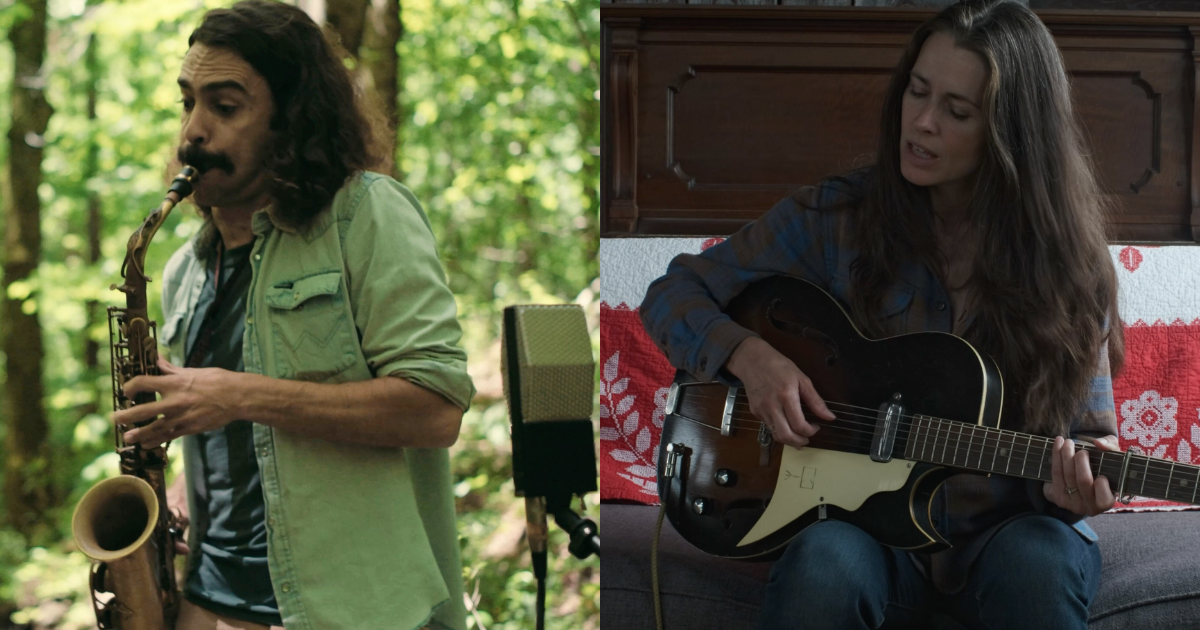
Bluegrass power couple Benson – Wayne Benson and Kristin Scott Benson – call on Zack Arnold of Rhonda Vincent & the Rage for their new single, “Bully of the Town,” which drops today. You may recognize the track, which is usually performed as an instrumental, but its unique chord progression shines with Arnold’s vocal as the somewhat unexpected cherry on top. Also in a bluegrass space – bluegrass saxophone, of course – Eddie Barbash continues his mini-series with us of classic bluegrass and old-time fiddle tunes rendered superlatively, as only he could, on sax. This time, we’re sharing his new performance video of “Tennessee Mountain Fox Chase,” shot at Larkspur Conservation in Westmoreland, Tennessee. We can’t get enough solo saxophone fiddle tunes!

From the bottom of the globe, progressive New Zealand string band You, Me, Everybody returns to the pages of BGS with a new music video. “The Rest of Us” is a contemplative, introspective song set to sparkling newgrass that’s about leadership, abandonment, and rising above – if you can. From country, our friend Brit Taylor also debuts a new music video this week for “All For Sale,” her most recent single that released just last month. The new video, which only features a short cameo by Taylor, a new momma, is a fun-fueled yard sale spurred by heartbreak and readiness for a blank, clean slate.

To round out our collection this week, legendary blues master Robert Finley is celebrating a brand new album via Easy Eye Sound today, so of course we’re highlighting a track from Hallelujah! Don’t Let the Devil Fool Ya to mark the special day. “Can’t Take My Joy” is an infectious song with a perennial message that Finley holds at the core of his values system – you really can’t steal his joy. And, with music like this in our weekly roundup, you won’t be taking our joy, either!

It’s all right here on BGS and, just like every week before this one, You Gotta Hear This.

Eddie Barbash, “Tennessee Mountain Fox Chase”

Artist: Eddie Barbash
Hometown: Nashville, Tennessee
Song: “Tennessee Mountain Fox Chase”
Album: Larkspur
Release Date: November 28, 2025 (The album will be released one song at a time with the last track coming out Nov. 28.)

In Their Words: “This song was recorded during a spring sun shower on the porch swing at Larkspur Conservation’s cabin headquarters. A barn swallow was nesting in the rafters just over my head and I was inspired by all of the bird songs around me to improvise this introduction.

“I learned the tune late one night from Ric Robertson after a party/concert in his Washington Heights apartment in NYC. I believe he learned it from Nate Leath and my version is also inspired by his recording. I decided to slow it down a bit and give it a lazier, swingier feel that just feels so good to play on the saxophone.” – Eddie Barbash

Video Credits: Shot and edited by Jeremy Stanley. 

(Editor’s Note: Watch the first video in our mini-series with Eddie Barbash here.)


Benson, “Bully of the Town”

Artist: Benson
Hometown: Boiling Springs, South Carolina
Song: “Bully of the Town”
Release Date: October 10, 2025
Label: Mountain Home Music Company

In Their Words: “I’ve always loved to play this song and didn’t even know it had lyrics for years. The chord progression is just different enough to make it work either way.” – Wayne Benson

“‘Bully of the Town’ is a good example of a song that wasn’t originally a part of the bluegrass genre, but is versatile enough that you can play it many different ways and it sounds like it belonged there all along. Wayne and I are pickers first and this arrangement is really built around being able to play around this fun chord progression, but the vocals are the icing on the cake, because prior to this cut, people typically played it as an instrumental. A lot of people don’t even know it has words, so adding vocals differentiates it and we got a young gun to sing it! Zack Arnold, from Rhonda Vincent & the Rage, did such a great job. He delivers it with a lot of energy, power, and a spirit that accompanies youthful musicianship. He really added excitement to an already-grooving track.” – Kristin Scott Benson

Track Credits:
Wayne Benson – Mandolin
Kristin Scott Benson – Banjo
Cody Kilby – Acoustic guitar
Kevin McKinnon – Bass
Zack Arnold – Lead Vocal


Robert Finley, “Can’t Take My Joy”

Artist: Robert Finley
Hometown: Bernice, Louisiana
Song: “Can’t Take My Joy”
Album: Hallelujah! Don’t Let the Devil Fool Ya
Release Date: October 10, 2025
Label: Easy Eye Sound

In Their Words: “There’s an old saying that I used to hear folks say, ‘There’s joy in the world, can’t take it away.’ Joy is something that can’t be measured by man and can’t be controlled by man. That’s why I say, ‘You can’t take my joy.’ You can take everything else, but you can’t take that. You can take my freedom and I can still be happy. Though there are problems, there is still a way to look beyond the faults and accept the good things in life. Joy is something that no man has the power to give and no man has the power to take away.” – Robert Finley


Brit Taylor, “All For Sale”

Artist: Brit Taylor
Hometown: Hindman, Kentucky
Song: “All For Sale”
Release Date: September 5, 2025 (song); October 9, 2025 (video)
Label: RidgeTone Records/Thirty Tigers

In Their Words: “We wrote this song like a script. There’s so much imagery in the song that it just seemed natural for the video to follow the lyrics. I decided only to make a quick cameo in the video and let my friends be the stars of the show! While it seems counterintuitive to what the rest of the industry is currently doing, it felt right to me. After all, the song isn’t about me, it’s about a story that wants to be told. And, honestly, my friends should probably move to Hollywood, because they really nailed their parts!” – Brit Taylor

Video Credits:
Robert Chavers – Producer, director, cinematographer
Steve Voss – Director
Solar Cabin – Production company


You, Me, Everybody, “The Rest Of Us”

Artist: You, Me, Everybody
Hometown: Ngāruawāhia, New Zealand
Song: “The Rest of Us”
Release Date: October 10, 2025
Label: Southern Sky Records

In Their Words: “I woke up with the melody and the lyric in the chorus, ‘If you’re the one who’s going to give up, what are the rest of us doing here tonight?’ And as much as the melody kept hooking me in, it took a while to find an angle for a song that could only really be about leadership. Even though it’s from the perspective of the people who are left when a leader abandons them, I was writing this with an awareness of how I felt I was letting people down at a time when I wasn’t following through on a commitment I had made. That’s why it’s less about blame and more about the heartbreak of watching someone lose faith in something they’d once worked so hard for.” – Kim Bonnington

Video Credits: Produced and edited by Kim Bonnington. Filmed by Ethan Bryant.


Photo Credit: Brit Taylor by Sammy Hearn; Benson by Sandlin Gaither.

Outlaw Country That’ll Make You Smile

Holding the attention of a roomful of moderately smashed bar-goers is no small feat, let alone with a traditional Irish folksong. But last May, country singer-songwriter Dylan Earl ended his set at Brooklyn’s Skinny Dennis standing on top of the bar and singing an a cappella version of “Wild Mountain Thyme.”

“Will you go, lassie go/ And we’ll all go together/ To pull wild mountain thyme/ All around the blooming heather,” Earl implored in his warm baritone, towering above the room in worn jeans, boots, and a sleeves-cut-off T-shirt from his Arkansas-based label, Gar Hole Records. In spite of all the alcohol collectively consumed by the listeners who packed the venue to its beer-tinged walls that evening, the room was just about as quiet as a divey honky-tonk can be.

By ending his set with the kind of folk song which, passed down through generations, comprises one major lineage of country music – indeed, “Wild Mountain Thyme” is based in a much older Scottish folk song – Earl invoked a deep vernacular tradition and history often left out of modern country. Earl’s music attracts labels like “old-school” and “classic country,” and his voice certainly lends itself to those comparisons, but his own compositions convey a whole lot more. Rejecting the banality of tired Southern stereotypes, Earl writes punk-hearted, poetic music rooted in a love of people and place; music which is both socially and class-conscious and captures wide-ranging cultural unease and indignation with nuance and wit.

On his fourth studio album, Level-Headed Even Smile (released September 19), Earl makes clear that his is not a return to a bygone era so much as a carrying on of a long tradition of speaking truth to power and of imbuing dimension and worth into the lives of overlooked characters and issues too easily reduced to absolutes.

“I’d rather be an outlaw than in with the law/ All this authority worship is the strangest thing I ever saw,” he sings in “Outlaw Country,” a thesis statement of sorts for the album and Earl himself. Earl wrote “Outlaw Country” out of frustration at how many people made assumptions about his beliefs and morals because of his appearance – and because he plays country music with a whole lot of Southern twang. Earl wanted to make it clear where he stands.

“I finished high school in a very rural part of Arkansas; I identify with the Deep South, but I don’t identify with its most prevalent fucking right-wing rhetoric… I still want to remain approachable to those people I completely disagree with, because I think that’s an important part of making art, is creating discourse,” he says. “I want to try to approach these people and try to have that conversation. Be like, ‘Listen here, brother, I’m just like you, but you don’t have to be a racist piece of shit. It’s way more fun in life to be happy and be inclusive. Your soul will be happier because of that.’”

Lately, outlaw country morphed from its subversive roots into a shorthand for wicked good independent country or a slightly more specific alternative to Americana. While both wicked good and independent, Earl’s version also rekindles contempt for the establishment that fueled the original outlaw country movement:

I’d rather be a bootlegger than a bootlicker
A side stepper than a homewrecker
And I don’t get a pick me up
From putting other people down

It’s clear to see by the air I breathe
Working class solidarity
Is the only way
We’re gonna stamp that fascist out

Sardonic and irreverent, “Outlaw Country” is an anthem for anyone who ever believed in love and community over corruption and power. But rather than a callback, Earl’s music is of and for the next generation of ne’er-do-wells and dreamers living on the fringes, hoping for something better.

Earl grew up in Lake Charles, Louisiana, where he split his time between separated parents. Chafing at the craven habits of money and influence that he witnessed from his father, a powerful local lawyer, Earl preferred the warmth and love he felt in the house his mother shared with his grandmother. (Despite a rocky childhood, Earl’s now building a relationship with his dad.)

“I was living in poverty on one side and then I was living in opulence on the other side, and the poverty side is where I wanted to be, because that’s where all the love was,” Earl says. “I’m so lucky to have that, to be able to have identified where love was at a young age and identify where my soul felt good.”

Earl’s mother showed him how to seek joy and adventure, filling life with road trips and camping weekends. When he was just five years old, Earl’s mother plopped a map in his lap and taught him to navigate. Perpetually tight on money and resources and mired in an enduring custody battle with his father, she nonetheless taught him how to get away from it all, instilling in him a curiosity about the world. On the road, they stopped to check out historical markers, explored parks and rivers and the Gulf Coast, and watched giant boats come in while picnicking along the Intracoastal Waterway.

“That developed a sense of wonder and being like, ‘I don’t fucking need money to feel this type of happiness, to feel this sense of joy and adventure and love of life, just life in its purest form,” Earl says, choking up. (He firmly believes more men should cry, and that it helps him be more humane.)

“Her sense of adventure, her true passion for living, it’s amazing to me; it still is amazing to me.”

The album’s title and thematic heart – level-headed even smile – are derived from that approach to living life fully. For Earl, it’s an essential mechanism of coping and connecting. Remain engaged in the world and aware of all its horrors and tragedies, he says, but then, when it gets to be too much, know when and how to take a break:

Some nights I’m crying on the backroads
Rolling my smoke backwards
Trying to keep a level-headed even smile
Don’t you know I might take a while to get there
Just hoping I get anywhere
Trying to keep a little level-headed even smile

“At some point we’ve got to unplug from the fucking screen and just go explore things that are fucking real, like the trees around us, or the grass, or the water, or the sun or the moon, and try to get in touch with that more primal sense of ourselves,” Earl says. “That is where we can really most quickly and most efficiently achieve happiness, it’s getting in touch with the simplest form of ourselves.”

Beside the love from his mother, Earl describes himself as a depressed kid who struggled in school and wanted desperately to escape his hometown and father and stepmother. At 15, he convinced his father to send him to boarding school which, in part because of Hurricane Katrina’s devastation of Louisiana, ended up being in rural Arkansas. At the Subiaco Abbey and Academy, Earl studied with monks who’d taken a vow of poverty and offered rigorous, benevolent study, kindness, and care. Though he’s an atheist, Earl counts the monks, whom he visits regularly, as mentors, connecting with them still through shared spirituality.

“We all fucking showed up pissed off as hell. And we found love and we found love amongst each other; we found love from those monks and found nature,” Earl says, reverently, of his time at Subiaco. “It saved my fucking life. The whole thing; I found joy and happiness for the first time in my life.”

Level-Headed Even Smile is dedicated to Earl’s late friend, William, who was the first to befriend him at Subiaco. “He helped me clear my heart,” Earl says. As he sings of those halcyon days on “Two Kinds of Loner,” “We were two kinds of loner/ A misfit and a wayward son…”

Armed with the sense of wonder his mom taught him, liberated by the fallow morals of youth, and subsumed by the ready escapism afforded by their surroundings, Earl and William learned every back road. They’d steal beer from the back of William’s dad’s Crossroads Tavern and drive for hours exploring the backwoods and levees along the Arkansas River.

“William was the first to show me the country air. Hanging out with him, something about getting in that truck after class, taking off down Lile Ridge Road, cracking a beer, putting on whatever weird music he was listening to at the time, that was the first sense of fucking true freedom I ever had in my life,” Earl says.

Stopping just shy of wistful, “Two Kinds of Loner” is a bittersweet, intimate portrait of the desperately important work of becoming oneself as a teenager – and of the raw beauty in forming kinship through human connection rather than blood relation:

Down where the kudzu meets the bodark
And the darkness first let go of me
High in a cab of a buddy I had
He showed me the county air
I used to not care about nothing
Because no one seemed to care for me

After high school, Earl attended Hendrix College, a liberal arts school which lived up to its name situated in Conway, Arkansas. A few years earlier, Earl borrowed his father’s old guitar – a Yamaha FG 180 Red Tag, which he still plays today – and learned enough chords to make himself useful around a bonfire and impress the local girls. Encouraged by one of the monks at Subiaco, who noticed him straying from lesson plans, Earl started writing his own music.

When he got to college, he landed feet first in a robust DIY music scene. Together with a group of friends – including Gar Hole Records cofounder and label manager Kurt DeLashmet – Earl played a circuit of local house venues: White House, Blue House, Brick House, and occasionally Shit Mansion, where both also lived for a time. To this day, their two-day, 28-band Butt Ranger music festival thrown by friends at the White House remains one of Earl’s favorite shows.

“We were drunk off our fucking asses on plastic bottle whiskey and snorting Adderall and fucking ripping cigs and shit like that. It was fucked up. It was so awesome. It was just blood and piss everywhere,” Earl says. He recalls the floor at White House buckling so deeply that by the end of the night all his gear, including his oversized amp, wound up in a pile in the middle of the floor. Volume was of primary concern, tone and other nuances distinctly secondary. “What a fucking beautiful, carnal, amazing culture to be a part of,” he says.

Two songs on Even Smile come from those early days playing music first in college and, afterwards, in Little Rock, where Earl and his band Swampbird moved. (Earl lived in Little Rock for a few years then moved to Fayetteville, where he still lives.) Both songs are paeans to the chaotic moil of early adulthood rendered heady and hazy by too much booze and too little grounding: “Broken Parts,” which he first recorded with Swampbird, and “Little Rock Bottom,” about his time in Arkansas’ capital city.

“I don’t really quite realize it until I am talking about it, how much of my life and my story is wound up into that album,” Earl, who’s now in his mid-30s, admits. The album feels like a fitting way to process and close that chapter of life. “I do feel like I’ve left it on the table and I’ve left it all out on the field, so to speak.”

In total, Even Smile is a loving, layered depiction of both Arkansas specifically and the south in general. Among his many influences, Earl includes Arkansas gonzo poet Frank Stanford (who also attended Subiaco and whose burial there Lucinda Williams memorialized in her song, “Pineola”). Stanford’s realism and wild abandon creep into Earl’s songwriting sensibilities; they share a love of the South and its complexities and a reverence for and dedication to illuminating those stories.

Alongside a few cheeky disquisitions on life on the fringes – including road dog ode “Get In The Truck” – throughout the album Earl relishes the beauty of his home territory. Perhaps nowhere more so than on “High On The Ouachitas,” an extended soliloquy on the wild beauty of the mountain range, his chosen retreat for a reset and solace:

When I’m high on Ouachita
High as I ever saw the Arkansas
With goldenrod and reindeer lichen
Twist flowers in bloom
There’s just no place
I’d rather waste my afternoons
Than high on Ouachita

“I love it so fucking much, because I know all of the nuance and I know all the beauty that’s deep underneath all of the stereotypes. And just how fascinatingly complex our communities are,” Earl says. “It’s fucking beautiful. You have two and a half million acres of national forest. So we have the cleanest drinking water in America; we have endless amounts of outdoor recreation; the food is fucking kick ass; the people are the sweetest ever.”

Earl rounded out Level-Headed Even Smile with two very on-theme cover songs: beloved Arkansas folksinger Jimmy Driftwood’s “White River Valley,” a love letter to Arkansas’s pastoral beauty, and Utah Phillips’ peripatetic wanderer’s lament, “Rock Me to Sleep,” which concludes the album. Together they bracket the glib “Lawn Chair,” written with Cameron Duddy and Jonathan Terrell.

Earl jokes when playing the song live that it might be the worst song he’s ever written. And superficially it sounds like the kind of redneck anthem that might confirm the uneducated listener’s worst stereotypes about uncouth Arkansans: “It’s a whipass life just being me/ It don’t cost much to be the free/ I got my lawn chair/ And I’m sitting on top of the world.” Yet the song is also a sly rebuke against taking everything too seriously. Convivial in its roughness, it’s a gleeful, carefree reminder of the many ways to keep a level-headed even smile.

“If I’m feeling bogged down and feeling depressed, oftentimes it has nothing to do with the task at hand, it’s just that I’ve been absorbing how terrible the fucking world is and it makes me incapable of interacting and interfacing with my immediate world, because I’m so fucking caught up in that goddamn bullshit… and it is not allowing you to reach your full potential as a biological piece of anatomy that is somehow living on this planet,” Earl says.

“[A level-headed even smile is] an attempt to focus on your humanness and try to reattach yourself to the earth and detach from the problems of the earth; and just go out and find your smile. Go find your joy amongst all the fucking evil.”


Photo Credit: Justin Cook

Country Songs for Fall

Fall marks the beginning of “over the river and through the woods season,” whether your destination is grandma’s house, an off-season beach, a u-pick apple orchard or pumpkin patch, a spangled and harlequin forest, or an autumn music and arts festival. As you navigate the changing season and enjoy leaf-peeping, apple butter, hot cocoa, and hot dogs roasted over the fire, there’s one genre certain to accompany you through each and every picturesque context the “-ber” months give us – that’s Good Country.

Country is perfect for fall, whether you’re raising a beer, whiskey, or cider alone or among friends. From driving through tobacco country during curing season in September, to tailgating at the football stadium, to winding your way over the Smoky Mountains, to soaking in the last bit of summer sun, there’s a country song ready to soundtrack your falling back in love with cozy season.

Dripping with nostalgia, evocative text painting, a rich and deep connection to nature, and a reverence for community, folkways, and tradition, country music just may be synonymous with fall – and our playlist certainly helps make that case. We hope you enjoy listening and we wanna know: what country songs always get you in an autumnal mood? Did they make the list?


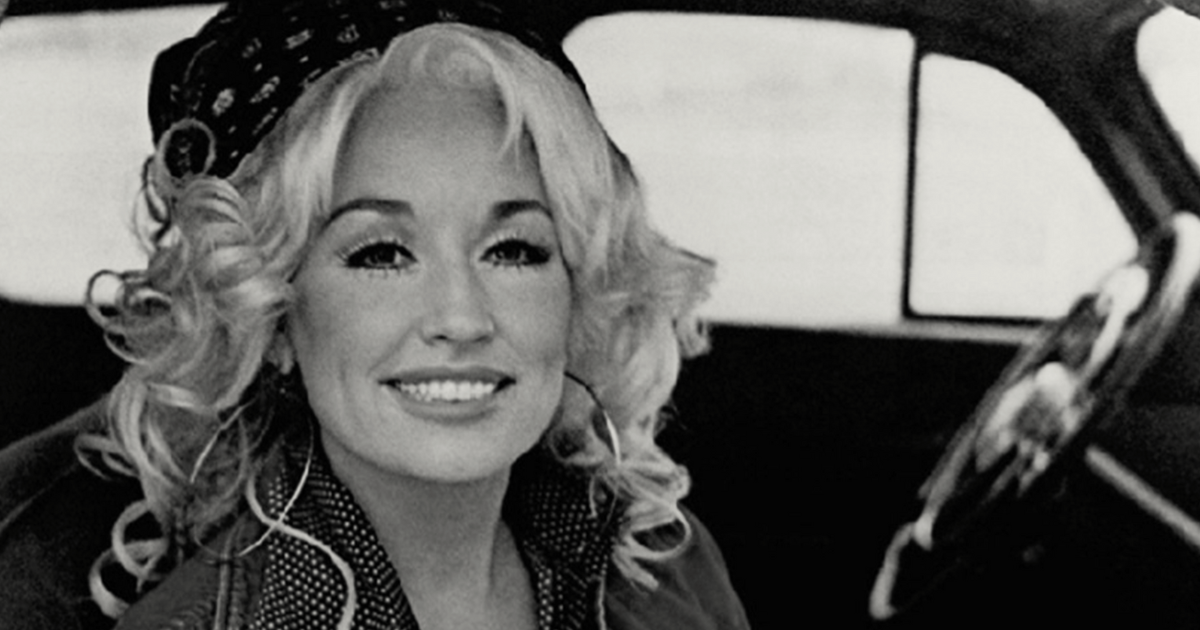
Photo Credit: Album cover,  New Harvest… First Gathering, Dolly Parton.

Jack Schneider’s
Songs of Hope and Healing

Six years ago, I found myself in the hospital for a period of a few weeks with a mystery illness, unsure of whether or not I would make it out alive. I did survive, of course; but the experience changed me fundamentally. It brought me closer to many of my heroes, both living and dead, who have walked before me, people who know a whole lot more about life and its passing than I do. As near-death experiences do for many, it led me to live differently, cherishing each present moment and honoring life’s transitory nature rather than fearing it. Retrospectively, it was a gift, because it helped me to realize that I have been fortunate to have been given a free life and my hope is to use my experience of healing to help others heal too.

My new album, Streets Of September, marks my reflection upon the anniversary of that life-altering event. It is a collection of songs that, to me, honor the beauty of being alive and the magic of alchemizing grief into something beautiful, created out of thin air in the moment we have before us. It is an ode to brevity and the wonder that can be found there: to be appreciated for a moment before being washed away.

As I have navigated the path of healing myself, these songs have served as anchors during some of the darkest of times. They are beacons of light I’ve looked to when I was uncertain of how to shift my consciousness from a place of grief to one of hope. We are all growing and healing one day at a time, and everyone else’s reality is as real to them as our own is to us. Wherever this music may find you, my hope is that there may be something here to give you the courage to press on, to continue on your journey, whatever it may be. – Jack Schneider

“Looking For Space” – John Denver

I first discovered this song when I was in middle school. That was a dark time for me. I felt different and yearned for a place to belong, wondering if it was something that even existed. This song helped me to look inward, to find peace in the home within my heart. As I continue to grow up I keep coming back to it. It reminds me to stay true to that journey, to open myself up to the space of my soul. It’s not about arriving at that place. Ultimately, it is about the continuous practice of aiming for something that we know we will never reach within our consciousness, but that the growing is what makes us who we are, stronger and more resilient, committed to the path as it disappears, which is how we can tell that it is the right one.

“Secret Of Life” – James Taylor

My parents took me to see James Taylor perform a solo acoustic show when I was nine years old. He played this song and the idea of the “secret of life” stuck out to me. At that age I barely knew what living meant. I’m still not sure I do. But coming back to that song now, having survived a near-death experience, it has more depth than I ever could have understood before. Our task in being truly present and grounded is through the power of the now and “enjoying the passing of time.” No matter how dark or difficult the road gets, nothing is forever, and if we can remember to shift our awareness and accept the unfolding of things in the time that they are meant to unfold, we can surrender to the joy of living and experience the full extent of our aliveness.

“Sweet Seasons” – Carole King

When I was growing up, my mom had an art studio in our house that she used to paint in. Every now and then I’d get to go hang out with her in there and we’d listen to music together. My mom put this song on a lot back in those days and hearing it reminds me of those special memories, of being encouraged to connect deeply with my creative energy. “Sometimes you win, sometimes you lose/ And most times you choose between the two…”

The older I get, the more I realize that we really do get to choose how we show up to the present. The hope is to be able to embrace the passing seasons as they come and go and find the beauty in watching life flow.

“I Got A Name” – Jim Croce

Jim Croce was one of my first musical heroes. I can’t remember how I found my way to his music, but his songs sound as if they always existed. I especially love this one, largely because of the last line of the chorus, “Moving ahead so life won’t pass me by.” Healing is not a linear journey and the dark times are necessary to help build and reveal our character. Time continues to pass and it is in the forward motion that we find ourselves connected to the magic of life, continuing to be reborn every time we open our eyes.

“That Lucky Old Sun” – Big Mama Thornton

A favorite song of mine and my favorite version of it. Perfect in every way.

“Shine A Light” – Rolling Stones

This was my grandmother’s favorite song. At her request, we played it at her funeral. She used to quote the lyric all the time, “May every song be your favorite tune.”

“If You Want To Sing Out, Sing Out” – Cat Stevens

My dad first showed me this song, and I’ve always loved the simplicity of its message.

“Go Wherever You Wanna Go” – Patty Griffin

I remember listening to this song leaving home, on my way to college. I cried so hard. The possibilities of the future were endless. And with that came the necessity to accept the changes happening around me and within me and the loss of the grounding presence of my family and the home I knew. I was bound to chase my dreams with tremendous uncertainty, hunger, and hope.

“One Of These Days” – Emmylou Harris

I love the line in the chorus of this song “ I won’t have this urge to go all bottled up inside.” Writing and singing songs is my outlet for processing my emotions, but I often struggle to create the space to bring them to light in my day to day life. Growing is recognizing where or who you hope to someday be, and then each day waking up and striving towards that dream, one moment at a time.

“Good Again” – Sunshine Grocery

“For us, there is only the trying. The rest is not our business” – T.S. Eliot.

“Bells Of Harlem” – Dave Rawlings Machine

A song of hope and redemption, capturing the essence of the kind of clarity that comes through after a season of darkness. The sun rises again. “A little joy, at long last.”

“Pilgrim” – Steve Earle

I was fortunate to have been at the Grand Ole Opry a couple weeks ago when Steve Earle was inducted. After becoming a member, he chose to play this song. Emmylou Harris, Vince Gill, Don Schlitz, and Connie Smith sang it with him. It was such a special moment, and I am grateful to have witnessed that kind of history. We don’t know where our journeys will lead us, but the path is homeward.


Photo Credit: Annie Loughead

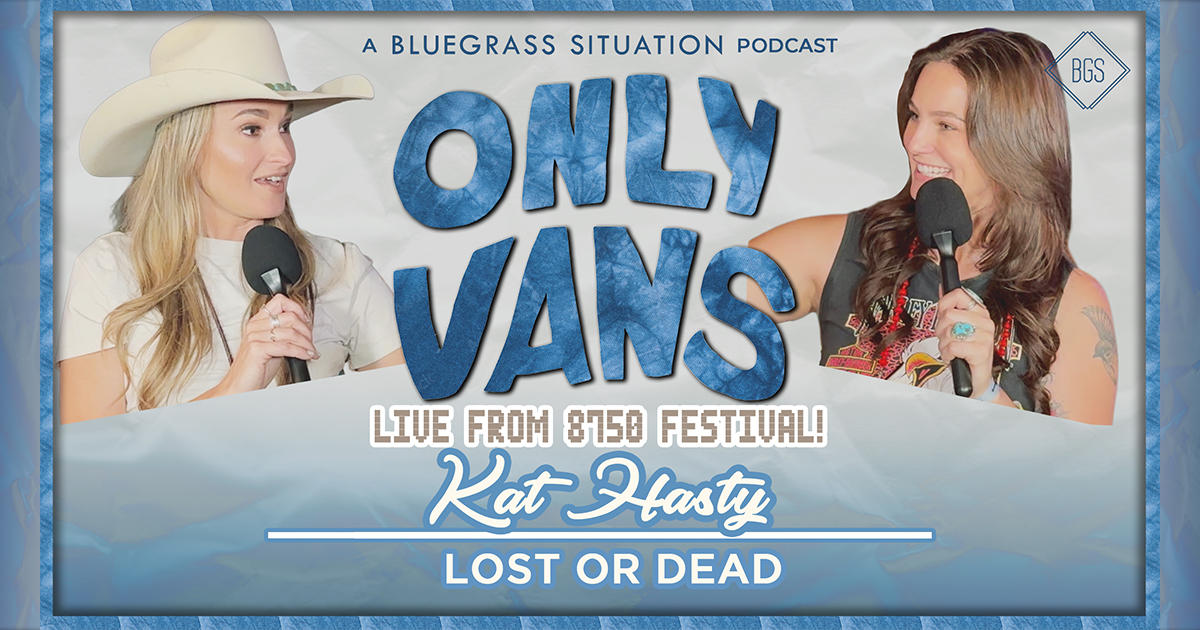
Kat Hasty on Only Vans with Bri Bagwell

What a fun and effortless conversation with my friend Kat Hasty, live from the Motherlode Saloon in Red River, New Mexico. We dig into weird stage habits, her new music on the way, drunk musician versus professional musician, making content, and the expenses of touring.

LISTEN: APPLE • SPOTIFY • AMAZON • MP3

Kat Hasty and I have one of the most effortless conversations, for two gals that almost never get to see one another – both of us being on the road like crazy. I have mad respect for Kat and I was thrilled she took time out of her busy festival day at the awesome 8750′ Festival in Red River, New Mexico, to chat with me at the legendary Motherlode Saloon.

Kat has great style – and somehow I got distracted and didn’t tell her how much I love Double Take vintage in Santa Fe, New Mexico – and you’ll see she has a super fun and magnetic personality. Drowning in Dreams was her album released in 2021 and Time of Your Life in 2025, both of which are awesome and authentic; she tells us she has so much new music on the way.

And, oh my gosh, since this came out, the mini Winnie – Kat’s traveling RV that we talk about – caught on fire! She and her band are okay, but holy moly. Someone buy that girl a new Sprinter! Thanks for chatting, Kat. I’m taking you up on that offer to interview me on my podcast, for real!


Shawn Camp Pays Homage to A Childhood Hero on The Ghost of Sis Draper

From the half dozen records under his own name to hits co-written for Garth Brooks, Brooks & Dunn, Blake Shelton, and Josh Turner; playing with Jerry Reed, Alan Jackson, Trisha Yearwood and the Earls of Leicester; or his work on Willie Nelson’s GRAMMY winning album, A Beautiful Time, in 2023, Shawn Camp has done just about everything in his 30+ year musical career.

But with his latest project, The Ghost Of Sis Draper, he’s able to cross off another box off his bucket list – making a concept album. According to the Arkansas native, the album’s origins trace back to the late ‘90s with his close friend and longtime collaborator Guy Clark, centering around a larger-than-life figure from Camp’s childhood named Sis Draper.

After laying the project’s foundation with the lead track “Sis Draper” one fateful day, the pair later penned “Magnolia Wind” soon thereafter with other songs slowly trickling out whenever they reconnected in the years that followed. Once the songs were all written, Camp took them to Nashville’s famed Cowboy Arms Hotel and Recording Spa – now the Clement House – where he knocked the entire record out in only one day.

Per Camp, the immediacy of his time in the studio helped to keep its collective sound cohesive – like Willie Nelson’s Red Headed Stranger and other standout thematic country albums that came before it. And, by the sound of it, there’s more like it coming soon.

“I’ve got lots of ideas for concept albums and songs I won’t release until I have a record like that to include them on,” Camp tells BGS. “I’ve got about 14 songs on another that I started recording last year that were inspired by Johnny Cash and Cowboy Jack Clement that’ll likely be out next year as well. It’ll be a lot different from the Sis Draper stuff, because we recorded it like Johnny Cash & The Tennessee Two – stripped down with an electric and upright bass – but in a similar fashion all belong together.”

Ahead of the release of The Ghost of Sis Draper, Camp caught up with BGS to discuss his relationship with Clark, musicals, the album’s old-time ties and more.

When did you first connect with Guy Clark?

Shawn Camp: I had a country label deal with Warner Bros. Records in the early ‘90s and in 1993 the people there asked me if I could write with anyone in Nashville, who would it be? I shot for the moon and said, “How about Guy Clark?” and before I knew it I was sitting across the room from him writing [“Stop, Look And Listen (Cow Catcher Blues)”] from my second album, 1994, that Warner shelved until 2010.

Guy was known at the time for writing songs that in parentheses included a second title he’d refer to them as and that was one of them. When you go to the Country Music Hall Of Fame now his entire writing room and workshop is on display there and it’s exactly the way it was the day he died. You can walk up to the glass and see his writing tables, his ashtrays, his guitars and all of his work tapes that he would record the day he wrote each song. He would spin around and write the title on the spine of a cassette to stick on a rack on the wall behind him. If you look into that room right now you can still see the cassette for “Stop, Look And Listen” about waist-high two or three feet from the wall on the right. It’s just a real treat to see his work environment that I spent so much time in up close again.

Years ago, I remember Guy getting mad at a fiddle he couldn’t get into tune so he smashed it into smithereens and stuck it up in his attic in a fiddle case. He got to telling me about it one time and crawled up there and set it down on his bench and it’s still laying there to this day. It’s been wild to see how they number and photograph everything so they can get it back to exactly how it was – it was a real trip to see.

How did the idea for this Sis Draper album first come about a quarter century ago?

I was just sitting around with Guy trying to write a song, but got stuck. It led to us talking for an hour or so until I eventually got around to telling him about a lady I knew in Arkansas named Sis Draper. She had a big beehive hairdo and a fiddle she carried around in a coffin case that she’d shred these old-time fiddle tunes on. Before I ever saw her, my grandpa and Uncle Cleve built her up as such a superstar that she was a world traveler in my eyes, even though in reality I don’t think she did much traveling at all.

After telling Guy about her I remember him leaning back in his chair, taking a big drag off a cigarette, and saying, “That’s your story right there,” which led to us writing more songs about Sis Draper and my family that together make up this new record.

Were there any differences in how you approached writing or recording this project compared to your other non-conceptual work?

We recorded it all in one day with the same musicians, so when you listen it doesn’t sound like a hodgepodge of different sessions and trying to make them fit together, because it basically happened live. In the past I’ve spent eight or nine months just recording the songs, but with Sis Draper it was easier to streamline because all the songs already sounded similar and fit together.

What motivated you to keep returning to this project through the years?

It’s taken a long time to come to fruition. [Laughs] We first started in the late ‘90s and would work on it anytime we got together and didn’t have other stuff to work on. We’d always thought about it being a musical play too. I even have started writing dialogue to turn these songs into that. It’s always been in the back of my mind, but now that Guy’s gone it felt like I needed to go ahead and get it into this form.

What specifically interests you about a play format?

I’ve always loved acting, even though I haven’t done much of it. I’d love to do it more and a play would be a cool way to accomplish that.

Several of the songs on Sis Draper have roots in old-time music. What made you want to weave those influences through these songs?

We wanted to pull from those old fiddle tunes that I heard Sis and others playing when I was a kid during jam sessions. Like “Lost Indian,” which is what “Big Foot Stomp” was written around. The common thread of it all was always an old fiddle tune melody, so I wanted to reference those songs in any way I could.

You and Guy both collaborated a lot with Verlon Thompson through the years. With that in mind, what did it mean to have him aboard to co-write “Old Hillbilly Hand-Me-Down” with y’all?

Verlon is one of the greatest songwriters around and an even better person. I don’t do a lot of co-writing with him, but we’re the best of friends. I love making music with him because we play off of each other so well.

The only song on the album you weren’t involved in writing was “New Cut Road,” but even so it still ties back to Guy and your childhood?

Yes. Guy wrote the song originally about his grandaddy Coleman Bonner who played fiddle in Kentucky. On the play-version of this album there’s dialogue that ties it all together. But when I was a kid, I started playing fiddle at 15. I remember standing on a ladder holding up a piece of sheet rock to the ceiling in a house my dad and I were remodeling. We had a little Gilligan’s Island radio playing across the room and Bobby Bare’s version of the song featuring Ricky Skaggs came on. It really inspired me to be a fiddler even though I didn’t know Guy wrote it at the time. Six short years later I was in Nashville, so it just felt like it belonged in this Sis Draper suite of songs.

Another tune I wanted to ask you about was “Grandpa’s Rovin’ Ear,” which I understand you originally constructed as a poem?

Guy and I wrote all those lyrics in different places, but for the longest time didn’t have a melody to go with it, so I made one up before going in to record. Similarly, “The Checkered Shirt Band” started as a rap that we played without a melody, almost like a group chant. I put melody to that right before heading into the studio, as well and was inspired by the old-time tune “I Don’t Love Nobody.”

The guy’s names I mention on [“The Checkered Shirt Band”] – Rodney, Chuck, and Rodge – are all band members from my days with the Grand Prairie Boys in Arkansas. We’d dress up like Bill Monroe & the Blue Grass Boys. I recently went back there to receive a Lifetime Achievement Award from the Arkansas Country Music Awards and got those boys together to play for the first time in years. We played that song and a couple others from the album and it was such a treat. It meant a lot to not only do that, but shout them out by name in the song as well.

The end of Sis Draper includes “Hello Dyin’ Day,” the last song you and Guy ever recorded together, sandwiched between “The Death Of Sis Draper” parts 1 and 2. What did it mean to you to include that one here?

It represents the deathbed confessions of Sis Draper. It just felt like The Ghost Of Sis Draper to me, due to the mood of it all. It’s her last words, but when we return to “The Death Of Sis Draper” in the medley it’s like Sis’ funeral, so it all just kind of belonged together in my mind. It’s about 10 minutes of music that all goes together, so hopefully it’ll be listened to that way and not dissected too much.

With that being said, what are your thoughts on song sequencing? It sounds like you designed this Sis Draper record as something intended to be listened to in order?

We’ve really gotten away from the arc of storylines on albums. It’s a two-minute world out there now, so if you can get just one single out that’s all a lot of people shoot for anymore. I miss those records like Red Headed Stranger that take you through all different kinds of moods and serve as an escape from the real world. I enjoy going on those little trips and hope listeners enjoy going on this Sis Draper adventure with us.

What has the process of bringing The Ghost Of Sis Draper taught you about yourself?

It’s taught me not to hesitate and to make the move to record stuff when it crosses your mind because if you don’t it may never happen. It initiated a whole new lease on life for me because I hadn’t put out a solo album since 2006. A lot in the world has changed since then just like it has in my own life, but I’ll never stop wanting to make music.


Photo Credit: Neilson Hubbard

You Gotta Hear This: New Music From Eddie Barbash, Caitlin Canty, and More

You know what Friday means! New music, new songs, new videos – and of course, You Gotta Hear This.

Let’s begin with some Good Country from Idaho’s own Colby Acuff. His new album, Enjoy the Ride, is out today and we’re enjoying the ride ourselves with a lyric video for the title track from his excellent collection of country that’s both traditional and forward-looking born from beyond the continental divide. Singer-songwriter Kashena Sampson brings us a song from her brand new album, Ghost Of Me, that we find at the intersection of vibey Americana and contemplative indie. “Thick As Thieves” is a daydream in a song about teenage years, friendship, and holding onto – if you can – the ineffable magic of youth.

One of our longtime friends, Caitlin Canty, released her new album, Night Owl Envies the Mourning Dove, yesterday. Based in Vermont, the singer-songwriter crafts music that rests comfortably between folk, bluegrass, string band, and Americana sounds. To celebrate her new album, she’s shared a special live performance video of “Don’t Worry About Nothing,” inspired by parenthood, our frenetic day-to-day, and giving up control – and worry – whenever we can. Speaking of string band music, Damn Tall Buildings, a Brooklyn-based group playing on the fringes of bluegrass, old-time, and swing, have a brand new video for “Turkish Airlines,” a funny and all-too-relatable track they describe as portraying the haze of travel dreams, the desire to be seen, and late-night self-reflection.

And don’t miss your essential dose of bluegrass saxophone, as one of the foremost purveyors of the form, Eddie Barbash, begins a BGS mini-series sharing videos of solo performances of traditional fiddle tunes on sax. To begin, check out his rendition of “Forked Deer,” which Barbash picked up from Sierra Hull while touring with Cory Wong. If you aren’t familiar with Barbash, you may be surprised how perfect fiddle tunes can feel on saxophone. If you are already familiar, you’ll love getting to hear him offer his takes on these classic melodies. More sax-fiddle tunes are coming soon.

There’s a little something for everyone in this week’s roundup, as usual. We hope you enjoy, because You Gotta Hear This!

Colby Acuff, “Enjoy The Ride”

Artist: Colby Acuff
Hometown: Coeur d’Alene, Idaho
Song: “Enjoy The Ride”
Album: Enjoy The Ride
Release Date: October 3, 2025

In Their Words: “The title track of this project does not pull any punches. This song sets up the world where this story takes place. Like most of my songs, it takes place in the real world. In the plains of Oklahoma, the mountains of Idaho, or the heat of the desert. This record is for real people. People that we talked to on the streets and truly got a look into who they are. This song is meant to represent the people of this country for what it is. I hope people love this one as much as I do.” – Colby Acuff


Eddie Barbash, “Forked Deer”

Artist: Eddie Barbash
Hometown: Nashville, Tennessee
Song: “Forked Deer”
Album: Larkspur
Release Date: November 28, 2025 (The album will be released one song at a time with the last track coming out Nov. 28.)

In Their Words: “This performance was recorded in a dry streambed at the Larkspur Conservation natural burial ground in northern Tennessee. I learned ‘Forked Deer’ from Sierra Hull while we were on tour with Cory Wong. The harmonic lift in the B part is what makes the tune for me. Modulating to the 5 is a tried-and-true move at least as old as the Baroque. In my playing I tried to capture what I love most about bluegrass – the fast and hard-driving, yet still light and bouncy, groove and the thrilling rhythmic and melodic variations. To achieve the bluegrass backbeat, I made generous use of one of my favorite bowing techniques that I learned from Alex Hargreaves called the ‘Georgia shuffle bow.'” – Eddie Barbash

Video Credits: Shot and edited by Jeremy Stanley.


Caitlin Canty, “Don’t Worry About Nothing”

Artist: Caitlin Canty
Hometown: Danby, Vermont
Song: “Don’t Worry About Nothing”
Album: Night Owl Envies the Mourning Dove
Release Date: October 2, 2025

In Their Words: “I started writing this song to my son when his Magna-Tiles castle came crashing down in a spectacular heap. It felt like what was happening at that time to my view of the wider world. This song helps me wind down from worrying about what doesn’t matter so much and focus my powers on fighting for what does matter. It’s written from my own unshakeable mom’s point of view – I love how she sees the world and walks through it with a smile, even on the darkest days. I’m so looking forward to touring Night Owl Envies the Mourning Dove and playing this song each night with my full band! ” – Caitlin Canty

Video Credits: Filmed and edited by Brian Carroll. Mixed by Dave Sinko.


Damn Tall Buildings, “Turkish Airlines”

Artist: Damn Tall Buildings
Hometown: Brooklyn, New York
Song: “Turkish Airlines”
Album: The Universe Is Hungry
Release Date: October 8, 2025 (single); October 24, 2025 (album)

In Their Words: “We are honored to share this single from our fourth upcoming studio LP with BGS! ‘Turkish Airlines’ explores the sensation of being loved, but not being sure which version of you someone is loving. We’re always evolving and changing as humans, and this song floats through the uncertainty that can be triggered by that truth. We had a blast crafting this track to portray the haze of travel dreams, the desire to be seen through the complexity, and late-night self-reflection. Through creative experimentation in the recording and production of the track, we were able to bring a bit of studio magic to this song that we hope will become a DTB classic. Hit us up on the socials to let us know what you think!. Thanks for listening, see y’all on the road.” – Damn Tall Buildings


Kashena Sampson, “Thick As Thieves”

Artist: Kashena Sampson
Hometown: Nashville, Tennessee
Song: “Thick As Thieves”
Album: Ghost Of Me
Release Date: October 3, 2025

In Their Words: “I wrote this song for my best friend, Sulayla. It’s a daydream about our teenage years growing up in Las Vegas. It’s about those carefree days when the world felt full of endless possibilities. The song came to me after a conversation we had, realizing that adulthood isn’t quite what we imagined and wishing we could go back to those golden moments. Driving through the desert in my old Ford Explorer, listening to the Beatles and feeling like anything was possible.” – Kashena Sampson

Track Credits:
Kashena Sampson – Vocals, songwriter
Jolana Sampson – Songwriter
B.L. Reed – Guitar
Tom Myers – Drums
Jon Estes – Bass


Photo Credit: Eddie Barbash by Jeremy Stanley; Caitlin Canty by Brian Carroll.

Classic Country
Is Here to Stay

With a new generation boasting unapologetic traditional influence, there’s more classic-sounding country in the mainstream today than in many years before. With his second album, When I Write the Song, Jake Worthington captures one specific aspect of honky-tonk history better than the rest – its sense of humor.

That’s definitely not to say Worthington’s new album is a joke. Far from it. Over 14 songs, the Texas native sinks down into the depths of sorrow and lets his heart believe in miracles all the same. His love of the classic country form is just as authentic as his barrel-chested vocal twang, and with producers Jon Randall and Chuck Ainley joining his team, it gets highlighted with more sincerity than ever. But right from the opening track, Worthington walks in the footsteps of artists like Johnny Paycheck or Jerry Reed; his down-home demeanor is as country as it gets.

Meanwhile, the solo-written title track is almost alarmingly personal and Worthington welcomes Miranda Lambert, Marty Stuart, and Mae Estes as special guests on other tracks. When I Write the Song arrived on September 12 and by touring through the end of the year with both Jon Pardi and Zach Top, Worthington adds even more evidence of an ongoing trad renaissance.

Good Country spoke with Worthington about writing the way he lives and chasing honky-tonk inspiration farther than ever. Plus, he reveals a secret appreciation fans might not suspect.

For fans who don’t necessarily know, you have always been a proud purveyor of the classic country arts. I think that’s pretty fair to say. Are fans going to get more of that on this record or what?

Jake Worthington: Damn right. Yes, sir. I guess that whole narrative don’t ever really change for me. I don’t ever want to make any other kind of music. When somebody listens to a record that I am a part of or put together, I hope they can have a definitive direction to point to and say “That’s what country music sounds like.”

I think that comes across for sure. Now, it’s good timing because there’s kind of a little traditional renaissance going on in the mainstream. Do you agree with that?

Damn right. Absolutely. I’ve never been more inspired in terms of our genre than I am right now. I think a lot of people are writing and singing and recording great country music and I think that folks of all ages are wanting to hear it. Another thing, too, is I don’t think it’s a fad of any sort. I find it interesting – you hear terms like “traditional” or the whole “’90s” deal or whatever. To me, it’s just country music getting made in 2025. I think that’s really exciting, to know that’s the case. It wasn’t like that just a couple years ago.

So you don’t think it’s people cosplaying country?

I know it’s genuine for me. I can’t control what other people do, but hey, if they want to play dress up, that don’t bother me none. I think it’s good for country music. I’m glad that they’re wanting to dress like a grownup.

One thing that I’ve always loved about classic country itself, and something that you do well on this record, is to have a touch of humor. That’s not around as much anymore, but you do that well.

Well, I think it’s funny. I have always struggled with the idea that I never wanted to not be taken serious as a singer or songwriter, but I still like to have fun. I still cut up and it ain’t all rain and storms all the time. I think country music allows room for all of that. There’s definitely a couple songs on this record that is lighthearted, and I guess I was all right with that.

There’s definitely some hardcore heartbreak in here, but the reason I ask is because of the opening track, “It Ain’t the Whiskey.” There are not many songs about getting pulled over and accused of a DUI these days – even fewer that are fun.

Well, some of us write from the research department, I guess. Unfortunately, I was just trying to make light of what was a really shitty situation for me at one point in time in my life. I’ve made some dumb decisions in my adolescence, I guess. That was a good way to look back and laugh at it.

How about “Two First Names”? This one reminds me of a little bit of Joe Diffie and the way he was able to merge classic country and a funny line.

Well, shoot man, thanks. That’s just about a country girl. I’ve got a handful of women I know and love in my life that got two first names and I love that we got away with writing it without ever saying an actual name. … There wasn’t one of us that wrote that song who ain’t from the country, and we’ve all got women we love and know that got two first names. We all love a country girl.

Hell yeah. Now, one thing about this record, you definitely got to work with some big names. You got Jon Randall and Chuck Ainley helping out on production, along with Joey Moi. I wonder with those two guys specifically, Jon and Chuck, did they help you move your sound or your style forward?

Definitely I think. There’s four tracks that I recorded top to bottom with Chuck and Jon … there’s a lot of really awesome things that I got to do through working with Joey. But I think for me, I wasn’t ever totally happy with the way things were ending up sonically. That was my biggest change that I was after, was just kind of where it landed sonically.

Really?

Especially with the vocal. I’m a very imperfect singer. I’m not a perfect singer. I want that to be heard. I don’t want to be masked.

Joey’s amazing, but he definitely comes from a different world sonically, right?

Yeah, and I wanted to work with guys that were making country records that inspired me. But again, I tracked nine of them songs with Joey and man, I love all of it. Chuck wound up mixing the record and Jon come in when we went to track the last four songs and it’s been a dream come true. I get to work with my heroes, man.

You also got to work with Miranda Lambert [plus Marty Stuart and Mae Estes]. Tell me about doing “Hello Shitty Day” with Miranda, it’s a cool broken-hearted waltz. Did you guys get to know each other?

Sure. I mean, I know it sounds a little simple, but she had texted me the song and I asked if I could cut it. She said yes and I said, “Would you sing on it?” And she said, “Hell yes,” so by God, that’s what we did. I don’t know, man. I wasn’t trying to get on the radio with that song. I just thought it was brilliant. I love that song.

One thing I’ve got to ask you, since this is BGS. Do you have any ties to bluegrass, or was that ever a part of what you listened to?

Where I’m from, oddly enough down there in Southeast Texas, we had to go find that stuff. There’s nooks and crannies in East Texas where these cats kinda start out in bluegrass and I think they find it through gospel music and stuff like that. But I wasn’t in the church or nothing – I was baptized in beer and I’m here to testify, you hear me?

Ha!

The great words of Kevin Fowler. But a lot of the stuff I loved the most was coming out of Ohio. When I discovered Dave Evans, that shit knocked me out.

Really?

Oh gosh. There’s something called “99 Years [Is Almost for Life].” One day I’d like to record it, but I understand that bluegrass is just as sacred as country music, so if you’re going to do it, you got to do it right and I think it starts with putting your heart and soul in it.

But I always loved Ralph Stanley. I’ve always loved Flatt & Scruggs and Bill Monroe. I mean, that might sound a little standard, but I love that stuff. Harley Allen’s one of my favorite songwriters and his daddy, Red Allen, I love the records he done. Ronnie Bowman and Lonesome River Band. I like that stuff.

Short answer – yes, sir. Hell yes. I love bluegrass.

That’s amazing. It sounds like you’re deep into it. I mean, maybe it doesn’t show up too much in what you’re doing right now, but maybe one day you ought to do a bluegrass record.

Oh, man. We’ll see, but right now all I want to do is what sounds like country music to me. I think it’s a matter of if you got electrics on it or not. It’s just soul music. It’s gotta come from the heart.

That’s a good segue because I wanted to ask you about the title track, “When I Write the Song,” and writing that solo. You were able to share your pain quite a bit. Where did that come from?

I don’t always wind up writing by myself. I think a lot of us writers sit down and try, and if we could, we would write a lot by ourselves. But that one just kind of fell out. I’d been six, seven years in [to my career] and I don’t know, I think I was a little hurt and kind of angry. I got a whole lot of, “You can’t sing that kind of music. That ain’t never going to work.” Sad songs and waltzes and whatnot. I don’t know why it’s so easy to write about the hard things or the bad things. It seems to be easier than it is to write about the good things sometimes. That’s just kind of where I was at with it.

When I wrote it, I was headed home from some gig and at the time I had been staying at my parents’. They had just got one of them push button door locks to the house with a code on it and I did not remember the damn code. There wasn’t no way I was getting in the house, so I had a guitar and a six pack of beer, a back porch, and plenty of time.

You’re kidding.

That’s what come out of that. I sat on that song for a long time. I was kind of scared of it. I wasn’t sure if it was for anybody. I wasn’t sure if it was any good. But I’m a songwriter and I think that’s just my way of showing it.

That’s real country music to me, so thank you for sharing the story. It’s funny that you got locked out – almost feels meant to be.

I’ve been locked out of a lot of things, hoss.

You’re going to be out on the road with Zach Top and Jon Pardi, right? In their own way, they both definitely inject some classic country into the mainstream, too. Are those tours a good fit for you?

Damn right, man. You tell me anywhere else, you’re going to see three steel guitars and three fiddle players in one stage. … I’m a fan of both of them guys and they know it, and I revere and respect the hell out of them. I’m grateful to get to go work with ‘em. That’s going to be a lot of band, buddy.

All right, Jake, thanks for the time, man. Let me leave you with the big picture. Just tell me what you hope people get from this record.

Well, take away a little piece of my heart while I’m giving it to you. Country music’s here to stay and I don’t think it ever left. I’m just grateful to be a little spoke in the wheels and I hope that when they hear this record, it’s something that they can go to and say, “This is what country music sounds like.”


Photo Credit: Jim Wright

Is Adam Wright the Poet Laureate of Music Row?

Adam Wright is a songwriter’s songwriter. An artist’s songwriter. A poet whose medium is best set to music. And not just any music, but the absolute highest echelons of bluegrass and country – radio, real, outlaw, Americana, and everything in between and beside. He writes daily from an office nestled between Music Square East and Music Square West in Nashville – the fabled Music Row.

His songs have been cut by stars like Alan Jackson, Lee Ann Womack, Garth Brooks, Trisha Yearwood, Brandy Clark, and Robert Earl Keen. In bluegrass, bands like Balsam Range and Lonesome River Band have carried his originals high up the charts, and he’s co-written with many players in the genre, like Sierra Hull, for example. His songwriting and its distinct, intentional, and artistic voice has gained him award nominations from the GRAMMYs, the Americana Honors & Awards, and the IBMA Bluegrass Music Awards.

Since early February of this year, Wright has been leaving a trail of musical breadcrumbs online and on streaming platforms, teasing out his brand new album, Nature of Necessity, in four parts, which he calls “sides.” Along with singles peppering the release cycle throughout the following months, the prior three sides of the project finally convene with the fourth today, September 25, as a coalesced and cohesive project of 18 songs. The novel delivery mechanism for Nature of Necessity feels like an extension of the intentionality Wright brings to each of these literary, textural, and fantastic songs. They each stand alone, certainly, but together they sing.

These are not Music Row fodder, or craven attempts at radio hits, or tracks churned out day-in-and-day-out for volume and viral potential. These are passion projects. Ideas and stories that stuck in Wright’s creative craw and demanded much more deliberate treatments. It’s not as though songs written with the bottom line in mind can’t be this successful as works of art – they often are. It’s just that it’s immediately tangible to the listener that these works by Adam Wright aren’t just some of his best, they were clearly written and produced without a single thought towards saleability. Rather, Wright and his creative partners – especially producer Frank Liddell – gave each of these songs the artistic treatment they deserved on their own merits as stories and tableaus, vignettes and pantomimes.

If you remember when Bob Dylan was awarded the Nobel Prize in Literature in 2016, there was a whole lot of “discourse” on the internet as to the actual literary value of songs and lyrics. It’s a painfully on the nose, forest for the trees moment to even have to accept the premise of that debate in order to refute it. But with a writer like Adam Wright – ever so rare in country and roots music and becoming even more endangered still – it’s easy, direct, and demonstrable connecting the dots between literature and songwriting. Nature of Necessity being 18 compelling points on that trail. With this album, Wright should perhaps be offered a term as the poet laureate of Music Row. Let each of its four sides stand as a resumé.

I really love the sonics of the album, the production. I’m a bluegrass banjo player, so when I listen to records I want to hear the pick noise, I want to hear the room, I want to hear the distance between a singer’s lips and the microphone. I want it to sound like music and I want it to sound like a moment in time.

Granted, I listen to a lot of music that doesn’t check any of those boxes and I like it a lot for sure, but the first thing I noticed about this album was that it sounds not just live, but alive. Can you talk about that and can you talk about how you accomplished it? It feels like, having heard so much of Frank [Liddell’s] work as producer that he was probably a perfect partner to accomplish that production style, too.

Adam Wright: Yeah, he absolutely was. And we wanted the same thing. We wanted it to be live and to sound live. With all the flaws inherent in performance, like a full unedited, undoctored performance.

‘Cause I’m like you – I’m a pretty poor listener currently but I have, in my long life of listening, listened to an awful lot of music and studied a lot of it. I know when I’m listening to a song that was gridded and then a singer came in and sang very carefully and then they cut it up and got it right. Because I’ve made records like that, too.

You sound your best that way, you truly do. It is so flattering to have someone do that to you and then listen back and go, “Wow, I sound fantastic.” So what I’ve enjoyed, for some reason, [is] getting used to what I sound like, giving it my best effort on a play down all the way through, one whole take, and go, “That’s what I sound like.”

It’s like looking at yourself like in a hotel mirror. [They] are the worst mirrors in the world. Like you go in the bathroom in the hotel room and you look awful and can’t figure out why. Something about the lighting or the quality of the lighting or where they’re placed. Every time I’m in a hotel mirror, I’m just like, “What am I doing out in the world?”

It’s a little bit like that. You listen back to yourself, play this song, and you go, “Man… that is not perfect.” There are things I just really dislike about the way I sing certain things on this record, the way I played. I hear me failing the whole way through. ‘Cause we did track it live. Me and Matt Chamberlain and Glenn Worf tracked us a three-piece, me on acoustic and singing with bass and drums. The idea was just to keep all of that as it is, intact, which we did.

I told Glenn, I said, “You’re the lead instrument. No one’s coming to save us. If something has to happen, we just have to do it right now.” We recorded it with that philosophy. The meat of it is my playing and singing with Glenn and Matt and we didn’t fiddle with it. The caveat was, “Okay, we can add things, but this has to remain what it is.” Whatever we did has to be live as it happened.

We did it a bunch of times. We did every song like seven times. So if I didn’t get it, is it gonna get better? No. That’s how I sing that line, obviously. There was some freedom in that … I’ve just gotten to enjoy it.

These feel like songs for you and not songs to sell or to get cut or to pitch on Music Row. Like, they feel like songs that, as they came out of you, you may have been squirreling them away, caching them for yourself for the future. I wanted to see if that was true or if that resonated with you. To me, they’re poetic and they’re literary without being “pick me” or “try hard.” They’re really thoughtful. I love your lyricism because it’s not too esoteric. But, these traits aren’t exactly regarded as commercial. So how did this collection end up… collected?

That’s exactly how that went. And thank you for the kind words, too. I do write every day for a publisher. Usually that means co-writing. I co-write almost every day of the week. Whether I want to or not. I’m usually writing with younger artists that want a record deal or have a record deal and they have some ambitions about the commercial music industry – and for some reason they thought I could help them. [Laughs] As misguided as that is, that’s usually what our job is in that moment. I don’t think a lot about, “Hey kid, I got a hit for you.” My brain just doesn’t really work that way. I just try to write a really good song that I think is tailored towards that particular artist.

I do a lot of that, but I would never try to force one of these ideas like [that] are on this record on someone that is trying to do something like that. This is a different endeavor. I do categorize it differently. That co-writing with people for their records or for whatever they would like to do is almost like a day job. And these songs are my night job. So they are very different. It feels like a different writing brain altogether. The process of writing ’em is very different. It’s not two hours of looking at each other. Some took me weeks, just because I couldn’t unlock ’em, but I kept tinkering away. It’s a much different thing.

I want to find out the deepest realization of whatever the story was or the idea or the character that I decided the song was gonna be about. Just follow that rabbit through the woods as deep into it and as dark as it got, that’s what we were gonna do. It’s rewarding! It’s a lot of work and it takes a long time and I’m so busy at the moment. I don’t know if I could write some of those songs right now. If you told me to write a song that had a lot of Latin in it about watching the dawn, I’m not sure I could pull it off. [Laughs]

But you know how it is when you find these things. You get a hold of this little spark, you follow it, and then at some point it dims a little. Then you’re looking for another spark to light up. I’m currently between sparks – I’m writing every day, but I haven’t found a new thread that I just can’t wait to chase yet. But sometimes you get a little hint of it.

Let’s talk about some of the music. On “Dreamer and The Realist,” are you the dreamer? Are you the realist? Is it about you?

I never really decided if I contain enough pragmatism to be both a dreamer and a realist. Like in some ways I am. Like when my wife says, “Hey, we’re going to Disney World,” that’s what we’re doing. I would never decide to go to Disney World [on my own], because I don’t like fun. [Laughs] But once I know I’ve gotta go, then I can get pragmatic about it.

But aside from those types of things, I’m pie in the sky. If I could stare out a window 10 hours a day every day for the rest of my life and not starve to death, I would do it.

Thank you!

All I really want to do is walk around the world and roll around inside my own brain. That sounds fascinating to me forever, endlessly. And not because I have a fascinating brain, just because I think it’s fun to just go, “What if” and then, “What if” and then, “What if.”

I feel like this is a long way of trying to say, I feel like everyone is some combination of a dreamer and a realist. Or you couldn’t function. But certainly nobody’s all dreamer or all realist, I don’t think. I think we all compartmentalize our dreaming and our realism to certain areas of our life and hopefully we each find someone that compensates for, or augments, [ourselves] in ways. And that’s never perfect. There’s always like a dueling going on with all that stuff. But I love the push and pull of it; within myself and within a relationship. There’s music in all of that I’ll always find it very interesting. The song really is within the same person.

With “All the Texas,” which features Patty Griffin, one of the first things I thought when I heard it was of Lyle Lovett’s “That’s Right (You’re Not From Texas).” Plus, I was thinking about this moment in time with Texas and politics and the culture wars. Country music tends to feature this thinking like, “Everyone loves Texas and you should too!” “Don’t we all agree, Texas is great??” And then you look at what’s happening in Texas and you’re like, “Oh my gosh, Texas. What the hell?” I’ve had all the Texas…

Help us help you, please! Exactly.

Can you talk to me a little bit about that song? Because I have a feeling that there’s much more going on than just the way we’re all feeling about Texas these days.

It really was written before Texas got so Texas-y, recently. I don’t remember what year it was, but it was probably four or five years ago. Texas is always pretty Texas-y, but this was before it got super Texas-y. It was just about a night opening for Patty Griffin there at the Moody [Center] in Austin. It was just a whirlwind of a trip; flew in day of show, ran around Austin for half an afternoon, and then played a show.

She’s so supernatural. There’s just something like… sorcery around her. Anytime you’re around her, she doesn’t come off that way. She doesn’t walk around like talking wizard speak or anything; she’s just such a lovely, cute, normal, funny individual. But there’s still something that swirls around her that is just supernatural.

With all of that, I was like jotting things down, like the whole 24 hours that we were there. I just kept getting like little snatches of things and they all started to have this kind of mythical quality to ’em. Some of it’s literal, the Driskill and all of that stuff was true. But it turns into a sort of dream logic, mythical stuff – which is like watching [Patty] perform. It was an exercise in playing with almost like a journal entry of that experience and then distorting it with mythical language or symbolism.

I also love “Weeds” – and not just because Lee Ann [Womack] is on it. But also because I am obsessed with wildflowers, with native gardening, and habitat restoration. Something that struck me about that line, “Heaven is a meadow with no weeds” is perhaps heaven is a place where we finally understand that a “weed” is a social construct, right? A weed is a plant that we’ve decided is in a place where it shouldn’t be, but maybe we’re the ones where we shouldn’t be–

Yeah, that’s right.

Maybe we changed so much of the environment that we look out and we see a weed, but that plant has been here all along. And [the habitat is] probably supposed to be all weeds.

Exactly.

When I heard “Weeds” I also thought of Dolly’s song “Wildflowers” and the idea of, “What is the difference between a wildflower and a weed?” So, in my own mind, I heard that line as maybe you get to heaven and you realize all these weeds were wildflowers the whole time. Maybe I’m projecting. [Laughs]

I don’t know how the farmer’s perspective developed [on that song], I just don’t remember. And I’m not trying to put any sort of romanticism on it, it just didn’t come to me. I don’t remember what the jump was, but I remember why I started the song initially. I was at the library looking for something new to read and I came across this book, it was like a catalog of late-1800s farming equipment and the techniques and things. You could order out of these catalogs in like, 1870-whatever.

It also had articles about how to fix your wagon or what to do about this particular tractor part. How to deal with a stubborn mule or a pig that wouldn’t do what you wanted them to do. I thought it was fascinating, and the language of it – I love lingo so much. I love getting into some endeavor or line of work or character where there’s lots of language that I haven’t heard before. Like specialized language to a particular job or whatever. This book was full of it. I was just fascinated by all of it.

The whole thing about the last verse about the pig, all of that, it’s just outta the catalog. Those were all things [from the book]. Like, “Are you dealing with a hog who’s ill-formed? And unquiet in his mind? Here’s what you can do.” I found it all so interesting.

Then the middle verse about the tramp, to me he was dressed in soldiers’ clothes. I imagined he’d been shot and was laid over this farmer’s fence. It would have been just at the close of the Civil War era stuff. I wanted all of it to hang together, but with all of these strange things going on the overarching thing is this farmer going, “I can’t get rid of these weeds.” Why does he care? I don’t know. I just liked the guy [because] the thing that sort of kept him going was that his eternal reward might be a meadow without all of these weeds in it.

Your career has intersected with bluegrass and has been part of your career in so many ways. You’re a picker – which is one of the first things I noticed about this album, you guys tracking it live means we get to hear you pick the guitar. All these bluegrass folks have cut your songs, you’ve been nominated for an IBMA Award. What does the genre mean to you? And of course, the inseparable community that comes with it. How does that fit into the constellation of how you make music, songwrite, and be creative in general?

That’s interesting. I love the world of bluegrass. Maybe I’m just a little particular. Like, if you looked at all genres of music as slices of a pie, there’s really only a sliver that I really love. Out of any genre. Whether it be jazz or a big band or blues or bluegrass or classic country or rock, there’s really only a little bit of it that I really like and most of it, the rest of it I find I can leave alone. Not quite for me.

But I always said, good bluegrass might be the best music ever. Like, when it’s good and it’s right. I wish I had started trying to play that kind of music when I was younger. I got fascinated with it too late to physically do it at a level that I appreciate. I can distinguish the difference in the nuances of really great players, but I’m not able to do that. I don’t lose a lot of sleep over it, but I’ve probably got carpal tunnel trying to figure out Tony Rice licks a few times in my life. There’s so much of it that I really like and I love.

I’ve never really sat down to try to write bluegrass songs. I just write songs. Like you were talking about this interview going under the Good Country category, I’ve always sat somewhere in the mushy in-between of folk, singer-songwriter, bluegrass, and country. I’ve just always existed somewhere in the middle of all that stuff. Some of my favorite artists have done that, as well.

Some of my favorite bluegrass artists were folkier or bluesy-er. Del McCoury or Doc Watson. Tony Rice was such a genre evader. I always appreciated that about certain bluegrass artists. But writing-wise, I just always wrote songs. And because of the nature of what I’ve ingested, they lend themselves fairly well to more traditional bluegrass arrangements. They always play everything a lot faster than I think they’re going to. [Laughs]

Last night at the Bluebird [Cafe] I did my version of “Thunder and Lightning,” which is a moonshining song of mine that Lonesome River Band cut. I think I’m playing my version fast, like it feels fast to me. And then I hear them do it and it’s about twice as fast as I play mine. It sounds great when they do it, but if I try to play it that fast it sounds ridiculous.

I write some with Sierra Hull, she’s so much fun to write with. It’s funny, she hardly plays when we’re writing, which I had to get used to. ‘Cause the first time I wrote with her I was like, “Oh I can’t wait to just watch her play!” And I don’t even know if she touched the instrument a couple of times, just to check a chord. But I got to like her so much and enjoy writing with her that it didn’t matter. [Laughs] …

My dad was a piano player – and still is. His dad was a piano player, too. So I started on piano when I… I think I was like four. I was kinda tugging on their shirt going, “Hey, I wanna play piano!” And they’re like, “Yeah, okay. Sure.” But they did let me, I started, and I did like classical piano for years. Then I went to saxophone and then I heard a Chuck Berry record and I needed a guitar. Today. Right now. This afternoon.

I was talking to a friend of mine who is a bluegrasser, saying, “I just don’t know how you guys do it, the flatpicking. How are you doing this?” And he goes, “You remember when you were learning Rolling Stones songs on a Stratocaster when you were a teenager? Most of these guys were playing D28s with grown men at festivals then.” When they were that age, that’s what they were doing. Picking with grown men.

Who were having pissing contests with those children. [Laughs]

Yeah! Sorry kid, not today. [Laughs]


Photo Credit: Emily McMannis