On New Solo Album, Resophonic Guitarist Andy Hall Reaches for the Jam Songs

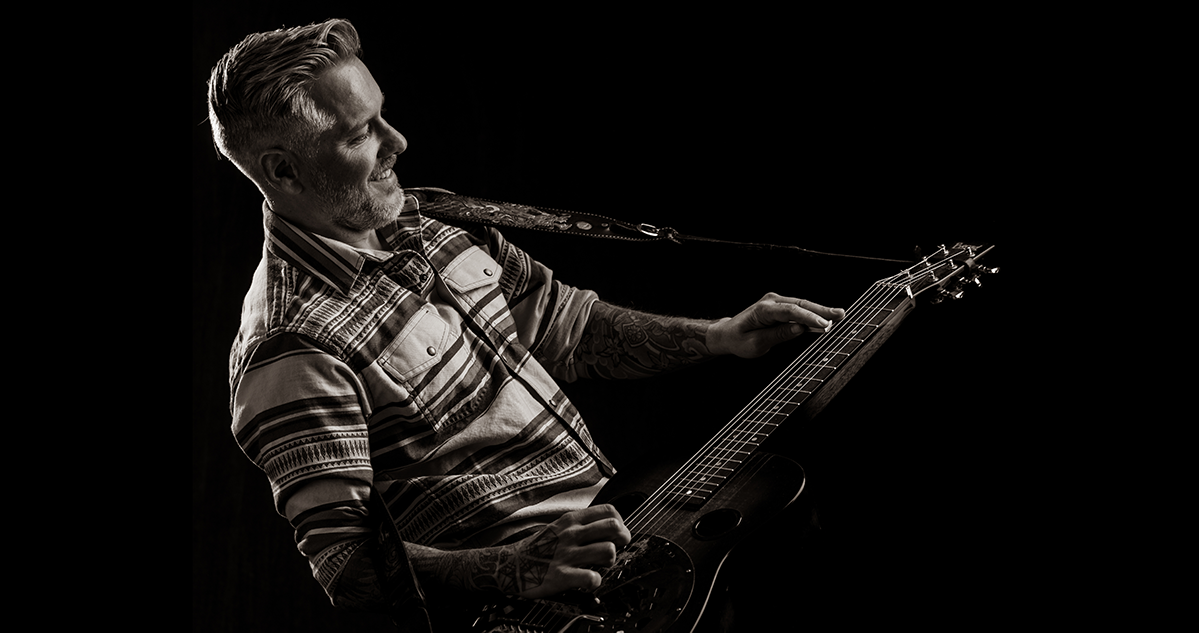
Andy Hall is one of the fiercest slide guitarists we have around not just today, but probably ever. If there’s any doubt, you needn’t look further than his newest release, 12 Bluegrass Classics for Resophonic Guitar. The Denver-based singer and Dobro player of the Infamous Stringdusters has always pushed the envelope, but had never taken the time to put his own stamp on the formative tunes that all musicians of the genre play with one another. From teaching thousands of students online via ArtistWorks, to his work with Earl Scruggs, Dolly Parton, or Jack Black, it’s obvious that Hall is a master of the instrument, and the art itself.

BGS visited with Hall to talk all things pandemic, resophonic guitars, and what this record means in a time like our own. 

BGS: What was your initial inspiration for this recording?

Andy Hall: It was an interesting time in the spring when I was recording it, you know, but it’s all about taking opportunities that present themselves and making the most of the situation and what you can do. When everything stops, you have no idea what’s happening, you’re pretty quickly trying to figure out how to continue to be expressive. Our band the Stringdusters has toured so much for so long. …I don’t want to say I took it for granted, but when it all went away it was surprising — there was this withdrawal from doing the things that I love to do.

These are songs I’ve played for years and years, and I’ve always wanted to put my stamp on them, my take, you know? I totally overlooked them as anything I would record, because I always played them in jams. For most people, they don’t know these songs. So, I thought it would be the perfect opportunity to get a recorded version of all these jam songs. It was really just a matter of me sitting, playing, and enjoying these tunes enough to get a good representation of them.

At the same time that you’ve put your own stamp on these tunes, you said that they were formative. I noticed the speed-up in “House of the Rising sun,” just like Mike Auldridge of the Seldom Scene would do. Are there any influences you’re drawing from, more than others, on this record?

Everyone has their own version of what their “classic” tune would be for a certain instrument. So “House of the Rising Sun,” definitely based on the Mike Auldridge version. To me, if you do that song on Dobro, that’s just how it goes. “Dixie Hoedown” was on Jerry Douglas’ first solo record, and something like “Fireball Mail” couldn’t be a more quintessential dobro song. I was always too impatient to sit and get every nuance of somebody’s playing, so I kinda gloss over it for the general idea and fill in the blanks myself. So due to my impatience I have my own style with a lot of them.

So that’s what a lot of these are like, but you can trace most of them back to an original version — like “Cherokee Shuffle,” Sally Van Meter, a great dobro player from Colorado, did that on a record called the Great Dobro Sessions. One that’s totally my own is the first one on the record, “Leather Britches.” I’d never really heard a version of that, but I wanted to try and get that repetitive, cyclical, rolling sound of the fiddle. So a lot of them are jam tunes that I never heard a Dobro version of, and wanted to develop my own thing with. 

“Foggy Mountain Rock” really comes through that way. 

I actually was fortunate enough to get to play with Earl Scruggs some, and that tune is a perfect example of how I didn’t take the time to learn it officially like Josh Graves. When I auditioned for Scruggs’ band, I went to his house and jammed with both Earl and a fiddle player named Glen Duncan. My mind was just blown, you know, we’re just sitting in Earl’s living room playing “Foggy Mountain Rock.” When we finished playing it, it was clear I hadn’t done it the way he was used to hearing it. And he complimented it! “Oh, I love how you put that four chord in there. I love when people do their own thing.” That really justified my whole approach. If Earl Scruggs says it’s cool, then I’m good. 

Do you teach many of these in your class over at ArtistWorks?

There are a couple in my school. “Panhandle Rag” is in there, “Cherokee Shuffle.” I’m about to transcribe not just the melodies, but the solos for a few of these so that the students can have a crack at them. It seems primed for that kind of thing. This is a specialty project geared at Dobro nerds. With the Stringdusters or other projects I do it’s a bit more broad, usually song-based. This record definitely ties into ArtistWorks; it’s just getting deep into the slide guitar thing… because that’s what I love! 

“I am a Pilgrim” is so woody, while “Cherokee Shuffle” has that cutting metallic ring of the Dobro… Can you talk about some of the guitars you used on this record?

“I am a Pilgrim,” “Amazing Grace,” and maybe “Foggy Mountain Rock” were all played on a 1929 Squareneck Tricone National guitar. To me it just has a super unique blues sound. So I used it on the tunes that were slower, just to get some variety. I wrestled with how much variety to put on the record in that way, because I have a bunch of different slide instruments. I’ve got a Chaturangi, which is an Indian slide guitar with all of these resonant strings, of course lap steels and things of that nature, but I decided I wanted to keep it kind of Americana sounding. The National fit into that. All the rest I did on my favorite Beard guitar.

Speaking of formative years, I’m curious if there are any younger Dobro players that stick out to you, or even influence you?

For sure. As a Dobro player, when I was in my twenties, at a certain point I kinda felt like I had heard everything, because there weren’t all that many. I’d heard all of the Jerry Douglas and Rob Ickes, Mike Auldridge and Josh Graves. There’s a lot to dig into, but compared to any other instrument, there was a much smaller pool of stuff to draw on. It’s been cool as new players come up to hear new styles. I think the first guy that was new when I first moved to Nashville was Randy Kohrs. He had a technique that nobody else had.

Out of that came a couple of younger players that I really love like Josh Swift, who played in Doyle Lawson’s band for years. His technical ability is just insane — nobody else can do what he does. There’s a young guy named Gaven Largent who I remember teaching when he was probably 12. There’s a guy named Tommy Maher, who plays in a band called Fireside Collective. Andy Dunnigan from the Lil Smokies, he uses the Dobro very lyrically, and he’s the lead singer too. I love seeing that — a lead singer Dobro player!

I’d say one of my biggest influences in recent years is Roosevelt Collier, a lap steel player. I met him in 2013, on JamCruise, and of course became fast friends with the slide guitar connection. We stayed in touch and actually did a record together a few years back. Roosevelt’s very gospel, sacred steel, very singing, very emotive style, is something I’ve really tried to absorb. It just gets you in the chest. 

What do you foresee, or hope, will be the impact of this record?

There’s something about the coronavirus, or the lockdown, that made every part of life simpler. A lot of things got stripped away and we just got down to basics, be it hanging out with our families and making food, or with the music we’re not doing big tours or big production — we’re sitting in our basements by ourselves playing. It’s certainly one of the silver linings of the whole pandemic thing, the simplicity and the sweetness, and that’s what I was feeling with this. It’s just a reflection of me sitting and playing, and hopefully people will relate to that. People have had to strip everything down to being simple, and that’s what this record is. It’s a reflection of that return to the basics that the pandemic has put on us. It’s really forced us to get back to the root of why we do what we do!


Photo credit: Tobin Voggesser
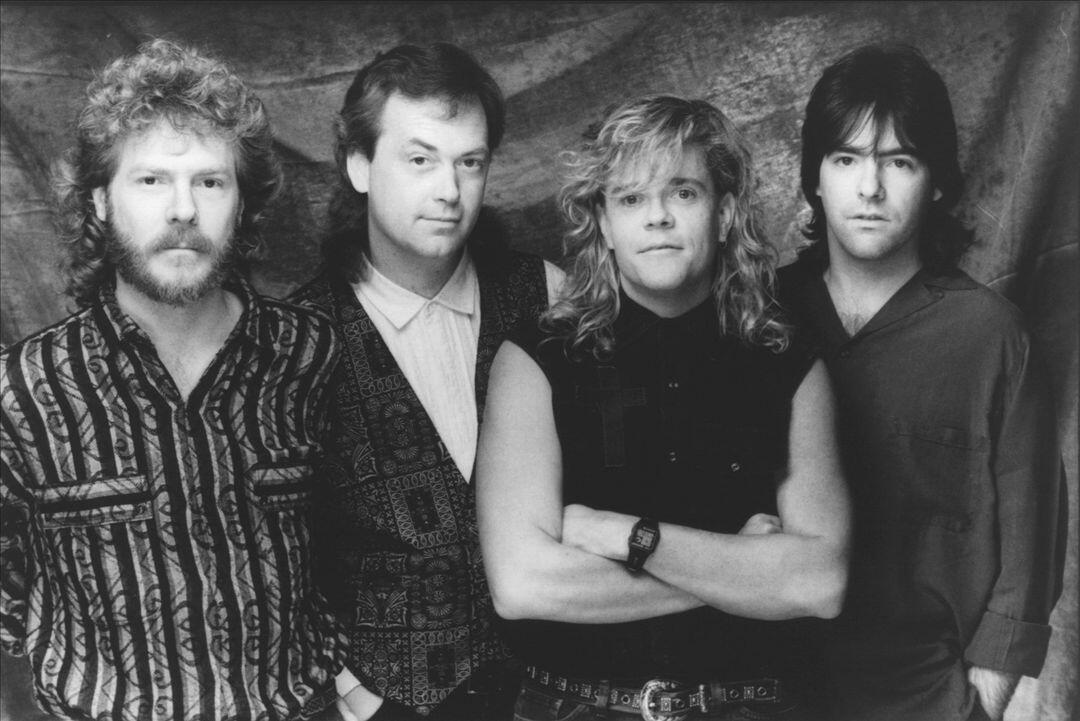
The String – New Grass Revival

New Grass Revival showed the world new ways of playing and thinking about bluegrass music between 1972 and 1989.


LISTEN: APPLE PODCASTS

Founded and led by fiddler, mandolinist and singer Sam Bush, two different lineups reached new audiences, interpreted and wrote important repertoire and ushered in today’s modern and very popular jamgrass scene. The String talks with Bush and the rest of the 1980s lineup, banjo player Bela Fleck, singer and bass player John Cowan and singer, guitarist Pat Flynn in a special episode on the even of NGR’s induction into the Bluegrass Hall of Fame.

New Grass Revival: Four Members Look Back on Their ’80s Albums (Part 2 of 2)

A beloved band that was perhaps ahead of its time, New Grass Revival will be inducted into the Bluegrass Hall of Fame during the IBMA Bluegrass Music Awards on October 1. In the second half of our oral history with New Grass Revival, we hear from band members Sam Bush, John Cowan, Béla Fleck and Pat Flynn. Read the first half of the interview, which is part of our celebration of the 75th anniversary of bluegrass.

In 1981, founding members Courtney Johnson (who died in 1996) and Curtis Burch left the band after a long tour with rock ‘n’ roll star Leon Russell. As a result, New Grass Revival began its newest incarnation with Béla Fleck and Pat Flynn.

Sam Bush: Courtney and Curtis were older than me and John and they were just burned out. We had worked harder on the road with Leon than we’d ever worked in our lives.

Pat Flynn: New Grass Revival had established a following on the circuit in the late ’70s, but Leon Russell had sucked them into his orbit and taken them away from the bluegrass world. So by the time that band [lineup] broke up, they really had to start over.

SB: I had met Béla in a band he played in called Tasty Licks, and Béla had hired me as the fiddler on his first album, Crossing the Tracks.

PF: Béla was a smart kid. He thought, “If I’m going to come out with a solo album and nobody knows who I am, why don’t I hire high-profile people to play on it?” That’s a smart move!

Béla Fleck: I liked the original band when I heard it, but I admit I was attracted to smoother and jazzier stuff at the time. I have matured a bit since then and now I am a huge fan of the early band, their bravery and iconoclastic spirit, and a poetic expression of their time and place. They were committed to the moment and improvising, and taking the music to a new place that resonated with a lot of folks who loved bluegrass, but it didn’t totally represent them.

SB: Pat and his friend Scott Myers had opened for New Grass Revival on the Colorado tours we did. We loved his guitar playing because it wasn’t like the bluegrass players. He was a rock electric guitar player that could do it on acoustic.

PF: I’d moved from Los Angeles to Aspen, Colorado, and got to know the band at Telluride. Sam had a hand in writing some songs, but they really didn’t have an in-house songwriter. I had always written songs for the bands I was in. And Béla brought a unique and original instrumental vision. So all of a sudden you had two new people that could supply original material.

SB: They were the two musicians who could bring the next step of another sound for us. I called Garth [Fundis, the band’s producer] and said, “You’ve got to come hear these new pickers we’ve got, this is something, this is really good.” I knew it was too hot for me to handle — I didn’t feel I was qualified to produce the four of us. We needed another ear, an outside opinion, because we had so many ideas between the four of us.

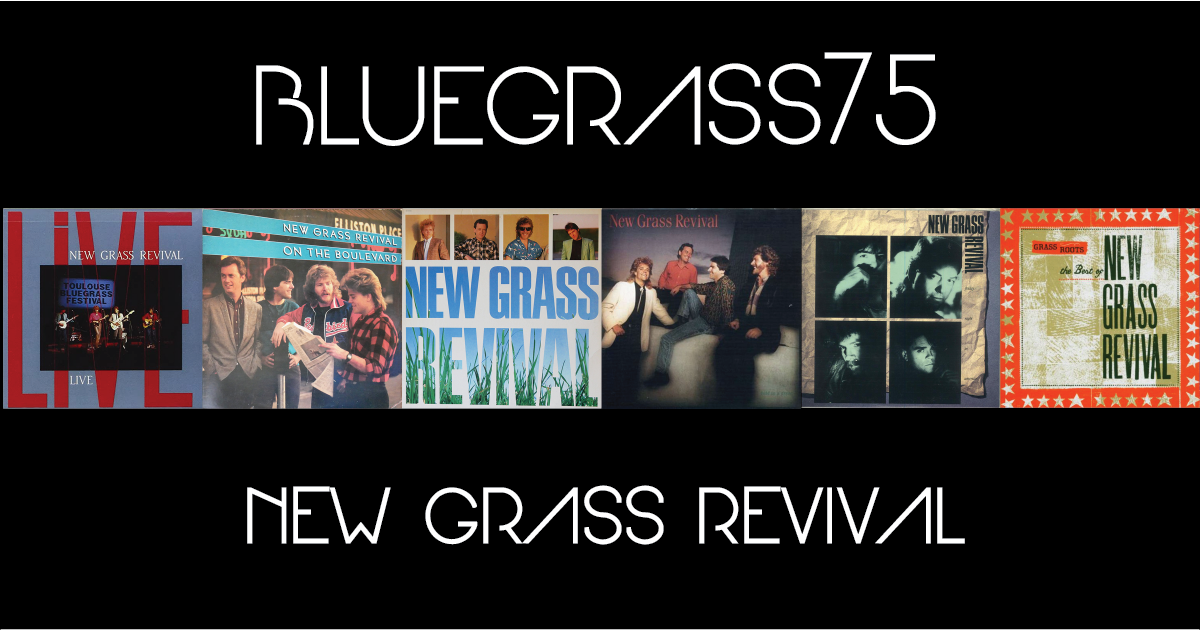
PF: On the Boulevard was the first album we released in the US, but we’d done a live album in France almost a full year prior. Technically Live in Toulouse was the first album we made as a new band.

JC: We’re playing like a well-oiled machine; it’s really a good record. It has one of Sam’s instrumentals on there called “Sapporo” that might be 11 minutes long!

SB: The idea of “Sapporo” started when the band went to Japan for the first time. It was my favorite city over there; it was also my favorite beer. A mandolin player over there taught me a five-note Japanese scale and that is a recurring riff you hear us play as we jam.

JC: The first year we were together with Béla and Pat, the energy and the love and everything was way up, confidence was high. And On the Boulevard is one of my favorites. There’s no drums, it’s just the four of us.

PF: It was very fresh. I remember the recording sessions at Jack’s Tracks studio in Nashville. We had a decent budget from Sugar Hill, enough to record comfortably and take our time. I experimented with different guitars and arrangements. We were able to bring the music into the magnifying glass of a studio and really look at it in depth.

JC: The dynamic of the band had changed so much, because Béla was already miles ahead of everybody in terms of his ability to play. He practiced all the time. In the old band, I was in charge of shoveling coal into the engine and Sam was flying around on top painting whatever picture he wanted to paint. Courtney and Curtis, they were kind of like myself, advanced support players. But now you’ve got two other players who can play at the same level of Sam. So we could take this train anywhere. We could get off the tracks.

PF: I had brought some songs with me to the band and I was very happy with “On the Boulevard.” I had written it prior to joining. It was pretty much autobiographical. I’d been living in Thousand Oaks, California, and there’s a boulevard that runs through the middle of the Valley, and as I watched it from the window it was like its own little world, a parade of passing people. It was one of the earliest things we worked out.

SB: My songwriting partner Steve Brines had died a sudden death of a heart ailment he didn’t know he had. So Steve was gone and I was still writing instrumentals, but I lost my enthusiasm for songwriting.

PF: I was especially happy with “One of These Trains,” the way the material came out, and the band took to it so naturally. I was encouraged that I was in the right place with the right people. I loved Sam’s instrumental “Indian Hills,” and John did a great blues number called “Just Is.” We were discovering each other’s powers and personalities as musicians and friends. I remember it very fondly. We were struggling for employment to connect with the old fans and that album was a big help — when it came out, we created a pretty big buzz.

SB: Toni Foglesong told her husband Jim, who was the president of Capitol Records Nashville, “I heard a band that makes a sound like nothing I’ve ever heard before.” So, Jim came to hear us and he said, “I want you guys to record. I don’t know how we’re going to sell you but I want you to be yourselves.”

Two studio albums followed: New Grass Revival in 1986, and Hold to a Dream in 1987.

SB: Every time new people joined, we encouraged them to bring their influences into the music. When Pat joined he was influenced by those Southern Californian songwriters like Jackson Browne, and the country-rock Telecaster picking he knew. One song where I specifically hear Pat’s southern rock influence is “In the Middle of the Night,” on the ’86 album.

PF: I was very involved in the country-rock sound like the Eagles and the Flying Burrito Brothers and the songs I wrote were well-fitted for a bluegrass approach. I didn’t have to make adjustments musically or lyrically, just in the area of arrangements. I had to make sure the songs I wrote had great solo spots for the instrumentalists and I had to fit the songs to whoever was singing, either John or Sam. So I started to instinctively shape my material where there was plenty of room for improvisational playing and also good range of vocals for those two.

BF: This band was full of guys with very different musical influences. If you didn’t want to be challenged, it was the wrong place for you. Some folks surround themselves with people that love all the same stuff they do, and that can work too. But in New Grass Revival, we were all into different stuff, which we brought to the band to see if we could get our favorite stuff included.

SB: Béla is a jazz player and when he came in his favorite musician was Chick Corea. I had his records, but they didn’t make so much sense to me until then.

BF: I think my interest in jazz gave me some cool tools to work with in a bluegrass context. I wrote a tune called “Metric Lips” [on Hold to a Dream], which was partly in jig time. I feel like that main melody had some Chick Corea influence. Sam was highly influenced by John McLaughlin and his great bands. One of them was Shakti, a collaboration with Indian musicians. This seemed to encourage his interest and ability in odd meters, which I also was quite fond of exploring. So if you look at “Metric Lips,” you have Irish music, Indian music, and fusion jazz represented, along with some raging bluegrass. It’s puzzling that it actually works, but in my opinion, it does.

PF: When you’re in a bluegrass band, it’s blend or die! You’re cramped inside a van together and you’re sleeping feet to nose. You’re in a very confined space together more than you are with your significant others back at home.

JC: We called our bus The Bread Truck. We’d bought it from a dry cleaning business. It wasn’t like the 36-footers I had in the Doobie Brothers; it was less than half of that, closer to a van.

PF: John slept half the time, I would be reading a book or writing a song, Sam would be listening to reggae or some weird eclectic thing, Béla was always fiddling with a new tune.

BF: For me it’s the intention and commitment to the ideas that make them work in this band. The same ideas might not work for a band that didn’t play so confidently. Of course we loved bluegrass and that was the common denominator. Each guy also played with a savage fervor or intensity, and perhaps that was another denominator.

PF: We could really charge each other up with the solos. We admired each other, and when somebody threw a flaming ball out there it would be a challenge. And in that exchange, gosh, we became so much better players. I remember listening back to tapes and thinking I lifted myself up and above myself. We all did.

BF: The new band with me and Pat was a somewhat cleaned-up version of the band. We still improvised and pushed hard, but we also were going for a supercharged, seamless tightness.

PF: The thing I remember that we developed between the first two albums was a hardcore consistency. We could turn it on and it would just come on full-bore despite whether or not there was a good sound system or the weather was bad or the crowd was sluggish. We could always count on each other to present a united front. There were no weak links. We just locked into that energy and never lost it.

BF: And we made singles for country radio, which is hard to imagine the early group doing.

SB: We knew we were going into a country market, but I think there’s a misconception that Capitol Records changed us, when in fact the change came from us. We were the ones that said, “We’ll try this song,” and maybe we wouldn’t have tried it in the past.

BF: We were still too out there for it to work, but we were trying to take the music closer into the mainstream, and that was bringing a lot of new people into the scene and showing them what bluegrass could produce.

PF: We would laugh about that in a sad way. The jocks would come to us and say, “I love your stuff, I listen to it at home,” and we’d say, “What about playing it on air?!” They’d say “Yeah, but it’s bluegrass….” We finally got “Callin’ Baton Rouge” into the top 40 which opened up a lot of shows and airplay for us. But we ended up disbanding before we could really bring that home.

SB: For our last album, Friday Night in America, Wendy Waldman became our producer and we really tried all kind of things on that. It’s hard for an athlete to know when to stop, but I really think our last record might be our best one.

PF: I saw a deepening musically. John’s vocals had got better and better, but he also doesn’t get the props for his bass playing. He was a terrific player — listen to his work on Friday Night in America, see how he connected the melodies, the tone he got and the way he tied together the four instruments. They would get noticed, but the glue was John.

SB: John and I had been together 15 years and we were burned out. We lived on the road and I was suffering responsibility overload. And we couldn’t possibly accommodate all that Béla was writing, the type of tunes he was writing. I physically couldn’t play them and neither could the rest of us! We all loved each other, but it was time for him to go on, he needed to express himself. Because at that point it’s not about making money, it’s about musical happiness and your satisfaction.

PF: We’d got together in 1981, and we played our last job as a band on New Year’s Eve, the last day of 1989. We were opening for the Grateful Dead at the Oakland Coliseum, 10,000 people inside and 5,000 outside. That night was particularly memorable — on the right side of the stage sitting nearest Béla was Bonnie Raitt, on the left side, near to me, was Jane Fonda — and I’d always thought what a shame we didn’t release that. Years later someone walked up to me and said, “Remember when you guys opened for the Dead?” I said yes. He said, “Have you got a copy of that set?” I said no. He said, “Do you want one?” A tape of our concert had leaked out among the Dead fans. I contacted a friend at Capitol Records and then that set was remastered and released on a two-CD set called Grass Roots, which has stuff you wouldn’t find on our records. It had its rough spots as a live tape, but you’ll hear that energy and visceral connection we had with each other on stage, you sure will.

(Editor’s note: Read part one of our New Grass Revival Bluegrass 75 feature.)


MIXTAPE: Songs That Changed Jon Stickley’s Life and Still Blow His Mind

When I was a senior in high school, my lacrosse teammate Andy Thorn loaned me a couple CDs and a mandolin. The two CDs were the original David Grisman Quintet album and Sam Bush’s Glamour and Grits. I was an angsty teen drummer in a punk band, and when I popped the Grisman album in my Sony Discman and pushed play, my life changed forever.

We started a little band and I started learning mandolin and making weekly trips to the local record store to buy every “newgrass” album I could. I didn’t know anything, so searching through the bluegrass/country section was an adventure of discovery. I learned to recognize the font that Rounder Records used and started using liner notes to find other musicians to listen to.

A lot of the tracks on this list are track #1 on the album, and I think that’s because when I heard them for the first time, they magically seared themselves into my brain. When I hear them today they inspire the same excitement as they did when I first heard them, and they have had an enormous impact on the music that I create for the Jon Stickley Trio. — Jon Stickley

David Grisman – “E.M.D.”

The first track I ever heard in the vein of bluegrass/newgrass. I heard David Count “1,2,3,4…” just like the Ramones! Then they launch into the most indescribable, unbelievable, clean, rockin’ jam I’ve ever heard. Also my first introduction to my guitar hero, Tony Rice. Nothing compares to this track!

Sam Bush – “Whayasay”

Another leading cut. This was my introduction to the one and only Sam Bush. His kickoff tells you everything you need to know about Sam’s music. It’s masterful, tasteful, and it freakin’ ROCKS. Then he goes totally Mark Knopfler at the end. Blew my young mind!

Jerry Douglas, Russ Barenburg & Edgar Meyer – “Big Sciota”

I picked this record up at the store because, on the back cover, they are dressed in gorilla suits. I thought, these dudes MUST be cool. Something about the tone of this record is unparalleled. It’s just the nicest-sounding acoustic record I’ve ever heard. Still cook dinner to it almost every night and my wife walked down the aisle to another track from the album called “The Years Between.”

Ricky Skaggs & Kentucky Thunder – “Pig In A Pen”

Holy crap. This is another album I bought blind at the record shop knowing absolute nothing about the music. To this day I have never heard anything rock this hard! Also, my first intro to a big guitar hero, Bryan Sutton.

Bryan Sutton – “Decision At Glady Fork”

Senior year of high school my uncle Pat took me to the Béla Fleck Bluegrass Sessions concert. I knew who Sam Bush and Béla were, but it was my first time hearing Jerry Douglas, Stuart Duncan, and the young Bryan Sutton. They played this song and the audience pooped their pants!

Béla Fleck – “Blue Mountain Hop”

The ultimate supergroup in my opinion. This song got me thinking about composition and arrangement in a new way. It seems like each new part of the song was written with each individual soloist in mind. Also the giggles and growls in the intro remind you that they’re having a ball.

Béla Fleck & the Flecktones – “Sinister Minister”

Two words. Victor Wooten. Blew. My. Young. Mind! I’ve listened to this version of this song more times than I can count, and it’s one of the covers that we do in the trio. The Flecktones probably had more of an impact on our trio than anyone else out there.

The Bluegrass Album Band – “Blue Ridge Cabin Home”

This is another album where I had no idea what I was buying. It wasn’t until I looked at the back of the CD that I realized that Tony Rice was on it. It was my introduction to J.D. Crowe, Doyle Lawson, Bobby Hicks, and Todd Phillips. I fell in love with bluegrass banjo by listening to this song, and I was thrilled to find out there were five more volumes!!!

The Nashville Bluegrass Band – “Dog Remembers Bacon”

Another record store score that I grabbed just because “bluegrass” was in the title. LOL. These guys became my favorite group for years and this was always one of my favorite tracks. I learned about Gillian Welch from this album. Stuart Duncan is the best fiddler in the world!

Acoustic Syndicate – “No Time”

Man, I love these dudes SO much. My Uncle Pat gave this album to my dad around ‘98, and I promptly stole it. The chill energy of this album really spoke to me and I feel like it really embodies the spirit of the North Carolina festival scene. Super sentimental band for me!

Tracks from our new album “Scripting the Flip” that draw heavy on these influences:

Jon Stickley Trio – “Scripting the Flip”

This song is pretty much a bluegrass fiddle tune turned on its head. It reminds me of some of my favorite newgrass instrumentals that take the music somewhere new.

Jon Stickley Trio – “Driver”

Well, given that my buddy Andy Thorn got me into this music waaaaay back in the day, I had to bring it full circle and write a tune for him to come in and play on. This piece definitely draws on the music of the Flecktones and some of the tunes they play in odd meters.

Jon Stickley Trio – “Bluegrass in the Backwoods”

Kenny Baker, Bill Monroe’s longtime fiddler, was surprisingly one of the most innovative of the classic bluegrass pickers! He is thought of as a traditional fiddler, but his music is really anything but. I think this tune was way ahead of its time and we love the elements of gypsy jazz and Latin music in the melody. We HAD to cover this on at some point and it was so much fun!


Photo credit: Sandlin Gaither

The String – Leftover Salmon

Vince Herman and Drew Emmitt met in 1985 on Vince’s first night in Boulder, CO and formed a lifelong musical bond. With banjo player Mark Vann they merged two bands into one and became Leftover Salmon at the dawn of 1990.

LISTEN: APPLE PODCASTS

In the 30 years since, they’ve earned the respect and partnership of the highest levels of the bluegrass and acoustic worlds while playing music that’s as adventuresome as it is laid back. Herman and Emmitt marked the anniversary with a duo acoustic tour. The String’s host Craig Havighurst caught up with the pair at Nashville’s City Winery for a wide ranging talk about their years together.

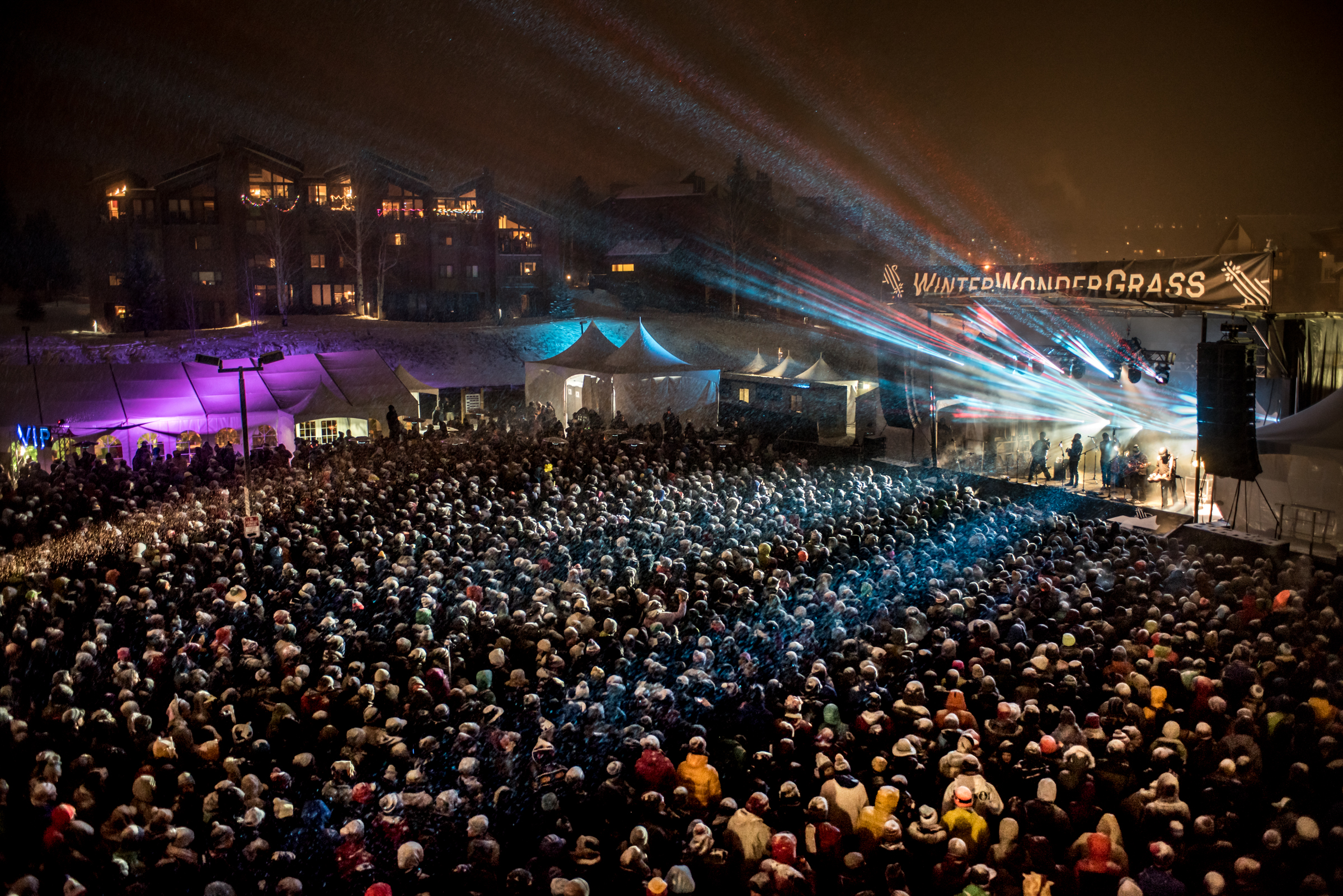
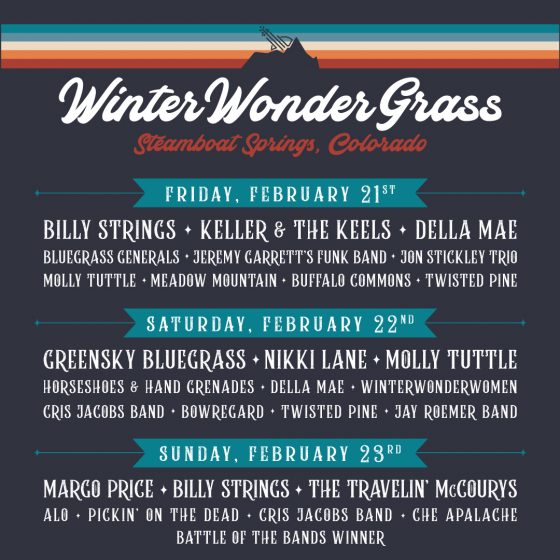
ANNOUNCING: WinterWonderGrass Releases Daily Schedule for Colorado Festival

As February’s kick-off of WinterWonderGrass 2020 grows closer, the festival is excited to share with BGS the official daily schedule for their Colorado edition, taking place February 21-23 in Steamboat Springs. One of the biggest delights includes the announcement of a second headlining performance by Billy Strings, who will now play the main stage on both Friday and Sunday nights.

In conjunction with the daily schedule announcement, WinterWonderGrass plans to release a limited quantity of single-day tickets starting Tuesday, December 3. Weekend general admission passes will move to a new pricing tier starting Tuesday, December 10. Tickets and more info available here.


“We are super pumped to announce that Billy will not only perform his first headlining WinterWonderGrass set on Friday night, but that he and his band really wanted to stick around and enjoy that Steamboat hospitality, so we added him as a co-headliner on Sunday before Margo Price,” festival founder Scotty Stoughton says. “It’s a testament to Billy’s appreciation and gratitude for his fans, the community, and the WinterWonderGrass family.”

Gates open at 1:45 p.m. each day and music kicks off at 2 p.m. during the three-day music festival, with Friday and Saturday night’s programming lasting until 10:30 p.m. All attendees 21+ are invited to take part in the complementary beer sampling from 2:00-5:00 p.m. each day during the event.

Performances across the Soapbox, Pickin’ Perch, and Jamboree stages will see many artists perform two consecutive sets, and each night, performances on the Close Pick stage will close the festival.

Tickets for all three stops are now on sale and moving fast: Colorado | California | Vermont.

VIP tickets to Steamboat’s stop are already sold out, but fans are encouraged to check out the official fan-to-fan ticketing exchange powered by Lyte if they’re in search of tickets as more of the dates and tiers sell out.

Stay tuned for more information on Grass After Dark programming and beer partners for the 2020 season.

Check out the full, announced schedule:

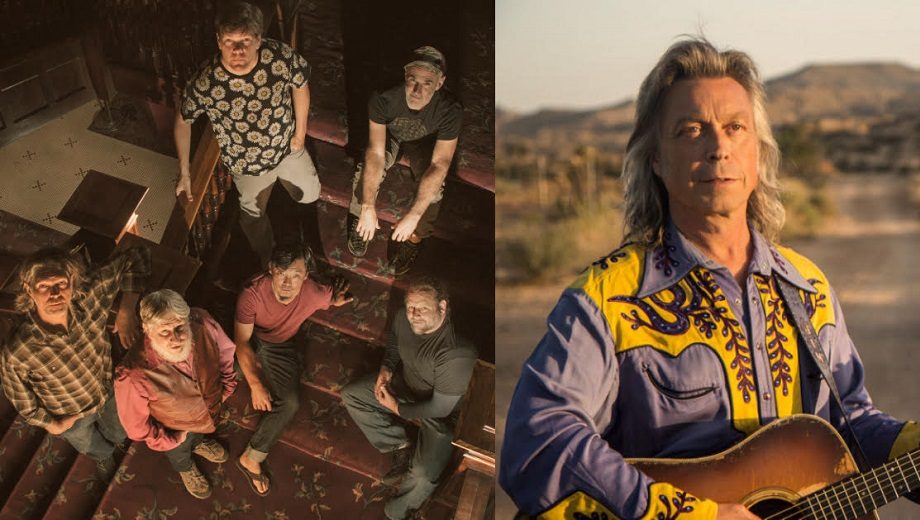
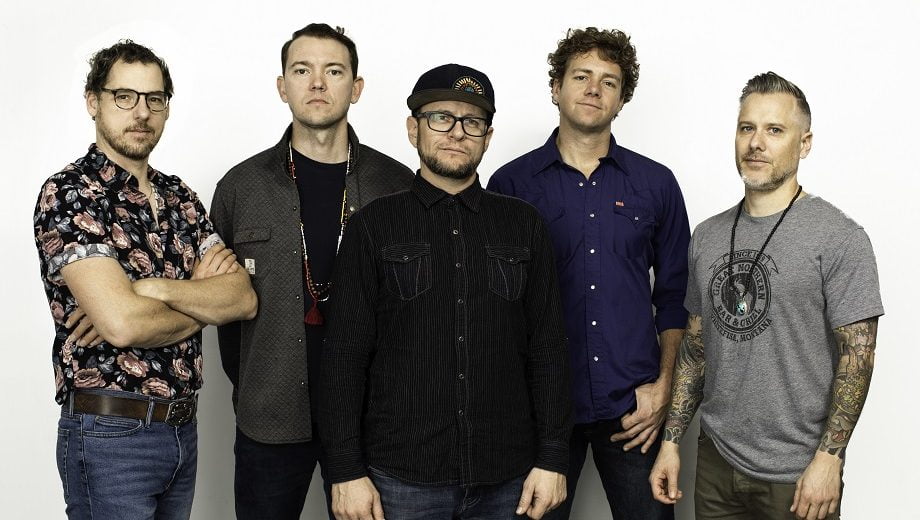
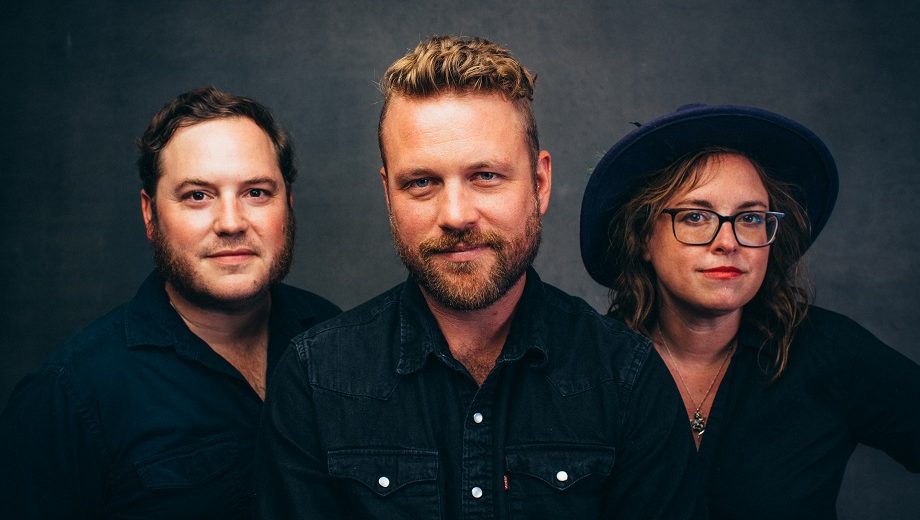
Twisted Pine kicks off the music for the weekend on the Soapbox stage from 2:00-2:30 p.m. and 3:40 – 4:20 p.m., followed by Molly Tuttle at 5:35-6:15 p.m. and 7:45-8:25 p.m. Steamboat locals Buffalo Commons open the Pickin’ Perch stage with performances at 2:00-2:40 p.m. and 3:40-4:20 p.m., followed by the Jon Stickley Trio at 5:35-6:15 p.m. and 7:45-8:25 p.m. The Jamboree stage opens on Friday at 2:00 p.m. with performances from Meadow Mountain at 2:00-2:40 p.m. and 3:40-4:20 p.m., with two sets from Jeremy Garrett (the Infamous Stringdusters) + Friends at 5:35-6:15 p.m. and 7:45-8:25 p.m.

The Bluegrass Generals (ft. Andy Hall & Chris Pandolfi of the Infamous Stringdusters) will open the Main stage on Friday from 2:30-3:40 p.m., followed by Della Mae’s headlining performance from 4:20-5:35 p.m. From 6:15-7:45 p.m., Keller and the Keels will take over the main stage and Billy Strings’ headlining debut at the festival will take place from 8:25-10:00 p.m.

Saturday welcomes local Steamboat pickers Jay Roemer Band from 2:00-2:30 p.m. and 3:40-4:20 p.m. on the Soapbox stage, followed by two additional performances from Della Mae at 5:35-6:15 p.m. and 7:45-8:25 p.m. Twisted Pine returns, as well, for performances from 2:00-2:40 p.m. and 3:40-4:20 p.m. on the Pickn’ Perch stage, and the collaborative WinterWonderWomen follow with performances at 5:35-6:15 p.m. and 7:45-8:25 p.m. Telluride Bluegrass winners Bowregard takes the Jamboree stage from 2:00-2:40 p.m. and 3:40-4:20 p.m., with Cris Jacobs Band to follow at 5:35-6:15 p.m. and 7:45-8:25 p.m.

Saturday’s Main stage opens with Horseshoes and Handgrenades from 2:30-3:40 p.m., followed by a headlining performance from Molly Tuttle at 4:20-5:35 p.m. Nikki Lane follows, with a set from 6:15-7:45 p.m. and Greensky Bluegrass takes the stage for their headlining performance from 8:25-10:00 p.m.

The Battle Of The Bands winner from the January 11th competition will open Sunday’s Soapbox stage from 3:15-3:55 p.m. Two sets from Che Apalache follow, with sets at 5:10-5:50 p.m. and 7:20-8:00 p.m. Cris Jacobs Band returns on Sunday for three sets on the Pickn’ Perch stage at 3:15-3:55 p.m., 5:10-5:50 p.m., and 7:20-8:00 p.m. The Jamboree stage closes out with three sets from Pickin’ On The Dead at 3:15-3:55 p.m., 5:10-5:50 p.m. and 7:20-8:00 p.m.

ALO opens the Main stage on Sunday, with a performance from 2:00-3:15 p.m. and Travelin’ McCourys follows from 3:55-5:10 p.m. At 5:50 p.m., Billy Strings returns for his second headlining performance, and Margo Price closes out the festival’s Main stage from 8:00-9:30 p.m.


Photo credit: Tobin Voggesser

String Cheese Incident, Jim Lauderdale Share “Stories For Another Day”

Colorado-based jamgrass troupe String Cheese Incident turned 25 this year, and although they’ve already established themselves as one of the most accomplished groups in jam music, they show no signs of slowing down in the next quarter-century. The band has spent their 25th year touring the country and releasing new music on a regular basis, their most recent single featuring the country-music-great Jim Lauderdale. (See the premiere below.) We called up SCI’s lead singer Bill Nershi to discuss the history of the band, how they’ve managed to stay so productive, and more.

BGS: Thinking about the fact that you’ve been a band for a quarter of a century has got to be awe striking. How have you managed to continue doing things your own way for so long?

Bill Nershi: Ever since we started, which was really 1995, we decided we were going to actually go for it. We met and played some local shows for a while, and then we moved out here to Boulder in ’95 and really started getting after it as far as touring. All these bands used to look for record deals and when we talked about it with other bands who had been through that we heard a lot of negative stories about dealings with record labels, so that’s when we decided to start our own label.

Twenty-five years ago, that must have been a big decision to make. How did the band come to the conclusion that music is what you were going to commit to?

We’ve always been trying to achieve things and get the best results we can from playing together. We work hard on rehearsing. Trying to improve our weaknesses as a band and trying to promote the positives. But really, when we first started, we were encouraged by the audiences that we were playing to and that really motivated us.

I had been playing a long time, and other people in the band had played music with different people, but that was the first time for me that I got together with a group that clicked right away. Even before our skills were really developed musically, there was a chemistry that we could feel — mostly that the crowd had picked up on — and that encouraged us to go for it. From then it was just “How are we going to go about this?”

We’re not going to be the band that has the hit single. So, we looked at some of the bands that had paved the way for us a little bit. How did the Grateful Dead do it? They didn’t have a hit for a really long time but they developed a following. And Phish of course was already successful. So we decided we were going to have to start traveling around and playing lots of shows in lots of different areas of the country to hit all the regions. We had two years where it seemed like I was gone almost the whole time. I think we played 450 shows in two years, and that gave us a lot of momentum for developing a bigger fan base.

It sounds like you approached this very methodically and really thought about how you were going to fit into the grand scheme of music.

Yeah, it needs to be thought out. Especially when you’re out that much and making sacrifices. You know, not seeing your family, or even just not being able to be at home. The idea for us was always, “We want to make every gig count.”

We were going around the country playing these clubs. Some of them had good sound systems, some of them didn’t, but we were carrying our own sound system. Money that we were making touring, which was not a lot back then, we put back into the band. We bought a sound system. We bought a bus from Crested Butte Mountain [Resort], and it was a good transit bus. We gutted it and put in bunks, so when other people were driving around in those little vans, which were just kind of torture chambers on wheels, we had our bus that we were driving around the country with.

We had a trailer with the sound system and our back-line amps and stuff, so we were going into places and sounding a little bit better than the last band sounded, you know? Trying to make it count when you’re making a lot of sacrifices. You don’t want to be wasting shows and wasting the ears that you do get in the room.

And that hits on another point: You’re perhaps best-known for your live performances. How does performing a song live contribute to its development before you hit the studio to record it?

Sometimes you have a new song that you play the same way for months, or even a year, and then you discover a different part or a way to open up a section of a song and go a little bit of different direction. Or you decide, “Hey, this would be better if it had one more verse here.” Things happen that change the song. It’s a bit of a quandary whether that’s better, or whether it’s better to release a song, let people hear it, and then play it live, which is what we’ve been doing mainly lately.

Sitting down and arranging a song in the studio before you play it live — what does that process look like for you?

You want to try to look at the song at some different angles and play it with some different approaches to see if there’s anything there that you may have missed or you might be able to add to the song, or what parts are expendable if you want to make it a little shorter.

The thought in the back of your head is, “I hope I don’t put this out and decide that part of it would be better played a different way, because then we’ll have to change the song and it’s going to be different than what the recording is.” You’re trying to exhaust some different ideas to make sure that you’re not missing something, and at the same time thinking about what are the crucial things that make this song tick so they can be brought the forefront when you record. Build the songs around the best ideas in the songs.

Moving on to this latest single with Jim Lauderdale. I hear very clear elements of his sound along with very clear elements of your own sound. What did that collaboration process look like?

I’ve written, and other members in the band have written, with Jim Lauderdale before and we’ve always had good results. You never walk away from sitting down with Jim empty-handed. He’s like a stream of ideas. You get done with one idea and he’s already singing some melody into his recorder, or some lyric from your conversation with him. And he has this whole chain of ideas going at all times.

I like to show up when I write with Jim with some different ideas of my own. Whether it’s a chord progression, or a lyrical idea, or a concept. Just an idea for a song. So I went out to Nashville and spent a few days out there with him, and you don’t want to go into a project like that and be sitting around going, “Uh….” So you come in with some ideas.

For this song, “Stories for Another Day,” I had this melodic chord progression with all these different parts. I played with a few different ideas and I played this one thing in D minor that I had been working on. I had been trying to think about how to make it work as an instrumental, or with lyrics. I played it for him, and he picked three chords out of one of the three different sections and said, “Let’s just write a song with that chord progression right there. Those three chords.”

So I had a lot of stuff that was maybe gratuitous in this concept that I had and he plucked this one simple idea out of it. We sat down and started writing some lyrics to that. It’s great writing with Jim.

Looking at some of the artists you’ve collaborated with in the past 25 years, the list is seemingly endless. How much of your own sound has sprouted out of collaborating with so many different kinds of artists?

Everybody’s contributing, so you get this blend of different styles and you can come up with something you definitely would not come up with on your own. You also learn things from the different people that you write and play music with. They rub off on you either consciously or subconsciously. Co-writing and collaborating is really important.


Photo courtesy of the artist.

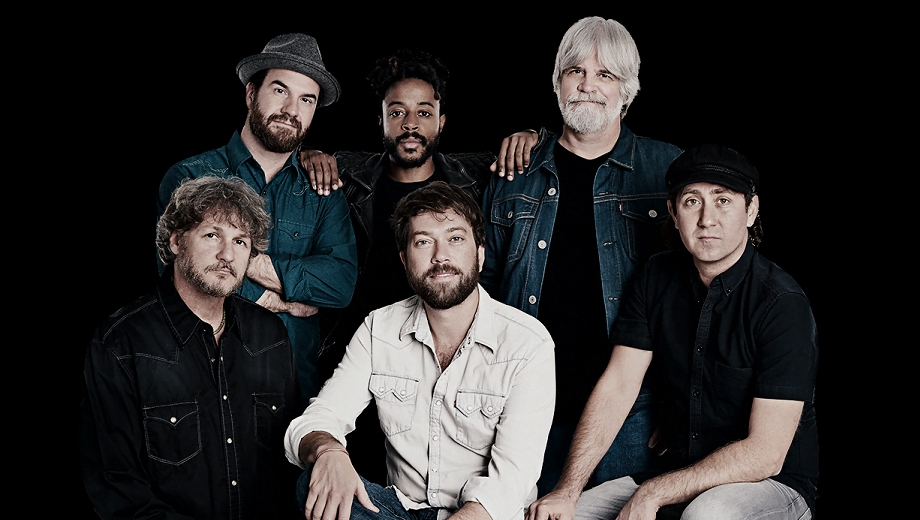
STREAM: The Infamous Stringdusters, ‘Live From Covington Kentucky’

Artist: The Infamous Stringdusters
Album: Live From Covington Kentucky
Release Date: November 15, 2019
Label: Tape Time Records

In Their Words: “I remember walking off stage that night in Covington, Kentucky and everyone in the band feeling like everything connected. The crowd, the music, the band — all felt like one for the night, and so we decided right then and there to release this show. [I] took the files to my studio and remixed the show, intentionally leaving as much audience in the mix as I could because, as in all our shows, I felt like they were as big a part of the energy as anything else. The goal was to bring the feeling of actually being at the show in to the mix. We believe it succeeded and, hope everyone can feel the love and gratitude we have for our fans in this release.” — Andy Falco, The Infamous Stringdusters


Photo Credit: Tony Hume

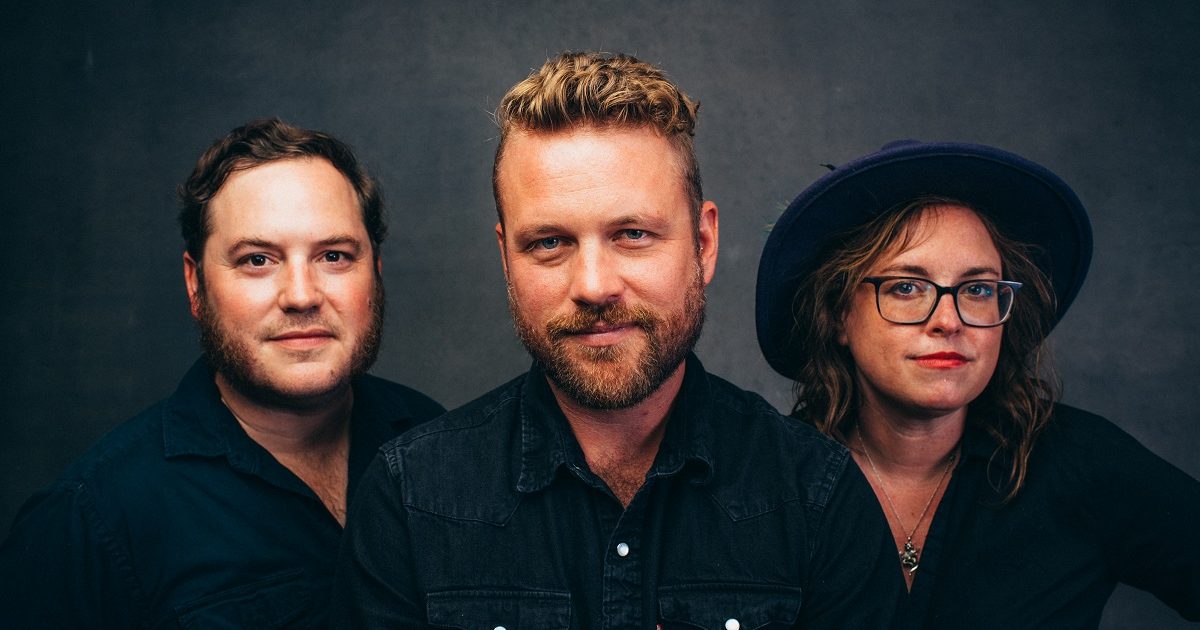
WATCH: Jon Stickley Trio, “Animate Object”

Artist: Jon Stickley Trio
Hometown: Asheville, North Carolina
Song: “Animate Object”
Label: Organic Records

In Their Words: “‘Animate Object’ is the trio’s current theme song. At heart, it’s a little flatpicking tune to have fun with, but we’ve rhythmically turned it on its head like we like to do. This video was shot in three different locations with deep significance to us. The World Famous Station Inn represents our love and respect for our bluegrass roots. Spirit of the Suwannee is where our band was born, and where we thankfully return every year to connect with that spirit and experience rebirth under the live oaks. And finally, the [Caverns and] Bluegrass Underground symbolize the deep, introspective dive we’ve taken into ourselves in search of the meaning of our music and where it is coming from. This track is the next step in a never-ending evolutionary journey that is the Jon Stickley Trio.” — Jon Stickley


Photo credit: Sandlin Gaither

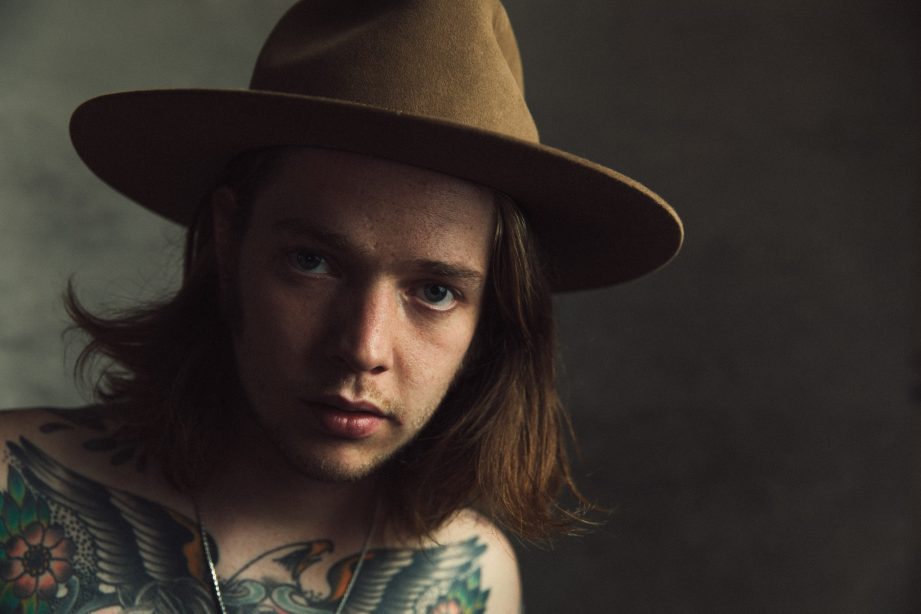
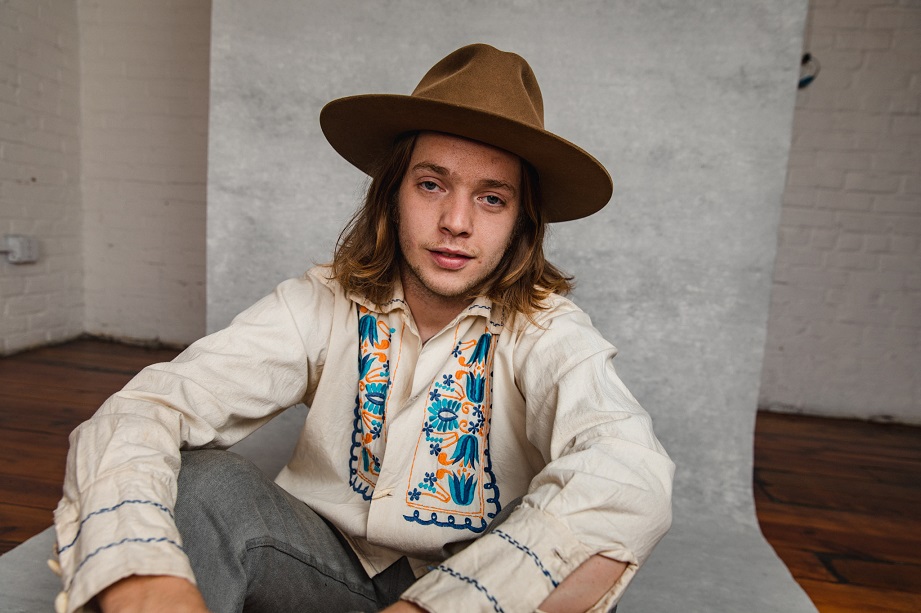
Despite Bleak Beginnings, Billy Strings Emerges as a Force in Bluegrass

Get Billy Strings on the phone, and the interaction will probably seem as much like a musical recital as a verbal conversation. He’ll most likely have a guitar in his hands, noodling around on scales or snatches of songs, sometimes as conversational punctuation marks. But mostly, it sounds like he’s thinking out loud with the instrument.

It’s a good time for Strings right now, who earned IBMA Awards last week for New Artist of the Year and Guitar Player of the Year. His very fine second album, Home, is out on Rounder Records. Checking at 50-plus minutes, Home is a wide-ranging album that showcases his remarkable, classic-bluegrass voice and even more remarkable six-string wizardry, confirming his status as one of the top young guns in the field. The album has 14 songs, pretty much every one of them a journey.

We caught up with Strings shortly before he hit the road on what will be a full season of touring across the U.S. this fall.

BGS: Is there ever a day when you DON’T play music?

Strings: Not usually. I do try to play all the time. Sometimes when I’m on the road playing every night, onstage more than two hours, I might feel like I want a little break: “When I get home, I’m not even going to touch it for a couple of days.” Never happens. It only takes about a day to get the itch and feel like I need to practice.

What form does practice usually take?

A little of everything. That right there is just doing some scales all over the neck in different keys. Metronome practice is good and I have not done enough of that lately. That will really whip your ass into shape. Playing along with records, too, or playing fiddle tunes, playing through songs I know and love. Coming up, I did not have these rigid practice regimens. I just played music.

But recently I’ve started getting into it more. I was inspired by the Rocky movies: “Man, he works out for months, running up and down stairs and training so hard for just one gig!” Every night I get in the ring, but I never train, never hit the bag. I need someone like Mickey yelling at me, “C’mon, kid, lemme see that major scale again! Now slip the G run!”

I saw a quote about how you learned to play with bluegrass, but learned to perform when you were in a metal band. What did you take away from your time playing metal?

I grew up watching bluegrass bands in suits and hats, singing and playing into the mic and standing very still. When I was playing in a metal band, we were all over the stage running into each other, spitting and headbanging. I remember I would start a show by running from the back of the stage into the audience, and they’d push me back onstage.

It was just this crazy energy and that was my first performing experience onstage in front of people. I do think bluegrass is more about music, listening to the notes. The metal band, we’d jump around so much it was difficult to play the correct notes. The music may have suffered, but we tried to put on one helluva show and I still sort of bring a little of that.

Your new album is called Home. Is there any significance to that as a title?

I would say there’s a lot. That came from a poem I wrote titled “Home” and turned into a song that was kind of obvious as the opus of the album once we recorded all the songs — the just kind of wild song of the bunch. So I figured we’d name it after that. I’m 26 years old, this is my second album and I’m sort of settling into life as a young adult. Up to now, not knowing what was happening kind of kept me alive.

Now I’m starting to feel a little bit like a grown-up. Also, on the road, we’re always dreaming about getting home. What does it mean to you? Home is something different for everybody — a place, a state of mind, a drink, a meal. When I get home, my friend’s grandpa grows some real good weed outdoors in Michigan soil. Smoking that is home right there. Home sweet home.

“Away From the Mire” is the longest song on the album and it seems like the centerpiece, a real journey. Did you know it was going to go that far when you started recording it?

It was spontaneous. We were recording, working on that one a couple of days and trying to figure out what to do with it. It felt like it needed a big guitar solo because I’m a fan of that. It’s a classic thing that always happened with ‘70s rock and roll bands: great song, verse, chorus, bridge and EPIC solo before it’s over.

A lot of times, me and the band will get into these moments and “Mire” was one of those we sort of landed on where I took my guitar and they followed along. It was not composed at all, just a jam. It did not take too many times through to get it. We were oiled up, had been in the studio a few days, and didn’t have to spend too much time on any of the songs. That whole jam in the middle, it’s all live.

Doc Watson seems like an obvious influence on your playing. Did you ever meet him?

Unfortunately, I never got the chance to meet Doc. I worshiped the man, you know? I started listening to his records and watching VHS tapes when I was 5 or 6 years old. Doc left a huge impression because his music was so alive with such heart and soul. I took my dad to see Doc once, the only time either of us got to see him. It was the Midland Theatre in Newark, Ohio, six hours away, the closest he was coming to us. So I got tickets for my dad, my mom, me and my friend Benji, who drove us there in his truck.

Seeing him in-person was incredible. He played “Shady Grove” and “Way Downtown,” and my mom and my dad and me were all crying because we could not believe that really was Doc right there. I enjoyed the hell out of it. That was in 2010, Doc with David Holt and T. Michael Coleman, and he forgot a lyric here and there but still picked something great. I’ll never forget it as long as I live and I’m so glad I brought my parents.

Growing up listening to Doc was something special, and a mutual love for Doc is a connection I share with my dad. We bond over Doc’s music, play it together and I think we do it justice, a little. He knows so many old Doc songs, the deepest cuts. He’ll pull out one he’s not played in years and remember all the words. He embodies the soul Doc put out there. We really worship Doc around my house. He was, is and always will be the best.

Were there other influential elders?

When I was little, my mom and dad took me to a couple of bluegrass festivals. Larry Sparks and Ralph Stanley made a huge impression. Those guys would walk through a crowd like a hot knife through butter, in their big hats and suits with banjo cases. That was the first time I heard bluegrass on a PA, loud. I’d heard it around the campfire all my life. But hearing Larry Sparks’ band up there with the fiddle and banjo and guitar and harmonies, I knew then what I had to do. I’d already been messing around on guitar. Seeing those dudes, I knew it was serious.

Have you ever thought about what else you might do if not for music?

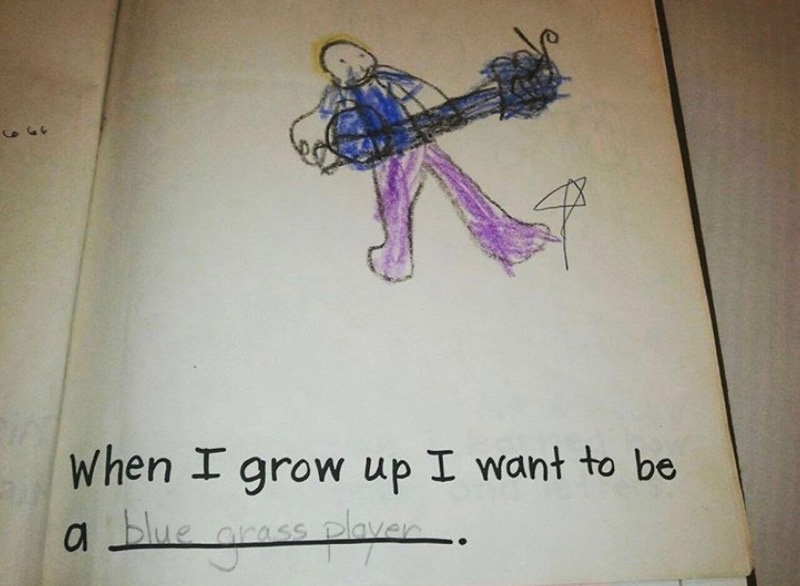
There was this picture I drew in kindergarten with a thing that said, “When I grow up I want to be a (blank).” I put “bluegrass player” and drew a picture of a guy with a banjo. So there it is. All I need now is the purple pants. I don’t know what else I’d do. I’m not a good mechanic or woodworker and I don’t like painting houses or carrying shingles up a ladder.

And I don’t like somebody wagging their finger in my face telling me what to do. I’m not good at dealing with authority figures. I’ve always had to do it my own way. I never thought music would even be possible as a career so I thought I’d always be a loser. But the last six or seven years have brought the incredible realization I can make it with music and not have to be a bum or drug addict.

Does that account for some of the heavy subjects on the record, like the song about drug overdoses (“Enough to Leave”)?

I always end up talking about this stuff, because it inspires a lot of my songwriting. When I reach down and look for what to write about, I always come up with things I’ve experienced in the past relating to substance abuse or loss or poverty. It’s sad how many people are struggling with all of that. I have a lot of friends who have gone in all sorts of directions, some good but some not. I’m lucky to have gotten out, and it haunts me. I still think about it a lot.

Maybe I’m looking in the rearview mirror too much when I should be looking out the windshield. But back there is what motivated me to get to where I’m at. It’s where I got my drive as a teenager, being around bums and meth-heads. I did not want to end up like that. It was either that, or keep running toward the light and working hard. I got a job in Traverse City, but I was playing gigs and realized, you can make a living that way even if you’re not a star. So that started to happen and I’ve been walking slowly upward ever since, reaching higher goals.

How much of a master plan do you have?

I know what I’m trying to go for, but at the same time I don’t. It’s a transparent vision where I know it’s something large and cool where I want to do good and be successful, but I don’t know what it looks like. I do feel like I’m moving toward dreams. More people are coming out to the shows, I’m able to explore more creatively and musically. That’s success and I feel good about it. I went from playing for tips to clubs and theaters, slowly working my way up. I remember renting minivans at Enterprise and having to sleep in parking lots because we could only afford one hotel room. I even got robbed once like that.

But I’ve always been willing to do whatever it takes to make the dream happen. If I have to stay up all night and drive 16 hours to play music, I’m willing to do it. The thing is, the more we grow as a band, we’re able to make those plans better so we don’t have to kill ourselves — play a few less gigs with a few less hours between them. It feels like it’s working, which I’m happy as hell about. I work hard but it’s so much fun it does not feel like work even though I’m physically exhausted. I’m sore and tired all the time but happy as shit, too. I’m lucky, man, really grateful.


Photo credit (live): Emily Butler; (portraits) Shane Timm