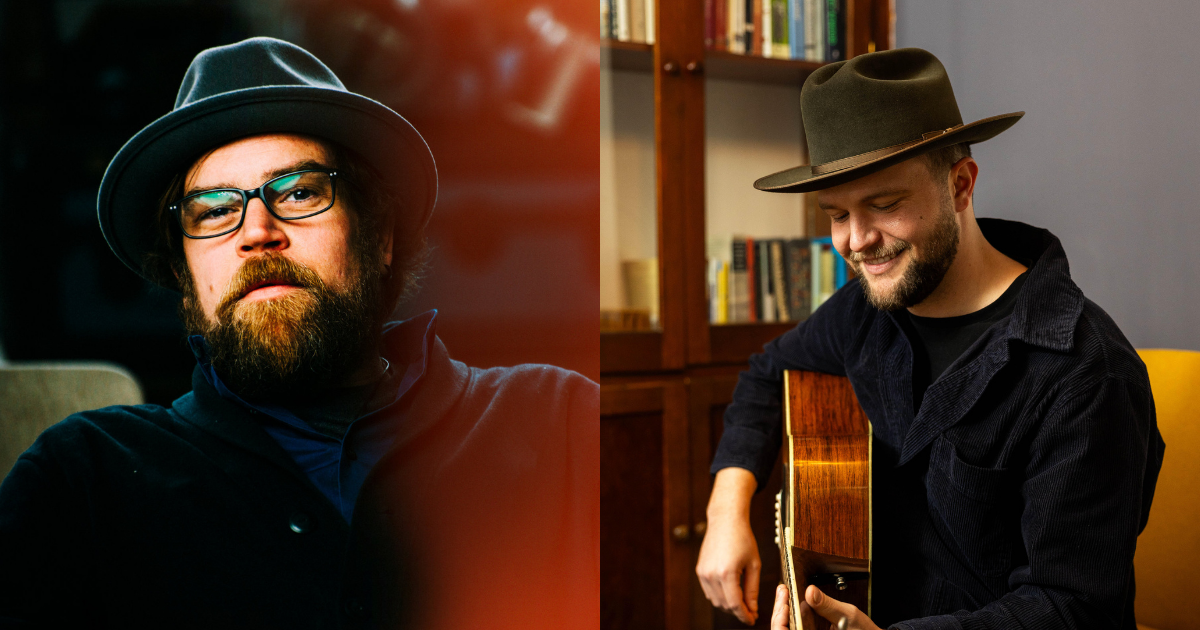
Happy New Year! We’re so excited to bring you our first collection of new music and videos for 2026. We’ve missed you over the past few weeks and, well, You Gotta Hear This…
Kicking us off, our old friend Joshua Britt returns with a new artist project, The Boy The Earth Sings To, and an official video for an original song, “Eyes Of God.” Falling on the continuum between gospel, sacred, and contemporary Christian roots music, the lush alt-folk track is built around the inspiration of a new mandola, tying the tone wood used to build the instrument to the forested visuals of the video. Meanwhile, Western North Carolina-based singer-songwriter Aaron Burdett unveils a new single, “Arthur’s Last Dance,” which pays tribute to folk dancer Arthur Grimes and his final performances at MerleFest before his retirement. It’s driving modern bluegrass appropriately perfect for flatfooting, clogging, and polishing those floorboards.
Then, from just up the mountains, Lonesome River Band also bring their first new single of 2026, “Bernadette,” written by Bob and Ginger Minner. Below, Bob offers his perspective on writing the tune, which he and his wife immediately imagined LRB recording, as soon as they had finished writing it. If you like crooked contemporary bluegrass that’s steeped in old-time mountain music – with a slightly dark, modal tinge – you’ll love this one.
Let’s continue up the mountains now, across Virginia and West Virginia to southeastern Ohio, where we’ll find the music of singer-songwriter Trey Hedrick and this new track, “Shoestring,” which features Tim O’Brien. It’s a testament to Hedrick’s grandpa, his relocation of the family to Ohio, and the way life, love, work, and place are passed down generation to generation.
Rounding out our collection this week, it’s a premiere we published elsewhere on the site this morning, as well. Celebrating his upcoming collaborative album, guitarist Bryan Sutton launches a hilarious and entertaining animated music video for “The Devil Went Down to Deep Gap” featuring Billy Strings, Del McCoury, and more. It’s a delightful reimagining of Charlie Daniels’ “The Devil Went Down to Georgia” that tells a fantastic version of Doc Watson’s origin story, pitting Doc’s style of picking against shredding metal electric guitars played by Sutton and Strings. You won’t want to miss this masterpiece of country, bluegrass, and flatpicking storytelling.
What a great way to kick off the year, right? There’s plenty to hear, love, and enjoy below. You Gotta Hear This!
The Boy The Earth Sings To, “Eyes of God”
Artist:The Boy The Earth Sings To Hometown: Franklin, Kentucky Song: “Eyes Of God” Album:The Quiet Voice Of God Release Date: November 7, 2025
In Their Words: “Years ago, my band played a show with Sierra Hull in Montana and that’s where she introduced me to mandolin builder Bruce Weber. Visiting his shop was unforgettable – an old schoolhouse where one room was filled with raw, uncarved slabs of wood that he would walk across, knocking on each piece, saying, ‘They all sound different, but some of them sing.’ It felt like he was listening for the mandolin already inside the wood, the way Michelangelo spoke about finding David inside the marble. Bruce built an octave mandolin for me that became the backbone of this album and while I was writing it I came across another Weber mandola. The first night I brought it home, I picked it up and wrote ‘Eyes Of God’ in one pass, as if the words and melody were already waiting inside that piece of wood. My favorite art has always felt more like discovery than invention.
“For the video I was inspired by time I spent in Bolzano, Italy, reading about the singing trees in the high altitude mountain forest – God placing the best wood high in the mountains, starved for air instead of down in the village. A reminder to me that making something great always requires adventure.” – Joshua Britt
Track Credits: Joshua Britt – Vocals, mandola, other instruments, songwriter Matt Menefee – Banjo Neilson Hubbard – Drums Colter Britt – Harmony vocals Sarah Drake – Harmony vocals
Video Credits: Filmed on location in the Colorado Rockies. Directed by Joshua Britt and Quincy Britt.
Aaron Burdett, “Arthur’s Last Dance”
Artist:Aaron Burdett Hometown: Saluda, North Carolina Song: “Arthur’s Last Dance” Release Date: January 9, 2026 Label: Organic Records
In Their Words: “I was first introduced to Arthur Grimes when I lived in Boone, NC, in the ’90s. He’d materialize now and then at many shows I was playing or attending over the years. So when I played a set at MerleFest 2024 with Steep Canyon Rangers and heard that Arthur was going to be there with Old Crow Medicine Show – to do his last dance before largely retiring – my interest was piqued. After our set, I was checking out other performances and, sure enough, got to see Arthur doing his thing on the Watson stage one last time. It was an event that deserved a few songwriting notes. Those notes I took that night are what turned into this song commemorating Arthur’s long career dancing with any and every band or performer who came through the High Country of NC over the past 50 years or so.” – Aaron Burdett
Track Credits: Aaron Burdett – Lead vocal, acoustic guitar Kristin Scott Benson – Banjo Carley Arrowood – Fiddle Tristan Scroggins – Mandolin Jon Weisberger – Upright bass Wendy Hickman – Harmony vocal Travis Book – Harmony vocal
Trey Hedrick, “Shoestring” (featuring Tim O’Brien)
Artist:Trey Hedrick Hometown: Wilkesville, Ohio Song: “Shoestring” featuring Tim O’Brien Album:Sing, Appalachia Release Date: January 7, 2026 (single); February 18, 2026 (album)
In Their Words: “‘Shoestring’ is a song about my Papaw, who was an incredible singer and multi-instrumentalist and the engine to the musical life of my immediate and extended family. Through him I came to the writers and songs that I still call on frequently in my own writings. Pap grew up in Parsons, West Virginia, and when work dried up or, more likely, after a need to move on after his brother Skip died in a mining accident, he moved north to southern Ohio. A move that anchored the geography of our family to southern Ohio after many generations in West Virginia and Kentucky. I didn’t try and likely couldn’t have written ‘Shoestring’ from any perspective other than reverent grandson, intentionally setting aside any precise detail. ‘Shoestring’ is about place, love, work, and life passed down, intentionally or not. I was honored to have Tim O’Brien sing and play fiddle on the track – Tim’s music has been an inspiration and has long meant a great deal to me.” – Trey Hedrick
Track Credits: Trey Hedrick – Lead vocals, acoustic guitar, songwriter Tim O’Brien – Lead and background vocals, fiddle Maya de Vitry – Background vocals John Mailander – Fiddle Ethan Ballinger – Mandolin Frank Evans – Banjo Phillipe Bronchtein – Pedal steel Jamie Dick – Drums Rhees Williams – Bass
Lonesome River Band, “Bernadette”
Artist:Lonesome River Band Hometown: Floyd, Virginia Song: “Bernadette” Release Date: January 9, 2026 Label: Mountain Home Music Company
In Their Words: “My wife Ginger and I write a lot of songs together and sometimes the ideas come from the strangest of places. ‘Bernadette’ came from when one of Ginger’s favorite authors, Shawn Inmon, who asked his fans to offer up unique women’s names to be used in his next novel. We were driving around and joking about names like Ethel, Maude, Calry, etc., and I just blurted out ‘How ’bout Bernadette?’ And out of nowhere I sang that name and first line. We got home and sat down and we wrote it in no time. It just fell out, so to speak. Plus, I always wanted to use the word ‘trifling’ in a song, so it seemed fitting for a woman like Bernadette in the story. We did a guitar and vocal demo of it and I sent it right to my buddy Jesse Smathers, because LRB was who we heard in our heads doing it as we wrote it. Thanks to LRB for cutting this one, we’re honored.” – Bob Minner, songwriter
Track Credits: Sammy Shelor – Banjo Jesse Smathers – Acoustic guitar, lead vocal, harmony vocal Mike Hartgrove – Fiddle Adam Miller – Mandolin Kameron Keller – Upright bass Rod Riley – Electric guitar Bob & Ginger Minner – Songwriters
Bryan Sutton, “Devil Went Down to Deep Gap” with Billy Strings
Artist:Bryan Sutton with Billy Strings Hometown: Nashville, Tennessee Song: “The Devil Went Down to Deep Gap” Album:From Roots to Branches Release Date: January 9, 2026 (single/video) Label: Mountain Home Music Company
In Their Words: “It was listening to Charlie Daniels’ original ‘The Devil Went Down to Georgia’ with my youngest daughter, Lily. She has very eclectic and broad musical tastes. I’ve loved sharing music with her and checking out what she has discovered. We found some other covers of the original and one that stuck with me was Jerry Reed’s interpretation, where he makes Johnny a guitarist instead of a fiddler. I have been working on a duets record for some time, collecting recordings here and there with my pals, and knew I wanted to do something different with Billy, as he and I have a whole record of duet playing.
“Billy and I also share a love for heavy metal. I was trying to think of a way he and I could do something connected to this duets project that would allow us to play acoustic and electric. It all kind of came together when I realized this song would allow for that. The Doc [Watson] origin story came about thinking how to make this not just a cover, but more personal and fun. It’s also another subtle tribute to Doc, who would oftentimes change or add lyrics to a song in order to make it fit for him. I fashioned the story, made a little demo, and sent it to Billy. He was into it and we were off.” – Bryan Sutton
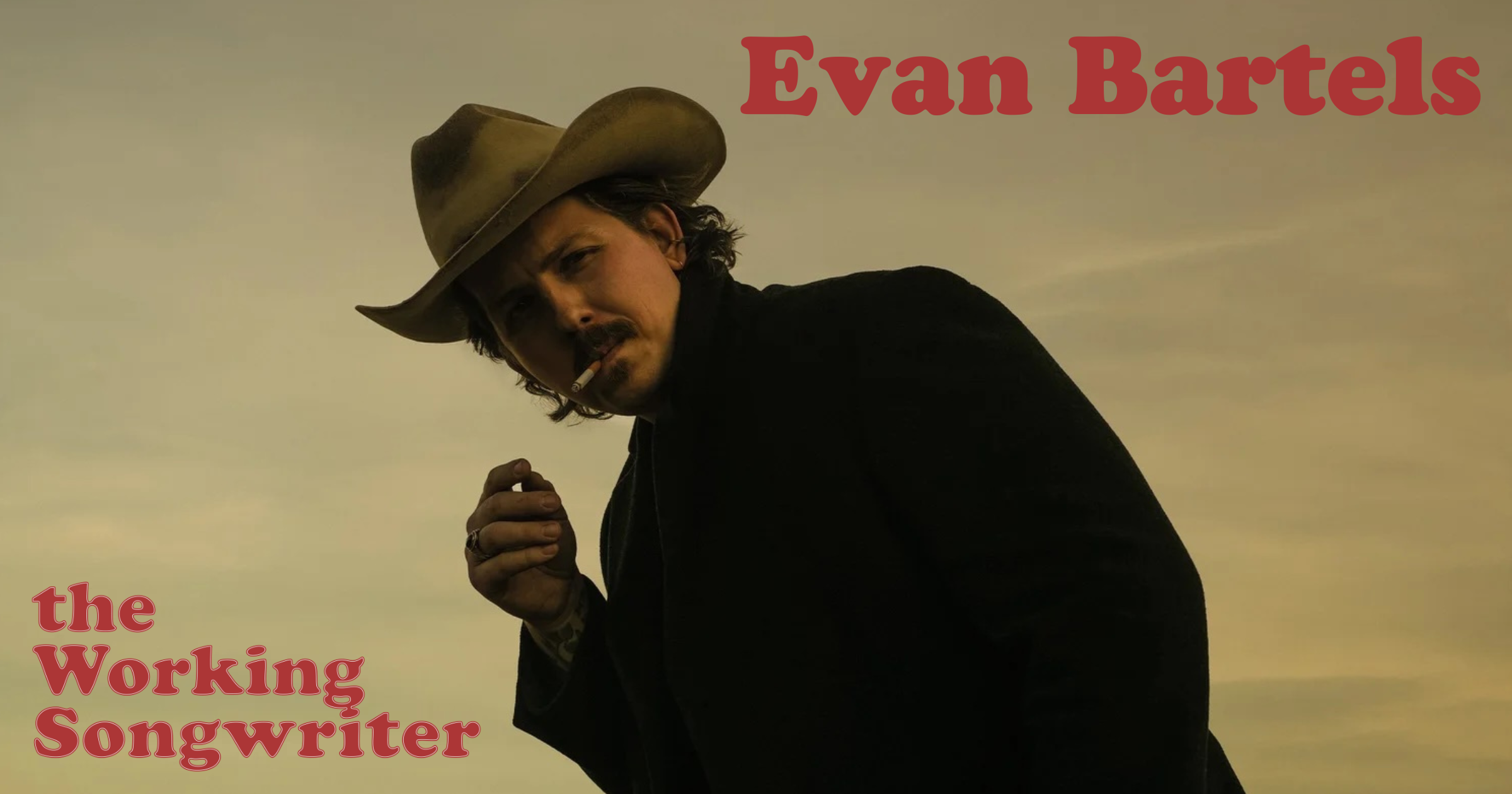
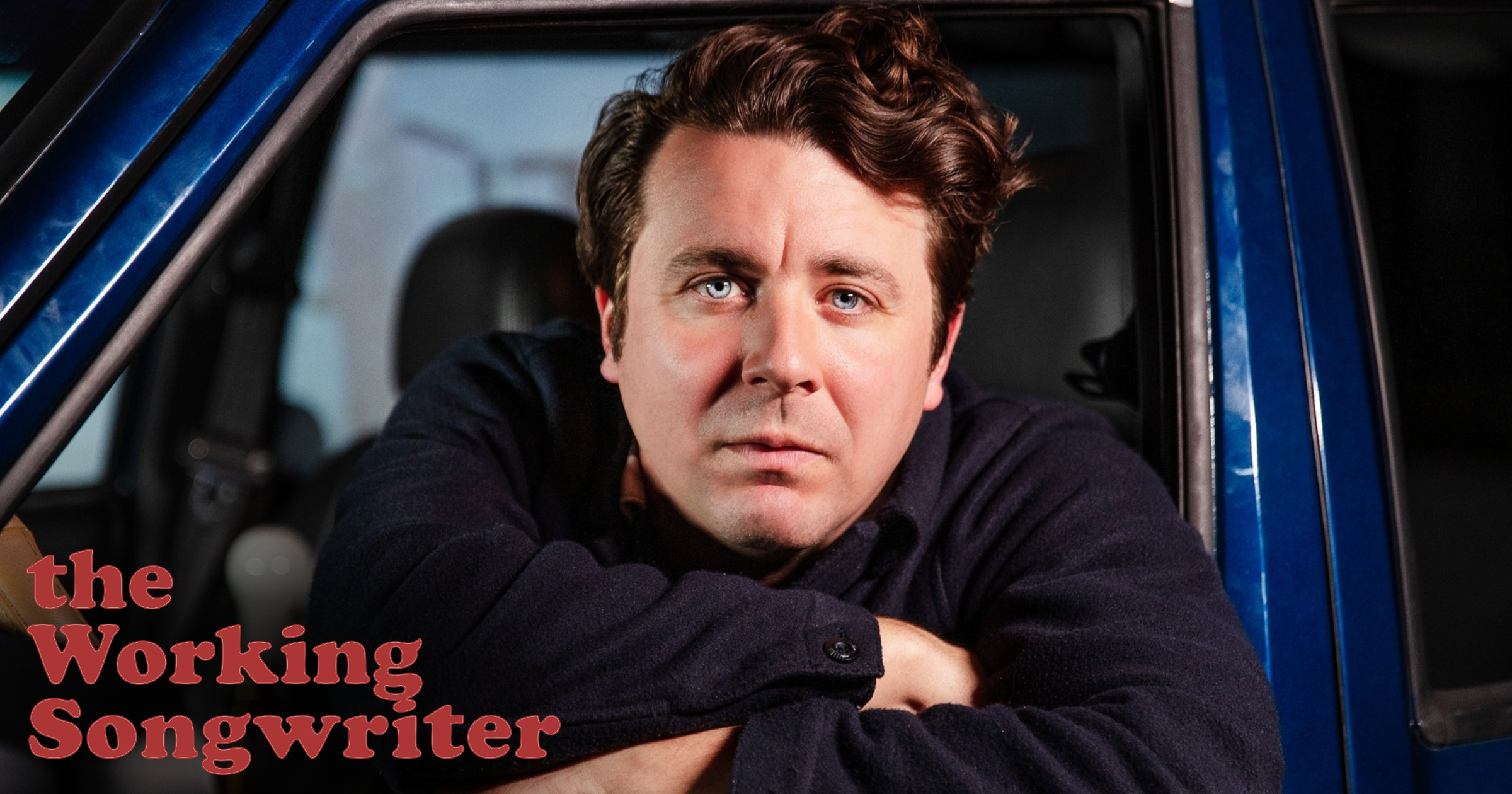
Welcome to The Working Songwriter, the show where today’s best songwriters come to talk shop. Each episode we host a distinguished guest and we ask them to go deep on their inspiration, their process, and the general ups and downs of making a life in music. Whether you’re a grizzled veteran picking out custom chrome trim for your tour bus or a scrappy upstart, trying to determine whether your Toyota Tercel can make it through a three thousand mile tour, this is your show. Because, ultimately, it is what every writer seeks most. An ironclad excuse to put off actually writing.
Our guest this week on The Working Songwriter hails from Tobias, Nebraska, a town of about 100 people. Evan Bartels is a singer-songwriter who with his 2017 debut, The Devil, God & Me, burst onto the national scene. More recently, Bartels has expanded his audience with the release of his EP, To Make You Cry, recorded after relocating to Nashville and reflecting on a period of personal upheaval and renewal.
Bartels has toured with American Aquarium, The White Buffalo, and John Moreland; he records for MCA/Universal; and he’s performed at Mile of Music, Americanafest, and the C2C Festival. No Depression calls him “a haunting new presence in Americana,” while Americana Highways praises his “unvarnished, soul-bearing songwriting.” Glide Magazine notes his “ability to turn bruised experience into stark, resonant beauty.”
I caught up with Evan Bartels a few months ago for The Working Songwriter to hear about his musical journey so far.
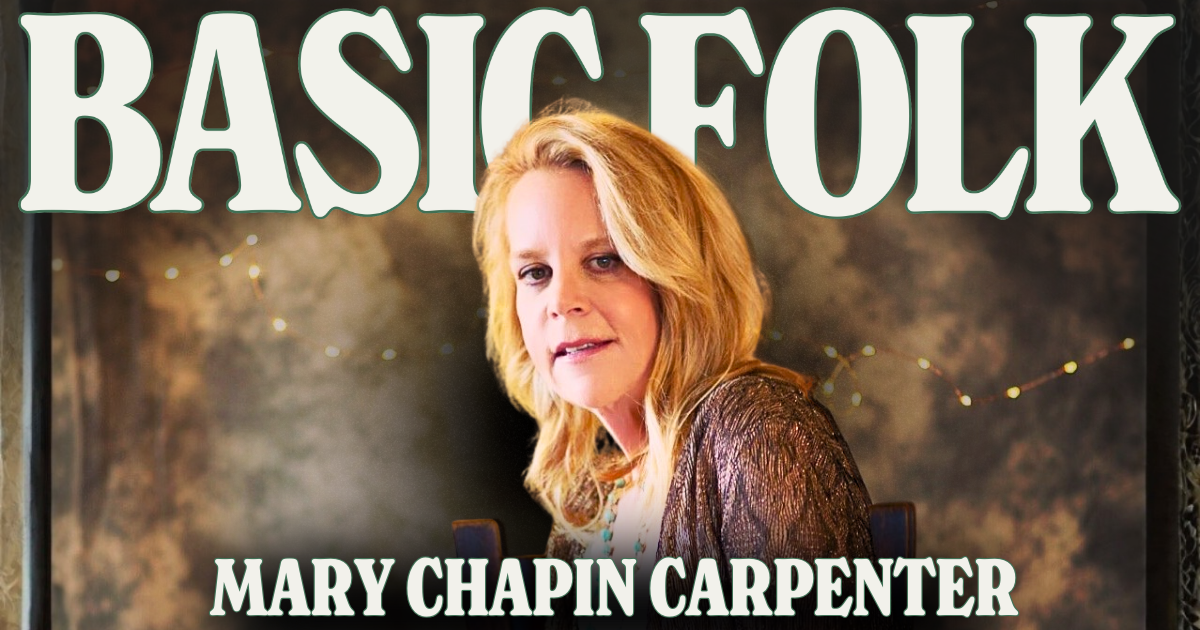
Mary Chapin Carpenter’s latest album, Personal History, is as lush in production and color as the beautiful farmland she calls home in Virginia. Carpenter will often wake up early for sunrise walks with her dog, Angus, and one of several daily cups of coffee (of course) to start the day. In our Basic Folk conversation, she reflects on how living in this serene farmhouse has brought her peace, drawing parallels to Carl Sandberg’s “creative hush.” Mary Chapin also discusses her method of “song walking” as a tool to overcome writer’s block, often accompanied by her pets.
Carpenter goes on to touch on her evolving relationship with fame and the importance of surrounding herself with grounded people; she reveals her younger self was shy, and talks about how being less concerned with others’ opinions has empowered her over time. We cover her connection to the Celtic music community and how it inspired her collaborative album Looking for the Thread with Scottish musicians Julie Fowlis and Karine Polwart. That record was her first with Josh Kaufman as producer and it worked so well, she decided to have him produce her new solo album, too. We also chat about “hyphen-gate,” due to her double first name, the process of feeling visible and valued, and the impact of Elizabeth Strout on her perspective of songwriting.
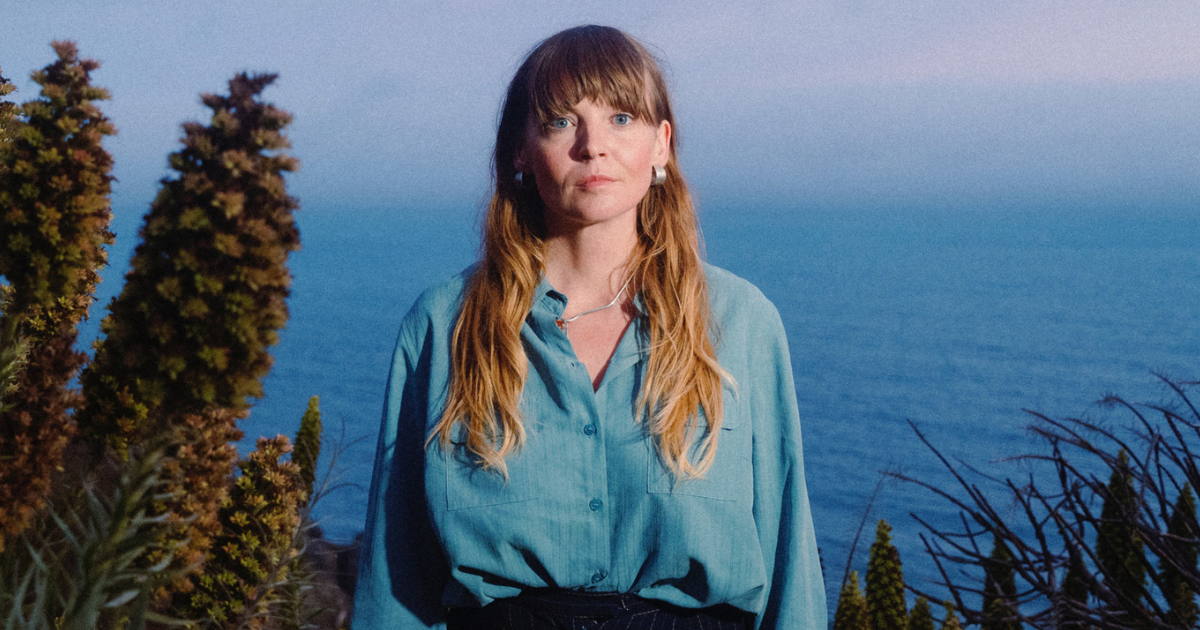
On singer-songwriter Courtney Marie Andrews’ upcoming album Valentine, you can hear her letting go.
It’s a process she ostensibly started – at least, musically or outwardly – on 2022’s Loose Future, a collection on which Andrews also reckoned with being in a period of transition, personally and professionally, letting go of former five- and 10-year plans and recentering in the present.
Approaching four years since that most recent studio album, with Valentine it seems Andrews is intent on reinforcing and revisiting the same lessons she taught us and herself on Loose Future. The new album, which will be released on January 16 by Thirty Tigers, begins with a grand, tone-setting opener, “Pendulum Swing.”
Reminiscent of ‘60s pop-folk and rich with arpeggiated 12-string guitars, Andrews vocally soars into the verses and murmurs each contemplative chorus:
If I get what I want Gotta let the pendulum swing Can’t be good for too long Let the pendulum swing…
It doesn’t exactly strike a listener as the sort of Loose Future Andrews formerly envisioned, but the song also doesn’t seem to wallow in the apparent feeling of impending doom, or the instinct that imbalances of “good for too long” must be righted. Instead, to this writer, it rather sounds like she’s focusing on the instinct itself. On her belief, conscious or subconscious, active or passive, that “karma” or “deserving” necessitates inevitable negative responses to anything positive.
As with all of her impeccable albums, Valentine finds love as a frequent subject – as well as community, perception, expectations, and how all of these topics touch on or intersect with existential dread. But Andrews seems to be letting go of her ideals of what love is or what it can be, as well. Thankfully, her perspective on the subject is always expansive, never simply reduced to just romance or sex or heteronormativity – or some slurried combination thereof. But Valentine is more direct in its approach to love than some of her LPs.
“[Valentine is] a record in pursuit of love,” Andrews explains via press release. But that love “is a lot more than I gave it credit for,” she continues. “It’s built over years, it’s built with trust, with changes, it becomes something new and unrecognizable, the deeper you go.”
Songs like “Keeper,” “Cons and Clowns,” and “Everyone Wants to Feel Like You Do” follow in tight formation behind Andrews’ past songs on love, connection, and romance – especially the masterful album, 2020’s Old Flowers. But other tracks, perhaps chief among them “Best Friend,” indicate that expansion on love as an idea and point back to the creative process here also being one of letting go.
You can sense that surrender, the gradual unclasping of fists and de-whitening of knuckles, in almost every aspect of Andrews’ creative output. It has, after all, been quite a few years since she last released an album. Her prior rhythm of abject road-dogging and releasing LPs every year or two has been replaced by much more thoughtful and intentional tours, performance forays, and product launches. She’s leaned more into another medium, painting, and has gone full-bore as a published poet, too. She’s released two collections of poetry – Love Is a Dog That Bites When It’s Scared having arrived this past August – and has built up her creative, community infrastructure to feed more than just her itinerant musical pursuits and former wall-to-wall, year-round tour schedule.
It’s almost like you can hear the retooling of Andrews’ idea of success happening in real time, from Loose Future through to Valentine. Like you can hear her realizing that giving up the version of herself who existed on Honest Life (2017) through May Your Kindness Remain (2018), and the version of herself from Old Flowers and Loose Future, doesn’t ever mean net loss. Like being on the road less means one could grow flowers, feed stray cats, and build a support system in her new home of Nashville that, especially as an only child and retired nomadic busker, she’s always craved.
The sense of letting go was perhaps infused into Valentine by the specific circumstances that gave birth to these songs. “I was in one of the darkest periods of my life,” Andrews continues in the project’s album bio, “and songs were the only way I could reckon with it.”
“I felt cursed, and the only mental cure felt like songwriting and painting.”
It’s why this album, like almost all of her prior releases, also feels as self-directed as it is outward-facing and primed for wide audiences. Andrews has learned that letting go – of control, of her past self, of expectations, of legalism around or criteria for love, of the “power” (and curse) of individualism, of freneticism and frantic ladder-climbing, or of life itself – is a process we don’t ever graduate from. We never muster out. We have to return to ourselves, to introspection, to the very constructions of our selfhoods over and over again to do that work.
The redemption and sheer beauty of this album are not because Courtney Marie Andrews has found her Valentine, but because she can hold up her wants, needs, and dreams as valid and wholesome goals on one hand, while stripping – and re-stripping – them of any power they may hold over her on the other. It’s an impressive duality, one that wouldn’t be nearly as successful without Andrews already having done so many reps in finding herself and of letting go.
Andrews is our January 2026 Artist of the Month, an auspicious start to a brand new year of roots music. Here, you can read our feature interview with Andrews all about Valentine, its making, and the unique way she and her collaborators went about recording these fantastic songs. Below, enjoy our Essentials Playlist and tune in on social media as we dip back into the BGS archives throughout the month to share all things Courtney Marie Andrews.
The BGS Podcast Network is proud to announce our first addition of a new (to us) show in 2026, bringing artist and singer-songwriter Joe Pug‘s hit podcast, The Working Songwriter, on board. Beginning January 9, the Working Songwriter will be distributed exclusively through BGS and available wherever you stream podcasts.
“After ten years and over three hundred episode of doing this podcast independently, we’ve decided to go pro!” Pug says. “[BGS] is the perfect home for our show. They focus on American roots music, but ultimately they celebrate any kind of songwriting as long as it’s of a very high quality. I think that’s pretty similar to the ethos of The Working Songwriter.”
Over a decade of work and hundreds of episodes, Pug has explored songwriting, music-making, artfulness, and creative practices with some of the most thoughtful and entrancing voices in Americana, country, roots music, and songwriting as a whole. Over the years, guests have included such luminaries as Jerry Douglas, Charlie Peacock, John Hiatt, ERNEST, Chuck Prophet, Kim Richey, Bonny Light Horseman, Hunter Hayes, Iris Dement, Del McCoury, Keb’ Mo’, Darrell Scott, and countless others. Alongside these songcraft heavy-hitters are just as many fresh discoveries, newcomers, and essential-yet-underrated voices in the space, too.
The overlap between our rootsy BGS purview and Pug’s roster of guests is vast and varied, illustrating how perfect a fit the show will be for the BGS Podcast Network. “With their network,” Pug continues, “we’re gonna be able to get guests that we’ve never had before. We’re gonna be able to produce more content and we’re gonna be able to lean into video quite a bit more. I’d like to thank Cindy Howes and Amy Reitnouer Jacobs for believing in our show and helping to shepherd it to the next level.”
“The Working Songwriter has set the standard for long-form interviews with our favorite songwriters in the roots music world and beyond,” responded Cindy Howes, director of the BGS Podcast Network. “Joe’s ability to open up his guests in relaxing conversations on the craft of writing is endlessly impressive. The fact that a podcast of this caliber that legitimizes the best working songwriters is joining our roster is an honor. We are beyond excited to work with Joe and his team on this wonderful show.”
The latest season of the Working Songwriter will premiere this Friday, January 9, with guest Evan Bartels. Bartels, a singer-songwriter, burst onto the national scene with his 2017 debut, The Devil, God & Me. He has toured with American Aquarium, The White Buffalo, and John Moreland; he records for MCA/Universal; and he’s performed at Mile of Music, Americanafest, and the C2C Festival. We’re looking forward to beginning this new era for The Working Songwriter with Joe Pug, Evan Bartels, and all of you, right here on BGS.
To celebrate the announcement and the upcoming season premiere, listeners can subscribe to the Working Songwriter wherever they listen to podcasts. While you do, revisit and enjoy all past episodes of The Working Songwriter – including these five of our favorite selections below, chosen from over 10 years of superlative work.
Remembering Todd Snider (March 2020, rereleased November 2025)
Joe originally sat down with The Bard of East Nashville back in March of 2020, but after his untimely passing in November 2025 at the age of 59, TWS reissued this beautiful episode in his honor.
Jerry Douglas (June 2025)
An artist who needs little introduction to BGS audiences, GRAMMY-award winner Jerry Douglas is considered the contemporary master of the Dobro. Joe talks to Jerry about his long and storied career, playing alongside everyone from Ray Charles to Billy Strings.
Ashe (September 2024)
TWS covers songwriters of all backgrounds and genres, as demonstrated in this 2024 episode with Ashe. The Berklee College of Music grad discusses her years writing songs for other artists such as Demi Lovato, only to find her own distinct voice (and a legion of obsessive fans, including the late Diane Keaton) in the last five years.
The Swell Season (October 2025)
The Oscar-winning and decades-spanning musical partnership of Glen Hansard and Marketa Irglová has captivated worldwide audiences, but this conversation with Joe from 2025 celebrated their first album together since 2009 (Forward), and showed their connection and chemistry was as deep as ever.
Bonny Light Horseman(February 2023)
Each member of the folk supergroup trio of Anaïs Mitchell (Hadestown), Eric D. Johnson (Fruit Bats), and Josh Kaufman (The National, Bob Weir, Josh Ritter) could easily deserve their own deep-dive episodes, but put together it’s clear that they are greater than the sum of their parts. Joe digs in with the three GRAMMY nominees to peek behind their magical music-making curtain.
For anyone cheering on the mainstream country return of classic roots musicianship, Spencer Hatcher is a name to remember. Joining the likes of Zach Top and even Billy Strings, he’s a new country artist with some decidedly old-school tendencies and a deep foundation in bluegrass.
Having dropped his debut EP, Honky Tonk Hideaway, in November 2025, the Virginia native planted his flag for two-stepping rhythms and hot-blooded twang. Hatcher got his start in a family bluegrass band; over six tracks, his rich Shenandoah Valley vocal stands center stage, flanked by boundless barn-dance energy and timeless emotional heft. But with a thriving TikTok fanbase and a steamy, slow-dancing debut at country radio (“When She Calls Me Cowboy”), his style goes beyond nostalgia. It marks a shift in possibility, with room for roots artists in the commercial country space.
Speaking with Good Country a few weeks into his first promotional radio tour, Hatcher filled us in on his bluegrass beginnings and why they will always be his baseline. Plus, he opens up about the mainstream return of roots country, TikTok-ing back when it was “a dancing app,” and where he sees his music evolving.
Lately it seems like the foundational stuff from bluegrass and classic country is making a mainstream comeback, and you’re part of that. Do you have any sense of what is driving it?
Spencer Hatcher: I think that it’s like anything, I do believe in a full-circle moment – everything comes back into style. In this case, I’m overjoyed that the traditional sound is coming back. I’ve always called that “real country music,” and that’s just the stuff that all my heroes played. Growing up, I didn’t even know what modern country music was. I thought George Jones was modern. I thought that Johnny Cash and Waylon Jennings were modern, and then I found out that stuff was 30 years old 20 years ago.
You grew up on a farm in Virginia, right? Shenandoah Valley?
Yes, sir.
How did you get your country education?
A lot of it was just literally how I was raised. It’s what I lived by. I don’t know if everybody lives by what they sing, but I certainly do. I remember at a very early age, probably 6 or 7 years old, I learned how to drive a tractor and I’d be out in the fields every day working with my dad and running cows, and we had some goats. That’s just been my lifestyle. It’s what I love, still today. Growing up on a farm in the Shenandoah Valley right there at the Blue Ridge Mountains, and coming from a small town, that’s what home is to me. I had a lot of bluegrass around me, of course, in the Blue Ridge Mountains, and a lot of old-style country music. So that’s what we listened to, and sang, and jammed to on Friday nights.
You had a family bluegrass band. What drew you all into that music? I mean, this would’ve been in the 2000s. It wasn’t really in fashion.
It’s a fair statement to say that, in the 2000s, bluegrass was probably at an all-time low as far as popularity goes. But in my hometown, you wouldn’t really know that. There were jams, and what attracted me to it was definitely my dad. I can remember my dad sitting there watching me and my brothers play, and he’d be either playing the guitar or playing the banjo and singing. Growing up, I wanted to be like my dad, and so I picked up the banjo at 12 years old and started playing that, and I was just absorbed in it. That was the moment that music really took me over.
I just wanted to play the banjo, and so that’s what I did for three years straight. Friday night wasn’t spent with my friends at football games. It was at the local jam session where the average age was probably 75 years old. … Then my younger brother Connor decided to pick up the bass fiddle and that was history. From there, we started a band and we started playing everywhere we could.
Early on, you and Connor made bluegrass and country life seem fun on TikTok and you ended up with a pretty big following. What made you want to start posting?
I’d seen some friends do it in college and I admired their confidence. I was never into social media. I had it, but I didn’t post. It wasn’t an interest I had. But after I graduated college in 2019, I decided to move back home in March as COVID had hit, and I said, “I’m going to go back home and see about just playing country music.” I didn’t really know what I was going to do. I had a business degree. I was maybe going to be a financial advisor or something, but music was what I wanted to do. It’s what I did all through college, too. I was in four bands in college, and I just had this infatuation with becoming a country performer. I wanted to add that into my bluegrass shows.
So, I did the only thing I thought I could, and I decided to turn on a camera and sing a song. It took about six weeks for me to work up the courage to finally post that video. … And the fifth one is the one that went viral. It only took five videos and it was insane.
Wow, that’s pretty fast. And I think it’s cool that something so modern as TikTok can have so much fiddle playing and traditional lifestyle on there.
Back then in 2020, TikTok was still a dancing app, and I hadn’t seen any [country lifestyle] stuff on there yet. I was like, “Well, I’m going to show people how we live around here and just be myself.” I would oftentimes just turn the camera on and just let it roll.
Let’s talk about where you’re at now. You’ve got this country career going and it’s a little different from the bluegrass stuff, right? I mean, do you see a difference?
Yes, sir. There definitely is. But I guess you could say [I take] a very bluegrass, old-fashioned approach. I play as many shows as I can, just like the guys in bluegrass do and always have. … Of course, yes, the music is different, but I do believe that you can hear some bluegrass influence in my country music. It’s real country music. What we do in the studio, we can directly replicate on stage, and that’s how it is in bluegrass music. That’s how I wanted my country music to be.
I’ve got a fiddle, I’ve got a pedal steel, I’ve got guitars. Every single show I still play bluegrass. And maybe the difference between country music and bluegrass is that country is a little bit more polished, a little bit more produced. But I don’t like a tremendous amount of production. I don’t have anything faking my songs like bass loops or autotune or anything like that. If you come to a show, you get what you hear online.
Honky Tonk Hideaway is your debut EP. What did you want it to be like?
There was definitely a lot of thought and planning that went into the EP. And the song itself, “Honky Tonk Hideaway,” was a very exciting song. I’ve been calling it a barn burner. It’s one that makes you want to get up and dance, and that’s one thing that I hold pretty highly at my shows. I want people to just have fun and dance and have a good time. They did back in the day – you watch Urban Cowboy and everybody’s dancing, everybody’s cutting up and having fun. I don’t know if that’s been lost over the years, but I know that at my shows, a lot of people feel like they can get up and be themselves.
Did you have much of a hand in the songwriting, or are these outside cuts that you fell in love with?
All of these songs right now have been outside cuts, because basically I came to [Nashville in] July of 2024 and it was immediately like, “We need to get to the studio, let’s start getting some music.” There have been songs floating around Nashville for 30 years and they’re just stacked up – things people wrote years and years ago. There’s a song that I’ve not released yet, but it was written in 2009, so for 16 years it’s just been laying in a folder and nobody’s cut it until I came to town. And I’m like, “Man, I love this. This is country music.”
That’s a lot of what these first couple songs that people are getting to hear are. But since I’ve been in town, I’ve been doing a lot of writing and we’re very excited about the songs that I’ve gotten to write. I think we’re going to see a lot more Spencer Hatcher songs coming in the future.
There’s a lot of gold out there that’s still yet to be mined, I suppose.
Yeah, I mean, it was amazing. My producers would reach out to some of the really big companies and say, “Hey, we’ve got a new artist in town that’s looking for songs like George Strait would cut, or Joe Diffie or Keith Whitley or Merle Haggard, so send us what you got.” And we would get these folders of 50 songs and you just go through it and listen and listen.
Tell me about the single, “When She Calls Me Cowboy.” It’s got some of that Keith Whitley thing going on, in my opinion. Why did you want that to be the first single at country radio?
To me, that’s a very special song. … If anything, I compare it to maybe a Conway Twitty song, because it’s pretty intimate, but it certainly isn’t a Conway Twitty song. … It’s very country, very traditional. I love the melody, I love the words, and it’s relatable. I would say a lot of people can relate to a song like that.
I was thinking the same about “Cold Beer and Common Sense.” I feel like everybody has been saying they wish for more of that these days. What’s the sentiment behind the song?
Man, that message is just so powerful and it’s one I wish the entire world could listen to and live by – and not necessarily the cold beer part. As far as common sense and everybody getting along, regardless of what side of the fence you stand on, regardless of your political party, that’s one thing a lot of people want – to make it about politics. It’s like, “This is not a political song.” You’ve got to listen to the words. It’s about no matter what your beliefs are, everybody should be able to sit at a table and laugh and have fun and get along. I’ve always believed that there needs to be so much more of that in the world. And that’s honestly why I’m in music, is because music spreads joy. It spreads smiles.
Want more Good Country? Sign up to receive our monthly email newsletter – and much more music! – direct to your inbox.
In 1853, a 29-year-old Parisian photographer, Adolphe-Alexandre Martin, delivered a paper to the French Academy of Sciences. In his text, he proposed a process for creating a photographic image on thin, chemically coated metal sheets: the tintype. Between the late 19th and early 20th centuries, his invention became the portrait medium of choice, especially across North America, eventually falling out of fashion in the 1930s. Strikingly evocative, tintypes imbue subjects with a surreal, dreamlike quality, offering an emotional portal into the past.
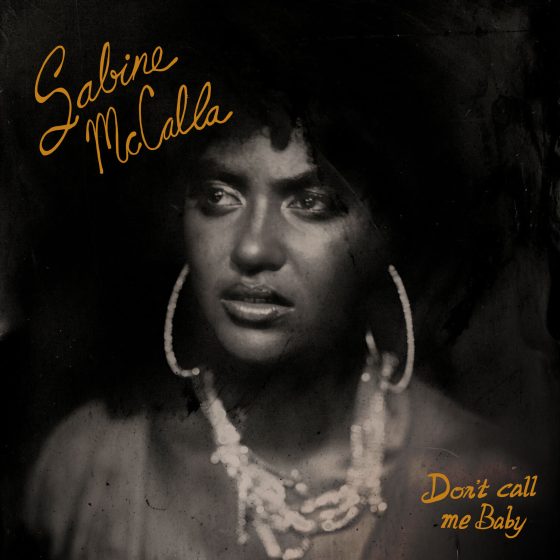
Over a century and a half later, the New Orleans-based Haitian American singer-songwriter Sabine McCalla, younger sister of the influential classical and folk musician Leyla McCalla, asked the tintype revival photographer Meg Turner to take her portrait. For an artist who draws from the past while seeking pathways forward, using an old medium to capture something new was an instinctive choice. Turner’s image became the cover art and a lodestar for the central feelings underpinning McCalla’s debut album, Don’t Call Me Baby, released through Kurt DeLashmet and Nick Shoulders’s Gar Hole Records label.
As we discuss later in this interview, the inspiration for Don’t Call Me Baby wasn’t born from a happy moment. Rather than sinking into sadness, McCalla juxtaposes joy and heartbreak, using narrative storytelling as a vehicle for catharsis across nine haunting, surreal songs. On “Sunshine Kisses” she recalls being lost in liminality after a breakup before letting loose on the classic rock and roll slanted singalong “Louisiana Hound Dog” (a co-write with Dan Auerbach from The Black Keys and Pat McLaughlin). By the time “Two of Hearts” arrives, our protagonist is singing about three different suitors.
Amid the paradisiac instrumentation surrounding her soothing voice, McCalla and her producers, Sam Doores (of The Deslondes) and Ajaï Combelic, collaborate with a cast of more than a dozen musicians from her musical community in New Orleans. Together, they blend rhythm & blues, country, folk, jazz, Tropicália, quiet storm soul, and doo-wop into hypnotic roots music. Song by song, the results reflect a lifetime spent studying traditions from across the Americas, Europe, the Caribbean, and Africa. Equal parts comforting, adventurous, and spicy, she serves up an Americana hotpot that speaks to the world while being informed by it.
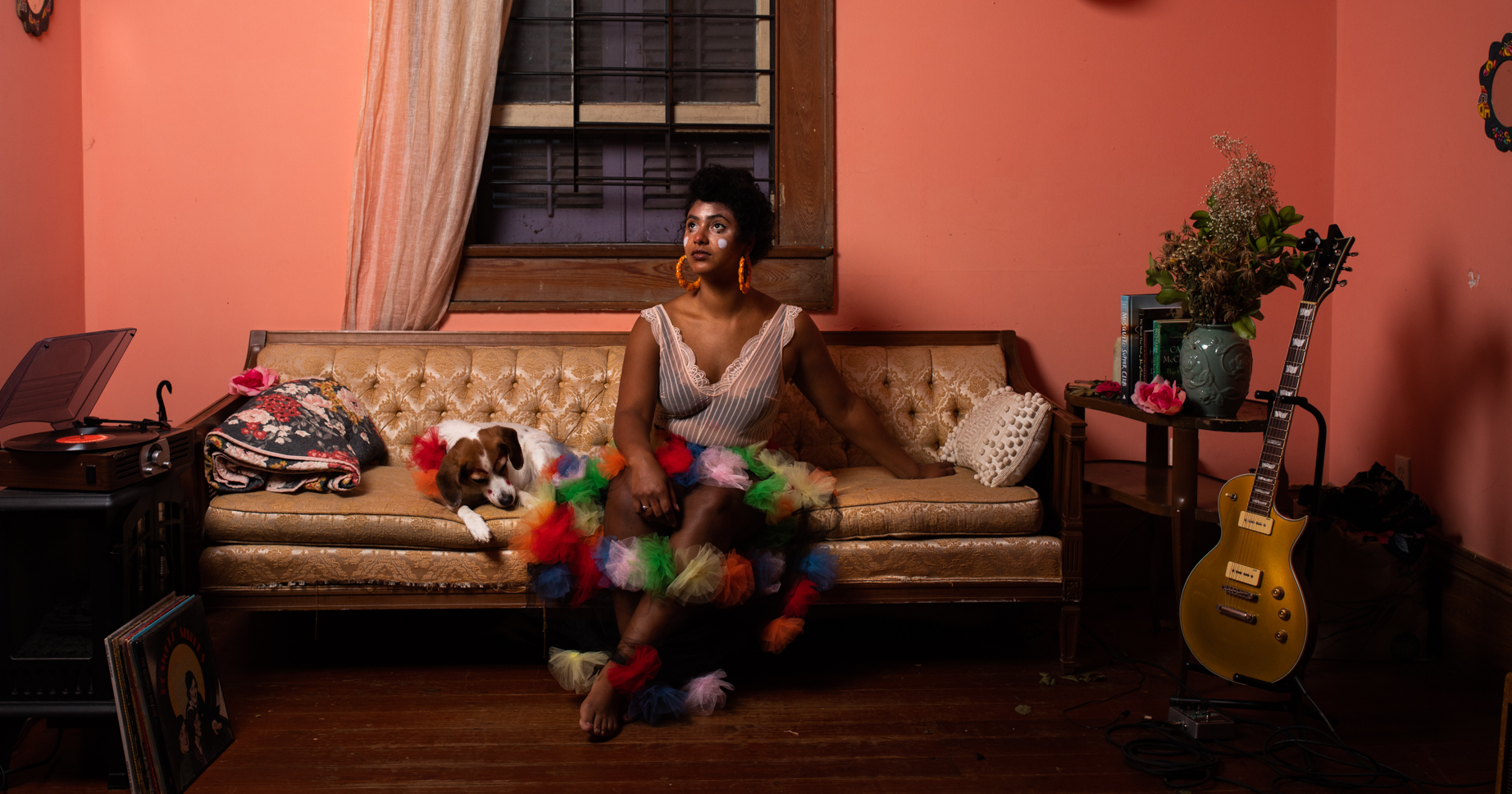
Last month, McCalla joined BGS on a video call. Sitting on a yellow couch surrounded by rosebud-hued walls and framed art, she spent just under an hour with us. In a discursive conversation, we explored the influence of life in Louisiana, her passion for musical history, and, given her background, the inevitability of her worldly confluence of sensibilities. A thoughtful speaker, McCalla isn’t the type to rush her answers. She’s also happy to keep a point simple or, when needed, throw in some extended anecdotes. Sometimes it’s not that deep; other times, it really is.
How important is a sense of place and location to your music?
Sabine McCalla: I don’t know. I mean, it is important. Louisiana and New Orleans have been characters in, or influenced my music a lot. But I’ve certainly written songs outside of New Orleans and Louisiana. I think any land we connect with is important when we’re writing songs.
From the outside looking in, it’s easy to surmise that there is a quality to New Orleans and the musical community that lives there that unlocked something in your artistry.
Yeah, it’s definitely been very inspiring. New Orleans is a very musical city. Nearly everyone you meet is a musician or plays more than one instrument. It’s incredibly culturally rich here. Learning to play music in this environment, you learn certain styles, or you learn with a focus on dancing. There’s a lot of rhythm & blues, soul, and second-line music, and people dancing in the street. I think dancing is something I was thinking of when I thought about how I want these songs to be listened to. Like I’m thinking of a honky-tonk dive bar, hot and steamy, lots of close dancing.
Who says you can’t dance to misery, right?
You certainly can. In fact, you’re probably a better dancer.
There’s something about the juxtaposition between a sad sentiment and a happy rhythm or melody that can be so moving.
I think innately we all want to experience pleasure, and we all have our pains that go with it. I think that’s what people are connecting with.
Unfortunately, or perhaps, fortunately, what is pleasure without pain?
Just a high.
New Orleans looms large in my mind as one of those places where traditions have been kept alive that don’t still exist elsewhere.
Yeah, for sure. There’s a tradition of passing down songs. There’s also so much space to create music here.
Don’t Call Me Baby is an ambitious album, but you succeed in your ambitions. You’ve braided a lot of threads together: different places, genres, periods of time. Was there a specific time in your life when you became interested in musical history, or looking to the past to find new ways to go forward?
I grew up playing classical music. Then I studied some old-time music from Appalachia. I’m interested in learning lots of old songs. I like listening to Harry Smith’s Anthology of American Folk Music. I feel like I’ve dug into a lot of pre-war recordings throughout the South and been inspired by ballad singing.
Like many people, I learned about the Anthology of American Folk Music through Bob Dylan and Joan Baez. There’s something about songwriters who go back and listen to their influences’ influences.
Totally. Shape-note singing is coming back into fashion now. I keep hearing about shape-note festivals around the country. My drummer, Howe Pearson, who also plays in The Deslondes, has been hosting a shape-note singing workshop every Monday.
What was it about the Anthology of American Folk Music that excited you?
They were songs I’d never heard before. I liked the quality of the voices on tape. So emotive and raw. And not just the Harry Smith anthology, Alan Lomax recordings too. I’ve always been interested in ethnomusicology. When I was younger, my sister and I had a mentor who played a lot of blues and jazz. I remember thinking he wrote these songs, until I realized, no, this white man from New Jersey did not write these songs. There’s this beautiful history of Black people in America who sang the blues and jazz and wrote so many songs that have been passed down.
Sometimes I wonder about the impact recorded music had on community singing. I’ve read that after phonograph records turned up, people became more self-conscious about singing at home. They’d hear these great singers and a shyness would set in.
People were keeping the songs they heard alive. They lived when there was no radio, so they were better keepers of songs than we are today. Now everything is so fast. There’s so much music, AI music, the industry pushing constant output, and not reviving songs. But I think a new resurgence of song revivals is happening.
You grew up in a Haitian family in New Jersey. Were your parents encouraging about music?
Yes and no. My sister’s also a musician. My mom was like, “Leyla’s the musician. You need to figure out your own path.” I was like, “No, I think I want to do this.” Both of my parents always encouraged choosing your own path and focusing on it.
It’s not always immediately obvious, but there’s a strong Haitian influence in American music.
Yeah, the Fugees! Lauryn Hill went to my high school. Her album The Miseducation of Lauryn Hill is like a bible to me. It’s a perfect album – the intros, outtakes, transitions. Lyrically empowering. I grew up on her songs. I’m grateful for my high school. We had amazing music teachers.
I graduated with SZA and Dave Authors, and a few others who’ve done great things. My sister Leyla McCalla went there, too. New Jersey is incredibly diverse. A lot of people immigrate to New York and then move into the suburbs, which my family did as well.
Did you grow up on a bit of everything musically?
Classical music. School trips to the opera. My parents played the Haitian groups Boukman Eksperyans and RAM. We listened to The Beatles, Bob Marley, and Rod Stewart.
When I think about Americana, I think about this confluence of cultures and musical traditions that came together in the South. When did it become attractive to you?
It all came together naturally. I was focused on pre-war songs, then going through decades of music. When I moved here, I got interested in The Boswell Sisters and songs collected in New Orleans in the early 1900s. Then I learned about Lonnie Johnson, the godfather of rock ’n’ roll. Through studying songs, I realized that it’s all Americana music. It influenced how I sang and created songs.
In a sense, there’s an inevitability to where you arrived.
I originally wrote and sang songs a cappella. That became my EP, Folk. My friends Leonie Evans and Steph Green helped with backup vocals. There wasn’t much thought about creating a larger sound until I met Eli “Paperboy” Reed. I’d already been listening to New Orleans R&B and soul, and when he put chords to my songs, I was like, “Oh, this is the sound I’ve been looking for.” That changed how I thought about songs. I also grew up listening to [the Tropicália singer-songwriter] Caetano Veloso. I’ve been trying to read his book Tropicalism, but there are so many references to Brazilian artists. It’s going to take forever.
After growing up in New Jersey, you moved to New Orleans, where this was all even more concentrated. There was a weekly jam session you’d go to called the All-Star Covered Dish Country Jamboree.
Yes. The first time I went was in 2014, probably in February. Joy Patterson came up to me – she runs it – and said, “I know who you are.” I was like, “Oh no, this lady…” But I loved it. My sister had been living here, so people were like, “Oh, you’re Leyla’s sister.” I think I saw Sam Doores’ doo-wop group with Casey Jane, Camille Weatherford, Emma Eisenhower, Jon Hatchett, and Max Bien Kahn; they did a little doo-wop show. I thought it was so cute. I wanted to know these people. And I’ve ended up working with all of them.
From there, it became a weekly ritual in your life, right?
Yeah, it was like a church. Going to this country night where I could talk about songs with people and hear a lot of old songs: classic country, classic R&B and soul. Those things lit my soul up.
After all these experiences, what’s your understanding of country music and where you could fit into it in 2025?
I don’t know. Maybe giving voice to other women of color who are interested in country music, not just hip-hop or R&B, but a diversity of sounds. I also lived in Ghana growing up, and lots of people listen to country music in Africa. What surprised me was going to Ghana and someone saying, “Where’s your cowboy hat?” I was like, “I’m from New Jersey, not Texas!”
I get the sense that a lot of your music is therapeutic storytelling.
Yeah, it is. It comes from the heart.
What sort of stories do people tell you about their experiences with your music?
The best one was in London. Someone said their friend’s father passed away and left her a boat. She went sailing for three months. They didn’t listen to music for most of it, then one day she put on my record and that’s all they listened to. That made my heart swell. It’s making me tear up now. Another woman told me she’d separated from her husband and, after hearing my music, reached out to him, saying she was ready to compromise. I was like, damn… Hopefully, this music lets people feel they’re not alone in their feelings.
How much has loneliness driven your music?
It’s been a huge component. I value my alone time, but sometimes it’s a detriment when I’m alone too long or ruminating too long.
You need something to break the feedback loop. Tell me about the backdrop to this album?
I was playing with a lot of ideas. Not everything made it onto the record. A friend visited – she’s an amazing stylist – and I wanted to get a tintype photo done by Meg Turner. We did makeup, hair, clothes, jewelry, so much dazzling stuff, so I’d be shiny in the sun. It was hot in New Orleans. Right before taking the photo, I got a text from someone I was dating, and that’s the true look of shock on my face. After I saw the picture, I was like, “Everything needs to be based around this photo.”
It’s an amazing photo.
Right after that, I wrote “Sunshine Kisses” and then I thought, “What else goes with this?”
What sort of ideas did you have about the threads you wanted to bring together in the music?
I was like: What are all my breakup songs? I wanted it to be haunting, but warm. Some songs I wrote during the pandemic felt too cold for this album. I originally wanted to name it Sudden Blue because I was thinking of a colder feeling. But something transpired while making it; the songs were given a new breath by the people I was working with: Sam Doores, Gina Leslie, Roy Brenc, Howe Pearson, and Ajaï Combelic. It was a warm feeling in the room, lots of laughter. And we were doing it during Mardi Gras, during carnival season, which was wild, because we’d play shows at night and then go into the studio in the morning.
It’s amazing how much other people can make a difference to a creative process.
Yeah. We fed off each other. If there’s negativity or self-consciousness, it’s felt in the music. We were all happy to work out ideas and nerd out about music.
Did you have a heartbreak record, not necessarily one you idolized, but a north star to look towards?
A few albums inspired me. Lauryn Hill’s The Miseducation of Lauryn Hill. Fiona Apple’s When the Pawn… There were also songs: Irma Thomas’s hits, and “Andromeda” by Weyes Blood. It’s such a powerful song about all the emotions we face. Feeling lonely, then liking the loneliness, then changing your mind five times a day.
Photo Credits: Lead image by Camille Lenain; album cover tintype by Meg Turner.
As one of Nashville’s key classic-country connoisseurs, fiddle maestro Joshua Hedley has long been a musician of many hats. In 2018 his first solo album Mr. Jukebox tapped 1960s-style countrypolitan. 2022’s Neon Blue embraced the lush warmth of the ‘90s-era format, and he regularly thrills crowds with cover sets from across time at the famed Nashville honky-tonk, Robert’s Western World. Yet with his new album All Hat, Hedley dons the metaphorical cap he’s long obsessed over – the wide-brimmed stetson of his Western Swing heroes.
A titan of twang and perhaps Broadway’s finest down-home devotee of the traditional arts, All Hat finds the lifelong Bob Wills fan going back to his roots. Produced by Western Swing icon and Asleep at the Wheel founder Ray Benson, the album captures the upbeat joy of an eminently danceable (yet often overlooked) country style, which Hedley has been loving and learning since he was 8 years old.
Over 11 tracks of old-style originals, he celebrates a genre defined by jaunty rhythms and euphoric solos meant to keep a crowd dancing long into the night. With an already-respected resumé, Hedley still calls All Hat his “pièce de resistance,” and feels Western Swing deserves its due in this era of cultural callbacks.
“It’s definitely not seen the renaissance that say bluegrass or the outlaw country sound have,” he laments.
Joshua Hedley spoke with Good Country about the new album, the differences between Western Swing and other country styles, and what it’s like to be produced by one of your heroes. Plus, he explains how “getting stoned and playing country music” is the best cure for creative burnout.
Your new album is called All Hat. But that term is famously used to describe posers – and you don’t fit that bill when it comes to country. So why are you calling it All Hat?
Joshua Hedley: Well some people disagree, man. [Laughs] I don’t know what constitutes “not a poser.” I would think playing country music since you were 8 would take care of that, but apparently not.
Really?
It is what it is. I don’t really give a shit, but it was just kind of poking fun at myself and those criticisms. I just think it’s funny. But honestly, for the album, I was working on a different album. I was writing for something else and I was on the road with Asleep at the Wheel and Brennen Leigh – we were doing a package show tour together – and I was just hanging out with Ray. He was like, “You ought to let me make a record on you.” I’ve been wanting to do another Western Swing album for a long time and I was just like, “This is it.” When Ray Benson wants to make a record on you, you make a fucking Western Swing record.
It came out really great. I’m enjoying it for sure. I wonder, how are you feeling about your craft these days? Like you said you’ve been doing this since… well, your whole life really.
Man, I’m feeling good about it these days. This album in particular has been just a joy all the way around. Writing – it was really fun. Recording – it was really fun. Playing these songs live is super fun, and it’s something I’ve been needing. You get pretty burned out when you do it this much. I come off the road and I go back to playing music just at home. When you play like that, you get burnt out hard – and I was really burnt out. This record is kind of pulling me out of the burnout.
That’s interesting. I’ve been watching you at Robert’s Western World for years and it’s always felt like you had that dialed in. I mean, you’ve earned the respect of everybody in the field, and you could probably be making a more commercial play, but it seems like you’re more inspired to make music with your friends and do small residencies. Is that a more satisfying life?
Definitely. I’ve done a lot of touring and all of that, but when I’m really having fun is when I’m down at Robert’s or Dee’s [Country Cocktail Lounge] or Skinny Dennis. I’ve been playing these solo acoustic shifts at Dee’s, it’s just two hours a week and I just sit there with my guitar and get stoned and play country songs. It’s kind of empty in there, and I get to do whatever I want. I forgot how much fun I have doing that, so I’ve been leaning more towards playing at Robert’s and doing the honky-tonk thing lately, just because at the end of the day, you got to do what makes you happy. If I was going to do something I wasn’t enjoying, then I could get a desk job and probably make a lot more money than I make doing this.
Maybe.
I wonder, do you ever feel like you know a secret that some of your peers are missing? I mean, when you talk about that burnout phase, and being able to sit down and just get stoned and play country music, is that a secret hack of the lifestyle?
I don’t know about a hack or anything like that, but for me, I am having the most fun when I am playing covers and just singing old songs that I really love. You hear a great song on the radio and the feeling that you get from hearing that song? Imagine the feeling you get from singing it. That’s my jam.
You’ve been calling All Hat your “pièce de resistance.” And I cannot speak French, so I can’t say that phrase. But how do you figure?
I love country music in all its forms – well… maybe not all its forms. But most of its forms. Western Swing has always been my very favorite thing to play and sing, and I actually made a tribute to Bob Wills when I was 15 with Buddy Spicher and his band up here in Nashville.
What? Really?
Yeah, it’s all Bob Wills covers, and a lot of ’em, I think probably I learned them from Asleep at the Wheel. … It’s just always been on my mind that I should write one of these instead of just doing Bob Wills songs, and always wanted to do it. And then getting to do it with somebody like Ray and with the players who are on the album – guys I’ve looked up to my whole life. I don’t know, it’s just the vibe was in the room and this record came out better than I could ever imagine.
Tell me a little bit about your songwriting on this one. What do you do differently when you’re writing a Western Swing tune?
Oh yeah. It is actually quite different because a lot of those melodies come out of the pop world. And when I say pop, I mean like ’30s and ’40s pop.
Like the original pop.
The original pop. Big band music and stuff like that. Country’s very structured, at least the classic kind that I do to where you’re verse, chorus, turnaround, chorus, outro, something like that. It’s real regimented and formulaic and it’s a different approach to writing Western Swing. A lot of those songs are just one verse, and then you play a bunch of solos, and then you just repeat that verse and take it home, which is a very jazz standards thing to do.
I guess I never thought of that.
Like on “Fresh Hot Biscuits.” I kind of approached that how Bob and them would approach “Ida Red” or something, which is really just a fiddle tune that he wrote words to. I leaned into borrowing old lines from old blues songs and tried to find some of those old lines. Like in “All Hat” – “I know a gal up over the hill/ She won’t do it, but her sister will.” That line’s as old as time.
Right. So the structure, is that because it’s made for dancing?
Yeah, the vocal is secondary a lot of the time, and the lyrics certainly are. It’s more about dancing and the whole thing evolved out of square dance culture and callers where there weren’t lyrics to the songs. It was just a guy telling you what to do on the dance floor. The lyrics are kind of secondary to the overall vibe, and the musicianship is really a big part of it, too.
I did want to ask you about “Stuck in Texas” because that one’s got Ray on it. It’s got that jumpy beat, and a little bit of yodeling in there, too. Where did that one come from?
I had wrote several songs that had really similar chord progressions at that time. I had written them in a row, and I was trying to get out of that. And I’m also trying to push myself on guitar to write outside of three chords, four chords. I just kind of came up with that. I was thinking about the Sons of the Pioneers when I wrote that song, wanting a real good guy, cowboy-movie cowboy. Thinking about Gene Autry and stuff. Then it was just a no brainer for Ray to step in on. Mr. Texas.
What’s it like to be produced by a guy like Ray Benson? Is it different than playing in his band?
It is different than playing in his band because his band is his brainchild and he knows exactly what he wants it to sound like. I think he recognized that this was my brainchild and we all kind of did it together. Ray, he kind of choreographed a lot of it being like, “We should throw the ensemble part here and twin this,” and “We got to have fiddle on the intro,” that sort of thing. But a lot of it was just a group of guys that play together all the time getting together and playing these songs. And what happened was just natural.
You said somewhere in your bio that you grew up playing fiddle with guys who were in their 50s and 60s, and learning from them. I just wonder, is that what you aspire to be one day?
Yeah, definitely. There’s actually this kid Nash [Grier] that comes down to Robert’s whenever Brazilbilly plays and it’s always a treat. He’s like six or seven years old and he’s a really great fiddle player. He comes up and he sings “Hey, Good Lookin'” and he plays “Orange Blossom Special” behind his back – all the little things I used to do when I was his age. Now that I’m 40 years old, I’m like, “Man, look at that little guy.” It really brings back memories. I was that kid and I love seeing a new generation embracing all this stuff. It’s really special to get to pass it on.
What you hope people take away from this one. I know it’s a labor of love for you and a lot of fun to do, but what do you hope people get from this thing? Do you want to spark a revival?
I don’t know about any revival, but I hope people have fun with it. I hope that they don’t take it too serious. Music can get so heavy these days, and I get it. But I want to remind folks that you can just keep it light and make a great record. Sometimes it’s nice to just dance, to just do some two-stepping, learn how to polka and not be so serious all the time. It’s all fun. That’s why we got into this. So I just want people to remember to enjoy themselves.
We wouldn’t ever begin to even try to define it. Good Country is a place. A feeling. A sense of knowing it when you hear it. Whatever you consider to fall under the term or qualify for the moniker, there certainly is plenty of Good Country to be found these days – and especially in 2025.
To wrap up the year in country, we asked our GC contributors not to simply select their favorite country song or album of the year, but to consider that titular question. We gave our writers no parameters or qualifiers for what their picks could be or include, leaving the prompt as open-ended as possible, asking our folks to focus in on the music that stuck with them, whatever the reason or impulse or staying power. Most selections are albums and songs, but some are artists, books, soundtracks, live shows, or other more intangible moments.
The results perfectly illustrate how much easier it is to triangulate the location of Good Country by showing, rather than telling. Spanish-language and Mariachi-infused country fall alongside twangy Mississippian working class messages over hip-hop beats and contemplative singer-songwriter mental health reckonings. Bluegrass pickers can be found beside books and motion picture soundtracks and songs sung in te reo Māori. Smash hits and household names bump up against newcomers and fresh discoveries. It’s all here. It’s all Good Country.
As you scroll, we hope you enjoy the broad, borderless, and endlessly entrancing territory we’ve come to know as Good Country. As we turn the page from 2025 to 2026, we’re proud of the community of folks who love and make Good Country – and beyond excited to hear what they’ll continue to bring to us in the very near future.
Sammy Arriaga, “Before The Next Teardrop Falls”
Freddy Fender’s masterful 1974 hit, “Before The Next Teardrop Falls,” with its Tejano guitar and half-Spanish chorus, is so cemented into the history of the place it was made that it sounds as contemporary as Willie in Austin, and older than the Carter Family, even maybe older than Nashville itself. Recording a cover of it, especially in this era of ICE raids and xenophobic facism, is to argue for a kind of double heartbreak – where the loss of a lover and the oppression of a culture work concurrently. I would have never thought that Sammy Arriaga was capable of this, his previous work was often vapid and derivative, but 2025’s Heart in Texas has an immediate, difficult tenderness.
If Fender’s work has hope that his lover will eventually need him in the same way that country music will need him, then Arriaga’s work is devastating because he knows that he will not be asked to be there at all. – Steacy Easton
William Beckmann, “Por Mujeres Como Tú”
Few things brought me more joy this year than videos of country crooner William Beckmann performing Pepe Aguilar’s “Por Mujeres Como Tú” at Floore’s Country Store in Helotes, Texas, in September. Beckmann was joined by Mariachi Campanas de America, a San Antonio-based group that’s been active in different iterations since 1978.
A native of Del Rio, Texas, Beckmann has made no secret of his bilingual roots – he sang Vicente Fernández’s “Volver, Volver” during his Opry debut in 2023 and included a cover of “Por Mujeres Como Tú” on his major-label debut, Whiskey Lies & Alibis, earlier this year. But this was clearly a special moment, as evidenced by the triumphant expressions on Beckmann’s and the mariachis’ faces and the sounds of the delighted crowd singing along. It offered proof of what many generations of Texans already know to be true: Mariachis make everything better. – Will Groff
Luke Bell, The King is Back
Luke Bell was a country music chameleon like no other. Western swing, country blues, classic country, outlaw, cowboy, trucker songs, and rowdy barroom country – he sounded at home in it all. Enigmatic and tough to pin down, Bell was a quintessential driving force in the Americana and independent country scene as it blossoms now. He also struggled with mental illness and substance abuse, and was found dead at 32, truncating his musical contributions.
Now, a posthumous double album, The King is Back, delivers both Bell’s ineffable joie de vivre and his remarkable songwriting in the most complete form yet. The King is Back’s 28 tracks range from bravado on “Rattlesnake Man,” “Long Gone Love,” and “Cold Stew,” to vernacular country with “Roofer’s Blues” and “Irrigator’s Blues,” and classic country weepers like “Seven and Steady” and the album’s spectacular, tragic closer, “Tiger’s Mouth.” Bell’s songwriting was often stunningly prescient. And on the album’s title track, it’s easy to imagine Bell’s just stepped back on stage with a wink and a grin: “I heard things just ain’t the same without me/ Hold your hats, the party’s on, the king is back,” he sings. This album is as close as it gets. – Meredith Lawrence
Cole Chaney, In The Shadow Of The Mountain
In 2023, as I was wrapping up an interview with music industry counselor JT Nolan about the mental health benefits of playing music, he asked, “Have you heard Cole Chaney? Go to YouTube and listen to ‘Spirit.’” When friends and family turn away, houses of worship slam-lock their doors, and society at large stigmatizes and ostracizes, the broken take refuge in the arts. Sometimes it’s complex work. Sometimes it’s the gentle strumming of an acoustic guitar and a high lonesome refrain: “I want to let go, I don’t want to hurt no more, I want to let go … spirit … I’m tired of holding on …”
A lot can happen in two years. Cole Chaney grew his hair, plugged in, turned up, and released In The Shadow Of The Mountain. The result owes as much to Cobain and Cornell as it does to Doc and Merle. Chaney describes it as “a little bit of a darker album.” That’s saying something, considering the emotional outpouring that is his debut, Mercy. Settled in midway on the new release is a revisited “Spirit,” somehow even more plaintive than the OurVinyl session.
Albums like In The Shadow Of The Mountain, in all its aching beauty, are reminders that while our brokenness may never truly leave us, music is the kintsugi that helps fill its deepest cracks. – Alison Richter
Tyler Childers, Snipe Hunter
Sure, Tyler Childers’ grungy Rick Rubin-produced masterpiece, Snipe Hunter, has been nominated for a GRAMMY Award in the Best Contemporary Country Album, but placing the project alongside releases by fellow nominees Miranda Lambert and Kelsea Ballerini illustrates how limiting this buzzworthy category split really is. To this listener, every single fascinating song on Snipe Hunter is built upon a centuries-old foundation of country and Appalachian tradition.
While the album has certainly had a polarizing effect among those who describe themselves as Childers fans, folks “in the know” inside and outside of the region – be it central or southern Appalachia, Kentucky, the South, or rural haunts in general – found endlessly artful complications and narrations of country (and country-ness) throughout the collection. Childers’ lyrics are all at once demonstrable and fantastic, far-fetched and absolutely grounded in reality. Over the half-year since its release, I find myself returning to Snipe Hunter over and over again to delight in new discoveries and freshly raised eyebrows and first time laughs-out-loud as I find more and more whimsical magic flowing from Childers’ true country pen. You may not see yourself reflected in this EP, but to those of us who do, the sensation is joyous – and addicting. – Justin Hiltner
Madeline Edwards, FRUIT
When Madeline Edwards started turning in songs for her 2025 album, FRUIT, an “industry leader” on her team suggested she package the project as a “grief EP” – a moment of catharsis in the wake of her younger brother’s death that would not distract her from more commercially viable musical pursuits. But the grief songs kept coming and the suits lost faith.
Edwards stuck to her guns and delivered the brilliant concept album independently. The pangs of mourning ring out throughout FRUIT, but so do hard-won determination and joy. Edwards’ range as a storyteller is on marvelous display from the instantly memorable piano ballad “Just A Dream” to the wall of guitars on “American Psycho” and gospel timelessness of “Holy Fire.”
Edwards is at home among the many different shades of contemporary country, while also dipping her toes in soul, rock, indie and her very own brand of classical pop vocals. Somebody please put this multifaceted performer on a massive headlining tour ASAP so we can watch her soar to even greater heights. – Lizzie No
Sierra Hull, A Tip Toe High Wire
With the release of her latest album, A Tip Toe High Wire, Sierra Hull has broken through a new level of national and international notoriety. With a songbird voice and soothing stage presence, the mandolin virtuoso took her deep bluegrass roots and blended it with a heady helping of Americana and indie-folk stylings.
Always cognizant of her traditional bluegrass foundation, Hull continues to use that steady footing to step over musical fences and into new realms of sonic possibilities, as seen with her appearances onstage in recent years with the likes of Slash, Cory Wong, and the Allman Betts Family Revival. If anything, A Tip Toe High Wire is, in many respects, Hull finally arriving into her own space and signature sound, something she’s chased after since she was a young kid playing alongside legends like Alison Krauss, Sam Bush, and Béla Fleck. The album itself is a testament to the unlimited possibilities she possesses and radiates with such ease and pure enthusiasm.
Not to mention, Hull also took home her seventh Mandolin Player of the Year honor at this year’s International Bluegrass Music Association Awards. – Garret K. Woodward
Nicholas Jamerson, The Narrow Way
Those plugged into Kentucky’s music scene will often put Nicholas Jamerson’s songwriting on the same level as that of Tyler Childers, Chris Stapleton, and Sturgill Simpson. With his latest record, The Narrow Way, it’s easy to see why.
On the 12-song project, the singer’s humility shines through as he tackles topics like the bond he’s built with his partner (“One With You”), remaining hopeful in life’s dim moments (“Dark In Every Day”), not taking your time for granted (“Running Out Of Daylight”) and reflecting on moments you can’t get back (“Prater Creek”).
Further recognition of Jamerson’s prowess as a writer can be found in the feature spots littering the project, which range from its producer Rachel Baiman to Ketch Secor (Old Crow Medicine Show), Tim O’Brien, Shelby Means (Molly Tuttle & Golden Highway), and his sister, Emily Jamerson (another artist to keep your eye on). Altogether, The Narrow Way follows the same formula Jamerson has rode to success for over a decade now – serving the song above everything else – and the best part is he’s showing no signs of slowing down. – Matt Wickstrom
I spend more time on TikTok than I’d like Good Country’s readers to know, and it seems like most country artists’ content sits on a continuum between “here’s a bonfire scene that cost two million dollars to produce” and “pardon my PJs, the label made me post this :(.”
Mississippi songwriter KIRBY, however, used short-form vertical video as a canvas for her Southern Gothic storyscapes to great effect all year, turning album promotion into an opportunity for site-specific performances. In July, KIRBY posted a lyric video for “The Man,” a song from her then-forthcoming album, Miss Black America. She sings straight to camera in front of the yellow Dollar General sign you see on every block in the hood. Her vocal winks at Ann Peebles and the caption explains the prevalence of food deserts in America.
This fall, clips of “Na$ty” created their own cultural moment on the Black Internet. You kinda had to be there, which is a lesson in itself. On KIRBY’s internet, everything is text and anything can be useful. Hair, thighs, grooves, intertextual comparisons, and accents are thick, and AAVE will not be translated. We are cordially invited to keep up. – Lizzie No
Olivia Ellen Lloyd, Do it Myself
West Virginia native, now New York-based songwriter Olivia Ellen Lloyd taps into a deeper sense of love, heartbreak, liberation, and resilience on her sophomore album, Do it Myself. The release features an all-star band with Dave Speranza on bass, Connor Parks on drums, Duncan Wickel on fiddle, James Woodall on pedal steel, Sarah Glades on percussion, and Mike Robinson as producer – as well as playing guitar and pedal steel.
Lloyd’s storytelling is vivid, emotional, and quite powerful. Listening to both this album as well as her first, it’s beautiful to watch her story unfold in sentimental songs, which have a country twang, but you can also hear influences from other genres. Whether punchy songs or soft ones, all of her music has a groove that makes you want to sing and dance along – while also giving you a space to experience your own feelings, as she does while singing. – Emma Turoff
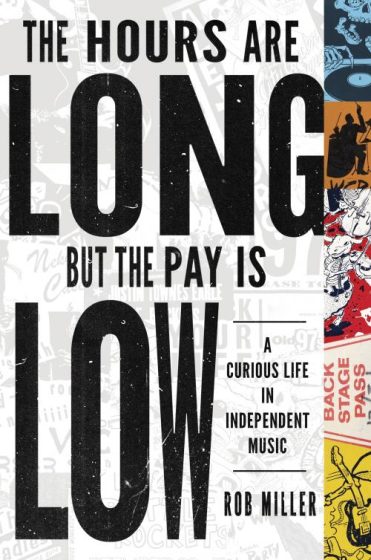
Rob Miller, The Hours Are Long But The Pay Is Low: A Curious Life in Independent Music
A question anyone who pursues a creative life will ask themselves: Why do we take a vow of poverty to put art into the world? As put forth in Bloodshot Records co-founder Rob Miller’s memoir, The Hours Are Long But The Pay Is Low, it’s because not doing it is not an option.
Chicago-based Bloodshot caught the wave of mid-1990s alternative country, releasing seminal works by Old 97s, Waco Brothers, Robbie Fulks, Sarah Shook, and more. Miller comes across as an OCD character straight out of High Fidelity, and his memories of the label’s hardscrabble early days are refreshingly unpretentious.
Bloodshot’s story wasn’t entirely positive. Its original incarnation ended badly amid disputes between Miller and his business partner (the label was ultimately purchased by Exceleration Music, which operates it now under new management). But Miller summarizes the bad-vibes part only briefly, concentrating instead on telling one man’s love story for music. It’s honestly impossible to imagine him doing anything else. And as the cherry on top, Miller dedicates the book to a pair of late friends including Dex Romweber, who he writes “left this world before he could read what his music meant to me.” – David Menconi
Kristina Murray, Little Blue
Little Blue is an understatement. Kristina Murray’s sterling third LP could convincingly have been called “Huge Bummer,” which is coincidentally the mark of a great country record.
“It’s gonna get worse, just give it time,” Murray incants on “Has Been,” a cheekily dour turn-of-phrase that just may stop you in your tracks. (Surely she means it’s gonna get better, right?) Later, on the dreamy “Fool’s Gold,” Murray tries her best at seeing beyond the proverbial grey skies, only to come up short: “It’s just more clouds,” she sighs. Such moments are appropriately slathered in pedal steel, but there’s also a swampy, rock ‘n’ roll groove to tracks like the deliciously jaded “Watchin’ the World Pass Me By” that makes the whole set go down easy. – Will Groff
Drew Parker
My introduction to Drew Parker was his 2020 single “While You’re Gone,” about missing a girl and drinking a gas station PBR while waiting for her to come back. That song had the classic hallmarks of a contemporary country breakup song. Little did I expect the curveball to come five years later.
For over a month earlier this year, Parker teased a big announcement with cryptic social messages like, “Some chapters end. Some chapters begin. This one… isn’t about me. 9•15•25.” The day came and Parker revealed in a short film testimonial that he’s felt God speaking to him, culminating in Parker’s non-religious manager calling and saying Parker should record Christian (country) music. This “moment” stuck out to me not only for the unexpected manner in which Parker revealed his decision, but because it’s obvious this isn’t a creative “phase.”
I don’t see Parker putting together a “token” record about believing and then going back to just girls, beer, and his pickup. Furthermore, Parker exudes unwavering peace about it all – whether he loses fans or faces mean-spirited judgment. There’s tangible risk to this move and there’s something to be said for Parker’s resolve and frankly, his faith in making this change. – Kira Grunenberg
Nathaniel Rateliff & The Night Sweats Live at the Kia Forum
Thinking back on all the great music I saw this year, the concert topping my list is one I saw at Los Angeles’ Kia Forum in February. The amazing triple bill – a solo Sam Beam, Waxahatchee, and headliner Nathaniel Rateliff & The Night Sweats – all delivered dynamic performances. But it was the unexpected parts of the concert that really made it so memorable.
During his set, Rateliff welcomed several special guests: Lucius’ lead singers Jess Wolfe and Holly Laessig, Taylor and Griffin Goldsmith from Dawes, and Grateful Dead bassist Bob Weir. What especially impressed me, however, was how Rateliff generously let his guests take the spotlight – a gesture that conveyed his joy for making music, particularly in a “more-the-merrier” collaborative way.
The Colorado-based Rateliff and his band also made the extraordinary gesture of using the concert to raise funds for victims of Southern California’s January wildfires as well as partnering in a purchase of a mobile food pantry to assist those left homeless by the destructive fires. This night reminded me how musicians can not only create a genuine sense of community through their rousing performances, but also through their inspiring actions. – Michael Berick
Sinners (Original Motion Picture Soundtrack)
Ryan Coogler’s Sinners is the horror film of 2025. It’s been hard to ignore, and for good reason. Michael B. Jordan, who plays double duty as twin outlaws Smoke and Stake, leads the cast which also includes Hailee Steinfeld, Wunmi Mosaku, and Thomas Pang (also known by his stage name, Yao). The film ultimately raked in $367 million in worldwide box office receipts. From its unique spin on vampires to its rootsy, blues-driven music, Sinners excels in celebrating the rich history of Black music and connects the dots between African tribal music to modern day hip-hop and R&B.
Songs like “Travelin’” (a standout moment from newcomer Miles Caton as musician hopeful Sammie) and the mind-blowing time-traveling song “I Lied to You” (paired in the movie with a visual mixing all the styles of Black-made music throughout history) mark the soundtrack as one of the year’s best releases. It’s sure to give the audience a renewed sense of Black history that’s often correlated to specific moments and eras in time. The film and its soundtrack will be talked about for decades as being a vital cinematic moment. – Bee Delores
Ringo Starr, Look Up
Way back at the beginning of 2025, Ringo Starr reminded us how different the world would look today if not for his love of American roots music. Teaming up with GRAMMY-winning producer T Bone Burnett, Starr’s country album Look Up is a love letter to the sound that drove his imagination.
Over 11 new songs written mostly by Burnett for the occasion, a classic American art form got a British Invasion makeover, with modern masters like Billy Strings, Molly Tuttle, and Alison Krauss joining Starr’s fun. Yet, what made this project a year-end highlight was not just the tunes. It was what they represent. As Starr openly declared, his first musical love was American blues and country. Artists like Lightning Hopkins sparked a creative impulse that would ultimately help redefine pop forever. From releasing music as a self-contained band and writing their own songs, to making youth culture a dominant force, The Beatles would change the world – and who knows? With a different drummer behind the kit, maybe none of it happens. Look Up shows where Starr was coming from. – Chris Parton
Vandoliers, Life Behind Bars
Vandoliers’ fifth studio album, Life Behind Bars, is both joyous and contemplative as the raucous country-punk band dive deep into themes of gender, grief, and sobriety in equal measure. “Dead Canary” blasts eardrums with a Mariachi flavor that barrels full steam ahead, setting the stage for their most impressive record to date. Other essentials such as “Bible Belt” and “Thoughts and Prayers” take aim at the current social and cultural moment, addressing religious fanaticism and how it clouds any sense of empathy.
Songs like “You Can’t Party with the Lights On” and “Valencia,” another Mariachi-intoned moment, are just plain fun. These round out the album into a well-crafted snapshot of the group right now and where they fit into the ever-changing world. Additionally, Vandoliers have never sounded so in tune with one another, vocally and musically, opting for compelling and intricate choices that expand their style without sacrificing what’s made them so good. – Bee Delores
Kelsey Waldon, Every Ghost
As the editor for Good Country and BGS, I listen to hundreds of albums a year, but they rarely stop me in my tracks. That happens even more rarely when album creators are longtime close friends of mine. But despite having met Kentuckian singer-songwriter Kelsey Waldon nearly 15 years ago and adoring all of her LP releases in that time, when Every Ghost first arrived in my email inbox earlier this year, I was floored.
In a world – and industry and genre – absolutely dripping with affectations of country music in lieu of the “real deal,” Waldon’s sixth studio album is dyed in the wool, but unconcerned with meeting those expectations or checking the boxes of trends and salability. These honky-tonking songs are infused with old-time, bluegrass, outlaw, confidence, and Prine-ian philosophizing. Waldon somehow turns introspection and identity into gritty and engaging wit and metaphor, without ever needing to obscure her messages to make them feel artistic or serious or poetic.
Even listeners like myself, who have been in Waldon’s fan club for a decade and a half or who have swapped vegetable seedlings and chicken pics with her, or who have crisscrossed her Ohio river floodplain homeland dozens of times, will learn much more about Waldon, her approach, her sonic loves, and her inner machinations as she pulls back the curtain for all of us on Every Ghost. – Justin Hiltner
Marlon Williams, Te Whare Tīwekaweka
Down here at the bottom of the globe in Aotearoa and Te Waipounamu (the North and South Islands of New Zealand), 2025 has very much been the year of the Māori singer-songwriter Marlon Williams (Kāi Tahu, Ngāi Tai).
Back in April, I interviewed Williams for a Good Country cover story to celebrate his stunning fourth solo album, Te Whare Tīwekaweka (The Messy House) and director Ursula Grace Williams’s equally affecting documentary film Marlon Williams: Ngā Ao E Rua – Two Worlds. Since then, he’s brought his antipodean blend of country and western, folk, rock and roll, and mid-to-late 20th-century pop to audiences across the U.S., UK, Australia, and at home, culminating in taking home the coveted APRA Silver Scroll songwriting award for his single “Aua Atu Rā” in late October.
Written and sung entirely in te reo Māori, the indigenous language of New Zealand, Te Whare Tīwekaweka is a masterful example of how music can use mood and emotion to cross geographic borders and linguistic barriers effortlessly. Even when we don’t speak the same language, we can still find common ground. Sometimes a sense of connection is only a song or two away. – Martyn Pepperell
Photo Credit: Tyler Childers by Sam Waxman; Kelsey Waldon courtesy of the artist; Olivia Ellen Lloyd courtesy of the artist.
Artist:Jenna Torres Hometown: New York, New York Latest Album:Firebird (released December 5, 2025) Personal Nicknames (or rejected band names): I have been known to answer to JT, Jen, JenJen, Sugar, Honey, and Baby, but my favorite by far is Mom.
If you had to write a mission statement for your career, what would it be?
Living a song-driven life has filled me with a sense of purpose over and over again. It has always been more than a career to me. There is something about being a singer-songwriter that has always felt like a mission. If I have to break it down to a single statement, I would say my mission is to “touch as many hearts as I can.”
What has been the best advice you’ve received in your career so far?
There are a few, but these are my top two. Be you! Be true to your own voice. The world is filled with great artists, but there is only one you. So follow your heartbeat, dance to your own drum, and try not to give too much of a shit about what other people think, because it can get in the way of finding you.
The second piece of advice I got from my A&R person when I signed a fancy deal some time ago. She said, “Celebrate when things are good, because the world of music is full of ups and downs and if you don’t celebrate when things are going well, you will wake up and whatever was worth celebrating will be gone.” Being somewhat superstitious, I missed out on quite a few moments when I could have been having fun. She was right – when things are going well, raise a glass of gratitude and be sure to enjoy the moment!
Which elements of nature do you spend the most time with and how do they impact your work?
I am into human nature. I like to say people are my trees. Growing up in NYC, people have always been my inspiration. My songs are born out of the endless fascination with how we handle what life gives us. I probably get more from riding the subway than a walk in the woods, although there is magic in the woods and the waves. I love to walk down a city street – it inspires me to tell stories.
What’s one question you wish interviewers would stop asking you?
“What or who is your favorite ‘fill in the blank’?” I am kind of an equal opportunity appreciator, if that is a phrase. I do have old favorites, but I seem to have new favorites every day. I am always open to loving something I have never seen, heard, or done before. So yeah – I can’t pick a favorite!
If you didn’t work in music, what would you do instead?
I would be a fortune teller. I love the unseen world. I tend to dig the deep end of the pool, so some helping profession that involves exploring healing from within – which is not that much of a departure from songwriting when you think about it.
Photo Credit: Jon Karr
This website uses cookies to improve your experience. We'll assume you're ok with this, but you can opt-out if you wish.AcceptRejectRead More
Privacy & Cookies Policy
Privacy Overview
This website uses cookies to improve your experience while you navigate through the website. Out of these, the cookies that are categorized as necessary are stored on your browser as they are essential for the working of basic functionalities of the website. We also use third-party cookies that help us analyze and understand how you use this website. These cookies will be stored in your browser only with your consent. You also have the option to opt-out of these cookies. But opting out of some of these cookies may affect your browsing experience.
Necessary cookies are absolutely essential for the website to function properly. This category only includes cookies that ensures basic functionalities and security features of the website. These cookies do not store any personal information.
Any cookies that may not be particularly necessary for the website to function and is used specifically to collect user personal data via analytics, ads, other embedded contents are termed as non-necessary cookies. It is mandatory to procure user consent prior to running these cookies on your website.