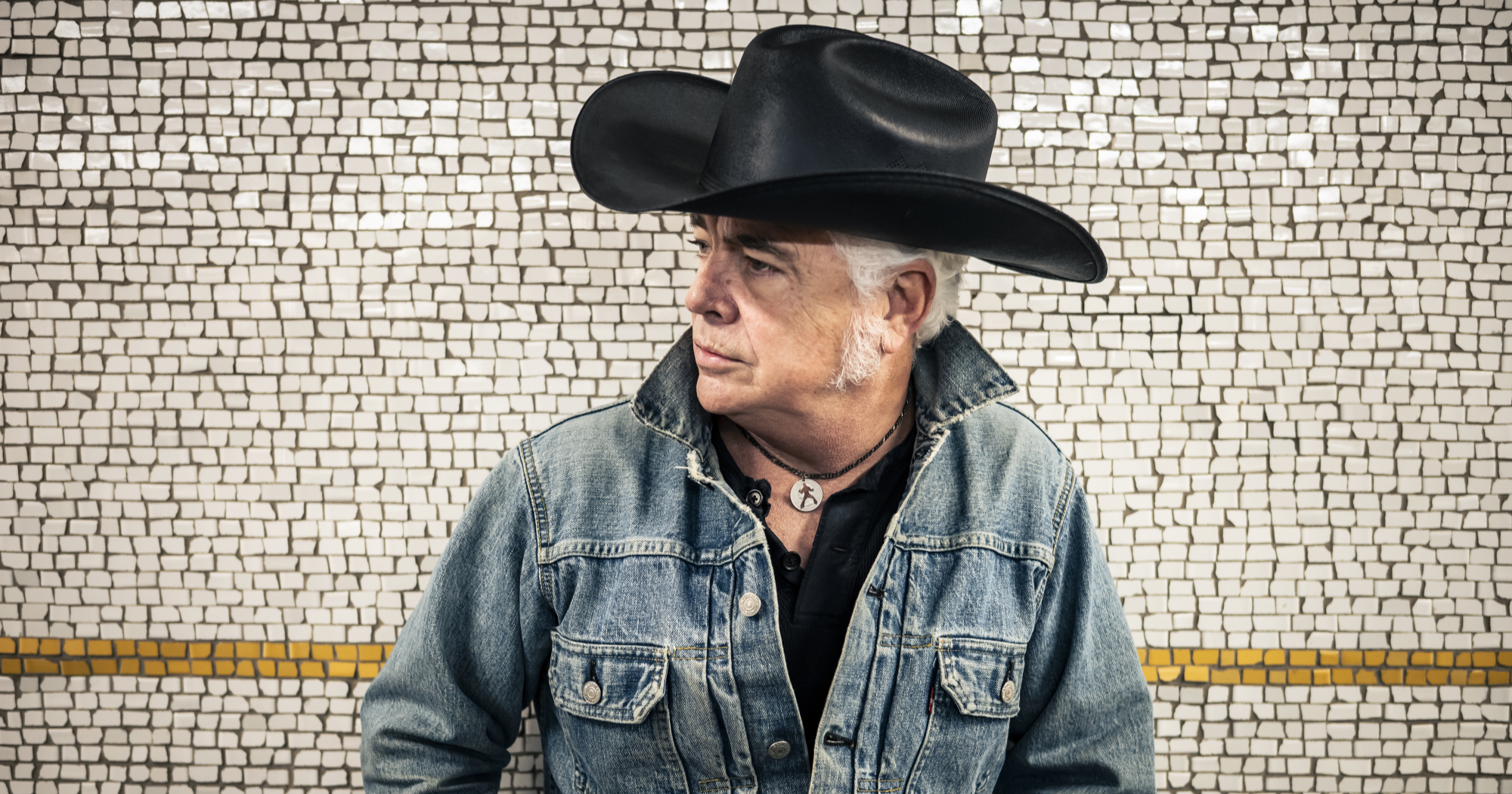
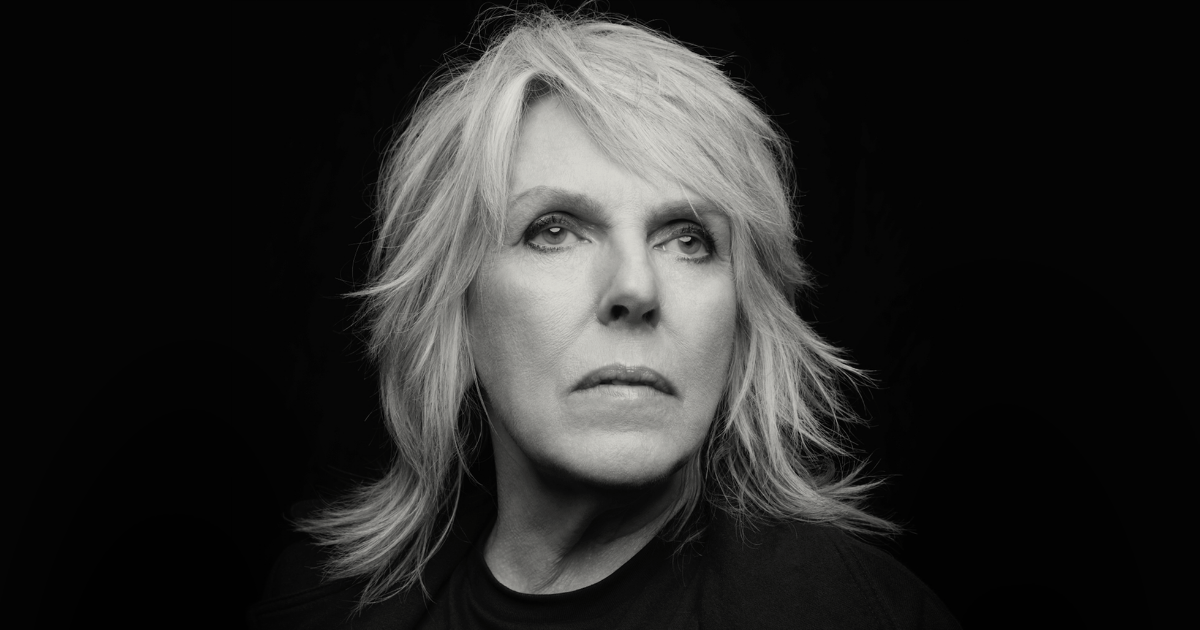
Stephen Wilson Jr.’s Dreams Have Been Outdreamed

Stephen Wilson Jr. knows he doesn’t fit the mold of your typical mainstream country artist. But honestly, who needs that?

A 46-year-old former microbiologist and Golden Gloves boxer, the Southern Indiana native stands out with probing lyrics and an experimental sound to match. Grunge and jazz combine with country inside a drop-tuned gut-string guitar, powering the 2023 album søn of dad to critical acclaim and a slow build of career momentum. But Wilson has now reached exit velocity.

After a viral, six-minute solo performance of Ben E. King’s classic “Stand By Me” at the 59th Annual CMA Awards – so stark and surging it stunned Nashville’s Bridgestone Arena into complete silence – Wilson has followed up with the equally enigmatic single, “Gary.” Like his album debut (which was a tribute to his multi-faceted father), “Gary” takes an almost scientific approach to detailing the mythical class of people who don’t do fancy, but do get things done.

“When life gets very real, like your plumbing or your electricity goes out for two weeks like we experienced [in Nashville’s January ice storm], you need a Gary,” Wilson explains.

“Gary” is now climbing up the country radio charts and it will eventually become part of Wilson’s next album, currently in the works. But we wanted to catch up with him now. Wilson spoke with Good Country about his musical worldview just before the launch of his headlining Gary the Torch Tour, which kicked off March 6 in Columbus, Ohio – and just added dozens of dates through the summer and fall, including appearances in Europe and the United Kingdom.

I was hoping you could tell me a little about how your sound developed. I mean, you play a gut-string acoustic guitar, but not the way Willie Nelson does, right? It’s down-tuned and you have these very hypnotic sections that I really love. Have you always played guitar like that?

Stephen Wilson Jr.: Yes and no. I’ve been a guitar player of all ilks over the years. I’ve been an electric lead guitar player, a jazz nerd in college. And I was an indie rock guitar player for a long time. A lot of soundscaping and stuff like that. And I was super technical for a long time. I still am very much into Apocalyptica and Al Di Meola and the John McLaughlin Trio.

Oh, ok!

I used to go to sleep to the song “Mediterranean Sundance” [by Al Di Meola, Paco de Lucía] all the time. That was the soundtrack to my late teen years. And just because I love that kind of music, there’s a lot of percussiveness in the style that I play. Influencers like Dave Matthews, a lot of acoustic players like that, they kind of treated the guitar like a drum as much as they did a melodic instrument. …

I was also very influenced by the Seattle sound, all the drop tunings. The fundamentals of my guitar playing I kind of learned from the Superunknown record by Soundgarden. I learned it from front to back, and there’s so many different tunings and so many droney riffs that had a huge inspiration on me, too. So it’s really a combination of Seattle and then a bunch of Spanish-style guitar players.

Wow, I had no idea.

Then, I discovered Willie Nelson. I grew up listening to tons of country music, but it was more like George Jones and Johnny Cash and Hank Sr. and a lot of ’90s country. Willie wasn’t a big part of my soundtrack growing up. But I saw him at the Ryman Auditorium the year I moved to [Nashville] and it changed my life. I saw him playing a gut-string through two Baldwin [amps] with a pick and I’ve been pretty much chasing that ever since. I play a gut-string through an amp, too, but not the same way. It’s a lot heavier and a lot grungier. And, obviously, I use these drop tunings, which Willie doesn’t do, which has made for a lot of challenges in the production department. It’s like trying to figure out how to tame that animal, which is honestly kind of the point. I didn’t really want it to be tame. I want it to be wild. I liked that it always has the ability to get away from you.

I think it tells – definitely on stage.

That’s kind of what I learned from Willie when he would solo. He would just fly real close to the sun. He had no problem taking the 18-wheeler right to the edge of the cliff and seeing how far he could take it before it almost goes off the edge. And he’d always somehow pull it back on the track. I really lean into that every night and every song – every time we produce a song, we kind of go in hoping that the wild animal will show up. And it does all the time on stage, there’s a lot of unpredictable things that happen, but we kind of welcome them.

The untamed wildness of it. I would say you can even hear that in your lyrics. Tell me a little bit about “Gary” and why you felt the need to say this. You write about the value of blue-collar folks, how loyal, selfless, and capable they are. But also how they’re not appreciated enough sometimes.

Well, yeah, I grew up in a body shop. I’m a son of a body man.

Really? Me too.

Yeah. Grandson of a body man. All my uncles are auto body repairmen. I grew up in body shops. I grew up in a house that was surrounded by a cornfield, like the movie Signs. And there was farmers all around me. The blue-collar influence was everywhere. I grew up in a John Mellencamp song, literally. I grew up in a town where there was an abundance of these “Garys,” as I call them. I kind of started thinking about Garys as a subspecies of humanity, and I started to observe them in the wild, similarly to how Jane Goodall would observe chimpanzees and other greater apes. That’s kind of the approach with the whole song, but it was all inspired by a tragedy, really.

I was driving down a highway and I saw a memorial billboard sign and it said “in memory of Gary,” and there was a picture of a boy who was probably 16 years old. It was just really heartbreaking. I could feel the sadness and the heartbreak and the family’s plea to keep this boy alive in any way possible. I understand that plea. That’s why I made that album. I mean, søn of dad is a sonic monument to my father. That’s my billboard that I put on the side of the road to keep my dad alive, to keep his memory alive. So I really understood that sentiment behind it, just on the foundational level. And then when I saw it, I couldn’t help but say out loud in the car, “Dang, there ain’t a lot of boys named Gary these days.”

That’s where my brain started subconsciously turning Gary into a subspecies of human. And then honestly, the song just fell out. Because of my upbringing, it wasn’t really written. It was subconscious. I guess my brain just started writing, and that’s how I write pretty much all my songs. Generally, I write them fast and I write all the lyrics first. I wrote the whole chorus in my car right there and I just kept driving around and I kept writing it. Then I put it to music a couple hours later and it was 85 percent done.

It seems like people have really latched onto the “Gary” theme. Those people you can depend on, but they’re not flashy.

There’s a lot of truth to this Gary thing. There’s a lot of people coming up after the show or whatever. I was getting overwhelming evidence to basically prove that this Gary thing was real. … You really couldn’t deny the conclusions that, yeah, I’m not the only person that has seen this Gary theme. Because I had so many people like, “Dude, I know exactly who you’re talking about.” It wasn’t a couple months after we started playing and people were chanting “Gary” in the audience. The song wasn’t even recorded yet, let alone released. … Now it’s being played all over the country. It’s pretty wild.

And the song is sad. I mean, that’s the thing. I’m definitely celebrating a working-class human, but at the same time, it’s a very sad story. I wasn’t trying to make Gary some superhuman. I wanted to try to be real about the situation, because the Garys are endangered. We experienced that when we had this ice storm in Tennessee [in late January 2026]. We had to import Garys from all over the country to get everybody’s power back on. There’s logistical evidence that we just saw recently to prove that, yeah, these Garys? We’re running out of them, and maybe we should pay attention to that because we rely on them to fix things. … Instead of just letting them drive off into the abyss to go save another person’s day, how about we give them a moment and celebrate them?

You’re starting the Gary the Torch Tour in March, and that should help. I was wondering, what’s your favorite setting for listening to music? Do you consider that when you’re putting your tour together?

I guess I prefer vinyl, and I listen a lot in my vehicle as I’m driving. But also, I don’t listen to a lot of music. It probably will shock a lot of people, not that it matters to them, but I wouldn’t say that I just sit around and listen to music all the time. I listen to a lot of silence, and I think it’s really important for musicians to listen to as much silence as they do sound, because that’s where the inspiration for me really comes from – the silence, not the sound.

That’s actually fascinating.

As much as I want to sit around and listen to bops, I got to listen to nothing, too. I’ve never had a song come to my head from listening to another song, ever. It’s always come from silence.

@stephenwilsonjrwent loco tryna open my møuth more for y’all this time. “Cuckoo” live acoustic version out now. love y’all. 🖤🥕🏃🏻‍♂️♬ original sound – Stephen Wilson Jr.

I saw you at the Ryman Auditorium in November and I know those were special shows, but you had a boxing ring on stage there. Where do you go creatively from something like that?

That was very much an ode to my father and getting to that stage was all I ever dreamed of, really since I moved to town. Back to the first part of this conversation, seeing Willie Nelson at the Ryman? I’ve been dreaming about that show since I moved to town.

Typically I tend not to rely on a lot of spectacle for the show. I tend to rely on something divine. … The real light show is what descends into the room during those shows. That’s really what I try to focus on more than laser beams and a bunch of production tactics. I do have a really quirky stage design that I created. I have my own little world up there. And ideally, full-time, there will be a boxing ring on stage. We’re working out the logistics of bringing that around full-time because it’s quite the undertaking.

But I mean, I think it’s all about feeling at home up there. I’m not really supposed to be here in this world. I’m not a natural-born star, as they would call it. My goal is to try to feel comfortable up there, and get people feeling things. That’s what people really remember. I’m in the emotion business, not the music business.

You’ve been working on some new music, right? What do you hope people will take away from that?

Well, I’m working on a whole new record, which is more just the continuation of conversations and observations from where I left off. Because it would’ve been really easy to never make another record again after søn of dad.

Oh yeah?

I never was trying to be an artist in the first place. And there was a big part of me that was … I mean, honestly, when I was making that record that’s what I was thinking, if I’m going to be perfectly honest with you. “I’m going to make this and then I’ll never make another record again,” because why would I? Then the story of søn of dad just was so much a God thing. It was so divinely orchestrated that I just had a hard time thinking, “What would I do from here?” Everything I ever wanted to do was already done.

But that was my own stuff, and I don’t believe God put me in this position for me to do that. It took me some time to figure that out. I’ve got to give “Gary” the credit for that because when “Gary” showed up, that’s when I knew I wasn’t done. If “Gary” hadn’t showed up to show me that, I’m not sure I would’ve ever recorded another song ever again. Like I said, I’m not supposed to be here. None of this was supposed to happen. So for me to have any expectation of what is down the road is pretty comical. My dreams outdreamed me a long time ago. I really just want to focus on being there for people and being where I’m supposed to be.

That’s one thing I learned from being a scientist and doing all these things over the years: There’s where you can be and then there’s where you’re supposed to be. And there’s nothing wrong with being in either place. There’s no guilt to be had in being where you can be because, man, we’re all just trying to survive. But then there’s where you’re supposed to be, and that can be a very difficult place to be. But I’ve chosen to be there and for whatever reason, I intend to stay there until the day I die.


Photo courtesy of Missing Piece.

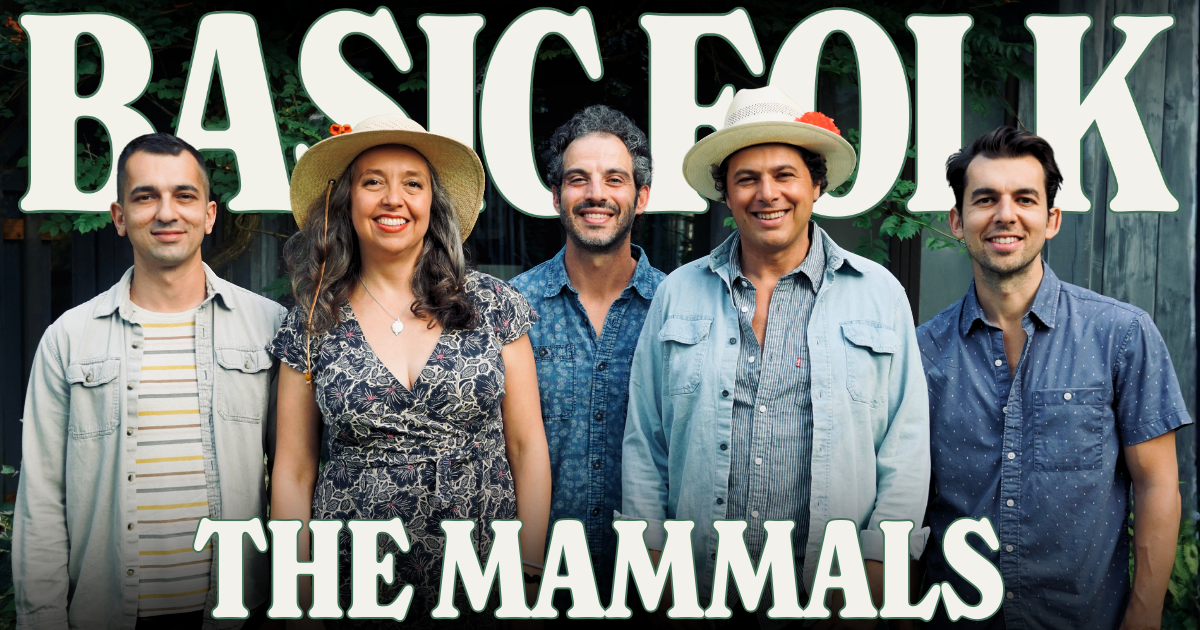
Basic Folk: The Mammals

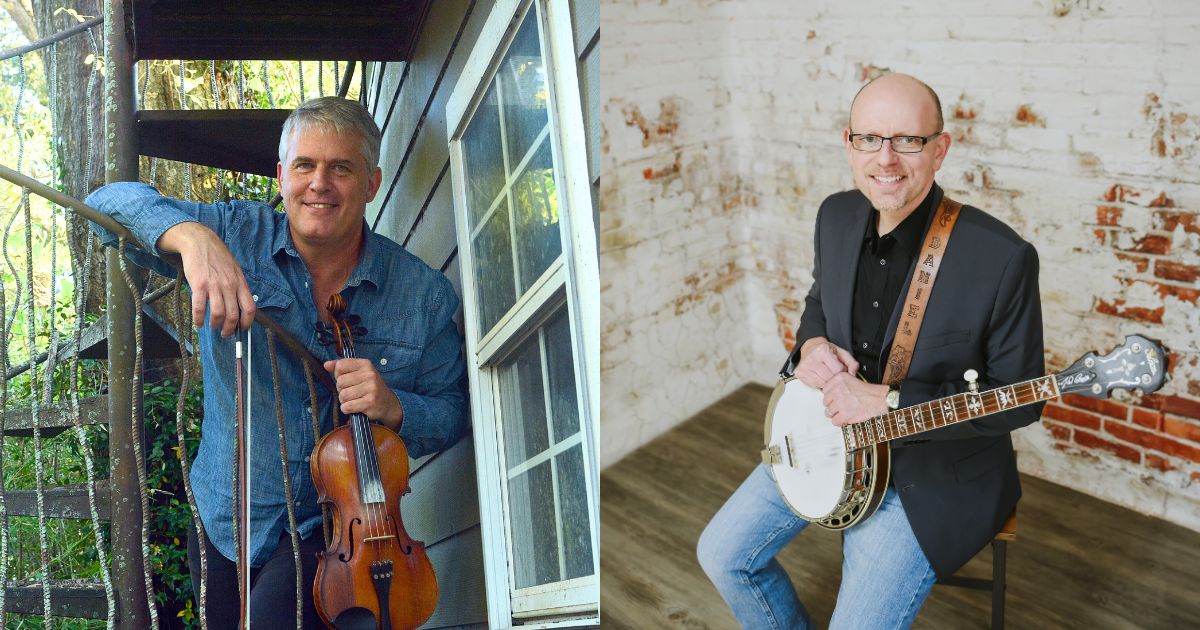
Mike Merenda and Ruth Ungar Merenda have been making music together as the Mammals since 2001, with a little break in 2008 to play as Mike & Ruthy. They’ve been back as the Mammals since 2017 with a couple of great albums, most recently Touch Grass Vol. 1 and Vol. 2. Mike, born and raised in New Hampshire, picked up the banjo after he met fiddler Ruth Ungar. Ruth is the daughter of Jay Ungar, a much-loved folk musician who is best known for his composition, “Ashokan Farewell,” used as the theme tune to the Ken Burns 1990 documentary The Civil War, which you now have playing in your head. Essentially, Ruth grew up surrounded by folk music, which she talked all about on her previous appearance on Basic Folk.

LISTEN: APPLE • SPOTIFY • AMAZON • MP3

This time around, we dig into a few of the songs on their double album Touch Grass. There are A LOT to choose from: seventeen tracks in all. It was a four-year project recorded at their Humble Abode studio in the Catskills. The songs offer a mix of socially conscious “daytime” folk-rock and introspective “nighttime” Americana. We get into the gospel influence on “O The Cruelty,” the bare-bones arrangements of “Old Friend,” and keeping the sadness in check with “Doldrums.” They also talk a bit about their home venue, the Ashokan Center, where their musical festival the Hoot takes place. Let it be known that the center has a ton of old farm equipment and no, they do not want any more, so don’t ask them to take it. Thanks, Mike & Ruthy!


Photo Credit: Lead image and vertical alternate image by Wayne Gibbous; square alternate image by Tanya Barricklo.

BGS 5+5: Cold Chocolate

Artist: Cold Chocolate
Hometown: Boston, Massachusetts
Latest Album: Not Gonna Stop (released February 13, 2026)

(Editor’s Note: Answers supplied by Cold Chocolate’s Ethan Robbins.)

What’s the toughest time you ever had writing a song?

In May of 2020, smack dab at the beginning of the pandemic, my wife and I were expecting our second daughter. At the time, among other things, we were worried about whether or not I would be allowed to accompany my wife to the hospital to give birth – that’s the way the protocols were set. Fortunately I was able to, but unfortunately the birth didn’t go as smoothly as one always hopes it will and Casey, our daughter, had to remain in the hospital for 17 days after she was born. Because of the protocols at the time, my wife and I were not allowed to stay with her. So all we could do each day was call the hospital to find out when she was coming home. If you recall, back in the early pandemic days, each day felt like a year. Those 17 days really felt like 17 years.

It was an incredibly emotional time. I’d find myself crying out of nowhere, in the middle of the day, without any warning. It was during that emotionally charged period that I wrote “How You’re Feeling Today,” and although it was hard to find the right words to write and sing, it was incredibly cathartic in that moment. Through the writing of that song, I was able to start to see the light at the end of the tunnel. Now, when we play that song live, I get to revisit some of those feelings, but in a much more positive light – because Casey is 5 years old now. Incredibly healthy, incredibly beautiful, incredibly hilarious, and one of the best dressers I know.

Genre is dead (long live genre!), but how would you describe the genres and styles your music inhabits?

We call our music Americana. It’s a broad term that’s meant to encapsulate many different genres, as does our sound. Our band goes back a long way, over a decade, and has evolved considerably over that time. When we began the band over 10 years ago, we had a banjo player and an upright bass player and the music we were playing was very much bluegrass-forward – or at least, that’s what we considered it to be. We always had drums, so some people may never have considered us a bluegrass band, but we did.

The issue for us back then was that the entire time our banjo player was touring with us he was also studying to get his PhD in Physics from Harvard University. So when he graduated and became a doctor, he had to make the very difficult decision whether to pursue his career in science or his career in banjo. He made the wrong decision that day – and we obviously continued on as a band and our music continued to evolve as anything and everything does over 10+ years of time.

We began to get enthralled by the music of bands like the Wood Brothers and the Black Keys, and I started playing electric guitar live more than ever before. Ariel [Bernstein] and I delved pretty far into what this electric sound allowed us to do. We found we were now able to play things and express things that we’d been unable to achieve before. So we went forth as an electric “power duo” (trademark pending) and wrote and performed a ton in that duo setting. Then, bam! – pandemic hits, and we don’t see each other for more than two years.

In May of 2022, I showed up at Ariel’s house and he says, “Oh, I play banjo now!” Through his banjo and my mandolin’s addition to our band, we were able to revisit some of the bluegrassy material that we’d started with so many years ago. We breathed fresh life into tunes that were as old as the band itself and now they feel like some of our newest songs. It’s added an arc to our albums and live shows that we adore. So in a live setting, we’ll play everything from electric funk and rock with a drum kit and guitar amp to acoustic bluegrass and folk with banjo and mandolin around a condenser mic. It’s hard to put one word on what we do. It’s all… us.

What was the first moment that you knew you wanted to be a musician?

I started classical violin lessons when I was 4 years old. I studied with the same teacher until I went to college at 18. At the beginning, although there was certainly a level of enjoyment that I was aware of, I never connected with classical music in a way that made me want to take complete ownership of my music education. When I was 14, I started teaching myself guitar and my love of playing music started to grow. I was finally able to play things that I wanted to play. At the time, that was a lot of Dave Matthews Band – but it was the first time I realized that music could be so soul-fulfilling.

When I got to college at Oberlin, at that point listening to a lot of Grateful Dead, I met some people who were really into bluegrass. I didn’t know what that was at the time, but the first time I heard Old & In the Way I was sold. I went to the very first DelFest in 2008, right before spending the summer working for HeadCount – the voter registration organization – on a six-week tour with the Dave Matthews Band. It was that juxtaposition, seeing my favorite childhood band rock out every night then going to sleep listening to Peter Rowan and Vassar Clements in my headphones, that I started to visualize a life path for me as a musician.

It certainly took us some time as a band to figure out how to make that dream a feasible reality and, in some ways, we are still figuring that out. But truthfully, I just met the right friends at the right time, saw and listened to the right music when it mattered most, and that sparked the dream.

What is a genre, album, artist, musician, or song that you adore that would surprise people?

When I was at IBMA in 2024 in a meeting setting, as an icebreaker, someone asked what the first album each person had ever purchased was. Most people responded on-brand with a classic bluegrass or newgrass album, Bill Monroe’s Uncle Pen or Alison Krauss & Union Station’s Paper Airplane. For me, it was an easy answer: Third Eye Blind’s self-titled record. I know all of the words to all of the songs on that record and it’s still a personal fave of ours as a band. During late-night drives, we’ll blast that album front to back in the van. It still pumps us up, sets the vibe and energy high, and keeps us going full-speed ahead toward our next destination. ’90s pop, across the board, is a winner for this band, but that album specifically will always and forever hold a special place.

Since food and music go so well together, what is your dream pairing of a meal and a musician?

Great question. My top act to have seen live, hands down, would have to be the Band. Certainly Cold Chocolate’s musical vibe has been modeled after those raw, rootsy sounds of theirs. Their songs transcending genre, while being just so totally “them.” I’m not sure what food would pair best with seeing them. At The Last Waltz it was a Thanksgiving dinner, which is honestly one of my favorite meals of all time. But [with] a heavy meal, I’d want to dance my ass off at that show.

Southern BBQ is another obvious choice for Levon’s Arkansas-growl, but again maybe too heavy. I think I could get down with a fish boil at a show by the Band, thrown out across a table, family-style. Then I could grab little bites throughout the show while belting out “The Shape I’m In” with my idols on that stage.

WBUR recently wrote about us that our song “I Know This Girl” has “enough grit, drive and backbeat to make Cold Chocolate worthy heirs to The Band,” which is maybe the best thing ever written about us in the media.


Photo Credit: Lead image by Kelly Davidson, alternate images by Joe Navas.

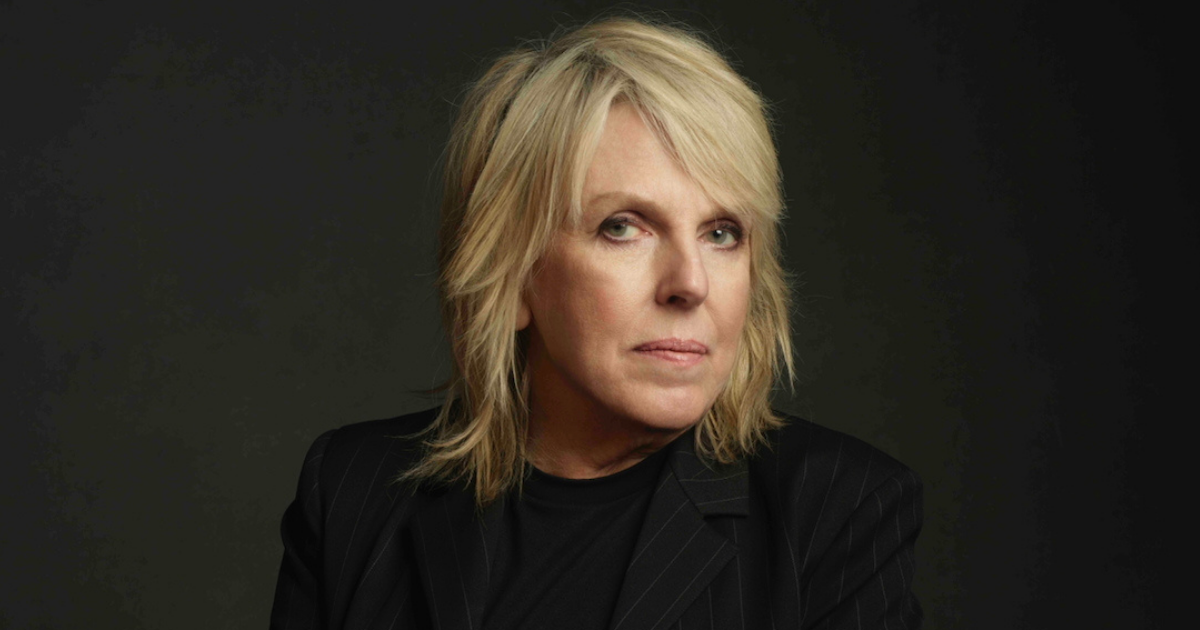
10 Sonically Diverse Covers of Lucinda Williams Songs

Befitting Lucinda Williams’ stature as one of the greatest songwriters of modern times, she might be the most covered artist this side of Bob Dylan (who, as far as I can tell, might be the only major artist never to have covered one of her songs).

From “Are You Alright?” to “You Can’t Rule Me” and all points in between, Williams’ catalog is broad, deep, and multivalent, with lavish emotional content to dig into. Truly, the woman’s body of work contains multitudes.

Where she’s coming from is no mystery, because Williams has always been generous about showing off her own influences and idols. She has covered too many other artists’ songs to count, by the likes of Dylan, Nick Drake, Howlin’ Wolf, and more. She has also done multiple tribute albums in her Lu’s Jukebox series, covering the Beatles, the Rolling Stones, Tom Petty, and even Christmas songs, among others.

There’s almost too much to choose from, but here is a small sampling of what other artists have done with Williams’ songs over the years – focused more on stylistic departures than faithful readings.

“Passionate Kisses” – Saintseneca (2014)

It’s hardly surprising that a great deal of this list of covers will come from 1988’s breakthrough album Lucinda Williams, starting with this forthright statement of purpose. The obvious “Passionate Kisses” cover choice would be Mary Chapin Carpenter’s 1993 hit version, which put both women on the map. But let’s go more left-field with the sprawling, atmospheric grandeur of the cover by Ohio indie-folk band Saintseneca. It’s never sounded more wide-open cinematic, to the point that I kind of can’t believe no one has put it onscreen yet. Cue opening credits.

“Bus To Baton Rouge” – Amos Lee (2023)

This Philadelphia-born soul man thinks enough of the Williams oeuvre to have covered 12 of her songs for an album, Honeysuckle Switches: The Songs of Lucinda Williams. Williams’ original appeared as the penultimate track of her 2001 release, Essence. The lyrics yield up the title phrase of Lee’s tribute LP, and it makes a stunning album-closer here.

“Side of the Road” – Ben Folds (2005)

In Williams’ hands, “Side of the Road” conveys stoic resolve on her 1988 self-titled joint. North Carolina native virtuoso Ben Folds transposes it to winsome piano pop for his 2005 solo album Songs For Goldfish, and the transition works beautifully.

“Change the Locks” – Tom Petty (1996)

Originally titled “Changed the Locks” on her eponymous album, this is in the conversation for Williams’ greatest songs. Her version coursed with undercurrents of the sort of domestic violence that would inspire a woman to, well, change her locks. So it’s interesting that so many men have taken a crack at this song in the decades since, including Silos, Vampire Weekend, Rostam, and Elvis Costello. But maybe best of all is Tom Petty, who recorded it for the soundtrack to 1996’s She’s The One, getting the defiance just right.

“Joy” – Bettye LaVette (2005)

As good as all of Williams’ records have been, it wasn’t until 1998’s GRAMMY-winning Car Wheels on a Gravel Road that she finally got herself a gold record. “Joy” was a high point, equal parts angry and exuberant. Still, powerhouse soul woman Bettye LaVette took it to a whole new level with a swamp-blues rendition on her 2005 comeback LP, I’ve Got My Own Hell to Raise.

“Abandoned” – The Lemonheads (2019)

While The Lemonheads’ troubled leader Evan Dando is a decidedly problematic figure, there’s no denying his taste in covers. The Lemonheads have released two volumes of cover collections with good, bad, and ugly songs by everyone from Townes Van Zandt and Yo La Tengo to Florida Georgia Line and GG Allin. From 2019, Varshons 2 also features a fuzz-toned version of Williams’ very forlorn “Abandoned” (yet another Lucinda Williams song).

“Concrete And Barbed Wire” – Bella White (2022)

There has always been a stateliness to the Car Wheels on a Gravel Road track “Concrete And Barbed Wire,” which was in Canadian songbird Bella White’s onstage setlist years before she released a studio version on 2024’s Five For Silver. The song’s waltz tempo makes a perfect fit for bluegrass – recorded live at the Green Mountain Bluegrass and Roots Fest in Vermont.

“Metal Firecracker” – Mary Lou Lord (2015)

Everybody’s favorite busker, Mary Lou Lord is best-known for solo deconstructions of songs from the indie-rock canon. But on her 2015 LP Backstreet Angels, Lord goes full-band indie-rock for “Metal Firecracker” (which Williams originally cut on Car Wheels on a Gravel Road). Lord sounds dreamy to Williams’ earthiness – but both versions come down to, “All I ask, don’t tell anybody the secrets I told you.”

“People Talkin’” – Hurray For the Riff Raff (2012)

Maybe the acid test of a song’s worthiness is how well it holds up if stripped all the way down to voice and quiet strumming. As if there could be any doubt, Williams’ “People Talkin’” (from 2003’s World Without Tears) is superb in this guitar-and-fiddle version that Hurray For the Riff Raff recorded in a London kitchen for an edition of “notes from mt. pleasant.”

“Fruits of My Labor” – Waxahatchee (2021)

“Fruits of My Labor” seems like a song that’s still going to be played around campfires a century from now. Its structure and vibe bear passing resemblance to that classic spiritual, “A Change Is Gonna Come,” and it’s been covered numerous times since first appearing on Williams’ 2003 LP World Without Tears – fine, fine versions by Margaret Glaspy, Mia Dyson, and Rostam, among others. But Waxahatchee (Alabama-born Katie Crutchfield) gets closest to the song’s soul with her cover from 2021’s Saint Cloud +3 album.

“The Last Time” – Lucinda Williams (2021)

We’ll break the format here at the end and give Williams herself the last word, showing everyone how one pays proper cover homage. From her 2021 tribute LP, You Are Cordially Invited…A Tribute to the Rolling Stones, “The Last Time” is a song with a long and winding road behind it. Originated by the Blind Boys of Alabama, it was famously covered by the Staple Singers in 1961. Four years later, the Stones fit it with a snarling lead-guitar hook that took it out of church – and here Williams moves it right on over to the honky-tonk.


Continue exploring our Artist of the Month coverage of Lucinda Williams here.

Photo Credit: Mark Seliger

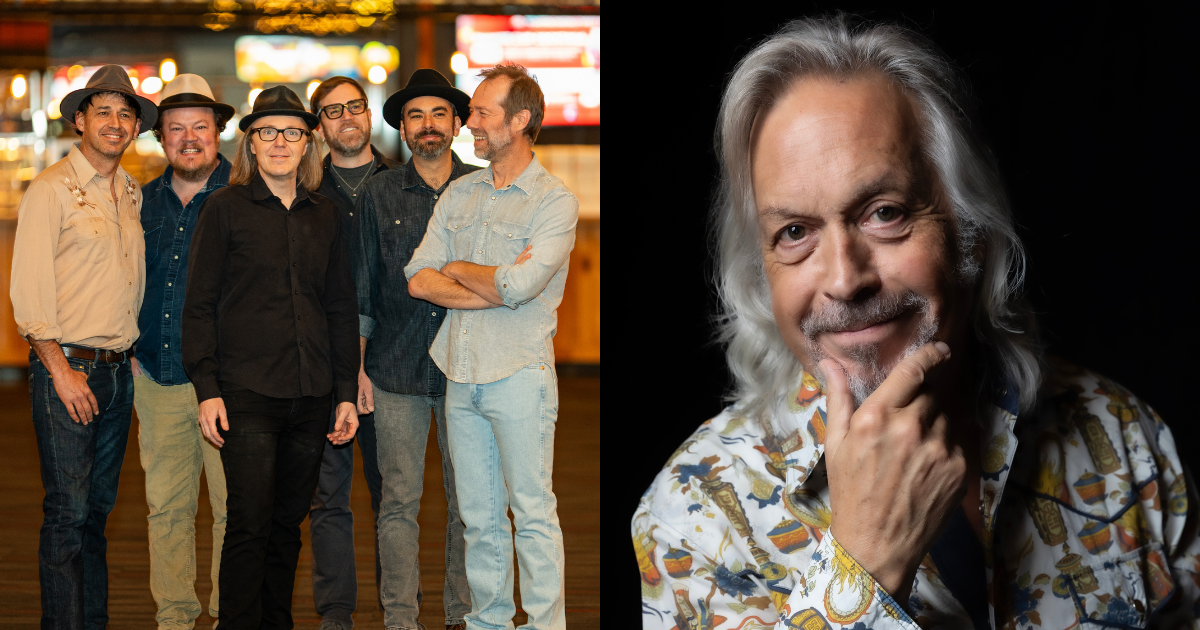
You Gotta Hear This: Steep Canyon Rangers, Jim Lauderdale, and More

Welcome to the conclusion of another week. With it, we’re once again sharing our weekly roundup of brand-new tracks, singles, videos, and more. You Gotta Hear This!

To start us off, Kentuckian singer-songwriter and instrumentalist Adam Chaffins shares a lyric video for “Sugarcoat It,” a new original song about the temptation and believability in misinformation these days. Chaffins and his collaborators leverage groove and catchy hooks for a meaningful and oh-so-timely message in the rockin’ Americana track. Also bringing a topical and cutting central thesis are Joe Troop & the Truth Machine, who have released a new live performance video for “Billionaires.” Bluegrass and old-time stemming from Southwest Virginia are the musical trappings for a funny, satirical song taking the 1% of the 1% to task. Troop and his queer cohort are well equipped to proffer their message with silliness, joy, and string band music.

From across the Atlantic, Spanish (via Amsterdam) singer-songwriter Liza Lo shares “Birdsong,” a tender and vibing alt-folk number zooming in on the present moment. “Life can get overwhelming and the simple things are quickly forgotten or overlooked,” she explains to BGS, using the song to remind all of us – and herself – not to lose sight of the beauty in the simplest of everyday things.

Bluegrassers Chris Jones & the Night Drivers have a new single out today. “Steal My Today” is the band’s first recording released with their latest member, Nelson Williams, playing the bass. Plus, Italian resonator guitarist Paolo Ercoli guests on the track, which also features banjoist Grace van’t Hof throwing some accordion into the mix. It’s also a song about the present moment, and not letting it be soiled by another. Meanwhile, perhaps the most prolific recording artist in roots music has announced a new project. Jim Lauderdale once again teams up with the Po’ Ramblin’ Boys, this time on his upcoming album The Birds Know – out in April. The lead single, “We Look At Things In Different Ways,” furthers our unofficial theme today of examining societal discourse, by pointing out you actually can love and care for another even with disparate points of view.

And, you won’t want to miss the latest from Western North Carolina’s bluegrass troubadours the Steep Canyon Rangers. Earlier this week they launched “Rumble Strips” a new single that will be included on their May Yep Roc Records release, Next Act. Written by Aaron Burdett, it’s a straight ahead bluegrass jam about getting back on track after you’ve wandered a bit from your lane and hit the rumble strips. But hope need not be lost, as Burdett points out, often you “maybe only need a little course correction to get back on the right path.”

Just in time for St. Patrick’s Day next week, country rockers Reckless Kelly share a reimagined, “evolved” acoustic version of “Seven Nights in Eire.” They originally released the song in 2005 on Wicked Twisted Road and it’s since become a fan favorite. This new edition of the track features mandolin, fiddle, pedal steel, and more combining country, Celtic, and string band in a pub-ready blend.

Check it all out below, right here on BGS. You Gotta Hear This!

Adam Chaffins, “Sugarcoat It”

Artist: Adam Chaffins
Hometown: Nashville, Tennessee, via Louisa, Kentucky
Song: “Sugarcoat It”
Release Date: March 13, 2026 (single)
Label: Spirit Nashville Recordings / Fluid Music Revolution

In Their Words: “Lately it just feels harder and harder to tell what’s real and what isn’t with so much information flying at us all the time. Sometimes, you hear something so outrageous you assume it can’t possibly be true – until you realize it is. That tension really shaped the song. It’s got sweet, sugary, sticky hooks and a groove you can’t help but move to, while shining a little light on how the truth can sometimes be deceiving. It was a lot of fun to track this playing upright bass. Along with Frank Rogers and the crew we really brought it to life. We’ve got a lot of new music on the way and we’re really excited to kick it off with this one.” – Adam Chaffins


Chris Jones & the Night Drivers, “Steal My Today”

Artist: Chris Jones & the Night Drivers
Hometown: Nashville, Tennessee
Song: “Steal My Today”
Release Date: March 13, 2026 (single)
Label: Mountain Home Music Company

In Their Words: “This song represents some firsts for us: it’s our first release to feature Nelson Williams on the bass (including some bowed bass). He’s the newest Night Driver, though he’s already been with us for over two years. It’s also our first time to feature Italian Dobro player Paolo Ercoli as a musical guest. He and I have been doing duo tours in Europe and in the U.S. for a few years now. Grace van’t Hof and I co-wrote the song, one about not letting the material loss of a breakup take away the joy of the present moment. Grace also played banjo and even added some accordion to the recording.” – Chris Jones

Track Credits:
Chris Jones – Acoustic guitar, lead vocal
Nelson Williams – Bass
Mark Stoffel – Mandolin, harmony vocal
Grace van’t Hof – Banjo, accordion, harmony vocal
Tony Creasman – Drums
Paolo Ercoli – Resonator guitar


Jim Lauderdale, “We Look At Things In Different Ways”

Artist: Jim Lauderdale & the Po’ Ramblin’ Boys
Hometown: Troutman, North Carolina
Song: “We Look At Things In Different Ways”
Album: The Birds Know
Release Date: March 13, 2026 (single); April 24, 2026 (album)

In Their Words: “This song came through me to speak to these times of divisiveness in our world. It was an important message I wanted to get out: that you can still love somebody even though your views might differ.” – Jim Lauderdale


Liza Lo, “Birdsong”

Artist: Liza Lo
Hometown: Amsterdam, the Netherlands
Song: “Birdsong”
Release Date: March 18, 2026
Label: Gearbox Records

In Their Words: “‘Birdsong’ reminds me of a new love, a gentle morning walk, or a hug from a friend. Life can get overwhelming and the simple things are quickly forgotten or overlooked. First morning coffees, meeting someone new, real connection, holding hands, song of birds in the garden, the smell of spring air, sunlight on your face after a long period of rain and grey. ‘Birdsong’ is written to remember the beauty in the smallest of things life gives us, I hope it can be this reminder for you too.” – Liza Lo

Track Credits:
Sean Rogan – Acoustic guitar
Chris Rabbits – Double bass
Owen Spafford – Fiddle
Liza Lo Hoek – Vocals, acoustic guitar


Reckless Kelly, “Seven Nights In Eire (Alternate Routes)”

Artist: Reckless Kelly
Hometown: Austin, Texas
Song: “Seven Nights in Eire (Alternate Routes)”
Album: Alternate Routes
Release Date: March 13, 2026 (single)
Label: No Big Deal Records

In Their Words: “‘Seven Nights In Eire’ is a collection of stories based on trips taken to Ireland by myself, my dad Muzzie, and our old friend Pinto Bennett. We had all been there individually a time or two and had had some amazing experiences that we wanted to write about. We got together at Pinto’s house in Boise, Idaho, and after a couple hours and a few beers, we had the song down. We basically just sat around swapping stories and telling jokes and working them into the verses that became the song as you know it today.

“The original version was recorded for our 2005 release, Wicked Twisted Road. Over the years it’s become a fan favorite and one of our most popular songs, so we decided to include it in its new evolved version on Alternate Routes. We had our friend Kym Warner come play some mandolin on it and we did the version we’ve been playing live over the last several years. It’s a little different from the OG, but it’s one of those songs that has stood the test of time and will definitely continue to be a staple on the set list.” – Willy Braun


Steep Canyon Rangers, “Rumble Strips”

Artist: Steep Canyon Rangers
Hometown: Asheville, North Carolina
Song: “Rumble Strips”
Album: Next Act
Release Date: March 10, 2026 (single); May 22, 2026 (album)
Label: Yep Roc Records

In Their Words: “My friend Nate is fond of saying when a person has gotten off track a little bit and notices they’ve ‘hit the rumble strips’ and maybe only need a little course correction to get back on the right path. I took this imagery and applied it to a relationship. Some ongoing conversations between Graham [Sharp] and I filled this one out.” – Aaron Burdett, songwriter, guitarist, vocalist


Joe Troop & the Truth Machine, “Billionaires”

Artist: Joe Troop & the Truth Machine
Hometown: Winston-Salem, North Carolina
Song: “Billionaires”
Album: The Truth Machine (EP)
Release Date: March 13 2026 (video); April 3 2026 (EP)

In Their Words: “I formed this band with friends that I made at the Galax Fiddlers Convention many moons ago. This track has Southwest Virginia written all over it. It’s Southern bluegrass gospel with four-part vocal harmonies in the Stanley Brothers style.

“Lyrically, it’s unabashed political satire, a high lonesome roasting of MAGA and their principal talking points. But funnily enough, people often approach me after gigs to thank me for singing it without realizing it’s satire. Yikes! Is media literacy a problem in this country? On occasion, some folks have walked out on our show during this song. One couple told the presenter that they didn’t pay to be insulted – they work hard for their money! And while we aren’t ragging on anyone for accumulating wealth, to add some perspective: a million seconds is 11 days. A billion seconds is 32 years. Who needs that much money!? What could you possibly spend it on?! Election meddling, propagating divisive talking points? Beyond partisan politics, the wealth disparity in this country ought to alarm everyone. We plebs are not that different. Let’s rally together around music, laughter, and class justice in this billionaire-induced hellscape of a country. It’s time for a change!

“‘Billionaires’ is part The Truth Machine, a five-track EP that drops everywhere on April 3, 2026. It is available for preorder now on my website.” – Joe Troop

Track Credits:
Joe Troop – Banjo, vocals
Lu Furtado – Guitar, vocals
Malia Furtado – Fiddle
Olivia Fernandez – Mandolin, vocals
Jimmy Washington – Bass, vocals

Video Credits: 
Kayla L Oelhafen – Producer
Alexei Mejouev – Videographer
Andy Augustyn – Gaffer
Larry Vellani, Toni Murray – Location coordinators


Photo Credit: Steep Canyon Rangers by Jay Strausser; Jim Lauderdale by Jeff Fasano.

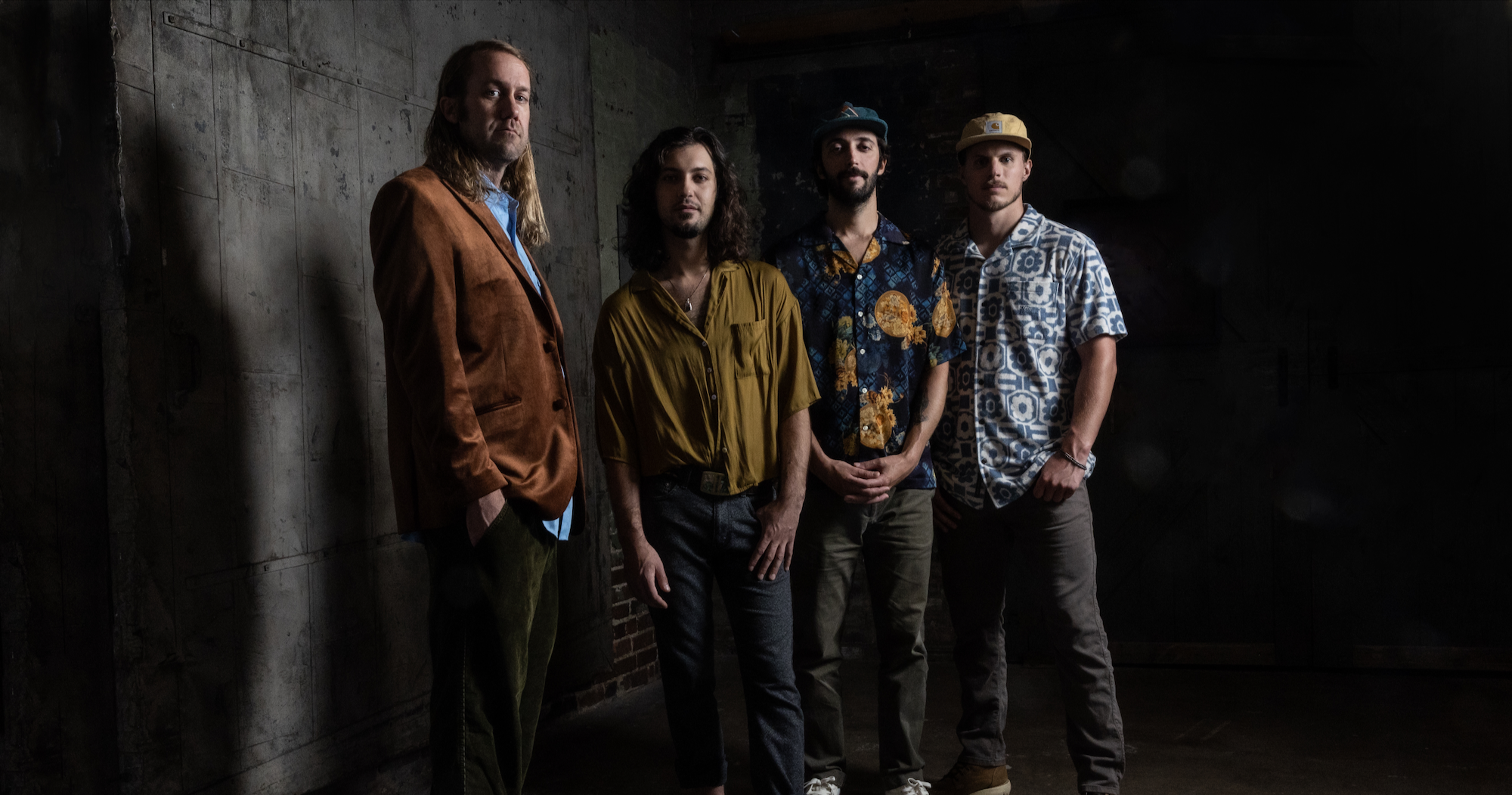
Magoo on Taking Chances and Giving Up Second Guessing

Magoo has been lighting up Colorado’s vibrant and crowded jamgrass scene since 2022. Their collision of string band music with danceable beats, jazzed up instrumental breaks, and anthemic lyrics rooted in rock has led guitarist Erik Hill to coin the phrase “bluegrass with lasers” to describe their sound and style.

After turning heads with two volumes of Magoo The EP in 2023 and 2024, the band – now comprised of Dylan Flynn (Dobro), Courtlyn Bills (mandolin), A. Denton Turner (bass), and Hill – have finally unleashed their full-length debut, What A Life. The 10-song compilation sees the upstart group of pickers contemplating everything from the sacrifices of a life lived on the road, the places that have transformed us, and how our stories are all connected.

Across 52 minutes of run time, the musicians rip their way through meandering jams that flow freely from one song to another as if it was a live show, an approach Hill says was intentional to keep the album from feeling sterile.

“Our live shows and recordings are very important to us, so it was imperative that this album not feel so copy and paste or cut and dry like studio projects often can be,” explains Hill. “I think we landed on a nice, organic feel that stretches the songs out, but not as much as we do when you see us live. In that sense, it serves as a good bridge between the two.”

During a free-flowing conversation with the band inside the green room at The Burl in Lexington, Kentucky, midway through their winter tour, Magoo spoke about the DIY approach to What A Life, Telluride’s significance to the group, near-death experiences, and more.

Why was now the right time to release your debut record?

Erik Hill: We had all the songs that we wanted to record. With the EPs we released previously, we basically recorded the couple originals that we had at the time along with a few covers. Eventually we started collecting a nice set of original music and figured it was time to do a full-length album.

Denton Turner: A big part of it is just having all the parts in place, from our management to booking people, so we can hit the road full speed. But in order to do that right it was important we have an album out to go with it – we needed a product to market. That was a big motivator for us this year, having an album to really kick in the door and make the most of our 100+ shows this year. Getting those other pieces in place on our team gave us ample time to focus on recording. When you’re trying to do everything it’s easy to half-ass it all, so having them by our side allows us to focus on and tackle what we love – the music – head on.

And with What A Life you opted to tackle it in your own DIY studio. Tell me about that experience?

Courtlyn Bills: I’ve made about 80 records in the past, but for this one everything was set up special just to make this album. I was moving and had my dad drive up a bunch of equipment from Texas, including my console he’d been holding in storage that was previously owned by Prince.

EH: Sessions were scattered throughout the month when we weren’t touring. Any time we were able we’d try getting over to Courtlyn’s to bang out a tune or two.

CB: There were a lot of 4 a.m. sessions. The coffee pots were flowing! The only big difference from one session to the next came on the jams, which we decided to use our pedal boards on and mic them up simultaneously. The only other thing is that I changed the action in my mandolin near the end of some tunes, which is why my mandolin sounds a bit thicker to close out three songs. There was a lot of us repeatedly asking each other, “How does your instrument sound?” Because there’s no turning back now, so no pressure. [Laughs]

DT: Even though we’re coming from touring and going straight into recording and back to touring – which seems hectic in a way – it’s nice for me doing [songs] one at a time. Being in a studio can be a grueling, tedious process, so having the luxury of being able to do it ourselves when it made sense for us was nice. We were able to just focus on one song or two songs at a time and give them all our attention. It didn’t feel like we were on the clock and paying by the hour with the pressure to get it all done quickly. Instead we were able to focus on banging out a song then hitting the road and discussing what next song we want to do and develop next before coming back being ready to give that song the attention it deserves, which was a lot of fun.

Courtlyn, you mentioned having a deep catalog of producer credits already. Has it always been a goal of yours to record your own band’s projects?

CB: I first started working in a studio when I was 15, mostly with younger artists that have less developed material, which I love. However, what I don’t love recording is my own music, which is why I never made a record for myself up to this point. But the cool thing about Magoo is, even though I write for and sing a lot with them, it feels like I’m working for a band and not myself. Knowing that removed a lot of the pressure of it being a make or break thing because I could trust my dudes. If they said something was good I wouldn’t question it, I’d just say, “Let’s move on!”

If I’m not mistaken, the only song you didn’t record at the DIY studio was “Angel Of Telluride,” which you flew to Nashville to knock out with its feature artist, Sam Bush. How’d that one come about?

CB: That connection came about through Jeff Fasano, an amazing photographer who used to shoot the rock band I was in prior to Magoo. Whenever we first met I had just started playing mandolin and I remember him telling me that he could see into my soul and could tell that playing it was my destiny, not rock music. I knew he was also close to Sam, so when I eventually wrote “Angel Of Telluride” I did it to be a Sam Bush song.

One day Jeff emailed Sam about the song and once he realized we were a real band and not full of shit he gave me a call and said he’d be honored to be a part of it. When we got to recording, I remember asking him if he wanted a producer credit on the song and he turned it down even though he was still effectively acting as a producer, because every freaking note, chord change, and tone shift he hit was spot on.

DT: Sam actually beat us to the studio the day we recorded. We wound up spending the entire day hanging out with him. It reminds me of a line in “What A Life” – “Buy the ticket, take the ride.” You only get one life, so don’t shy away from taking chances and shooting for the stars. Who knows, you might just wind up at a studio in Nashville recording with one of your heroes. Working with Sam never would’ve happened if we hadn’t taken the chance, and I’m so glad we did. I hope it inspires others to bet on themselves and their abilities too.

That song also holds a lot of significance given what the Telluride Bluegrass Festival has meant to the band, notably how you wound up bringing Courtlyn into the fold. Can you tell me about that?

Dylan Flynn: Erik, myself, and my Uncle Paul [Flynn] were the original Magoo and would regularly attend and pick around at festivals like Telluride, Rockygrass, and Tico Time. Then a few years ago Courtlyn, still new to bluegrass at the time, stumbled into our campsite. We ended up picking all week, through the night until 8 a.m. each day.

Then at one point when we were watching Greensky Bluegrass perform I remember him turning to me and saying, “I want to be in your band” and I responded, “I just met you like five minutes ago. Let me talk to the guys about it first.” [Laughs] But after spending all that time with him there and seeing not just how his brain works, but also how far along he was as someone still new to bluegrass, it was a no-brainer. In the weeks after Telluride it dawned on us that he was the missing piece we needed, not just as a player but as a person as well.

We rode with that lineup for about a year until my Uncle Paul decided he wanted to step away from music to travel the world – he’s actually rooting us on from Thailand right now. But when he departed, Denton was presented to us by a mutual friend. Similar to Courtlyn, after being introduced he tagged along to play several gigs before we formally asked him to join us long-term.

DT: I still remember them proposing to me and making it official with a Slim Jim ring. I still have mine and see it every day. It’s on the bus sitting on the butter tray in our fridge. [Laughs]

Sounds like you’re preserving it like one of those Big Macs you see in a museum that’s unchanged after 20 years!

Switching gears now – Courtlyn, what led to your move from the rock world into bluegrass?

CB: I was seeing the String Cheese Incident and going to festivals like Hulaween a lot, but I still didn’t quite love or understand bluegrass yet. I come from a really progressive and heavy world of jazz fusion, metal, and radio rock, but once I started hearing Cheese do more bluegrass-leaning songs I started falling in love and learning how to do them myself.

Then in 2019 – still prior to picking up a mandolin – I ingested DMT for the first time. When I did, I remember a friend who’d been telling me for years that even though I didn’t know it, that I was a mandolin player. [He] put a 1916 Gibson A[-style mandolin] into my hands and told me to shred. I don’t know how to explain it besides it being like “Dr. Strange,” but with numbers. It was that moment I became a mandolin player.

From there I formed a Celtic band and began plugging away with that, all the while realizing I had to get this bluegrass thing figured out. Bluegrass is one of the most prominent genres in the counterculture-ish scene that I loved being a part of, from String Cheese people to Deadheads and Spreadnecks and beyond. One day I sat myself down and said bluegrass is gonna have to be it – you are married to bluegrass now. Then I started going online and listening to pickers like Ricky Skaggs, Sierra Hull, Jarrod Walker, and David “Dawg” Grisman, slowing down YouTube videos to learn their breaks. That was about it. Once I learned what was going on in bluegrass musically, then it was obvious that these guys and gals are monsters. To be able to create such a back pocket with no drums on that mash grass stuff – there’s nothing like it.

You’re right, there is nothing like it! With that in mind, is that what your song “What A Life” is about – taking chances and being grateful to make a living making music?

CB: The melody and chorus for that song came together really quickly one day in my buddy’s living room. At that time in my life, the songs I was writing didn’t hold a lot of meaning or significance, so I wanted this one to be profound. The last verse really says it all: “What a life/ Is what I thought before I got swallowed by the tide/ Something felt amazing/ But I knew it wasn’t on the other side.”

I had a near-death experience when I was 19 and that is where I take a lot of the song’s inspiration from – although in the beginning I try to get cute talking about grandpas and other relatives and how their actions and memories have impacted the person you are in this very moment. Despite how insignificant those stories may seem to you right now, the fact that they were passed down and made it to you means they must’ve been pretty big moments in their and your family’s history.

So even though something like hopping into a stranger’s car and hauling ass to Telluride may not seem significant to anything other than the present moment, it’s so much more than that. We’re all connected in the climb and the work we put in together to build the memories we cherish. If none of us were here, what would be the point?

DF: …There’d be no life at all. That’s my favorite line in the entire song: “If none of us were here there’d be no life at all.” [Laughs]

A big part of the musical life and memories in your Colorado stomping grounds are its vibrant jamgrass community, a talented and tight-knit group that reminds me a lot of the Kentucky scene I’ve been fortunate to grow up in. What are your thoughts on the scene there and where Magoo fits into it all?

EH: We’re pretty lucky to call Colorado our home base. It’s certainly a breeding ground for a lot of great bands and even better music fans. People that love our type of music are everywhere in Colorado, no matter what town you’re in. From Denver to Boulder and up in the mountain towns, people want to hear that jam music, bluegrass, or a mix of both. It keeps us constantly busy and buzzing with new ideas to explore.

DF: We also have so many friends who are a part of great bands like Clay Street Unit, Tonewood String Band, and The Fretliners. I have more friends in my life now than ever before because of the community that we’re building. It’s also funny too – like one day I was driving home and saw [the Infamous Stringdusters’] Andy Hall in my neighborhood and am in awe, only to find out he lives half a mile down the road. My number one Dobro inspiration is Andy Hall, so having him so close by is a testament to just how unbelievable the music scene is in Colorado right now.

CB: There’s just something about being above 8,500 feet [elevation] that pushes people to their limits, whether it’s climbing a mountain or writing a song. The special thing about Colorado is the people here are making music for their friends. They’re making music for their little community to get together and have a good time. Someone like Vince Herman isn’t out there writing a song to have a number one hit. He’s writing a song so his family and his homies can get in front of the stage and throw down and feel comfortable and have the time of their lives, which is exactly what we’re getting to do now.

All: What a life!

What has bringing this album to life taught you about yourselves?

EH: Doing this album DIY style, we had to learn to trust ourselves and say, “Hey, this is really good.” You can sit here and nitpick each part and each take fucking forever, but at the end of the day what we have is really good, good enough to put out for people.

DT: For me, it’s in line with the phrase “what a life,” to take the chance and take the ride, call Sam Bush, whatever. I hope it inspires others the way it inspired me. When I met these guys, I lived three and a half hours away on a good day, but I saw what was going on and wanted to be a part of it. That meant getting in my car and driving to Denver multiple times a week to practice and learn the material. People thought I was crazy, but if you want something, you’ve got to go for it and give it your all. When you do that, amazing things can happen.

This whole experience has been a case in point of that, especially with the Sam Bush thing and making that call. We didn’t sit there and second guess ourselves about it and look at what happened. It’s always worth your time to give it a shot. You never know where the ride will take you. For me, that’s what this is all about.


Photo Credit: Jeff Fasano

Lucinda Williams: A Folk Singer’s Heart and A Rock Star’s Swagger

With a folk singer’s heart and a rock star’s swagger, Lucinda Williams gets it right on World’s Gone Wrong. Produced by Ray Kennedy and Tom Overby and released January 23, 2026, the topical album shows no love for the current president; instead, Williams turns to the musicians in her band, R&B legend Mavis Staples, and even a Bob Marley classic to put her own beliefs front and center.

As protesters take to the streets across America, Williams is reaching people where they live by maintaining an impressive tour schedule, just as she’s done for the last four or five decades.

BGS caught up with Williams for an Artist of the Month interview by phone, in motion and outspoken.

First off, I just want to say I love the electric guitar on this record.

Lucinda Williams: Yeah, I’ve got two of the best in my band, Doug Pettibone and Marc Ford. Marc was in the Black Crowes before and Doug’s been with me for a while. The two of them just play off of each other. They’re really great when you see the band live.

Thanks for saying that. I’ll pass that on! I’ve always managed to find really good guitar players to work with me. It’s important to me, having a good guitar sound in the band, both live and on the record.

This record’s got that live energy, which is hard to capture on an album. What were the sessions like putting this album together?

Wow! You’ve said all the right stuff that I want to hear! I love you! [Laughs] But like you said, it’s hard to get the recording to reflect that. That’s why I’m so excited that came across, but I always record live for the most part. … We’re all situated in that part of the studio where we’re recording, but the vocals are isolated, just for the sake of convenience, so we don’t have to worry about the [tracking band] bleeding in, in case there’s a mistake. But it has that live feel, because we’re not putting down certain things and then coming in later. The drummer is not coming in separately and putting the drum track down, that kind of thing. We’re putting down the basic track all at the same time, together.

I would be playing guitar normally, but since I had my stroke about five years ago, I’m struggling with it. That hasn’t come back all the way yet, unfortunately. Which makes it even more challenging, because normally I would set up the vibe and the feel on acoustic rhythm guitar, and then the guys would follow me and fall in behind me. So, now one of the other guitar players has to fill in for me. And even though they’re both great guitar players, nobody’s going to do a rhythm thing exactly like I do. That’s a little bit of a challenge right now, but we managed to pull it off somehow.

You’ve had so many musicians that have worked with you over the years. When it’s time to hire somebody in the studio or in your band, what qualities are you looking for?

Probably just being aware of different styles of music. I can’t read or write music, so for me to have to discuss something to another musician, I usually use a reference of another artist. And I might say, “I want to play this song kind of like Clifton Chenier,” like a zydeco thing. And if they don’t know who that is, it’s hard for me to describe it musically. So, the easiest and best way is just [bringing up] the sound of another style of music and using an artist to describe that.

What was on your mind as you were writing the song, “The World’s Gone Wrong”?

Well, what do you think? What’s going on right now, every single damn day. There’s some other crazy piece of news surrounding the so-called King of the United States. Or he wants to be king. He wants to name the Kennedy Center after himself. That stuff builds up in your mind, and after a while it’s therapeutic to sit down and write a song about it. Just get it out of your system. … I just remember, every single day there’d be something on the news, in the newspaper, on TV or somewhere online. You couldn’t get away from it. It was pervasive. It was just on my mind a lot, of course, and still is.

This might be venturing out a little bit, but it seemed like a love song too, because these two people in the song are leaning on each other.

Yeah, I’m glad you brought that up. I’m glad you saw that in there. I think it’s an interesting way of dealing with the political unrest, by painting a picture of a regular, everyday couple and what they’re going through. So you can express it that way.

I’ll shift it over to “Low Life,” because I feel like I’m sitting at that bar with you when I listen to that song. And I also like those bars where you can be anonymous and no one really knows you. When you’re out on tour, do you look for places like that?

Yeah, the guys and me will look for a cool little place to maybe go hang out after the show. It’s hard to find one, though, where they won’t know who we are, because then they’ll want to come up and talk and stuff. A lot of times the guys will go somewhere and I’ll be like, “I want to go! Take me! Take me!” And they’ll go, “Lu, you’re not going to want to go, because it’s going to be swamped with fans and everybody’s going to want to talk to you,” and all that. Then I get all disappointed because I can’t go. [Laughs] So I’d just stay on the bus.

We end up hanging out on the bus more often than not. That becomes our little bar. I like to fraternize with the band guys after we do a show. I like to bond with them a little bit on the tour bus.

I noticed you’re going on the road with the band Heart in March. When that offer came through, what made you think, “Yeah, I’ll do that.”

Well, turns out they were fans of my music, which I wasn’t aware of, and I guess their people reached out to my people… or my person [laughs] and wanted to take me out with them. Ann and Nancy Wilson are just two of the nicest people ever, real down to earth. We went out and already did some shows with them not too long ago. It seemed like with their fans and my fans, there was kind of an overlap there. It seemed to work musically as a bill.

I don’t think enough has been said about Nancy’s playing. I caught a documentary a while back on the music scene in Seattle back in the day, and with Heart a lot of people don’t realize they were there then, right when Nirvana was around. They were a little bit different, but I hadn’t realized how proficient Nancy was on the electric guitar and I was just sitting there watching it like, “Oh my God!” And Ann’s voice – they’ve got what it takes, that’s for sure.

You’re back out on the road, you’ve got this new album, and I’m sure there are a lot of other things in the works. What are you enjoying most about this stage of your career?

Being able to go out and do shows with artists like Heart. I got to go out and do shows with a tour featuring Bob Dylan and Van Morrison. I got to go out and do shows with the Allman Brothers. I’ve met so many fantastic, legendary artists over the years who like my music. And some might be a surprise. I was surprised, actually.

Like, Joey Ramone was a fan. David Byrne is a fan. Robert Plant is a big fan and I’ve done quite a few shows with him. So that’s been a big boost. Those probably have been the highlights of my career, being able to connect with those kinds of artists. The people I listened to when I was starting out and looked up to.

It was interesting to hear you include “So Much Trouble in the World” on this record. What did you like most about Bob Marley’s original version of that song?

First of all, I feel like that song was ahead of his time and it still rings true today. It’s still so fresh and could have been written yesterday. It’s still relevant. People still love the song. It’s got a great melody. Nobody can do it like Bob Marley did, though. I was a little self-conscious about that when we cut that song, because I was thinking, “What are people going to think? Me covering a Bob Marley song?” Like, “What does she think she’s doing?” But it’s a great song to play live. And like I said, it’s so much about what’s going on right now.

Having Mavis Staples on that recording is such a treat. What did she bring to the track?

She just added a whole extra level of soul, and thought, and everything. And we didn’t tell her what to sing or how to do anything. We didn’t give her parts to do or anything like that. We just showed her where the vocal booth was. You know, “Here’s the microphone,” turn it on, and she just let it rip. We’re so grateful to have her on there. And every single person I’ve done an interview with has mentioned her. Like, “What’s this about Mavis Staples on the record? How did you get her in the studio?” and all this. Everybody’s so excited to hear her on there.

I also wanted to ask you about “Too Far to Turn Around.” It feels like something we could sing at a protest march, but it’s kind of like a meditation, too.

Yeah. Thank you so much. I love hearing you say that, because that’s what I had in mind when I was writing it. Exactly that. I was thinking about songs like “We Shall Overcome” and everybody singing it together and holding hands. Because I experienced that myself back in the ‘60s. When I was a teenager, I used to go to all these marches and demonstrations. And music was the thing that kind of brought people together back then.

Those kinds of songs like “We Shall Overcome” were being sung and Bob Dylan was writing all those amazing protest songs like “Masters of War,” which I used to sing. I’d get my guitar, go to these things, and sometimes they’d ask me to sing. I’d do those kinds of songs, like Joan Baez and all. I mean, there was just a gamut of great folk singers. That’s what they used to call us! I kind of wish that would come back. Just call it folk music. The people’s music.


Continue exploring our Artist of the Month coverage of Lucinda Williams here.

Photo Credit: Mark Seliger

Vince Gill Has Done It All (Part 2)

Poaching from Elvis, well over 50,000,000 Vince Gill fans can’t be wrong.

The longevity Gill discussed in Part 1 of this interview has taken him from bluegrass beginnings to a genre-inclusive 50 years as one of country’s most beloved and sought-after artists.

It’s not always been easy, however. No one, regardless of talent or fan loyalty, is immune from freedom of the keyboard and Gill is no stranger to the highs and lows of public opinion. Mostly it’s outpourings of gratitude from the millions whose lives his music touches. Sometimes it’s claptrap about his now decade-long tenure in the Eagles, or venomous spewing over songs like “March On, March On,” from Secondhand Smoke, the second in his series of retrospective EPs being released monthly.

In Part 2 of his conversation with Good Country, Gill discusses, among other things, the aforementioned decade-long tenure with the Eagles, bullying – with a few choice words for those who inflict it – his scrolling habits, and he indulges us in a rapid-fire round of closing questions.

In the arc of this 50-year project, it is not unnoticed that Hotel California turns 50 this year. Do you have memories of listening to that album as a young man, as you now find yourself onstage playing those songs?

Vince Gill: I had all the Eagles records. We did a lot of their songs in my bluegrass days, and it’s completely surreal. I’m starting my tenth year of being in that band and continuing that legacy of songs. What I value most about getting to play with these guys, what I’ve learned most, is how important songs are – all the notes, all the licks, all the riffs, all that stuff. Getting to relearn that at this stage of life has been pretty profound in the way that I’m trying to write songs. I’m patient in the way I write. I’m patient to wait for it to come – the right words, to not settle on anything, and really edit and work and edit and work and continue to try to be mindful of how important the song is.

What I’m mindful of with the Eagles is the tragedy. More important than the fact that I get to do it is that if Glenn had not passed away, I would not have gotten to do this and I’m grateful I’m the one they called. I met all those guys in, I think, 1980, when I was living [in California]. In a million years, would I have ever thought this would have happened? No. But I am careful of how I couch everything, because it came from something tragic and I am respectful of that.

Glenn was a really good friend of mine, actually, and his son Deacon is doing a great job up there of carrying on his dad’s tradition. I think I’m a great fit for them in the way I play guitar and sing, and sing harmony, and play all the instruments I do. I’m not saying I’m better than anybody else they could have gotten. I’m just saying what I do suits them really well.

Jedd Hughes described you as “one of the greatest band leaders I’ve ever worked with. He’s listening to everything and everyone, always, so you can read his cues pretty easily.” First part of the question: Where did you learn to lead?

Because I’m a musician, I think I come at it different and I operate under the mindset that every note is equal. You’re not more important because you’re the lead singer. You’re not more important because you play the lead solo in the song. I value every note the same. Spending my life in the studio like I have, knowing what you play and do has to sit well and play well with others, you have to listen to everybody else.

It’s amazing what you can accomplish if you don’t care who gets the credit. Sometimes people play only to be noticed and that doesn’t necessarily constitute the right thing for the song. They say in Nashville all the time, “Just serve the song.” That’s all I’ve ever tried to do. If someone’s playing something and doing something, don’t do something to distract it. Do something to enhance it, to support it.

Second part: How does that translate to arrangements and contributions from the musicians you work with?

Great players all listen to each other and you’re dealing with a caliber of musicians that already know what not to do, so you don’t have to waste time going, “Hey, don’t play that, that’s too much, that’s not necessary.” Every time I’m in there playing, I take every note, examine it, and make it move me, make it sit just right.

Once again, if you’re playing with that caliber of people, which I fortunately am – my band is usually made up of a lot of studio musicians and amazing players – they like playing with me because I’m a player, too. I’m not just someone up there singing the songs. So I think I have their respect, and that points you once again towards, “What’s the best thing for the song? What’s the best arrangement idea? What’s the best part to play? What’s the best part not to play?” That’s it in a nutshell.

I’m surrounded by musicians that can all play me under the table, straight up. That’s the truth. I’m grateful to have them, grateful to get to play with them, and it makes for a very democratic spirit. Even in the way we record, I’m not heavy-handed. I’m not telling people what to play. Oftentimes we’ll be in there and they’ll say, “Do you like this?” I go, “I don’t have any idea. I’ve never even heard this song before. I know I wrote it, but we’re in here trying to figure it out, so we’re just going to figure it out all together.”

It creates a great spirit in there if everybody feels like they’re all walking on equal ground, everybody has a right to an opinion, everybody has a right to try something, nobody gets shut down, nobody gets put off. It’s an amazing experience. I don’t ever do demos with my songs. I just write them and then I show them to the guys on the floor. I go, “This is how it goes. Let’s figure it out.” They naturally gravitate towards something great and you just follow them off the cliff! It’s wonderful to watch other people’s gifts.

Earlier you described yourself as “the happiest son of a bitch in the world” who just loves sad songs. In that happiness, however, you have experienced much grief. Your faith is strong. Have you ever lost or questioned it during times of loss?

When I think about faith, I don’t think of it so much [from] the religious point of view. I think faith in humanity – more than Baptist or Methodist, or heaven or hell, or any of that stuff. None of these questions have ever been answered, so to pretend you know the answers seems a little, I don’t know, pretentious almost. That might not be a good word. But, no. It all comes from loving deep. The people I love, I love them deeply. They matter to me.

Music is where I go to grieve. It’s where I go to get through loss. It’s where all those things are. I tell everybody it’s cheaper than therapy. I just write about it.

I never feel the need to fix everything in my life. My relationship with my dad, if it was funky or whatever, I said, “It’s not my place to change him. It’s my job to accept him.” Once I could do that, we had a great relationship. You don’t have to be like me for me to like you. You don’t have to think like I do for me to like you.

I’ve been told more often than not, “Why I like your songs is you are able to say what I wish I could say. You are able to express feelings I have that I don’t know how to.” Maya Angelou sought me out and asked me to come and meet her when she was in Nashville years ago. She told me, “‘Go Rest High’ was a lifesaver to me. It helped me get through the loss of my brother.” Those kinds of things make you go, “I’m going to try to find a way to be emotional about things and not only help myself, but help other people too.” I think if you can portray in a story what someone’s going through, you have a chance to make people feel better.

You can’t name-drop Maya Angelou and just go on to the next question! We need to back up a little bit.

She was speaking at Vanderbilt and wanted to meet. [My wife] Amy [Grant] and I went and afterward we got to go back and say hi. She said, “You mean a lot to me, because your song helped me get through one of the hardest times of my life.” It was a great visit.

You’ve released the fourth EP in your series. Which chapter is this and do you know what’s to follow?

It’s uptempo-y and groove-y, kind of like “Liza Jane” and “One More Last Chance” and some of those fun songs. Each record is, on purpose, similar-driven. The record after this fourth one will be a lot of real country-country stuff, real traditional stuff. The one after that is going to be more like “I Still Believe In You” and “Don’t Let Our Love Start Slippin’ Away,” from a more rocking side. I don’t want to say the word “pop,” but it is. It feels like an Eagles record or a Fleetwood Mac record at times. The inspirations are all in there.

The one after that is real bluesy R&B-ish. Are you hip to Lamont Landers? He’s a soul singer from Alabama. You look at him and go, “There’s no way this voice is coming out of that dude.” He does all these really cool things. I found him and I got him to come and sing on one of my songs that’s coming out later in the year. He’s just such a cool dude. I’ve been trying to turn people on to him.

How did you find him?

Scrolling.

You’re a scroller!

Oh, heavily guilty. I tell Amy it’s my TV now instead of channel surfing. Once in a while you’ll come upon a great young musician, or a great young singer, or a great comedian. There’s so many options, and if you stop on something, it’ll start giving you hundreds of things just like that.

The algorithm gets you.

Yeah, exactly. But it’s entertaining, and I found a couple of people to track down and
have them sing on my record because I like what they do.

What do you scroll?

YouTube, Facebook, Instagram. Most of the stuff is pointless, but there’s a nugget once in a while.

How do you handle the cruelty of social media? It can get to anyone, especially when it’s directed toward you.

It can, if you let it. That’s the life we live in now. You can’t go perform and not have everybody have a camera out and put it up and showing it and seeing it. You have a bad night and everybody’s going to rip you for it. It’s like, “How much negativity can you continue putting out there, saying negative things?” It’s never going to stop, you know that, but it’s still entertaining to read.

I read it to be informed and I don’t mind taking it. I’ve lived with critics being critical of everything I’ve ever done. It comes with the territory. If you’re brave enough to stand up there and speak through a microphone, you know you’re going to get judged to some degree. Once in a while, somebody will say something and I say, “That’s fair. That’s truthful.” Other people will say things and I go, “You don’t even know what the hell you’re talking about, but you have an opinion that’s inflammatory towards me, and you couldn’t be more wrong.” I know that, so it doesn’t have an impact.

Sadly, people have to get on there, the keyboard warriors. They think they finally have a voice. Being able to post and have an opinion, they think that gives them a voice. But in the grand scheme of things, it doesn’t. I know that, so I just take it with a grain of salt and move on.

Perhaps being 68 years old with experience and success makes that easier than for a young person just starting out.

People are still critical of me being in the Eagles. They say, “Now it’s a cover band and you shouldn’t be there,” blah, blah, blah. You know it’s coming, so press on. Say whatever you want. Say it to my face and see what happens to you!

I can’t control any of it. I can control me. I can control my heart, what my heart thinks, what my heart feels. If you hate what I do, that’s okay. A lot of people don’t like what I do. I’m used to that. You’re not going to stop me.

Earlier we talked about hope. I just hope people respond. I don’t mind if they respond negatively. You don’t want that, you’d rather not, but it’s funny how you can get a hundred good reviews on a record and one bad and you only remember the bad one. That’s human nature. It’s not a weakness. It just goes to show how being cruel and negative towards someone has an impact.

I think about the times I was in school and was talked to in a negative way, and how it lasted. I remembered it forever. There was a girl I was in a band with for a little bit. She sang in this choir at the school that was really well thought of, and the choir director told her, “You are wasting your time with that guy and his banjo and bluegrass. He’s a fool.” And I just want to go, “Na-na-na-na-na!” But you remember it. And an English teacher that kicked me out of the class for saying something she didn’t like and painted me a certain way. You remember it.

My own kids, one teacher said to my youngest daughter, “My dog has more manners than you.” Things like that … my hundred-year-old mother is still pissed off about that! She’s still, “I’d like to get my hands on that teacher!” We’ve got a good bit of redneck in us!

I watch my sweet wife take slings and arrows all the time and the way she handles it is so beautiful to watch and so inspiring. It’s helped me do the same thing.

Can you play everything you hear in your head?

Probably. I hope so! It’s funny you brought that up, because being a musician and a singer, people say, “How do you get inspired to sing?” or “How do you get inspired to play?” Well, before I play something, in my head, I’m saying, “How would you sing this?” And when I’m getting ready to sing something, I ask myself, “How would you play this? What kind of rhythm? What kind of phrasing?” All those things.

I think the real difference [between] a good singer and a great singer is the way they phrase. Ray Charles could phrase like nobody’s business. Jerry Lee Lewis, when he sang country songs, could phrase like nobody else. George Jones could phrase like nobody else. You go on and on and look at all the greatest singers, and they’re unique because more so the way they phrased than how many notes they sang.

What is the difference between playing guitar and being a guitarist?

Oh, man. I don’t know if there is. I think it’s the same thing. It all comes from the same heart. It all comes from the same ears. I just play what I think fits. I think that’s what being a great guitarist is – playing what fits.

I saw something the other day that said, “I refuse to name who I think the greatest guitar player is,” and it makes sense to me because there’s no such thing. Everybody goes at it in a different way and has a different spirit about it, has a different way they want to play and statement they want to make. Then it becomes a matter of your preference, of what you like best, that defines what the best guitar player is.

I just like people that are gifted, and people that are musical, and they play what’s in their hearts and what they feel. If you feel it like they do, game over. If you don’t, you move on. Not every great guitar player moves me. It might move you. I think we’re lucky that we can be subjective and not have to all feel the same way about the same things.

Let’s close with a lightning round. Anything goes, whatever comes to mind. An album you wish you had played on.

Hotel California.

A song you wish you had written.

’Till I Gain Control Again” by Rodney Crowell.

A session in which you wish you could have been a fly on the wall.

Together Again” by Buck Owens.

A concert you attended that made your head spin.

Paul McCartney.

A guitar solo you wish you could claim as your own.

Oh, gosh. I might have to go with a Chet Atkins solo, because he’s the first person I ever saw play live when I was a little boy.


Editor’s Note: Check out part one of our Good Country conversation with Vince Gill here.

Want more Good Country? Sign up to receive our monthly email newsletter – and much more music! – direct to your inbox.

Photo Credit: David McClister

Artist of the Month: Lucinda Williams

Among the 78 bands performing for thousands of fans at San Francisco’s 25th annual Hardly Strictly Bluegrass, our nation’s foremost Americana festival, in October of 2025, one of the largest audiences had gathered for Lucinda Williams. She took the main stage in the afternoon clad in a leather suit, studs on the hem of her pants. The groove from the band and her lyrics landed with resonant pounding, like the drop of a heavy set of books on a table. After more than 50 years of performing, her sound still hits.

Lucinda Williams grasped brilliance in 1998 with Car Wheels On A Gravel Road, but this was not some isolated incident. She has pursued the craft of album-making expertly for her entire career, and fans flock to her because there is always something more to scratch up. The singularity of her writing rings at a higher frequency today in our shallow digitized world. I see her current position in our culture to be similar to that of poet-songwriter Leonard Cohen in his final chapter. When she sings, we listeners get to grasp at something real, and we crave what Lucinda offers; intimate corporeal love, the palette of Southern backroads alongside broken-down juke joints, honest bewilderment at the state of the world while still loving it.

When I was 26, I set out on a road trip to trace Lucinda’s origins. Being a songwriter, I wanted to determine what I could do to strive and bloom, like she did. So I left California driving my 1995 Ford F-250. From Texas to Tennessee, I dug up characters from Lucinda’s early days. I was most interested in finding people who had worked with her in the beginning of her career.

In Jackson, Mississippi, I spent a day at Malaco Studios where Lucinda made her first record Ramblin’ On My Mind. While listening to outtakes, I happened upon the first-ever originals she recorded but never released. In those reel-to-reel tapes that had been sitting untouched in a concrete vault, I heard a voice from four decades ago that was clear and bold. Wolf Stephenson was the engineer from that session and he told me that in 1978 Lucinda was a resolute and present woman: “[In] day-to-day life, she was just as footloose and like she was on stage. And really there wasn’t much difference in sitting here talking [with her] or being on stage, very natural.”

In Austin, Texas, I was shocked to learn that well-known guitarist Charlie Sexton had played with Lucinda when he was just 11 and she was 26. At the Hole in the Wall where a booker once cancelled Lucinda’s gig because there were “too many girl singers that month,” Charlie and I discussed how he has learned from Lucinda as a writer. He reflected on his early impressions of her and told me, “…There’s no doubt that Lucinda was always going to be unique… I mean, she’s like a regional writer in a way… she’s the Flannery O’Connor of that era of singer-songwriter.”

Lucinda’s parents raised her in an extraordinary community. Her father Miller Williams was a professor, a translator, and a poet. He and his wife were descendants of humble traveling Methodist ministers with meager finances, but by the time their first daughter Lucinda was a teen, the family sat in the company of Nobel Prize-winning authors. Miller’s genuine passion for literature gave him the conviction to invite figures like Charles Bukowski and indeed Flannery O’Connor into his circle of friends and acquaintances. He hosted literary parties in the family’s Arkansas home. After drinks were served, Miller read some of his new poems out loud, and a young Lucinda sat and strummed her latest songs. Writers of the highest caliber listened at attention. Some of these writers gave Lucinda feedback. Perhaps just as important was that these writers also imparted genuine encouragement to Lucinda and told her that in spite of all of the suffering and uncertainties involved in being an artist, it was still a worthwhile pursuit in life.

Along my road trip I also discovered how committed Lucinda has been to her art over the decades. I spoke at length with some of the musicians and engineers that worked on Car Wheels On A Gravel Road. I learned from Lucinda’s recollections that when you have that itching worry that a sound just isn’t right on an album, you have to wrestle with the process to find the right timbre, the right soundscape that will thrill you. I found that a songwriter has to embrace change, even if they’re unsure of the career consequences. I found that artists can’t just make the same album over and over again. Well… they can, but they probably shouldn’t. A songwriter has to keep seeking out that sound, that story that pulls at their soul’s musical corners, like Lucinda did.

Lucinda’s latest release, World’s Gone Wrong, is a continuation of the directness I’ve known her for. She conveys her truth with her language of simplicity. So often in our era, bathed in a slurry of news and trends, opinions from artists can feel glued-on. But that’s not the case with Lucinda. She conveys her frustrations with the state of the world from a genuine and honest place and, when she sings, I believe her. As with so much of her writing, in her latest album I feel like I’m reading a book, inhabiting the imagined place of the viewer and the subject.

The characters in Lucinda’s songs are alive, bleeding, imperfect, and desirously wanting. We benefit from the chance to continue paying attention to the words she writes.

If you’d like to learn all about how I retraced the roots of Lucinda Williams, check out Finding Lucinda, my podcast released in partnership with the BGS Podcast Network. You can also watch the documentary film Finding Lucinda on AppleTV, Youtube and more.

Stay tuned as BGS and Good Country celebrate Lucinda Williams as Artist of the Month throughout March. Enjoy our Essential Lucinda Williams playlist below and check out an exclusive interview with Williams here. Plus, we’ll be diving into the BGS archives for all things Lu and exploring our favorite covers of her songs by other artists, too. Follow along right here on BGS and on social media for more.


Photo Credit: Mark Seliger

Steve Poltz Loves a Tangent

Steve Poltz has built a career by following each song wherever it wants to go. Sometimes that means a meticulously fingerpicked melody. Sometimes it means a story that veers off into comedy, confession, or absurdity before circling back to the heart of the matter. That tangential nature – equal parts songwriter, raconteur, and road-tested troubadour – has become his signature, especially onstage, where no two of his shows are ever the same.

Poltz’s new album, JoyRide (released January 30, 2026), reflects that same restless curiosity. Trim, deliberate, and capped at 10 songs, it distills decades of touring, collaboration, and lived experience into a tightly sequenced record designed to be heard in one sitting. From satirical observations about modern life to deeply personal reflections shaped by years on the road, JoyRide captures Poltz at a moment of clarity – still chasing the perfect song, still trusting instinct over plan, and still finding meaning in the long way around.

Long before JoyRide, Poltz earned his reputation the slow way – by logging miles, swapping verses with fellow songwriters, and learning how a room breathes. Founder of the San Diego-based rock band the Rugburns and co-writer of Jewel’s breakthrough “You Were Meant for Me,” he has never been defined by that early success, instead carving out a singular path marked by humor, humility, and an almost reckless openness.

In a conversation with BGS, we spoke with Poltz about the making of JoyRide, the longtime relationships that have sustained him, and the zany, unpredictable ride that has been his career. Whether sharing a bill with old friends or holding a crowd rapt with nothing more than a guitar and an improvised aside, Poltz approaches music less as a performance than as a conversation – one where the destination matters less than the unexpected connections made along the way.

Let’s start with early memories. Was there a moment when music really clicked for you?

Steve Poltz: I remember when I was in second or third grade, I stuttered, had asthma, eczema, and I didn’t hang out with many people. I started playing guitar when I was six. So I brought the guitar to school for show and tell. And I sang the song “Sloop John B” in class. And other kids brought snakes, brought their moms who were nurses or doctors or firemen, and their dads and stuff. I sang a song on guitar. I went out and sat alone. I remember I opened my lunch and I looked up and there were six girls around me. I thought, “This is all I have to do!” That was it. That was the plan.

I had a friend who was a DJ at San Diego State University [radio station] KCR, and she moved in with these roommates. They had brought this record by that had just come out by this woman named Rickie Lee Jones. It was her eponymous debut LP. And, oh my God, I listened to that record nonstop. There was a song called “On Saturday Afternoons in 1963,” which is still one of my favorite songs. It was in the movie Stripes with Bill Murray.

Man, two years ago I played Byron Bay Bluesfest in Australia and Rickie Lee Jones was on after me. Just the way the world works and the universe works, I knew her percussionist who plays the vibes, Mike Dillon. He sees me, and he’s sitting with Rickie Lee Jones, who’s like my hero. She’s one of my favorite lyricists ever. I’m a Dylanologist, and still, Rickie Lee Jones – those first two records especially – her poetry, the way she puts the songs together, I put it at the top of my whole pyramid.

[At Bluesfest] I told her I’d do a cover of “On Saturday Afternoons in 1963” and I segue into it from John Hartford’s “Presbyterian Guitar.” She loved John Hartford, too. She comes out during the song in front of 5,000 people, sings the second verse, and I just started crying. It was one of those full circle moments. These are the people that are my heroes.

You’ve become very deliberate about keeping your albums, like JoyRide, short and sweet. Why?

We’re just in such a quick world, where people don’t have the attention span. I’ve come to this conclusion that 10 songs is the perfect amount of songs to have on a record. Leave all these other ones on the cutting room floor. Put them out later on B-side compilations or something. Keep it under 33 minutes. It fits on vinyl perfectly. It doesn’t lose any of the resolution. If people are into you, it’s not too hard to give 32 minutes of your time. My hope is they go, “Let’s hear it again.” That’s my fantasy. One day I’ll get it right.

You’re known as a road warrior. What still thrills you about touring?

I feel like I’m kind of like the Grateful Dead in that I’m better experienced live than on record. Live, there’s magic. I’m still looking to make the perfect record. Maybe when I’m 80. I can’t believe Bob Weir just died, I mean he’s so young, 78. I’m like, “God, that’s like 12 years older than I am, I better get my shit together.”

I love it when things don’t work on the road. When something goes wrong, when animals attack. It took me a lot of years to get there, but sometimes things are really good when they don’t work. It messes with the audience. It’s like mental jiu jitsu.

Perhaps not surprisingly, you often reference comedy as an influence. How important is humor to your music?

I loved Andy Kaufman. I loved Richard Pryor. The early Steve Martin albums, Cheech and Chong – I memorized all that stuff. When I heard Allan Sherman sing “Hello Muddah, Hello Faddah!” I remember thinking, “Why can’t every song be like this?” Same thing with listening to the Dr. Demento [radio] show. Dr. Demento was huge. He played the Rugburns [on his show]. “Weird Al” Yankovic used to come to our shows and loved [our 1995 record] Dick’s Automotive. Because of that song, he wrote “Albuquerque.”

What are some of your earliest musical memories? You mentioned Rickie Lee Jones earlier. What are some other early prominent memories of being moved or touched by a song? Where were your first performances?

My uncle took me to see Julian Bream at the Hollywood Bowl. Classical guitar. That was it. I wanted to learn classical guitar. You know, with my left foot up on a stool, with a nylon string guitar, the way you hold it all in the proper classical way. I learned to read music. Fernando Sor’s etudes. My first gigs were in Mexican restaurants in San Diego. Four hours of classical guitar. Free meals. One night I got the courage to sing “Time in a Bottle.” The waitress said, “I didn’t know you could sing.” That night ended with me running out a window and leaving my left shoe behind. I never went back to that restaurant.

And then there was another one in El Cajon and it was called El Amigo. The El Amigo Ballroom. Then I got a job at Round Table Pizza in La Mesa. I got fired because I sang on the mic and I sang “The Rodeo Song.” One night, I got really drunk with the manager and I didn’t know the owner was in the audience. That was where I kind of learned mic control, because the manager was like, “Man, you’ve got a good voice for speaking. I want you to be the guy who says, ‘McDonald, party of four, you’ve got a large pepperoni pizza.’”

One night the manager got me really drunk. He was a younger guy. I started singing “The Rodeo Song,” which was this Canadian song that went, “Well, it’s 40 below and I don’t give a fuck, got a heater in my truck and I’m off to the rodeo.” And the chorus goes, “You piss me off, you fucking jerk, you get on my nerves.” It’s like a really juvenile song that was played on the radio in the late ‘70s. They would have all these bleeps where the cuss words were. And I sang it on the mic. Then the next morning I got a call from the manager. He’s like, “You need to come in and pick up your check.” I said, “We’re getting paid early.” And he goes, “No, you’re fired. We need pizza makers, not entertainers.”

Let’s talk about JoyRide. Tell us about the opening song, “If It Bleeds, It Leads.”

It started with a guitar riff. A major seventh chord. Then the melody. Then the words came. And the next morning when I woke up, I was kind of laughing. I always saved ideas, it’s like a junkyard of melodies, words, everything in my iPhone on my notes page, and then also in my voice memos. And I went, “Oh, this fits.” [Quotes:]

I can never watch the news with you because you yell back
You scream like they can hear you in the television set
What am I to do when all you’re doing is yelling at the top of your lungs?
You’re even scaring all the pets.
You’re scaring all, you’re scaring all, you’re scaring all the pets.

And it just worked out perfectly. You just kind of shave off syllables and fit it into this sort of Sudoku puzzle or something.

And next thing you know, it’s like you’re fishing and you have this song on the line. Like, where do I want it to go next? You can say, “I remember one time when you went and grabbed your pistol.” And so that harkens back to Elvis Presley, who I was lucky enough to meet when I was nine years old. He put me on his shoulders. I’m like, “I gotta name check Elvis in this.”

The songs comprising JoyRide seem especially quirky, even by your standards. Can you tell us about some of the ones that you have the most affection for?

“Petrichor,” which is track two, I really love because it’s really fast fingerpicking. I wrote that with Gary Nicholson, who wrote a bunch with John Prine and toured with Guy Clark. He’s just a wonderful songwriter. I went over to his house and I was like, “I have this idea for this song called ‘Petrichor.” I showed him the guitar riff, we wrote that song, and it’s a banger. I love playing that live. There’s one called “At It Again” that I wrote with Jim Lauderdale that I love playing live, and I love playing “Love a Little Bigger.”

There’s a song called “Hair Lift,” where I learned a tuning from Richard Thompson. It’s just my E string goes down to C and my A string goes down to G, and everything else is the same. He uses that tuning in “1952 Vincent Black Lightning,” but he capos it up. So I took that tuning and wrote this song called “Hair Lift.” I love singing that song because it’s got lines in it that are just so goofy, they still make me laugh. Stuff that I find funny, not everybody else does, which makes me laugh even harder.

My favorite one to do live is called “The Son of God,” and that’s because I get to play myself and Jesus. I’m having a conversation with Jesus, and that whole song came about because when I was a kid – it’s one of my fondest memories – [there] was this door-to-door salesman [that] came to our house. He was selling Funk & Wagnalls encyclopedias. Dude, it was like a new iPhone. All the answers to everything were in this set of encyclopedias, and I begged my parents to get them. I begged them and they got the Funk & Wagnalls encyclopedias for me.

My mom said, “You gotta read every one of them cover to cover.” And I did. Every day I would just read the encyclopedia, because I found all this knowledge so fascinating about everything. Words I’d never heard of and countries I’d never heard of. Niger! I mean, come on. And I’d want to read everything about it. So I was thinking when I made up this song, “The Son of God,” like, “Hey, whatever happened to all those Funk & Wagnalls encyclopedias?” I had this fantasy that Jesus called me up and he was trying to get rid of them, because you have to have a storage unit in heaven.

What came together perfectly on this record?

It’s hard to get me into the studio, so just that it happened is like a dream. I’m always on the road. But I recorded at this guy’s house in Nashville. The vibe was good. That’s everything to me. I wrote songs with Jim Lauderdale. One with Vince Herman. It all came together naturally.

You spent ten years in Nashville before returning to San Diego. What did that city give you?

From the moment I got there, it was where I was meant to be. Everywhere you go, you’re making contacts. Coffeehouses are where everything happens. People are polite. You don’t know who anyone is. Your Uber driver might get you a record deal. I remember I was at this coffeehouse and I looked over and there was Lisa Loeb, who I hadn’t seen in years because I toured and opened for her back in the ‘90s. I hadn’t seen her since that tour and she just happened to be in town and I was in this coffeehouse and she was like, “Steve?” “Lisa?” And she said, “You know, I always come here to write and hang out.” Then, the same coffeehouse, there is another amazing person just a week later. And then at a different coffeehouse, Jim Lauderdale. Then me and Jim became really close – and must have like 30 songs [written together] – and it just went on and on and on. Like wherever I went, I was just making contacts.

Circling back to where we started our conversation, some people don’t want humor or irony or banter in their music, staples and bedrocks of JoyRide and perhaps your entire career. How do you continue to approach and navigate those variables?

Luckily, there are hundreds and thousands of artists for everything. Some people want to slam dance or listen to really serious bluegrass. Some want to cry. My audience wants stories. They want to laugh and to cry. They want to hear some guitar playing. In today’s world, part of the whole thing is you got to be consistent, you’ve got to get out there, and you got to keep doing it, because nobody’s going to just tap you on the shoulder and say, “Hey, kid, I’m going to make you a star.” It just really doesn’t happen.

I like small rooms. Low ceilings. Shoulder to shoulder. Quiet listening rooms. Tangents. That’s the ultimate job.


Photo Credit: Jay Blakesburg