From TikTok to
Everything I Wanted

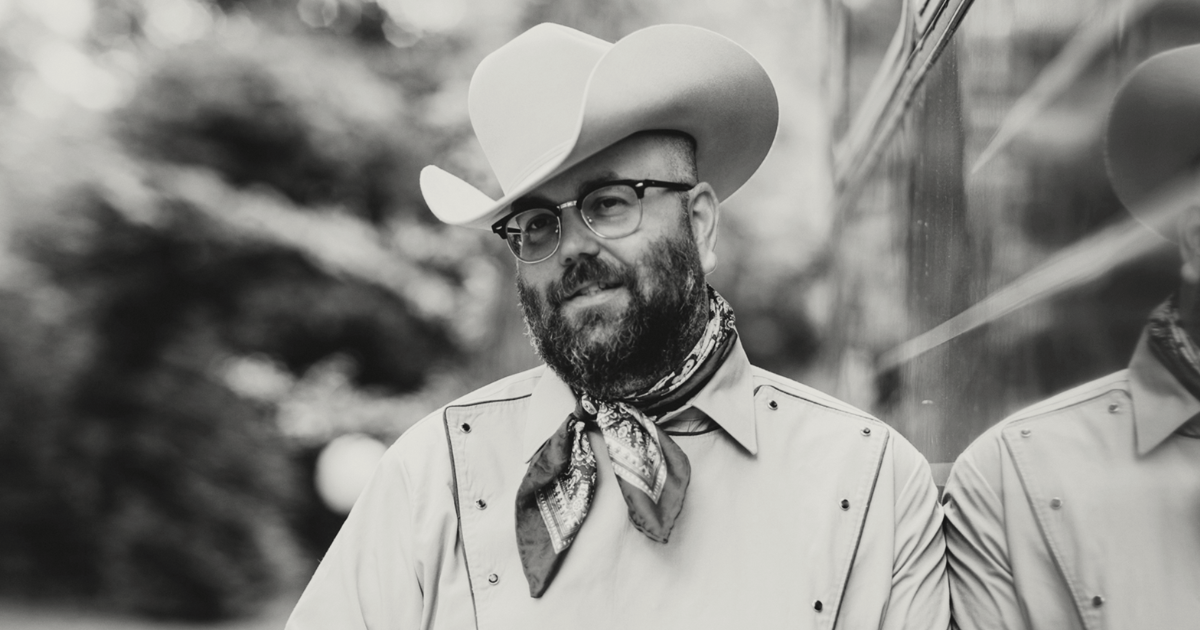
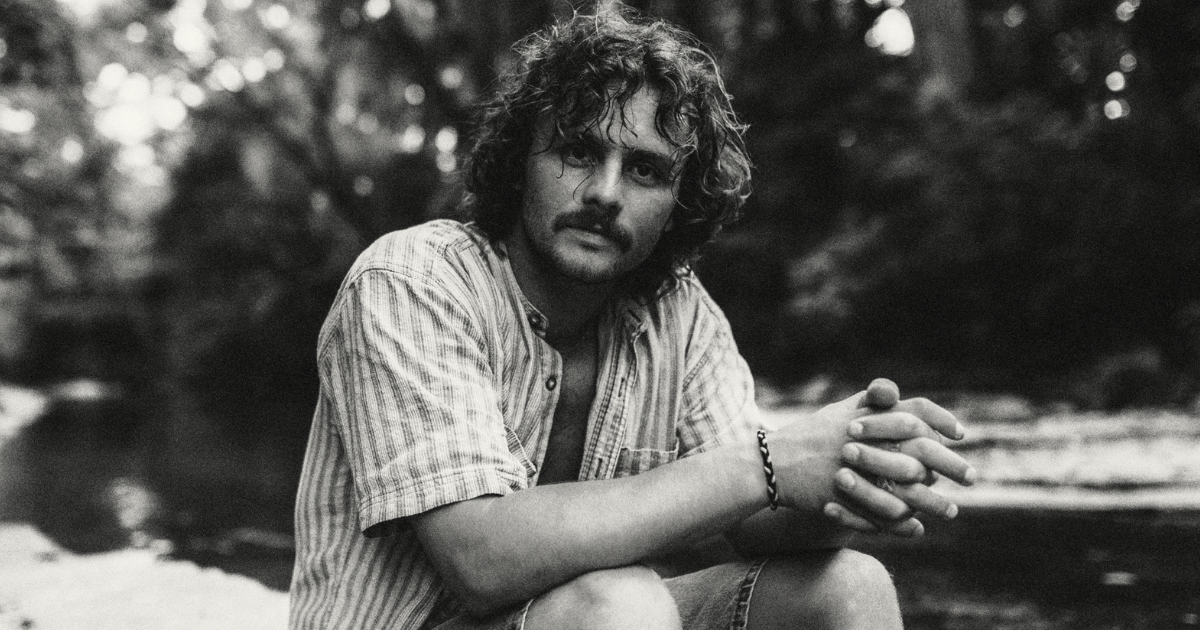
Evan Honer opens his new album, Everything I Wanted, with a charge of electric guitar – an unexpected twist for a singer-songwriter who has mostly recorded with a stripped-back sound. And after commanding attention with that blast of energy, Honer carries the listener through a range of emotions familiar to any twentysomething (and beyond). There are breakup songs, of course, but also entanglements with loneliness, self-doubt, and even the relationships that seem to be going well.

Recorded in Honer’s garage studio just outside of Nashville, Everything I Wanted documents a creative moment where sonic exploration may be the biggest priority. However, the fans who discovered Honer in 2022 through a TikTok cover of Tyler Childers’ “Jersey Giant” will likely embrace the songwriting on the new album, with lyrics that reflect a day in the life of someone who’s still figuring things out.

Honer was raised in Surprise, Arizona and excelled in competitive diving at California Baptist College in Riverside. Although a spot on the U.S. Olympic team was within reach, Honer turned instead to a career in music and established his own label, Cloverdale Records. From his home office, Honer called into Good Country to talk about his new album, his relationship with fans, and the road ahead.

I listened to your catalog, and this album seems more electrified than your previous work. Why it was important for you to show another side of your musical approach?

Evan Honer: I felt like the first two albums were… I guess it was what I was into and the production that I was a fan of at the time. I was so new to everything, too. I just thought, “I’m gonna record the guitar, then maybe we’ll have drums.” But I hardly had any drums at all with my first two albums. I guess I just didn’t know the possibilities. And the more I grew as an artist, and thankfully, with the resources that I have, the more things I can do. If I want this exact sound, I know I can do it and I can do it in my garage. My taste has changed. I grew as an artist, and I realized, why not? I can do whatever I want literally.

Are you pretty consistent with your writing routine?

Yeah, most of the time I’m working on something. And it could be one line the whole day, but I sat there for three hours. That’s very common. Now I’m writing with other people more – with artists that I am inspired by. And when I’m back home, it takes a long time. Sometimes it’s sitting with my guitar for hours, and I don’t get anything except a couple words. Or I go backwards and I change everything, then I don’t even have lyrics anymore. I try to do some type of writing every day, but on the road it’s a lot more difficult.

The song “Curtain” captures your relationship with your fans. What does that relationship between artists and audience look like for you personally?

It’s such a difficult thing for me. Recently I’ve been able to enjoy a tour more and not be so affected by it emotionally. On my first tour, I was so not used to how you’re running on no sleep at all and you’re around the same people for a month. You have a bad show, and it feels like your life is over. That is sort of what I wrote [“Curtain”] about, just the ups and downs of being on tour.

I still am upset after a bad show and I don’t know if I ever will not be. In my opinion, a bad show could be, like, one person talking for one song. It was tough for me to realize – and it still is tough for me to realize – that I have such a different perspective on it. There’s my perspective, and their perspective. I felt like I needed to write that song where it’s like, “I’m looking out at you, and I’m just grateful that you guys bothered showing up to hear me scream about my problems.”

And it really helps me, now that I let it. They’re constantly telling me, “Oh, your music means the world to me,” and that is the greatest thing to hear. But them being there is like the whole reason and it means so much to me. That relationship is not one-sided at all. It’s completely: “I need you as much as you need me.”

Listening to “Not There Yet,” I can remember that phase in relationships where it’s like, everybody wants me to be all in, except I’m not sure myself if I’m ready. When you finish a song like that, who is the first person that gets to hear it?

Most of the time, my best friend Blake Abernathy. He was a big reason why I started doing music. When I graduated high school, I went to go sell AT&T Internet and DIRECTV. I moved out to Minnesota with Blake and that’s where we became best friends. We worked together and he shared his music tastes. Tyler Childers was the first person he showed me and I’d never had felt that feeling before, from hearing a true songwriter, someone that makes me feel something.

And from that point, I went down a rabbit hole with my favorite songwriters, like Benjamin Tod, James Taylor, Jim Croce, and so many that I can’t even think of. And that’s how I started and fell in love with writing. From then on, I sent every single song to Blake and he always shoots me straight. He’s always such a big supporter in anything I’m doing, and he always gets it. He’ll tell me, “This is very different, I’m not sure if I like it yet,” or stuff like that.

For the record, can you explain how the “Jersey Giant” video took off?

The first song I ever posted on TikTok was the first song I released, called “How Could I Ever.” I had a good reaction to it and that was literally one of the only songs I had finished. At that point I was like, “Holy crap, I have to write another song because I don’t have any.” Maybe four months later, I was like, “All right, I got a new one.” So, I released “Comfort the Fall” and then “Foolin’ Ourselves,” and maybe a couple other ones, I’m not sure.

Then I released “Jersey Giant” as a cover and it went crazy. Then a bunch of label people were in my email! That was so funny. “Jersey Giant” was a big moment, for sure, but I think the songs that made people come to the shows were from my first and second album, rather than “Jersey Giant.”

@evanhonermusic Don’t know how to play the banjo but i do love this song #dialdrunk #noahkahan #cover ♬ original sound – Evan Honer

I saw you playing banjo and singing a Noah Kahan song, “Dial Drunk,” on a TikTok video. When do you find yourself reaching for the banjo? Is there a certain mood where you think, “Banjo is going to make this better”?

Yeah, there’s a good amount of banjo that I played on this album. I don’t know, I just love the banjo. It’s always so interesting to me to have a song like “Long Road.” It’s not super country. And then you throw in a very country instrument, like a banjo. I love having really country instruments in songs that are not country and have very different melodies than what a traditional country song would normally have. It’s always fun to just throw in a banjo, whenever it feels like it needs it. Maybe I overdo it sometimes. [Laughs]

Do you remember when you first reached for the banjo, or what led you to it?

My grandma actually got me that banjo. I just wanted a new and different instrument to write on, to create new ideas. I think that’s always helpful with piano and banjo. Just writing on a different instrument to hopefully get a different outcome, because sometimes I’m writing on the guitar and it feels like “I’ve written this song already” and I don’t feel excited about it. Now I’m trying to explore every option to write a song, even if it’s writing and producing at the same time.

That’s a scary thing to me. It’s like, we’re writing this song as we’re making it. Normally you have a whole song, or at least how I do it, and you produce it out, and the creative part is producing it. But it’s kind of scary when you don’t have the lyrics. You don’t even know what the chorus is going to be, but you’re already starting to produce it.

Is that because you’re on deadline or just trying to stretch your boundaries? What leads you to a situation like that?

There’s no deadline at all. [Laughs] I’m a fully independent artist, so it’s all up to me when I want to release stuff. I think that’s why I feel like I’ve released a lot more than maybe somebody that kind of started the same time. Three albums in, it’s just me trying to make something different.

I read you released an album the day you graduated from college. Was that like a mission statement? Like, “I’m gonna do this. I’m a musician from this day forward”?

Yeah, pretty much. It’s called West on I-10, because I would go west on I-10 driving back from home to college. Funny enough, the navigational voice would always pop up in my voice memos with, like, “I-10 West.” I had already decided that I was going to do music full-time. I was a diver in college and I originally made plans with my coach to do my fifth year and go for the Olympic trials. That was tough, making that big change. First, my dad was very much like, “Wait, are you sure you want to do this?” But now he’s the biggest supporter ever. There was just a lot of uncertainty and releasing that album on the day I graduated just felt like the most normal thing for me. All those songs I’d written in college are now on that album, and I felt like then I can move on to whatever else.

What goes through your mind now when you hear this new album in its entirety?

This is always tough for me. In January when I recorded it, listening through the album, I’m, like, incredibly stoked on it. And I still am, but it’s a different type of stoked now. I’m stoked that it’s out and I don’t have to sit on these songs anymore. I can move on to what I’m liking now. Because right now, my taste has already changed, where I’m into different production styles, I’m into different, really weird lyrics, or whatever it is. I’m in a different spot now.

That’s always an interesting thing to see how delayed the music industry is. Even if I’m independent, it still takes time to do all these things. So that’s always a hard thing for me, but I’m so happy that it’s out, and I’m so happy that we recorded that way, just 18 straight days of recording. That helps with the cohesiveness of it. I’m really proud of it, and I’m really proud that it’s my third album, and I’m excited to make something else.


Photo Credit: Harrison Hargrave

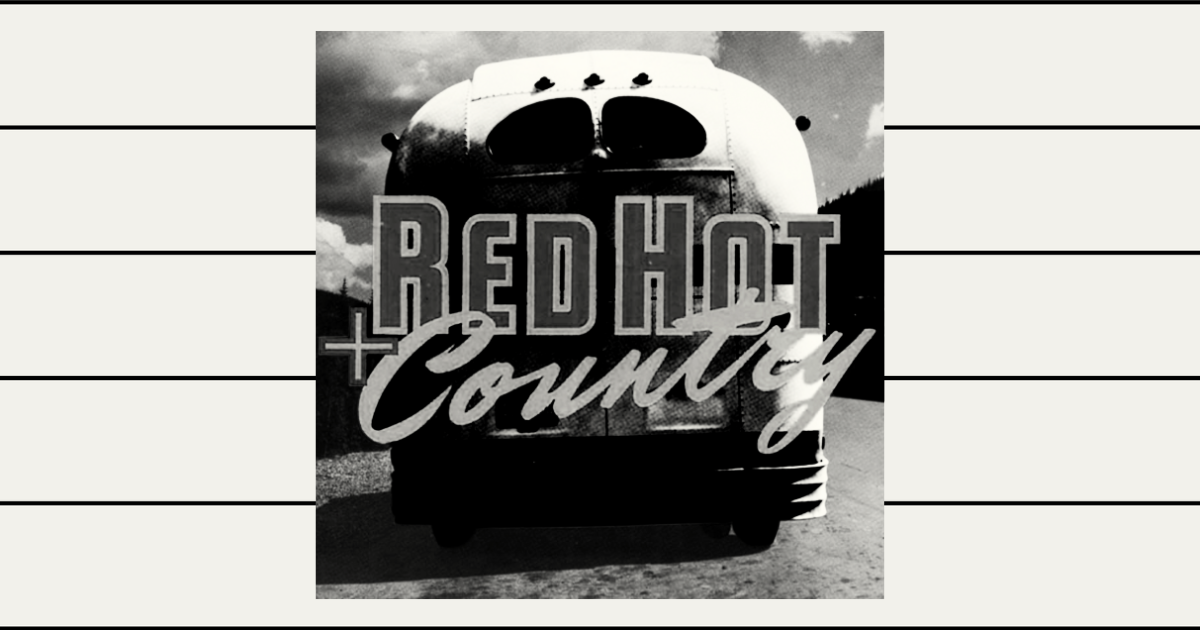
1994 AIDS Benefit Album Red Hot + Country Was Ahead of Its Time

During the 1992 CMA Awards, Kathy Mattea had a decision to make. The singer-songwriter and 1989 and 1990 CMA Female Vocalist of the Year had opted to wear four red AIDS awareness ribbons, which had become prominent at award shows such as the Tonys, the GRAMMYs, and the Oscars. In ‘92, the Country Music Association decided to hand out green ribbons to promote environmental protection. According to a Billboard article, reports of the CMA’s decision sparked controversy and the organization reacted by offering to distribute red ribbons to artists backstage.

But there was no plan to publicly address the disease on the broadcast. After a local columnist wrote that country fans may not know what the red ribbons symbolize, calling for Mattea to publicly speak out on AIDS – which had become the number one cause of death for all Americans ages 25 to 44 – Mattea realized simply wearing the ribbon was not enough.

“We went to the CMA and said, look, we’ve been called out and I don’t wanna grandstand and I don’t want to go against you guys, but can you help me?” Mattea says. “We basically got no response. So the night of the show I had to decide what I was going to do. I didn’t want to be sanctimonious… How do you stand up in a moment when you feel called to do something bigger? I just went backstage during the commercial before and searched my heart.”

When Mattea took the stage to present, she spoke the names of three of her friends who had died from AIDS. One of those names belonged to her dear friend Michael, who had died without ever telling Mattea he had the disease.

“The problem was he couldn’t tell me,” she says. “You didn’t know who you could talk to and who you couldn’t back then. It’s hard to fathom now, but that’s the way it was.

“Something in me just kind snapped and I thought, I’d like to do something to help. I had a long talk with my manager and I was like, these people in New York who are working on this, they don’t even know that I’m down here in Nashville and we’re dealing with it, too.”

Mattea got in touch with the Red Hot organization, which was founded by Leigh Blake and John Carlin in 1989 to raise awareness and financial support around the AIDS epidemic. Carlin, who got his start in the New York art world, where he curated shows at the Whitney Museum of American Art and befriended artists such as Keith Haring and David Wojnarowicz, had already experienced immense loss among his friend group.

“Being in New York in the 1980s was at the start this kind of paradise liberation. There was all this creativity. If you think of the late ‘70s and early ‘80s in New York, it’s when hip-hop, punk art, music, the East Village arts scene, graffiti, all these things were really being born culturally,” Carlin says.

“Then by the mid ‘80s, the specter of HIV and AIDS turned what felt like a paradise into an inferno. All of a sudden people that you would see at parties or at openings – you’d go, ‘Where’s Nicholas?’ and people get that kind of quiet look and say, ‘Oh, he’s sick. He’s in St. Vincent’s.’”

Carlin, who had since left his job as an art curator to work as an entertainment lawyer, began working on Red Hot’s first project, 1990’s Red Hot + Blue, a compilation album featuring pop and rock artists such as Sinead O’Connor, Debbie Harry, Iggy Pop, U2, David Byrne, and more covering the songs of Cole Porter. The album was a smash hit, raising money for AIDS organizations, including ACT UP, a grassroots protest movement which successfully pushed the government and pharmaceutical companies to release drugs that now allow people to live with HIV.

Despite its success, Carlin had no initial plans to release more Red Hot compilations. He left the law firm where he was employed after the partners gave him an ultimatum. (“My reward for [organizing the project] was basically the partners of the law firm said, ‘stop doing that or leave,’” Carlin says.) Then he received a phone call that would change everything.

“I got a call from George Michael’s manager saying George was a big Red Hot fan. He wants to contribute a song to your next album,” Carlin says. “At the time, we didn’t have a next album. But, in 1991, if George Michael says he wants to give you a track, we were like, ‘Well, we better get an album together.’”

In 1992, the organization released Red Hot + Dance, featuring Michael, Madonna, Sly & the Family Stone, Lisa Stansfield, and more. The album cover featured artwork by Keith Haring. No Alternative, featuring Nirvana, Soul Asylum, Pavement, Patti Smith, and more, followed – and even spawned an MTV special with live performances. AIDS awareness was becoming a key issue among the MTV generation, but the country music industry was still mostly silent.

“I don’t think the seriousness of the problem has hit home yet with the country audience,” Mark Chesnutt, who co-chaired the Country Music AIDS Awareness Campaign alongside Mary Chapin Carpenter, told Billboard in 1992. “Most of the people who speak about AIDS and participate in the awareness programs have been in the pop business, movie stars and rock stars.”

Starting the Conversation

If Nashville’s music industry was slower to respond to the AIDS epidemic, it certainly wasn’t because the community hadn’t been impacted.

“If people found out you were HIV positive, there were landlords who threw people out on the street,” Mattea says. “There were medical facilities that would not take them in. I had a friend who worked on my crew for a while who was legendary in Nashville for taking people in during the AIDS crisis. If you had nowhere to go, you went to his house and he had an army of volunteers. There were lots of stories like that. But there was also a lot of rejection and a lot of stigma.”

After Mattea’s statement at the 1992 CMA Awards, she was quietly approached by people who had been impacted by AIDS. At an event the morning after the award show, Mattea was approached by a man named Bubba who worked at a large radio station in the Deep South who had lost his high school best friend to AIDS. Later, a man who worked for The Nashville Network’s hit talk show Nashville Now told Mattea his son was diagnosed with HIV. Another, a Nashville radio DJ, told Mattea that he had AIDS, but didn’t feel comfortable telling anyone else in his workplace.

“There were all these people in our community who couldn’t talk to each other about it,” Mattea says. “That’s what I was wanting – some compassion and support and for people to be able to speak up about what they were struggling with and hear each other.”

In 1992, Nashville mayor Phil Bredesen and Jo Walker-Meador, former executive director of the CMA, co-chaired the city’s first AIDS Walk. Mattea and Chesnutt performed at the event. With Red Hot + Country, Mattea set out to help expand country music’s AIDS outreach beyond Music City, leaving nerve-wracked answering machine messages for anyone she thought might be interested in taking part in the project.

“Kathy was very brave. I think it’s almost like a heroic gesture for her to take a stand at that moment,” John Carlin says. “Let’s just say [there was] a lot of homophobia in the South and country music in general, and AIDS-phobia. It was not a topic people wanted to talk about. It was really difficult. I think she made it her business so that people couldn’t ignore it.”

Hunter Kelly, a country journalist who hosted Apple Music Country’s Proud Radio from 2020 to 2024, says, as a gay kid growing up in Alabama, artists who championed LGBTQ+ causes felt like a safe place. He remembers Mattea’s speech at the 1992 CMA Awards and attending Reba McEntire’s 1996 tour and seeing her bring a replica of the famous AIDS Memorial Quilt, an ongoing community project to honor the lives lost to HIV/ AIDS.

“I definitely knew on some level I was gay, but I was also in a Southern Baptist church, so I was drawn to those things,” Kelly says. “I was drawn to that mainstream representation that was more open to queer people.”

“Teach Your Children Well”

Carlin says the original idea for the Red Hot + Country album was to have country artists cover John Lennon songs. He even met with Yoko Ono, who granted the organization permission to use Lennon’s songs for the project. But when that idea didn’t come to fruition, the theme shifted to the Laurel Canyon folk-rock scene of the ‘60s and ‘70s and the songs of Jackson Browne, James Taylor, and Bob Dylan. The album would be produced by Randy Scruggs, a GRAMMY-winning musician and songwriter whose own father, Earl Scruggs, had played a significant role in the cross-generational Nitty Gritty Dirt Band album Will the Circle Be Unbroken two decades earlier.

“Randy kind of wanted to recreate that spirit of bringing generations together and, obviously, because of his dad, he had access on a level that I never could get,” Carlin says.

Alongside renditions of Crosby, Stills, Nash & Young’s “Teach Your Children Well” and Jackson Browne’s “Rock Me on the Water,” the album featured covers of country classics, such as the Carter Family’s “Keep On the Sunny Side” that had inspired California folkies of the ‘60s.

The album also features the first recording by the band Wilco, which was formed by Jeff Tweedy in 1994 after the breakup of his former band, Uncle Tupelo. The group teamed up with singer-songwriter Syd Straw to perform “The T.B. is Whipping Me,” an Ernest Tubb song inspired by his hero Jimmie Rodgers, who died of tuberculosis in 1933.

Carlin says he wanted to highlight that Rodgers, known as the father of country, had also died from a disease that weakened the immune system.

“What is the difference between tuberculosis and HIV? Really nothing other than homophobia,” Carlin says. “It’s a disease; it doesn’t choose people.”

Other standouts include Nanci Griffith and Jimmy Webb’s “If These Old Walls Could Speak,” Patty Loveless’ “When I Reach the Place I’m Going,” and Marty Stuart and Jerry & Tammy Sullivan’s cover of the traditional gospel tune, “Up Above My Head/ Blind Bartimus.”

Perhaps the most stirring song on the album is Mary Chapin Carpenter’s “Willie Short,” which was written by Carpenter’s producer and guitarist John Jennings after seeing a Newsweek feature called “The Faces of AIDS.” There, he spotted the photo of a Houston dishwasher named Willie Short.

“I was looking at the pictures, and under the picture of Willie Short, there was a very affecting caption and it just got to me: ‘Don’t forget me. From time to time, mention my name’,” Jennings told The Washington Post in 1994.

Red Hot also produced a Red Hot + Country television special, which aired on CMT. The program featured Mattea, Griffith, Earl Scruggs, Carl Perkins, Waylon Jennings, Vassar Clements, and more performing at the Ryman as well as interviews with rural and Southern folks impacted by the AIDS epidemic.

“Three Chords and the Truth”

In many ways, the early ‘90s seemed to usher in a new era in country, where queer issues were concerned. Kelly points to Garth Brooks’ song “We Shall Be Free,” which includes the line “when we’re free to love anyone we choose.”

“You also had Bill Clinton, who was a Southerner, but also a Democrat, in office,” Kelly says. “Culturally, in ‘94, there was a lot going on that dovetailed – I really see the Red Hot + Country album as country music being a part of the mainstream at that time.”

None of that translated to radio play, however. Despite the Red Hot + Country’s wealth of talent, Carlin says the album was “dead on arrival,” a huge contrast to the compilation album Common Thread: The Songs of the Eagles which was released the year prior and was certified Platinum three times by the RIAA. Red Hot + Country peaked at No. 30 on the U.S. Billboard Top Country Albums chart.

“Sadly, it was pretty clear it was homophobia in country radio,” Carlin says. “At that time, if you didn’t get played on radio, you couldn’t get arrested.”

Though Red Hot + Country didn’t gain the listenership of previous Red Hot releases, Carlin and Mattea both remain extremely proud of the project.

“It’s a beautiful cross section of musicians and music. Many of these people I know and love, and I feel proud of my community for stepping in and stepping up and doing something to try to contribute in this situation that just felt so impossible back then,” Mattea says. “I’m more of a ‘fraidy cat than it might appear, and I’m happy with my younger self that I could listen to my heart and step in.”

In the years since Red Hot + Country, LGBTQ+ representation in country music has grown tremendously. Queer artists such as Chely Wright, Brandi Carlile, Brandy Clark, Orville Peck, T.J. Osborne, and the Kentucky Gentlemen have opened doors within the genre. But Kelly says when he launched Proud Radio in 2020, he faced many of the same roadblocks Red Hot + Country faced 25 years earlier.

“There were artists whose publicists would be like ‘We don’t want to make [being gay] the main focus or we don’t want to belabor it,” Kelly says. “With the anti-DEI [diversity, equity and inclusion] thing [from the] Trump administration coming in, we might as well be in 1994, as far as the mainstream country space.”

Kelly champions LGBTQ+ country artists Adam Mac and Chris Housman’s recently released “The Outside” as an anthem for queer country artists who’ve never felt embraced by the industry.

“I keep going and keep hoping for progress, but it’s disheartening,” Kelly says. “But also I look to artists like Chris and Adam who keep making great music and purposefully [making music] in the mainstream.”

Earlier this year, singer-songwriter David Michael Hawkins, an openly gay and openly HIV-positive country artist, released his song “Sin,” which addresses the stigma around HIV.

“When I started to look back on the emotion surrounding primarily the stigma attached to the diagnosis, that’s where the emotional well ran really deep,” Hawkins says. “Stigma is rampant in a lot of LGBTQIA identities. For me, the HIV diagnosis was a big part of it, which was also surrounded by poverty, which was surrounded by substance abuse. They were all in this weird cycle of feeding each other. The healthier I got physically, mentally, and emotionally, the more I was able to put words to that deep well of emotion.”

Hawkins says he wants to expand the conversation around HIV/AIDS by helping more artists feel comfortable with sharing their personal connection to the disease.

Sin is not the first country song written about HIV. There are probably hundreds or thousands, but up until very recently and maybe up until my song, there’s no one that’s been transparent about that being the root of why the song was written,” Hawkins says.

“I think if the industry is doing our job, which is to offer a safe space for artists to come up with inspiration from anyone or anything, then the artists should feel comfortable saying, ‘Yes, this is about HIV, or this is about drug use, or this is about domestic violence,’ and however closely it’s attached to them as an individual. I think we could probably do a little bit better about letting artists know that no matter the subject matter or the inspiration, if it’s a good song and if it helps people – if it’s three chords and the truth – then we’ve done our job as country musicians.”


Brennen Leigh’s Modern Retro Country

Brennen Leigh says she’s been a goner for country music since she was a teenager. But when it comes to her discography, she hasn’t been gone for long. Don’t You Ever Give Up On Love (released October 3) is the musician’s fourth album in five years, and it continues a creative streak that matches her love of traditional country arrangements with clever, well-crafted songwriting.

Recorded in Dayton, Texas, where Leigh now lives, Don’t You Ever Give Up On Love is a mostly up-tempo collection that should appeal to anyone who loves country from its golden eras. Catching up with Good Country, Leigh talks about the turning point in her love of country, her fondness for bluegrass, and how she really feels about one of Nashville’s most famous phrases.

I was curious about the title track, “Don’t You Ever Give Up On Love.” It’s got such a positive feel. Why did you choose that one to put on the cover of your record?

Brennen Leigh: I love the title of it, for one, and for two, I wrote that with a dear friend named Elijah Ocean. He’s a great writer and a player and we kind of came up through the mud together, I’ll say. He told me, “I just was thinking about you as I was writing it.” And not even about me singing it, but me as a person. He sent me the first verse – and I’m a procrastinator and I won’t read people’s texts and I won’t return phone calls – but he knows I love him, he doesn’t care. That’s how songwriters are. But about a month later, when I finally went and listened to it, I said, “Elijah, I hope you haven’t finished that, because I would love to participate.” He said, “Yeah, of course, that’s why I sent it to you.”

So I finished it. And it’s just two verses. That’s the whole song. I love that thing about songwriting, and specifically country music, where it’s just a quick statement and out. So many of the best songs are just a verse and a chorus, or even just a verse. We wrote it in the midst of recording this album and then we recorded it down in Dayton. And it’s like, well, that’s an obvious choice for the album, because it is so positive. I really like performing it.

It’s encouraging, too. Have you had a good response from the crowd with that song?

Yeah, I’ve had a lot of positive feedback from people. On the surface, it’s a love song and it’s a relationship record, but to me, it’s really more of a “Don’t ever give up on yourself” message. Because people come and go, sadly, in our lives, and for me, it’s more a story of resilience.

I think it’s similar to the song “Dumpster Diving,” where it gets the point across in a pretty cool way. You filmed that video for “Dumpster Diving” at the Sagebrush in Austin, right?

We did, and it was hot! It was like 90 degrees in April or something. We brought one of our favorite videographers, Oceanna, down from Nashville, and I just kind of threw her into this situation in Austin, but she rolled with it. She really has a wonderful eye. And we dressed me up and put me in a dumpster. [Laughs]

Then some of the other videos for this project look like ‘60s Nashville country. I love the vintage eyeglasses and that cool yellow-and-orange shirt in the “You’re Finally Hurting” video.

Those are my real glasses! [Laughs] I really have a prescription in them to drive with. And the thing specifically about the “Tell Me” video was that we wanted to make it look like we were the Nashville A-Team in the ‘60s. We were just going to work, like country business casual or Western business casual. Like, how an Anita Kerr or Chet Atkins would show up to work in kind of fancy dress, but casual. Read their charts, put the song down, and smoke a cigarette. You know, we weren’t smoking, but that’s kind of the idea.

“Tell Me” is a simple title, but that song says a lot. What was on your mind as you wrote it?

I was imagining calling somebody in a sweaty panic, like, “Oh, I heard something, I’ve got this feeling, and I need you to confirm my suspicions.” And not getting the answer that you want, but sort of trying to demand this answer. I love country songs that are one-sided conversations. There are so many good ones throughout history. For some reason, the one that is popping into my head is “I Met a Friend of Yours Today.” You’re feeling like a little bit of a psycho, like you’re losing your mind a little bit, and you confront somebody. That’s the sort of song that that is.

People often say country is “three chords and the truth.” Do you like that phrase?

I do like it, but I think in a way it’s not 100 percent accurate. We’re splitting hairs here, but for me, a lot of my writing is at least semi-fictional. Maybe I’m doing myself a disservice as an artist by saying that. But fans want to believe, and I think the listener wants to believe, that this is my story, and this came from me tossing in desperation on my bed and grabbing my notebook.

Well, you know, I’m a songwriter and it’s my job to make up stories. While this record has some truth on it, some of these stories are just straight made up! That doesn’t mean that there’s not feeling behind them, or that I haven’t experienced something similar, but I’m also a private enough person that I’m not going to just air things of a certain nature for the public. I do have lines that I won’t cross. Now, I’ll say some of these are true, word for word, and some of them are not. But that’s what imagination is for.

I think the song is not for me, it’s for the listener. So, if somebody gleaned something that they feel personally in one of these songs, I love that. And probably, as a Western swing person at heart, I should say we have a few more than three chords. But I do really appreciate and love that sentiment of like, “This is just no BS, I’m gonna sing this.” I mean, I like that saying, and I think at its heart, it’s pretty true.

How old were you when country music kind of sparked your interest?

I grew up hearing it around the house, but I was maybe 14 before I went headlong into it.

Was there a song or an artist that pulled you in?

There was one summer when my brother and I were already budding musicians. We were already playing gigs. He was heavily into Robert Johnson. I had gotten into that stuff, too, and I liked oldies. I liked ‘50s and ‘60s rock and roll and soul music, like Buddy Holly and Bessie Smith, and I liked some show tunes. We got into country one summer, courtesy of our parents’ record collection.

Then we got a free ticket – via donating a canned good to the radio station – to see Dwight Yoakam. I think I was turning 15, and I kind of flipped my lid. It was our county fair in Fargo, North Dakota and it was probably September or August – and it was probably 40 degrees. I stood there for that whole concert and went, “Wow!!” [Laughs] Then one friend gave me a box set of Hank Williams and that was huge. I already had heard him, but that Bear Family box set is like six or eight discs. I dubbed it onto tapes and that’s all I listened to.

Somebody else gave me a Smithsonian Folkways set that had Bill Monroe on it and it had Lucinda Williams on it, because it was more of a folk label. It was like, “Wow, there’s all these tentacles to country music.” And my family was into it, too. So, I was pretty well immersed, except geographically. I wasn’t around any live music, but I was around a lot of good recorded music.

Are you a fan of bluegrass?

Oh, yeah! Very much, and I grew up with it. My favorite guitar player is Norman Blake. I get asked all the time, “When’s your bluegrass record?” I would love to do something. I just need to get the songs together, because the bluegrass community, they’re the best fans in the world. Bluegrass fans are so loyal, and they know what they like and they don’t care what you look like. It’s a great culture and it’s diverse, and that’s a beautiful thing. So, yeah, that’ll happen.

You know, I wish there were two of me and I had double time. I’ve been loving East Nash Grass and Thunder & Rain. I love the Kody Norris Show. They’re so poised and so good. I’ve been feeling the influence to do something with bluegrass again, because it’s been a long time.

We can maybe wrap it up with this. What are you looking forward to the most coming up?

I just got off a three-week album release tour that was great fun. Before that, I was everywhere. [Laughs] So, to be completely honest, I’m looking forward to being home for a bit. But I’m also working on another project that’s even weirder than all the other ones I’ve ever done. I don’t want to say too much about it, but it feels like a spiritually important album for me to do. I’ve also got some songs in the can with my other band, Wonder Women of Country. We have a couple singles we’ve recorded and I think we’re going to be out together some next year, too.

You’re so collaborative and you’re not just off doing your own thing. It’s like a luxury to have such a great, rich community around you.

Well, thank you. And it is a luxury. Honestly that’s how I’ve gotten by and kept it sane, because I know it’s not about me. I know it’s about the art, and the art can be more fun than when you involve others sometime. Also, I’ve noticed a lot of the good things that have happened in my career are because I’ve worked with other people on musical collaborations. It’s just so much stronger together.


Photo Credit: Lyza Renee

100 Years of Grand Ole Opry
Makes a Mighty Book

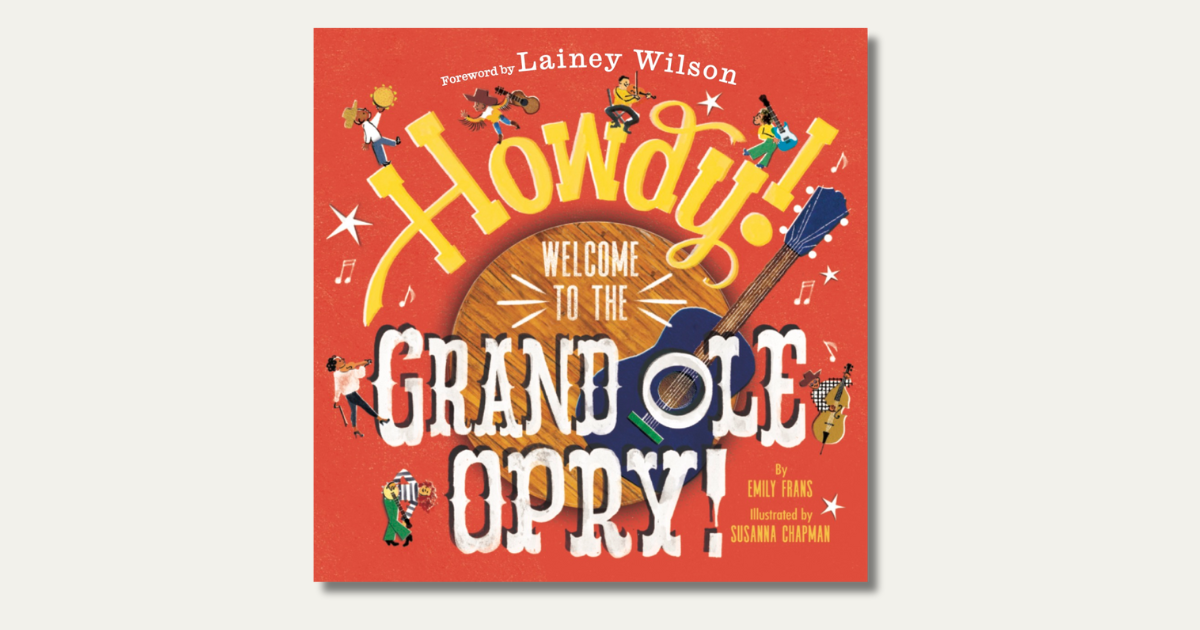
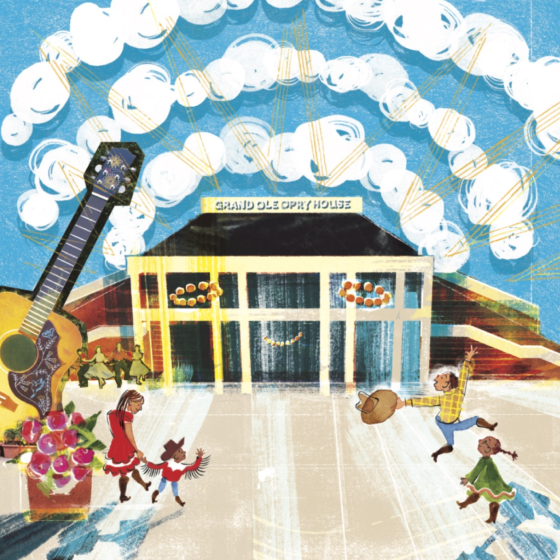
The sheer variety and singularity of the Grand Ole Opry – whether in just one of its shows or in just one of its many eras – would be paralyzing enough, if tasked with telling its complete, unabridged story to a broad audience. The assignment of taking the entire century-long history of the world’s longest running radio show and condensing it between the covers of a book would have to be heart-stopping. How could one ever take such a complex story full of twists, turns – and plenty of the idiosyncrasies found in human beings who make and love country music – put it down in 350+ pages?

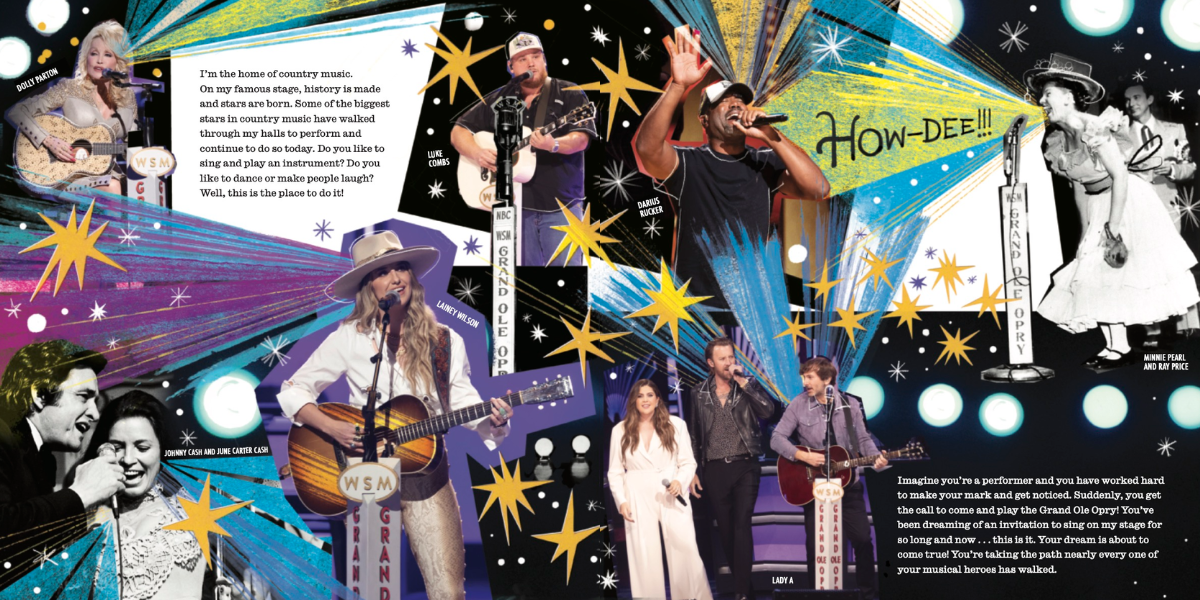
It’s hard to imagine, but that’s exactly what writer Craig Shelburne, historian Brenda Colladay, and a host of Opry members have done with the brand new book, 100 Years of Grand Ole Opry. Shelburne – a BGS contributor and former managing editor for our website – worked with Colladay to penetrate the vast, lush archives of the Grand Ole Opry to posit its history decade by decade, chapter by chapter in the new hefty, coffee-table-ready tome. They completed dozens and dozens of interviews with Opry members, artists, musicians, employees, executives, and broadcasters and, as a result, the history book feels remarkably alive and vibrant – just like the show itself.

The book, released in April of 2025, demonstrates and reiterates time and again that the Grand Ole Opry isn’t a relic – nor has it ever been. It’s a living, breathing, adaptive being that’s enacted by a strong community of stakeholders not only from across the company that owns the brand, Ryman Hospitality, but the music industry as a whole, too. 100 Years of Grand Ole Opry showcases a country and cultural icon not waning or winding down after a century of triumphs (and trials and bumps and scrapes, too). No, instead, this book finds the Opry, beloved by all of us, merely at its next transition point, moving purposefully from the last 100 years to the next 100 years.

We sat down with Craig Shelburne on the phone to chat about the immense undertaking of writing this book, the surprises found and lessons learned along the way, and what makes the Grand Ole Opry so special, all for our Artist of the Month celebration of Opry 100.

This is such a gargantuan task, staring down the entire 100-year history of the Opry and being asked to turn it into a book. Where do you even begin? How did you take that first bite? What did it feel like to you to enter this process of creating a book?

Craig Shelburne: Yeah, 100 years is a massive undertaking and we – my co-writer Brenda Colladay and I – spent some time at Frothy Monkey in East Nashville sketching out some of the important Opry milestones in those eras when things really seemed to be shifting. As we did that, we realized that we could probably have each chapter be roughly a decade. At one point, we realized we wanted to have some breakout sections, but we didn’t know how to do that.

I wanted the book to be very readable, [without] a whole bunch of sidebars. So instead of designing sidebars, we have these pages that are interludes in between the decades, in between the chapters. You have the history of bluegrass, or the ways that the Opry has been on television, or what the Opry looked like when it went into the 21st century and a new era of technology. [That] was our chance to expand on one particular theme, rather than try to weave [those themes] into the narrative or take away from the narrative. It could be distracting if you dropped [a sidebar] into the manuscript every time the Opry was on television. Those interludes also gave us a chance to use some of these magnificent color photos [from the Opry archives] just because they’re beautiful photos. We didn’t have to necessarily set them up within the text. …

It was intimidating for a while until one night, late at night, I was writing and I realized that the main character of the story is the Opry itself. There are so many people that have passed across the stage, from Roy Acuff and Minnie Pearl up to the modern era. I wanted the artists and the cast members to be represented well, but really the main figure throughout this 100 years is the show itself. And it’s a show. It’s not a stage, it’s not a building. It’s a show.

Once I could get my head around the fact that this was the leading character in a 100-year story, the narrative started to fall into place. That was a breakthrough for me.

I also love how that format parallels the structure of the show itself. That you have segments, sets of artists performing, you have commercials and announcers and little games with sponsors, and you have talk-back sessions from artists. When you go to a show, it’s not just one thing from start to finish, it’s a bunch of different things – and there are obviously lots of interludes built in. So there’s something about the structure of the book that parallels the show in a nice way.

And telling the story of how the segmented portions of the Opry came to be was one of my favorite parts of writing the book. Basically, the Opry hired their music librarian – who was a very organized individual – to try to reign in some of the chaos from when the Opry was at what is now the Belcourt Theater [in the 1930s]. I think back then it was called the Hillsboro Theater. His name was Vito Pellettieri and he realized if he could wrangle three or four artists within the same timeframe, then these performers would now have a rough idea of when they needed to be standing side stage, instead of disappearing as musicians might have been wont to do.

Then of course, being the Opry, owned by an insurance company, the business people sensed an opportunity there and thought, “Let’s sell those segments to sponsors and advertisers.” And so that’s how the 30-minute segments came to be. Whether it was dog food or condensed milk or tobacco, if there was a sponsor for each segment, the Opry made more money that way, too. The Opry has been pretty creative in how it positions itself and how it can take advantage of good ideas quickly.

I know you spoke to dozens of artists, stakeholders, musicians, executives, broadcasters, and announcers. You and your co-writer Brenda Colladay must have done hours and hours of interviews for this book. Can you tell us a bit about that process and who you most enjoyed or were most excited to sit down with?

On one hand, the general narrative crafting you’re talking about sounds like really grueling work, but on the other hand, it sounds like doing that through these interviews was probably the most fun part of this process.

I would say the interviews were the most fun. I agree with you on that. I have the Opry show schedule as a shortcut on my smartphone now, because I would always try to figure out who was playing and who we needed to talk to.

As it should be, we started our interview series with the one and only Jeannie Seely. We felt like she needed to be first, and she deserved that. She only got about halfway through what she wanted to say [during our first meeting], so we set up another interview. It was wonderful to talk to her. Both of those afternoons were great, because with Jeannie, she’ll tell you the way it actually was. Some of it was very positive and some of it was critical, but it’s her perspective. And she was there! I didn’t get to see the Opry in the ‘60s or ‘70s, and she did. Getting to hear it directly from her was fantastic. She was also hilarious, when you got to sit down and joke around with her a little bit.

It was really important to talk to people firsthand and to go deeper than just, “Hey, what do you think of the Opry? Why is it important?” So the Opry opened up its entire archive to me, which was videos, books, newspaper clippings – pretty much anything that I wanted to look at, read, or watch. When I knew I had an interview coming up, I would spend several hours reading clippings and reading stories in order to come up with questions specific to their Opry experience. Rather than just, “Tell me about when you moved to Nashville. Tell me about this. Tell me about that.” Those aren’t questions, those are just prompts. When the people came in to talk to us, we were usually in pretty much a supply closet for camera equipment. It was a really small room. We didn’t have any cameras. We wanted everybody to be casual and comfortable and not worry about makeup and hair.

Then it became a very comfortable conversation. We started every interview with the same question, which was, “What is going through your mind in those moments before the curtain comes up?” Everybody had a different answer. That put them in the frame of mind of talking about the Opry, I think, more than talking about themselves. They went pretty deep, back in their memories, of how they discovered the Opry and what it’s meant to them. Quite a few of those artists went to the Opry as kids. So then they started talking about their family and what the Opry meant to their family, there were a lot of emotions.

I think some of those artists expected it to be like a 10 or 15 minute interview to grab that [sound] bite that says, “I sure do love the Opry.” But we went really deep and spent more than an hour talking with some of these artists. You don’t get to put everything like that into the book, but suddenly now we have an oral history from these modern contemporary performers that will live forever. When somebody writes about the Opry in 50 years from now, they have it straight from the artists, [speaking] about their path to that stage.

I think that’s one of the best accomplishments of this book, that it tells the story in such a rich, full way that isn’t just the mythology and isn’t just the good parts and the glitzy parts. It sounds like part of how you were able to accomplish that is by having these interviews set up in such a way that you could build trust with folks, so they didn’t feel like they were just giving you that marketing sound bite. They could really tell you those full stories.

I think a lot of that came from the Opry headquarters. They wanted us to tell [it] the way it happened. A woman named Jenn Tressler, she handles a lot of the talent requests there and I think she primed most of these artists about what the interviews would be like and what the goal was. Just [so they would] be comfortable and [know] no topic is off limits. Artists were asked some pretty sensitive questions sometimes about the relationship with the entertainment industry in general, including the Opry and the artists rose to the occasion.

We wanted to tell the actual story. I’ve often felt that nobody wants to read a book where everybody’s happy and there’s no conflict. There’s conflict in this one.

From your interviews or from writing this book, what was a story or two about the Opry that stuck out to you or surprised you? Or, that brought you to learning something new that maybe you wouldn’t have tripped over into if you hadn’t done this book? Is there a story or two that stand out to you?

The first one would be just how young everybody was when they got involved with the Opry. George D. Hay was a young man; Harry Stone, who was one of the early program directors, had just turned 30 when he took on that role. The artists were [in their] 20s and 30s. You had a very young Bill Monroe, Roy Acuff, Minnie Pearl, coming on the stage and changing the game for country music.

Sometimes the Opry is perceived as the elder statesman of country music – and that’s true and they’ll always have a place there, it’s wonderful. But a lot of the shake-ups at the Opry and a lot of the progress that’s been made was because of these young, innovative perspectives. That happened over and over. I think without that viewpoint from people who were younger, the Opry would’ve struggled through the last hundred years. There would’ve been times somebody might’ve said, “I want it to stay the same way, ’cause this is how we’ve always done it.” It’s never the right answer, to do it just because it’s always been done that way. I think that was pretty fascinating to me.

The other thing I didn’t realize was that it was not until I believe 1978 that the Opry was ever aired on television. It was a PBS special. If you wanted to see the Opry, you had to come to Nashville for the first 53 years. After that one night on the PBS special, it didn’t happen again until the following year. Being able to see the Opry, you had to come to Nashville, and I think executives at that time feared that if you put it on television, people would stay away from the show and they wouldn’t sell tickets anymore. But time has proven just the opposite. People saw it on television, how exciting it was and they felt like they needed to be there, myself included. I watched it growing up in Nebraska as a teenager and I just was fascinated by it. By that time, of course, it was on TNN.

I watched it many a Saturday night with my grandparents and I didn’t always know who those legendary figures were that were sharing the stage with Alan Jackson or Clint Black or Alison Krauss. But because of the Opry, I got a country music education as a teenager before I moved to Nashville in 1994. By the time I got here, I feel like I had a leg up on other people who wanted to write about country music that were my age.

You’re pointing out another fact that we often forget about country music, hillbilly music, these traditions that made these musics. It’s that all of them are constantly changing and growing, morphing and adapting to the future – and responding to the present.

Like, the reason the Opry became what it is today was because of technology, because of the “Air Castle of the South.” Because of radio, because there wasn’t a lot of competition on the literal bandwidth, and because the tower was so tall it could reach so many people all across the country. To think that, nowadays, when we view “tradition” in 2025, we think that means not changing something.

Wrong!

But the Opry has always been changing and always been using cutting edge technology to do that. And country wouldn’t exist without technology, without the railroad, without industrialization, without radio, without recording technology becoming portable and handheld.

Oh, absolutely. Well said. It has to change, and the Opry does figure out a way to reach new listeners and engage with people that have never been there. Obviously, when you go to the Grand Ole Opry House for a show now, the emcee will say, “Who’s never been to the Opry before?” And a lot of hands go up. They’re constantly marketing the show – as they should be. They want people to have a seat in the Ryman or the Opry House to see how special the world’s longest running radio show is. I give them a lot of credit for always trying to reach new people and not just looking for what they’ve done already in the past. They take a lot of pride in the fact that no two shows have ever been the same.

I was just listening the other night [on the radio] and I was able to catch the Opry debut of Grupo Frontera. I thought it was such a perfect example of what you’re talking about, that a Spanish-speaking, Spanish first language group that makes country. Of course, it’s Mexican folk and Tejano and Latin folk and all these other things as well – but it’s certainly country & western. [They were] making their debut and you could hear the building shaking through the radio. It felt like one of those iconic ovations we hear about from the old days, with everybody stamping their feet in the balcony of the Ryman. The Opry is still doing that. And not only are they doing it, but this year for Opry 100, they’re doing it over and over again where they’re having these shows with these special moments, reaching new audiences.

And it was a brilliant move, because those fans now have a general idea of what the Grand Ole Opry is, how it is performed, and they got to hear some music from people they maybe hadn’t heard of. I know Frank Ray was on the show that night, he might’ve gained some fans from those who came to see Grupo Frontera. It’s a win for everybody when an artist of that caliber plays the Opry.

There was a great moment, after doing some digging, where I found the full performance of when Porter Wagoner invited James Brown to come play the Opry. It was like a 20-minute segment – there are some things online where you hear bits and pieces of it. But the Opry archive had it from start to finish, so I just sat there and listened to it. There was some screaming and hollering going on that night, too. It was exhilarating to listen to it. Then I found an oral history from Porter Wagoner – I quoted it in the book – that said, when you bring someone of world-renowned stature to the Opry, it benefits the Opry. You want the Opry to be in the news, because it draws attention to the show.

We’ve already talked about Jeannie Seely, but I wrote my concluding question with her in mind, as well. She passed in August of this year and when she did she had performed on the Opry almost 5,400 times. (The number is 5,390-something.) That longevity is incredible. So thinking about longevity, we’re standing here at the milestone of a hundred years of the Grand Ole Opry, looking at potentially another 100 years of the Grand Ole Opry coming up.

Do you see this modern era of the Opry as its golden age? Do you think the golden age of the show is yet to come? And who are you seeing that’s just getting their start “in the circle” nowadays that is gonna be like Jeannie Seely in a few decades, thousands of appearances into their Opry career?

Yeah [the future] looks strong to me, too. Something I never put into context until I wrote the book was that in the 1990s the Opry lost Roy Acuff, Minnie Pearl, Grandpa Jones, Bill Monroe, and Dottie West. And you just think, “How do you recover from that?” They did. They figured out a way to press on.

There were definitely growing pains and bumps, but some of those figures that they picked out in the early 2000s have become advocates for the Opry, champions for the Opry. The ‘90s country stars that I love, like Lorrie Morgan, Pam Tillis, Vince Gill, Steve Wariner, and Marty Stuart are still out there. They still play the Opry – and they’re the elder statesmen now. I do think the cast members that joined in the ‘90s and 2000s are gonna become a foundation for the show.

I think you’ll be seeing Trisha Yearwood out there quite a bit as she settles into the “twilight years” of her career. I sense that she will be out there singing alongside Kathy Mattea and Suzy Bogguss. I think Opry is in really good hands with the young women that they’ve invited to be part of the cast. More than once, without any prompting, artists like Carly Pearce and Lauren Alaina have said they feel the responsibility to be here. And I think Lauren Alaina is very likely to inherit the comic routines of Jeannie Seely – she’s pretty much already there. She had us rolling in laughter in her interviews. She’s got the natural timing of a comedian, but she’s got hit songs, too.

I think the Opry is in really good shape right now. They’ve done a good job of connecting to a younger audience that wants to play it. It’s a career goal now for a lot of inspiring artists. I think when I moved here in the ‘90s it was seen as living history and you had to have some history to get on that stage. But now you just have to have a good story, some musical talent, and an ability to connect with an audience. That’s easier said than done, but if you can have those three things, the Opry will take a chance.

I think they’ve found a recipe for success. They set themselves up to succeed. There are times in the music industry where it seems like things are crumbling or those pillars are not as strong as they used to be. But I think right now the Opry is as strong as it’s ever been. I don’t see it going anywhere anytime soon.


Lead image courtesy of Ryman Hospitality Properties.

Joshua Ray Walker Has Got the Stuff

When Joshua Ray Walker received a cancer diagnosis in early 2024, he thought he only had months to live. This led him to contemplate not only his life and what he’s done with it, but his possessions and what would happen to them if he were to perish.

His latest album, Stuff, is the culmination of that pondering. Across 10 songs, the Dallas-based singer breathes life into a variety of inanimate objects ranging from a brick to the scent of perfume on sheets, bowling balls striving for perfect games, and even Barbie dolls eyeing everlasting love. Despite its deeply personal nature, the record leans into universal themes of grief and mourning since we’re all ultimately destined to suffer the same fate.

“We’ve all had someone in our lives die,” he says. “That’s why love and death are go-to topics for most songwriters – they’re two of our most universal concepts.”

With his future uncertain, Walker threw the rule book out for recording Stuff. Teaming up with longtime producer John Pedigo inside his home studio, the duo laid down everything on their own in a week – even instruments like the synth and melodica that Walker had never tinkered with before. The result is the “Sexy After Dark” singer’s most personal, dark, experimental, and hopeful album all rolled into one.

“Growing up everyone wanted to make records in their bedroom, but I never knew anyone with nice enough equipment to actually do it,” says Walker, who’s now stacked up a year’s worth of clean CT scans. “In junior high and high school I remember recording vocals in my friend’s laundry room or sneaking into a friend’s house whose mom had a piano and recording parts on it on the fly. There’s just always been something really fun about trying to make something sound the way we wanted from a sound people wouldn’t expect.”

Ahead of Stuff’s release, Walker spoke with Good Country from inside his van stacked to the gills with merch ahead of a run supporting Molly Tuttle. Our conversation covered his health struggles, the healing nature of writing these songs, experimenting in the studio, and more.

How’d the idea for this album come about?

Joshua Ray Walker: Before I even got sick I had thought about writing a song or album from the perspective of inanimate objects. Once I fell ill, I made a plan with my best friend and producer, John Pedigo, to write a song every week so that at the end of my year [at] home doing treatment I could have 50 new songs. When you’re planning to write that much, it’s easier if you pick a theme.

At the time, I was also starting to do estate planning for myself due to the nature of my advanced cancer. Even though I had multiple family members die where I was the main person who had to deal with their belongings after they passed, it was an eye-opening experience. So somewhere between the inanimate object song idea and thinking about where all my personal belongings would go if I died, I came up with the idea to write a whole album of songs from the perspective of stuff that was left over at an estate sale.

Subconsciously I was feeling like a burden to people. Anytime you’re sick, it’s a lot of effort that your loved ones have to put in, and even though they reassure you that you’re not a burden, it doesn’t stop you from thinking that way. [On this album] I was trying to think about that while projecting onto these items how leftover stuff can be a burden even after its owner is dead and gone.

Were any of the songs on Stuff more difficult to bring to life than others?

There were around 30 different ideas for the actual items, so the ones that got made were the ones that came the quickest since we were in a time crunch to make the record. If it was difficult it just didn’t end up getting written.

That being said, there was definitely some unexpected stuff. Like on “Brick” – I wasn’t necessarily expecting a brick to make it on the record, but it actually ended up being one of my favorites. I’ve always been very nostalgic for physical items as well, which only made it easier to connect with these objects. It made for a fun challenge writing from these perspectives and trying to get people to relate to it or have some emotional response. I’m known for being able to write from a character’s perspective and have been fascinated by how fictional characters can conjure up real emotions. It made me wonder if I could take things a step further and get people to feel something for these fictional objects.

Well, I’d say mission accomplished!

In addition to the concept and lyrical depth of these songs I also adore the sonic direction as well, which pulls from your previous material at times while navigating into pop, electronic, and other territory elsewhere. What motivated you to take that approach?

Because of where I was at with my health when we were conceptualizing the record, I really just wanted to explore some sounds that I’ve always loved and been influenced by, but didn’t make sense for the projects I worked on previously. Since I wasn’t sure how many more records I would be able to make I wanted to have as few limitations on what I was making as possible. If you put yourself in a box it forces you to be pretty creative. The rules were that John and I had to play all the instruments and we could only use ones we already had inside his home studio. It forced us to stretch a bit from our normal production style and was a lot of fun to make. We did it all in a week, locking ourselves in the studio for as many as 14 hours a day to get it all done.

Were there any instruments you played that you hadn’t tinkered with much before, if at all?

I played a lot of the keys, which I’d never really done before.I’d never played synths or melodica before, either. There were also just a lot of weird ambient sounds on the record. At one point we even had a sponge tucked under the bridge of a guitar as I was playing the strings with drumsticks, giving it a dulcimer-esque sound. We also utilized paper clips on ukulele strings to make them rattle, the pull string from a lamp on a cymbal so it would sizzle and random cups and pillows as percussion on the song “Stuff” – we wanted to turn non-instruments into instruments.

One of the songs I love most on Stuff is “Barbie,” a song about playing with dollhouses that contains some of the best one-liners on the whole record like, “…Do you want to play house with me and practice making babies?” Tell me about how it came to be?

Like you said, it’s a song about kids playing house put onto the characters of Barbie and G.I. Joe. It’s Barbie looking out her window and seeing G.I. Joe get played with in the sandbox and pining for this love connection. For one reason or another, G.I. Joe makes it into the house one day and they have the chance to run off in her Jeep and canoodle. When you’re a kid you don’t even really know what that means, but if you watch kids play with dolls at some point they’re going to make them kiss. They know people fall in love, but they don’t understand how or why – they’re just acting out what they see their parents doing. Such a big part of childhood is trying to figure out what all that means, so I thought it’d be funny to have Barbie trying to work that out for herself in this song.

Sounds like it has the potential to lead to a lot of conversations about the birds and the bees between parents and their kids. [Laughs]

Another song I want to ask you about is “Bowling Ball,” which features by far your lowest vocal register on the entire album. Tell me about your decision with that along with what made you want to bring a bowling ball of all things to life?

I don’t bowl much anymore, but used to be in a league when I was a kid. There’s a local bowling alley in my neighborhood called Jupiter Lanes that I’ve been very nostalgic for since I had a birthday party there and won a Johnny Bravo bowling ball when I was eight. [John Pedigo] is also a good bowler who grew up with a mom who worked at a bowling alley. We both know more about bowling than the average person, which allowed us to write a song from the ball’s perspective pretty well.

It’s got the best beginning, middle, and end to any song on the record, because it’s one short story about someone getting ready to finally bowl a perfect game. Only a frame away they throw too hard and pick up a chip or crack in the ball return, leading to a “put me in coach” or Rudy moment. They’re contemplating whether to walk over to the pro shop to get a new ball to finish out their first perfect game or continue on with ole faithful that got you there.

In terms of the vocal delivery, that’s pitch-shifted down with a Whammy pedal – I simply don’t have that kind of range on my own. That’s also something you’re just not allowed to do on a typical country record, which is another rule I guess we broke.

I gotta know more about this Johnny Bravo bowling ball!

I got it from that bowling league I mentioned, which was sponsored by Cartoon Network. At the end of the league, if you placed in the top three you were able to pick out a custom ball with whatever Cartoon Network character you wanted on it. The color was called galaxy, which is this purple kind of nebula-like color with Johnny Bravo etched into the side. It was awesome!

I remember choosing between him and Dexter, but I wound up choosing Johnny because of my dad, who would jokingly do an impression of Johnny Bravo’s voice that I loved. I also just related to that character and had a blonde pompadour haircut of my own.

You mentioned the song being about the journey to bowling a perfect game. Have you ever tossed one?

Definitely not. [Laughs] The best I’ve ever done is in the 220 range. I peaked at bowling when I was around nine years old. If I were to go bowling right now I would not do well at all.

With how much you’ve stepped outside your comfort zone on Tropicana and Stuff, what direction do you see taking next, musically?

I have a lot of projects, but only thought I’d have a couple years to make them, so I focused on jotting all of them down since I tend to see records as entire concepts, not just collections of songs. I have an autobiographical project I’m wrapping up now, but I also have a western trilogy on my mind along with a bluegrass record and even something a bit heavier.

Hopefully I’ll get to keep making records and all of these projects will come to light. Even though my music sounds different record to record they’re all still country in my mind. I’m always trying to make country music, whether it sounds like that or not.

What has Stuff and everything you’ve experienced the last couple of years taught you about yourself?

I hold onto things a lot less now than I used to. But in general, I just want to spend more time doing things I like with people that I like. This health scare has taught me to make music however I feel like making it and to do it as much as I can while I still can.


Lead image courtesy of the artist.

See the Winners From the 59th Annual CMA Awards

On November 19, 2025 the 59th Annual CMA Awards were broadcast live on ABC from Bridgestone Arena in Nashville, Tennessee. Hosted by Lainey Wilson for the second year in a row, the primetime awards show is now streaming on Hulu for any viewers who were unable to tune in live. Wilson not only hosted, she also dominated the awards, taking home trophies for Album of the Year, Female Vocalist of the Year, and the evening’s top honor, Entertainer of the Year. The Louisianan country sensation has now won 12 CMA Awards out of 25 nominations in just four years of eligibility – including two Entertainer of the Year wins.

The other standout award recipient of the night was “you look like you love me,” a viral hit for mainstream country stars Ella Langley & Riley Green. The track garnered trophies for Single of the Year, Song of the Year, and Music Video of the Year. Meanwhile Post Malone, who has now been nominated for CMA Awards five times over the past two years, landed his very first CMA Award for Musical Event of the Year for his song, “Pour Me A Drink,” featuring Blake Shelton. Bluegrass-steeped country phenomenon Zach Top also received his first CMA Award – for New Artist of the Year – after two huge, breakout years for everyone’s new favorite neo-traditionalist.

The broadcast included live performances and exciting collaborations from artists like Wilson, Top, Kenny Chesney, Chris Stapleton, Luke Combs, Miranda Lambert, Shaboozey and Stephen Wilson Jr., the Red Clay Strays, Tucker Wetmore, and many more. Legendary country, bluegrass, and Americana multi-hyphenate Vince Gill was honored with the Willie Nelson Lifetime Achievement Award – the presentation featuring a surprise appearance by last year’s awardee, George Strait. Gill’s longtime pal and collaborator, pedal steel guitarist extraordinaire Paul Franklin, took home the award for Musician of the Year.

Chesney, who recently released a best-selling book, Heart Life Music, performed a medley of “American Kids” and “When the Sun Goes Down.” to mark his induction into the Country Music Hall of Fme, and to celebrate his fellow newly minted Hall of Fame members June Carter Cash and Tony Brown, too. Brandi Carlile and Patty Loveless joined together to honor Gill with a rousing performance of “When I Call Your Name,” a No. 2 Billboard hit for Gill that shone and sparkled on the CMA stage with rich, reedy harmonies by Carlile and Loveless.

Fans can stream the CMA Awards Show now on Hulu. Find the full list of nominees and winners (in bold) for the 59th Annual CMA Awards below:

ENTERTAINER OF THE YEAR

Luke Combs
Cody Johnson
Chris Stapleton
Morgan Wallen
Lainey Wilson

SINGLE OF THE YEAR

“4x4xU” – Lainey Wilson
Producer: Jay Joyce
Mix Engineers: Jason Hall, Jay Joyce

“Ain’t No Love In Oklahoma” – Luke Combs
Producers: Luke Combs, Chip Matthews, Jonathan Singleton
Mix Engineer: Chip Matthews

“Am I Okay?” – Megan Moroney
Producer: Kristian Bush
Mix Engineer: Justin Niebank

“I Never Lie” – Zach Top
Producer: Carson Chamberlain
Mix Engineer: Matt Rovey

“you look like you love me” – Ella Langley & Riley Green
Producer: Will Bundy
Mix Engineer: Jim Cooley

ALBUM OF THE YEAR

Am I Okay? – Megan Moroney
Producer: Kristian Bush
Mix Engineer: Justin Niebank

Cold Beer & Country Music – Zach Top
Producer: Carson Chamberlain
Mix Engineer: Matt Rovey

F-1 Trillion – Post Malone
Producers: Louis Bell, Charlie Handsome, Hoskins
Mix Engineer: Ryan Gore

I’m The Problem – Morgan Wallen
Producers: Jacob Durrett, Charlie Handsome, Joey Moi
Mix Engineers: Charlie Handsome, Joey Moi

Whirlwind – Lainey Wilson
Producer: Jay Joyce
Mix Engineers: Jason Hall, Jay Joyce

SONG OF THE YEAR

“4x4xU”
Songwriters: Jon Decious, Aaron Raitiere, Lainey Wilson

“Am I Okay?”
Songwriters: Jessie Jo Dillon, Luke Laird, Megan Moroney

“I Never Lie”
Songwriters: Carson Chamberlain, Tim Nichols, Zach Top

“Texas”
Songwriters: Johnny Clawson, Josh Dorr, Lalo Guzman, Kyle Sturrock

“you look like you love me”
Songwriters: Riley Green, Ella Langley, Aaron Raitiere

FEMALE VOCALIST OF THE YEAR

Kelsea Ballerini
Miranda Lambert
Ella Langley
Megan Moroney
Lainey Wilson

MALE VOCALIST OF THE YEAR

Luke Combs
Cody Johnson
Chris Stapleton
Zach Top
Morgan Wallen

VOCAL GROUP OF THE YEAR

Lady A
Little Big Town
Old Dominion
Rascal Flatts
The Red Clay Strays

VOCAL DUO OF THE YEAR

Brooks & Dunn
Brothers Osborne
Dan + Shay
Maddie & Tae
The War And Treaty

MUSICAL EVENT OF THE YEAR

“Don’t Mind If I Do” – Riley Green (featuring Ella Langley)
Producers: Scott Borchetta, Jimmy Harnen, Dann Huff

“Hard Fought Hallelujah” – Brandon Lake with Jelly Roll
Producer: Micah Nichols

“I’m Gonna Love You” – Cody Johnson (with Carrie Underwood)
Producer: Trent Willmon

“Pour Me A Drink” – Post Malone (feat. Blake Shelton)
Producers: Louis Bell, Charlie Handsome

“You Had To Be There” – Megan Moroney (feat. Kenny Chesney)
Producer: Kristian Bush

MUSICIAN OF THE YEAR

Jenee Fleenor – Fiddle
Paul Franklin – Steel Guitar
Brent Mason – Guitar
Rob McNelley – Guitar
Derek Wells – Guitar

MUSIC VIDEO OF THE YEAR

“Am I Okay?” – Megan Moroney
Directors: Alexandra Gavillet, Megan Moroney

“I’m Gonna Love You” – Cody Johnson (with Carrie Underwood)
Director: Dustin Haney

“Somewhere Over Laredo” – Lainey Wilson
Director: TK McKamy

“Think I’m In Love With You” – Chris Stapleton
Director: Running Bear

“you look like you love me” – Ella Langley & Riley Green
Directors: Ella Langley, John Park, Wales Toney

NEW ARTIST OF THE YEAR

Ella Langley
Shaboozey
Zach Top
Tucker Wetmore
Stephen Wilson Jr.


Photo Credit: Lainey Wilson by CeCe Dawson

BGS Class of 2025: Books

2025 was a standout year for roots music books. In a time of political upheaval and uncertainty, authors like Craig Shelburne & Brenda Colladay and Alisa Murphy brought us deep into the history of music institutions that have weathered generations of American ups and downs: the Grand Ole Opry and The Station Inn. Reading about these places is a reminder that culture is often a better litmus test than news cycles, when it comes to what a country stands for and where its soul can be found.

Biographies of Dolly Parton and Alice Gerrard (the latter written by Gerrard herself) highlight women who defied the odds to become iconic voices in country and old-time. Parton first debuted on the Opry at the age of 13 and her influence on American culture has spanned from highlighting women in the workplace with “9 to 5” to donating a million dollars for medical research to accelerate the creation of the Moderna COVID vaccine. Gerrard, while less of a household name, is considered one of the last of the old guard in traditional music; even if you haven’t heard of her, you’ve probably still been touched by her work. These books detail the unlikelihood of these women’s successes given the time and place of their work and both good reminders of changing gender norms that we now take for granted.

Two books on Black American fiddle and banjo music continue the quest to restore African music’s and African American musicians’ rightful place in the history of the American string band tradition. With additional archival and notation resources, these books offer not only scholarship, but an opportunity for dedicated pickers to add to their repertoire, too.

And finally, roots musicians Paul Burch and Charlie Parr channel their creative writing into novels Meridian Rising and Five, respectively, the former a fictionalized story of Jimmie Rodgers and the latter a wild meditation on the wanderings of a troubadour.

From coffee table aesthetics to novels and new tunes, 2025’s roots music books have you covered! See a list of our favorites and a collection of “honorable mentions” below.

Ain’t Nobody’s Fool: The Life and Times of Dolly Parton by Martha Ackmann

Martha Ackmann is known for illuminating the stories of women who rise above societal expectations, so it’s only appropriate that she should tell the story of Dolly Parton’s ascent to success. With new interviews and documents, the book focuses on the price Parton paid for her early fame, penalized and criticized by those who saw it as a betrayal of her roots. Despite legal battles and struggles with her mental health, Parton persevered and went on to use her affluence to help her East Tennessee home, through the development of Dollywood, her charitable work, and the creation of The Imagination Library. Find it here.


Go Back and Fetch It: Recovering Early Black Music in the Americas for Fiddle and Banjo by Kristina R Gaddy and Rhiannon Giddens

Appropriate for pickers and scholars alike, this collection of early Black Atlantic music is equal parts songbook and history lesson. Nineteen carefully transcribed tunes sourced from 1687 to the 1860s are presented in standard notation and banjo tablature, and accompanied by rich historical essays detailing their origins, cultural context, and evolution over time and place. This collection is another important step in the recovery of Black history of the American musical canon – and specifically the fiddle and banjo canon – from two lauded experts on the subject. Find it here.


Meridian Rising by Paul Burch 

Meridian Rising, the debut novel from Paul Burch, fictionalizes the life of country star Jimmie Rodgers and was released this fall to rave reviews. As the Chattanooga Free Press says, “Burch must have done a great deal of research to deliver a story that feels so authentic, but research alone doesn’t make a good novel. The writing is what matters, and Burch skillfully renders a large cast of narrators throughout Meridian Rising, especially its main subject, whose witty, sometimes barbed voice is vivid and memorable.” Find it here.


The World Famous Station Inn by Alisa M Murphy 

The passing of JT Gray in 2021 marked the end of an era for The Station Inn. Although the venue continues its bluegrass legacy with new management, it has been long past time to commemorate this (as its name rightly points out) world-famous venue with a book of stories and photos. Author Alisa M Murphy spent two years immersing herself in the culture of the venue and conducting interviews to put together her coffee-table book, The World Famous Station Inn. Find it here.


Custom Made Woman: A Life in Traditional Music by Alice Gerrard

This new memoir from one of our national treasures, Alice Gerrard, features over 100 of her personal photographs along with stories from pivotal times and an exceptional life in traditional music. Gerrard’s career saw her crossing paths with Bob Dylan, Doc Watson, Elizabeth Cotten, and many more. Recent rereleases of Gerrard’s trailblazing collaboration albums with Hazel Dickens have been put out by Rounder Records and Smithsonian Folkways, and they can be listened to in an entirely new context thanks to this book. Find it here.


Fiddling is My Joy: The Fiddle In African American Culture by Jacqueline Cogdell DjeDje

UCLA Ethnomusicologist Jacqueline C. DjeDje investigates the fiddle in Black America, not only helping restore it to its rightful position in history, but also exploring why fiddle in African American culture disappeared from the mainstream story of the instrument in the first place. In addition to exploring geographic differences in African American fiddling traditions, DjeDje’s scholarship looks at fiddle traditions in West African and how their specific characteristics made their way to both Black and white American fiddlers. The book is accompanied by an online eScholarship Companion with primary source documents and audiovisual examples of music discussed in the text. Find it here.


Five by Charlie Parr

The second collection of short fiction from beloved Minnesota musician Charlie Parr is not for lovers of a tight plot and succinct characters. Parr’s five stories are, according to his own description, “more like sad anecdotes told to you at the end of an impossibly long dinner party by the drunken spouse of someone that you barely know while you’re easing your way to the door, having already put your coat on around the time that these stories began.”

But, if you’re a fan of Parr and his 18 (!!!) studio albums, this collection is a must. Find it here.


100 Years of Grand Ole Opry by Brenda Colladay & Craig Shelburne

Music journalist Craig Shelburne worked tirelessly with Opry historian Brenda Colladay – and dozens of artist, announcer, and Opry employee interviewees – to tell the story of the world’s longest-running live radio show over a century. The Grand Ole Opry is certainly the main character. This book is perfect for collectors and readers alike, since it’s full of illustrations and photographs. It’s separated into chapters by time periods, following the twists and turns of the Opry’s youth, adolescence, and adulthood. From Lester Flatt to the 2010 flood, the book is as deep as it is wide. An entertaining resource for country fans who like to get the full story. Find it here.


Other Reads From Our Inbox

  • Solomon Simon Dog Man Jack by Cindy Baucom, illustrated by Grace van’t Hof (Self-published)
  • Bluegrass Gospel: The Music Ministry of Jerry and Tammy Sullivan by Jack Edward Bernhardt (University Press of Mississippi)
  • Land of a Thousand Sessions: The Complete Muscle Shoals Story by Rob Bowman (Malaco Records Press)
  • Heart Life Music by Kenny Chesney with Holly Gleason (Harper Collins)
  • Southern Mountain Music: The Collected Writings of Wayne Erbsen (McFarland Books)
  • Howdy! Welcome to the Grand Ole Opry! by Emily Frans (Abrams Books)
  • Blood Harmony: The Everly Brothers Story by Barry Mazor (Da Capo Press)
  • The Hours Are Long, But the Pay Is Low: A Curious Life in Independent Music by Rob Miller (University of Illinois Press)
  • Star of the Show: My Life On Stage by Dolly Parton (Ten Speed Press)
  • Roots & Rhythm: A Life in Music by Charlie Peacock (Eardmans)
  • Poets and Dreamers: My Life in Americana Music by Tamara Saviano (Texas A&M University Press)
  • Bluegrass and Religion by Pete Ward (Bloomsbury)


Shooter Jennings’ Heartfelt Tribute to His Legendary Father

Being the son or daughter of a legendary artist can often cause self-esteem and identity problems, especially if offspring choose their famous parent’s profession. But that clearly hasn’t been the case with Waylon Albright Jennings, much better known to music fans as “Shooter.”

The son of greats Waylon Jennings and Jessi Colter, Shooter Jennings has forged an impressive career as a singer, songwriter, instrumentalist, and producer covering over three decades, while displaying an idiomatic flexibility that’s seen him excel with both country and rock projects. Though he never uses the term “prodigy,” he was playing drums at five, taking piano lessons at eight, and sitting in with his father’s band on guitar at 14, while often spending time riding on his dad’s tour bus. Since then, he’s done an array of projects from heading bands to helming sessions, but he’s also always upheld a mantra of his father’s, which is stressing authenticity and passion in whatever he’s doing, writing, or playing.

Towards that end, Shooter’s newest venture both pays tribute to his famous father and reaffirms the musical values both have always championed. That’s the album Songbird (released October 3 via Son of Jessi/Thirty Tigers), which is the first of a planned posthumous trilogy of releases from the famed vocalist, who was one of the most distinctive and dominant voices to emerge in modern country during the ’70s and ’80s. Waylon’s landmark recordings, both as a solo artist and later in collaborations with Willie Nelson, Johnny Cash, Kris Kristofferson, Tompall Glaser and Jessi Colter, not only ushered in the “outlaw country” movement, they signaled a major step forward for artistic independence and creative freedom that resonated across the popular music spectrum.

Waylon Jennings was an innovative and vital figure not only as a performer, but as a personality. His voice and stature helped give gravitas to an otherwise forgettable TV show (The Dukes of Hazzard) and helped fuel a drive for authenticity within country. Still, despite that quest for freshness and originality, Waylon knew how to make hits. He had 16 number one tunes on Billboard‘s Hot Country Songs chart and 11 number one albums on Billboard‘s Top Country Albums chart during his amazing career, while always being a staunch advocate for his view of what constituted country.

Though Shooter has always called himself “an MTV kid who went down the rabbit hole with rock and roll,” he’s also long held a great reverence and respect for country. He began sorting through hundreds of his father’s personal studio recordings during the summer of 2024. Having just begun an exclusive residency at Hollywood’s historic Sunset Sound Studio 3 (which he redubbed “Snake Mountain”), Shooter began examining the tapes with veteran engineer Nate Haessly. Things moved quickly, his initial goal of finding previously lost Waylon songs he could share with the world morphing into instead deciding the best way to present what turned out to be a rich treasure trove of recordings. The material he was hearing was recorded between 1973 and 1984 and featured such guest stars as Tony Joe White and Jessi Colter.

“I started listening to this material last year and knew right away I had to put it out,” Shooter said during a recent phone interview with Good Country. “Once we began thinking about what we would put out there first, ‘Songbird’ just really kind of took over.

“Everyone that I played the song for heard it and they were really emotionally affected. Many broke out in tears the first time they heard it. It was an example of my father’s philosophy about doing songs from other people. Any song that he chose to record he would turn it into his own type of anthem. I really think that was the case with ‘Songbird,’” Shooter continued. “It gives the album a power and special flavor, and I’m really proud of everything on it.”

Songbird was released the first week of October, with Jennings’ evocative and stirring cover of the Fleetwood Mac tune its lead single. It debuted at number six on Billboard‘s Top Album Sales chart and it’s been in either the Top 10 or 20 on a host of other charts as well, representing the highest any Jennings LP has charted in 35 years. The 10-track release contains several other notable singles, most of them already previously complete. But on a couple of cuts, Shooter utilized the talents of surviving members of The Waylors, including guitarist Gordon Payne, bassist Jerry Bridges, keyboardist Barny Robertson, and backing vocalist Carter Robertson to add some spice. Elizabeth Cook and Ashley Monroe were also enlisted to help propel Songbird to new heights. Shooter mixed the songs in a purely analog fashion on Sunset Sound Studio 3’s custom 1976 DeMedio API mixing board.

Another song that’s quite appropriate in these times of extreme social conflict and division is Waylon’s version of Johnny Rodriguez’s “The Cowboy (Small Texas Town),” which finds him urging both cowboys and hippies to direct their ire away from each other and towards those causing greater structural harm to society. Additional recommended cuts include a sizzling Jennings version of Johnny Cash’s “After The Ball” and “I’d Like To Love You Baby” that features Jessi Colter.

Both “Wrong Road Again” and “I’m Gonna Lay Back With My Woman” are trademark Jennings numbers, while his version of Jesse Winchester’s “Brand New Tennessee Waltz” is also solid. The one criticism that some hardcore Waylon fans might make is Songbird doesn’t offer any previously unissued gems that he penned, feedback that Shooter’s been around long enough to anticipate. “What we went through and chose here were numbers that were made memorable through his treatments,” he continued.

“That’s something that my father always talked about and stressed, that whenever you do a song, make sure that you’re not just replicating something else, you’re making your own statement. That’s why Songbird has such an impact and that’s the case with everything on this album. These are songs that he loved from other people and wanted to perform and put his own stamp on them.”

Though born in Nashville, Shooter made the move to Los Angeles in 2001. Since then, he’s comfortably moved back and forth between rock and country. He’s had a mixed amount of success as a performer, cutting 11 albums and EPs in both genres. His biggest country hit came on the 2005 LP, Put The O Back in Country. That album’s lead single, “Fourth of July,” peaked at No. 22. The album version featured a cameo by George Jones, who sang the chorus to his signature song, “He Stopped Loving Her Today,” at the end. Unfortunately that was purged from the radio version, but Jones was credited on the Billboard charts.

The album also spotlighted Shooter’s then-new band, The .357s, which consisted of Leroy Powell on guitar, Bryan Keeling on drums, Ted Kamp on bass, Robby Turner on steel, and backing vocals by Bonnie Bramlett. Later that year his song “Busted in Baylor County” was featured in the 2005 film version of The Dukes of Hazzard. Furthermore, Jennings portrayed his father in the Johnny Cash biopic Walk The Line alongside Joaquin Phoenix and Reese Witherspoon. His rendition of his father’s song “I’m A Long Way From Home” was featured on the film’s soundtrack.

Still, Shooter’s greatest fame has come as a producer for a wealth of recordings. He was introduced to the studio as a child, his earliest exposure being inside Chips Moman’s studio in Nashville. His rock influences come through in his at times freewheeling use of studio technology that wasn’t in general use during his father’s heyday, but on any of his productions he’s never let the artist’s voice be overwhelmed by layers of excessive production or backdrop.

He’s been nominated for five GRAMMYs in that role and won two. A short list of memorable sessions he’s produced include such artists as Brandi Carlile (Best Americana Album GRAMMY), Tanya Tucker (Best Country Album GRAMMY), and American Aquarium, as well as Jessi Colter, Jamey Johnson, Jaime Wyatt, The White Buffalo, Hellbound Glory, The Mastersons, Julie Roberts, Kelsey Waldon, Yelawolf, Marilyn Manson, Jason Boland, Billy Don Burns, Avi Kaplan, Billy Ray Cyrus, and Angry Grandpa. Just this year alone, Shooter Jennings produced acclaimed releases by the Turnpike Troubadours, Charley Crockett, and Jake Owen.

When asked what he enjoys most or looks for in terms of production collaborations, Jennings says, “The people that I truly enjoy working with the most are the ones who have their own ideas of what they want to do, how they want to sound, or what they want to sing. Then they bring those ideas into the studio and we take it from there. I’m not really quite as good when it comes to just taking someone who doesn’t really have a sense of who they are and saying why don’t you try this or try that.

“With Charley [Crockett], for instance, that guy comes into the studio and he’s already got all these things together and we can just hit the road from there and take it forward. A guy like Duff [McKagan], who can just write their ass off, or a group like American Aquarium, I can get really excited. Brandi [Carlile] came to me and wanted me to work with her and that was a fantastic experience. But in general, if you’re someone who has their concept of what they want to do, then we can sit down and really make it work in the studio.”

Shooter also has amassed some good credits in the worlds of broadcasting, film, and television. As well as getting the chance to portray his father in the 2005 film Walk The Line, he has made celebrity appearances on television shows CSI, Marvel’s The Punisher, and American Revolutions, while also playing a gunslinger in the 2013 film The Other Life.

Back in 2009, Shooter participated in a CMT Crossroads session, paired with close friend and fellow musician Jamey Johnson. The evening’s set list consisted entirely of duets, including a cover of “Outlaw Shit” from the Waylon Forever album, two songs from Jennings’s discography – “God Bless Alabama” and “It Ain’t Easy” – and four songs from Johnson’s album That Lonesome Song including “High Cost Of Living,” “Mowing Down The Roses,” “Between Jennings and Jones,” and “In Color.”

Shooter cites Glenn Danzig and the band Oasis as folks that he hasn’t yet worked with whom he’d like to in the future. But right now, his main focus is on the two remaining Waylon Jennings posthumous recordings – though he’s not sure yet exactly when they will come out or what will be on them.

“One thing I can say for sure is that there’s a lot more great music coming,” Shooter concluded. “I was really amazed at how much great stuff is there, and I think the fans are going to really be thrilled when we get these next two out there. My father did a lot of great music before he passed, and we’re going to get as much of it out there as we can.”


Photos courtesy of Shooter Jennings.

You Gotta Hear This: New Music From Valerie June, Bryan Sutton, and More

Hear ye, hear ye! A fresh collection of new music, premieres, videos, singles, and more is here. You Gotta Hear This…

To start off, Good Country purveyors, Texan duo Briscoe, offer a brand new music video for “Free.” It’s a track from their new album inspired by lessons learned by Truett Heintzelman from his grandfather, as well as an ode to the Texas roots he shares with his grandad – and with his bandmate, Philip Lupton, too. Also bringing a newly minted video, singer-songwriter Rachael Sage and her band the Sequins celebrate love, friendships, and togetherness on “Belong To You.” The adorable music video was created by hosting an open casting call inviting participants to arrive and join in the taping with whomever they “love the most.” Sidle up to your loved ones and click play.

Bluegrass guitar great Bryan Sutton sits down with mandolinist Sierra Hull for a new rendition of an instrumental classic, “Grandfather’s Clock,” this week, too. But, this time, Hull is playing a six-string instead. Did you know she’s an equally accomplished guitar picker? Meanwhile, Sutton quite fittingly performs the tune on a guitar once owned by his own grandpa. Elsewhere, you’ll find South Carolina-based gospel bluegrass band Eighteen Mile sharing a new single below. “What Mercy Means” is an excellent example of how the long relationship between gospel and sacred music and bluegrass and old-time continues today.

Keep scrolling, though, because we have two more videos for you to enjoy. If you have young roots music fans around – or if you’re young at heart – the Okee Dokee Brothers have an adorable new animated music video for their track, “Little Old You.” Sure, the Brothers make children’s music, but this is listenable at all ages, that’s for sure. The message of the track is sweet and timely, as they put it: “…We’re [all] infinitely big in all our little ways.”

And, finally, the cosmic and (literally) magical Valerie June has a new single out this week and an accompanying visualizer you won’t want to miss. “Rollin’ and Tumblin'” is raucous, impassioned, and brash – just how we like June’s music – and demonstrates yet again how complex and inviting this indie-string-folk mastermind can be. Especially when she brings the blues and the banjo together in exciting ways like this.

There’s plenty to watch and hear, so let’s get to it! ‘Cause seriously, You Gotta Hear This.

Briscoe, “Free”

Artist: Briscoe
Hometown: Austin, Texas
Song: “Free”
Album: Heat of July
Release Date: September 19th, 2025 (album); November 14, 2025 (video)
Label: ATO Records

In Their Words: “I’ve learned a great deal of lessons from my grandfather and the life that he lived so well. He was chock full of wisdom and always keen to share that wisdom with me and my siblings. Perhaps the most important thing he taught me was the art of moderation and the joy in being content with what you have. ‘Free’ is an ode to him and the Texas roots we both share, as well as a reminder for people of all walks to savor a life lived right down the middle.” – Truett Heintzelman

Video Credit: Jackson Ingraham 

(Editor’s Note: Read our recent Good Country interview with Briscoe here.)


Valerie June, “Rollin’ and Tumblin'”

Artist: Valerie June
Hometown: Humboldt, Tennessee (now Memphis, Tennessee and New York, New York)
Song: “Rollin’ and Tumblin'”
Release Date: November 12, 2025 (single)
Label: Concord

In Their Words: “Working with producer and bassist Matt Marinelli and drummer Andy Macleod brings a wild, rambunctious twist to this old blues standard, “Rollin’ and Tumblin’.” I love taking the banjo out of its traditional comfort zone and driving it into a raw, heavy, metallic space – like someone tossing and turning through sleepless nights until they finally let go.

“Decades of digging into how the blues bleeds into every style have taught me one thing – those roots never die. Every time I twist that sound through my own work, I find new ways to grow and let those old ghosts roar again.” – Valerie June

Track Credits:
Valerie June – Vocals, banjo
Matt Marinelli – Basses, producer, engineer
Andy Macleod – Drums

Video Credits: Filmed at Magnolia Pearl in Fredericksburg, Texas by Brights and in Big Sur, California by Dr. Ietef Vita.


Eighteen Mile, “What Mercy Means”

Artist: Eighteen Mile
Hometown: Upstate South Carolina
Song: “What Mercy Means”
Release Date: November 14, 2025

In Their Words: “I’ve always been intrigued by the mental picture of Moses climbing up Mount Sinai to meet God in Exodus 34.The Bible paints a picture that the mountain was dark and terrifying and it even describes earthquakes and thunder, all because the holy presence of God was there. I wrote this song to capture the divine tension of a powerful holy God meeting an unholy man. The song then relates the Bible story to my personal story, that even though I deserve the punishment that comes from being a sinner before a holy God, he surprises me with overflowing mercy every morning instead.” – Carson Aaron

Track Credits:
Hallie Ritter – Upright bass
Carson Aaron – Acoustic guitar, lead vocal, songwriter
Emily Guy – Harmony vocal
Jack Ritter – Banjo, harmony vocal
Savannah Aaron – Fiddle
Andy Leftwich – Mandolin, mandola, acoustic guitar
Steve Pettit – Mandolin


The Okee Dokee Brothers, “Little Old You”

Artist: The Okee Dokee Brothers
Hometown: Denver, Colorado
Song: “Little Old You”
Album: Little Old You
Release Date: November 11, 2025 (video); November 7, 2025 (album)
Label: Okee Dokee Music

In Their Word: “This tune is a special one for us. It reminds us that we’re infinitely big in all our little ways. Even our tiniest feelings ripple like oceans, our dreams comfort the night, and our smiles can light the way for others.” – Justin Lansing

“It’s a gentle anthem to our place in the cosmos – showing that our smallest actions have big effects. We are silly and wise, young and old, and infinitely big in all our little ways.” – Joe Mailander

Track Credits:
Justin Lansing – Vocals, guitar
Joe Mailander – Vocals, guitar
Dean Jones – Organ

Video Credits: Directed by Jack Carr.
Art Directed by Zachariah Ohora.
Animated by Tom Jolliffe & David Jenkins.


Rachael Sage & The Sequins, “Belong to You”

Artist: Rachael Sage & The Sequins
Hometown: Hudson Valley, New York
Song: “Belong To You”
Album: Canopy
Release Date: November 14, 2025
Label: MPress Records

In Their Words: “‘Belong To You’ is the first song I’ve intentionally composed as a gospel ballad. It meant the world to me that many of The Sequins ended up singing on the arrangement, rather than me performing all the harmonies myself (as has often been the case). Kevin J. Killen’s soulful Hammond organ and guitar playing and Will Wilde’s incredible blues harmonica add so much; Dave Eggar’s cello performance keeps everything grounded so beautifully.We all genuinely feel so much love and devotion for one another, so the vibe that was captured via our friendships really mirrors the lyrics and adds so many beautiful layers of emotion.

“Because it’s one of the more universal songs on the record, it’s been really magical to perform it live, and have audience members at the gigs share their individual interpretations of it with us. Trina Hamlin, who also sings on the track, has been singing it with me live lately and it makes it very easy to sing about unconditional love and friendship when one of your best friends is harmonizing with you!” – Rachael Sage

Track Credits:
Rachael Sage – Lead vocals, background vocals, piano
Doug Yowell – Drums
Dave Eggar – Cello
Kerry Brooks – Upright bass
Will Wilde – Harmonica
Kevin J. Killen – Acoustic guitar, electric guitar, Hammond B3 organ, background vocals
Trina Hamlin – Background vocals
Mikhail Pivovarov – Background vocals

Video Credits: Jenny He – Director, producer
Shadow Play Pictures, LLC. – Production company
MPress Records – Executive producer


Bryan Sutton, “Grandfather’s Clock” (with Sierra Hull)

Artist: Bryan Sutton with Sierra Hull
Hometown: Nashville, Tennessee
Song: “Grandfather’s Clock”
Album: From Roots to Branches
Release Date: November 14, 2025 (single)
Label: Mountain Home Music Company

In Their Words: “I’m so happy to have Sierra Hull on this record. We chose the song, ‘Grandfather’s Clock,’ just because it’s a classic, beautiful melody. A lot of people know what a great mandolin player Sierra is, but I’ve always known what a great guitar player she is. This song meant a lot to us and, in fact, I’m playing my grandfather’s old Martin 0-17 guitar on this track.” – Bryan Sutton

“Bryan is one of my favorite musicians in the world to listen to and make music with. He knows how to elevate any musical situation he enters. Whether he is supporting a simple melody with pure tone and restraint or providing a wave of rhythmic brilliance and musical playfulness to ride along with, he always knows how to make things feel and sound easy. He’s one of my biggest heroes, so I’m both honored and thrilled to get to be a part of this new duets project with him!” – Sierra Hull

Track Credits:
Bryan Sutton – Acoustic guitar
Sierra Hull – Acoustic guitar


Photo Credit: Valerie June by Dr. Ietef Vita Photography; Bryan Sutton courtesy of the artist.

The Opry, the GRAMMYs, and Beyond

Editor’s Note: Each issue of Good Country, our co-founder Ed Helms will share a handful of good country artists, albums, and songs direct from his own earphones in Ed’s Picks.

Luke Bell
Luke Bell

When country singer-songwriter and community-builder Luke Bell passed away in 2022, he left an enormous vacuum in the scenes that made him and adored him. But, he left an even larger legacy. His only posthumous album, The King Is Back, was released last week after being lovingly compiled by his mother Carol, sister Jane, and his team, friends, and collaborators – many of whom perform the LP’s 28 Bell-penned songs. It’s a devastating and heartfelt collection that benefits the Luke Bell Memorial Affordable Counseling Program. Learn more and donate here.


Suzy Bogguss
Suzy Bogguss

Suzy Bogguss is a country artist and singer-songwriter who’s won a GRAMMY, two CMA Awards, and an ACM award, and has had eight original songs become top 10 hits on the country charts across her career. Now, she’s adding another impressive title to her resumé: Grand Ole Opry Member! Last month, while her longtime friend Kathy Mattea celebrated her own induction into the Opry, Mattea interrupted her performance of “Eighteen Wheels and a Dozen Roses” (with Bogguss, Trisha Yearwood, and Terri Clark singing along) to surprise Suzy with her own invitation. Congratulations, Suzy! (She’ll be inducted in early 2026.)


We’re celebrating 100 Years of the Grand Ole Opry for our Artist of the Month. Dive into our Opry 100 coverage here.


Shooter Jennings
Shooter Jennings

It would be hard to find a more prolific artist-producer-actor in country these days. Shooter Jennings is everywhere, producing albums for Jake Owen, Charley Crockett, Jeremy Pinnell, and the Turnpike Troubadours this year alone. In addition, he’s reached back into the archive of his outlaw father, Waylon Jennings, to release Songbird, the first in a three-album series of posthumous Waylon releases curated by Shooter. His influence is everywhere in modern country – and we’re glad about that.


Read our brand new feature on Shooter Jennings and the new Waylon project,
Songbird, here.


Southern Avenue
Southern Avenue

We first heard about Memphian modern blues-Americana family band Southern Avenue way back in 2017 and now, more than eight years later, they’re nominated for a GRAMMY! Their most recent album, Family, dropped in April and gained the group their second GRAMMY nomination last week for Best Contemporary Blues Album. The band showcases how Memphis, though it’s often overlooked in favor of its nearby music city sisters, produces fascinating, genre-blending roots music dripping with personality.


Read our GC 5+5 interview with Southern Avenue from earlier this year here.


Colter Wall
Colter Wall

Everyone’s favorite Canadian cowboy recluse is back with more of his signature raw, down-to-earth, and grizzled country & western sound. Memories and Empties, Wall’s first studio release in two years, is out today. Tracked in Nashville at the legendary RCA Studio A with his touring band, Scary Prairie Boys, and production by bandmate Pat Lyons, it’s a stellar collection of traditional, working-class, flatland-steeped country that wouldn’t even dare to try getting above its raising. Plus, it celebrates the communities and relationships often obscured or overlooked in songs and recordings that sound like this. Good Country? That’s for damn sure.


Want more Good Country? Sign up to receive our monthly email newsletter – and much more music! – direct to your inbox.

Photo Credits: Luke Bell by Mike Vanata; Suzy Bogguss, Kathy Mattea, and Trisha Yearwood at the Grand Ole Opry by Chris Hollo; Shooter Jennings by Jared Christopher; Southern Avenue by Rory Doyle; Colter Wall by Jake Zielke.