100 Years of Grand Ole Opry
Makes a Mighty Book

The sheer variety and singularity of the Grand Ole Opry – whether in just one of its shows or in just one of its many eras – would be paralyzing enough, if tasked with telling its complete, unabridged story to a broad audience. The assignment of taking the entire century-long history of the world’s longest running radio show and condensing it between the covers of a book would have to be heart-stopping. How could one ever take such a complex story full of twists, turns – and plenty of the idiosyncrasies found in human beings who make and love country music – put it down in 350+ pages?

It’s hard to imagine, but that’s exactly what writer Craig Shelburne, historian Brenda Colladay, and a host of Opry members have done with the brand new book, 100 Years of Grand Ole Opry. Shelburne – a BGS contributor and former managing editor for our website – worked with Colladay to penetrate the vast, lush archives of the Grand Ole Opry to posit its history decade by decade, chapter by chapter in the new hefty, coffee-table-ready tome. They completed dozens and dozens of interviews with Opry members, artists, musicians, employees, executives, and broadcasters and, as a result, the history book feels remarkably alive and vibrant – just like the show itself.

The book, released in April of 2025, demonstrates and reiterates time and again that the Grand Ole Opry isn’t a relic – nor has it ever been. It’s a living, breathing, adaptive being that’s enacted by a strong community of stakeholders not only from across the company that owns the brand, Ryman Hospitality, but the music industry as a whole, too. 100 Years of Grand Ole Opry showcases a country and cultural icon not waning or winding down after a century of triumphs (and trials and bumps and scrapes, too). No, instead, this book finds the Opry, beloved by all of us, merely at its next transition point, moving purposefully from the last 100 years to the next 100 years.

We sat down with Craig Shelburne on the phone to chat about the immense undertaking of writing this book, the surprises found and lessons learned along the way, and what makes the Grand Ole Opry so special, all for our Artist of the Month celebration of Opry 100.

This is such a gargantuan task, staring down the entire 100-year history of the Opry and being asked to turn it into a book. Where do you even begin? How did you take that first bite? What did it feel like to you to enter this process of creating a book?

Craig Shelburne: Yeah, 100 years is a massive undertaking and we – my co-writer Brenda Colladay and I – spent some time at Frothy Monkey in East Nashville sketching out some of the important Opry milestones in those eras when things really seemed to be shifting. As we did that, we realized that we could probably have each chapter be roughly a decade. At one point, we realized we wanted to have some breakout sections, but we didn’t know how to do that.

I wanted the book to be very readable, [without] a whole bunch of sidebars. So instead of designing sidebars, we have these pages that are interludes in between the decades, in between the chapters. You have the history of bluegrass, or the ways that the Opry has been on television, or what the Opry looked like when it went into the 21st century and a new era of technology. [That] was our chance to expand on one particular theme, rather than try to weave [those themes] into the narrative or take away from the narrative. It could be distracting if you dropped [a sidebar] into the manuscript every time the Opry was on television. Those interludes also gave us a chance to use some of these magnificent color photos [from the Opry archives] just because they’re beautiful photos. We didn’t have to necessarily set them up within the text. …

It was intimidating for a while until one night, late at night, I was writing and I realized that the main character of the story is the Opry itself. There are so many people that have passed across the stage, from Roy Acuff and Minnie Pearl up to the modern era. I wanted the artists and the cast members to be represented well, but really the main figure throughout this 100 years is the show itself. And it’s a show. It’s not a stage, it’s not a building. It’s a show.

Once I could get my head around the fact that this was the leading character in a 100-year story, the narrative started to fall into place. That was a breakthrough for me.

I also love how that format parallels the structure of the show itself. That you have segments, sets of artists performing, you have commercials and announcers and little games with sponsors, and you have talk-back sessions from artists. When you go to a show, it’s not just one thing from start to finish, it’s a bunch of different things – and there are obviously lots of interludes built in. So there’s something about the structure of the book that parallels the show in a nice way.

And telling the story of how the segmented portions of the Opry came to be was one of my favorite parts of writing the book. Basically, the Opry hired their music librarian – who was a very organized individual – to try to reign in some of the chaos from when the Opry was at what is now the Belcourt Theater [in the 1930s]. I think back then it was called the Hillsboro Theater. His name was Vito Pellettieri and he realized if he could wrangle three or four artists within the same timeframe, then these performers would now have a rough idea of when they needed to be standing side stage, instead of disappearing as musicians might have been wont to do.

Then of course, being the Opry, owned by an insurance company, the business people sensed an opportunity there and thought, “Let’s sell those segments to sponsors and advertisers.” And so that’s how the 30-minute segments came to be. Whether it was dog food or condensed milk or tobacco, if there was a sponsor for each segment, the Opry made more money that way, too. The Opry has been pretty creative in how it positions itself and how it can take advantage of good ideas quickly.

I know you spoke to dozens of artists, stakeholders, musicians, executives, broadcasters, and announcers. You and your co-writer Brenda Colladay must have done hours and hours of interviews for this book. Can you tell us a bit about that process and who you most enjoyed or were most excited to sit down with?

On one hand, the general narrative crafting you’re talking about sounds like really grueling work, but on the other hand, it sounds like doing that through these interviews was probably the most fun part of this process.

I would say the interviews were the most fun. I agree with you on that. I have the Opry show schedule as a shortcut on my smartphone now, because I would always try to figure out who was playing and who we needed to talk to.

As it should be, we started our interview series with the one and only Jeannie Seely. We felt like she needed to be first, and she deserved that. She only got about halfway through what she wanted to say [during our first meeting], so we set up another interview. It was wonderful to talk to her. Both of those afternoons were great, because with Jeannie, she’ll tell you the way it actually was. Some of it was very positive and some of it was critical, but it’s her perspective. And she was there! I didn’t get to see the Opry in the ‘60s or ‘70s, and she did. Getting to hear it directly from her was fantastic. She was also hilarious, when you got to sit down and joke around with her a little bit.

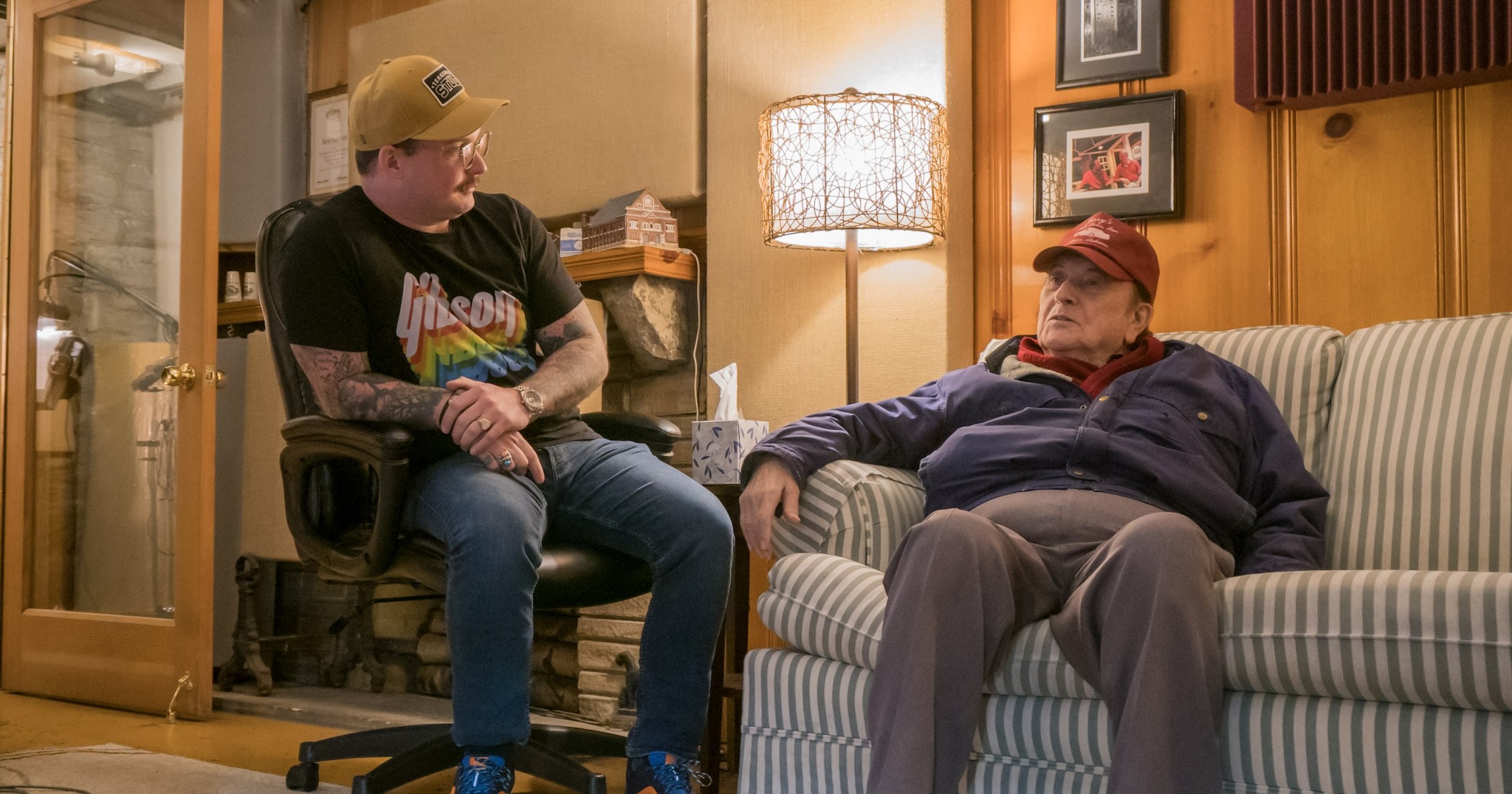
It was really important to talk to people firsthand and to go deeper than just, “Hey, what do you think of the Opry? Why is it important?” So the Opry opened up its entire archive to me, which was videos, books, newspaper clippings – pretty much anything that I wanted to look at, read, or watch. When I knew I had an interview coming up, I would spend several hours reading clippings and reading stories in order to come up with questions specific to their Opry experience. Rather than just, “Tell me about when you moved to Nashville. Tell me about this. Tell me about that.” Those aren’t questions, those are just prompts. When the people came in to talk to us, we were usually in pretty much a supply closet for camera equipment. It was a really small room. We didn’t have any cameras. We wanted everybody to be casual and comfortable and not worry about makeup and hair.

Then it became a very comfortable conversation. We started every interview with the same question, which was, “What is going through your mind in those moments before the curtain comes up?” Everybody had a different answer. That put them in the frame of mind of talking about the Opry, I think, more than talking about themselves. They went pretty deep, back in their memories, of how they discovered the Opry and what it’s meant to them. Quite a few of those artists went to the Opry as kids. So then they started talking about their family and what the Opry meant to their family, there were a lot of emotions.

I think some of those artists expected it to be like a 10 or 15 minute interview to grab that [sound] bite that says, “I sure do love the Opry.” But we went really deep and spent more than an hour talking with some of these artists. You don’t get to put everything like that into the book, but suddenly now we have an oral history from these modern contemporary performers that will live forever. When somebody writes about the Opry in 50 years from now, they have it straight from the artists, [speaking] about their path to that stage.

I think that’s one of the best accomplishments of this book, that it tells the story in such a rich, full way that isn’t just the mythology and isn’t just the good parts and the glitzy parts. It sounds like part of how you were able to accomplish that is by having these interviews set up in such a way that you could build trust with folks, so they didn’t feel like they were just giving you that marketing sound bite. They could really tell you those full stories.

I think a lot of that came from the Opry headquarters. They wanted us to tell [it] the way it happened. A woman named Jenn Tressler, she handles a lot of the talent requests there and I think she primed most of these artists about what the interviews would be like and what the goal was. Just [so they would] be comfortable and [know] no topic is off limits. Artists were asked some pretty sensitive questions sometimes about the relationship with the entertainment industry in general, including the Opry and the artists rose to the occasion.

We wanted to tell the actual story. I’ve often felt that nobody wants to read a book where everybody’s happy and there’s no conflict. There’s conflict in this one.

From your interviews or from writing this book, what was a story or two about the Opry that stuck out to you or surprised you? Or, that brought you to learning something new that maybe you wouldn’t have tripped over into if you hadn’t done this book? Is there a story or two that stand out to you?

The first one would be just how young everybody was when they got involved with the Opry. George D. Hay was a young man; Harry Stone, who was one of the early program directors, had just turned 30 when he took on that role. The artists were [in their] 20s and 30s. You had a very young Bill Monroe, Roy Acuff, Minnie Pearl, coming on the stage and changing the game for country music.

Sometimes the Opry is perceived as the elder statesman of country music – and that’s true and they’ll always have a place there, it’s wonderful. But a lot of the shake-ups at the Opry and a lot of the progress that’s been made was because of these young, innovative perspectives. That happened over and over. I think without that viewpoint from people who were younger, the Opry would’ve struggled through the last hundred years. There would’ve been times somebody might’ve said, “I want it to stay the same way, ’cause this is how we’ve always done it.” It’s never the right answer, to do it just because it’s always been done that way. I think that was pretty fascinating to me.

The other thing I didn’t realize was that it was not until I believe 1978 that the Opry was ever aired on television. It was a PBS special. If you wanted to see the Opry, you had to come to Nashville for the first 53 years. After that one night on the PBS special, it didn’t happen again until the following year. Being able to see the Opry, you had to come to Nashville, and I think executives at that time feared that if you put it on television, people would stay away from the show and they wouldn’t sell tickets anymore. But time has proven just the opposite. People saw it on television, how exciting it was and they felt like they needed to be there, myself included. I watched it growing up in Nebraska as a teenager and I just was fascinated by it. By that time, of course, it was on TNN.

I watched it many a Saturday night with my grandparents and I didn’t always know who those legendary figures were that were sharing the stage with Alan Jackson or Clint Black or Alison Krauss. But because of the Opry, I got a country music education as a teenager before I moved to Nashville in 1994. By the time I got here, I feel like I had a leg up on other people who wanted to write about country music that were my age.

You’re pointing out another fact that we often forget about country music, hillbilly music, these traditions that made these musics. It’s that all of them are constantly changing and growing, morphing and adapting to the future – and responding to the present.

Like, the reason the Opry became what it is today was because of technology, because of the “Air Castle of the South.” Because of radio, because there wasn’t a lot of competition on the literal bandwidth, and because the tower was so tall it could reach so many people all across the country. To think that, nowadays, when we view “tradition” in 2025, we think that means not changing something.

Wrong!

But the Opry has always been changing and always been using cutting edge technology to do that. And country wouldn’t exist without technology, without the railroad, without industrialization, without radio, without recording technology becoming portable and handheld.

Oh, absolutely. Well said. It has to change, and the Opry does figure out a way to reach new listeners and engage with people that have never been there. Obviously, when you go to the Grand Ole Opry House for a show now, the emcee will say, “Who’s never been to the Opry before?” And a lot of hands go up. They’re constantly marketing the show – as they should be. They want people to have a seat in the Ryman or the Opry House to see how special the world’s longest running radio show is. I give them a lot of credit for always trying to reach new people and not just looking for what they’ve done already in the past. They take a lot of pride in the fact that no two shows have ever been the same.

I was just listening the other night [on the radio] and I was able to catch the Opry debut of Grupo Frontera. I thought it was such a perfect example of what you’re talking about, that a Spanish-speaking, Spanish first language group that makes country. Of course, it’s Mexican folk and Tejano and Latin folk and all these other things as well – but it’s certainly country & western. [They were] making their debut and you could hear the building shaking through the radio. It felt like one of those iconic ovations we hear about from the old days, with everybody stamping their feet in the balcony of the Ryman. The Opry is still doing that. And not only are they doing it, but this year for Opry 100, they’re doing it over and over again where they’re having these shows with these special moments, reaching new audiences.

And it was a brilliant move, because those fans now have a general idea of what the Grand Ole Opry is, how it is performed, and they got to hear some music from people they maybe hadn’t heard of. I know Frank Ray was on the show that night, he might’ve gained some fans from those who came to see Grupo Frontera. It’s a win for everybody when an artist of that caliber plays the Opry.

There was a great moment, after doing some digging, where I found the full performance of when Porter Wagoner invited James Brown to come play the Opry. It was like a 20-minute segment – there are some things online where you hear bits and pieces of it. But the Opry archive had it from start to finish, so I just sat there and listened to it. There was some screaming and hollering going on that night, too. It was exhilarating to listen to it. Then I found an oral history from Porter Wagoner – I quoted it in the book – that said, when you bring someone of world-renowned stature to the Opry, it benefits the Opry. You want the Opry to be in the news, because it draws attention to the show.

We’ve already talked about Jeannie Seely, but I wrote my concluding question with her in mind, as well. She passed in August of this year and when she did she had performed on the Opry almost 5,400 times. (The number is 5,390-something.) That longevity is incredible. So thinking about longevity, we’re standing here at the milestone of a hundred years of the Grand Ole Opry, looking at potentially another 100 years of the Grand Ole Opry coming up.

Do you see this modern era of the Opry as its golden age? Do you think the golden age of the show is yet to come? And who are you seeing that’s just getting their start “in the circle” nowadays that is gonna be like Jeannie Seely in a few decades, thousands of appearances into their Opry career?

Yeah [the future] looks strong to me, too. Something I never put into context until I wrote the book was that in the 1990s the Opry lost Roy Acuff, Minnie Pearl, Grandpa Jones, Bill Monroe, and Dottie West. And you just think, “How do you recover from that?” They did. They figured out a way to press on.

There were definitely growing pains and bumps, but some of those figures that they picked out in the early 2000s have become advocates for the Opry, champions for the Opry. The ‘90s country stars that I love, like Lorrie Morgan, Pam Tillis, Vince Gill, Steve Wariner, and Marty Stuart are still out there. They still play the Opry – and they’re the elder statesmen now. I do think the cast members that joined in the ‘90s and 2000s are gonna become a foundation for the show.

I think you’ll be seeing Trisha Yearwood out there quite a bit as she settles into the “twilight years” of her career. I sense that she will be out there singing alongside Kathy Mattea and Suzy Bogguss. I think Opry is in really good hands with the young women that they’ve invited to be part of the cast. More than once, without any prompting, artists like Carly Pearce and Lauren Alaina have said they feel the responsibility to be here. And I think Lauren Alaina is very likely to inherit the comic routines of Jeannie Seely – she’s pretty much already there. She had us rolling in laughter in her interviews. She’s got the natural timing of a comedian, but she’s got hit songs, too.

I think the Opry is in really good shape right now. They’ve done a good job of connecting to a younger audience that wants to play it. It’s a career goal now for a lot of inspiring artists. I think when I moved here in the ‘90s it was seen as living history and you had to have some history to get on that stage. But now you just have to have a good story, some musical talent, and an ability to connect with an audience. That’s easier said than done, but if you can have those three things, the Opry will take a chance.

I think they’ve found a recipe for success. They set themselves up to succeed. There are times in the music industry where it seems like things are crumbling or those pillars are not as strong as they used to be. But I think right now the Opry is as strong as it’s ever been. I don’t see it going anywhere anytime soon.


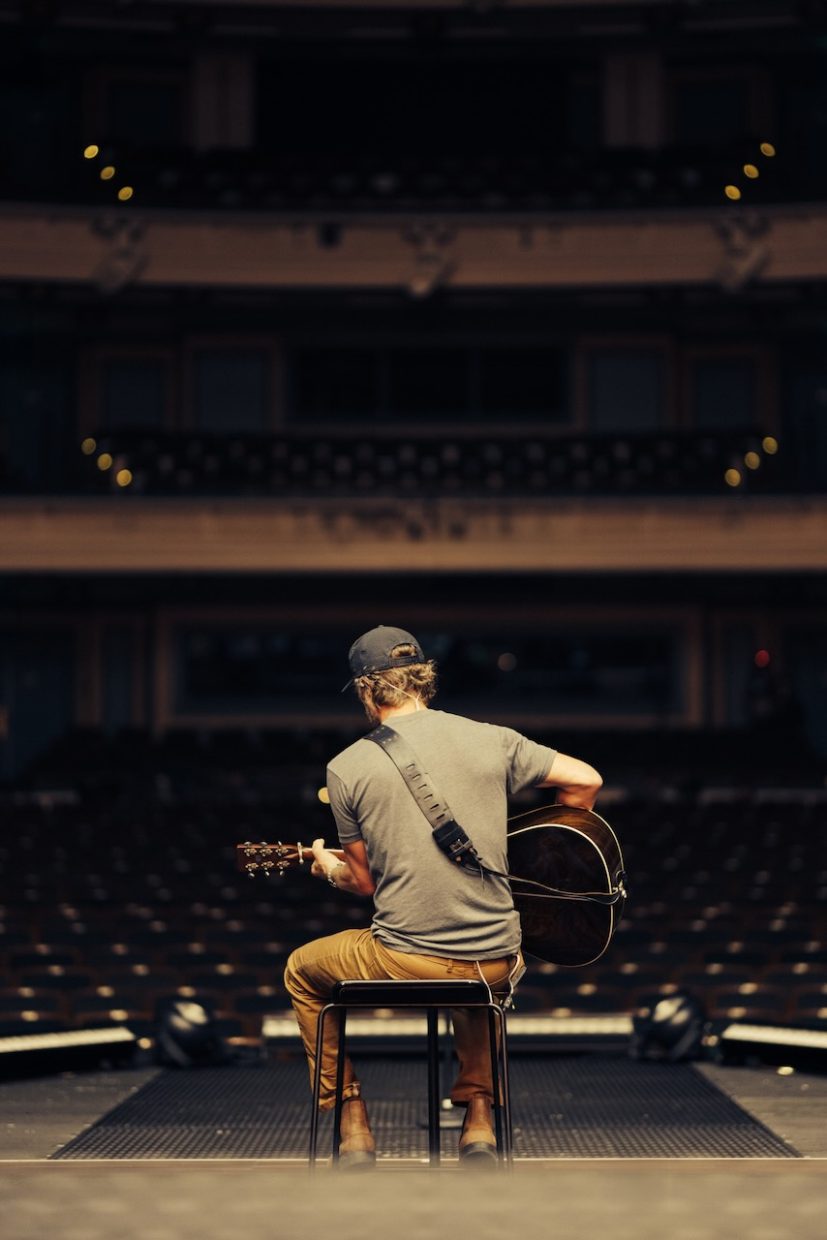
Lead image courtesy of Ryman Hospitality Properties.
How-dee! And Happy 100 to the Grand Ole Opry

In 1925, world leaders were signing the final treaties coming out of WWI; Congress authorized work on Mt. Rushmore as a national memorial; the Scopes Trial was held in Tennessee; and the first patent on radio transmission was only 28 years old.

And, in 1925, WSM first broadcast its barn dance – soon to become the Grand Ole Opry.

One hundred years later, the Grand Ole Opry is the world’s longest-running radio program. After a century that saw changes unparalleled in world history, audiences are still drawn to the Opry. Every week thousands make the pilgrimage to the Grand Ole Opry House in Nashville while others tune in around the world. The show continues to inspire new generations of performers to aspire to step “into the circle” on the Opry House stage.

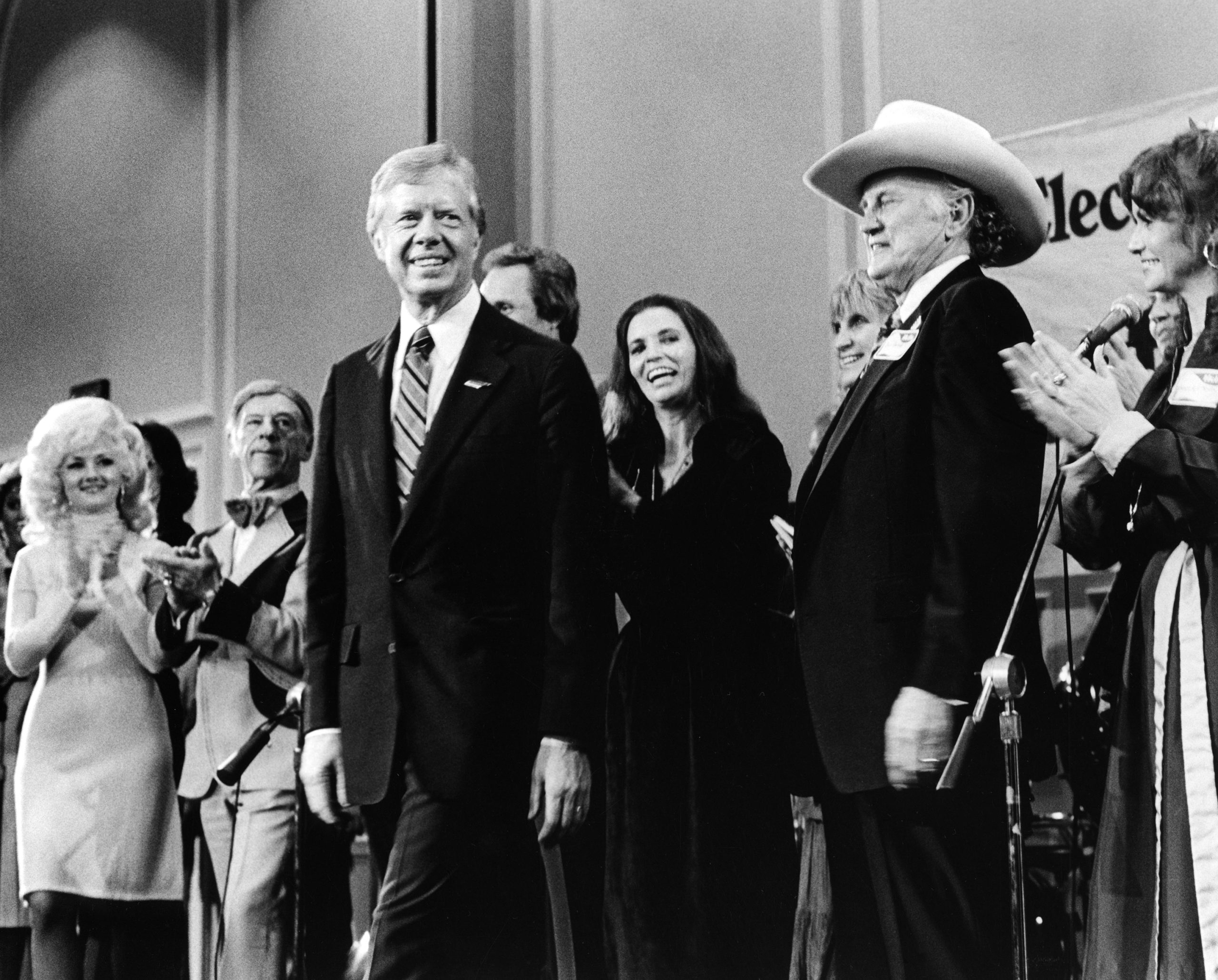
President Jimmy Carter on the Grand Ole Opry stage with Kelly Foxton, Hank Snow, Mel Tillis, June Carter Cash, Skeeter Davis, Bill Monroe, Jeannie C. Riley, and others on October 9, 1980. Photo courtesy of Ryman Hospitality Properties.
In The Beginning Was Insurance

In the 1920s, Edwin Craig was watching radio stations emerge across the nation – and seeing the money-making potential for sponsors and owners. He convinced Cornelius Craig, his father and founder of the National Life and Accident Insurance Company, that a radio station could sell a lot of insurance.

Soon, the fifth floor of the company’s downtown Nashville building held a radio studio. The call letters WSM stood for “We Shield Millions,” the company’s motto. A program that would become the lifeblood of country music started as a way to promote life insurance.

The hiring of George D. Hay away from Chicago’s WLS was the beginning of the WSM Barn Dance. The 30-year-old who called himself The Solemn Old Judge and started every show with a steamboat whistle would set the tone for much of the Opry’s 100 years – including its name.

Which all started with a clash of cultures.

Some upper-crust Nashville residents complained the only radio they could hear on weekends was string band programming from the dominant WSM station. In response, WSM began carrying the syndicated “Music Appreciation Hour.”

The Barn Dance slot followed the classical program, and Hay, not one to pass up a good line, said, “For the past hour, we have been listening to music largely from Grand Opera, but from now on, we will present ‘the Grand Ole Opry.”

George D. Hay is pictured at microphone with a whistle and Uncle Jimmy Thompson is seated in this 1925 photograph from when the Grand Ole Opry was still the WSM Barn Dance. Photo courtesy of Ryman Hospitality Properties.
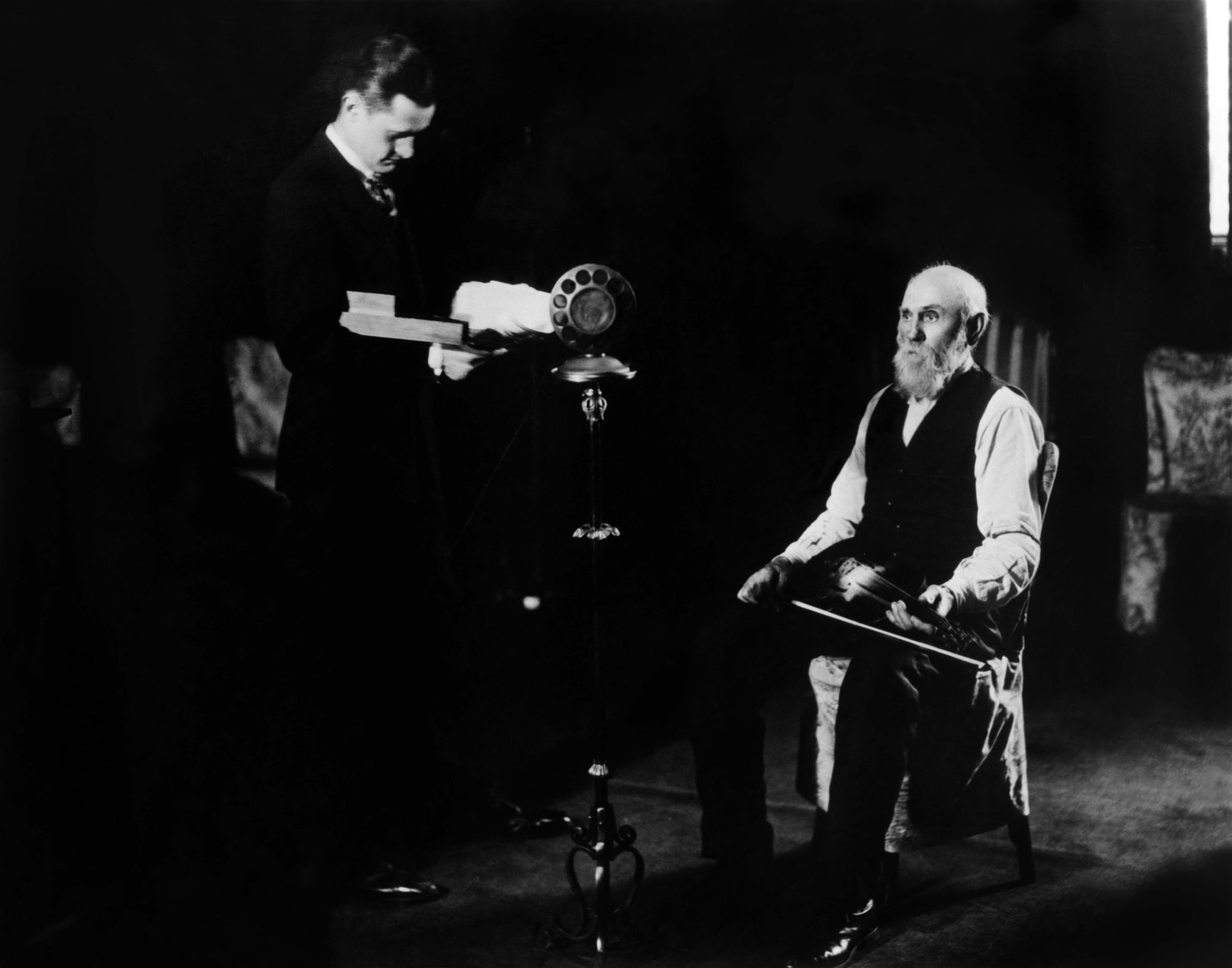
For years, the Shield Men – door-to-door National Life and Accident insurance salesmen carrying the company’s shield logo – introduced themselves as representing the Grand Ole Opry. They would even listen outside windows to see who was tuned in to the Opry – and who would be a likely customer.

The earliest WSM shows relied on local talent, running heavily toward fiddlers and string bands. But Hay would invite whoever he thought the audience would like.

DeFord Bailey, a Black musician grounded in both the blues and old-time string band music, became a regular, wowing audiences with his harmonica. Kitty Cora Cline, the first female soloist, performed on hammered dulcimer, and Fred Shriver played the accordion. Uncle Dave Macon on his banjo with Sid Harkreader on fiddle and guitar set the stage for the comedy that would remain central to the Opry’s success, with songs like, “Keep My Skillet Good and Greasy.”

A Beacon

As the recording industry grew, the variety of musicians available to the Opry grew, as well. The show began featuring brother duets, cowboy music, Western swing and solo crooners. Bill Monroe & the Blue Grass Boys were featured stars for decades.

Opry singers expressed the joys of new romance, the happiness of Sunday dinner on the lawn, the sorrow of lost love, and the loneliness of leaving home. Audiences across America listened – and related. The Opry became a focus of family life.

Dolly Parton, like many rural listeners, grew up without electricity. Her family faithfully listened to the Opry on a battery-powered radio. Waylon Jennings’ dad would hook their radio to the car battery. Jeannie Seely’s family would pile in the car and drive up a hill until they could get the signal. Opry history is filled with stories of musicians who listened as children – and dreamed of growing up to perform, like their idols, on the iconic stage.

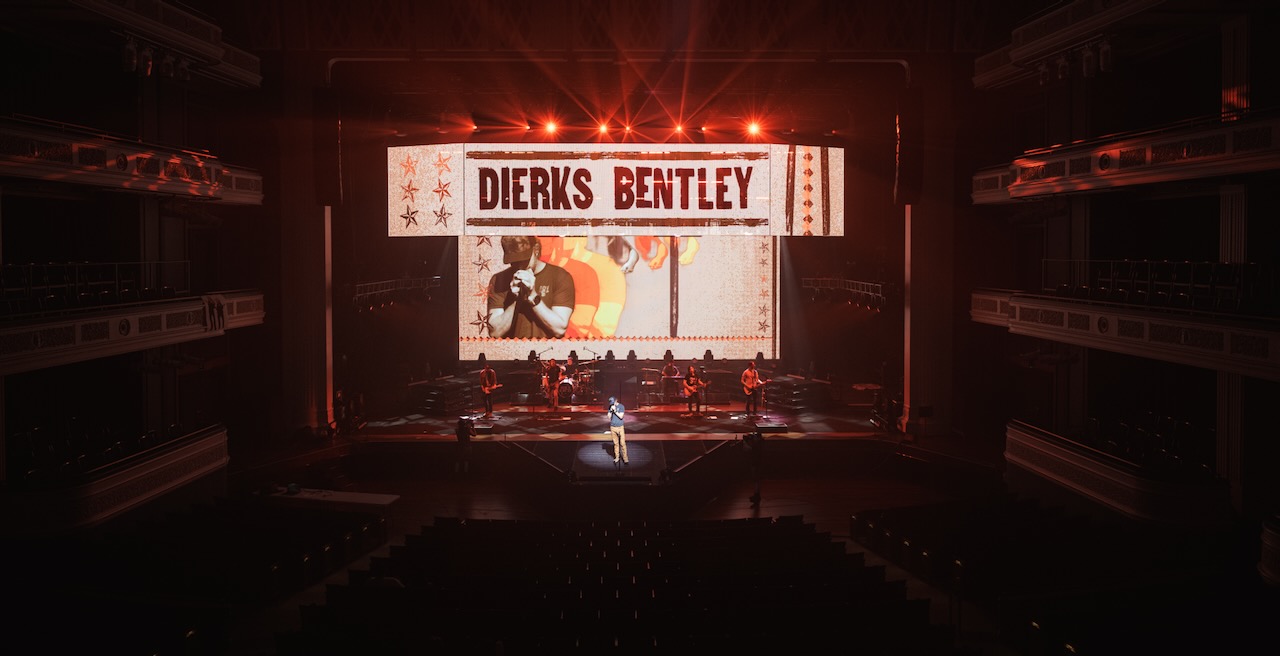
Opry member Dierks Bentley, who gracefully moves between country and bluegrass, told BGS, “Being invited to join at all is the biggest honor – especially for me, personally. I grew up listening to all the Opry greats on the radio with my dad, so becoming a member is like having the ultimate backstage pass to see the best musicians in the world. And to be invited by Marty Stuart … hands down, it was one of the coolest nights of my life.”

Dan Rogers, the Opry’s senior vice president and executive producer, said the Opry has always been a place to celebrate the good times and be uplifted during the tough times. “Think about,” he said, “the folks who tuned in on Saturday nights during World War II. That was their only source of entertainment throughout the week.” Minnie Pearl, with her signature “How-dee,” and Roy Acuff gave them respite from war news.

On the first show after the 9-11 attacks in 2001, Rogers said, “Our background singers sang an a cappella version of ‘God Bless America.’ And one by one, the people in the audience stood and sang along. And I remember thinking, I bet everybody tuned in across the country is singing along to ‘God Bless America.’”

The Opry’s response to the COVID-19 crisis created desperately needed connection during a frightening time of isolation.

Just a week after deciding that live audience shows weren’t safe, Opry staff arranged a pared-down streaming production with no audience and a skeleton crew. Longtime cast members Bill Anderson, Jeannie Seely and Connie Smith held down the first night alongside Mandy Barnett, Michael Cleveland & Flamekeeper, and Sam Williams.

For the second weekend of restrictions, veterans Vince Gill, Marty Stuart, and Brad Paisley sat on stools spread out across the stage and pulled off what Rogers called “a beautiful, beautiful show.”

Watching from his office, Rogers started reading comments from grateful listeners. For months, people marked their calendars to tune in. They wrote, “I’m in Europe. I set my alarm. It’s 2 a.m. here, but I wanted to experience this with a community.”

Marty Stuart, Vince Gill, and Brad Paisley perform for an empty Grand Ole Opry House during the COVID-19 lockdowns in 2020. Photo by Chris Hollo, courtesy of Ryman Hospitality Properties.
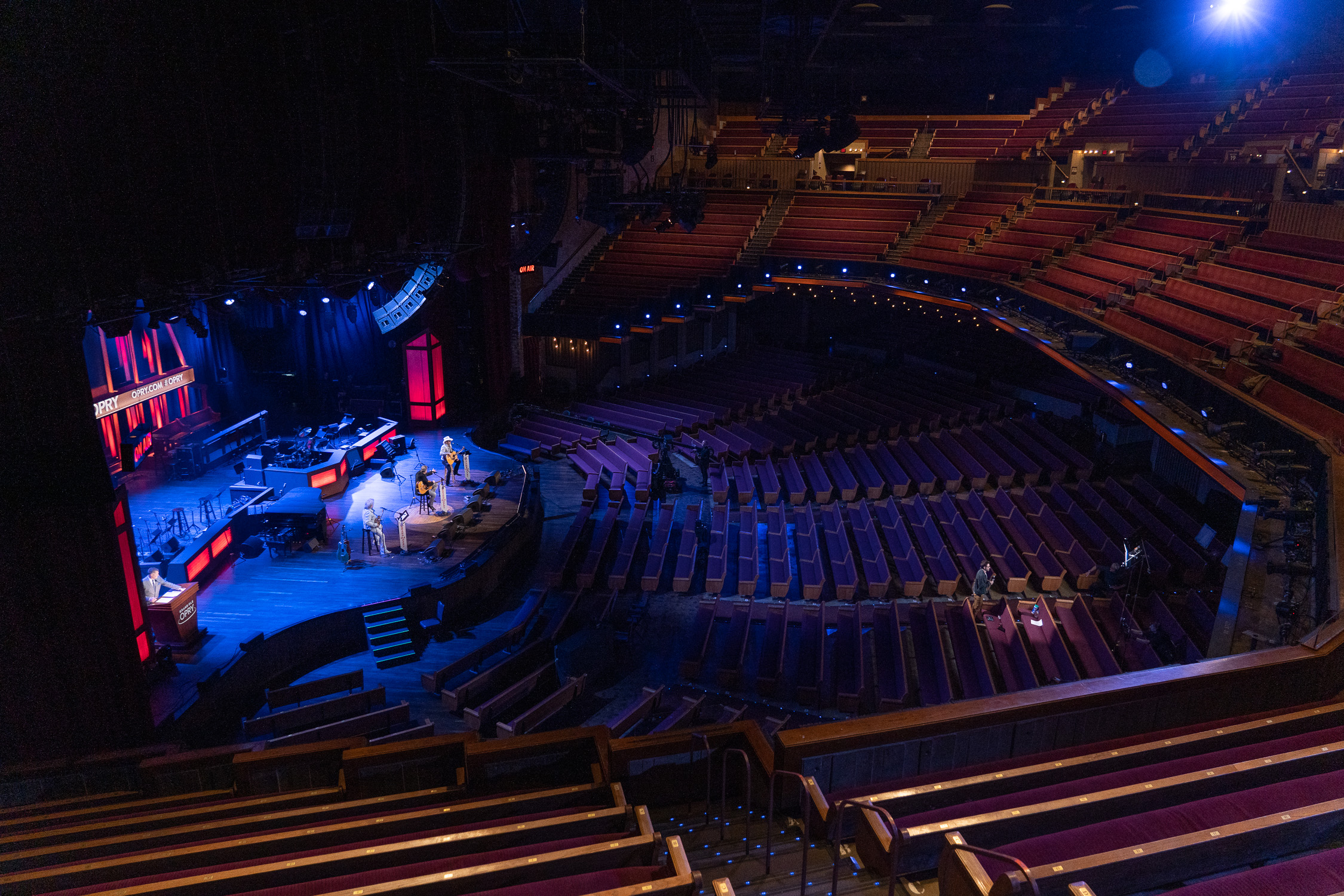
Kathy Mattea, the newest Opry inductee, feels those connections whenever she performs there.

People may have sung along to her hit “18 Wheels and a Dozen Roses” in their car or in the shower, but at the Opry, she says to BGS, “Here’s your chance to sit with an audience and sing this song that everybody knows. Nobody knows who the person next to them voted for and it doesn’t matter at that moment.”

“The Ellis Island of Country Music”

In the early days of radio, what was called hillbilly music was as limitless as the range of a 50,000 watt radio station. And the Opry remains dedicated to maintaining those wide open spaces.

Garth Brooks and Trisha Yearwood, in their forward to the book 100 Years of the Grand Ole Opry, refer to the show as the “Ellis Island of Country Music – a place where all are welcome.”

Contemporary country often has been accused of being homogenous and limited. But despite the factors that have controlled commercial country, the Opry maintains its open-arms attitude. Rogers said, “The two core tenets of an Opry show are celebrating the past, present, and future of country music, and also showcasing multiple genres under the country music umbrella.”

In any show, he said, “You might have something that’s on the top 20 of the country charts today. And you’ll have country classics. You might have a contemporary Christian song, Americana string music, or even something from outside the genre by somebody who just happens to be a country music fan or was influenced by country music.”

In 1974, the R&B-oriented Pointer Sisters included an original country song, “Fairytale,” on their second album. The cross-over hit earned them an invitation to the Opry stage, where they became the first Black group to perform.

Ringo Starr appeared for the first time in 2025 and James Taylor’s debut on November 11 will be remembered as a big part of the 100th anniversary celebration.

And, Rogers said, “Because we can do it, it’s fun to take a chance on a new artist.”

Before his first Opry appearance in July 2022, Zach Top had no hits to his name. But Rogers remembered the programming team saying, “You don’t see an artist like that every day. It sure feels to us like our audience would absolutely eat that guy up!” Today, Top’s music is everywhere.

Bluegrass has been a staple since before it had a name and it has never lost its place on the stage. Bentley and Del McCoury played “Roll on Buddy, Roll On” when the Grand Ole Opry House first reopened after the 2010 flood closed its doors for months.

Charlie Mattos is a 10-year veteran Opry announcer and longtime co-host and producer of WSM’s morning show. He said that on any given night, a portion of the Opry House audience “may truly have never seen a bluegrass band play.”

“And when Del McCoury and the boys finish with an incredible instrumental,” Mattos continued, “or Sister Sadie blisters the stage … the enthusiasm that comes out of that crowd, the immediate standing ovation for the insane musicianship that they have just witnessed …” Mattos said, “it blows their minds.”

Mattea said, “Bluegrass is front porch jazz – the virtuoso playing and the vocals and the harmonies and the trading off of licks. That’s how I fell in love with bluegrass.” And the Opry exposes millions to that brilliance.

A Good-Natured Riot

The Opry show is a complex set of acts and sets requiring precision planning, flexibility, and good nature on the part of the announcers – and commitment on the part of the performers. Rehearsals are brief or non-existent. Timing is everything.

Borrowing a phrase from George D. Hay, the Opry is still sometimes called a “good-natured riot.”

Mattos said, “When you come to see the show live, you see it all. The set changes. The artists leaving as the announcer sends them off. You can see the stage crew out there and usually in 90 seconds they can completely swap things around.”

But while reading a commercial during set changes, Mattos may notice the stage manager giving the “stretch” signal. He might have to keep talking for as long as four minutes – a millennium in radio time.

Sometimes the commercials themselves become the entertainment.

The first time Glad Wags sponsored an Opry segment, Chuck Morgan was announcing. While he stood off-stage reading the dog food commercial, house bassist Bill Linneman came up behind him and started barking. “By my last year there, there were like 20 people behind me going at it,” Morgan said. (The consensus is that Connie Smith does a great chihuahua imitation.)

A Family

Jeannie Seely – who racked up nearly 5,400 performances on the Grand Ole Opry before her passing in August 2025 – remembered it was more than the music that fueled her desire to join the Opry: “That’s hearing these people, like Mr. Acuff and Minnie [Pearl] and Jimmy Dickens and all of them, coming together every week,” she says in 100 Years of the Grand Ole Opry. “They always sounded like they were so glad to be together. They picked on each other and joked, and I thought, that’s just like a family.”

And they were family. When the plane Jim Reeves was aboard crashed in a wooded Nashville suburb, Marty Robbins and Ernest Tubb joined the search party, as did the elegant Nashville socialite Sarah Ophelia Colley Cannon – known as Minnie Pearl.

Opry star Jean Shepard was expecting her second child with husband Harold “Hawkshaw” Hawkins when Hawkins died in the plane crash that also killed Patsy Cline and Cowboy Copas. After months feeling adrift, as Shepard was quoted in the 100 Years book, “I looked down my driveway one day and here come two big black limousines full of the so-called ‘higher-ups’ from the Grand Ole Opry. They said, ‘We want you to come back to the Grand Ole Opry.’ And it really meant a lot to me.”

The family feeling is no accident. In earlier years, Opry members had to perform a specified number of Saturday nights a year. While there’s no set number today, Rogers said they look for a sense of commitment in new members. “It truly is about that relationship,” he said.

Rogers quoted Mattea, upon her invitation to become a member, saying, “These people treat you like family, no matter what.”

One of Mattea’s favorite Opry memories involves a bass player who toured with her. “He was sitting on a stool, playing and singing some old Western swing chestnut, and suddenly Riders in the Sky leaned into the dressing room in full regalia and started singing harmony.

“He was gobsmacked. He felt it was the highlight of his life,” she said.

Bluegrass performer Kody Norris’ music is influenced heavily by first- and second-generation bluegrass. But the band’s preference for flashy suits dates back to a family-friendly welcome Norris received 25 years ago.

His parents took nine-year-old Kody backstage at the Opry, “and I met Bill Anderson. And he had on a red rhinestone suit. That’s the first one I ever saw up close, where I could touch it.”

Later that day, upon meeting his equally rhinestone-clad hero, Porter Wagoner, young Kody got so excited he spit out his chewing gum. Wagoner graciously grabbed two Opry-logoed napkins, one of which the little boy used for his gum. The other one the grown Norris still keeps in perfect condition.

The Circle is Unbroken

In 1974, the Opry left its revered home of decades, the Ryman Auditorium, to move to the deliciously air-conditioned 4,400-seat Grand Ole Opry House.

To honor its longtime home, the Opry crew cut a circle out of the Ryman stage and inset it in the new Opry House stage. The circle symbolizes the Opry’s continuity, respect for the past, and optimism for the future.

Mattea experienced that sense of a completed circle on the day she became an Opry member.

“Suzy [Bogguss] was there. We’ve toured together and sung on each other’s records. She’s my closest artist friend, and she was the only one at the ceremony who was not a member. And I thought how generous it was of her to be there.

“So, while I was overflowing with celebration, to get to invite my friend to the party publicly in the name of the Opry was the sweetest gift. It was a moment I’ll never forget, and I’m going to be there for her induction, too.” Bogguss will officially be inducted as an Opry member in early 2026.

Braid Paisley and Little Jimmy Dickens return the Circle to the Opry stage after the 2010 flood. Photo courtesy of Ryman Hospitality Properties.
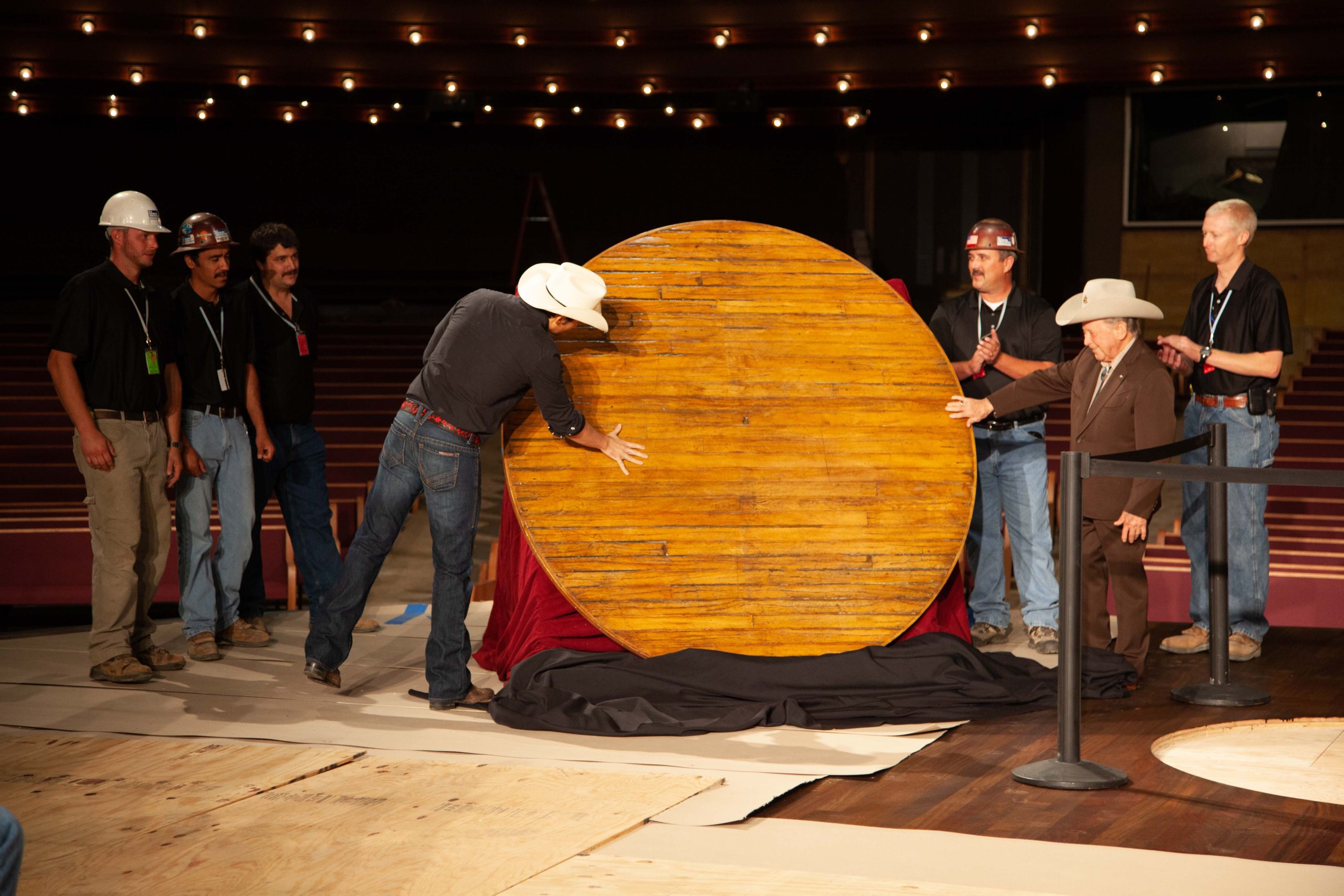
Join The Celebration

There’s nothing low-key about the Grand Ole Opry – so in the classic Opry spirit, fans have had plenty of opportunity to celebrate the centennial all year long.

Earlier this year, NBC broadcast a three-hour anniversary special, with dozens of stars ranging from Reba McEntire to Jelly Roll to The War and Treaty. The Opry also took the show to London’s Royal Albert Hall for the very first time. You can stream clips of these and other Opry events on YouTube and social media.

With the Virgin Music Group, the Opry has produced the album Opry 100, Country’s Greatest Songs (released November 7). Among the unforgettable recordings are Vince Gill singing his heart-rending “Go Rest High on That Mountain,” Dolly Parton singing “I Will Always Love You,” and Ashley McBryde covering the classic “Your Cheatin’ Heart.” You can order the album from the Opry site.

Craig Shelburne, Brenda Colladay, and Opry members and employees collaborated on 100 Years of the Grand Ole Opry, a book filled with anecdotes and photos that vividly illustrate the Opry’s remarkable history. And to teach your children well, there’s also a new childrens’ picture book written by Emily Frans and illustrated by Susanna Chapman. Find them in your local bookstore.

And, on November 28, 2025, the official 100th anniversary of the Grand Ole Opry we all hold dear, the Opry is celebrating with two huge birthday party shows featuring country stars and Opry members like Vince Gill, Ricky Skaggs, Trace Adkins, Dailey & Vincent, Bill Anderson, Jamey Johnson, Marty Stuart, and many, many more. Tickets are available here.

Of course, the celebrations will continue in 2026.

“The Opry is the core and soul of country music,” Bentley said. “It’s a place where the past, present and future of our genre all come together. There isn’t anywhere else like it.”


Continue exploring our Artist of the Month coverage of Opry 100 here.

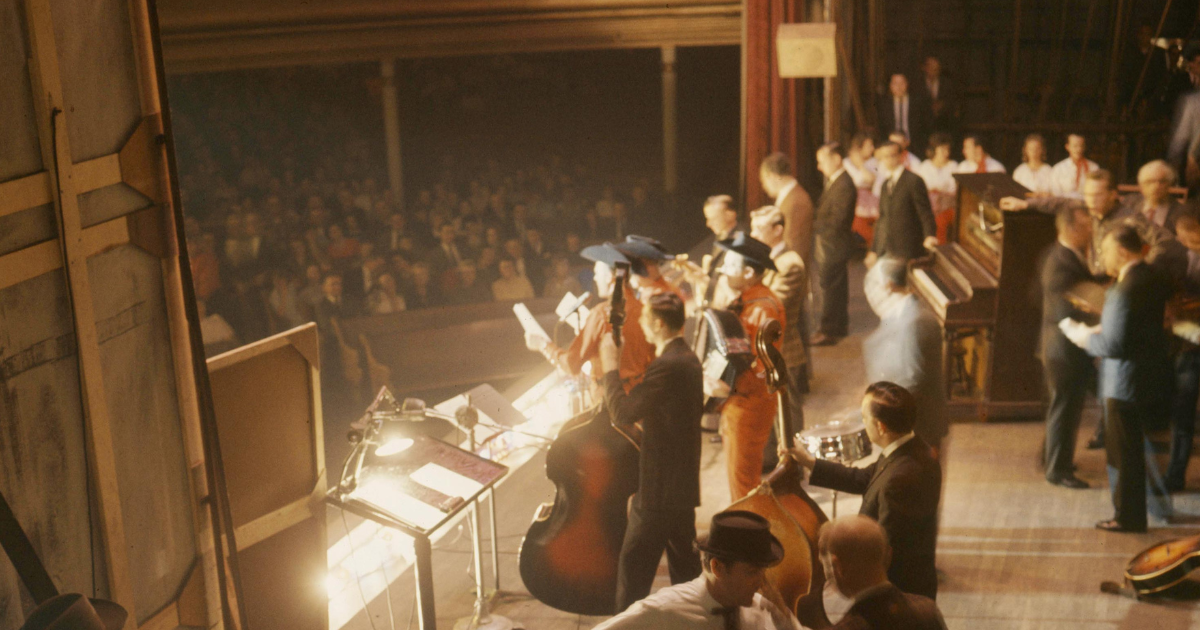
All photos courtesy of Ryman Hospitality Properties, credits and attributions as marked. Lead image: Bill Monroe & the Blue Grass Boys and the Opry Square Dancers take the Opry stage at the Ryman Auditorium in the 1960s.

Technology and Tradition Combine on Sierra Hull’s Signature Gibson Mandolins

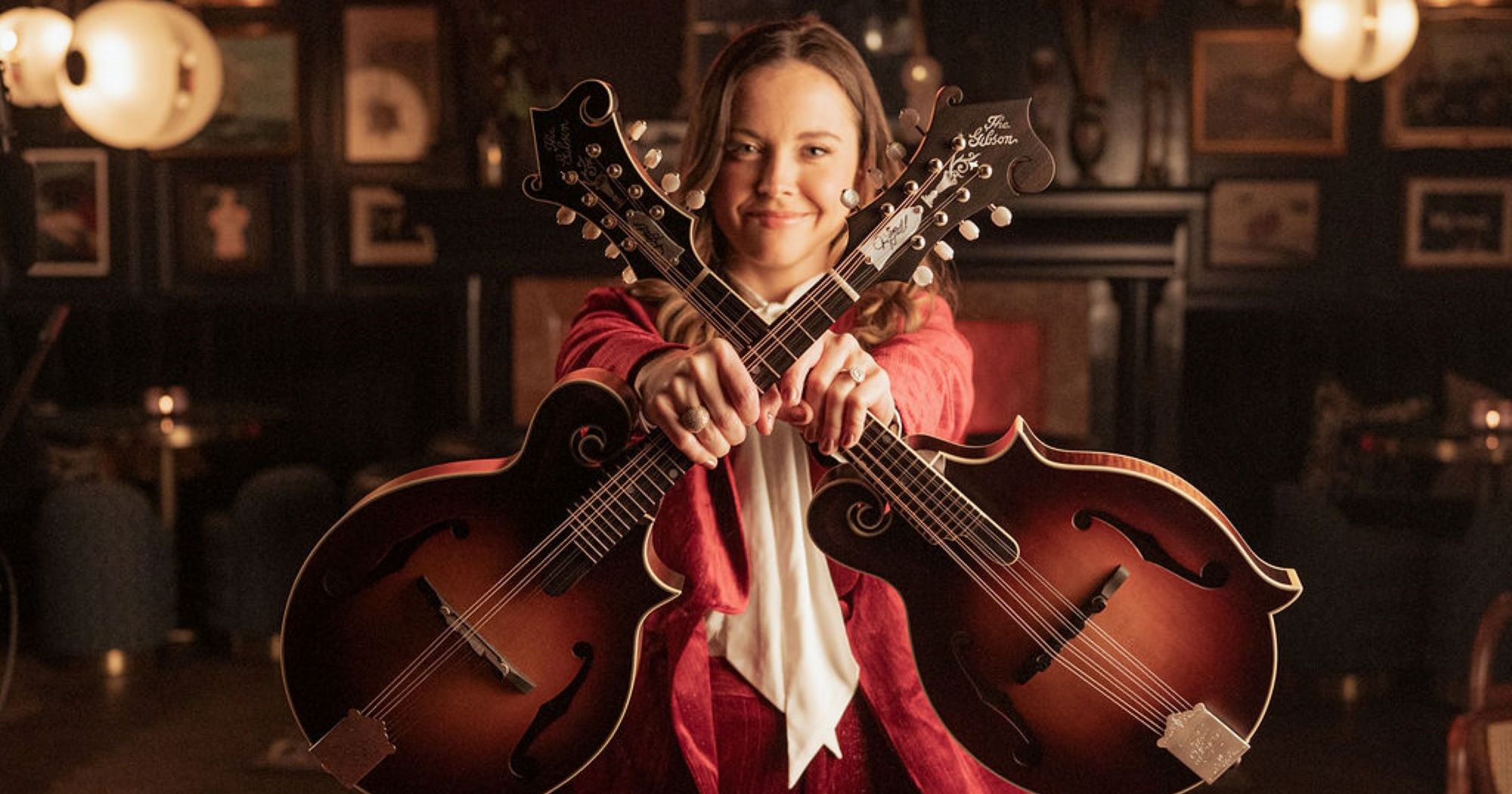
Eyes on the future, heart in the past – it’s the cornerstone of how award-winning mandolin player, guitarist, singer, and songwriter Sierra Hull crafts her music, and how Gibson Master Luthier David Harvey and the Gibson Custom Shop crafted her new signature mandolins: the F-5 Master Model and F-5G.

The F-5 Master Model boasts a red spruce top, eastern curly maple back and custom narrow neck, and ebony fretboard, while the F-5G offers a red maple neck and body, Sitka spruce top, and ebony fretboard. Both models feature the Sierra Burst VOS Varnish finish and come with certificates of authenticity, Sierra Hull/Gibson BlueChip pick, and mandolin cases – vintage replica for the Master Model and hardshell case for the F-5G.

The instruments are the result of Hull’s many years of dedication, hard work, and talent, alongside a working relationship with Gibson that began when she was 12 years old and already a four-year veteran on her instrument. Growing up in Byrdstown, Tennessee, with few if any resources for musicians, the slightest instrument repairs required a two-hour drive to Nashville, where, at the time, Gibson had a shop in the Opry Mills Mall.

Hull had graduated from her first F-style mandolin, “a starter-model Epiphone that was so cool because it said ‘Gibson’ on the truss rod cover,” she says, to a flatiron mandolin she bought used from a local player and still has in her collection. In need of new frets, and in Nashville with family, they went to the mall in hopes of a walk-in or referral. Hull had recently played the Opry with Alison Krauss and upon entering the Gibson Showcase shop, Grascals mandolin player and Gibson staffer Danny Roberts recognized her and put a new, limited edition Adam Steffey signature model in her hands.

“My dad remembers them saying, ‘How would you like to have one of these?’ He’s thinking, ‘Yeah, buddy, I bet she would, but we ain’t got that kind of money to spend on a mandolin,’” Hull recalls. “They gave me that mandolin and it was such an unbelievable moment, as a 12-year-old, to be given this incredible instrument. That was the beginning of my relationship with Gibson. I’ve mostly played a Gibson mandolin ever since.”

Fast-forward to 2009 and Sierra Hull’s main instrument: her Gibson Master Model, built by Gibson Master Luthier David Harvey. “The 2009 was brand new at the time,” she says. “Dave made some modifications to it to suit what I was looking for and it has become my voice.”

That mandolin eventually became the springboard for her signature Master Model and F-5G, in line with her original specifications for the 2009. “I have small hands, so Dave took the neck down a little bit for me,” she says. “We put an aged varnish on it instead of the normal gloss, which makes it a little more unique than one right off the line.

“I’ve always preferred that thin, matte varnish type finish, so we decided to recreate that with the signature line. So many people often ask me about my mandolin; they think I’m playing a Lloyd Loar most of the time. I’ve put a lot of miles on this mandolin since 2009. I’ve played it as my primary instrument since then. When I got it, it didn’t look anything like it does now in terms of being so worn, but it didn’t look brand new and shiny, either. I always loved that about it, that there was a certain aged vibe to it already because of the finish.”

In addition to the aesthetics, the Master Model parallels Hull’s unique sense of blending her deep bluegrass roots with contemporary sounds. It is, she says, the perfect instrument for that mix of past and present. “When I think about the kind of music I play, both these days and throughout my career, I’m so rooted in traditional bluegrass,” she says. “I grew up going to bluegrass jams on the weekends, sitting in a circle – you need a mandolin with volume, something you can dig into, like the Master Model.”

“Part of the reason we all want to play F-5 mandolins is because Bill Monroe, the Father of Bluegrass, played an F-5,” she continues. “I love an A-style mandolin as well, but there’s something that makes you feel legit about playing bluegrass on an F-5 mandolin, because it just feels right – the feel, the look, the sound, the pointedness that those F-style mandolins have. The idea of having a mandolin that you can really channel that traditional thing that as mandolin players we’re born to love in bluegrass music – Gibson is the gold standard for what we think of in terms of every F-style mandolin that you see.

“There’s a lot of great builders out there, so many talented luthiers building beautiful mandolins, so it’s no slight to any of them. But nobody would be doing that if Gibson didn’t exist and build these F-5 mandolins with Lloyd Loar’s stamp of approval on them. When I pick up my Master Model, it feels like the connection to that legacy.

“Even though I tend to think my sound is more progressive and modern – way more so than what you think of when you think of Bill Monroe – that’s the world I come from, so I want a mandolin that feels connected to those roots. But the clarity, the top end, the sparkle that these mandolins have, too – they have a large span on what they can bring to the table. No matter what musical direction I go in, I never find myself lacking from the side of what the instrument can do. It really shows up in all those situations.”

Bringing the Sierra Hull Master Model and F-5G from concept to showroom was a two-year process. Hull, David Harvey, and Gibson worked closely, taking time and care to not rush the work, but instead building the mandolins to her exact specifications.

“As a youngster I couldn’t have dreamed of having my own signature line with Gibson, so it was wild to get the call,” she says. “I’ve learned so much in this process over the past couple of years. Getting to go up-close, help pick out the wood, and see it go from a chunk of wood to mandolins that have my name on them is such an experience. To see it all come to life is a full-circle moment that takes me back to sitting in the Gibson Showcase at 12 years old and playing one of my heroes’ signature lines. To see these mandolins with my name on them is overwhelming. It’s such an honor.”

Mat Koehler, Vice President of Product at Gibson, joined the company almost ten years ago. He says bringing the vision of Sierra Hull signature mandolins to fruition was, in fact, over a decade in the making, beginning with conversations and leading up to the present.

“Even ten years ago, Sierra was one of the best, if not the best, mandolin players in the world,” he says. “When I got here, I was like, ‘Why don’t we have a Sierra signature model?’ The answer, of course, is very complicated. I think everybody’s intention was to make that happen, but we had a restructuring of the company, change of leadership, change of management, a lot of things, a lot of obstacles. So this is really the culmination of a long time spent both ideating what a Sierra signature model would be and then executing it, finally. I am very happy and proud to be involved in some small way. But this is all Sierra and speaks to her incredible talents.

“Her impact [on the instrument] has been huge,” says Koehler. “She represents the next generation of players. She really refreshed the mandolin and offered a completely fresh take. Mandolins are a little bit similar to banjos in that with bluegrass music in the mainstream, if it’s not Mumford & Sons or Nickel Creek, it’s almost ‘out of sight, out of mind.’ Sierra has done an amazing job of taking mandolins into the mainstream in both her music and her collaborations with other amazing musicians. I see a recharging of the bluegrass world right now and Sierra is one of the many leading the charge.”

At the intersection of tradition meets technology, precise replication of Hull’s Master Model in order to build her signature mandolins was done by 3D scanning of the 2009 Master Model, a process Hull describes as “kind of like an ultrasound of your instrument. They run it over the whole instrument, you see it on the screen, and they capture all the specs in a detailed way.

“It gave us a good, strong starting point to mimic the Master Model that I love so much. From there, I got to pick out the wood and watch the process in real time. Essentially they made a replica of my mandolin that Dave Harvey, for fun, distressed to look like my mandolin, and they nailed it on the first try. We used those scans to build the signature line.”

True to her preferences, she selected a thin matte varnish finish on the models, a custom look that Gibson titled “Sierra Burst.” She also opted for the traditional Loar nut width and flat, scalloped fingerboards. “It’s much like I feel my career tries to do – lean into traditional while having some progressive new things as well,” she says.

“We did a custom tailpiece design. I didn’t want a lot of flair on the instrument. I didn’t want crazy inlays or my name spread across the fretboard. But I’m so honored to be the first woman to do a signature mandolin line with Gibson, so part of me did want a little touch of feminine something on there. If you look closely, there’s a little heart dotting the i on my signature on the truss rod. On the tailpiece, the traditional script says ‘The Gibson,’ but where the tailpiece has a curve up top, you’ll see a little heart built into the design, and a little bit of a heart at the bottom and my initials.”

“Sierra has played dozens of original Lloyd Loar 1923 F-5s, so we couldn’t cut any corners with her,” says Koehler. “We wanted to make sure her instrument was on par with any of the amazing mandolins she has played, because she would know right away what looks right, feels right, and sounds right. There are lots of different ways you can spec mandolins, but hers is true to the 2009, which would have been, at the time, a core Master Model F-5.

“That mandolin is her number one instrument to this day, so obviously we had the recipe. … Sierra’s took the very same path as our historic reissue 1923 F-5, which was we scanned her mandolin, we detailed it down to every tiny little nick and ding on it, just so we had a record of the current state of that mandolin, how it looked. The feel of the neck is really unique on hers because it was handmade by Dave Harvey at Custom.

“[3D] scanning has been a complete game-changer for us. Not only has it opened the door to be able to recreate instruments more accurately, it’s rekindled relationships with artists. Customers and fans of Gibson who want the most accurate now can finally have it, knowing it’s mapped identically from the original instrument. … Now, in a matter of maybe twenty minutes, you can do an entire mandolin, just waving a wand over it. That wand is capturing thousands and thousands of points…”

When the mandolins were ready, Hull – still a bit incredulous about having her own signature line – made a special trip to the Gibson shop to test each Master Model. “I guess it’s rare for someone to ask to do that, but I was like, ‘Can I come in and play all these?’” she says. “So we just made a fun day of it. The consistency of the sound, the build, and the playability is all at an insanely high level. All this stuff is done by hand and it’s no small feat to accomplish that. Dave sets them all up. He is the only one to set up my Master Model since 2009, so he knows what I want. Not that I expected anything less, but it was comforting and confirming that this is something I could be proud of.”

“We were overjoyed that she wanted to do it,” says Koehler. “That’s going over and above. She wanted to support this every way she could and obviously she was really excited about it, which makes us really excited. … For her to go the extra mile with us – we were very appreciative. … The fact that the endorsing artist would go to that length of playing it to test it out is amazing.”

It’s been a long, remarkable journey from Opry Mills Mall to seven-time IBMA Mandolin Player of the Year and two GRAMMY nominations, but Sierra Hull hasn’t forgotten the early days. Cognizant that signature edition mandolins are beyond the financial grasp of most players, her next collaboration with Gibson is an Epiphone model, bringing her back to her first instrument.

“I want this to be something that doesn’t price everybody out,” she says. “We’re going to work on an Epiphone model that will be a little bit more affordable for young players and people who are just starting on mandolin, the same way I was when I was a kid. It’s important to me not to have those people feel forgotten. I’m excited to work on it with Gibson as the next part of this story.”


Photo Credit: Courtesy of Gibson Custom Shop.

Artist of the Month: Opry 100

This month, BGS is celebrating 100 years of the Grand Ole Opry! It would be hard to overstate the influence of the Opry on American roots music – hell, on music in general – over the past century.

From Earl Scruggs joining Bill Monroe to create the sound of bluegrass; to DeFord Bailey becoming the first Black Opry star and the first Black musician to break into the commercial music scene in Nashville; to the legendary meeting of Johnny Cash and June Carter; the Opry has been a catalyst for so many iconic moments. Below, we kick off our “Artist of the Month” celebration with our Opry 100 Essentials Playlist, which includes some of our favorite live recordings from the Opry, songs famously debuted on that legendary stage, and some of our favorite roots songs written about the Opry and its lore, too.

Did you know that Dolly Parton made her first Grand Ole Opry appearance in 1959 at the age of 13 and received three encores? To get a sense of how young Dolly might have sounded on that stage, we’ve included one of her very first singles, “Girl Left Alone,” (the B-side of the now well-known “Puppy Love”), recorded when she was just 11 years old and released the same year as her Opry debut.

Elvis famously made his Opry debut in 1954 at the age of 19, singing “Blue Moon of Kentucky” in a style that was so poorly received a manager told him to “go back to driving a truck,” or something of that nature. You can hear his rockabilly version on our playlist.

In 1969, Linda Martell was the first solo Black woman to perform on the Opry, singing “Color Him Father” for her debut. Although she faced rampant racism throughout her career, her first performance on the Opry was met with two standing ovations and she went on to perform there 12 times over the years.

The Opry has also been fodder for songwriting, inspiring many tracks over the years. Early Opry star David “Stringbean” Akeman met Bill Monroe while playing semi-professional baseball and went on to play clawhammer-style banjo in his band from 1943 to 1945. After parting ways with Monroe’s band, Stringbean became an Opry star in his own right and penned the song “Opry Time in Tennessee.”

Stringbean and his wife were tragically murdered in 1973 by thieves who had heard of him storing cash in his home. In 2009, Sam Bush released his song, “The Ballad of Stringbean and Estelle,” co-written with Guy Clark and Verlon Thompson. “The thieves laid in wait for hours/ But things didn’t go their way/ But he wouldn’t let go of his Opry pay,” sings Bush on his album, Circles Around Me.


@cmt #SabrinaCarpenter makes her #grandoleopry debut 💋✨🎙️ #opry100 #slimpickins #mansbesfriend ♬ original sound – CMT

Shortly before the Opry was moved from downtown Nashville’s Ryman Auditorium to the newly built Opry House in 1974, John Hartford released “Tear Down the Grand Ole Opry,” a scathing commentary on the commercialization of country music. “Right across from the wax museum/ They used to line up around the block/ From east Tennessee and back down home again … Broad Street will never be the same,” Hartford sings nostalgically on his legendary Aereo-Plain album.

While the Opry is known as a country music gold standard, over its 100 years as a live-broadcast radio show it has held clout across the genres and in popular culture – not just in country. This year, as part of the celebration of its 100th anniversary, the Opry has been featuring 100 Opry debuts and first-time performances. These special appearances have showcased the broad impact of the Opry, hosting the likes of pop star Sabrina Carpenter who said, “My mom raised me on the artists who have stood up here.”

Whether in country, bluegrass, Americana, or beyond, the Grand Ole Opry continues to be a musical powerhouse, 100 years after its barn dance birth. While we look ahead to the next century of Opry magic, we’re beyond excited to join the Grand Ole Opry family in celebrating Opry 100 for the entire month of November. Enjoy our Opry 100 Essentials Playlist below and relive the Opry 100: A Live Celebration television special on NBC from earlier this year here, too. You can read our primary feature on Opry 100 right here. Plus, stay tuned all month as we have brand new and archive articles, interviews, and features we’ll be sharing here and on socials all spotlighting the incredibly legacy and community of our beloved Grand Ole Opry as we countdown to November 28, 2025 – the Opry’s official 100th birthday!


Lead Image: Opening of the Grand Ole Opry House in 1974, courtesy of Ryman Hospitality Properties.
25 Years of Greensky Bluegrass Connecting the Dots

On a recent afternoon, Paul Hoffman is standing in a parking lot in Harrisburg, Pennsylvania. Lead singer/mandolinist for Greensky Bluegrass, Hoffman is pacing around the backstage lot before the gig at XL Live that evening deep in reflection about questions posed over the phone – the core of which focus on the upcoming 25th anniversary of the groundbreaking jamgrass outfit. A while back, in the depths of rural New Hampshire, I interviewed Hoffman for another project and I asked him just what the original intent was behind Greensky Bluegrass.

“To play heavy metal music on acoustic instruments,” he replied, a sly grin emerging across his face.

Now, 25 years since its inception, Greensky Bluegrass has adhered directly to Hoffman’s sentiments. These days, the group has become a marquee live act, one which uses its string instruments to transcend all genres of music, whether bluegrass or blues, rock or country, funk or soul – or even heavy metal.

Case-in-point, the ensemble’s latest album, XXV, is not only an ode to a quarter-century of passion, purpose, and performance, but also a mile marker by which Greensky Bluegrass can measure their own road to the “here and now” – this realm where the passage of time doesn’t necessarily matter, only fleeting moments onstage with the ones you love do.

XXV brings together many of those dear friends and collaborators of Greensky – Sam Bush, Billy Strings, Lindsay Lou, Nathaniel Rateliff, Aoife O’Donovan, Holly Bowling, Ivan Neville, Natalie Cressman, and Jennifer Hartswick. Each of these special guests represent chapters of the band’s continued journey to something – somewhere, anywhere – that kind and curious folks congregate in the name of fellowship, compassion, and sonic joy.

With the starting line of Greensky Bluegrass being an impromptu Halloween gig in 2000 in Kalamazoo, Michigan, other pivotal dots pop up quickly along the way. Like the inevitable camaraderie between the group and other Michigan artists like Strings and Lou, who came up in the same scene and have supported each other ever since. Or, like Sam Bush himself – Bluegrass Hall of Famer and the symbolic face of the Telluride Bluegrass Festival – being featured on the project, reminding how the Telluride stage brought Greensky Bluegrass into the national spotlight when they won its famed band contest in 2006.

For Greensky, the friendships made along the way brought endless opportunities to play alongside one another at a show, a festival, or late-night jam. Opportunities that would always be too good to pass up – don’t forget, fun is the original point, and should remain so.

XXV is also a fresh snapshot of Greensky Bluegrass. The songs are pulled from across the entire timeline of the outfit, from their early days in Kalamazoo to the mountains of Colorado. From the bright lights of Nashville to the backroads of Southern Appalachia. From the blue skies of Anytown, U.S.A., to the sandy beaches of some international destination.

After 25 years, what remains is a band of genuine souls where gratitude is only matched by hunger and curiosity for what resides just around the next corner. Greensky Bluegrass, decades later, remain ready to surprise the listener and to carry on the pure intent that emerged those many years ago.

Now that this album’s coming out, whether consciously or subconsciously, the celebration of 25 years is currently underway. What’s been kind of rolling through your mind?

Hoffman: Primarily gratitude. I’d be remiss to not be grateful that we’ve been able to [do this for 25 years]. It’s a celebration, truly. It feels so cool. We’re doing [the anniversary shows] in our hometown and playing the [Wings Event Center in Kalamazoo] for the first time, which we’ve talked about since we were a very young band. And, you know, something interesting I’ve learned is how excited people are about this retrospective project. In true Greensky fashion, it’s this unique, hybrid idea. Like, “What if we did this? What if it took this turn? What if we recorded this and revamped this?”

We didn’t just make a new record, we stopped to reflect and commemorate in a way that was meaningful to us. And it seems like it’s translating. It’s not even out yet. It’s a unique perspective on gratitude that maybe I didn’t expect. [For XXV], I don’t want to say that it was easy or something. Because we did it pretty quickly and we didn’t have to write any material and we didn’t have to make huge choices about how to present it, because there already is an arrangement and an idea. But, in some cases, we did things differently because we could and we were not beholden to some authority on how it needs to go.

[The recording process] was so casual and creative in this really innocent way – “Let’s just record this and see what happens.” And we just kept recording stuff. We didn’t even know what we were going to do next. Every moment is monumental in some way or another, but 25 years is nothing to scoff at. And this all was birthed from, “What could we do?” With making new music and new albums, there’s a pressure to create something better than we’ve ever done. Or genuine to the brand we’ve created and to ourselves, but also exploratory enough [and] a departure from the norm enough that it’s new and exciting. It feels like such a relief to do [XXV], to approach creating new material from a different perspective.

How did you decide on the guests?

I wanted to find guests that celebrate our story, that are close to us and collaborators and such, but also elevated the material in some meaningful way. And there were real pleasant surprises along the way there.

What did it mean to have Billy and Lindsay on the record, seeing as all of you emerged from the same scene in Kalamazoo and have always supported each other?

I mean, to say that it was sort of obvious and natural is probably an understatement. We joked about why we chose “Reverend,” because Billy plays it [live]. But, I also feel it’s an important song. And for me as a writer, it’s kind of a landmark in my journey as a creative. But again, even though I knew [Billy] would crush it on the guitar solo, some of the phrasing choices he makes are subtly different than mine – I love it. And, man, I can’t stress enough, what a gift [“Reverend” is]. I wrote that song almost 20 years ago. It means something different to me now, and it has throughout my life singing that song.

You’ve always been a very sonically elusive band. Was that by design or just how things evolved?

I think that we just have a spirit to not be limited. So, if we want to emulate all the things we love – and we’d love a diverse amount of things, musical things – we honor the acoustic nature of our heritage as a band, but we want so much more. We want [things] to keep us interested and engaged. We’ve allowed ourselves that creative freedom to try anything. And we think we’ve jumped the shark many times. [Laughs]

With getting older, you also start having different perspectives on what you were creating and how you want to present it.

Yeah. You know, art is timeless in some ways, because you can change your opinion about it or the way you relate to it as you mature.

When you had mentioned that you guys “jumped the shark many times,” I think that’s one of the things I appreciate about Greensky – you’re not afraid to just take a leap.

It’s one of my favorite things about musicians I admire, too, are the ones that I watch struggle to either challenge themselves, push themselves, push their boundaries, or convey a message with emotion that’s challenging, you know? If you’re willing to make a mistake, if you’re willing to truly find the line of your capacity, you have to be willing to cross it to know where it is. I’ve always said – in my later maturity – that I wonder if I’ve crossed it too many times, and in sort of a noble quest with noble intentions. [Laughs]

That’s something I love about Billy’s playing a lot. Despite being one of the greatest guitar players I’ve ever seen, I’ve watched him up there grasping for things and struggling. Struggle doesn’t always have to have a negative [connotation]. To not struggle would be complicit and boring.

The upcoming Halloween shows in Kalamazoo are the official 25th anniversary of when the stars aligned, when you, Mike [Bont], and Dave [Bruzza] played together as Greensky for the first time.

When you started asking the question, my brain went to right about now, [25 years ago]. We met [a few] weeks before Halloween. I was a college freshman and I went to this bar called the Blue Dolphin, where there was a bluegrass open mic. I saw Dave and Bont play and approached them after the thing and was like, “Hey, I just bought a mandolin,” that I’d gotten in late August before moving to college. So, I’d only had it for four or five weeks.

I didn’t know what the hell I was doing at all or what bluegrass even was. I bought the mandolin because of David Grisman, who’s so bluegrass-adjacent that I didn’t know who Bill Monroe was. I knew “Shady Grove.” [All of] which is still just a remarkable thing for me to think about. Like, what hell would my life have been had I not made that choice [to play mandolin]? What a bizarre twist of fate and then here we are 25 years later.

So, you guys met and you said, “Let’s jam”?

Yeah. A couple days later, I showed up at Bont’s house for a rehearsal. Him and Dave would just get together and pick. They were both learning bluegrass. Everything was so casual and just for fun. They would have band practices where we would get together and learn songs and stuff. And I just showed up for the next one and then didn’t go away.

What was the name of that [open mic] band?

Greensky Bluegrass. They were already playing as Greensky Bluegrass, which was named by a friend of Dave’s that played mandolin with him a little bit for fun. It was a joke in jest, “Wouldn’t it be funny to have a bluegrass band named Greensky Bluegrass?”

I don’t think I ever knew that you guys were called Greensky before the official [2000] Halloween show.

Well, I mean, what is “official” is interesting to think about. They were already [Greensky]. It wasn’t their first open mic, either. So, the first time the three of us [“officially”] played was the Halloween show. But, I think I joined them at open mics for a week or two or something [before Halloween]. And Halloween was a party. There was a poster made for fun or something. We were on the bill. Dave was in another band called Seeds & Stems. It was a house party in a house that Dave lived in. [Laughs] A pretty wild party, if I may say so.

So, it was billed as Greensky Bluegrass?

“Billed” is still kind of generous. But, yeah, we played a set in the basement and in the living room. I think the living room upstairs was just acoustic and then the jam band played downstairs in the basement, like colleges do, you know? A couple days later, we played a show at a venue in town, Club Soda in Kalamazoo, that was kind of a legendary rock club through the ‘90s and stuff. It was small, but we played there on a triple bill November 5 or something, [just] days later. And that one, I [still] have the poster. I think that was our first paid show.

Were you doing covers or did [Dave and Mike] have originals, too?

They were playing just bluegrass standards for the most part. It’s funny, that [first] night [I met] Dave, he gave me CDs – Seldom Scene, Live at The Cellar Door, a Rounder Records bluegrass compilation, and a Bill Monroe live show. And [he] was like, “Listen to these. See you on Tuesday at Bont’s house.”

In hindsight, man, to be 18 and have that kind of freedom, you know what I mean? I’ve been recently jamming on electric guitar at my house by myself for fun. And I’ve been thinking, “I wonder if I could find some dads around to start a band with for just fun.” And that experience is so foreign to me now, because I’m so immersed in this thing that’s become my life.

Looking back on it, you kind of jumped into the deep end pretty quickly.

I didn’t take a mandolin lesson until COVID. [Laughs] I was self-taught, because I already knew how to play the guitar – “knew how to,” I use that a little loosely, too. Took some [music theory] classes in high school and college and I’m sort of classically trained. But, I was able to teach myself my own instrument for a really long time. I should have sooner harnessed the strength of learning from another, because when I took a lesson during COVID from a friend, I was like, “I should’ve done this a lot sooner.” [Laughs]

You know, so much of what I was learning in those early days was how to express myself as a writer and find my voice. That stuff always superseded my need for technical prowess. I think we all kind of share that sentiment, all five of us – how to present this passion piece is more important than how to do it. We took on this every-other-week gig and stuff like that [in Kalamazoo]. And the commitment to go play shows for the same crowd every other week inspired us to grow, because we needed to. We had that jam band sensibility of satiating the fans. What can we do next week that’ll keep people excited? What can we do that’s new? How can we make this better?

When you look back, you can see where the dots connect. But, when it’s happening in real time, you don’t realize what the domino effect is, where all of a sudden you’ve found yourself in this band that you’re still in 25 years later.

Yeah. I was 18 [when we started the band]. I’ve lived with Dave and Bont for 25 years of my life. I didn’t even live with my parents that long. [Laughs] I’ve spent 200+ days of [every] year of my life with those two guys for 25 years, and the other ones for many years, as well. It’s kind of wild. It’s so cool that we created this project, [which has become] just a celebration of our relationship and that’s so much more important than what it has become. We care about each other and we genuinely have a lot of aligned goals, artistically and personally. We’re still grinding for it, and I’m grateful for what we have.

I think we’ve been very successful. I feel less “grinding” now and more, “Let’s just go and have some fun and play some shows.” Play where people want us to play and not measure our success by how many tickets we sell. And I’m starting to learn that more now. It took 25 years for me to figure out that what we have is great. We’ve got something cool, let’s just keep doing it.

And that’s got to be a nice place to get to, because you don’t get to 25 years by accident. The fact the original three members are still there is amazing, because that story is not that common in the grand scheme of things in this industry.

Even in our culture. It’s not even [common] in business partnerships, families, friendships. And the reality of that – that I’m learning with age – is that relationships change and everything shouldn’t be measured by the testament of time. I want to find value in a moment that is for the sake of “now” and not some transactional [thing]. Like, if I’m nice to you “now,” then we’ll have this friendship that serves us both and we’ll be there for each other. All that kind of stuff is great, but I want to live in the moment.

I think what’s remarkable is that we’ve stayed together, because we’ve all grown and changed in similar ways and our journeys have aligned the whole time, or for the most of the time. We’ve veered away from each other and back to each other many times. But, when one of us has wanted something different, we’ve all kind of shared that desire. In a way, we’ve been able to all be very sincere to ourselves and grow and change together.

I don’t mean to speculate what other bands are like or anything like that, but I don’t have a lot of relationships in my life that have lasted this long. And not just people, but to things like food or activities I enjoy. The only thing maybe is the way I’ve worn my hair for 30 years. [Laughs] When we grow, our tastes change for all things. But, my [creative, intrinsic] tastes for these four other men have not changed.


Continue to explore our Artist of the Month content on Greensky Bluegrass here.

Photo Credit: Dylan Langille

Classic Country
Is Here to Stay

With a new generation boasting unapologetic traditional influence, there’s more classic-sounding country in the mainstream today than in many years before. With his second album, When I Write the Song, Jake Worthington captures one specific aspect of honky-tonk history better than the rest – its sense of humor.

That’s definitely not to say Worthington’s new album is a joke. Far from it. Over 14 songs, the Texas native sinks down into the depths of sorrow and lets his heart believe in miracles all the same. His love of the classic country form is just as authentic as his barrel-chested vocal twang, and with producers Jon Randall and Chuck Ainley joining his team, it gets highlighted with more sincerity than ever. But right from the opening track, Worthington walks in the footsteps of artists like Johnny Paycheck or Jerry Reed; his down-home demeanor is as country as it gets.

Meanwhile, the solo-written title track is almost alarmingly personal and Worthington welcomes Miranda Lambert, Marty Stuart, and Mae Estes as special guests on other tracks. When I Write the Song arrived on September 12 and by touring through the end of the year with both Jon Pardi and Zach Top, Worthington adds even more evidence of an ongoing trad renaissance.

Good Country spoke with Worthington about writing the way he lives and chasing honky-tonk inspiration farther than ever. Plus, he reveals a secret appreciation fans might not suspect.

For fans who don’t necessarily know, you have always been a proud purveyor of the classic country arts. I think that’s pretty fair to say. Are fans going to get more of that on this record or what?

Jake Worthington: Damn right. Yes, sir. I guess that whole narrative don’t ever really change for me. I don’t ever want to make any other kind of music. When somebody listens to a record that I am a part of or put together, I hope they can have a definitive direction to point to and say “That’s what country music sounds like.”

I think that comes across for sure. Now, it’s good timing because there’s kind of a little traditional renaissance going on in the mainstream. Do you agree with that?

Damn right. Absolutely. I’ve never been more inspired in terms of our genre than I am right now. I think a lot of people are writing and singing and recording great country music and I think that folks of all ages are wanting to hear it. Another thing, too, is I don’t think it’s a fad of any sort. I find it interesting – you hear terms like “traditional” or the whole “’90s” deal or whatever. To me, it’s just country music getting made in 2025. I think that’s really exciting, to know that’s the case. It wasn’t like that just a couple years ago.

So you don’t think it’s people cosplaying country?

I know it’s genuine for me. I can’t control what other people do, but hey, if they want to play dress up, that don’t bother me none. I think it’s good for country music. I’m glad that they’re wanting to dress like a grownup.

One thing that I’ve always loved about classic country itself, and something that you do well on this record, is to have a touch of humor. That’s not around as much anymore, but you do that well.

Well, I think it’s funny. I have always struggled with the idea that I never wanted to not be taken serious as a singer or songwriter, but I still like to have fun. I still cut up and it ain’t all rain and storms all the time. I think country music allows room for all of that. There’s definitely a couple songs on this record that is lighthearted, and I guess I was all right with that.

There’s definitely some hardcore heartbreak in here, but the reason I ask is because of the opening track, “It Ain’t the Whiskey.” There are not many songs about getting pulled over and accused of a DUI these days – even fewer that are fun.

Well, some of us write from the research department, I guess. Unfortunately, I was just trying to make light of what was a really shitty situation for me at one point in time in my life. I’ve made some dumb decisions in my adolescence, I guess. That was a good way to look back and laugh at it.

How about “Two First Names”? This one reminds me of a little bit of Joe Diffie and the way he was able to merge classic country and a funny line.

Well, shoot man, thanks. That’s just about a country girl. I’ve got a handful of women I know and love in my life that got two first names and I love that we got away with writing it without ever saying an actual name. … There wasn’t one of us that wrote that song who ain’t from the country, and we’ve all got women we love and know that got two first names. We all love a country girl.

Hell yeah. Now, one thing about this record, you definitely got to work with some big names. You got Jon Randall and Chuck Ainley helping out on production, along with Joey Moi. I wonder with those two guys specifically, Jon and Chuck, did they help you move your sound or your style forward?

Definitely I think. There’s four tracks that I recorded top to bottom with Chuck and Jon … there’s a lot of really awesome things that I got to do through working with Joey. But I think for me, I wasn’t ever totally happy with the way things were ending up sonically. That was my biggest change that I was after, was just kind of where it landed sonically.

Really?

Especially with the vocal. I’m a very imperfect singer. I’m not a perfect singer. I want that to be heard. I don’t want to be masked.

Joey’s amazing, but he definitely comes from a different world sonically, right?

Yeah, and I wanted to work with guys that were making country records that inspired me. But again, I tracked nine of them songs with Joey and man, I love all of it. Chuck wound up mixing the record and Jon come in when we went to track the last four songs and it’s been a dream come true. I get to work with my heroes, man.

You also got to work with Miranda Lambert [plus Marty Stuart and Mae Estes]. Tell me about doing “Hello Shitty Day” with Miranda, it’s a cool broken-hearted waltz. Did you guys get to know each other?

Sure. I mean, I know it sounds a little simple, but she had texted me the song and I asked if I could cut it. She said yes and I said, “Would you sing on it?” And she said, “Hell yes,” so by God, that’s what we did. I don’t know, man. I wasn’t trying to get on the radio with that song. I just thought it was brilliant. I love that song.

One thing I’ve got to ask you, since this is BGS. Do you have any ties to bluegrass, or was that ever a part of what you listened to?

Where I’m from, oddly enough down there in Southeast Texas, we had to go find that stuff. There’s nooks and crannies in East Texas where these cats kinda start out in bluegrass and I think they find it through gospel music and stuff like that. But I wasn’t in the church or nothing – I was baptized in beer and I’m here to testify, you hear me?

Ha!

The great words of Kevin Fowler. But a lot of the stuff I loved the most was coming out of Ohio. When I discovered Dave Evans, that shit knocked me out.

Really?

Oh gosh. There’s something called “99 Years [Is Almost for Life].” One day I’d like to record it, but I understand that bluegrass is just as sacred as country music, so if you’re going to do it, you got to do it right and I think it starts with putting your heart and soul in it.

But I always loved Ralph Stanley. I’ve always loved Flatt & Scruggs and Bill Monroe. I mean, that might sound a little standard, but I love that stuff. Harley Allen’s one of my favorite songwriters and his daddy, Red Allen, I love the records he done. Ronnie Bowman and Lonesome River Band. I like that stuff.

Short answer – yes, sir. Hell yes. I love bluegrass.

That’s amazing. It sounds like you’re deep into it. I mean, maybe it doesn’t show up too much in what you’re doing right now, but maybe one day you ought to do a bluegrass record.

Oh, man. We’ll see, but right now all I want to do is what sounds like country music to me. I think it’s a matter of if you got electrics on it or not. It’s just soul music. It’s gotta come from the heart.

That’s a good segue because I wanted to ask you about the title track, “When I Write the Song,” and writing that solo. You were able to share your pain quite a bit. Where did that come from?

I don’t always wind up writing by myself. I think a lot of us writers sit down and try, and if we could, we would write a lot by ourselves. But that one just kind of fell out. I’d been six, seven years in [to my career] and I don’t know, I think I was a little hurt and kind of angry. I got a whole lot of, “You can’t sing that kind of music. That ain’t never going to work.” Sad songs and waltzes and whatnot. I don’t know why it’s so easy to write about the hard things or the bad things. It seems to be easier than it is to write about the good things sometimes. That’s just kind of where I was at with it.

When I wrote it, I was headed home from some gig and at the time I had been staying at my parents’. They had just got one of them push button door locks to the house with a code on it and I did not remember the damn code. There wasn’t no way I was getting in the house, so I had a guitar and a six pack of beer, a back porch, and plenty of time.

You’re kidding.

That’s what come out of that. I sat on that song for a long time. I was kind of scared of it. I wasn’t sure if it was for anybody. I wasn’t sure if it was any good. But I’m a songwriter and I think that’s just my way of showing it.

That’s real country music to me, so thank you for sharing the story. It’s funny that you got locked out – almost feels meant to be.

I’ve been locked out of a lot of things, hoss.

You’re going to be out on the road with Zach Top and Jon Pardi, right? In their own way, they both definitely inject some classic country into the mainstream, too. Are those tours a good fit for you?

Damn right, man. You tell me anywhere else, you’re going to see three steel guitars and three fiddle players in one stage. … I’m a fan of both of them guys and they know it, and I revere and respect the hell out of them. I’m grateful to get to go work with ‘em. That’s going to be a lot of band, buddy.

All right, Jake, thanks for the time, man. Let me leave you with the big picture. Just tell me what you hope people get from this record.

Well, take away a little piece of my heart while I’m giving it to you. Country music’s here to stay and I don’t think it ever left. I’m just grateful to be a little spoke in the wheels and I hope that when they hear this record, it’s something that they can go to and say, “This is what country music sounds like.”


Photo Credit: Jim Wright

Basic Folk: Peter Rowan

Legendary Massachusetts-born, California-based musician Peter Rowan is best known for his bluegrass roots. A practicing Buddhist, he did time in Bill Monroe’s Blue Grass Boys as well as in the short-lived and epically important Old & In the Way with Jerry Garcia and David Grisman. However, his latest album, Tales of the Free Mexican Airforce, celebrates the music of the Southwest and draws a throughline from Tex-Mex to bluegrass. Rowan has a long history with this music from his very first solo record, which includes the original recording of “The Free Mexican Airforce” as well as “Midnight-Moonlight.” Both of those classic Rowan compositions got re-recorded for the new record and feature the late great Flaco Jiménez (as did the original 1978 recordings), who passed away in July 2025.

LISTEN: APPLE • SPOTIFY • AMAZON • MP3

In our Basic Folk conversation, we talk about Flaco’s enthusiasm for Peter’s music, the many collaborations they recorded, and why he included a recording of Flaco speaking on the album. Peter speaks about how immigrants and musical culture from Latin America are constantly inspiring him and keeping him patriotic. He also spoke about what keeps him aging well, what his energy and enthusiasm look like at 83 years old, and, of course, Bill Monroe’s baseball team.


Photo Credit: Amanda Rowan

Ethan Setiawan’s Personal Encyclopedia Mandolinnica

A short history of the mandolin in America: The mandolin is essentially a small lute which has been around since the 1300s. Italian immigrants brought bowl-back mandolins to the States in the 1800s. Mandolin orchestras were big in the 19th and 20th centuries, believe it or not. In fact, a whole mandolin family exists with mandolas, mandocellos, and mandobasses out there.

Around the turn of the 20th century, Orville Gibson started to develop flat-backed mandolins constructed more similarly to guitars. Finally, in the 1920s, Lloyd Loar created the F5 mandolin, with its longer neck and F holes. These new instruments were built to project and fill a concert hall, though they were ill-timed – the mandolin orchestra craze was fading and not ’til Bill Monroe picked up one of those instruments from a barbershop in Florida in the ’30s did they come back into their own. Since then, bluegrass mandolinists the world over have played these instruments or copies thereof. I play an instrument by John Monteleone, who started innovating on Lloyd Loar’s design in the 1980s – and so the tradition continues.

My new album, Encyclopedia Mandolinnica, turned into a survey of Western and Northern mandolin styles quite quickly. It’s very much been shaped by these inspiring musicians who were very kindly up for playing a duet with me. We go on a real journey through bluegrass both progressive and traditional, old-time, jazz, classical, and Scottish trad. The chance to get to work with these heroes of mine has been such a pleasure and invoked several “pinch me” moments. One of the most beautiful things was getting to see how everyone approached our little 8-stringed instrument so uniquely. I learned something from playing with and working alongside each of the mandolinists that agreed to be a part of the project!

In putting together this playlist I thought about my personal inspirations as well as the mandolin’s place in musical cultures across the world. It ranges from hardcore bluegrass, to Brazilian choro, over to Scottish trad – with lots of things in the middle. It mostly features folks you can hear on Encyclopedia Mandolinnica. I hope you enjoy my guided tour of the mandolin! – Ethan Setiawan

“Victoria” – Ethan Setiawan & Mike Marshall

Mike is a legend of the mandolin. He was an early member of the David Grisman Quintet and went on to collaborate with Darol Anger, among others. He helped write the book on progressive acoustic music and mandolin styles therein. This tune of mine falls within that realm and Mike was the perfect person to play it with.

“Shoulda Seen It Comin’” – Mike Marshall & Chris Thile

Mike also duetted with this young guy Chris Thile, whom you may have heard of. The live record that this cut is from is one of my very favorite recorded mandolin performances. Both mandolinists are at the top of their game. This tune was in my ear quite a bit when writing the previous tune, which maybe you can hear?

“There Will Never Be Another You” – Don Stiernberg

Don is one of the world’s foremost practitioners of jazz mandolin – a combination of words you might have never thought you’d hear. He studied with the great Jethro Burns of Homer & Jethro before forging his own path forward into a style where few mandolinists have ventured. Don was a teacher of mine during high school and it was great fun to get to be in the studio together for Encyclopedia Mandolinnica.

“Jiguaraña” – Ethan Setiawan & Maurizio Fiore Salas

Venezuela has a rich and beautiful mandolin tradition that not many folks are aware of. This tune is a co-write between myself and Maurizio. We took a jig (a Celtic form in 6/8) that I came up with and Maurizio had the bright idea of putting it over a Venezuelan rhythm called guarana (also in 6/8). It’s always a joy to play with Maurizio, he challenges me in the right ways.

“Wonderful” – Kinnaris Q (Laura-Beth Salter)

Laura-Beth is at the forefront of the Scottish trad revolution in Glasgow, Scotland. This track by her band Kinnaris Q puts the mandolin front and center – when she takes the tune at 1:52 check out the facile right hand triplets! We co-direct the Glasgow Mandolin Retreat as well and it’s always great to get a tune with LB.

“Blue Grass Stomp” – Bill Monroe

This is where it all started for a lot of us. Bill Monroe, along with Earl Scruggs and Lester Flatt, in the ’40s had something electric and powerful, so much so that in large part bluegrass has been unchanged since then.

“New Cimarron” – Matt Flinner

Matt Flinner is one of my favorite mandolinists out there. One of the many things that strikes me about his playing is how good it feels. Everything is placed so precisely and beautifully. He also writes great tunes that beautifully synthesize lots of things we love about bluegrass, old-time, and jazz. This is one of my favorite tunes of his.

“Golden” – Ethan Setiawan

In a similar tradition to the last tune, this is my take on a progressive “new acoustic” tune. Darol Anger on the fiddle here, he produced this album and it was such a joy to work with him on it.

“O Voo Da Mosca” – Jacob Do Bandolim

While bluegrass was developing up north, another mandolinist was fusing styles down south. Way down south. In short, choro is a fusion of classical forms with jazz harmony and Afro-Brazilian rhythms – similar on the page to ragtime. Jacob Do Bandolim (which translates to Jacob the mandolin, amazing) wrote many tunes that became staples of the style and was a virtuosic mandolinist to boot.

“Saint Cecilia Caprice” – Hamilton De Holanda

Hamilton De Holanda is the Chris Thile of Brazil. Amazing technically and a great musical mind. He wrote a double album of caprices and made the music public on his website, as well. Every mandolinist reading this: go download them, now!

“Salt Spring” – John Reischman

The greatest modern jam standard of our time! John is another great tune writer. He also gets the most beautiful sound out of the mandolin.

“Shetland Jigs” – Hildaland (Ethan Setiawan)

My own contribution to the Scottish trad lexicon from my duo with fiddler Louise Bichan, Hildaland. These are a couple nice jigs from Shetland. I’m playing mandola here, but I’ve tuned the highest string down a step and put on a capo so that the strings are tuned DAEA. This is inspired by the fiddle, which is crosstuned – common in old-time but not so common in Great Britain. We thought it was a cool connection to draw for our duo which goes between those styles at will.

“Canon at the Twelfth in Counterpoint at the Fifth” – Caterina Lichtenberg & Mike Marshall

Caterina is one of the greatest classical mandolinists to ever live. There have been vital classical mandolin traditions going on this whole time in Italy and Germany, which is so cool to see. Classical music is being made on the mandolin at very high levels and being taught as well.

“Queen of the Earth, Child of the Stars” – Sharon Gilchrist & John Reischman

A beautiful old-time tune, played so beautifully by Sharon on mandolin, John on mandola, and backed up by Scott Nygaard on guitar. I first heard this tune played late at night by Darol Anger and Bruce Molsky at Freshgrass a bunch of years ago now and it’s stuck with me ever since.

“Big Hill” – Ethan Setiawan & Andrew Marlin

Andrew has taken the mandolin scene by storm over the past several years with beautiful tunes and great trad bluegrass playing. Part of the thing that developed with this project was to write something that I thought might work well for each guest – not to explicitly write something that sounded like theirs, but to draw a little inspiration. I think this tune captured something there and I love the way Andrew accompanies the tune.


Photo Credit: Louise Bichan

C.J. Lewandowski’s Essential Bobby Osborne Moments

I was fortunate to grow up in a time and place where some of the first generation of bluegrass artists were still out performing – and that is my heart. To see these guys on stage made me want to dive in the music more and learn all I could from the people that helped create it. Bobby Osborne is part of the reason I play bluegrass music for a living. I wanted to be like him. He’s also one of the reasons I still play music for a living. At one time, I was gonna give it all up – several times actually – but Bobby’s love for the genre 70-plus years after he started was encouraging. He also believed in me and I can never thank him enough for that.

I met Bobby for the first time in 2004 and got a picture with him (that is included in the new album’s liner notes). The kid in that picture would have never guessed what the next 20 years would hold for him.

Touring with Karl Shiflett’s Big Country Show and then The Po’ Ramblin’ Boys, I was around Bobby a lot on the circuit and always made time to visit him. I later joined him for a few months at the Kentucky School of Bluegrass & Traditional Music in Hyden, Kentucky, where I took lessons from him. From there, we somehow became buddies. I started visiting him at home and stayed in constant communication with him.

The new album on Turnberry Records, Keep On Keepin’ On, is a reflection of our friendship. It started as a project with Bobby, then was shelved for quite a while. I couldn’t bear to hear his voice on this record after his passing in June 2023. Then, with a little help from friends and Bobby’s spirit, the project became one that was for Bobby. The original idea was awesome, but what it has bloomed to be with all these amazing guests to help me out– I would have never imagined. I hope folks enjoy it as much as I enjoyed making it, and Long Live Bobby Van Osborne! – C.J. Lewandowski

March 17, 1973 was an extremely historic moment for bluegrass music. In this video you are viewing the very first time that bluegrass was played in The White House with the most iconic bluegrass song of all time, “Rocky Top.” Bobby was so proud of this moment and spoke of it often. You can see the joy in his face.

This features a 1970s Gibson mandolin that he later traded for a 1924 Gibson F-5. It was plugged right into an amp, which was also a historical moment for bluegrass. Bobby gave me the strap he is wearing in this video and it now resides in the Bluegrass Music Hall of Fame & Museum in Owensboro, Kentucky.


The Osborne Brothers were all over network television for decades and this is an example of such with “Ruby.” Even in his 40s, Bobby is stretching his boundaries. The instruments are tuned up 1/2 step, playing a E flat in D position. These are suits that were made by all the wives of the band members, as well.


“Rosie Bokay” is probably my favorite song on the new album. Paul Brewster sings the album cut and is also featured on the guitar in this video. Bobby heard Lincoln Hensley kick this off in the studio, just toying around, and he immediately said, “Let’s do that.” So we did! What Bobby wanted, Bobby got. He sang a scratch vocal, but was never able to get back in the studio.I think Bobby would be very proud of Paul’s vocals on the song.

The look in Bobby’s eyes was incredible in this video. I have a feeling he was proving a point to someone for some reason. Could it have been the divorce he was going through? Could it be the heart surgery that was near to this video taping? Who knows. I just know that Bobby was singing his ass off and I love it!


This has nothing to do with Bobby’s music, but I feel like this needs to be recognized. This is an hour-long interview pertaining to his time in the Korean War. A huge part of Bobby’s life. It may be a long video, but if you want to learn about Bobby Van Osborne, this is mandatory.

He was truly an incredible force of a human being in every aspect. Thank you for your service, Bobby.


This is live at Bean Blossom in 2009 featuring a song from Bobby’s solo career that he recorded on Rounder Records. Bobby talked about cutting this song again on the newest project, but we didn’t get to it. What a great message, right? Bobby’s compassion for people was always present.


Bobby did a YouTube series of him playing his favorites. Here is an example of Bobby playing his own piece, “7th of December.” Mind you, he was in his late 80s and could still play great. This is one of the actual tunes of his own that he taught me while visiting him at his house.


Twin banjos, steel guitar, the Grand Ole Opry, the best singing – can’t ask for anything else.

Bobby worked for several months with The Stanley Brothers before being shipped off to basic training and planned to return to work with them when he came back home. He had no idea his brother was working with Bill Monroe.

This video was filmed at the most important place to Bobby, the Grand Ole Opry. The twin banjos of Sonny and Bobby’s son, Wynn, are just amazing, This song is also featured on the new project. Bobby singing it at 91 years old is a different kind of hurt.


Photo Credit: C.J. Lewandowski (left) and Bobby Osborne (right) by Jeff Daugherty.

Bluegrass Gospel,
Arena-Style

This feature ought to start with a laundry list of our subject’s accomplishments, but rootsy country hitmaker Dierks Bentley’s résumé and inventory of accolades, awards, and trophies would be far too long to include. After 30+ years in Nashville, Bentley has more than made it and his particular brand of country – down-to-earth approachability, bro-ey (while remarkably non-toxic) good-time vibes, honeyed crackling vocals, an unwavering sense of humor, and fierce love for bluegrass virtuosity – has now gained such a strong gravitational pull, it continues to shift Music Row. (For the better, of course.)

In June, Bentley released his eleventh studio album, Broken Branches, and launched an eponymous continent-spanning tour with everybody’s favorite, fellow trad country lover Zach Top, and swampgrass North Georgia duo the Band Loula in tow. Broken Branches features guests like Miranda Lambert, Riley Green, John Anderson, and more and – like all of the albums in his expansive Dierkscography – quite a few string band- and bluegrass-inspired moments, as well.

The Broken Branches Tour, which has been clipped and shared thousands and thousands of times on social media over the past several weeks, includes many hits, striking sets and theatrical tech, cameos from the infamous Hot Country Knights, and, yes, plenty of bluegrass. On the set list, Bentley and Top duet on an incredible “Freeborn Man” – we’re leaving out spoilers here so you can catch the tour’s scant remaining dates yourself and still be delighted. Bentley also performs the title track from his hit bluegrass album, 2010’s Up On The Ridge, and Logan Simmons and Malachi Mills of The Band Loula join him elsewhere in the set for a delicious bit of church.

@thebandloula the broken branches tour is in fulll effectttt 🥹🤧 y’all come see us with @dierksbentley and @Zach Top ♬ original sound – The Band Loula

Singing a Bill Monroe bluegrass gospel number in tight, intricate three-part harmony may seem like an odd choice for a big mainstream country arena show, but longtime fans and listeners of Bentley will know this is no aberration. This is the norm. Whatever the sonics of his music, from the most poppy and radio-ready country to the more Americana-coded to straight-ahead bluegrass, classic rock, and New Orleans grooves (and back again), Bentley brings bluegrass with him everywhere he goes. He brings its pickers, legends, and unsung heroes, too, uplifting them for all to enjoy.

When Mills, Simmons, and Bentley step to the center stage of an enormous auditorium or amphitheater to sing “Get Down On Your Knees and Pray,” depicted behind them on towering LED screens is a little log cabin dive bar with a neon cross steeple and a flickering “open” sign. As they lead the audience in the stark, convicting, hair-raising number – with grit and heart and endless spirit – you realize, yes, this is church. This is gospel. This is country and bluegrass, front porch music and arena music. This is Saturday night and this is Sunday morning.

It’s hard to imagine all of these intricate roots music details not only being palpable in a show of this scale, but they’re also measured, vulnerable, and intimate – traits not known as hallmarks of either country or bluegrass. It’s here that we find exactly the conglomeration of reasons why Bentley retains such widespread appeal and adoration from fans of all entry points. While neither he nor any other artist is universally loved, Dierks Bentley accomplishes being the modern country “everyman” not by diluting himself and his personality beyond recognition, but by purposefully, creatively, hilariously – and spiritually! – putting all of himself on the line in his music.

Before the Broken Branches tour launched earlier this summer, Good Country sat down backstage with Dierks Bentley and the Band Loula during a break from tour rehearsals, after the trio had just run through “Get Down On Your Knees and Pray.” We spoke about what bluegrass means in a country context, the appeal of gospel to folks of any (or no) faith, tent revivals and camp meetings, the joys and vulnerabilities of singing harmony, and much more.

Obviously, Dierks, across your entire career you’ve had a relationship with bluegrass. And not just Up On The Ridge, which we just heard you rehearse a bit of for the Broken Branches Tour. You’ve got records and posters on the wall at the Station Inn here in Nashville, you namecheck Keith Whitley on the new album. You’ve worked with the McCourys over and over, Charlie Worsham, an excellent bluegrass picker, is in your band. There are so many more bluegrass touchpoints. Your bluegrassy CMA Awards show appearance last year was very popular with our audience.

And for y’all, the Band Loula, you call yourself “swampgrass.” The harmonies clearly have the grit and the gospel of bluegrass and the timbre of how your voices blend together reminds me of bluegrass.

It might be an obvious question to ask, but I figured we could go around the circle here and get each of your takes on what does the genre mean to you? What’s your relationship with bluegrass? What does bluegrass mean to you in the constellation of country music that you make now?

Dierks Bentley: When I think about bluegrass, obviously it’s the music and all that, but really it’s just people with acoustic instruments gathering to play and sing together. I never really did a lot of stints on my own, solo. Probably I’m not good enough, but bar gigs where I was just doing cover songs never really interested me. I always liked being in a band. I love the way this instrument talks to that instrument, this voice talks to that voice, and this voice gets added and– “Whoa!”

Like the Osborne Brothers, they’re switching harmonies. Sonny is singing the high tenor, then the next thing you know, he is on like a low baritone part. The voices, the way they move around. That’s the main thing, that’s what drew me in when I walked into the Station. And there were guys my age. I always thought bluegrass was kinda like Hee Haw stuff. I walked in and I was like, “Oh my God, there’s guys my age.”

It was about just playing songs together. And they were doing a lot of Merle Haggard songs, George Jones songs mixed in. Johnny Cash songs mixed in with Stanley Brothers, the Osborne Brothers, and all that too. So it was just, “Wow.”

It’s more about the community of people congregating through and with their instruments. And using those to have fun – and drinks as well. [Laughs] Lotsa drinks, a lot of moonshine back then. The real stuff! No label on it.

Not 30 proof. [Laughs]

DB: That’s what it means to me and that’s what I hear in [The Band Loula’s] music, a lot of, if you want to call it, “front porch” picking music. Picking their roots – you know, deep, Southern gospel-y kind of roots, the mixing of that, and those voices together.

That’s what bluegrass has always been to me. It’s about the community as much as it is about the instrumentation and the bands. It’s the great community of people.

(L to R): Logan Simmons and Malachi Mills (of the Band Loula) confer with Dierks Bentley during rehearsals for the Broken Branches Tour. Photo by Zach Belcher.

Logan Simmons: I’ll say something that comes top of mind for me. I spent my whole life going to tent revivals. It’s not just, “I go and it’s summer camp, ’cause somebody made me.” It’s like the pinnacle of who I am.

I really believe that it’s the pillar of my family. We go for about 10 to 15 days every year. It’s beside my nanny’s house, and all it is, red-back hymns and bluegrass. The service happens every night and you go for about an hour and a half before service starts, before preaching starts, to hear bluegrass, gospel bands.

That’s how I learned harmonies, hearing all my godmothers and aunts sing the wrong ones around me. [Laughs] And you’ll hear somebody over there, Linda’s like [sings operatically and off-tune] and she’s not on it at all. But I was at least learning something and I feel like with my roots in general, it already infused that bluegrass sound into my life.

Then when Malachi and I became friends and started making music together. He has a lot of Motown roots. I think, blended together, the blues and bluegrass just made something beautiful. And, on top of that, the family harmony we have together. We’ve been friends forever, half our lives.

Malachi Mills: It all comes back to blues, yeah. And just like you said, that cross-pollination of the different genres. North Georgia is like the southern point of Appalachia. Like she said, it really influences the music we make by our harmonies. That’s the biggest thing we take from it. I love bluegrass music, but I’m not like a bluegrass buff. I would lose at bluegrass trivia. [Laughs] But it’s just in our bones and in the harmonies that she was talking about. Growing up in church and everything influences the way that we sing together and the notes that we pick whenever we’re singing harmonies. One of the biggest things that I love about bluegrass is the rhythm and pocket. And the intonation of the instruments. Bluegrass players choose to be intentional about [all of] it, the pocket, the timing, the tuning. It’s all so dead on. The details matter when you’re making records.

Dierks Bentley and band give Good Country and members of the media an exclusive sneak peek at their Broken Branches Tour set at rehearsals in May 2025 in Nashville. Photo by Zach Belcher.

I think that’s one of the reasons why it’s striking that y’all have this bluegrass song as part of this big, arena-sized stage show. Because for me, translating those details in such a big space and in such a broad format could be really hard.

Then I hear and see y’all singing in three parts with a neon cross behind you and suddenly yes, this is church. This is what it is. Any close-singing harmony vocals are great, but when it really sounds like bluegrass to me is when you can hear the reeds of your voices match up when you’re harmonizing. That was a really beautiful moment.

Could you talk a little bit about capturing those details for a big audience in big rooms like this – or even outside, in amphitheaters. How do you take a Bill Monroe gospel song and translate it to that space?

DB: Well, there’s “Bluegrass” Ben Helson out there walking the hallways. Ben and a couple other guys in the band have played with Ricky Skaggs. Ben played with Ricky and Tim [Sergent] still plays with Ricky. I always say, if you can graduate from the Ricky Skaggs school of bluegrass and country music, you’re probably a pretty good musician. He also played with Rhonda Vincent.

I’m a big Del McCoury fan. They did [“Get Down on Your Knees and Pray”] and Del has such a cool version of it. We were just kinda thinking of songs to do with these guys that would be great using their voices. Like [they] said, they’re the blues and bluegrass. I’m still trying to figure out their sound. It’s such a unique mixture; it’s so Americana in the way that in this country we have this melting pot of stuff. We thought it would be cool to do a little three-part thing, so that one came up.

Marty Stuart also did a really cool version of that song. But Ben [Helson], our guitar player really came up with that [arrangement], leaning into the swampy stuff they do. Gave it that feel, a little Southern – I don’t know what the vibe is there, but that telecaster is playing and it just has a cool kind of dirty, bluesy vibe to it. Then working up the harmonies, there’s just something about hearing a cappella bands.

I remember seeing Billy Strings at a bluegrass festival years ago and the band all stopped – no one knew who he was back then. Bryan Sutton had told me who he was, so I was where he was. He played like a Thursday set in the middle of the day. They had just done three songs and then they stopped and did a four-part harmony thing. There’s just something about it that’s so powerful. It goes straight to your soul.

The oldest version of entertainment there was was probably harmonizing. Finding people, seeing how your voices sound together, it’s a weird, cool thing. Singers talk about it all the time, in any genre of music about how seeing how we sound together is an intimate thing.

It’s vulnerable and it’s immediately establishing that community that you’re talking about. “We may not be a band, but now we’re a thing.”

DB: I feel like I blend well with anybody, because I’m like the condition. I sing it pretty straight here and allow the people around me to really do their stuff. I’m just gonna hold the line. There’s like nothing special about my voice, but it’s good to blend with ’cause other people have these amazing voices. They can do a lot of movement and a lot of great vibrato. I’m like the dumbest Del McCoury School of Bluegrass [student], just find that note and put everything into it. [Laughs]

Not to mention, introducing people to bluegrass as well – I love that. You have a chance to be a bridge to your heroes and that is always fun. People have been that to me, Marty Stuart probably the biggest. You get into Marty Stuart’s music and you find out who he likes, and then, whoa! He brings you back there. So [I hope] this turns somebody onto Bill Monroe. That’s pretty cool.

Dierks Bentley has a quiet moment on stage during rehearsals for the Broken Branches Tour. Photo by Zach Belcher.

Country – a lot like blues, R&B, and the early days of rock and roll – it has this often tempestuous and inspiring relationship between the fun of Saturday night and the conviction of Sunday morning. So seeing y’all sing that song in front of the depiction of a church as a dive bar, complete with a neon cross and a flickering “open” sign – to me that’s “a little bit holy water, a little bit Burning Man” epitomized. You guys are embodying that relationship between the sacred and the secular here. And that duality is all over your new album, too, Dierks.

MM: I’ll say, I think that one of the biggest things that contributes to that is the goosebump, hair-standing-up-on-your-arm feeling. It’s knowing that you have a part in something and whenever you sing and play bluegrass music together, you have to give way to one another on stage. So it’s the whole stage saying we’re doing this very intentionally in unity, in harmony.

And everybody in the crowd, whether they know that or not, they feel it. That’s what I think people feel. Even if you’re not a believer and maybe the message that’s being said [doesn’t apply], but you still resonate with serving each other. With being present, which is a strong energy. I think that’s what makes me excited about playing this song. I don’t know what’s gonna happen emotionally for me whenever that moment happens, ’cause it’s gonna be so much of that unified energy.

DB: Unified energy is a good way of putting it. It’s unified and it really is energy.

We’re pretty involved with the church. I have an older daughter who’s involved in the church and another middle daughter who doesn’t believe it like I did. But there’s something divine that you just can’t ignore, whether you believe it or not – just look at a sunset, look at a flower, look at a fish, look at so much unnecessary beauty in the world. There’s just some energy that exists and you can’t deny it when you sing a song like this. It just taps [something] on anybody. Recognizing how small you are in this world and the power of whatever version of prayer you do.

LS: I liked how you said it joins secular and holy together and that actually made me think of the tent revival, as well. I think growing up in Appalachia, like Malachi said – I wish I could just teleport you there so you could experience!

DB: That would be cool, a tent revival – I can’t even imagine.

I haven’t been to a camp meeting or revival in so long!

LS: Everybody’s invited to camp meeting. I don’t know if you’d love it. Our tent – I say tent, it’s like a shack on a square, it’s like a big square, four sides. So we’ll say, “Are you on the upper line or the lower line?” We’re on the upper line, which is not a good thing. It’s like you think upper line is like uppity people or something, but it’s not. Our shack is the oldest and [most] untouched of the whole campground. It was built in 1846.

DB: Wow!

LS: So there’s holes in the roof and like, my bunk bed, I get water drops on my head if it rains. There’s hay floors, there’s no air, and there’s a lot of us, so it’s all packed in there. But camp meeting is where I learned my first Bible verses and where I smoked my first joint. [Laughs] So it all marries together how you said, like holy and secular at the same time. I think of that picture of going to the gospel tent revival, going to camp meeting, singing those red-back hymns, doing all those things – but then also learning the grit of growing up.

I just loved when you said joining those things together, because that was such a representation of my upbringing. Yeah, it’s a little bit holy water, a little bit Burning Man. It’s definitely Saturday nights and Sunday mornings – and the tent revival is where I feel like those two worlds are so evident.

Dierks, in all you’ve done across your career there are all these bluegrass moments. The country that you “grow,” it’s mainstream, it’s radio-ready, but it’s like there’s bluegrass in the “soil” you grow it in, so you can always taste bluegrass in everything you do. Like on the new record, “Never You” with Miranda Lambert feels that way and “For As Long As I Can Remember”–

DB: There’s a little “Circles Around Me” by Sam Bush [reference] there at the top of that song.

Oh my gosh, yeah! Exactly what I’m talking about.

You said a little bit earlier turning people onto your heroes always feels great, but for you, from your own perspective being that guy that used to just hang out at the Station Inn and now being the Dierks Bentley and going on tour in sheds and arenas and amphitheaters… Why do you keep bluegrass with you?

Dierks Bentley: It is selfish in a lot of ways. I have such a great band and I just take so much joy watching them do cool stuff that I can’t do. It’s like our guitar player, Ben, he’s just an unbelievable flat picker. Charlie Worsham’s in our band and Charlie won the CMA Musician of the Year. He is just an incredible musician. Dan [Hochhalter] is an incredible fiddle player. Tim is so underutilized. Our steel guitar player – who plays banjo and everything else – he’s one of the best singers to me. Hearing him is like hearing Merle Haggard. He sings like nobody else, but he’s also so underutilized. And Steve’s been playing with me since 1999.

It’s just a great group and we love bluegrass music, featuring that, and having the music part of the show. I like being in a band setting, so just getting to be around it and hear these instruments swirling around me playing, I think it’s just cool.

I got a chance to play ROMP Festival last year and I feel lucky to be friends with guys like Jerry Douglas and Sierra Hull and have them come up on stage and play with us. I still think bluegrass music is the punk rock of country. It’s just the coolest genre of music there is.

It’s gotta be centering or grounding to a certain degree just to have that as something you can go back to, to feed yourself and fill yourself back up even while you’re touring.

DB: Absolutely. In the show we go from playing Tony Rice to John Michael Montgomery. We play bluegrass with the Hot Country Knights with costumes on. It’s just it’s all very selfish! It’s like, “How can I have a lot of fun in the next 90 minutes?”

I wanna do our radio country. I want people singing songs back, because that’s a great feeling. I want to get a little bluegrass in there. Just see if we get away with that. Then, can we try to get canceled on the way out? [Laughs] I dunno. It’s really fun for me. And having these guys [out with us] and getting to harmonize with them, it’s gonna be really fun. Check back in a few months, see how it turned out.


Want more Good Country? Sign up to receive our monthly email newsletter – and much more music! – direct to your inbox.

All photos by Zach Belcher.