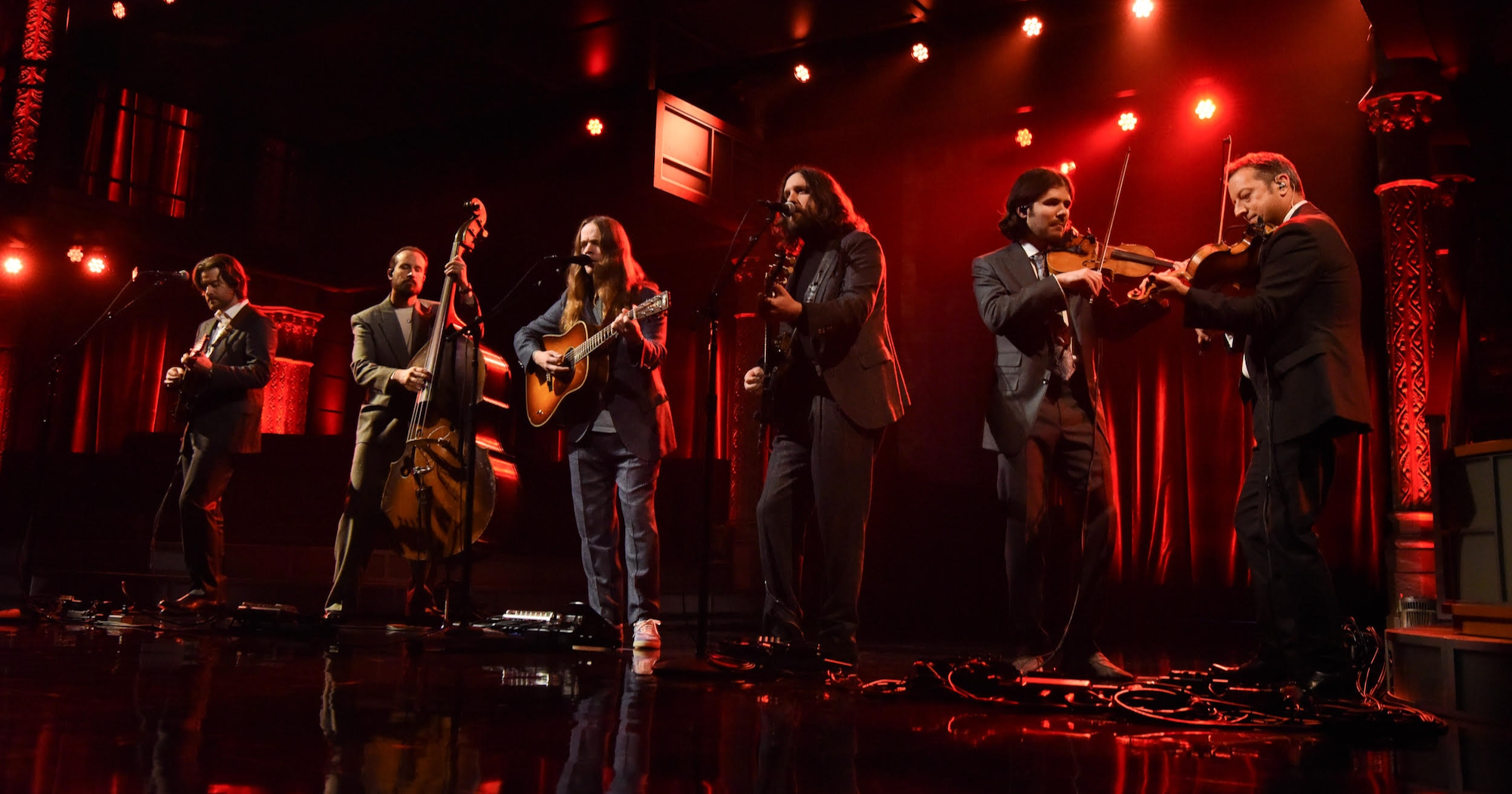
On Thursday, November 20, 2025, Billy Strings and his band returned to The Late Show with Stephen Colbert for another exciting bluegrass performance broadcast over the television airwaves. Strings’ 2024 album, Highway Prayers, was recently announced as a GRAMMY nominee for the Best Bluegrass Album award at the upcoming 2026 GRAMMY Awards, which will be held in early February. On Colbert, the group performed “Leaning on a Travelin’ Song” off the project to celebrate the LP’s nomination. (Watch above.) It’s Strings’ eighth GRAMMY nomination since 2020 and, if he wins in 2026, will be his third trophy for Best Bluegrass Album.
The band, which includes Jarrod Walker (mandolin), Royal Masat (bass), Billy Failing (banjo), and Alex Hargreaves (fiddle), were joined by fellow Best Bluegrass Album nominee Jason Carter for a twin-fiddle arrangement of “Leaning on a Travelin’ Song.” (Carter is GRAMMY-nominated with Michael Cleveland for their debut duo album, Carter & Cleveland.) Carter guested on the track on Highway Prayers, as well, supplying delicious twin fiddle and reprises his album role on the Colbert stage. The song begins with mournful a cappella three-part vocals and dramatic guitar strums before kicking into time with the lush, burning fiddling of Hargreaves and Carter.
As Nickel Creek’s Sara Watkins put it in a comment on Instagram, “Yes sirs!! Nothing like some singin’ twin fiddles on National Television!” We and the many other commenters and viewers on the internet agree. Strings and his cohort sound excellent, offering warm, lively, and crisp, fresh-sounding bluegrass to millions over the television airwaves. The world could always use more twin fiddle, and it certainly always craves more Billy Strings.
We spoke to Billy Strings about Highway Prayers while celebrating the album’s release last fall when he was BGS Artist of the Month. Check out that interview here.
Photo Credit: Scott Kowalchyk for The Late Show with Stephen Colbert.
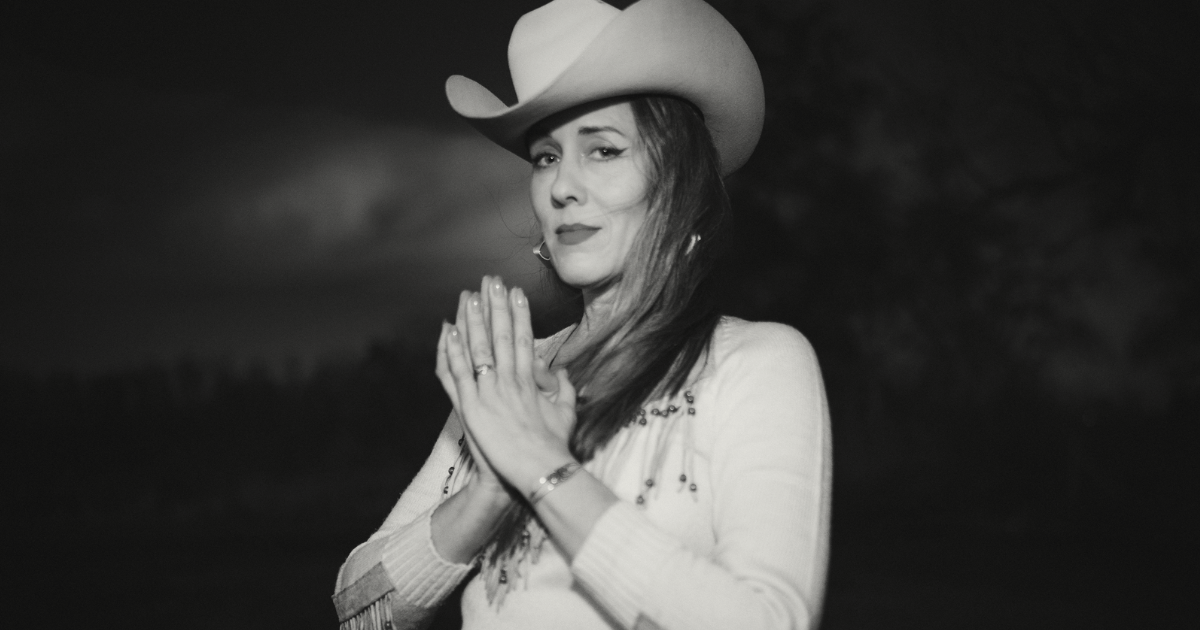
Brennen Leigh says she’s been a goner for country music since she was a teenager. But when it comes to her discography, she hasn’t been gone for long. Don’t You Ever Give Up On Love (released October 3) is the musician’s fourth album in five years, and it continues a creative streak that matches her love of traditional country arrangements with clever, well-crafted songwriting.
Recorded in Dayton, Texas, where Leigh now lives, Don’t You Ever Give Up On Love is a mostly up-tempo collection that should appeal to anyone who loves country from its golden eras. Catching up with Good Country, Leigh talks about the turning point in her love of country, her fondness for bluegrass, and how she really feels about one of Nashville’s most famous phrases.
I was curious about the title track, “Don’t You Ever Give Up On Love.” It’s got such a positive feel. Why did you choose that one to put on the cover of your record?
Brennen Leigh: I love the title of it, for one, and for two, I wrote that with a dear friend named Elijah Ocean. He’s a great writer and a player and we kind of came up through the mud together, I’ll say. He told me, “I just was thinking about you as I was writing it.” And not even about me singing it, but me as a person. He sent me the first verse – and I’m a procrastinator and I won’t read people’s texts and I won’t return phone calls – but he knows I love him, he doesn’t care. That’s how songwriters are. But about a month later, when I finally went and listened to it, I said, “Elijah, I hope you haven’t finished that, because I would love to participate.” He said, “Yeah, of course, that’s why I sent it to you.”
So I finished it. And it’s just two verses. That’s the whole song. I love that thing about songwriting, and specifically country music, where it’s just a quick statement and out. So many of the best songs are just a verse and a chorus, or even just a verse. We wrote it in the midst of recording this album and then we recorded it down in Dayton. And it’s like, well, that’s an obvious choice for the album, because it is so positive. I really like performing it.
It’s encouraging, too. Have you had a good response from the crowd with that song?
Yeah, I’ve had a lot of positive feedback from people. On the surface, it’s a love song and it’s a relationship record, but to me, it’s really more of a “Don’t ever give up on yourself” message. Because people come and go, sadly, in our lives, and for me, it’s more a story of resilience.
I think it’s similar to the song “Dumpster Diving,” where it gets the point across in a pretty cool way. You filmed that video for “Dumpster Diving” at the Sagebrush in Austin, right?
We did, and it was hot! It was like 90 degrees in April or something. We brought one of our favorite videographers, Oceanna, down from Nashville, and I just kind of threw her into this situation in Austin, but she rolled with it. She really has a wonderful eye. And we dressed me up and put me in a dumpster. [Laughs]
Then some of the other videos for this project look like ‘60s Nashville country. I love the vintage eyeglasses and that cool yellow-and-orange shirt in the “You’re Finally Hurting” video.
Those are my real glasses! [Laughs] I really have a prescription in them to drive with. And the thing specifically about the “Tell Me” video was that we wanted to make it look like we were the Nashville A-Team in the ‘60s. We were just going to work, like country business casual or Western business casual. Like, how an Anita Kerr or Chet Atkins would show up to work in kind of fancy dress, but casual. Read their charts, put the song down, and smoke a cigarette. You know, we weren’t smoking, but that’s kind of the idea.
“Tell Me” is a simple title, but that song says a lot. What was on your mind as you wrote it?
I was imagining calling somebody in a sweaty panic, like, “Oh, I heard something, I’ve got this feeling, and I need you to confirm my suspicions.” And not getting the answer that you want, but sort of trying to demand this answer. I love country songs that are one-sided conversations. There are so many good ones throughout history. For some reason, the one that is popping into my head is “I Met a Friend of Yours Today.” You’re feeling like a little bit of a psycho, like you’re losing your mind a little bit, and you confront somebody. That’s the sort of song that that is.
People often say country is “three chords and the truth.” Do you like that phrase?
I do like it, but I think in a way it’s not 100 percent accurate. We’re splitting hairs here, but for me, a lot of my writing is at least semi-fictional. Maybe I’m doing myself a disservice as an artist by saying that. But fans want to believe, and I think the listener wants to believe, that this is my story, and this came from me tossing in desperation on my bed and grabbing my notebook.
Well, you know, I’m a songwriter and it’s my job to make up stories. While this record has some truth on it, some of these stories are just straight made up! That doesn’t mean that there’s not feeling behind them, or that I haven’t experienced something similar, but I’m also a private enough person that I’m not going to just air things of a certain nature for the public. I do have lines that I won’t cross. Now, I’ll say some of these are true, word for word, and some of them are not. But that’s what imagination is for.
I think the song is not for me, it’s for the listener. So, if somebody gleaned something that they feel personally in one of these songs, I love that. And probably, as a Western swing person at heart, I should say we have a few more than three chords. But I do really appreciate and love that sentiment of like, “This is just no BS, I’m gonna sing this.” I mean, I like that saying, and I think at its heart, it’s pretty true.
How old were you when country music kind of sparked your interest?
I grew up hearing it around the house, but I was maybe 14 before I went headlong into it.
Was there a song or an artist that pulled you in?
There was one summer when my brother and I were already budding musicians. We were already playing gigs. He was heavily into Robert Johnson. I had gotten into that stuff, too, and I liked oldies. I liked ‘50s and ‘60s rock and roll and soul music, like Buddy Holly and Bessie Smith, and I liked some show tunes. We got into country one summer, courtesy of our parents’ record collection.
Then we got a free ticket – via donating a canned good to the radio station – to see Dwight Yoakam. I think I was turning 15, and I kind of flipped my lid. It was our county fair in Fargo, North Dakota and it was probably September or August – and it was probably 40 degrees. I stood there for that whole concert and went, “Wow!!” [Laughs] Then one friend gave me a box set of Hank Williams and that was huge. I already had heard him, but that Bear Family box set is like six or eight discs. I dubbed it onto tapes and that’s all I listened to.
Somebody else gave me a Smithsonian Folkways set that had Bill Monroe on it and it had Lucinda Williams on it, because it was more of a folk label. It was like, “Wow, there’s all these tentacles to country music.” And my family was into it, too. So, I was pretty well immersed, except geographically. I wasn’t around any live music, but I was around a lot of good recorded music.
Are you a fan of bluegrass?
Oh, yeah! Very much, and I grew up with it. My favorite guitar player is Norman Blake. I get asked all the time, “When’s your bluegrass record?” I would love to do something. I just need to get the songs together, because the bluegrass community, they’re the best fans in the world. Bluegrass fans are so loyal, and they know what they like and they don’t care what you look like. It’s a great culture and it’s diverse, and that’s a beautiful thing. So, yeah, that’ll happen.
You know, I wish there were two of me and I had double time. I’ve been loving East Nash Grass and Thunder & Rain. I love the Kody Norris Show. They’re so poised and so good. I’ve been feeling the influence to do something with bluegrass again, because it’s been a long time.
We can maybe wrap it up with this. What are you looking forward to the most coming up?
I just got off a three-week album release tour that was great fun. Before that, I was everywhere. [Laughs] So, to be completely honest, I’m looking forward to being home for a bit. But I’m also working on another project that’s even weirder than all the other ones I’ve ever done. I don’t want to say too much about it, but it feels like a spiritually important album for me to do. I’ve also got some songs in the can with my other band, Wonder Women of Country. We have a couple singles we’ve recorded and I think we’re going to be out together some next year, too.
You’re so collaborative and you’re not just off doing your own thing. It’s like a luxury to have such a great, rich community around you.
Well, thank you. And it is a luxury. Honestly that’s how I’ve gotten by and kept it sane, because I know it’s not about me. I know it’s about the art, and the art can be more fun than when you involve others sometime. Also, I’ve noticed a lot of the good things that have happened in my career are because I’ve worked with other people on musical collaborations. It’s just so much stronger together.
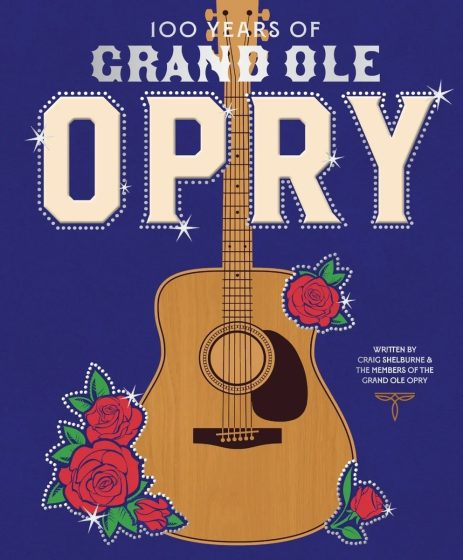
The sheer variety and singularity of the Grand Ole Opry – whether in just one of its shows or in just one of its many eras – would be paralyzing enough, if tasked with telling its complete, unabridged story to a broad audience. The assignment of taking the entire century-long history of the world’s longest running radio show and condensing it between the covers of a book would have to be heart-stopping. How could one ever take such a complex story full of twists, turns – and plenty of the idiosyncrasies found in human beings who make and love country music – put it down in 350+ pages?
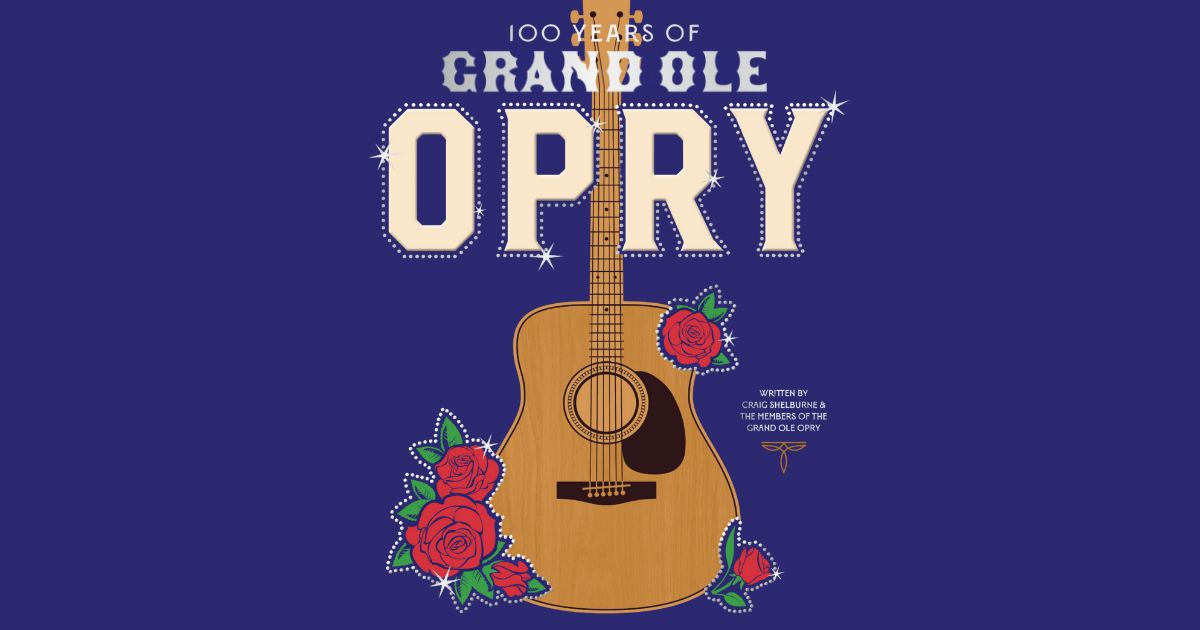
It’s hard to imagine, but that’s exactly what writer Craig Shelburne, historian Brenda Colladay, and a host of Opry members have done with the brand new book, 100 Years of Grand Ole Opry. Shelburne – a BGS contributor and former managing editor for our website – worked with Colladay to penetrate the vast, lush archives of the Grand Ole Opry to posit its history decade by decade, chapter by chapter in the new hefty, coffee-table-ready tome. They completed dozens and dozens of interviews with Opry members, artists, musicians, employees, executives, and broadcasters and, as a result, the history book feels remarkably alive and vibrant – just like the show itself.
The book, released in April of 2025, demonstrates and reiterates time and again that the Grand Ole Opry isn’t a relic – nor has it ever been. It’s a living, breathing, adaptive being that’s enacted by a strong community of stakeholders not only from across the company that owns the brand, Ryman Hospitality, but the music industry as a whole, too. 100 Years of Grand Ole Opry showcases a country and cultural icon not waning or winding down after a century of triumphs (and trials and bumps and scrapes, too). No, instead, this book finds the Opry, beloved by all of us, merely at its next transition point, moving purposefully from the last 100 years to the next 100 years.
We sat down with Craig Shelburne on the phone to chat about the immense undertaking of writing this book, the surprises found and lessons learned along the way, and what makes the Grand Ole Opry so special, all for our Artist of the Month celebration of Opry 100.
This is such a gargantuan task, staring down the entire 100-year history of the Opry and being asked to turn it into a book. Where do you even begin? How did you take that first bite? What did it feel like to you to enter this process of creating a book?
Craig Shelburne: Yeah, 100 years is a massive undertaking and we – my co-writer Brenda Colladay and I – spent some time at Frothy Monkey in East Nashville sketching out some of the important Opry milestones in those eras when things really seemed to be shifting. As we did that, we realized that we could probably have each chapter be roughly a decade. At one point, we realized we wanted to have some breakout sections, but we didn’t know how to do that.
I wanted the book to be very readable, [without] a whole bunch of sidebars. So instead of designing sidebars, we have these pages that are interludes in between the decades, in between the chapters. You have the history of bluegrass, or the ways that the Opry has been on television, or what the Opry looked like when it went into the 21st century and a new era of technology. [That] was our chance to expand on one particular theme, rather than try to weave [those themes] into the narrative or take away from the narrative. It could be distracting if you dropped [a sidebar] into the manuscript every time the Opry was on television. Those interludes also gave us a chance to use some of these magnificent color photos [from the Opry archives] just because they’re beautiful photos. We didn’t have to necessarily set them up within the text. …
It was intimidating for a while until one night, late at night, I was writing and I realized that the main character of the story is the Opry itself. There are so many people that have passed across the stage, from Roy Acuff and Minnie Pearl up to the modern era. I wanted the artists and the cast members to be represented well, but really the main figure throughout this 100 years is the show itself. And it’s a show. It’s not a stage, it’s not a building. It’s a show.
Once I could get my head around the fact that this was the leading character in a 100-year story, the narrative started to fall into place. That was a breakthrough for me.
I also love how that format parallels the structure of the show itself. That you have segments, sets of artists performing, you have commercials and announcers and little games with sponsors, and you have talk-back sessions from artists. When you go to a show, it’s not just one thing from start to finish, it’s a bunch of different things – and there are obviously lots of interludes built in. So there’s something about the structure of the book that parallels the show in a nice way.
And telling the story of how the segmented portions of the Opry came to be was one of my favorite parts of writing the book. Basically, the Opry hired their music librarian – who was a very organized individual – to try to reign in some of the chaos from when the Opry was at what is now the Belcourt Theater [in the 1930s]. I think back then it was called the Hillsboro Theater. His name was Vito Pellettieri and he realized if he could wrangle three or four artists within the same timeframe, then these performers would now have a rough idea of when they needed to be standing side stage, instead of disappearing as musicians might have been wont to do.
Then of course, being the Opry, owned by an insurance company, the business people sensed an opportunity there and thought, “Let’s sell those segments to sponsors and advertisers.” And so that’s how the 30-minute segments came to be. Whether it was dog food or condensed milk or tobacco, if there was a sponsor for each segment, the Opry made more money that way, too. The Opry has been pretty creative in how it positions itself and how it can take advantage of good ideas quickly.
I know you spoke to dozens of artists, stakeholders, musicians, executives, broadcasters, and announcers. You and your co-writer Brenda Colladay must have done hours and hours of interviews for this book. Can you tell us a bit about that process and who you most enjoyed or were most excited to sit down with?
On one hand, the general narrative crafting you’re talking about sounds like really grueling work, but on the other hand, it sounds like doing that through these interviews was probably the most fun part of this process.
I would say the interviews were the most fun. I agree with you on that. I have the Opry show schedule as a shortcut on my smartphone now, because I would always try to figure out who was playing and who we needed to talk to.
As it should be, we started our interview series with the one and only Jeannie Seely. We felt like she needed to be first, and she deserved that. She only got about halfway through what she wanted to say [during our first meeting], so we set up another interview. It was wonderful to talk to her. Both of those afternoons were great, because with Jeannie, she’ll tell you the way it actually was. Some of it was very positive and some of it was critical, but it’s her perspective. And she was there! I didn’t get to see the Opry in the ‘60s or ‘70s, and she did. Getting to hear it directly from her was fantastic. She was also hilarious, when you got to sit down and joke around with her a little bit.
It was really important to talk to people firsthand and to go deeper than just, “Hey, what do you think of the Opry? Why is it important?” So the Opry opened up its entire archive to me, which was videos, books, newspaper clippings – pretty much anything that I wanted to look at, read, or watch. When I knew I had an interview coming up, I would spend several hours reading clippings and reading stories in order to come up with questions specific to their Opry experience. Rather than just, “Tell me about when you moved to Nashville. Tell me about this. Tell me about that.” Those aren’t questions, those are just prompts. When the people came in to talk to us, we were usually in pretty much a supply closet for camera equipment. It was a really small room. We didn’t have any cameras. We wanted everybody to be casual and comfortable and not worry about makeup and hair.
Then it became a very comfortable conversation. We started every interview with the same question, which was, “What is going through your mind in those moments before the curtain comes up?” Everybody had a different answer. That put them in the frame of mind of talking about the Opry, I think, more than talking about themselves. They went pretty deep, back in their memories, of how they discovered the Opry and what it’s meant to them. Quite a few of those artists went to the Opry as kids. So then they started talking about their family and what the Opry meant to their family, there were a lot of emotions.
I think some of those artists expected it to be like a 10 or 15 minute interview to grab that [sound] bite that says, “I sure do love the Opry.” But we went really deep and spent more than an hour talking with some of these artists. You don’t get to put everything like that into the book, but suddenly now we have an oral history from these modern contemporary performers that will live forever. When somebody writes about the Opry in 50 years from now, they have it straight from the artists, [speaking] about their path to that stage.
I think that’s one of the best accomplishments of this book, that it tells the story in such a rich, full way that isn’t just the mythology and isn’t just the good parts and the glitzy parts. It sounds like part of how you were able to accomplish that is by having these interviews set up in such a way that you could build trust with folks, so they didn’t feel like they were just giving you that marketing sound bite. They could really tell you those full stories.
I think a lot of that came from the Opry headquarters. They wanted us to tell [it] the way it happened. A woman named Jenn Tressler, she handles a lot of the talent requests there and I think she primed most of these artists about what the interviews would be like and what the goal was. Just [so they would] be comfortable and [know] no topic is off limits. Artists were asked some pretty sensitive questions sometimes about the relationship with the entertainment industry in general, including the Opry and the artists rose to the occasion.
We wanted to tell the actual story. I’ve often felt that nobody wants to read a book where everybody’s happy and there’s no conflict. There’s conflict in this one.
From your interviews or from writing this book, what was a story or two about the Opry that stuck out to you or surprised you? Or, that brought you to learning something new that maybe you wouldn’t have tripped over into if you hadn’t done this book? Is there a story or two that stand out to you?
The first one would be just how young everybody was when they got involved with the Opry. George D. Hay was a young man; Harry Stone, who was one of the early program directors, had just turned 30 when he took on that role. The artists were [in their] 20s and 30s. You had a very young Bill Monroe, Roy Acuff, Minnie Pearl, coming on the stage and changing the game for country music.
Sometimes the Opry is perceived as the elder statesman of country music – and that’s true and they’ll always have a place there, it’s wonderful. But a lot of the shake-ups at the Opry and a lot of the progress that’s been made was because of these young, innovative perspectives. That happened over and over. I think without that viewpoint from people who were younger, the Opry would’ve struggled through the last hundred years. There would’ve been times somebody might’ve said, “I want it to stay the same way, ’cause this is how we’ve always done it.” It’s never the right answer, to do it just because it’s always been done that way. I think that was pretty fascinating to me.
The other thing I didn’t realize was that it was not until I believe 1978 that the Opry was ever aired on television. It was a PBS special. If you wanted to see the Opry, you had to come to Nashville for the first 53 years. After that one night on the PBS special, it didn’t happen again until the following year. Being able to see the Opry, you had to come to Nashville, and I think executives at that time feared that if you put it on television, people would stay away from the show and they wouldn’t sell tickets anymore. But time has proven just the opposite. People saw it on television, how exciting it was and they felt like they needed to be there, myself included. I watched it growing up in Nebraska as a teenager and I just was fascinated by it. By that time, of course, it was on TNN.
I watched it many a Saturday night with my grandparents and I didn’t always know who those legendary figures were that were sharing the stage with Alan Jackson or Clint Black or Alison Krauss. But because of the Opry, I got a country music education as a teenager before I moved to Nashville in 1994. By the time I got here, I feel like I had a leg up on other people who wanted to write about country music that were my age.
You’re pointing out another fact that we often forget about country music, hillbilly music, these traditions that made these musics. It’s that all of them are constantly changing and growing, morphing and adapting to the future – and responding to the present.
Like, the reason the Opry became what it is today was because of technology, because of the “Air Castle of the South.” Because of radio, because there wasn’t a lot of competition on the literal bandwidth, and because the tower was so tall it could reach so many people all across the country. To think that, nowadays, when we view “tradition” in 2025, we think that means not changing something.
Wrong!
But the Opry has always been changing and always been using cutting edge technology to do that. And country wouldn’t exist without technology, without the railroad, without industrialization, without radio, without recording technology becoming portable and handheld.
Oh, absolutely. Well said. It has to change, and the Opry does figure out a way to reach new listeners and engage with people that have never been there. Obviously, when you go to the Grand Ole Opry House for a show now, the emcee will say, “Who’s never been to the Opry before?” And a lot of hands go up. They’re constantly marketing the show – as they should be. They want people to have a seat in the Ryman or the Opry House to see how special the world’s longest running radio show is. I give them a lot of credit for always trying to reach new people and not just looking for what they’ve done already in the past. They take a lot of pride in the fact that no two shows have ever been the same.
I was just listening the other night [on the radio] and I was able to catch the Opry debut of Grupo Frontera. I thought it was such a perfect example of what you’re talking about, that a Spanish-speaking, Spanish first language group that makes country. Of course, it’s Mexican folk and Tejano and Latin folk and all these other things as well – but it’s certainly country & western. [They were] making their debut and you could hear the building shaking through the radio. It felt like one of those iconic ovations we hear about from the old days, with everybody stamping their feet in the balcony of the Ryman. The Opry is still doing that. And not only are they doing it, but this year for Opry 100, they’re doing it over and over again where they’re having these shows with these special moments, reaching new audiences.
And it was a brilliant move, because those fans now have a general idea of what the Grand Ole Opry is, how it is performed, and they got to hear some music from people they maybe hadn’t heard of. I know Frank Ray was on the show that night, he might’ve gained some fans from those who came to see Grupo Frontera. It’s a win for everybody when an artist of that caliber plays the Opry.
There was a great moment, after doing some digging, where I found the full performance of when Porter Wagoner invited James Brown to come play the Opry. It was like a 20-minute segment – there are some things online where you hear bits and pieces of it. But the Opry archive had it from start to finish, so I just sat there and listened to it. There was some screaming and hollering going on that night, too. It was exhilarating to listen to it. Then I found an oral history from Porter Wagoner – I quoted it in the book – that said, when you bring someone of world-renowned stature to the Opry, it benefits the Opry. You want the Opry to be in the news, because it draws attention to the show.
We’ve already talked about Jeannie Seely, but I wrote my concluding question with her in mind, as well. She passed in August of this year and when she did she had performed on the Opry almost 5,400 times. (The number is 5,390-something.) That longevity is incredible. So thinking about longevity, we’re standing here at the milestone of a hundred years of the Grand Ole Opry, looking at potentially another 100 years of the Grand Ole Opry coming up.
Do you see this modern era of the Opry as its golden age? Do you think the golden age of the show is yet to come? And who are you seeing that’s just getting their start “in the circle” nowadays that is gonna be like Jeannie Seely in a few decades, thousands of appearances into their Opry career?
Yeah [the future] looks strong to me, too. Something I never put into context until I wrote the book was that in the 1990s the Opry lost Roy Acuff, Minnie Pearl, Grandpa Jones, Bill Monroe, and Dottie West. And you just think, “How do you recover from that?” They did. They figured out a way to press on.
There were definitely growing pains and bumps, but some of those figures that they picked out in the early 2000s have become advocates for the Opry, champions for the Opry. The ‘90s country stars that I love, like Lorrie Morgan, Pam Tillis, Vince Gill, Steve Wariner, and Marty Stuart are still out there. They still play the Opry – and they’re the elder statesmen now. I do think the cast members that joined in the ‘90s and 2000s are gonna become a foundation for the show.
I think you’ll be seeing Trisha Yearwood out there quite a bit as she settles into the “twilight years” of her career. I sense that she will be out there singing alongside Kathy Mattea and Suzy Bogguss. I think Opry is in really good hands with the young women that they’ve invited to be part of the cast. More than once, without any prompting, artists like Carly Pearce and Lauren Alaina have said they feel the responsibility to be here. And I think Lauren Alaina is very likely to inherit the comic routines of Jeannie Seely – she’s pretty much already there. She had us rolling in laughter in her interviews. She’s got the natural timing of a comedian, but she’s got hit songs, too.
I think the Opry is in really good shape right now. They’ve done a good job of connecting to a younger audience that wants to play it. It’s a career goal now for a lot of inspiring artists. I think when I moved here in the ‘90s it was seen as living history and you had to have some history to get on that stage. But now you just have to have a good story, some musical talent, and an ability to connect with an audience. That’s easier said than done, but if you can have those three things, the Opry will take a chance.
I think they’ve found a recipe for success. They set themselves up to succeed. There are times in the music industry where it seems like things are crumbling or those pillars are not as strong as they used to be. But I think right now the Opry is as strong as it’s ever been. I don’t see it going anywhere anytime soon.
Lead image courtesy of Ryman Hospitality Properties.
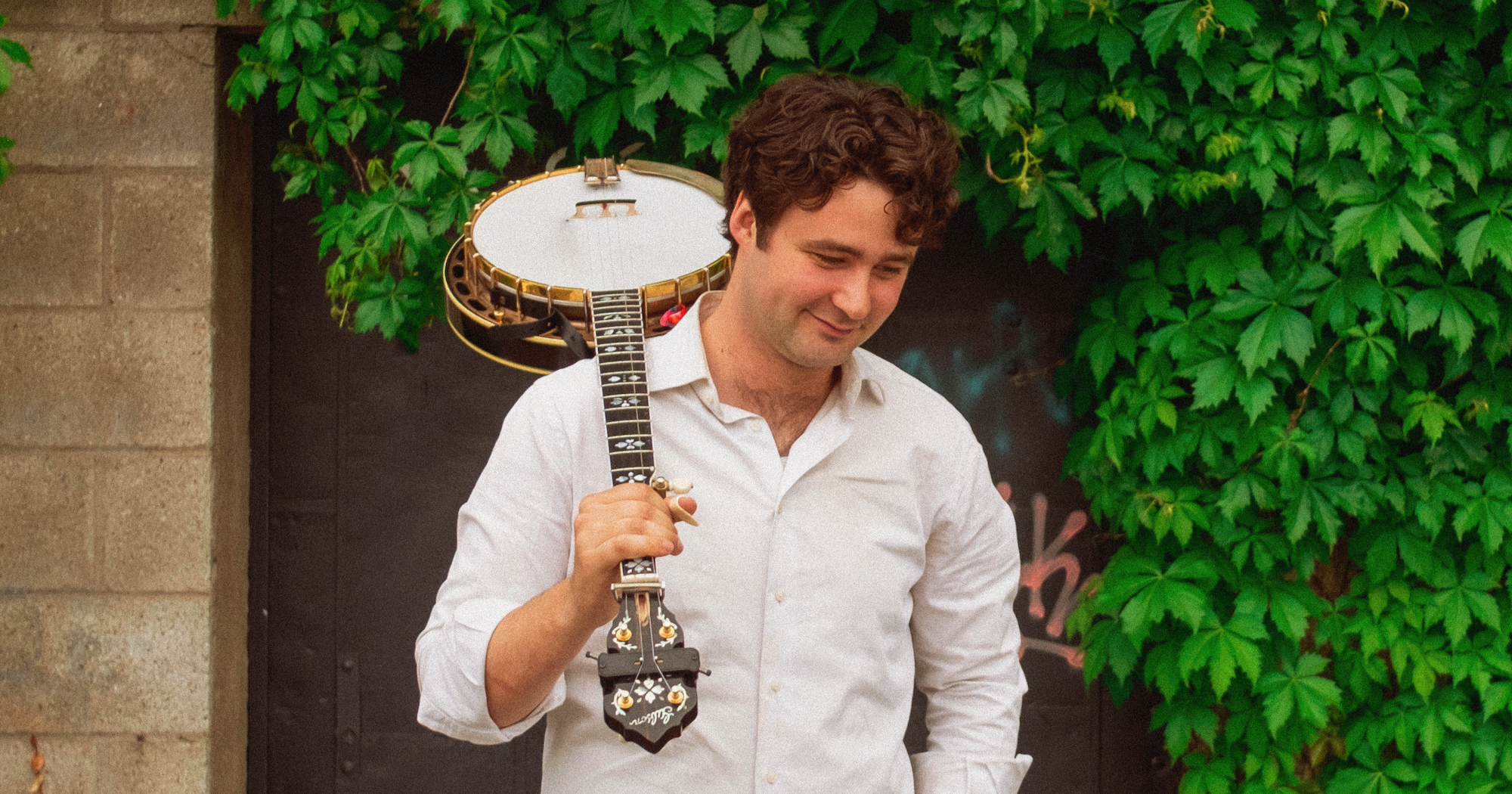
Artist:Frank Evans Hometown: Toronto, Ontario, Canada Latest Album: Debut album is in the works
Which artist has influenced you the most – and how?
It’s always difficult to narrow that question down to one artist, but if it has to be one, I would say Alan O’Bryant of the Nashville Bluegrass Band. His ability to sing and play banjo at the same time, with so much dynamic intensity, still gives me chills whenever I hear it. When I was just starting out on the banjo, my teacher, Chris Coole, gave me a compilation CD of all these different banjo styles. “When I Get Where I’m Goin'” was on there and I must have listened to it on repeat ten thousand times. That band has really influenced how I arrange songs for a full bluegrass outfit. It was a huge honor to have Alan come into the studio to produce The Slocan Ramblers’ latest album. He was such a joy to work with.
What’s your favorite memory from being on stage?
All the guys in The Slocan Ramblers used to joke that if you’re a banjo player, you’re never safe from another banjo player appearing out of nowhere and asking you a very specific question about your instrument. I guarantee I’ve been that person.
A funny example of that happened back in 2015 when we were at MerleFest. They’d asked a few bands to do some early-morning TV interviews to help promote the festival. It was 5 a.m. and the gates were all closed. We had just gone live with the first interview when a guy popped out from behind a bush about 50 yards away and shouted, “Is that a Presto tailpiece on your Style 11?” How he knew what kind of banjo I was playing from that far away, I have no idea – but it was almost impossible to keep my composure after that.
What other art forms – literature, film, dance, painting, etc. – inform your music?
I’ve always been a fan of graphic novels and comic art. Growing up in Toronto, I was lucky to be surrounded by a healthy community of artists and great comic shops – especially my favorite, The Beguiling. Chester Brown, Harvey Pekar, and R. Crumb have always been some of my favorite artists.
Back in eighth grade, we had a year-long culminating project that could be on any topic and I decided to write a graphic novel about Edden Hammons, the old-time fiddler from West Virginia. It was a lot of fun and a ton of work, but I got to sell a few copies at The Beguiling, which was pretty cool. The last time this hobby came up was when The Slocan Ramblers asked me to come up with a cover for their Queen City Jubilee album. It’s a little out there, but I like how it turned out.
Does pineapple really belong on pizza?
Being born in Ontario — the birthplace of the Hawaiian pizza — I firmly believe that pineapple belongs on pizza. It actually took me a long time to come around to it, but a fresh Hawaiian slice from the right place is hard to beat. One of my favourites was a little spot called 2 for 1 Pizza in Kensington Market, Toronto. They’d pull a regular-sized slice from the oven, cut it in half, and hand you “two for one.”
What would a perfect day as an artist and creator look like to you?
I’ve really enjoyed the days I’ve spent in the studio since moving to Nashville. I feel very lucky to have been invited to be part of a number of projects here, ranging from experimental old-time records to working on the soundtrack for King of the Hill. If you’ve ever been unsure about what to practice, spending a day in the studio among amazing musicians will fix that. Recording has a way of putting everything under a microscope, which can sometimes feel crippling, but it’s also extremely rewarding when you notice tangible improvement from the last session.
I’ve also started working on my own solo record, which has been both rewarding and humbling. I plan to start releasing some of the tracks next year.
Ready for another batch of new songs and videos? Great! ‘Cause You Gotta Hear This.
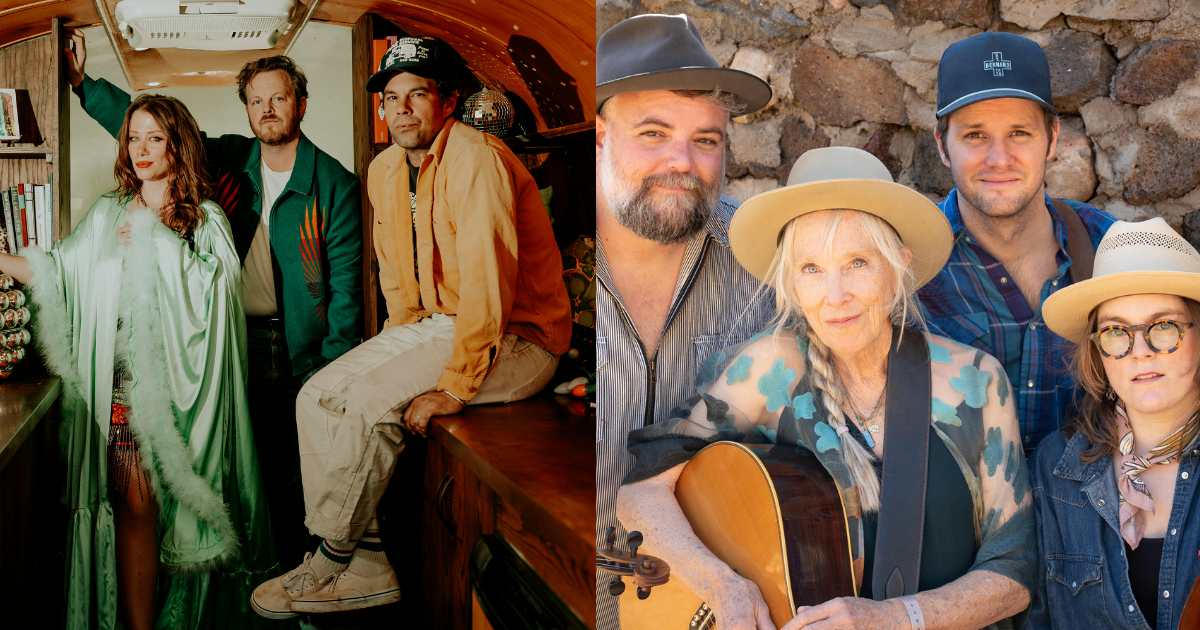
It’s a roundup full of friendship and interpersonal connections this week. First up, Americana rockers Chamomile & Whiskey bring a new video for “Friends Are Falling Out.” In the vein of classic, folky alt-rock sounds, the track and video explore the fragility of relationships with a deep groove, distortion, and fiddle and banjo. But keep scrolling, as you’ll also find singer-songwriter Kim Moberg’s testament to the all-too-rare true friend with her new track, “I’ll Always Be A Friend.” The jangly modern folk number was born from Moberg’s desire to communicate to her old and new friends how important they are to her. The paeans to friendship continue with a new video from old-time/folk duo Paper Wings, who debuted their new single “Fumblin” earlier this week. It’s a double-guitar track about awkwardness, eagerness, and how we all stumble through life and through relationships.
There’s still more to enjoy elsewhere in our collection, too. Bluegrass icon Laurie Lewis has announced her upcoming 2026 album, O California! with a new video for “Look Down That Lonesome Road.” Lewis took the mournful ballad, wrote new verses, and set the lyric to a jammy, driving bluegrass tune that drips with her signature sounds. Plus, fiddler Andy Leftwich calls on his pal, guitarist Cody Kilby, to trade licks on a new original fiddle tune he’s just released called “Old Hickory.” You might never guess he first wrote the melody on guitar.
You won’t want to miss “The Doldrums” from New York Americana string band The Mammals. They’ve just dropped an animated video for the track from their recent project, Touch Grass, Vol. 1. The song might just be a cure for its own namesake; it’s a perfect selection to take with us into the often doldrums-heavy winter months. Finally, don’t miss a brand new single from iconic folk trio The Lone Bellow. Today they announced their upcoming record, which will release in February 2026 and was recorded in Muscle Shoals, Alabama. “You Were Living” finds the band with an expansive, resplendent sound that certainly sounds like The Lone Bellow, but steeped in the Shoals.
There’s plenty to find and enjoy in our conglomeration of new music. Scroll on for more. You Gotta Hear This!
Chamomile & Whiskey, “Friends Are Falling Out”
Artist:Chamomile & Whiskey Hometown: Charlottesville, Virginia Song: “Friends Are Falling Out” Release Date: November 19, 2025
In Their Words: “I wrote the line ‘that broken heart might just catch a break’ after meeting up with a friend of mine. She had regaled me with her latest story in a long line of bad relationships. I live in Charlottesville, which isn’t very big, and we’ve got plenty of small-town drama. The song kind of came out of some of that and the fragility of friendships. I finished writing it just before we celebrated 1,000 shows as a band.
“In preparation for the show, Marie and I did an in-studio performance at WNRN, a station we’ve long had a good relationship with. I thought it would be fun to try a brand new song. A few days later they told me that NPR Music had shared the video as their live song of the day. We felt like it must have some juice and we decided to record it ASAP. We all liked the mysterious, Southern Gothic aesthetic that we felt in the studio. Critter added the banjo on top of fiddles before laying down a glass slide part on the guitar. Marie and I grew up in Nelson County and that first Old Crow Medicine Show record, O.C.M.S., was huge in our circles and reminds me of driving around those beautiful backroads as a teenager. To have Critter put his signature sound on one of our songs was special and felt full circle.” – Koda Kerl
Track Credits: Koda Kerl – Guitar, lead vocals, songwriter Marie Borgman – Fiddle, backing vocals Bobby St. Ours – Fiddle, backing vocals Brian Gregory – Bass, backing vocals Critter Fuqua – Banjo, slide guitar, backing vocals Jesse Fiske – Baritone guitar, backing vocals Drew Kimball – Electric guitar Stuart Gunter – Drums
Video Credits: Directed by Johnny Saint Ours and Jenny Carhartt. Filmed at Dürty Nelly’s Pub
Andy Leftwich, “Old Hickory”
Artist:Andy Leftwich Hometown: Carthage, Tennessee Song: “Old Hickory” Release Date: November 21, 2025 Label: Mountain Home Music Company
In Their Words: “Every once in a while, you sit down with your instrument, a melody just falls out, and within a few minutes you have a fun, catchy melody! This is exactly what happened to me with this song. Even though it’s a fiddle tune, I actually wrote it on my guitar. After a few small changes to the melody, I finally landed on something that flowed well under the fingers – not only for the fiddle, but the lead guitar part as well. I was honored to have my good friend, Cody Kilby, take the lead guitar on this one! It’s so much fun to play and was named after ‘Old Hickory,’ a town near where I live.” – Andy Leftwich
Track Credits: Andy Leftwich – Fiddle, mandolin Byron House – Upright bass Cody Kilby – Acoustic guitar Matt Menefee – Banjo
Laurie Lewis, “Look Down That Lonesome Road”
Artist:Laurie Lewis Hometown: Berkeley, California Song: “Look Down That Lonesome Road” Album:O California! Release Date: November 21, 2026 (single/video); February 13, 2026 (album)
In Their Words: “I have been playing around with this song since I heard Gaither Carlton sing it decades ago as a mournful ballad. I love it that way, but it seemed to me that sometimes parting needn’t be so sad, if you know you get to meet again (maybe at a festival next year). I started writing verses for it and when I got up to about eight or ten, I decided it was time to get serious. I love the loose arc of the story and the way the band responds to it. We winnowed down the verses to the essentials, leaving the others for the extended jam version.” – Laurie Lewis
Track Credits: Laurie Lewis – Lead vocals, acoustic guitar Brandon Godman – Fiddle George Guthrie – Banjo, harmony vocal Hasee Ciaccio – Double bass, harmony vocal
Video Credits: Produced and directed by Bria Light. Recorded at the Strawberry Music Festival in Grass Valley, CA.
The Lone Bellow, “You Were Leaving”
Artist:The Lone Bellow Hometown: Nashville, Tennessee Song: “You Were Leaving” Album:What a Time to Be Alive Release Date: November 21, 2025 (single); February 13, 2026 (album) Label: Thirty Tigers
In Their Words: “‘You Were Leaving’ is a song about the fleeting, transient nature of life. For us, the song is deeply personal, but it also feels universal. It invites people to find their own story in it, what it means to say goodbye, and what stays with us long after the leaving.” – The Lone Bellow
The Mammals, “The Doldrums”
Artist:The Mammals Hometown: West Hurley, New York Song: “The Doldrums” Album:Touch Grass, Vol 1 Release Date: November 1, 2025 Label: Humble Abode Music
In Their Words: “I wrote ‘The Doldrums’ during a stretch of isolation when joy felt out of reach and time moved so strangely. ‘Why do the good times go so fast? Why do the doldrums linger and last?’ We tend to remember the hardest part of the day when we lay down to sleep, but this song reminds me to appreciate every amazing moment. I’m grateful this recording sounds triumphant and energized – like an anthem to shake out of a low vibration and shine a bright light into the future. For all who listen, may music and friendship help carry you through the next windless day. The Mammals have your back.” – Ruth Ungar
Track Credits: Ruth Ungar – Vocals, guitar, songwriter Mike Merenda – Guitars, banjo, vocals Brandon Morrison – Bass, vocals Will Bryant – Keys, vocals Tim Morrison – Drums
Video Credits: Animated and Directed by Anne Beal.
Kim Moberg, “I’ll Always Be A Friend”
Artist:Kim Moberg Hometown: Cape Cod, Massachusetts, the traditional territory of the Indigenous Nauset and Wampanoag Nations Song: “I’ll Always Be A Friend” Album:All That Really Matters Release Date: January 30, 2026 (album)
In Their Words: “As an artist who grew up listening to the amazing singer-songwriters of the 1970s, Carole King’s ‘You’ve Got A Friend’ is embedded in my heart. I love that her song and its message about connection, support, and loyalty have endured all of these many years. I was a military ‘brat’ who attended 10 different schools in 12 years, so growing up I never lived in one place long enough to be part of a friend group or a clique. I was always ‘the new kid’ who was never included. The rare true friend meant more than gold to me.
“‘I’ll Always Be A Friend’ was born from my desire to share how important the friends in my life have been and how equally important the new friends I get to connect with through performing are to me. In these uncertain and trying times, community and friendship are paramount. (And Libra loyalty lives strong in this song!)” – Kim Moberg
Track Credits: Kim Moberg – Lead vocal, acoustic guitar Jon Evans – Bass, tenor guitar, drums, percussion, Fender Rhodes, harmony vocals
In Their Words: “‘Fumblin’ is about friendship and watching one another stumble and fumble through the joys and trials of life. We wrote this one together in the backyard in a sort of trance state, describing scenes from our lives. It’s definitely a romanticization of awkwardness and our eagerness to connect as a species despite inevitable failure at times. We played double guitars on this one which we’ve been having fun doing lately. It’s the first track in the world of ours that I recorded and mixed in my studio in Nashville, so that’s quite exciting as well. We have a lot more music coming from this space, so look out!” – Wila Frank
Video Credits: Filmed by Sami Braman, edited by Wila Frank.
Photo Credit: The Lone Bellow by Debbie Ewing; Laurie Lewis and band by Dawn Kish.
In the late summer of 2022, Courtney Hartman realized that the songs she had written for a new album were not the songs she needed to release. “I had found out I was pregnant a few months earlier, [and already] had a batch of material I was working on for a new record. I felt this quiet urging to set all of that aside and give my attention to what was happening in our life and in my body,” she says.
She discarded everything and began writing her third album, With You, a personal journey through motherhood set to music.
“What was happening in our life” refers to a tumultuous string of events that saw Hartman and her husband, John, through the best and worst of times. Best because the couple were expecting their first child, rebuilding their house in Eau Claire, Wisconsin, and Hartman was on tour; worst because her husband fell off a ladder, could not work for months, lost two jobs, she was dropped by her booking agent, and they totaled their car.
The cumulative effect left the couple in need emotionally, physically, and financially. They soon found themselves uplifted by their community – their immediate one and her music community at large. The experience left Hartman deeply grateful and dedicated to giving back even more than she received.
In September of that year, Hartman began writing “in earnest” the songs that became With You. She and her husband welcomed their daughter in February 2023 – more best of times followed by worst of times as Hartman struggled with postpartum depression.
“At the end of [2023] I had all this material and realized I wanted to invite in other voices and stories and perspectives, specifically those of other mothers,” she says.
Once again, she drew on her community, calling on a fellowship of songwriter mothers – Sarah Siskind, Dawn Landes, Ana Egge, Tift Merritt, Kristin Andreassen, and Emily Frantz Marlin of Watchhouse – to help take her deeply personal new songs to an even higher level.
“I spent another few months, December [2023] to February [2024], writing mostly over Zoom, finishing the material with those other writers,” she says. With You was recorded in June and July 2024, at The Hive studio in Eau Claire, with Hartman producing and Brian Joseph as co-producer and engineer.
As one might expect from Hartman, there are plenty of guitars on the album – her Lawrence Smart Archtop, Bourgeois Parlor, PreWar (modeled after a Gibson J-45), Bischoff Dreadnought, Martin 00, and a Telecaster – but if you’re looking for the lightning flatpicking work that makes her a bluegrass force to reckon with, you’ll be best served on YouTube. With You tells a story that calls for understated guitars as a palette for its songs.
“Things weren’t all bright and shiny in that season,” she says, “but the impetus to write and pay attention helped me pay attention to some of those lighter moments. Not all the songs on With You are about everything being light, because that’s just not how it is. But there was this extra attention to some of those details that do help buoy your spirit when things are a little more challenging.”
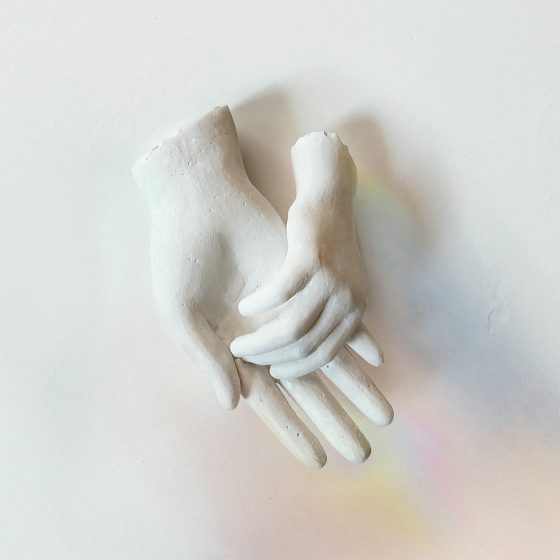
Courtney Hartman’s ‘With You’ album cover art, created by Claire Lindwall.
Completing the journey is With You’s striking cover art. The work of Hartman’s close friend Claire Lindwall captures the music’s delicate intimacy. “Claire is primarily a watercolor artist and illustrator,” says Hartman. “A special part of creating an album, for me, is giving the music to someone who then translates it into a visual piece of art. Every time, it’s surprising and expansive in a new way.”
Lindwall cast her own hand and that of her daughter’s, and positioned the casts so that one holds the other. “We experimented with drawings around it, then having just a splash of watercolor behind the piece,” says Hartman. “That’s all it needed.”
With this album now making its full debut, how do you feel about sharing so much vulnerability?
Courtney Hartman: The processing has happened in phases. I think it started just by saying yes to writing the material. There was an accepting of, “I’m writing about this thing that feels more vulnerable and more naked than anything I’ve written about before.” Bringing those songs to other writers, to collaborators, there was another level of vulnerability there.
A year ago I brought all of this material to my greater community and asked for support, because at that point I needed help putting the album out. Now, to give it to the rest of my community and listeners in the world, there’s a level of vulnerability, but I feel mostly excited. It feels like, “We made it.”
You’ve explained in other interviews that you had to use funding meant for the songs that came before these in order to get back on your feet. Needing financial assistance is also a vulnerable place and one that often brings publicly imposed shame and guilt. How did you process it?
You’re bringing up something that my husband and I have been talking about a lot, just with the news cycle and trying to get an understanding of what we can do for folks in our community. And having had small tastes of that in our life, because I know what we’ve experienced is so small compared to what so many people live through and are currently living through.
An important [word] that you touched on is shame – the shame of needing help; of not feeling like you can do it on your own or you can stand on your own two feet; of needing help for basic things like groceries. I think maybe accepting help and accepting care expands our capacity to feel compassion and to be able to then care for others.
In a podcast for Acoustic Guitar, you used the phrase “the intimacy of sound.” Could you talk more about what that means in the songwriting and guitar playing?
What I hear when you reflect that phrase back to me is the sound of the skin of your finger on the guitar string, or the sound of hands against a percussive instrument. When we went into the studio, I told the friends that were with me there on the first day, “Just as a guiding directive, whenever we imagine a sound that we want to create, let’s see if we can find something natural to create it with.”
Everyone took it in their own way, some on their instruments. Sean Carey was heavily involved on the record and he took that more literally in a lot of the percussion work. He found a nest outside when he was wandering around and that became the percussion on a track. Or even just the sound of skin on skin being a sound that we used as well; bringing in and magnifying some of these quieter sounds and allowing that to be a part of the soundscape [was part of the intimacy of sound].
Did you select the guitars around the songs or did some of the songs develop around your guitars?
Sometimes you think you know what a song wants before going into the studio and then you sit behind a mic and you’re like, “This isn’t serving it quite right.” And sometimes that experimentation takes a little longer than you think it will. Or sometimes you sit down with a first instinct and it’s totally right. That’s part of the reason it’s fun to have a good array of instruments in the studio.
Is the guitar as much a part of expressing your feelings as the lyrics?
It is. I think part of that comes from how long it’s been an instrument that feels like a voice to me. Songwriting came around the same time. I was about 12 when I started writing songs. Singing feels like something I still have so much exploration and learning to do.
How did working with other mothers, and their lived experiences, bring understanding to what you were going through?
What I was given [was the] shared experience and the acknowledgement of, “This is really hard. It’s really beautiful, but it’s also really challenging.”
So much of the caregiving that happens [as a mother], especially in that first year … so much of it is invisible. Maybe an aspect of that applies to all sorts of giving care – that it’s invisible other than to the one giving the care and the one receiving the care. When you feel invisible, it can also make you feel isolated and that can really feed into some of the struggles. A lot of folks have postpartum [depression] and societally we’re not set up to honor and support that season very well at all. It’s something I care a lot about, both from experiences with my family, but also as I’ve delved into work as a birth doula.
When you say, “Societally we’re not set up to honor and support that season very well at all,” what do we need to do?
We need to honor and uphold the importance of rest and nutrition and preparation. Parents are prepared for “Here’s what birth might look like,” but after that six-week checkup [traditional care usually ends]. Postpartum extends far longer than that.
A lot of [postpartum] mental health struggles won’t show up until maybe nine months or a year after a child is born. Better supporting [people postpartum] that would be the first thing I can think of. We live pretty isolated lives, as families in our insular homes, and so we’re not set up to receive support very well.
Or ask for it.
Yes, totally, [we need to be] preparing [people] to know that this is a time to accept and receive care. Preparing your heart for that is such a big piece of it, to know that we, as your village and your community, want to care for you in this time.
You’ve spoken openly about postpartum depression. What was that period of time like for you?
Moments of real happiness, but also moments of hitting my head against the wall … when I was struggling. [It was] hard to admit to myself and then to speak that [struggle] out loud to anybody. It wasn’t until afterwards that I could say, “That was hard.”
All depression is misunderstood and will often make people in your circle run away.
Let’s go back to your community, and the community of mothers, and how they lifted you.
I felt so cared for by our community in a way that was deeply humbling and in a way that somehow prepared me to do some of the caregiving that was going to be required of me. I was receiving so much love and support and meals and folks showing up. That kind of care is life-changing. It changes the way we see the world and our community around us.
My daughter was about nine months old or so when I started reaching out to other mothers, asking if they would collaborate on some songwriting. Having some tether creatively helped pull me through that season. It helped weave together the woman I was prior to having a child with the woman I was in that new space. … Sometimes it feels like … you almost can’t remember who you were before.
I was really afraid of [losing parts of myself]. I was afraid I wouldn’t create music again. There’s all these fears, irrational or not, that show up. Creating and being able to have these conversations that normalize what you’re experiencing. Having women who are [a] few years ahead of me be like, “It might be extra-challenging now, but it doesn’t stay that way forever.”
It’s almost 2026 and society still misunderstands and stigmatizes mental health, certainly PPD, and even some aspects of pre- and postpartum healthcare. Why are we uncomfortable talking about things that are so natural and important to discuss? Are we making progress or going backward?
I hope we’re making progress. It was a lot easier for me to ask, “Why don’t we talk about these things?” when I wasn’t part of the “we.” As soon as it was also part of my story to talk about and share, [I had to come] to terms with my own hesitancy. Why do I not want to talk about something as normal as pregnancy and motherhood in my songs? Why do I feel like if I put this music out, it will be discredited and potentially ignored, even though it may speak to so much of the population? …
I still don’t have an answer. Maybe it’s because there’s so many generations of women having to hide those things for fear of losing wages, or jobs, or discrimination, whatever it might be. For everybody’s sake, there’s so much we have to learn from mothers’ voices, and I hope we’re beginning to really listen.
On a podcast, The Other 22 Hours, you reflected on the period after Della Mae and the realization, at the time, that “Music was not a healing thing.” What role does music now play in your healing and mental health?
It has become healing again. Years ago, I was dealing with physical pain in my hands. That was magnified by touring all the time, being on the road so much, and the strain on my body. So I was speaking about it in a physical way. [Music] has become a lot more than just physically healing [for me]. I think this album exemplifies that.
You have worked with so many people. Who is your wish-list artist or artists?
Oh my gosh. The first person that came to mind – and maybe it’s because I’ve been listening to her record all week – I would love to play music in the same room as Brandi Carlile. She gives all of herself and it’s so good.
We had a listening party [for With You] and as I was listening to the album for the first time with a whole group of friends and collaborators, what I hear on it is my friends and heroes, which is such a joy. There are so many folks on this album that I look up to so much and who have been dream collaborators. So, in that way, a lot of it has been a dream list fulfilled.
When Joshua Ray Walker received a cancer diagnosis in early 2024, he thought he only had months to live. This led him to contemplate not only his life and what he’s done with it, but his possessions and what would happen to them if he were to perish.
His latest album, Stuff, is the culmination of that pondering. Across 10 songs, the Dallas-based singer breathes life into a variety of inanimate objects ranging from a brick to the scent of perfume on sheets, bowling balls striving for perfect games, and even Barbie dolls eyeing everlasting love. Despite its deeply personal nature, the record leans into universal themes of grief and mourning since we’re all ultimately destined to suffer the same fate.
“We’ve all had someone in our lives die,” he says. “That’s why love and death are go-to topics for most songwriters – they’re two of our most universal concepts.”
With his future uncertain, Walker threw the rule book out for recording Stuff. Teaming up with longtime producer John Pedigo inside his home studio, the duo laid down everything on their own in a week – even instruments like the synth and melodica that Walker had never tinkered with before. The result is the “Sexy After Dark” singer’s most personal, dark, experimental, and hopeful album all rolled into one.
“Growing up everyone wanted to make records in their bedroom, but I never knew anyone with nice enough equipment to actually do it,” says Walker, who’s now stacked up a year’s worth of clean CT scans. “In junior high and high school I remember recording vocals in my friend’s laundry room or sneaking into a friend’s house whose mom had a piano and recording parts on it on the fly. There’s just always been something really fun about trying to make something sound the way we wanted from a sound people wouldn’t expect.”
Ahead of Stuff’s release, Walker spoke with Good Country from inside his van stacked to the gills with merch ahead of a run supporting Molly Tuttle. Our conversation covered his health struggles, the healing nature of writing these songs, experimenting in the studio, and more.
How’d the idea for this album come about?
Joshua Ray Walker: Before I even got sick I had thought about writing a song or album from the perspective of inanimate objects. Once I fell ill, I made a plan with my best friend and producer, John Pedigo, to write a song every week so that at the end of my year [at] home doing treatment I could have 50 new songs. When you’re planning to write that much, it’s easier if you pick a theme.
At the time, I was also starting to do estate planning for myself due to the nature of my advanced cancer. Even though I had multiple family members die where I was the main person who had to deal with their belongings after they passed, it was an eye-opening experience. So somewhere between the inanimate object song idea and thinking about where all my personal belongings would go if I died, I came up with the idea to write a whole album of songs from the perspective of stuff that was left over at an estate sale.
Subconsciously I was feeling like a burden to people. Anytime you’re sick, it’s a lot of effort that your loved ones have to put in, and even though they reassure you that you’re not a burden, it doesn’t stop you from thinking that way. [On this album] I was trying to think about that while projecting onto these items how leftover stuff can be a burden even after its owner is dead and gone.
Were any of the songs on Stuff more difficult to bring to life than others?
There were around 30 different ideas for the actual items, so the ones that got made were the ones that came the quickest since we were in a time crunch to make the record. If it was difficult it just didn’t end up getting written.
That being said, there was definitely some unexpected stuff. Like on “Brick” – I wasn’t necessarily expecting a brick to make it on the record, but it actually ended up being one of my favorites. I’ve always been very nostalgic for physical items as well, which only made it easier to connect with these objects. It made for a fun challenge writing from these perspectives and trying to get people to relate to it or have some emotional response. I’m known for being able to write from a character’s perspective and have been fascinated by how fictional characters can conjure up real emotions. It made me wonder if I could take things a step further and get people to feel something for these fictional objects.
Well, I’d say mission accomplished!
In addition to the concept and lyrical depth of these songs I also adore the sonic direction as well, which pulls from your previous material at times while navigating into pop, electronic, and other territory elsewhere. What motivated you to take that approach?
Because of where I was at with my health when we were conceptualizing the record, I really just wanted to explore some sounds that I’ve always loved and been influenced by, but didn’t make sense for the projects I worked on previously. Since I wasn’t sure how many more records I would be able to make I wanted to have as few limitations on what I was making as possible. If you put yourself in a box it forces you to be pretty creative. The rules were that John and I had to play all the instruments and we could only use ones we already had inside his home studio. It forced us to stretch a bit from our normal production style and was a lot of fun to make. We did it all in a week, locking ourselves in the studio for as many as 14 hours a day to get it all done.
Were there any instruments you played that you hadn’t tinkered with much before, if at all?
I played a lot of the keys, which I’d never really done before.I’d never played synths or melodica before, either. There were also just a lot of weird ambient sounds on the record. At one point we even had a sponge tucked under the bridge of a guitar as I was playing the strings with drumsticks, giving it a dulcimer-esque sound. We also utilized paper clips on ukulele strings to make them rattle, the pull string from a lamp on a cymbal so it would sizzle and random cups and pillows as percussion on the song “Stuff” – we wanted to turn non-instruments into instruments.
One of the songs I love most on Stuff is “Barbie,” a song about playing with dollhouses that contains some of the best one-liners on the whole record like, “…Do you want to play house with me and practice making babies?” Tell me about how it came to be?
Like you said, it’s a song about kids playing house put onto the characters of Barbie and G.I. Joe. It’s Barbie looking out her window and seeing G.I. Joe get played with in the sandbox and pining for this love connection. For one reason or another, G.I. Joe makes it into the house one day and they have the chance to run off in her Jeep and canoodle. When you’re a kid you don’t even really know what that means, but if you watch kids play with dolls at some point they’re going to make them kiss. They know people fall in love, but they don’t understand how or why – they’re just acting out what they see their parents doing. Such a big part of childhood is trying to figure out what all that means, so I thought it’d be funny to have Barbie trying to work that out for herself in this song.
Sounds like it has the potential to lead to a lot of conversations about the birds and the bees between parents and their kids. [Laughs]
Another song I want to ask you about is “Bowling Ball,” which features by far your lowest vocal register on the entire album. Tell me about your decision with that along with what made you want to bring a bowling ball of all things to life?
I don’t bowl much anymore, but used to be in a league when I was a kid. There’s a local bowling alley in my neighborhood called Jupiter Lanes that I’ve been very nostalgic for since I had a birthday party there and won a Johnny Bravo bowling ball when I was eight. [John Pedigo] is also a good bowler who grew up with a mom who worked at a bowling alley. We both know more about bowling than the average person, which allowed us to write a song from the ball’s perspective pretty well.
It’s got the best beginning, middle, and end to any song on the record, because it’s one short story about someone getting ready to finally bowl a perfect game. Only a frame away they throw too hard and pick up a chip or crack in the ball return, leading to a “put me in coach” or Rudy moment. They’re contemplating whether to walk over to the pro shop to get a new ball to finish out their first perfect game or continue on with ole faithful that got you there.
In terms of the vocal delivery, that’s pitch-shifted down with a Whammy pedal – I simply don’t have that kind of range on my own. That’s also something you’re just not allowed to do on a typical country record, which is another rule I guess we broke.
I gotta know more about this Johnny Bravo bowling ball!
I got it from that bowling league I mentioned, which was sponsored by Cartoon Network. At the end of the league, if you placed in the top three you were able to pick out a custom ball with whatever Cartoon Network character you wanted on it. The color was called galaxy, which is this purple kind of nebula-like color with Johnny Bravo etched into the side. It was awesome!
I remember choosing between him and Dexter, but I wound up choosing Johnny because of my dad, who would jokingly do an impression of Johnny Bravo’s voice that I loved. I also just related to that character and had a blonde pompadour haircut of my own.
You mentioned the song being about the journey to bowling a perfect game. Have you ever tossed one?
Definitely not. [Laughs] The best I’ve ever done is in the 220 range. I peaked at bowling when I was around nine years old. If I were to go bowling right now I would not do well at all.
With how much you’ve stepped outside your comfort zone on Tropicana and Stuff, what direction do you see taking next, musically?
I have a lot of projects, but only thought I’d have a couple years to make them, so I focused on jotting all of them down since I tend to see records as entire concepts, not just collections of songs. I have an autobiographical project I’m wrapping up now, but I also have a western trilogy on my mind along with a bluegrass record and even something a bit heavier.
Hopefully I’ll get to keep making records and all of these projects will come to light. Even though my music sounds different record to record they’re all still country in my mind. I’m always trying to make country music, whether it sounds like that or not.
What has Stuff and everything you’ve experienced the last couple of years taught you about yourself?
I hold onto things a lot less now than I used to. But in general, I just want to spend more time doing things I like with people that I like. This health scare has taught me to make music however I feel like making it and to do it as much as I can while I still can.
2025 was a standout year for roots music books. In a time of political upheaval and uncertainty, authors like Craig Shelburne & Brenda Colladay and Alisa Murphy brought us deep into the history of music institutions that have weathered generations of American ups and downs: the Grand Ole Opry and The Station Inn. Reading about these places is a reminder that culture is often a better litmus test than news cycles, when it comes to what a country stands for and where its soul can be found.
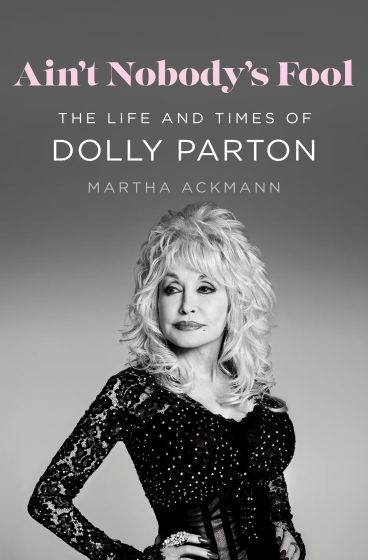
Biographies of Dolly Parton and Alice Gerrard (the latter written by Gerrard herself) highlight women who defied the odds to become iconic voices in country and old-time. Parton first debuted on the Opry at the age of 13 and her influence on American culture has spanned from highlighting women in the workplace with “9 to 5” to donating a million dollars for medical research to accelerate the creation of the Moderna COVID vaccine. Gerrard, while less of a household name, is considered one of the last of the old guard in traditional music; even if you haven’t heard of her, you’ve probably still been touched by her work. These books detail the unlikelihood of these women’s successes given the time and place of their work and both good reminders of changing gender norms that we now take for granted.
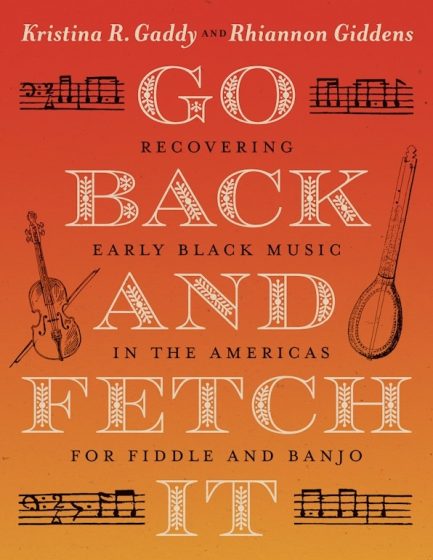
Two books on Black American fiddle and banjo music continue the quest to restore African music’s and African American musicians’ rightful place in the history of the American string band tradition. With additional archival and notation resources, these books offer not only scholarship, but an opportunity for dedicated pickers to add to their repertoire, too.
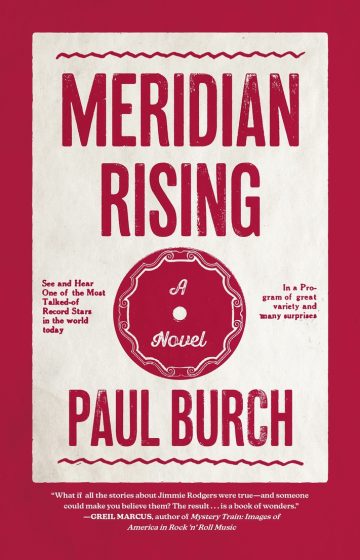
And finally, roots musicians Paul Burch and Charlie Parr channel their creative writing into novels Meridian Rising and Five, respectively, the former a fictionalized story of Jimmie Rodgers and the latter a wild meditation on the wanderings of a troubadour.
From coffee table aesthetics to novels and new tunes, 2025’s roots music books have you covered! See a list of our favorites and a collection of “honorable mentions” below.
Ain’t Nobody’s Fool: The Life and Times of Dolly Parton by Martha Ackmann
Martha Ackmann is known for illuminating the stories of women who rise above societal expectations, so it’s only appropriate that she should tell the story of Dolly Parton’s ascent to success. With new interviews and documents, the book focuses on the price Parton paid for her early fame, penalized and criticized by those who saw it as a betrayal of her roots. Despite legal battles and struggles with her mental health, Parton persevered and went on to use her affluence to help her East Tennessee home, through the development of Dollywood, her charitable work, and the creation of The Imagination Library. Find it here.
Go Back and Fetch It: Recovering Early Black Music in the Americas for Fiddle and Banjo by Kristina R Gaddy and Rhiannon Giddens
Appropriate for pickers and scholars alike, this collection of early Black Atlantic music is equal parts songbook and history lesson. Nineteen carefully transcribed tunes sourced from 1687 to the 1860s are presented in standard notation and banjo tablature, and accompanied by rich historical essays detailing their origins, cultural context, and evolution over time and place. This collection is another important step in the recovery of Black history of the American musical canon – and specifically the fiddle and banjo canon – from two lauded experts on the subject. Find it here.
Meridian Rising by Paul Burch
Meridian Rising, the debut novel from Paul Burch, fictionalizes the life of country star Jimmie Rodgers and was released this fall to rave reviews. As the Chattanooga Free Press says, “Burch must have done a great deal of research to deliver a story that feels so authentic, but research alone doesn’t make a good novel. The writing is what matters, and Burch skillfully renders a large cast of narrators throughout Meridian Rising, especially its main subject, whose witty, sometimes barbed voice is vivid and memorable.” Find it here.
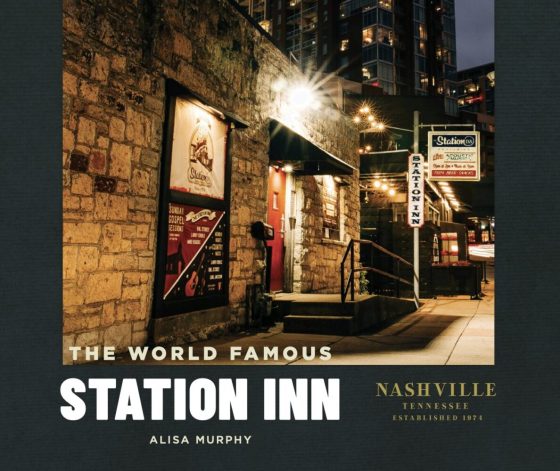
The World Famous Station Inn by Alisa M Murphy
The passing of JT Gray in 2021 marked the end of an era for The Station Inn. Although the venue continues its bluegrass legacy with new management, it has been long past time to commemorate this (as its name rightly points out) world-famous venue with a book of stories and photos. Author Alisa M Murphy spent two years immersing herself in the culture of the venue and conducting interviews to put together her coffee-table book, The World Famous Station Inn.Find it here.
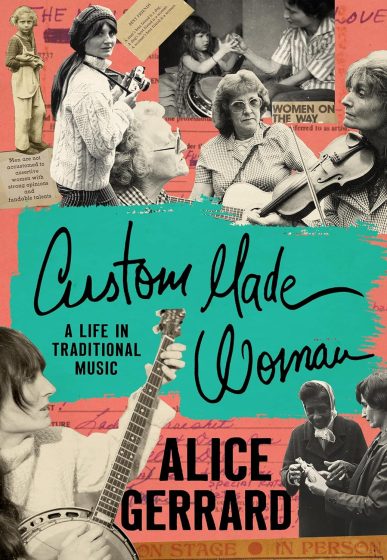
Custom Made Woman: A Life in Traditional Music by Alice Gerrard
This new memoir from one of our national treasures, Alice Gerrard, features over 100 of her personal photographs along with stories from pivotal times and an exceptional life in traditional music. Gerrard’s career saw her crossing paths with Bob Dylan, Doc Watson, Elizabeth Cotten, and many more. Recent rereleases of Gerrard’s trailblazing collaboration albums with Hazel Dickens have been put out by Rounder Records and Smithsonian Folkways, and they can be listened to in an entirely new context thanks to this book. Find it here.
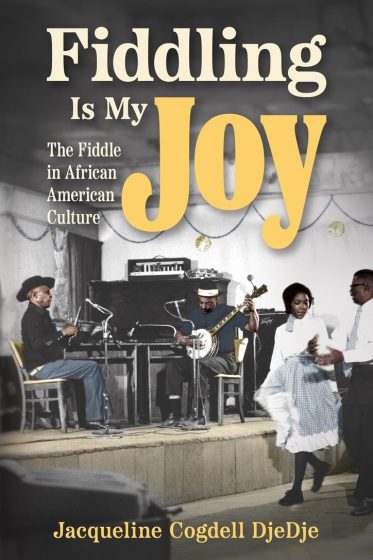
Fiddling is My Joy: The Fiddle In African American Culture by Jacqueline Cogdell DjeDje
UCLA Ethnomusicologist Jacqueline C. DjeDje investigates the fiddle in Black America, not only helping restore it to its rightful position in history, but also exploring why fiddle in African American culture disappeared from the mainstream story of the instrument in the first place. In addition to exploring geographic differences in African American fiddling traditions, DjeDje’s scholarship looks at fiddle traditions in West African and how their specific characteristics made their way to both Black and white American fiddlers. The book is accompanied by an online eScholarship Companion with primary source documents and audiovisual examples of music discussed in the text. Find it here.
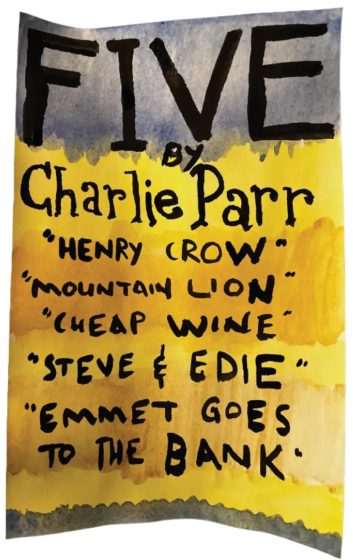
Five by Charlie Parr
The second collection of short fiction from beloved Minnesota musician Charlie Parr is not for lovers of a tight plot and succinct characters. Parr’s five stories are, according to his own description, “more like sad anecdotes told to you at the end of an impossibly long dinner party by the drunken spouse of someone that you barely know while you’re easing your way to the door, having already put your coat on around the time that these stories began.”
But, if you’re a fan of Parr and his 18 (!!!) studio albums, this collection is a must. Find it here.
100 Years of Grand Ole Opry by Brenda Colladay & Craig Shelburne
Music journalist Craig Shelburne worked tirelessly with Opry historian Brenda Colladay – and dozens of artist, announcer, and Opry employee interviewees – to tell the story of the world’s longest-running live radio show over a century. The Grand Ole Opry is certainly the main character. This book is perfect for collectors and readers alike, since it’s full of illustrations and photographs. It’s separated into chapters by time periods, following the twists and turns of the Opry’s youth, adolescence, and adulthood. From Lester Flatt to the 2010 flood, the book is as deep as it is wide. An entertaining resource for country fans who like to get the full story. Find it here.
Other Reads From Our Inbox
Solomon Simon Dog Man Jack by Cindy Baucom, illustrated by Grace van’t Hof (Self-published)
When you’re walking around the halls of IBMA’s business conference, World of Bluegrass, for good reasons and bad, everything ends up sounding the same. The Earls of Leicester sound just like Flatt & Scruggs. (Thank goodness.) Every single version of “Carolina in the Pines” sounds exactly like Special Consensus. (As they should.) There are pickers born in the 2000s who sound like carbon copies of Frank Wakefield or Don Reno or Wilma Lee Cooper.
But, in the well-intentioned and admirable adoration, emulation, and preservation a homogeneity results. It’s why IBMA jams sound different from SPBGMA jams; why Californian trad bluegrass sounds completely distinct from say, Virginian trad bluegrass these days. Where music happens, ideas cross-pollinate, and we all start sounding like each other, little bit by little bit. It’s a blessing and a curse.
That’s why it’s all the more remarkable when, out of that bluegrass milieu, a singular voice or perspective or sound can pierce through the sameness and rise above. Especially when that sound utilizes exactly the same tools and is built on a similar respect for emulation and preservation. At this year’s IBMA World of Bluegrass in Chattanooga, Red Camel Collective were one such band.
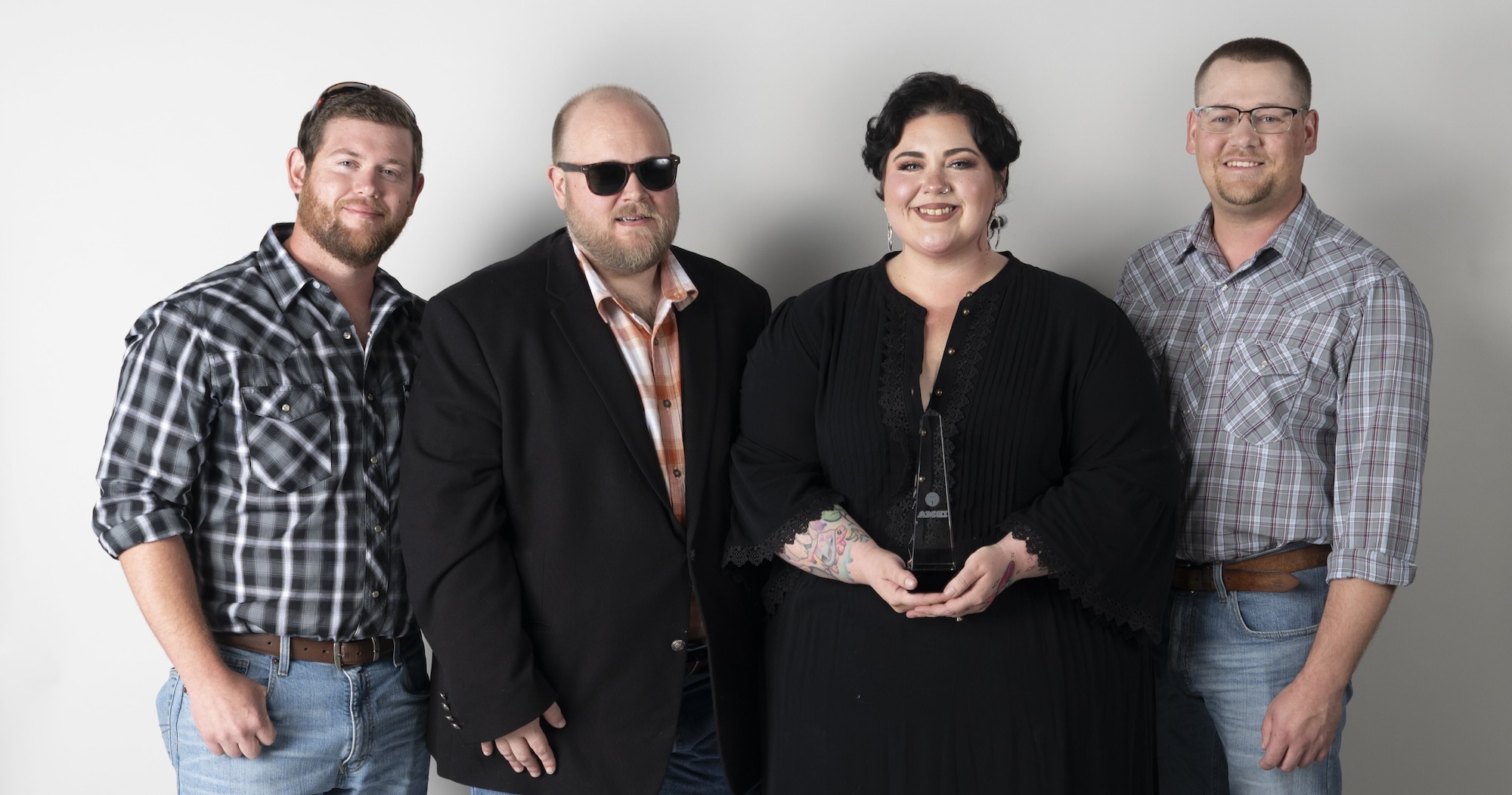
The group – made up of Heather Berry Mabe, Tony Mabe, Curt Love, and Johnathan Dillon – took home the IBMA Award for New Artist of the Year, their first such trophy. While it’s true they’ve only been a band for a few years (they came together first as Junior Sisk’s backing band and he has since encouraged them to take on work, make music, and record albums of their own), each of the Collective’s members are lifelong veterans of the bluegrass scene.
Perhaps that’s why they do sound like themselves and no one else. They know well by now the intricate little details that add up to a unique sonic brand. It’s intuition. They’re able to follow each other and each song wherever they may lead, landing in sometimes surprising or unexpected places. But still, the bones of this band and of their 2025 debut self-titled album are “just” bluegrass. Straight up and down. When you listen, though – or have the pleasure of chatting with any member of Red Camel Collective, like we did speaking to Heather Berry Mabe by phone – you’ll quickly realize this group has much more going on than the same ol’ same ol’.
Y’all sound like bluegrass, straight up and down, but you also sound like yourselves. Your sound has so much personality. You can tell that you’re holding up tradition, but also you’re trying to sound like your own band, your own group. How do you think that you’ve done that? How have you accomplished having a sound that feels within tradition, but also is something that’s all your own?
Heather Berry Mabe: First of all, thank you so much. That is a huge compliment, especially in today’s time. When I was growing up playing – I’ll soon be 38 years old – it was before YouTube and all of that. So I learned from my family members, I learned from my grandpa and my great-grandpa, and then also from the music that I was listening to at the time. Which was everything from ‘90s country to traditional bluegrass. To me, there was no box. I just loved music and it was just about getting as much of it as I could.
I think what influenced me and my husband, as far as having our own sound, I don’t think it was something that we set out to do [intentionally]. Like, “Hey, we’ve got to find a way to sound like ourselves.” I just think that happened organically. And I’m very thankful, because he’s such a recognizable picker, Tony Mabe. My husband is such a recognizable banjo player. You can hear the influences, but he totally sounds like himself. And his singing is the same way.
And, Johnathan, our mandolin player, he has so many influences, too, but he sounds like Johnathan. Nobody else sounds quite like him. I love that. I think on his part, it’s not focusing on trying to sound like anybody, but playing what you love and inspires you.
It’s not really uncommon for backing bands of bluegrass stars to have their own brand, their own shows, their own followings. I’m thinking about Quicksilver becoming their own band more than once or the New South becoming their own band once J.D. Crowe retired. Or how The Infamous Stringdusters got their start.
So could you tell us a little bit about how your relationship with Junior started as a band? And he just announced his eventual retirement at the end of 2027, as well. I’m wondering how y’all are thinking about what the next couple of years mean for you as a group. Is this your chance to springboard into having a full calendar of solo shows by 2028? Is that too far out to be thinking about?
Playing with Junior, I’ll answer that part first. Johnathan Dillon has been there with Junior since he was 18 years old and he is now 31 – or he’ll be 31 in January. So he’s been there for years and years. I’m not exactly sure how those two got hooked up, I can’t exactly remember the story. But for me and Tony, Junior called me in 2018 to sing a duet with him on an album that he was working on. The song is called “Backwards And Forwards.” I was so tickled when he called out of the blue, especially because I knew this is the first song that Junior Sisk & Rambler’s Choice had ever done with a woman. There’s never been a woman on anything [of theirs before]. So I felt really honored to get to be the first one.
A few months later, he called and said that he needed some help. He asked if Tony and I both would be interested in coming to work with him. Again, I was really tickled to get to be the first woman to play with Junior. We were just so thankful to have the work. It was at a time when my husband Tony was losing his vision. And the rest is history!
It was actually Junior’s idea [for us to be our own band], because there are songs that I’ve written and songs that we love, like I was saying, that really sing to us and speak to us and inspire us. We would sit around and jam on those and they don’t exactly fit Junior’s style. It’s two different styles there. But Junior suggested to us that we cut an album so that we would have something to sell at these venues, something to play on the radio, and all of that. He said, “I think it would be really good for you guys to do that.” So we did. Man, you can imagine our amazement at how much this has blown up! When it started as a side venture.
What are you feeling as you stare down a couple more seasons with Junior, but then his eventual retirement? What’s in the cards for Red Camel Collective? Are you looking ahead already?
We’re doing our best. It’s super hard to plan very far ahead. Lord, sometimes it’s hard for me to plan next week. [Laughs] I’ll be honest with you, most of the time I feel like I’m riding by the seat of my pants, as they say. But we are looking to the future and trying to secure bookings for ourselves so that Red Camel can continue on when Junior retires. And Junior, when he says “retire,” I’m sure that he’ll still keep making records and things like that. He’s using the word “retire” here, but he’s not gonna go away completely, because music is in his blood! It’s just like all of us, we’ll never [stop making music.]
We have plans to go as far with Red Camel as we possibly can. Man, if Johnathan Dillon and Curt Love will have me and Tony – I’m sure he feels the same way – if they’ll have us for the rest of forever, we’ll stay with them for the rest of forever! [Laughs] We love making music together. And we are working on a new album right now. As much as I loved the first one, this next one, it’s just beautiful to see the growth. It’s got several songs that I wrote. Of course, we’ve released one single, “In the Mexican Sun,” and it’s getting played on SiriusXM and a lot of bluegrass DJs are playing that one for us. We’ve got a music video that goes along with that, too.
I’m glad you bring up the single, I feel like it’s the perfect sunny, summer vacation song for moving through fall into winter. It reminds me of Jimmy Webb and the way he writes songs and it also reminded me of Dale Ann Bradley’s “Somewhere South of Crazy.” Can you tell us about the story of the single, because I know from the premiere we did that the songwriter has quite the bluegrass pedigree too…
Yeah, absolutely. We reached out to our buddy Malcolm Pulley, who is a banjo player extraordinaire and incredible bluegrass songwriter. He wrote “In the Gravel Yard” for Blue Highway. He wrote “How Many Roads,” several folks have recorded – Tina Adair, Michelle Nixon, and the list goes on. But he’s just such a good writer, so we reached out to him to ask if he had any songs. [We were] expecting traditional bluegrass, something along that line. I had no idea that he had ever written anything like this.
I believe this is right, he was playing with a jazz quintet at the time – I forget the name of the quintet. They had a [woman] lead singer who was so good. Anyway, he sent me this song that was written I guess in the early to mid ‘90s. The way they recorded it together, it sounded like a Hispanic song, I don’t know if you call it a rumba beat or whatever. It was most certainly not bluegrass! But I loved it, man. I loved the melody and the way that lady sang. It was so good.
I thought, “Man, this is just begging for banjo.” I could hear, instead of the four-quarter time that they were doing, like to halftime it and put a bluegrass spin on it. I thought, “This will really work.” I worked on a little demo of it and sent it over to Johnathan and he was like, “Wow, you’re right. I think that is really cool.”
Let’s talk about the IBMA Award you just won. It’s funny to me – and I think it’s funny to everybody – how every year in the New Artist of the Year category at IBMA barely any of the artists are new!
[Laughs] It is like that, ain’t it?
You just made the point, you’ve only been a band for two years. Your debut album just came out in February of this year. So you guys are new in so many ways, but you’re all also lifelong musicians, veterans. Tell me about what it meant to y’all to step on stage and receive that trophy, because these are peer-voted awards. And yeah, maybe you aren’t new, maybe you’ve been doing this for decades, but this is also a “moment” y’all are having as a band.
It’s so hard, because there are so many emotions. Tony and I, we’ve been married for 20 years and we’ve both, even before that, we’ve just been doing this our whole lives. This is all we’ve ever wanted to do is make music. I know and he knows that’s why the good Lord put us here. We know that it’s our purpose in life and it’s our story. As I look around and compare, I see these young people making such great strides and hitting so many marks so early in their careers. Tony and I, while we had some success, throughout the years for some reason we could just never get that momentum going.
When you’re a person who battles anxiety and crippling self-doubt, those types of things can really eat at you. [They] make you question, “Am I capable of this?” I will tell you the truth. I just said earlier, I’m 38 years old. I have never in my life grown in confidence the way that I have in the last two years. Putting together this album, writing these songs, working through the production process, putting ourselves out there as something brand new.
[Getting the award] felt like a confirmation. It felt like, “Yes. This is where you’re supposed to be.” At the end of the day, an award is a glass thing. It’s just a thing. Awards are not what matters, because there are so many incredible artists and musicians who will never be recognized in that way. Does that take away from their value? Absolutely not! On the other hand, it just felt surreal and it felt like a big kiss on the forehead from the good Lord above to me.
As a band, we were just all blown away. We were not expecting it. I know everybody says that, but this is absolutely the truth. [Laughs] In a category with Jason Carter, Bronwyn Keith-Hynes, AJ Lee [& Blue Summit], and Wyatt Ellis and all. Man, we absolutely were completely surprised and blown away – and just extremely grateful, because there are folks who work so hard for years and never get that sort of acknowledgement.
I wanna talk about the new album as well, which came out in February. It’s your self-titled debut. Like what we’ve already talked about, it combines traditionalism as well as contemporary sounds. It’s forward-looking.
But what I noticed first is how live it sounds, warm and inviting – like you’re in the room with y’all. It’s really crisp and it’s really clean, but it also sounds like real music. It doesn’t sound like it came out of a can of bluegrass cheese whiz.
[Laughs] I love it.
Can you tell me a little bit about how you guys accomplished that sound?
For Red Camel Collective, this was our first experience recording together. It was so different from recording with Junior, because the songs and the arrangements are different. I don’t know that we went in with any expectations except to do the very best job that we could. I think those were basically our only expectations.
As far as the sound, we record live. We track live and then we go back and fix and edit. I wish I could answer your question better! … Music is all about feel. Aaron Ramsey said one time, “It’s all about feel, it’s not a science project.” I think that you can strive so hard for perfection that you suck all the soul and all of the life right out of it. There has to be a balance between what we perceive as perfection and the feel and the groove of the music. Because all of the best albums, the ones that I love the most, were all created before autotune! And there are notes in there that would probably end up being tuned today. But they sure didn’t bother me. ‘Cause it’s all about the feel and the vibe.
I’m thankful to work with musicians who recognize that. While they want it to be right, more than anything they want it to have a good groove. We don’t want anything to interrupt that groove, ’cause that’s what makes people wanna get up and dance.
Speaking of sonics, I love how your voice sounds on the record, too. Could you talk a little bit about your vocal process and maybe your inspirations – or who you looked up to as you were developing your own voice as an instrument? I also can’t help but notice you have two vocal powerhouses guesting on the album, Suzanne Cox and Sharon White.
They’re heroes of mine!
Who are the inspirations and heroes that you feel have been infused into your own voice? Or maybe you’ve just done it all yourself?
Lord, no! Uh-uh, absolutely not. [Laughs] The first one that I have to list is Dolly Parton, because she was my earliest influence when I was just a little girl. The first song that I ever sang anywhere was in my grandpa’s church. I sang “Coat of Many Colors” and she was just my hero in every sense of the word, vocally, aesthetically, that she was a songwriter, an actress. I just adored her. I saw her in all these cute little movies like that Christmas movie she made and I just adored her.
Alison Krauss would’ve probably been the next one who came into my purview. Then that album that Alison did with the Cox Family. I was just a kid when that came out and I had never heard anything more beautiful in my life than their voices. They were so angelic. I would put that album on to go to sleep when I was just a little kid. I loved it so much. Suzanne Cox is probably my favorite female vocalist ever. Ever. I love Alison to no end, but there is just something that draws me to [Suzanne]. I call Suzanne Cox the queen of phrasing. Because no matter what it is that she’s singing, she will phrase it exactly the way it should be phrased. She’s a genius and she doesn’t even realize it, because it is so natural to her and it’s not forced. It’s just effortless. It’s just a gift. She just has one of those one-in-a-million voices and I’ll always sing her praises.
Then you mentioned Sharon White. It was so cool to have her come and Suzanne Cox come in and sing on that song, “Last Time I Saw Him.” But the Whites, man, oh my gosh. They were like the it group for harmony backup in the ‘80s and ‘90s country. That’s who everybody sought out, because their voices – it doesn’t matter who they’re singing with – they make whoever they’re singing with sound like a million bucks. And their singing lead, too. Their tone and their delivery is so pure.
That’s what draws me to vocalists. It’s purity. Sometimes with singing you can just hear it’s just put on. That just doesn’t sing to me. It’s a hard thing to describe really, isn’t it? It’s just something in the purity of people’s voices that really draws me in.
A few years back, we put out an album called Modern Old-Time Sounds for the Bluegrass and Folksong Jamboree. The title was a nod to that 1960s trend of naming records in a way that tried to cover every possible base. It was tongue-in-cheek, but it still sums up what we do – and what you’ll hear on our latest Lonesome Ace Stringband album, Big Wing. We don’t really play old-time music so much as make a modern old-time sound, and that’s exactly what this playlist is all about
Up here in Canada, we have a wealth of traditional music – distinct regional fiddle styles from coast to coast, songs and ballads that reflect the multicultural makeup of our country, and Indigenous music that predates all of it. Even with this abundance of homegrown music to draw from, many of us have found ourselves charmed by the traditional “old-time” sounds of the American South.
Being far away – geographically and culturally – from the source of the music you love presents some challenges, but it also affords a certain freedom. The first step is always to understand where the music comes from and its history; eventually, though, we all need to find our own voice within it. That’s sometimes easier to do when you’re removed from entrenched scenes and long-established communities.
One way I see this playing out in the old-time music coming from Canada is that writing original tunes and songs seems to come naturally and early in the journey. Whether it’s composing new tunes in the tradition or letting the sounds and themes of traditional music color our lyric writing, we’ve developed a wealth of modern old-time sounds up here – and I’m excited to share a few examples in this playlist. – Chris Coole, Lonesome Ace Stringband
“Maggie At The Door” – Arnie Naiman
Arnie Naiman has been playing old-time music longer than anyone else on this list. When I first met him in the early ’90s, he’d already been playing for around 20 years. Back then, he was mostly on fiddle, but sometimes he’d pull out the banjo at the end of the night and share some of the original tunes he always seemed to be writing. This led to us making a couple of albums together – and to me becoming a lifelong fan. “Maggie at the Door” is a great example of how he can write a banjo tune that also works on the fiddle – not as easy as it sounds. It was written for his dog and it’s probably the most badass-sounding tune ever written for a golden retriever.
“Lonesome Song” – Rube & Rake
Rube & Rake are Josh Sandu and Andrew Laite. Both live in St. John’s, Newfoundland, and are writing beautiful songs while touring hard. We ran into them in the UK last year and were instantly taken by their deft playing and the “low lonesome” sound of their harmony singing. “Lonesome Song” is a moody example of all that.
“Platform Four” – The Slocan Ramblers
The Slocan Ramblers are Canada’s bluegrass band – at least as far as I’m concerned. Although Frank Evans no longer plays full-time with the group, I chose this tune to remind everyone that while he’s mostly known for his three-finger bluegrass playing these days, he’s also on another level as a clawhammer player. There are a few licks on “Platform Four” that he’ll probably take to the grave.
“Narrow Line” – Mama’s Broke
Mama’s Broke are another duo from Eastern Canada (Nova Scotia). We crossed paths with Lisa Maria and Amy Lou Keeler at the Baltimore Old-Time Gathering a few years ago. They put on a riveting show and blew us away with their singing and playing. The arrangements on their records are so imaginative – they capture the spaciousness of their live sound while layering on subtle textures. “Narrow Line” is an excellent example of this and one hell of a song.
“White Horse Plains” – The Red River Ramblers
The Red River Ramblers feature the music of Douglas Richard Sinclair, a Red River Métis musician whose last album, Reverie, showcased original tunes inspired by the Métis fiddle tradition. “White Horse Plains” highlights Douglas’ tuneful guitar playing and answers the question: What would Norman Blake have sounded like if he’d been Métis?
“Saint Elizabeth” – Kaia Kater
Kaia Kater’s 2016 album Nine Pin made a lot of folks take notice of this exceptionally talented songwriter. Kaia is a perfect example of someone who’s really tried to get to the roots of the music; she studied Appalachian traditions at Davis & Elkins College in West Virginia. She’s taken what she learned there and carried it to a creative place that defies genre or categorization. “Saint Elizabeth” is a perfect example.
“New Caledonia” – Pharis & Jason Romero
Pharis & Jason Romero probably need no introduction to anyone here. They’re old friends of ours and we’re big fans of their music. It almost seems remiss to share a song that doesn’t feature their beautiful singing and lyrics, but we’re always enchanted by Jason’s tune writing, backed by Pharis’ always-right-on-the-money guitar playing. “New Caledonia” is one of those tunes that instantly takes you somewhere. It manages to say a lot without a single word.
“The Wheels Won’t Go” – Hannah Shira Naiman
Hannah Shira Naiman comes to the music honestly. She grew up learning fiddle and banjo from her dad, Arnie Naiman, while listening to her mom, Kathy Reid-Naiman, sing the songs of Jean Ritchie, the Georgia Sea Island Singers, and the Delmore Brothers. Hannah has taken it all in and made something uniquely her own. “The Wheels Won’t Go” is the title track of her 2022 album.
“Wellington” – Allison de Groot & Tatiana Hargreaves
Allison de Groot is one of our most treasured banjo exports – clean, hard-driving, and full of tone. Best known these days for her work with Tatiana Hargreaves, she’s also a fine composer. “Wellington” is one of her own tunes, a reminder that she’s as creative as she is technical.
“Mama’s Boy” – Lotus Wight
Lotus Wight (AKA Sam Allison) is best known for his work with Sheesham and Lotus & Son. He’s a beautiful banjo player, a lovely jaw-harpist, a rock-solid bassist, and even plays the contrabass harmoniphoneum. I didn’t know until his last album that he’s also a moving songwriter, somewhere between John Hartford and Leon Redbone. “Mama’s Boy” tells the story of the three men who were fathers to Sam over the course of his life. I can’t remember the last time I heard such an honest and tender song.
“From Silence” – Daniel Koulack
Daniel Koulack hails from Winnipeg, Manitoba, where he’s been making music and teaching banjo for many years. (Allison de Groot is one of his students.) Daniel has always been game to take the clawhammer banjo to new and unexpected places – which might explain “From Silence,” possibly the only clawhammer banjo and saxophone duet in the known universe.
“At the Airport” – Old Man Luedecke
Old Man Luedecke is one of the crown jewels of Canadian singer-songwriters and he also happens to be one hell of a clawhammer banjo player. He’s written most of his songs on the banjo (at least the early ones), which gives them those unmistakable twists and turns – in both phrase and melody. And he has that rare gift for putting a bit of hope into everything he writes, whether the song is sad, funny, or introspective. “At the Airport” is a perfect example.
“May Day” – The Andrew Collins Trio with The Lonesome Ace Stringband
The Andrew Collins Trio (Andrew Collins, James McEleney, Adam Shire) collaborated with us on “May Day,” a tune Andrew and I wrote together many years ago. These three are next-level players who are always pushing the boundaries of what’s possible on their instruments. Known for mixing new acoustic bluegrass with classical and jazz influences, we had fun diving into some weird old-time with them on this track from our new album.
Photo Credit: Jen Squires
This website uses cookies to improve your experience. We'll assume you're ok with this, but you can opt-out if you wish.AcceptRejectRead More
Privacy & Cookies Policy
Privacy Overview
This website uses cookies to improve your experience while you navigate through the website. Out of these, the cookies that are categorized as necessary are stored on your browser as they are essential for the working of basic functionalities of the website. We also use third-party cookies that help us analyze and understand how you use this website. These cookies will be stored in your browser only with your consent. You also have the option to opt-out of these cookies. But opting out of some of these cookies may affect your browsing experience.
Necessary cookies are absolutely essential for the website to function properly. This category only includes cookies that ensures basic functionalities and security features of the website. These cookies do not store any personal information.
Any cookies that may not be particularly necessary for the website to function and is used specifically to collect user personal data via analytics, ads, other embedded contents are termed as non-necessary cookies. It is mandatory to procure user consent prior to running these cookies on your website.