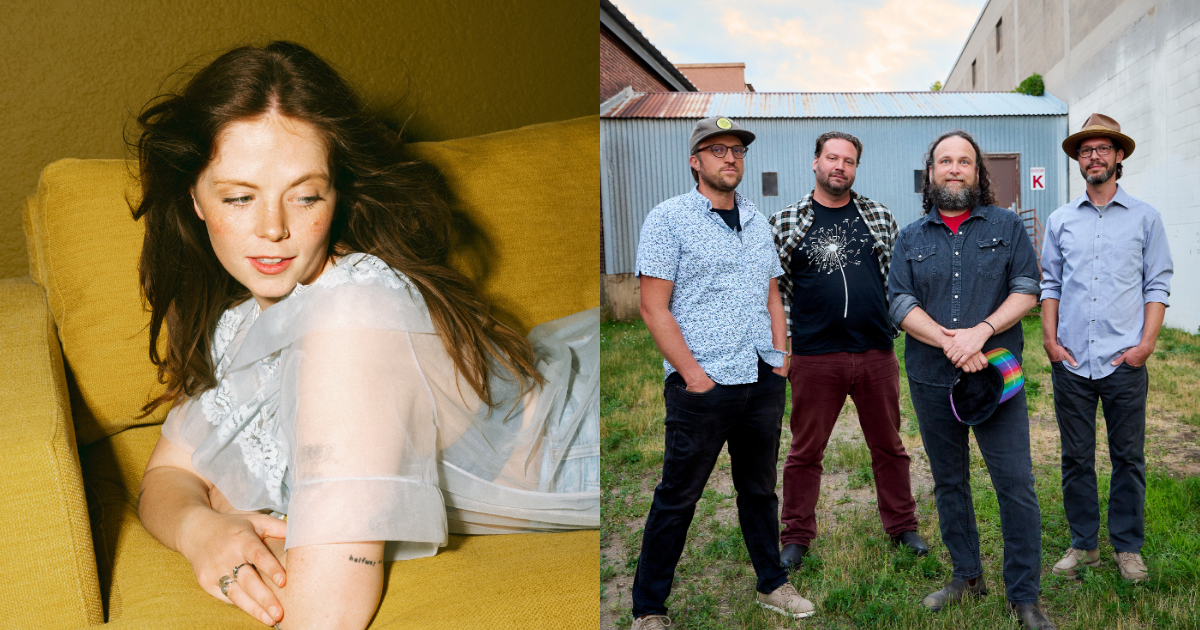
Artist:Michael Daves Hometown: Atlanta, Georgia (originally); New York, New York and Adams, Massachusetts (currently) Song: Can’t Get There From Here Album:Fables (EP) Release Date: December 19, 2025 Label: Wild Geranium Records
In Their Words: “As a Georgia boy growing up in 1980s, R.E.M. was my first musical obsession and I still love those early albums. The dream logic, the obscure references to Southern culture, the addictive hooks, the ghostly background vocals. I thought it would be interesting to adapt one of them to bluegrass and it happens that Fables of the Reconstruction is celebrating its 40th anniversary this year. It’s an arty rock album, but there’s a lot of droney stuff in there that sounds like it came from mountain dulcimer, banjo, and mandolin. The quartet I lead with Hargreaves, Jolliff, and Alvar has proven very adept at interpreting music from non-bluegrass sources and though they had no prior knowledge of this music, they were open to it and knocked it out of the park.” – Michael Daves
Track Credits: Michael Daves – Guitar, vocals Alex Hargreaves – Fiddle Jacob Jolliff – Mandolin Erik Alvar – Bass Duncan Wickel – Cello Sean Cahill – Background vocals Jefferson Hamer – Background vocals
In our eyes and to our ears, there’s no better family of musical genres to usher in the holiday season than roots music. Bluegrass, Americana, old-time, country, blues, and beyond – they’re all perfectly suited for the coziest time of year, for togetherness, for parties and gift-giving and cookie icing. Whether you celebrate Christmas, Hanukkah, Kwanzaa, or Winter Solstice – or even if you feel like opting out of the ruckus altogether – there is roots music for you.
Each year, we like to share our picks for the rootsiest time of the year in BGS Wraps, a weekly collection of songs, videos, albums, shows, tours, and events that celebrate the season. We share a few of our favorites, mostly brand new but often classics and timeless selections, too. Plus, we collect all that we can into a running playlist so you’re ready when the family or party hands you the aux cable.
We hope you enjoy BGS Wraps and tune in the next week as we continue our series celebrating the holiday season. (Catch up on week one here.)
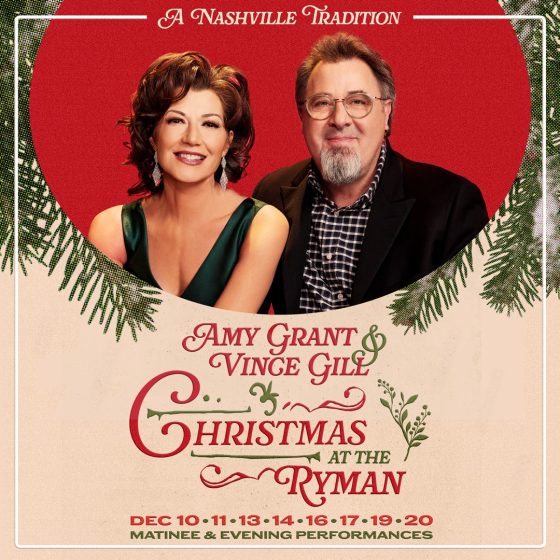
Christmas at the Ryman, Amy Grant & Vince Gill
“When I Think of Christmas” I think of Amy Grant and Vince Gill holding down the holiday fort with their iconic annual Christmas at the Ryman series. This year, they’ll offer 12 performances over eight days at the lauded venue known as the most famous former home of the Grand Ole Opry and the birthplace of bluegrass. Grant and Gill epitomize Music City and how tightly knit this town and its music creators are. There are sure to be plenty of memorable and one-of-a-kind moments across their holiday residency. Limited tickets are still available, so secure yours today. The series begins today, Wednesday, December 10 and concludes on December 20.
“Joy,” Kirby Lyle
Nashville-based songwriter and multi-instrumentalist Kirby Lyle is joined by Maya de Vitry on a brand new seasonal track, “Joy.” Featuring trickling banjos, fiddles, cellos, and guitars in a cozy and grooving 6/8 time, “Joy” feels like a folk holiday mantra, with Lyle and de Vitry singing in a call-and-response style perfect for the often ecclesiastical vibes of this time of year. “Joy” centers the feelings of working class and downtrodden folks in the holiday season, finding radical hope not through toxic positivity but through intention and community. It’s both a sonic and rhetorical antidote for those weary of capitalism and consumerism masquerading as togetherness and holiday cheer.
“Merry Christmas, Baby,” Miko Marks
Does Christmas give you the blues? Well, the blues can cure your holiday blues, too – as evidenced by Oakland-based artist and singer-songwriter Miko Marks’ brand new rendition of “Merry Christmas, Baby.” With twangy resonator guitar and whining harmonica, Marks’ ensemble stomps their way through the deep-pocketed number. The classic form and chord progression are as comforting as Christmas cookies and a mug of hot cocoa, and Marks’ soaring and soulful voice is more than angelic enough for the season.
“Santa Claus Is Coming to Town,” Parker McCollum on CMA Country Christmas
Young country superstar Parker McCollum performed a quintessential classic, “Santa Claus Is Coming to Town,” on this year’s primetime broadcast of CMA Country Christmas. Flanked by thousands of twinkle lights and backed by brass, strings, and background vocalists, McCollum wore a crisp white “Fresh Western” trucker cap as he brought his trademark country energy to the beloved carol at Belmont University’s Fisher Center for the Performing Arts. If you missed the original broadcast of CMA Country Christmas on December 2 and the encore broadcast on December 9, don’t worry – you can stream CMA Country Christmas via Hulu or Disney+. The single version of the track is also available exclusively via Apple Music.
“Every Season,” MORGXN
On the opposite end of the mainstream country continuum from bro country and country trap you have artists like MORGXN innovating on the genre in similar sonic ways, but without the genre cognitive dissonance, toxic masculinity, or petty litmus testing of the other end of the spectrum. See how much fun, engaging, and innovative country can be with pop and electronic influences from other territories than what we most commonly find on the country airwaves? “Every Season” is the first holiday release from MORGXN, an original song that draws as much upon rootsy textures and tones as crisp and modern software sounds.
We always love when we find new seasonal music that’s inclusive of everyone’s faiths and traditions, too, so we’re especially excited to add “Every Season” to our holiday playlists this year.
Opry Country Christmas
Are you also devastated our Opry 100 Artist of the Month series concluded already? Here’s your solution, as mere days after the Grand Ole Opry’s special 100th Anniversary shows on November 28, Opry Country Christmas began in earnest at the Grand Ole Opry House on November 30. The festive, star-stacked shows will continue through December 23, each performance featuring Opry members the Gatlin Brothers, Riders In The Sky, Mandy Barnett, and Charlie McCoy plus varying special guests each night like Connie Smith, Marty Stuart, Maddie & Tae, the Isaacs, Ricky Skaggs, Marcus King, and many more.
If you’re nearby or traveling to Nashville this December, get your tickets and more info here. Not able to make it in person? Stream Opry Country Christmas on WSM Online and the Opry’s digital platforms, or listen like we do most often, over the good ol’ fashioned airwaves at 650 AM. When you hear Country Music Hall of Famer Charlie McCoy wail through a medley of Christmas carols on his harmonica, you’ll be glad you did.
Snow Globe Town, Brad Paisley
Brad Paisley’s brand new country Christmas album, Snow Globe Town, was inspired by him being asked by Hallmark Channel to write and record music for their brand new A Grand Ole Opry Christmas movie. Paisley has already taken his festive songs to The Tonight Show Starring Jimmy Fallon and NBC’s “Christmas in Rockefeller Center” – and the album rose rapidly to the very top of the Billboard Current Country Album chart, scoring a No. 1 while it landed on their Top Country Albums and Holiday/Seasonal Albums charts, too. With his signature croon and hearth-hot telecaster licks, Paisley offers brand new numbers and favorite classics. Snow Globe Town has been called “unmistakably Brad” and we certainly agree.
Wrapped in Paper, Sofia Talvik
We’ve enjoyed featuring Swedish singer-songwriter Sofia Talvik’s holiday songs in BGS Wraps over the years. Now, she’s collected all of her Christmas singles and tracks since 2018 into a new holiday album, Wrapped in Paper. The project also includes three brand new tracks, two originals – “Merry Christmas, Adios, So Long” and “Let Peace be the Song” – as well as her version of “Silent Night.” “Let Peace be the Song” is more than apt for the uncertain and extreme times we find ourselves living in. Seemingly a response to the attention economy of social media and the sensationalism of the news cycle, Talvik calls for peace – the true meaning of this season, regardless of faiths or traditions – while wars, conflicts, and political frays are fought all around us. If only peace could be the gift we all give each other this year.
Heart of the Holidays, Tenille Townes
A new three-song EP from singer-songwriter Tenille Townes, Heart of the Holidays, is inviting, cozy, and classic. The collection’s title track is warm and jazzy, with round hollow-body electric guitar tone that feels like a comforting hug. The drum kit shuffles along as Townes gives us an excellent track for all kinds of wintry holiday celebrations. “I love writing and singin Christmas songs,” Townes said on social media, “because it brings out all the jazzy, cozy melodies.” The project continues with “Auld Lang Syne” – preemptively add that to your New Year’s playlist now! – and a lovely three-part harmony rich version of “Go Tell It On The Mountain” featuring Caylee Hammack and Fancy Hagood rounding out the vocal trio. It’s a perfect fit for BGS Wraps!
Lead Image: Miko Marks by Karen Santos; Amy Grant & Vince Gill by Robby Klein; Tenille Townes by Robert Chavers.
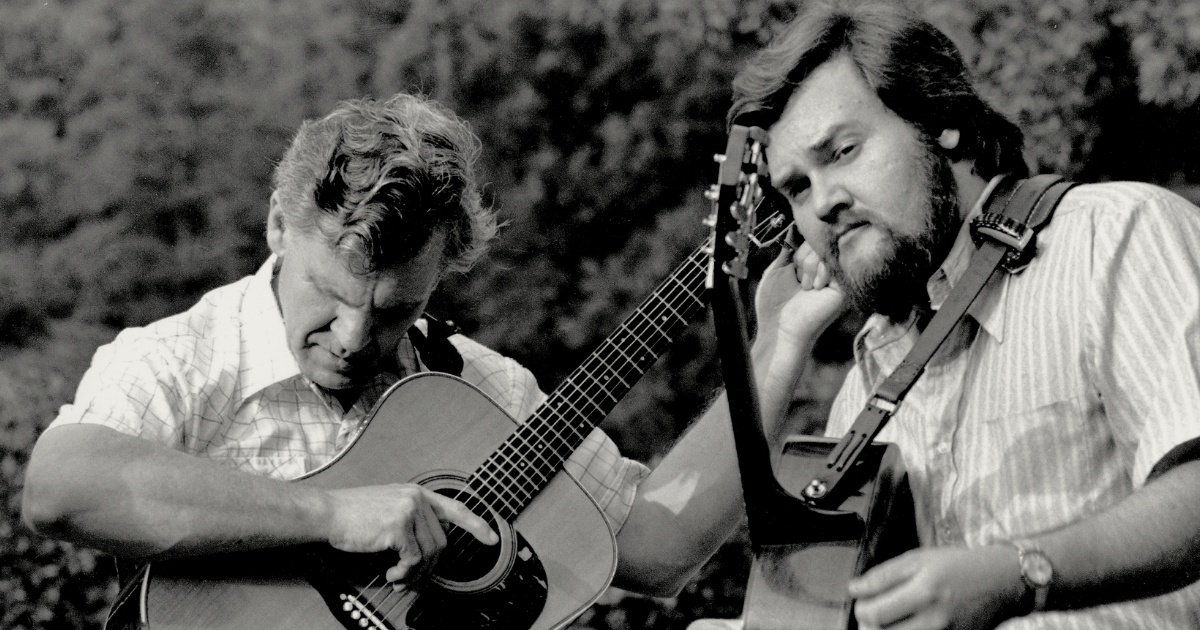
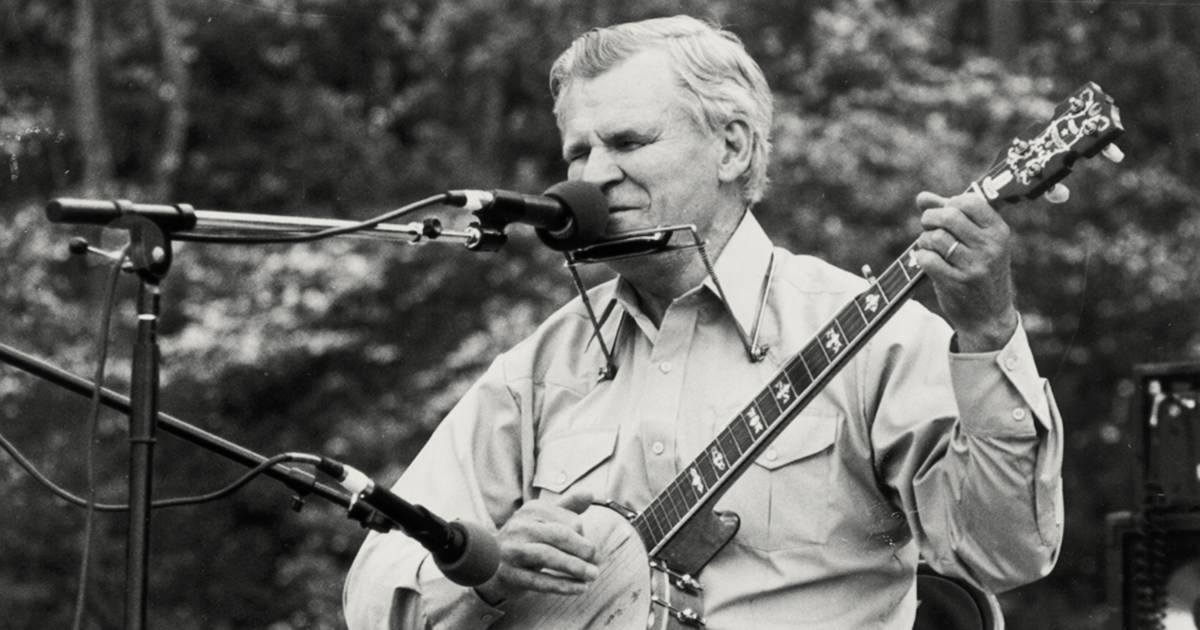
Few musicians have ever moved as fluidly between eras, genres, and generations as Doc Watson. From front-porch duets to grand-stage bluegrass revivals, Watson’s collaborations have a way of dissolving categories entirely.
His flatpicking precision, rhythmic calm, and vocal warmth made him the kind of performer who elevated everyone within earshot – young prodigies, genre pioneers, folk-tradition torch bearers, and musical iconoclasts alike. His reputation as a consummate accompanist was built not on showmanship or flamboyance, but on musical generosity and an intuitive sense of timing, phrasing, and expression that allowed others to shine while retaining his unmistakable voice.
Part of Watson’s power lies in the consistency of his musical identity. He never strained to fit into a new format or trend; instead, others bent gratefully toward his center of gravity. Whether playing an old-time fiddle tune, trading licks with a jazz-influenced mandolinist, or harmonizing with a younger bluegrass singer, he brought a sense of ease and groundedness that anchored every ensemble. That stability gave his collaborators the freedom to explore, improvise, and innovate – knowing Doc would be right there, steady and sure.
This sense of balance between precision and freedom made him a model collaborator for musicians across generations, and his impact can be traced through countless recordings, festival lineups, and mentorships of younger players.
Watson’s influence was not just technical but communal. He could guide a performance without overwhelming it, offering the ideal blend of authority and humility. In his guitar, listeners hear the voice of the North Carolina mountains, the pulse of Appalachian tradition, and the adaptability of a musician able to engage any genre without losing authenticity.
Today, YouTube’s patchwork archive of footage allows us to witness these collaborations anew: small moments of musical connection, sometimes real-time, sometimes reconstructed from archival sources. Below is a curated set of eight standout filmed or recorded collaborations that illustrate Watson’s reach. From storied duets with Chet Atkins or Earl Scruggs to meetings with newer-generation players.
“Roll in My Sweet Baby’s Arms” – Doc Watson, Earl Scruggs & Ricky Skaggs (The Three Pickers)
This relaxed but virtuosic performance features Watson, Scruggs, and Skaggs playing with the ease of a porch jam made public. Watson’s crisp flatpicking forms a warm foundation, while Scruggs’ banjo drives with characteristic agility and Skaggs adds mandolin flourish and bounce.
The trio exhibits mutual respect and joy, and their lines interweave with natural conversation. The recorded performance comes from the 2003 album The Three Pickers. The energy and clarity of the musicianship exemplify Watson’s ability to anchor an ensemble while remaining entirely supportive, a model of intergenerational teamwork. It is a performance that displays the combination of technical mastery and intuitive musical empathy that defined Watson’s career.
“Tennessee Stud” – Doc Watson & Nitty Gritty Dirt Band (Will the Circle Be Unbroken)
Watson’s performance of “Tennessee Stud” on the Will the Circle Be Unbroken project exemplifies his ability to blend seamlessly with both established musicians and a younger ensemble eager to learn from him. His deep, resonant vocals float over understated but fluid flatpicking, supporting the Nitty Gritty Dirt Band’s harmony vocals and rhythmic drive.
Watson’s musical sensitivity allowed for a dialogue that bridged generations, bringing traditional songs into a contemporary context while retaining their original heart and vibrancy. This track also highlights Watson’s ability to adapt to the studio environment, shaping a sound that was both authentic and polished. The 1972 studio album is well-documented, though various YouTube versions may mix studio, rehearsal, or live takes.
In this medley, Watson and Chet Atkins engage in a playful, masterful guitar dialogue. Watson’s flatpicking exhibits crisp, percussive articulation, while Atkins’ thumb picking introduces a smooth, jazz-inflected counterpoint. Both artists navigate tempo and dynamics with precision, creating a performance that is both technically dazzling and deeply musical.
The track appears on the Reflections album and while some online performances derive from live shows or reissued audio, the studio recording itself exalts the collaborative interplay. This duet demonstrates Watson’s ability to move effortlessly between folk and jazz guitar traditions, honoring both while creating something uniquely their own. The performance underscores his adaptability, an essential quality in a musician sought after by so many genres and generations.
“Black Mountain Rag” – Doc Watson & Merle Watson
The father-son dynamic between Doc and Merle Watson is in full display in this live rendition of “Black Mountain Rag.” Merle’s nimble, rhythmic energy dances atop Doc’s grounded guitar tempo, producing an interplay that is conversational, playful, and intricate. Their shared history and years of touring allow for spontaneous embellishments and musical commentary woven into the tune.
This performance captures the essence of the Watson family legacy, showing how Doc nurtured both musical skill and expressive interpretation in the next generation. The piece also serves as a lesson in ensemble sensitivity, as Doc balances his playing to give Merle ample space while maintaining rhythmic and harmonic cohesion.
“What Would You Give in Exchange for Your Soul?” – Doc Watson & Bill Monroe
Watson and Monroe’s pairing on this traditional tune combines the latter’s piercing, high-lonesome tenor with the former’s warm baritone, creating a striking emotional contrast. Watson’s guitar provides steady, unobtrusive accompaniment, allowing the vocal interplay to take center stage.
This recording exemplifies Watson’s ability to adapt to any partner, responding in real time to vocal phrasing and tempo shifts. The performance demonstrates his interpretive sensitivity, highlighting how he could honor a song’s emotional core while integrating his own stylistic voice.
“Shady Grove / Summertime” – Doc Watson & David Grisman
Watson’s collaboration with David Grisman blends Appalachian folk with progressive acoustic styling. In this rendition of “Shady Grove,” Watson’s rhythmic guitar backgrounds Grisman’s mandolin flourishes, resulting in a lively, conversational back-and-forth. Improvisation is key, as both musicians respond to each other’s phrasing, demonstrating mutual respect and spontaneity.
This collaboration underscores Watson’s versatility, showing he could navigate between traditional melodies and innovative interpretations, elevating both in the process. It is a reminder of his role in bridging traditional and progressive acoustic music for audiences and colleagues alike.
“Amazing Grace” – Doc Watson & Jean Ritchie
Watson and Jean Ritchie’s collaborations were well-established, including performances at venues like Folk City in the early 1960s. However, the specific attribution of some YouTube uploads titled “Amazing Grace” is ambiguous. The Live at Folk City album recording is the most reliable source, showing their complementary styles: Watson’s gentle, precise guitar lines support Ritchie’s clear, expressive vocals, blending Appalachian tradition with personal interpretation. They represent the transmission of Appalachian folk music to wider audiences and the seamless melding of their similar sensibilities.
“Summertime” – Doc Watson & Mark O’Connor
Watson’s influence on multi-instrumentalist Mark O’Connor is well-known; O’Connor cites him as a formative inspiration and their collaboration remains significant as a symbolic bridge between generations. Watson’s teachings and style informed O’Connor’s fiddle mastery, illustrating Watson’s mentorship and the continuity of American acoustic tradition. Indeed, their shared repertoire speaks to the passing of musical knowledge and the sustaining of tradition through personal and professional interaction.
These eight performances above collectively highlight Doc Watson’s role not only as a primary musician, but as a profoundly generous collaborator. He created space for others to excel, whether alongside legends like Bill Monroe, Earl Scruggs, and Chet Atkins or with younger rising stars such as Alison Krauss and Mark O’Connor. Watson’s approach combined technical mastery with emotional intelligence, allowing him to respond intuitively to fellow musicians in real time.
His collaborations illuminate the breadth of his influence. Watson moved with ease between old-time Appalachian tunes, rag medleys, gospel-inflected ballads, rocking hillbilly sounds, and improvised jam sessions. Across these contexts, he remained unmistakably himself: grounded, warm, and adaptable.
By mentoring younger musicians, bridging generations, and seamlessly adapting to new musical contexts, Doc Watson demonstrated that tradition is not static; it is a living, evolving practice. His legacy continues to teach musicians the art of generosity, the importance of listening, and the beauty of musical dialogue. Perhaps in every collaboration, Watson’s spirit resonates, ensuring that his contribution to music endures across time, space, and audience.
We wouldn’t ever begin to even try to define it. Good Country is a place. A feeling. A sense of knowing it when you hear it. Whatever you consider to fall under the term or qualify for the moniker, there certainly is plenty of Good Country to be found these days – and especially in 2025.
To wrap up the year in country, we asked our GC contributors not to simply select their favorite country song or album of the year, but to consider that titular question. We gave our writers no parameters or qualifiers for what their picks could be or include, leaving the prompt as open-ended as possible, asking our folks to focus in on the music that stuck with them, whatever the reason or impulse or staying power. Most selections are albums and songs, but some are artists, books, soundtracks, live shows, or other more intangible moments.
The results perfectly illustrate how much easier it is to triangulate the location of Good Country by showing, rather than telling. Spanish-language and Mariachi-infused country fall alongside twangy Mississippian working class messages over hip-hop beats and contemplative singer-songwriter mental health reckonings. Bluegrass pickers can be found beside books and motion picture soundtracks and songs sung in te reo Māori. Smash hits and household names bump up against newcomers and fresh discoveries. It’s all here. It’s all Good Country.
As you scroll, we hope you enjoy the broad, borderless, and endlessly entrancing territory we’ve come to know as Good Country. As we turn the page from 2025 to 2026, we’re proud of the community of folks who love and make Good Country – and beyond excited to hear what they’ll continue to bring to us in the very near future.
Sammy Arriaga, “Before The Next Teardrop Falls”
Freddy Fender’s masterful 1974 hit, “Before The Next Teardrop Falls,” with its Tejano guitar and half-Spanish chorus, is so cemented into the history of the place it was made that it sounds as contemporary as Willie in Austin, and older than the Carter Family, even maybe older than Nashville itself. Recording a cover of it, especially in this era of ICE raids and xenophobic facism, is to argue for a kind of double heartbreak – where the loss of a lover and the oppression of a culture work concurrently. I would have never thought that Sammy Arriaga was capable of this, his previous work was often vapid and derivative, but 2025’s Heart in Texas has an immediate, difficult tenderness.
If Fender’s work has hope that his lover will eventually need him in the same way that country music will need him, then Arriaga’s work is devastating because he knows that he will not be asked to be there at all. – Steacy Easton
William Beckmann, “Por Mujeres Como Tú”
Few things brought me more joy this year than videos of country crooner William Beckmann performing Pepe Aguilar’s “Por Mujeres Como Tú” at Floore’s Country Store in Helotes, Texas, in September. Beckmann was joined by Mariachi Campanas de America, a San Antonio-based group that’s been active in different iterations since 1978.
A native of Del Rio, Texas, Beckmann has made no secret of his bilingual roots – he sang Vicente Fernández’s “Volver, Volver” during his Opry debut in 2023 and included a cover of “Por Mujeres Como Tú” on his major-label debut, Whiskey Lies & Alibis, earlier this year. But this was clearly a special moment, as evidenced by the triumphant expressions on Beckmann’s and the mariachis’ faces and the sounds of the delighted crowd singing along. It offered proof of what many generations of Texans already know to be true: Mariachis make everything better. – Will Groff
Luke Bell, The King is Back
Luke Bell was a country music chameleon like no other. Western swing, country blues, classic country, outlaw, cowboy, trucker songs, and rowdy barroom country – he sounded at home in it all. Enigmatic and tough to pin down, Bell was a quintessential driving force in the Americana and independent country scene as it blossoms now. He also struggled with mental illness and substance abuse, and was found dead at 32, truncating his musical contributions.
Now, a posthumous double album, The King is Back, delivers both Bell’s ineffable joie de vivre and his remarkable songwriting in the most complete form yet. The King is Back’s 28 tracks range from bravado on “Rattlesnake Man,” “Long Gone Love,” and “Cold Stew,” to vernacular country with “Roofer’s Blues” and “Irrigator’s Blues,” and classic country weepers like “Seven and Steady” and the album’s spectacular, tragic closer, “Tiger’s Mouth.” Bell’s songwriting was often stunningly prescient. And on the album’s title track, it’s easy to imagine Bell’s just stepped back on stage with a wink and a grin: “I heard things just ain’t the same without me/ Hold your hats, the party’s on, the king is back,” he sings. This album is as close as it gets. – Meredith Lawrence
Cole Chaney, In The Shadow Of The Mountain
In 2023, as I was wrapping up an interview with music industry counselor JT Nolan about the mental health benefits of playing music, he asked, “Have you heard Cole Chaney? Go to YouTube and listen to ‘Spirit.’” When friends and family turn away, houses of worship slam-lock their doors, and society at large stigmatizes and ostracizes, the broken take refuge in the arts. Sometimes it’s complex work. Sometimes it’s the gentle strumming of an acoustic guitar and a high lonesome refrain: “I want to let go, I don’t want to hurt no more, I want to let go … spirit … I’m tired of holding on …”
A lot can happen in two years. Cole Chaney grew his hair, plugged in, turned up, and released In The Shadow Of The Mountain. The result owes as much to Cobain and Cornell as it does to Doc and Merle. Chaney describes it as “a little bit of a darker album.” That’s saying something, considering the emotional outpouring that is his debut, Mercy. Settled in midway on the new release is a revisited “Spirit,” somehow even more plaintive than the OurVinyl session.
Albums like In The Shadow Of The Mountain, in all its aching beauty, are reminders that while our brokenness may never truly leave us, music is the kintsugi that helps fill its deepest cracks. – Alison Richter
Tyler Childers, Snipe Hunter
Sure, Tyler Childers’ grungy Rick Rubin-produced masterpiece, Snipe Hunter, has been nominated for a GRAMMY Award in the Best Contemporary Country Album, but placing the project alongside releases by fellow nominees Miranda Lambert and Kelsea Ballerini illustrates how limiting this buzzworthy category split really is. To this listener, every single fascinating song on Snipe Hunter is built upon a centuries-old foundation of country and Appalachian tradition.
While the album has certainly had a polarizing effect among those who describe themselves as Childers fans, folks “in the know” inside and outside of the region – be it central or southern Appalachia, Kentucky, the South, or rural haunts in general – found endlessly artful complications and narrations of country (and country-ness) throughout the collection. Childers’ lyrics are all at once demonstrable and fantastic, far-fetched and absolutely grounded in reality. Over the half-year since its release, I find myself returning to Snipe Hunter over and over again to delight in new discoveries and freshly raised eyebrows and first time laughs-out-loud as I find more and more whimsical magic flowing from Childers’ true country pen. You may not see yourself reflected in this EP, but to those of us who do, the sensation is joyous – and addicting. – Justin Hiltner
Madeline Edwards, FRUIT
When Madeline Edwards started turning in songs for her 2025 album, FRUIT, an “industry leader” on her team suggested she package the project as a “grief EP” – a moment of catharsis in the wake of her younger brother’s death that would not distract her from more commercially viable musical pursuits. But the grief songs kept coming and the suits lost faith.
Edwards stuck to her guns and delivered the brilliant concept album independently. The pangs of mourning ring out throughout FRUIT, but so do hard-won determination and joy. Edwards’ range as a storyteller is on marvelous display from the instantly memorable piano ballad “Just A Dream” to the wall of guitars on “American Psycho” and gospel timelessness of “Holy Fire.”
Edwards is at home among the many different shades of contemporary country, while also dipping her toes in soul, rock, indie and her very own brand of classical pop vocals. Somebody please put this multifaceted performer on a massive headlining tour ASAP so we can watch her soar to even greater heights. – Lizzie No
Sierra Hull, A Tip Toe High Wire
With the release of her latest album, A Tip Toe High Wire, Sierra Hull has broken through a new level of national and international notoriety. With a songbird voice and soothing stage presence, the mandolin virtuoso took her deep bluegrass roots and blended it with a heady helping of Americana and indie-folk stylings.
Always cognizant of her traditional bluegrass foundation, Hull continues to use that steady footing to step over musical fences and into new realms of sonic possibilities, as seen with her appearances onstage in recent years with the likes of Slash, Cory Wong, and the Allman Betts Family Revival. If anything, A Tip Toe High Wire is, in many respects, Hull finally arriving into her own space and signature sound, something she’s chased after since she was a young kid playing alongside legends like Alison Krauss, Sam Bush, and Béla Fleck. The album itself is a testament to the unlimited possibilities she possesses and radiates with such ease and pure enthusiasm.
Not to mention, Hull also took home her seventh Mandolin Player of the Year honor at this year’s International Bluegrass Music Association Awards. – Garret K. Woodward
Nicholas Jamerson, The Narrow Way
Those plugged into Kentucky’s music scene will often put Nicholas Jamerson’s songwriting on the same level as that of Tyler Childers, Chris Stapleton, and Sturgill Simpson. With his latest record, The Narrow Way, it’s easy to see why.
On the 12-song project, the singer’s humility shines through as he tackles topics like the bond he’s built with his partner (“One With You”), remaining hopeful in life’s dim moments (“Dark In Every Day”), not taking your time for granted (“Running Out Of Daylight”) and reflecting on moments you can’t get back (“Prater Creek”).
Further recognition of Jamerson’s prowess as a writer can be found in the feature spots littering the project, which range from its producer Rachel Baiman to Ketch Secor (Old Crow Medicine Show), Tim O’Brien, Shelby Means (Molly Tuttle & Golden Highway), and his sister, Emily Jamerson (another artist to keep your eye on). Altogether, The Narrow Way follows the same formula Jamerson has rode to success for over a decade now – serving the song above everything else – and the best part is he’s showing no signs of slowing down. – Matt Wickstrom
I spend more time on TikTok than I’d like Good Country’s readers to know, and it seems like most country artists’ content sits on a continuum between “here’s a bonfire scene that cost two million dollars to produce” and “pardon my PJs, the label made me post this :(.”
Mississippi songwriter KIRBY, however, used short-form vertical video as a canvas for her Southern Gothic storyscapes to great effect all year, turning album promotion into an opportunity for site-specific performances. In July, KIRBY posted a lyric video for “The Man,” a song from her then-forthcoming album, Miss Black America. She sings straight to camera in front of the yellow Dollar General sign you see on every block in the hood. Her vocal winks at Ann Peebles and the caption explains the prevalence of food deserts in America.
This fall, clips of “Na$ty” created their own cultural moment on the Black Internet. You kinda had to be there, which is a lesson in itself. On KIRBY’s internet, everything is text and anything can be useful. Hair, thighs, grooves, intertextual comparisons, and accents are thick, and AAVE will not be translated. We are cordially invited to keep up. – Lizzie No
Olivia Ellen Lloyd, Do it Myself
West Virginia native, now New York-based songwriter Olivia Ellen Lloyd taps into a deeper sense of love, heartbreak, liberation, and resilience on her sophomore album, Do it Myself. The release features an all-star band with Dave Speranza on bass, Connor Parks on drums, Duncan Wickel on fiddle, James Woodall on pedal steel, Sarah Glades on percussion, and Mike Robinson as producer – as well as playing guitar and pedal steel.
Lloyd’s storytelling is vivid, emotional, and quite powerful. Listening to both this album as well as her first, it’s beautiful to watch her story unfold in sentimental songs, which have a country twang, but you can also hear influences from other genres. Whether punchy songs or soft ones, all of her music has a groove that makes you want to sing and dance along – while also giving you a space to experience your own feelings, as she does while singing. – Emma Turoff
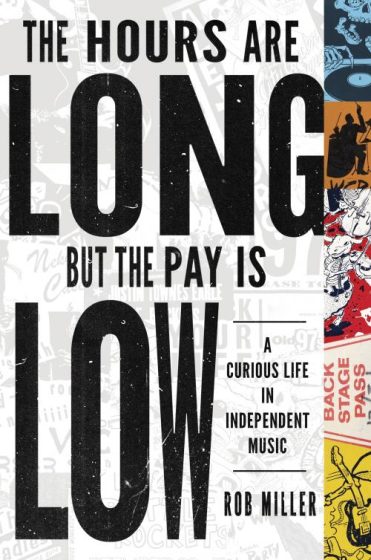
Rob Miller, The Hours Are Long But The Pay Is Low: A Curious Life in Independent Music
A question anyone who pursues a creative life will ask themselves: Why do we take a vow of poverty to put art into the world? As put forth in Bloodshot Records co-founder Rob Miller’s memoir, The Hours Are Long But The Pay Is Low, it’s because not doing it is not an option.
Chicago-based Bloodshot caught the wave of mid-1990s alternative country, releasing seminal works by Old 97s, Waco Brothers, Robbie Fulks, Sarah Shook, and more. Miller comes across as an OCD character straight out of High Fidelity, and his memories of the label’s hardscrabble early days are refreshingly unpretentious.
Bloodshot’s story wasn’t entirely positive. Its original incarnation ended badly amid disputes between Miller and his business partner (the label was ultimately purchased by Exceleration Music, which operates it now under new management). But Miller summarizes the bad-vibes part only briefly, concentrating instead on telling one man’s love story for music. It’s honestly impossible to imagine him doing anything else. And as the cherry on top, Miller dedicates the book to a pair of late friends including Dex Romweber, who he writes “left this world before he could read what his music meant to me.” – David Menconi
Kristina Murray, Little Blue
Little Blue is an understatement. Kristina Murray’s sterling third LP could convincingly have been called “Huge Bummer,” which is coincidentally the mark of a great country record.
“It’s gonna get worse, just give it time,” Murray incants on “Has Been,” a cheekily dour turn-of-phrase that just may stop you in your tracks. (Surely she means it’s gonna get better, right?) Later, on the dreamy “Fool’s Gold,” Murray tries her best at seeing beyond the proverbial grey skies, only to come up short: “It’s just more clouds,” she sighs. Such moments are appropriately slathered in pedal steel, but there’s also a swampy, rock ‘n’ roll groove to tracks like the deliciously jaded “Watchin’ the World Pass Me By” that makes the whole set go down easy. – Will Groff
Drew Parker
My introduction to Drew Parker was his 2020 single “While You’re Gone,” about missing a girl and drinking a gas station PBR while waiting for her to come back. That song had the classic hallmarks of a contemporary country breakup song. Little did I expect the curveball to come five years later.
For over a month earlier this year, Parker teased a big announcement with cryptic social messages like, “Some chapters end. Some chapters begin. This one… isn’t about me. 9•15•25.” The day came and Parker revealed in a short film testimonial that he’s felt God speaking to him, culminating in Parker’s non-religious manager calling and saying Parker should record Christian (country) music. This “moment” stuck out to me not only for the unexpected manner in which Parker revealed his decision, but because it’s obvious this isn’t a creative “phase.”
I don’t see Parker putting together a “token” record about believing and then going back to just girls, beer, and his pickup. Furthermore, Parker exudes unwavering peace about it all – whether he loses fans or faces mean-spirited judgment. There’s tangible risk to this move and there’s something to be said for Parker’s resolve and frankly, his faith in making this change. – Kira Grunenberg
Nathaniel Rateliff & The Night Sweats Live at the Kia Forum
Thinking back on all the great music I saw this year, the concert topping my list is one I saw at Los Angeles’ Kia Forum in February. The amazing triple bill – a solo Sam Beam, Waxahatchee, and headliner Nathaniel Rateliff & The Night Sweats – all delivered dynamic performances. But it was the unexpected parts of the concert that really made it so memorable.
During his set, Rateliff welcomed several special guests: Lucius’ lead singers Jess Wolfe and Holly Laessig, Taylor and Griffin Goldsmith from Dawes, and Grateful Dead bassist Bob Weir. What especially impressed me, however, was how Rateliff generously let his guests take the spotlight – a gesture that conveyed his joy for making music, particularly in a “more-the-merrier” collaborative way.
The Colorado-based Rateliff and his band also made the extraordinary gesture of using the concert to raise funds for victims of Southern California’s January wildfires as well as partnering in a purchase of a mobile food pantry to assist those left homeless by the destructive fires. This night reminded me how musicians can not only create a genuine sense of community through their rousing performances, but also through their inspiring actions. – Michael Berick
Sinners (Original Motion Picture Soundtrack)
Ryan Coogler’s Sinners is the horror film of 2025. It’s been hard to ignore, and for good reason. Michael B. Jordan, who plays double duty as twin outlaws Smoke and Stake, leads the cast which also includes Hailee Steinfeld, Wunmi Mosaku, and Thomas Pang (also known by his stage name, Yao). The film ultimately raked in $367 million in worldwide box office receipts. From its unique spin on vampires to its rootsy, blues-driven music, Sinners excels in celebrating the rich history of Black music and connects the dots between African tribal music to modern day hip-hop and R&B.
Songs like “Travelin’” (a standout moment from newcomer Miles Caton as musician hopeful Sammie) and the mind-blowing time-traveling song “I Lied to You” (paired in the movie with a visual mixing all the styles of Black-made music throughout history) mark the soundtrack as one of the year’s best releases. It’s sure to give the audience a renewed sense of Black history that’s often correlated to specific moments and eras in time. The film and its soundtrack will be talked about for decades as being a vital cinematic moment. – Bee Delores
Ringo Starr, Look Up
Way back at the beginning of 2025, Ringo Starr reminded us how different the world would look today if not for his love of American roots music. Teaming up with GRAMMY-winning producer T Bone Burnett, Starr’s country album Look Up is a love letter to the sound that drove his imagination.
Over 11 new songs written mostly by Burnett for the occasion, a classic American art form got a British Invasion makeover, with modern masters like Billy Strings, Molly Tuttle, and Alison Krauss joining Starr’s fun. Yet, what made this project a year-end highlight was not just the tunes. It was what they represent. As Starr openly declared, his first musical love was American blues and country. Artists like Lightning Hopkins sparked a creative impulse that would ultimately help redefine pop forever. From releasing music as a self-contained band and writing their own songs, to making youth culture a dominant force, The Beatles would change the world – and who knows? With a different drummer behind the kit, maybe none of it happens. Look Up shows where Starr was coming from. – Chris Parton
Vandoliers, Life Behind Bars
Vandoliers’ fifth studio album, Life Behind Bars, is both joyous and contemplative as the raucous country-punk band dive deep into themes of gender, grief, and sobriety in equal measure. “Dead Canary” blasts eardrums with a Mariachi flavor that barrels full steam ahead, setting the stage for their most impressive record to date. Other essentials such as “Bible Belt” and “Thoughts and Prayers” take aim at the current social and cultural moment, addressing religious fanaticism and how it clouds any sense of empathy.
Songs like “You Can’t Party with the Lights On” and “Valencia,” another Mariachi-intoned moment, are just plain fun. These round out the album into a well-crafted snapshot of the group right now and where they fit into the ever-changing world. Additionally, Vandoliers have never sounded so in tune with one another, vocally and musically, opting for compelling and intricate choices that expand their style without sacrificing what’s made them so good. – Bee Delores
Kelsey Waldon, Every Ghost
As the editor for Good Country and BGS, I listen to hundreds of albums a year, but they rarely stop me in my tracks. That happens even more rarely when album creators are longtime close friends of mine. But despite having met Kentuckian singer-songwriter Kelsey Waldon nearly 15 years ago and adoring all of her LP releases in that time, when Every Ghost first arrived in my email inbox earlier this year, I was floored.
In a world – and industry and genre – absolutely dripping with affectations of country music in lieu of the “real deal,” Waldon’s sixth studio album is dyed in the wool, but unconcerned with meeting those expectations or checking the boxes of trends and salability. These honky-tonking songs are infused with old-time, bluegrass, outlaw, confidence, and Prine-ian philosophizing. Waldon somehow turns introspection and identity into gritty and engaging wit and metaphor, without ever needing to obscure her messages to make them feel artistic or serious or poetic.
Even listeners like myself, who have been in Waldon’s fan club for a decade and a half or who have swapped vegetable seedlings and chicken pics with her, or who have crisscrossed her Ohio river floodplain homeland dozens of times, will learn much more about Waldon, her approach, her sonic loves, and her inner machinations as she pulls back the curtain for all of us on Every Ghost. – Justin Hiltner
Marlon Williams, Te Whare Tīwekaweka
Down here at the bottom of the globe in Aotearoa and Te Waipounamu (the North and South Islands of New Zealand), 2025 has very much been the year of the Māori singer-songwriter Marlon Williams (Kāi Tahu, Ngāi Tai).
Back in April, I interviewed Williams for a Good Country cover story to celebrate his stunning fourth solo album, Te Whare Tīwekaweka (The Messy House) and director Ursula Grace Williams’s equally affecting documentary film Marlon Williams: Ngā Ao E Rua – Two Worlds. Since then, he’s brought his antipodean blend of country and western, folk, rock and roll, and mid-to-late 20th-century pop to audiences across the U.S., UK, Australia, and at home, culminating in taking home the coveted APRA Silver Scroll songwriting award for his single “Aua Atu Rā” in late October.
Written and sung entirely in te reo Māori, the indigenous language of New Zealand, Te Whare Tīwekaweka is a masterful example of how music can use mood and emotion to cross geographic borders and linguistic barriers effortlessly. Even when we don’t speak the same language, we can still find common ground. Sometimes a sense of connection is only a song or two away. – Martyn Pepperell
Photo Credit: Tyler Childers by Sam Waxman; Kelsey Waldon courtesy of the artist; Olivia Ellen Lloyd courtesy of the artist.
Somehow it’s December and we’ve already reached our final collection of new roots music, songs, and videos for 2025. It’s been a year absolutely packed with essential new music that you gotta hear, hasn’t it? We think this final roundup is the perfect way to go out, as we look ahead to plenty more fresh tracks to share in 2026.
First, mandolinist Jesse Appelman previews the first single from his upcoming debut solo album. “Glacier Song” is sung from the perspective of the titular glacier, examining the inevitability of time and change with bluegrass trappings and tasteful dashes of old-time from his talent-stacked ensemble. Texan singer-songwriter Dustin Brown calls on fellow Texan Billy Hartman and Nashville-based Rachel Cole for his new track, “Ballerina.” Out next week, it’s a simple, stripped-down, and twangy arrangement for a song about yet another tale as old as time: a love triangle between two people and their freedom.
Also, Kara Arena draws inspiration from the Hindu deity Hanuman for a new single, “Whose Face Is On Your Heart.” A harbinger for her upcoming EP, which is set for release in January 2026, the vibey modern folk number finds the singer-songwriter considering the concept of our loved ones leaving indelible marks on our hearts while wrapped in cinematic strings. From Toronto, Meredith Moon returns to her just-released September album, From Here to the Sea, to share a brand new performance video for “Poseidon.” She’s accompanied by Tony Allen, Rachel Melas, and Mikey Shakes as they play the song down at Compass Records’ Hillbilly Central studio. “Poseidon” is about rising above the tumult of toxicity and negativity and choosing your own heart.
To conclude, we take a trip to Minneapolis and St. Paul, Minnesota, to catch new singles debuted this week by both Ber and Pert Near Sandstone, two acts from the incredibly music-rich Twin Cities. Today, Ber announced her upcoming new album, Good, Like It Should Be, set for release in early April 2026. The lead single from that project, “Book Cover,” is about the deeper meaning and understanding that can be hidden inside ourselves and is found in the delicious sonic territory where country, indie, and pop overlap. You can easily picture the song on mainstream country radio and an indie-pop playlist, too.
Pert Near Sandstone, for their part, lean into Irish folk and Celtic sounds with accordion, tenor banjo, and a shout-along, pub-ready lyric. “Side by Side” is about perseverance and rising above interpersonal challenges together. With resonant accordion and banjo tremolos, you’ll feel like you’re huddled up with the band in the corner of a cozy pub jamming along.
There’s plenty to hear and enjoy below. Thanks for sharing a year’s worth of new music with us! We’ll see you in 2026 right here for more premieres, but for now… You Gotta Hear This!
Jesse Appelman, “Glacier Song”
Artist:Jesse Appelman Hometown: Oakland, California Song: “Glacier Song” Album:Where We Go Release Date: December 12, 2025 (single); February 20, 2026 (album)
In Their Words: “This song might not make much sense until you realize that it’s sung from the first-person perspective of a glacier – and what better inanimate object could there be to explore the inevitability of time and change? Written one of my oldest friends, Will Fourt, the crooked and circular structure was a perfect vehicle for this ensemble to weave the spontaneous and lush whirlwind of melody that ends the track. The refrain, ‘I don’t know where we go,’ here an expression of uncertainty, gave rise to the album title, reworked as a statement of intent: Where We Go.” – Jesse Appelman
Track Credits: Jesse Appelman – Mandolin, vocals Sami Braman – Fiddle Allison de Groot – Clawhammer banjo Emily Mann – Bass, harmony vocals Eli West – Guitar, harmony vocals
Kara Arena, “Whose Face Is On Your Heart”
(Click to listen)
Artist:Kara Arena Hometown: New York, New York Song: “Whose Face Is On Your Heart” Album:Whose Face Is On Your Heart (EP) Release Date: December 5, 2025 (single); January 2026 (EP)
In Their Words: “‘Whose Face Is On Your Heart’ was born after I encountered the story of Hanuman, the Hindu deity. What truly distinguishes Hanuman is his deep devotion to his Lord, Rama and Devi Sita. When his loyalty comes into question, Hanuman says, ‘Every inch of my body has Rama in it. My heart and soul are made of Rama.’ When doubt of his love persists, he tears open his chest to reveal images of Rama and Sita glowing within his heart. When writing this song, I thought about what it would be like if our hearts were branded with the ones we love most. We wear their faces like a badge of honor. And when love leaves, do those sketches become scars?” – Kara Arena
Track Credits: Kara Arena – Vocals, guitar, songwriter Michael Lepore – Piano Brett Bass – Upright, electric bass Matt Bent – Drums, percussion Mae Roney – Violin Rachel Rice – Cello Joe Cilento – Electric guitar, keys
Ber, “Book Cover”
Artist:Ber Hometown: Minneapolis, Minnesota Song: “Book Cover” Album:Good, Like It Should Be Release Date: December 5, 2025 (single); April 3, 2026 (album) Label: Nettwerk Music Group
In Their Words: “I wrote ‘Book Cover’ last year over a cup of tea with my friend Corey Sanders, who at the time was consoling me as I was feeling very overlooked and invisible as a small, independent artist and writer in the music industry. At its surface, ‘Book Cover’ is about heartache and longing to be known for what’s inside, to be given a shot by someone not based on your looks or appearance, but because of the person you are. In its bones I’ve personally found deeper meaning— ‘Book Cover’ is a sweet reminder to myself to know your worth and acknowledge what you bring to the table. It’s one of my favorite songs from my forthcoming album, and I hope you like it!” – Ber
Dustin Brown, “Ballerina” (with Billy Hartman, Rachel Cole)
Artist:Dustin Brown, Billy Hartman, Rachel Cole Hometown: Moody, Texas (Dustin); Texas (Billy); Nashville, Tennessee (Rachel) Song: “Ballerina” Release Date: December 12, 2025 Label: New Usual Records
In Their Words: “Writing a song can be as complex as the characters in it. Some fall out on the table, but this one definitely reflects its process as much as its meaning. The turmoil behind the writing of this song influenced its jaded undertones. It’s a tale as old as time, a love triangle between two souls and freedom. A dilemma of one’s resolve and another’s yearning.” – Dustin Brown
Meredith Moon, “Poseidon”
Artist:Meredith Moon Hometown: Toronto, Ontario, Canada Song: “Poseidon” Album:From Here to the Sea Release Date: December 2, 2025 (video); September 12, 2025 (album) Label: Compass Records
In Their Words: “‘Poseidon’ was written during a pretty tumultuous time in my life, juggling priorities and in the end choosing my heart over all else. I felt the weight of the negativity inflicted on me by the toxic situations I’d left recently and ‘Poseidon’ was about re-instilling my own power and safety, like surrounding myself by an orb of protection.” – Meredith Moon
Performance Credits: Meredith Moon – Guitar, vocals Tony Allen – Fiddle Rachel Melas – Bass Mikey Shakes – Drums
Video Credit: Filmed at Compass Studios by Emma McCoury.
Pert Near Sandstone, “Side by Side”
Artist:Pert Near Sandstone Hometown: Minneapolis / Saint Paul, Minnesota Song: “Side by Side” Album:Side by Side Release Date: December 3, 2025 (single); February 27, 2026 (album)
In Their Words: “I originally started writing ‘Side by Side’ about my relationship with my wife and us pushing through challenging times. However, as the song came together, I realized the message of perseverance applied equally to the band and the challenges we go through together as professional musicians touring on the road. The music is traditional Irish-folk inspired, featuring wonderful accordionist Patrick Harison and Nate Sipe on Irish tenor banjo. I sing the lead along with full band group vocals and harmonies, which add to that real pub anthem sound. While in the recording studio we pulled the title ‘Side by Side’ from the lyrics which eventually became a rallying cry and decided it would be a fitting name for the new album.” – J Lenz
If you’ve listened to bluegrass made in the last decade, odds are you’re not only familiar with but absolutely enamored by the utter powerhouse that is Vickie Vaughn. Named the IBMA Bass Player of the Year thrice in a row (2023, 2024, & 2025), Vaughn has established herself as more than a class act – she’s an integral anchor of today’s bluegrass scene and beyond. Presently touring with the acclaimed all-women supergroup Della Mae, Vickie has a slew of accolades under her belt, having sung background vocals with Patty Loveless, toured with High Fidelity, and collaborated with just about every esteemed bluegrass musician under the sun.
November 21, 2025 saw Vaughn set sail unto uncharted waters with the release of her debut full-length solo album, Travel On. Released by Mountain Home Music Company, Vaughn deploys an all-star cast to bring her dynamic compositions to light. The record features guest vocals from Ronnie McCoury, Casey Campell on mandolin, Wes Corbett on banjo, Cody Kilby on guitar, Dave Racine on drums, harmony vocals from Justin Hiltner, Lillie Mae, and Frank Rische, and fiddle from Deanie Richardson, who also serves as the record’s producer.
Travel On champions Vaughn as its frontwoman, a role she hasn’t chronicled in studio since her six-song EP came out a decade ago. Her songwriting is full of dynamic abundance, from the deeply stirring gospel song “The Pilot,” to the absolutely raging “Sleepin’ in the Rain” to the emotive and heartfelt “Mama Took Her Ring off Yesterday.” Vaughn manages to strike a full range of emotions throughout the album’s thoughtful arc, a narrative bound by her buoyant relationship to both rhythm and melody alike.
Ahead of the album’s release, BGS had the unmatched pleasure of sitting down with Vickie Vaughn for a chat about Travel On, music, machinations, musicianship, and more.
Congratulations on the album release! I want to hear all about Travel On, but I’m wondering if you’d be able to take us back to the start for a bit and tell us about your personal musical history.
Vickie Vaughn: Oh golly! I started really early because of my cousins, who I adored growing up. I really looked up to them and they were just great singers who sang all the time and could play piano and guitar. I grew up in a Baptist church. When I was little, maybe six years old, the preacher’s wife found out that I could sing, so she asked me to come sing in the choir. I grew up singing in church and then when I was nine years old, back in Kentucky where I’m from, I got hired as a background vocalist. I know it sounds insane – I’m so normal now, but I was like a freak kid! I could hear harmony and sing every part. When the guy running the Kentucky Opry found that out, I was hired as a kind of novelty act at nine years old. I was there every weekend from when I was nine to when I moved out at 17 as a resident female vocalist and background vocalist.
As for the instrument side of things, my parents had me play classical piano and I hated it so much. I honestly got into bluegrass kind of late for a bluegrass musician – around 14. You know, Sierra Hull, Kimber Ludiker – they started when they couldn’t speak words, but I was a little late to the game. I would go to these bluegrass jams and there would be a bass there, but nobody would be playing bass. So I would pick it up, and I could add decent rhythm, stay on beat, learn the open chords. But then I started taking lessons from this guy named Scottie Henson. He traveled with the Grand Ole Opry touring band back when that was a thing. He was a banjo player, but he taught me how to play bass, which is incredible.
When I was 17, I moved to Nashville to go to Belmont and I was a classical vocalist there. I moved to commercial vocals my junior year and bass was a hobby. I got involved in the bluegrass ensemble and that’s kind of how I got known as a bass player in school. And then I got hired by a touring band from a girl I knew from bluegrass ensemble. The rest is history!
As you were growing up drenched in music, do you recall any songs that particularly sparked inspiration or curiosity for you as a child?
I remember when I was in the car with my dad, I used to love the music he listened to. Mama would always listen to Southern gospel and that was just not my jam. I remember telling Dad, “I hate the stuff that mom listens to.” And he was like, “Oh god, me too.” And I just remember thinking, “You’re so cool, Dad.” Once, we were listening to a classic rock station and the freaking “Wreck of the Edmund Fitzgerald” came on – I know there are all these memes about it now. But I remember having a moment with him in the truck where I was just like, “What is this?” And he was like, “Oh yeah, it’s a true story.” And I was like, “Get out!” That one really struck me.
Another one, which isn’t really a song, but there was this radio station, the local country station – 93.3 WKYQ. On the weekends, starting at 10 p.m. on Fridays and Saturdays, there was a radio program called the Outlaw Hours, and they would play stuff like Waylon Jennings, Merle, Steve Earle, Charlie Robison. It was outlaw music, edgier rootsy stuff, even some edgier bluegrass stuff. I remember riding in the car back from the Kentucky Opry and I’m just like, “Daddy, let’s listen to Outlaw Hours.” He was like, “You like that stuff??” Because I was little, and you know, a lot of that was not appropriate for a child to listen to, but I just loved it.
I can totally see how that influence carries through into your music today.
Well, I liked the subject matter. It wasn’t all about love. I don’t really like to write songs about love. There are already a lot of songs about love. I don’t have anything unique to say about love. I have something unique to say about the way I process a hangover. Or my faith! My faith is so individualistic and personal. If I feel like I don’t have a new idea, I’m not gonna write it or sing about it.
What is the songwriting process like for you? How did you go about selecting the songs on this album?
This might sound silly too, but do you ever walk around the house and just sing about what you see? So many of my songs come out that way. Like with “Bottle of Wine” – I collect wine, so I always have some on hand. Then it was the day after a breakup and I was super hungover, because I had decided to just drink about it. I walked out of my bedroom and I saw all these empty bottles of wine on the coffee table. And I thought, “I don’t want to see another bottle of wine. Maybe I’ll write that into a song when I’m feeling better.” That’s how most of my songs come out, the hook will come to me and then I’ll just expand on it. Sometimes I like to co-write, like with Thomm Jutz, we co-wrote “Bottle of Wine.” But then “The Pilot,” a song about my faith, I wrote by myself. Faith is so, so personal. Even if a person of faith and I could agree on some fundamental levels, my faith and my walk are so different than literally anyone else’s. So I had to write my own unique faith-based song.
Then “Mama Took Her Ring Off Yesterday” I co-wrote with Deanie Richardson. I brought that idea to her because my dad passed and he was one of my best friends in the world. He hated sappy sad songs, so I didn’t want to write that. I knew I needed to write a song, then I went to visit my mom about three months after he passed. We went to a Mexican restaurant and she slid her left hand over past the chips and salsa, showing me that she took her ring off. I support her and everybody grieves differently, but I still told her I thought it was early for that. But she’s bootstrap Kentucky and she was like, “We have to move on. Life doesn’t stop.” I was just left thinking, “Wow, Mama took her ring off yesterday. That’s the moment I need to write about.” I took it to Deanie because she knew my dad and knows my mom and she really walked with me through my grieving process.
That one turned out so beautifully! I’m curious – you’ve had an extremely successful bluegrass career for a number of years. What made now feel like the right time to put out a solo album?
The awards. Women always apologize for winning and here I am, apologizing for saying “my awards,” but that’s really what it was. People are paying attention. If I’m gonna write a song, I don’t want it to hit deaf ears. Making a record is such an expensive and painstaking process and your heart and soul go into it. After my dad died – well, he was such a cheerleader for me. And an inspiration – he just inspired me. If I was feeling bad about something, I felt like if he believed in me, then I could do it, you know? I didn’t believe in myself without him for a long time, so I couldn’t do it. Especially in the music industry, you can’t do shit if you don’t believe in yourself. It’s too hard. So I waited a while until I felt like there were enough people who believed in me and then I believed in myself. That’s when I felt like I had the energy and the belief to make a record that people would actually hear.
That makes a ton of sense. How do you feel like your relationship to music has changed now that you’ve taken on the role as captain of a project?
This is the first time I’ve ever made a full-length record that’s my own and not just playing on somebody else’s. And of course, Deanie is producing it, but being in control of the material and the direction of the record – it’s funny that you ask, because I almost didn’t realize the direction of the record until it was done. I realized after I heard it all in one setting. The concept is vulnerable joy.
Working on anybody else’s record and supporting them in that way – especially with the bass, which is such a big vibe creator as an instrument – I never felt like I could choose, or was confident enough to choose, the direction. But finally, here I am in my mid-30s, and I’m ready. It was so fun taking the reins artistically, getting to sign off on every bit of it. Every choice I felt in my heart. I was able to say, “If this doesn’t scream Vickie as fuck Vaughn, then I don’t want it!” I would rather not make a record [any other way]. Because when I was younger, I made EPs that I thought other people would like. That was the point for me. But now I’ve traveled around and I know what works. I know what an audience likes to hear; that base is covered. The process of just having to make it totally “me” – that was my favorite part.
How did you go about choosing the community to help you out with bringing this record to life?
So the engineer, Sean Sullivan, I’ve worked with him for a long time on other people’s records, and then I did a small project with him that never got released. This might sound nitpicky, but I feel like the sound engineer in a recording process makes one of the biggest differences. It’s hard when there’s too much input – that’s the producer’s job. But I wanted to work with Sean because he’s so efficient, he’s quick and he has such a calm spirit. He gives direction or a suggestion so seldom that when he does I really take it to heart.
And then, as for Deanie Richardson, my producer, I always knew that she was an amazing musician, but this is the first time that I have really been enamored with her production abilities. It’s the first time I’ve worked with her as a producer. She has taken each song and made it into my record. I would come to her with just bass and vocals, and she would just shape each song and make them each sound different. She’s a freaking genius! And she’s totally unafraid to just be herself. She’s an unashamed woman and that’s the energy I wanted in my record.
The band on the record is all folks that I’ve known and played with here in town. I didn’t want there to be anybody on the record I hadn’t played with or loved or traveled with. Because it’s my first record and I know me, and I know that I would be self-conscious if there was a stranger in the room. And then Justin, my best friend, he just matched my freak so hard on there. We have such a beautiful community.
It’s so beautiful how y’all uplift and support each other! How is it feeling for you to finally have this piece coming out into the world?
I’m terrified, but I don’t know – I kind of like that! I like a challenge. If I’m not scared, then I don’t care. I’m really excited to hear what folks think about it. I want to see what songs touch people and learn from that. And I’m really excited for Deanie to be introduced as a producer, and for everybody to see her talents in that area. I’m really excited to learn from the release. I’ve learned so much in the process already, because there’s so many firsts, and I’m excited for the reception of this record to influence my next. That one will be even more me. I never want to stop growing!
For the past few years, as the music industry goes quiet, spooling itself down for a two-week sleep over the Christmas and New Year’s holidays, the team here at BGS has taken the opportunity to utilize December to spotlight a few of our heroes. We began the series with Dylan in December in 2018 and followed up the success of that nontraditional “Artist of the Month” pick in following years with Dolly in December, Del in December, Dawg in December, and last year’s incredibly popular Dead in December.
What better way to spend a cozy, holiday-filled, wintry month than celebrating some of the legends – artists, songwriters, musicians, and bands – that have made our roots music scene what it is today? This year, it’s clear who our December Artist of the Month should be: “Doc” Arthel Watson, himself.
Born in Deep Gap, North Carolina, in the heart of Appalachia in 1923, Doc Watson started playing guitar – and other instruments, too – as a child. Doc lost his vision in his youth, but would go on to become one of the most important American guitarists in history even with his disability. His position in modern roots music, especially in bluegrass, old-time, and folk, is canon. He is a legend to any and all, from the diehard lifelong acolytes to the recently initiated neonates. He’s one of our Americana music figures who tends to get lost, like the forest for its trees, within his own ubiquity and universal adoration. But no matter from which angle you drill down into his career, discography, artistry, and legacy there’s always more to find. To explore. And to enjoy, of course.
Over the course of December, we’ll be doing just that. Our writers and contributors will offer new articles considering Doc’s songs and output and his career as an American guitar hero. And, how even after his passing in 2012, he continues to be a definitional stylist on flat-top, flatpicked guitar. But don’t sell him short, either. Though most known for his fiddle tunes, folk songs, and old-time and bluegrass licks, Watson was accomplished in many genres across the roots continuum; he dabbled in and conquered sounds from hillbilly and rockabilly, electric guitars, blues, ragtime, fingerstyle, chicken pickin’, and more. He collaborated with artists from well within his own circle and far outside it – sonically, socially, and geographically. Watson was incredibly dynamic, a characteristic that has contributed greatly to his lasting, ongoing appeal.
We will also be dipping back into our BGS archives to share past features, playlists, and articles about Doc, and his son Merle; about his festival MerleFest, which continues to this day; and about the albums and offerings celebrating the 100th anniversary of his birth that were released in 2023. Truthfully, there’s nearly an endless supply of BGS content that touches on, focuses on, or mentions Doc. Because of course there is – these genres we all love and hold dear wouldn’t be what they are today without him.
You also won’t want to miss perhaps the most exciting aspect of our Doc in December Artist of the Month celebration. In 2023, BGS was invited to Bryan Sutton’s Blue Ridge Guitar Camp in Brevard, North Carolina. Sutton, alongside his friend and peer Billy Strings, is one of the most prominent proselytizers for Watson in the 21st century, so it’s no surprise his annual camp just up the mountains from Watson’s hometown of Deep Gap is usually dripping with Doc’s music.
That year, one of Doc’s most famous guitars, “Ol’ Hoss” – a 1968 G-50 Gallagher Guitar Watson played in the late ’60s and early ’70s and on many recordings – was also at the Blue Ridge Guitar Camp. The instrument was one of the first of a few Gallaghers that Doc owned. BGS made the trip to Brevard to capture special video performances and interviews with many of the event’s instructors and pickers, each of whom played Doc tunes and shared stories and memories while picking Ol’ Hoss. It was a magical week in the mountains. Now, for the very first time, we’re making select songs from these tapings available in a new series, the Ol’ Hoss Sessions. Three sessions pulled from the shoot celebrates Doc in December and features Bryan Sutton, Courtney Hartman, and will also feature Billy Strings. Stay tuned as we share those videos right here on BGS and on our YouTube channel throughout the month.
It’s not that Doc Watson is underappreciated or underrated, or that he needs any of the visibility that being a BGS Artist of the Month might afford. In our neck of the woods, seemingly everyone knows and loves Doc Watson already. But with so many folks and institutions shouting Watson’s praises from the rooftops lately – artists like Sutton, Strings, and a host of guitar pickers and roots musicians from across our community and scene; the folks who put on and attend MerleFest; the communities of Boone and Deep Gap, North Carolina; projects like I Am a Pilgrim: Doc Watson at 100 – it’s clear there’s always more to learn, love, and enjoy about Arthel Lane Watson.
Get started with Doc in December with our Essential Doc Watson Playlist, below. Plus, follow along right here on BGS and on social media as we share Doc Watson content throughout the month. We’ll have a new feature on Watson’s status as American guitar hero, and you can see our YouTube playlist of his incredible musical collaborations here. Plus, of course, our very special Ol’ Hoss Sessions, exclusively available right here on the Bluegrass Situation. (Watch Bryan Sutton here. Watch Courtney Hartman here.) Plus, we’ll be combing through the BGS archives for everything Doc Watson for y’all to enjoy. Buckle up for a mighty month of guitar pickin’ glory, it’s Doc in December!
In our eyes and to our ears, there’s no better family of musical genres to usher in the holiday season than roots music. Bluegrass, Americana, old-time, country, blues, and beyond – they’re all perfectly suited for the coziest time of year, for togetherness, for parties and gift giving and cookie icing. Whether you celebrate Christmas, Hanukkah, Kwanzaa, or Winter Solstice – or even if you feel like opting out of the ruckus altogether – there is roots music for you.
Each year, we like to share our picks for the rootsiest time of the year in BGS Wraps, a weekly collection of songs, videos, albums, shows, tours, and events that celebrate the season. We share a few of our favorites, mostly brand new but often classics and timeless selections, too. Plus, we collect all that we can into a running playlist so you’re ready when the family or party hands you the aux cable.
To kick off the season this year, we’ve got a BGS Wraps full of Good Country, jingle bells, Texas snow, holiday generosity, and plenty of glittering lights and joyous cheer. We hope you enjoy BGS Wraps and tune in the next two weeks as we continue our series celebrating the holiday season.
A Very Carper Christmas, Melissa Carper
One of our favorite purveyors of Good Country in the most legit old-school, Texas, Western swing, and outlaw styles, Melissa Carper has just launched her own album of holiday music, A Very Carper Christmas. It boasts quite a few originals and co-writes and a couple covers of classics, too. The collection is silky smooth and timeless, a perfect accompaniment to holiday cooking, decorating, gallivanting from store to store, or cozying up by the fire with your loved one of choice.
Starting December 4, Carper will join JD McPherson’s “Socks: A Rock & Roll Christmas” tour around the Southeast, East Coast, and Midwest. So don’t miss your chance to catch these Good Country seasonal songs live in person. Melissa Carper tour details here.
“When It Snows in Texas,” Chaparelle & Sierra Ferrell
Let’s keep it going with more Austin-based Good Country! Last month, alt-country supergroup Chaparelle announced a brand new co-write and collaboration with everyone’s current favorite old-time Americana goddess, Sierra Ferrell. “When It Snows in Texas” is the perfect seasonal holiday number, apt for each and every rootsy holiday playlist and certainly suited to occasions beyond just Christmas. With a languid, loping groove, it’s all wrapped up in alt sounds that remind of Nitty Gritty Dirt Band and a casual sing-along sidled up to a shiny wooden bar all at the same time. This is the country & western (heavy on the ampersand western) vibe we all crave – this time of year or anytime.
Feels Like Christmas, Mickey Guyton
Singer-songwriter and country star Mickey Guyton is no stranger to festive song releases, but Feels Like Christmas is officially her first full-length holiday album. From the adorable “Sugar Cookie” to the classic pop trappings of the title track to her “Christmas Isn’t Christmas” duet with the Michael Bolton, Feels Like Christmas feels… well, grown up. Fully realized. Ready for your moody, ambient Christmas cocktail hour or a laughter-rich, full kitchen, too. Guyton makes some of the best crisp, modern, radio-ready country around today, and this holiday collection – like most if not all of her discography – feels made to last the ages, too.
Further leaning into the festivities of the season, Guyton will also appear in a brand new Hallmark movie, A Grand Ole Opry Christmas, which is premiering this year during Hallmark Channel’s 16th annual Countdown to Christmas programming event. Guyton certainly has our number, and we’ll be camped out in front of the TV with our hot ciders and sugar cookies ready and waiting for this incredible Opry, country music, and Hallmark crossover.
I’ll Be Home for Christmas, Drew & Ellie Holcomb
Drew & Ellie Holcomb have added to their deep-and-wide catalog of holiday and seasonal music with a brand new EP entitled I’ll Be Home For Christmas. The project adds three lovely covers of Christmas favorites to the stacked roster of selections the couple and their Neighbors trot out each winter for the season. This year, they’ll perform two “Neighborly Christmas Special” shows in Tennessee – in Memphis on December 5 and in Nashville on December 12 – before heading out on their next headline tour in February. Find ticket info here, then put on I’ll Be Home For Christmas while you make your holiday lists and check them twice.
The Greatest Christmas On Earth, Robert Earl Keen
Now this right here sounds like our kind of Americana Christmas circus! Robert Earl Keen kicks off his “The Greatest Christmas On Earth” tour this week, crisscrossing the South and Southeast through the month of December spreading cheer, joy, silliness, and light – and keeping the party going down the road forever, as he does.
The tour will kick off on December 4 in REK’s hometown of Kerrville, Texas, and you can be sure each night will feature his paean to the beauty and dysfunction of families at the holidays, “Merry Christmas From The Family.” Put all your own rowdy relatives in the van and don’t miss these shows. Ticket info here.
“Dream a Dream of Christmas,” Lydia Luce
Lydia Luce just released her excellent brand new album, Mammoth, in late October, but even before the project’s release she was looking ahead to the winter and holiday seasons with a A-side / B-side single release, “Dream a Dream of Christmas.” Like her songs in general, the A-side selection is contemplative, emotional, and rich with text painting and lush piano and vocals. Resonant strings play along with the contours of her vocal, punctuated by Christmas-y percussion and scoring, like Hollywood holiday offerings of the ’50s and ’60s. The track’s B-side is a delightful rendition of the beloved carol “Silent Night” that’s dramatic and rich – and features guest vocals by Caroline Spence. Both songs would be excellent additions to your themed playlists for the season.
OCMS XMAS, Old Crow Medicine Show
It’s hard to believe one of bluegrass and old-time’s longest running party string bands, Old Crow Medicine Show, have just released their first holiday album this year – but it’s true! OCMS XMAS is zany, rollicking, and unhinged. (As it should be.) It’s a collection of stories, songs, and tableaus that are just as fantastic and engaging as any of their rip-roaring live shows or any of their adored albums from their stacked discography. It’s a Christmas album as only Old Crow could make, and frontman Ketch Secor’s fingerprints are all over the track listing. From “Corn Whiskey Christmas” to “Breakin’ Up Xmas” to “Krampus Night” and beyond, this set of material will certainly be a Holiday Hootenanny on stage. Catch their Holiday Hootenanny on tour through December 20, before the band returns yet again to the Ryman Auditorium for their iconic annual New Year’s celebration performances to close out the year.
Sweet Relief’s Annual Holiday Auction
Sweet Relief is a non-profit organization with a mission that we all – in the music industry and outside of it – can get behind. For more than 30 years Sweet Relief has worked to provide financial assistance to musicians and music industry workers who are facing illness, disability, or age-related challenges. Just last week, they launched their annual holiday auction yet again, offering signed memorabilia and in-person experiences with a variety of artists in roots music and beyond, all of which benefit their important mission and vital work supporting music professionals’ mental and physical health.
Folks can bid on offerings from artists and musicians like Billy Strings, Hozier, Pearl Jam, Walker Hayes, The Decemberists, the Black Keys, Amanda Shires, Gregory Alan Isakov, and many, many more. If you’re planning your Giving Tuesday donations and also wondering what to get the music lover in your life who already has everything, perhaps you can check two things off your list in one go by supporting Sweet Relief. Learn more and view the auction items here.
Jingle All The Way Tour, Béla Fleck & the Flecktones
No holiday season would be complete without regularly returning to one of the best roots holiday albums ever made, Béla Fleck & the Flecktones’ Jingle All The Way. Released in 2008, the GRAMMY Award-winning album is beloved in and outside of roots music spheres – it even landed a mention in Oprah’s O Magazine back in ’08! Now, Fleck and the band – including Victor Wooten, Roy “Future Man” Wooten, Howard Levy, and special guests Jeff Coffin, Alash, and Sierra Hull (on select dates) – are taking their virtuosic cheer back on the road with a full slate of Jingle All The Way Tour shows. The tour kicked off in Nashville and will continue through December 20 hitting performing arts centers and theaters in the Midwest and across the Eastern U.S. To mark the occasion, Fleck & the Flecktones released their first holiday music since Jingle All The Way, a single medley of “The First Noel/Joy To The World.” If you can’t make the shows, put the original album and new single on the stereo – but we really recommend snagging tickets and seeing them live, with this superlative lineup, if you can.
Lead Image: Mickey Guyton, Feels Like Christmas; Melissa Carper by Lyza Renee; Old Crow Medicine Show courtesy of the artist.
Normally, when singer-guitarist Nick Hexum plays a gig, it’s fronting legendary hard rock band 311, performing for massive audiences in huge venues around the globe. But, on a recent evening in Knoxville, Tennessee, he was backed by Americana/bluegrass act Water Tower in front of a small crowd at the Open Chord, a cozy space on the west side of the city along Kingston Pike.
“I’ve always been drawn to music that has energy, and there’s so much energy in flatpicking, the banjo, the tremolo picking of the mandolin,” Hexum tells BGS backstage. “This stuff has rock and roll energy that predates rock and roll.”
For Hexum, this deep dive into bluegrass, country, and Americana of late has become something of an intrinsic mission from within. It’s the current soundtrack of a 55-year-old rock star carefully aiming to dig up and examine the melodic roots of his past – these existential anchor points needed to move forward.
“This whole experience is just bringing it really full circle, like a home,” Hexum says. “My mom is from Nashville, so this is me getting in touch with [memories of] when we used to go to visit my great aunt Margaret in Gatlinburg and she’d play the autoharp.”
Retracing old routes, both geographically and sonically, was no more apparent for Hexum than when he and Water Tower appeared at Americanafest in Nashville. The stop in Music City was part of a larger tour throughout the Southeast in an attempt for Hexum to not only reconnect with his past, but also create an opportunity to break new ground for his craft – especially outside of the hard rock juggernaut that is 311.
“I’m just grateful that fans are showing up and are open to seeing me do something completely different,” he says.
During the intimate set in Knoxville, Hexum and Water Tower crowded around a single microphone, weaving in, out, and around each other in a whirlwind of acoustic instruments and Hexum’s signature vocals. The show ran a gamut of material, whether it be classic 311 numbers or selections from Hexum’s latest solo record, Phases of Hope and Hollow.
“The intimacy [of the show], it’s wonderful to be so up close. It’s totally different [for me] from a technical situation – it takes silence,” Hexum reflects.
This project is the brainchild of Hexum and Water Tower’s Kenny Feinstein. Water Tower is a rising ensemble from Los Angeles, one which initially started as an old-time/punk group, only to lean further into becoming a high-energy string band. They raised more than a few eyebrows when they performed at the recent Telluride Bluegrass Festival in Colorado.
“We’re walking into another side of Nick,” Feinstein says. “311 is all about bringing people together through unity and different styles of music, so this is another slice of Nick’s personality.”
For Feinstein, working with Hexum has been this surreal experience, personally and professionally. As a millennial growing up in the late 1990s and early 2000s, Feinstein was a huge 311 fan, so much so he vividly remembers their video for the smash hit “Amber” and seeing 311 guitarist Tim Mahoney sporting a mohawk haircut.
“My friend and I saw the video and [decided] we needed mohawks,” Feinstein reminisces with a laugh. “So, all three of us went to a party [that night] and got our heads shaved into a mohawk.”
This latest musical chapter for Hexum and Water Tower happened serendipitously through the sober community both Hexum and Feinstein are part of in Los Angeles. Leading up to their crossing paths, Hexum had been heading down the rabbit hole of an Apple Music playlist that featured singer-songwriter Faye Webster. His ear perked up.
“I really like her songs, the pedal steel [sound], and the beautiful arrangements,” Hexum says of Webster. “And then, I reached out to Drew Vandenberg, who produces her music. We started talking about working together and one of the things I wanted to do was learn some of those instruments. So, I bought a pedal steel and took some lessons.”
Making space in his studio for the pedal steel, Hexum wanted to add a few more instruments into his creative arsenal, including the mandolin. Cue Feinstein. Meeting him through the sober community, Hexum asked Feinstein if he would teach him how to play the mandolin.
“I had [Kenny] over and I was like, ‘Let’s do something that sounds like [Faye Webster],’” Hexum says. “And he was just a cornucopia of ideas.”
At that juncture in his career, Hexum “mostly had played six-string guitar,” with these other instruments “a new world” for the artist. And yet, even though he was just learning how to play them, he was already well-versed in the sounds of bluegrass and country.
“Nick saw a dulcimer on my wall and I was really impressed that he knew what that was,” Feinstein recalls. “He told me about his heritage and [growing up] in Omaha and how he loved country and bluegrass. Then I said, ‘We should jam sometime.’”
That initial jam session between Hexum and Feinstein resulted in the duo writing five songs right out of the gate. Soon, Feinstein brought in Water Tower banjoist Tommy Drinkard and wrote several more.
“And now we’re on tour. It’s so special to see the humility that [Nick] carries, the gratitude and appreciation for all of his fans after so many years of doing it,” Feinstein says. “It just inspires us to have gratitude for where we’re at now, and to know the journey we’re on is about continuing to lessen the suffering [of others through music].”
“There’s so many people out there in the crowd crying, really taking it in,” Drinkard adds. “These are very intense subjects and Nick does a good job of explaining where he’s coming from with the songs he’s writing.”
For Hexum, this recent journey into the bluegrass realm has become this incredibly cathartic experience. He found himself not only dissecting his past and that of his parents, but also that of his ancestors going back generations.
“My mom is from Tennessee and my grandpa was a Southern Baptist minister,” Hexum notes. “Half of my family does have these southern roots, so when I hear bluegrass, it just feels like part of my DNA.”
Beyond the new music itself, Hexum views this ever-evolving project as part of his ongoing quest to find himself through this vibrant kaleidoscope of sound and purpose. It’s about stripping everything down, focusing on the essence of a particular melody, and always being aware of the beauty of the sacred platform that is live performance. Turn off the amps, pick up the acoustic guitar and huddle around a lone microphone, together.
“It has gotten to a point where I’m like, ‘All right, time is limited here, and I want to make the most of the time that I have now,’” Hexum says humbly. “I mean, when you see your kids get older and get their driver’s license and stuff like that, you just feel this passing of an era. And so, for me, it’s getting into a different mode of songwriting – really focusing on sincerity and simplicity.”
Artist:The Unfaithful Servants Hometown: Victoria, British Columbia, Canada Latest Album:Fallen Angel (released October 17, 2025) Personal Nicknames (or rejected band names): Quince/Quincy; Cobby; Dyl/Dilly; Cuss
(Editor’s Note: Answers supplied by mandolinist Jesse Cobb.)
Which artist has influenced you the most – and how?
Sam Bush, both solo and with New Grass Revival, Strength in Numbers, and many others. When I first started playing mandolin, I learned old-time fiddle tunes from the likes of Gus Ingo, Blind Kenny Hall, Bill Monroe, Bobby Osborne, and others all from LPs, by ear. I also had a few books around – Jack Tottle’s mandolin book, fakebooks, and some others. I recall going to the library in Superior, Wisconsin, and checking out albums/tapes of many artists.
Among the picks one time was New Grass Revival’s On The Boulevard. I was likely 10-12 years old and pretty new to playing at the time. I remember putting on the record and just being blown away by the overall intensity, sound, clarity, timing – everything seemed so leveled-up compared to the bluegrass and old-time music I’d been listening to. Sam particularly caught my ear as a mandolin player. The tone, attack, intensity, rhythm, changed my whole view of a mandolin’s role in a band. I still get this feeling every time I hear Sam’s music or get the opportunity to play with him! A real game changer for me.
What’s your favorite memory from being on stage?
My first time on the main stage at Telluride Bluegrass. I had been listening to recordings/watching videos of that stage with the house band, New Grass Revival, and others for literally my whole childhood! When I first played there with The Stringdusters, the feeling of looking over the massive crowd and up to the mountains in the distance was very special. It felt like a dream being there at that time and was a very emotional affirmation that all the time, sacrifice and hard work was worth it.
Genre is dead (long live genre!), but how would you describe the genres and styles your music inhabits?
The Unfaithful Servants draw from such a deep well of influences: old-time fiddle tunes to Vulfpeck; Doc Watson and Townes [Van Zandt] to Rush; Edgar Meyer to Jaco Pistorius; The Band to Polyphia; Bach to the Flecktones! Given our varied influences and our span of four decades in ages, we try to put this all together to inform our sound.
In my mind, the closest genre that encapsulates this is Americana. I think that we have more in common with artists like Sierra Ferrell and the Avett Brothers than with traditional bluegrass bands, although that influence/drive is incorporated as well. With the intensity of the Stanley Brothers and the technical aspirations of Punch Brothers, the groove of classic funk and lyrical depth of Neil Young, we try to create our own sound encompassing them all!
What is a genre, album, artist, musician, or song that you adore that would surprise people?
I really like ’80s rock music – think Steve Vai, Damn Yankees, Warrant, Def Leppard. I grew up listening to old-time music almost exclusively and working very hard to live up to the feel and sounds I was hearing in that. I recall being at a soundcheck at a theatre in northern Minnesota one time, probably around 13-14 years old. Walking into the venue for soundcheck, the crew was ringing out the room with the most exciting thing I’d ever heard. The song was “Peace of Mind” by Boston and I was blown away, very similar to the way Sam Bush hit me! I recall asking the crew, “What is this?” This started a long infatuation with ’80s hair bands, electric guitar shredding, and the crazy vocalists in the genre. I know a surprising amount of lyrics to ’80s hair bands and love to karaoke them when I can, for better or worse!
Does pineapple belong on pizza?
While I can confidently answer no for me, it’s kind of like asking, “What is bluegrass?” except without a point. I don’t like the flavor of pizza sauce and pineapple together, personally, but that doesn’t make it wrong for everyone! Much like trying to define genres, it’s completely up to personal taste.
Photo Credit: Syd Woodward
This website uses cookies to improve your experience. We'll assume you're ok with this, but you can opt-out if you wish.AcceptRejectRead More
Privacy & Cookies Policy
Privacy Overview
This website uses cookies to improve your experience while you navigate through the website. Out of these, the cookies that are categorized as necessary are stored on your browser as they are essential for the working of basic functionalities of the website. We also use third-party cookies that help us analyze and understand how you use this website. These cookies will be stored in your browser only with your consent. You also have the option to opt-out of these cookies. But opting out of some of these cookies may affect your browsing experience.
Necessary cookies are absolutely essential for the website to function properly. This category only includes cookies that ensures basic functionalities and security features of the website. These cookies do not store any personal information.
Any cookies that may not be particularly necessary for the website to function and is used specifically to collect user personal data via analytics, ads, other embedded contents are termed as non-necessary cookies. It is mandatory to procure user consent prior to running these cookies on your website.