For Chris Thile, Instrumental Music Excels in the Cracks of Language (2 of 2)

Chris Thile has always woven religious references into his songwriting, but never so much as on Laysongs. Recorded in solitude in an old church with just a mandolin and a sound engineer, the new album offers lyrics that question our impulses and references that span the Bible (“Ecclesiastes”), Hungarian composers (a take on Bartok’s “Sonata for Solo Violin, Sz. 117: IV. Presto”), and bluegrass legends (a cover of Hazel Dickens’ “Won’t You Come and Sing for Me”) in service of a higher truth.

Here, in the second installment of a two-part interview, BGS catches up with Thile about co-producing an album with his wife, finding inspiration in good wine, and why great instrumental music should emulate a warm dinner conversation.

Read the first half of the BGS Artist of the Month interview with Chris Thile here.

BGS: Your wife, [actress Claire Coffee], co-produced this album with you. What did that lend to the final product, and how did it influence the process?

Thile: Pretty much since we met, she’s graciously been my unofficial editor. It was high time to just formalize that. [Laughs] When you’re doing something like this — a pure solo record, no overdubs, absolutely nothing between me and your ears — it really helps to have someone involved who is absolutely 100 percent unimpressed with you. She has heard every one of my tricks and can see straight through them, can hear straight through them.

As an actor and someone who’s made a lot of film and television, Claire cuts straight to the chase: “Is this meaning something? Does one and one equal two here? Are we starting somewhere and ending somewhere — and how is the ride between those two points? Are we engaged? Is this clear enough, and does it ever get too painfully clear? Are we leading the witness, are we telling people the punchline before we give them the setup?” I can really gild the lily when left to my own devices. Musically, I can sort of be the guy in the theatre, like, elbowing you — like I’ve seen it six times and I’m like, oh, you’re going to love this part! And so Claire, I think, is so good at being like, “Hey. Don’t do that.” [Laughs]

And perhaps, also, letting you know when it’s warranted.

Right. Sometimes I won’t pull the trigger on what would be a really interesting decision because I’m worried that I’m just swinging too hard. I sort of gingerly put the idea of doing the fourth movement of Bartok solo violin sonata. Thinking, well, this is kind of a bridge too far. I sent it to Claire like, “What if I learned this on the mandolin?” and she was like, “Absolutely. Do that. That’s gonna be amazing.” Which was just so shocking to me! I thought I had probably lost my mind. [Laughs]

It was also her idea to put it after “Salt (in the Wounds) of the Earth.” I mean, I feel like everyone thinks they’re gonna get a big ol’ chance to exhale after “Salt (in the Wounds) of the Earth,” and instead… I mean, think of it like these Peloton instructors: You think, “Surely, surely this is it. Surely this is the hardest I’m gonna have to go.” And they’re like, GIVE ME FIVE MORE ON YOUR RESISTANCE!!

I feel like it’s that kind of move, going from “Salt (in the Wounds) of the Earth” to the fourth movement of the Bartok sonata. It’s as if the demon in “Salt (in the Wounds) of the Earth” just took my mandolin from me. But that’s the kind of perspective someone who loves you—but isn’t taking any of your shit—can help you with, especially someone who also has a deep and wide skill set that is compatible with mine. It was so fun to work with her on that.

You’ve always got multiple projects going. Is there anything you learned specifically from performing in groups and making music in that atmosphere that you feel gave you an advantage when you set out to record an album alone?

The accountability — the musical accountability, artistic accountability — that you feel in a collaborative context is noticeably absent in a solo context, so you need to pick up the slack there. You need to start roleplaying those people in your life who hold you artistically accountable. Thank God I had Claire involved in this project, but on the deep I-dotting and T-crossings that you encounter at every step along the way of the record-making process, I would also assume the role of an Edgar Meyer or Gabe Witcher or a Sara Watkins. I’d tease out a little fake conversation between myself and them, all by myself in the practice room. “In what way am I not being clear enough right now? In what way am I being self-indulgent right now?”

There are so many things that you learn from the people around you. But there are also things that you can learn in the silent retreat of making music solo. There are things that I can take back to each of those projects — things I can take back to Punch Brothers, or Nickel Creek, or the Goat Rodeo Sessions — that I think could be illuminative in those contexts.

Do you enjoy talking about religion outside of your art?

People have such strong feelings about religion. You wanna bust open a conversation, bring up God — like, in a real way. People are gonna quit mincing words and they’re gonna start talking about shit. I love that. I really love talking to people about that kind of stuff, from wherever they are. I find it endlessly instructive in my own journey. I find someone’s total disinterest in it just as interesting as total interest in it. If I bring up God and you’re like, “I don’t wanna talk about that shit, come on,” then I love you for that. Let’s go with that. Let’s talk about that.

And if I bring up God and you’re like, “Ugh, you know what? I was just praying about that this morning, I feel like the Lord brought you to me,” I’m in. Let’s go there. Why do you feel that way? Let’s go there. At this point, I have no reservations about bringing up God. It’s always been an instinct of mine to infuse whatever I’m thinking about with a little of that kind of imagery and language and thought, and so this was cathartic for me to just turn all the taps on and let it run.

You push beyond your own religious upbringing, too — you also included a song, “Dionysus,” named for the Greek god of grapes and wine. What inspired you to write about that figure?

I’m always looking for encouragement, as a human being, about human beings. We see a lot of evidence of our failings right now, and I want to see evidence of our success. Wine — the existence of good wine — is evidence of our success as a species. That is a beautiful relationship with the earth. We have occasionally exploited that relationship, but the best wine comes from the healthiest relationship with the soil. The best winemakers have this beautiful balance of science and mysticism. It sounds silly, but I find the whole thing very inspiring.

Ecclesiastes 2:24 seems like it’s along those lines, too: “Nothing is better for a man than that he should eat and drink, and that his soul should enjoy good in his labor. This also, I saw, was from the hand of God.” Why express that instrumentally rather than through lyrics?

Think about the last great dinner that you had with friends. Could you really, with words, describe to me why it was so great? Could you say, “And then we talked about this” or “Next, we gossiped about that”? When you walk me through that, or when I walk you through the last dinner I had, it’s gonna sound trite. And yet, there was something holy about it, you know? Maybe there was a new person that you sat next to, and you got a little light into a different corner of life that night. But could you say with words what that was? I don’t think you could, necessarily, say what can be so transcendent and transportive about a great dinner with friends. That’s where instrumental music excels — in the cracks of language. What language is incapable of properly expressing, instrumental music steps up and says, “I got this.”


Photos: Josh Goleman

WATCH: Mason Via, “Big City”

Artist: Mason Via
Hometown: Danbury, North Carolina
Song: “Big City”
Release Date: June 11, 2021
Label: Mountain Fever Records

In Their Words: “‘Big City’ is a song that I wrote as a playful fantasy, but it turned into something bigger, a personal hillbilly mantra of sorts. This past year has brought a lot of big changes in my life, from landing a top 40 placement on American Idol, joining the legendary Old Crow Medicine Show, to signing a record deal with Mountain Fever Records. ‘Big City’ is the first single off of my upcoming debut album with the label. The melody to this song is so catchy. I’ve been singing it for a while now, but it still gets stuck in my head, and I reckon that’s a good thing. The track features a couple notable artists from other prominent bands. Nick Goad of Sideline sang harmony on the track. Alex Genova (banjo) and Tommy Maher (Dobro) of Fireside Collective also lent their skills to the song.” — Mason Via


Photo credit: Shana Lee Photography

Hawktail’s “Antilopen” Is Playful and Awe-Inspiring at the Same Time

One of the most fearsome foursomes in modern instrumental bluegrass is at it again. A year on from the release of their sophomore record Formations, Hawktail spent their time off the road and in the lab over the last year, writing and arranging music that offers their characteristic finesse and virtuosity while never sacrificing melodic excellence. In the simple setting of a garage, the group performs “Antilopen,” which features a harsh, angular melody that gets traded around between bass and fiddle, while the guitar and mandolin provide rhythmic support and melodic responses.

As the song develops, all four musicians have a chance to really stretch out over the tune, passing the spotlight between them in a way that is playful and awe-inspiring at the same time. That’s no surprise when you consider the creativity of its members: Hawktail is composed of fiddler Brittany Haas, bassist Paul Kowert, guitarist Jordan Tice, and mandolinist Dominick Leslie. And if you haven’t treated yourself to this Nashville-based band’s music yet, we implore you to check out this live rendition of Lena Jonsson’s “Antilopen,” which was released this spring. You won’t regret it.


Photo credit: Dylan Ladds

Chris Thile Considers His Community and Christian Upbringing in ‘Laysongs’ (1 of 2)

For a while, Chris Thile might have been the busiest man in bluegrass. The former public radio host has snagged four Grammy awards and a prestigious MacArthur “Genius Grant,” all the while maintaining his status as a founding member of Punch Brothers, the Goat Rodeo Sessions, and Nickel Creek, collaborating with plenty of other Americana firebrands along the way. But on his latest album, Laysongs, Thile slowed down.

A solo album in the truest sense — it’s just Thile and a mandolin, after all — the album was recorded by engineer Jody Elff at Future-Past, a studio housed in an old church in Hudson, New York. The setting was a perfect match for the religion-influenced album, which ranges from the biblical passages of Thile’s Christian upbringing to mythological ideas about gods and gathering from the Greeks and the Romans. Below, in the first of a two-part interview, BGS caught up with Thile about recording the new album, finding inspiration in memories from his adolescence, and the dearly missed joy of a packed concert hall.

BGS: You recorded this album in a church in upstate New York. What did that atmosphere lend to the album, whether purely sonically to the recording or more generally as inspiration?

Thile: That was such a stroke of luck in a time that felt like it was a little thin on luck overall. [Laughs] We were weathering the earlier stages of the pandemic in Hudson, New York, and someone told me about a church right in the middle of town that had been converted into a studio. I went and checked it out and played a few notes in there and absolutely loved it. It’s not the most awe-inspiring church, but there were stain-glassed windows and very odd paintings that all brought me right back to my childhood.

I never attended a grand, elegant church growing up. This was still a beautiful church, but it was helpful that it wasn’t, y’know, St. Patrick’s in downtown New York — that it had a whole lot of that whole human-beings-just-trying-to-do-the-best-with-what-they-have kind of a vibe. Getting to be there was really helpful in terms of getting into character for the songs that I was recording. So much of the record comes from solitude… Actually, the solitude of the pandemic felt a lot like the solitude of spending one’s adolescence in a church pew.

What do you mean by that?

I spent so much of my adolescent time in church wondering if I was the only person there who was doubting the existence of God, or who couldn’t not think about how attractive the girl two pews over was. “Wait, I’m going to hell now probably, right?” Or, “Wait, is there hell? What is going on?” The pandemic thrust me and a lot of other people that I know back into that sort of lonesome, existential monologue: “Has every single choice I’ve made up to this point been wrong, perhaps?”

The sort of strange dialogue that we have with ourselves late at night started reminding me of those weird dialogues I would have with myself in church. I could well imagine at 16 years old sitting in this pew at Christian Community Church in Kentucky. I could well imagine there was a little angel and devil on my shoulder kind of duking it out. The centerpiece of the record, “Salt (in the Wounds) of the Earth” is very much a grown-up version of that feeling—but you know, also, how grown-up, really? I’m 40 now, and so much of the time, this felt like a rebirth right back into adolescence, smack in the middle of the most awkward period of our lives.

I loved being in that church for all those reasons. It was so easy to put myself in the headspace I was in when I had written the lyrics or when I discovered the power of those songs that I didn’t write that are on the record. It just lent a certain weight to those performances.

Why did it feel like the right time to approach religion specifically here? Was there anything you felt you had to tread carefully around?

If there’s a silver lining of this whole incredibly disorienting and distressing affair, it’s the chance to gain a little context: to have been forced to take a massive step back and to take a look at our lives, whether we wanted to or not. One of the things I saw, in the midst of missing the community that I’d inserted myself into, was that community often ends up acting in ways that are similar to my experience of organized religion.

How so?

A lot of people who grow up with religion and veer away from it at a certain point are veering away from what they — what we — perceive to be a poisonous exclusivity, or habitual exclusionism. I think that’s one of the main turn-offs for my generation on organized religion. You start meeting people who aren’t welcome in the flock, and you start wondering why. Having taken a step back, I see the same kind of exclusionary behavior in my current community. If you take a look at your own community, it’s probably full of people who think a lot like you do, and who feel very similar to the way that you do about whatever’s going on right now, and who live in a very similar way. I worry that we, as human beings, are trading one messed-up thing for another messed-up thing.

I adore community. I love it so, so much. For instance, the Telluride Bluegrass Festival: I feel like those are the high holy days of my acoustic music-making community, and to be deprived of them is so painful. You feel cast adrift, untethered. I can’t wait to get back and I’ll never take that for granted again. But I also want to go back there with my eyes wide open as to whom I have habitually not welcomed into that community. What barriers am I being a part of unknowingly placing between people and that community that I love so much? And what harm is that doing that community?

Tell me about how that harm appears on the record.

There’s a lot in the record about coming together, but there’s also a lot in the record about our compulsive need to compare ourselves favorably to other people. In an effort to feel better about ourselves, we look for someone to feel better than. That’s what “Salt (in the Wounds) of the Earth” is about. I took a look at this thing that had been a big deal for me in my adolescence, The Screwtape Letters by C.S. Lewis, and I was wondering: What would those demons be up to with me, right now? They would be preying on this compulsive desire to feel good about myself. One of the easiest, dirtiest ways to feel better about yourself is by looking at someone else and going, “Well, I’m better than that guy.”

In “Laysong,” the lyrics mention “drown[ing] out the enemy.” It made me wonder what it is that you consider the enemy — maybe it’s this comparison trap, maybe not — and how you drown it out.

When I wrote that lyric, the enemy was he or they that would talk loudest regardless of whether they had the best idea. “I’m gonna say whatever I have to say louder than anyone is saying anything else, and therefore it will be all that’s heard, and the discussion will be on my terms.” That felt like the enemy. And at that moment, in that lyric, I had to write it. It fit with the shape of the melody. The idea of drowning out the enemy — I couldn’t shake it, even though it’s not what I believe to be right. [Laughs] Hopefully you can get a sense of that in the performance, that it’s coming from an angry and not altogether balanced place. In that moment, I was pursuing the idea of drowning out the enemy with beauty, with restructuring, with anything, really. Let’s get a love song, let’s get a hard-times song, anything but a song about the front page of the newspaper.

The record starts there and ends with the Hazel Dickens song, “Won’t you come and sing for me.” When I get back into the concert hall, there’s no way I’m not ending my solo set with that song, the performance is going to be sincere—especially at the end of all this solitary music-making. [Laughs] But “Laysong” is very much like an altar call for the record. “Here’s what we’re gonna discuss.” Who knows where we’re gonna come out? I know that when I listen to a record, there’s a collaboration that starts there. I would love to imagine that happens when people listen to my records, too—that it starts a conversation. I can’t wait to feel that in the concert hall. No piece of music is done until you [the audience] hear it. And I am so dearly looking forward to that completion of this little bit of work.

Editor’s Note: Read the second half of the BGS Artist of the Month interview with Chris Thile.


Photos: Josh Goleman

MIXTAPE: The Foreign Landers’ Transatlantic Story

Each of us having grown up on either side of the Atlantic, our common interests and musical influences could not have been more similar. All of these tracks hold sweet memories in our years of being a couple, and each artist has definitely influenced our sound as The Foreign Landers. David and I thought we’d share some of our transatlantic story together through a few of our favorite songs. — Tabitha Benedict, The Foreign Landers

Paul Brady – “The Lakes of Pontchartrain”

This is one of our favorite tracks of all time. This version of the popular ballad is from Paul’s album Nobody Knows: The Best of Paul Brady rereleased in 2002. With Paul’s flawless storytelling ability and tasteful guitar playing, it makes it a joy to come back for a re-listen.

Crooked Still – “It’ll End Too Soon”

David and I have been big Crooked Still fans for a long time and they will often be our first choice of car music on any long journeys. Here’s a beautiful song written by banjoist Greg Liszt for Aoife O’Donovan that is just so sweet to the ears. This was one of the last songs they recorded before the band stopped touring in 2012 and it appears on their EP Friends of Fall.

Tatiana Hargreaves – “Foreign Lander”

This is where the inspiration for our band name “The Foreign Landers” was drawn from. Aside from having more of a story behind our name than just that, we both love this old song and especially love this version from Tatiana Hargreaves debut album Started to Ramble released back in 2009.

Alison Brown – “Fair Weather”

This title track of Alison Brown’s album Fair Weather released back in 2000 is a common favorite of ours. Vince Gill features on lead vocals and guitar, Alison on banjo, Stuart Duncan on fiddle, mandolin, and vocals and Gene Libbea on Bass and vocals.

Ron Block – “Ivy”

Well, we knew we had to involve some of Ron’s writing and performing in this mixtape. We love this track, “Ivy,” off his album Walking Song. This is a perfect album for all year round, with guest appearances from a host of our favorite players.

The Weepies – “I Was Made for Sunny Days”

I first was introduced to The Weepies through hearing them on the radio back in Northern Ireland many years ago. My family instantly fell in love with their songs and sound, so I was so delighted to introduce David to their catalog when we were dating. Another favorite for long drives and singing along in the car. Here’s a real feel good song of theirs called “I Was Made for Sunny Days” from their album Be My Thrill released back in 2010.

The Boxcars – “You Took All the Ramblin’ Out of Me”

We just had to stick some good bluegrass in this mix of songs, and we’re so glad we chose this one. When David and I started dating, we would sing this to each other, and it has to be one of our favorites from the Boxcars album It’s Just a Road released in 2013.

Hot Rize – “You Were on My Mind This Morning”

At one of our first-ever performances about three years ago at the well-loved Cantab Lounge in Cambridge, Massachussetts, David sang lead vocals on this track written by Hot Rize. They recorded this on their 2014 release When I’m Free.

Dori Freeman – “If I Could Make You My Own”

We are big fans of Virginia-based singer-songwriter Dori Freeman, and especially love this track of hers from her 2017 release Letters Never Read. We recorded a cover of this song on our honeymoon on the Isle of Skye about two years ago now, so it holds a sweet spot in our relationship!

John Reischman – “Little Pine Siskin”

One of our favorite tunes off John’s album Walk Along John! John had been touring with the wonderful Greg Blake in Ireland back in January/February 2018, right when David took his first visit to Northern Ireland, and right when we started dating. We went to see them at a wonderful show at the Red Room in Cookstown. It was just a couple of days prior to making things “official.” I remember David playing this tune on that visit and it brings back happy memories!

The Foreign Landers – “I’m Not Sayin’”

We discovered this Gordon Lightfoot song from the late great Tony Rice on his album Tony Rice Sings Gordon Lightfoot. We have both loved this song for many years, and knew that when he would start a duo we would definitely be covering this one. We recorded this version on our EP Put All Your Troubles Away that we released in May 2021. We’re so thankful we did and hope you enjoy it!

David Benedict – “Colonna & Smalls”

David released this tune on his solo project The Golden Angle in 2018, named after the specialty coffee shop in Bath, England, back when we were dating. He has the amazing David Grier and Mike Barnett playing on this track with him.

Cup O’Joe – “Till I Met You”

David and I also tour and record with my two brothers in Cup O’Joe, our band based out of Northern Ireland. I wrote this song back in 2018, and recorded it on Cup O’Joe’s most recent album, In the Parting. I wrote this one with David in mind, not thinking that he would be playing mandolin on it a few months later!


Photo courtesy of The Foreign Landers

WATCH: Joe Mullins & the Radio Ramblers, “Living Left to Do”

Artist: Joe Mullins & the Radio Ramblers
Hometown: Xenia, Ohio
Song: “Living Left to Do”
Album: Somewhere Beyond the Blue
Single Release Date: June 4, 2021
Label: Billy Blue Records

In Their Words: “We’re very thankful to have plenty of new music and a good tour schedule for 2021. But we’re most encouraged with the renewed opportunity to reunite with friends and loved ones we’ve missed so deeply, and to be back together doing what we love. ‘Living Left to Do’ was written by Conrad Fisher and is about enjoying our calling, celebrating God’s goodness, and the blessed assurance of life eternal. We’re ready to live, love, laugh and have a lot more to do!” — Joe Mullins


Photo credit: Kim Brantley

The BGS Radio Hour – Episode 209

Welcome to the BGS Radio Hour! Since 2017, this weekly radio show and podcast has been a recap of all the great music, new and old, featured on the digital pages of BGS. This week, we bring you new music off of the beautiful new album Outside Child from Allison Russell, as well as bluegrass songs to celebrate springtime, and much more! Remember to check back every week for a new episode of the BGS Radio Hour.

APPLE PODCASTS, SPOTIFY

Kishi Bashi – “Waiting For Springtime”

To start off this week’s roundup, we visit our conversation with Athens, Georgia-based Kaoru Ishibashi, better known as Kishi Bashi, about his new EP Emigrant. When COVID hit, he and his daughter packed into a camper and hit the road, from the southeastern U.S. all the way to Oregon, over a period of several months. Along the way, he fleshed out the songs that became Emigrant through visiting places like the Ozarks, the Dakotas, and Montana, including Heart Mountain: a World War II Japanese internment camp he visited many times during the production of his documentary Omoiyari: A Songfilm by Kishi Bashi.


Reid Zoe – “When I Go”

This new track from singer-songwriter Reid Zoé is, on the surface, a song about dying, but really it’s about all of the questions that come with being a human on earth.

Full Cord – “Right In Step”

With a catchy melodic hook and low-tuned banjo, “Right in Step” is a lovely bluegrass tune full of love, hope, and togetherness – hopefully a respite from the uncertainty of the pandemic.

Sean McConnell – “Price of Love”

It’s been said that everything in this world comes with a price. For Nashville’s Sean McConnell, that price is reflected in loving someone — be it family, friend, or significant other — and the eventuality and certainty of you losing them. Yet still, he suggests, most of us are willing to take that risk for love, to give up our hearts completely. It’s the price that our heart pays for love in return.

The Deep Dark Woods – “How Could I Ever Be Single Again?”

A new song from pan-Atlantic singer-songwriter The Deep Dark Woods was inspired by English folk band Steeleye Span. Featuring Kacy Anderson on fiddle, the tune asks the titular question, “How Could I Ever Be Single Again?”

Sam Robbins – “Raining Sideways”

“Raining Sideways” is one of Sam Robbins’ most-requested songs, a stream of consciousness lyric that’s one of the most raw and authentic he’s ever written.

Lera Lynn – “A Light Comes Through”

A recent episode of The Show on the Road featured a deep dive with silky-voiced, southern gothic-folk songwriter Lera Lynn. Stick around to the end of the episode to hear Lynn introduce her favorite broken-romance number, “So Far.”

Graham Sharp – “Truer Picture of Me”

BGS recently caught up with Steep Canyon Rangers’ banjo player and songwriter Graham Sharp about the release of his new solo record, Truer Picture. We talked about Steve Martin’s influence on the Rangers and Sharp himself, as well as his approach to songwriting, nature inspirations, and the way literature and music coincide.

Our Native Daughters – “Quasheba, Quasheba”

Our Artist of the Month for May, Allison Russell, wrote this song for her many-times-great-great-grandmother Quasheba, who survived being enslaved, being ripped away from everything she knew, the horrible Middle Passage, having her children taken, and more. Russell says her art and a loving community have inspired her to connect with her ancestors and find connection through intergenerational strength, resilience, and transcendence, despite intergenerational trauma and abuse.

Grace Pettis – “Paper Boat”

Singer-songwriter Grace Pettis literally dreamed up “Paper Boat,” a song about coming of age, trying to fit in, and losing our innocence. She’s joined by her producer, Mary Bragg, on tender harmony vocals.

Allison Russell – “The Runner”

We spoke with our May Artist of the Month, Allison Russell, about the inspiration behind and creation of her honest and stunning album Outside Child, including this track “The Runner.” Read our two-part interview here.

Lost & Found – “Wild Mountain Flowers for Mary”

We hope, wherever you’re reading this from, that snow, frost, and the cold are truly retreating, giving way to longer days, warmer weather, and the gorgeous, humid, cicada-soundtracked days of summer. But, before we get to full-blown bluegrass season – and, hopefully, our first live music forays since COVID-19 shut the industry down in early 2020 – let’s take a moment to intentionally enjoy spring with 12 bluegrass songs perfect for collecting a wildflower bouquet, romping and frolicking in the meadow, and pickin’ on the back porch while the evenings are still cool.

Accidentals – “Wildfire”

The Accidentals spoke with BGS on loving and learning from Brandi Carlile, singing on stage with Joan Baez, the magic in meeting strangers and finding common ground, and much more in this edition of 5+5.


Photos: (L to R) Lera Lynn by Alysse Gafkjen; Allison Russell by Marc Baptiste; Kishi Bashi by Max Ritter

In a Hypnotic Video, Rhiannon Giddens & Francesco Turrisi Add Life to “O Death”

Upon the release of their new record, They’re Calling Me Home, Rhiannon Giddens and Francesco Turrisi delivered a beautiful music video for their rendition of the old American tune, “O Death.” The video features a series of scrolling paintings done by Maeve Clancy, an Irish artist who specializes in these “crankie rolls.” It’s a suitable vehicle for illustrating Giddens’ performance, as the images match not only the drama of the story but also the pacing of the lyrics and rhythms. In this hypnotic, pre-electricity style, “O Death” comes to life with its own magnetism. It’s the latest installment in the North Carolina native’s ongoing collaborations with Turrisi, a gifted Italian multi-instrumentalist.

During the pandemic, Giddens and Turrisi stayed at home for more than a year in Ireland, and They’re Calling Me Home echoes the many ways that a tumultuous 2020 had many of us yearning for the comforts of home, of the past, or of those that were called home from this world. NPR’s Here and Now raved about They’re Calling Me Home, saying “Rhiannon Giddens’ newest album goes back in time to soothe the soul of listeners today.” In a Q&A with Garden & Gun, Giddens says, “I love the idea of old technology plus new technology. Maeve is cranking one long piece of paper from one side to the other. I hope people realize that! She’s responding to what’s going on in the song. And she found a certain style and then had to draw it so it has the same tempo as the song. I love getting inside another artist’s world for a bit.”

Watch the beautiful visual representation of “O Death” below.


Photo credit: Karen Cox

LISTEN: Merle Monroe, “Shelby Tell Me”

Artist: Merle Monroe
Hometown: Nashville, Tennessee
Song: “Shelby Tell Me”
Album: Songs of a Simple Life
Release Date: June 4, 2021
Label: Pinecastle Records

In Their Words: “A common characteristic of classic songs throughout history is how they tell a story or paint a picture for the listener. Our intention is to capture a wonderful story line that everyone can relate to — one that moves the listener emotionally through the lyrics and melody.” — Tim Raybon & Daniel Grindstaff, Merle Monroe


Photo credit: Sheri Clark

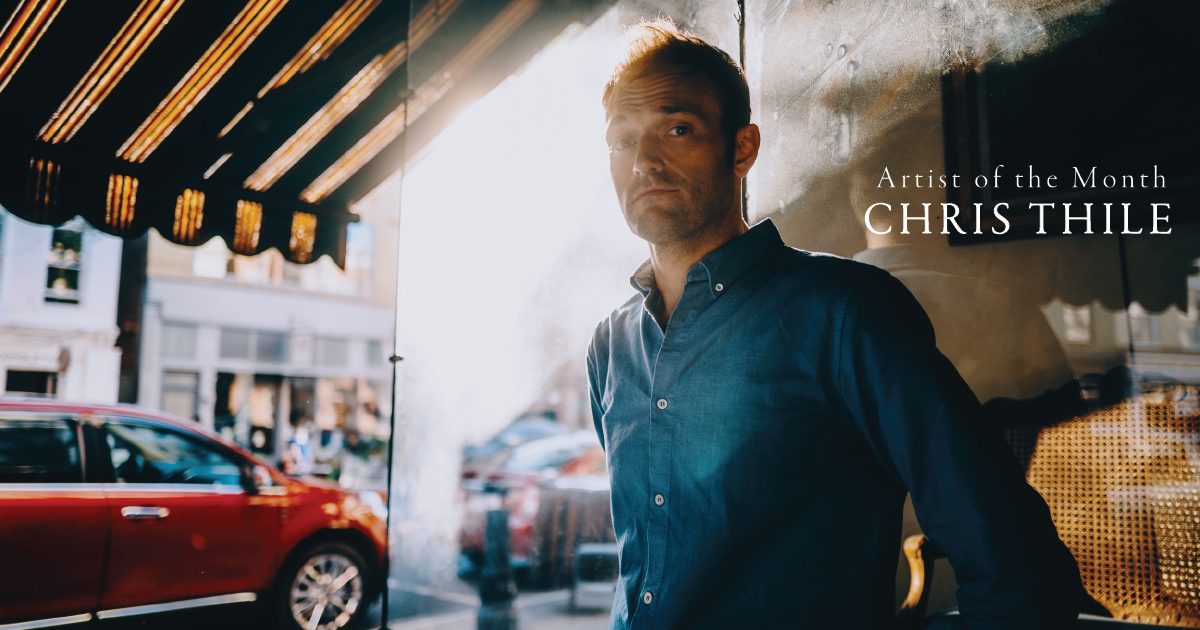
Artist of the Month: Chris Thile

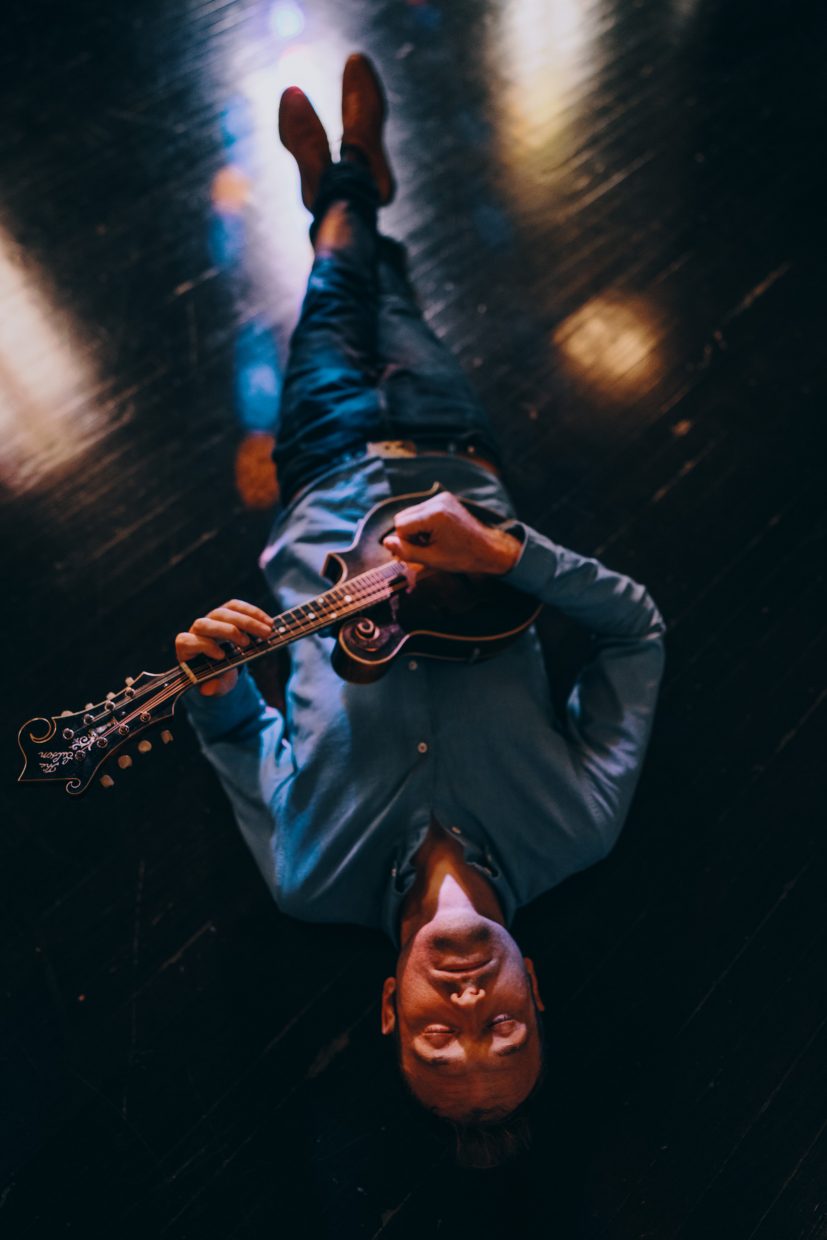
Chris Thile found solace during the pandemic in a church — more specifically, a remodeled one that now houses Future-Past recording studio in Hudson, New York, where he and his family were temporarily living in the summer of 2020. “I went in there to look at the space and instantly felt so at home,” Thile said upon announcing his new album, Laysongs. “I loved the amount of sound around the sound. I had two sonic collaborators on this record: the tremendous engineer Jody Elff and that church.”

With a suggestion from Nonesuch Records’ Chairman Emeritus Bob Hurwitz to make a record that was both spiritual and a snapshot of the pandemic, Thile decided to pursue the idea, putting together six originals and three covers with only his voice and his mandolin. In April, he introduced the project with the lead single, “Laysong.” As he noted, “It is a lifelong obsession of mine, even post-Christianity, what the impact of that kind of devotion to any organized religion is.”

Laysongs offers the three-part “Salt (in the Wounds) of the Earth,” which was inspired by C.S. Lewis’s The Screwtape Letters; a song Thile wrote about Dionysus; a performance of the fourth movement of Béla Bartók’s Sonata for Solo Violin; “God Is Alive, Magic Is Afoot” based on Buffy Sainte-Marie’s adaptation of a Leonard Cohen poem; a cover of bluegrass legend Hazel Dickens’ “Won’t You Come and Sing for Me;” and an original instrumental loosely modeled after the Prelude from J.S. Bach’s Partita for Solo Violin in E Major. Thile’s wife, actor Claire Coffee, serves as co-producer.

It’s the latest creative endeavor from the MacArthur Fellow, whose exceptional career spans far beyond his solo work. From Nickel Creek and Punch Brothers to a pair of Goat Rodeo albums and the much-missed Live From Here series, Thile remains one of acoustic music’s most visible figures. You can read part one of our Artist of the Month interview here. Read part two here. Meanwhile, enjoy our BGS Essentials playlist, a tip-of-the-iceberg hint at the remarkable breadth of this masterful musician.


Photo credit: Josh Goleman