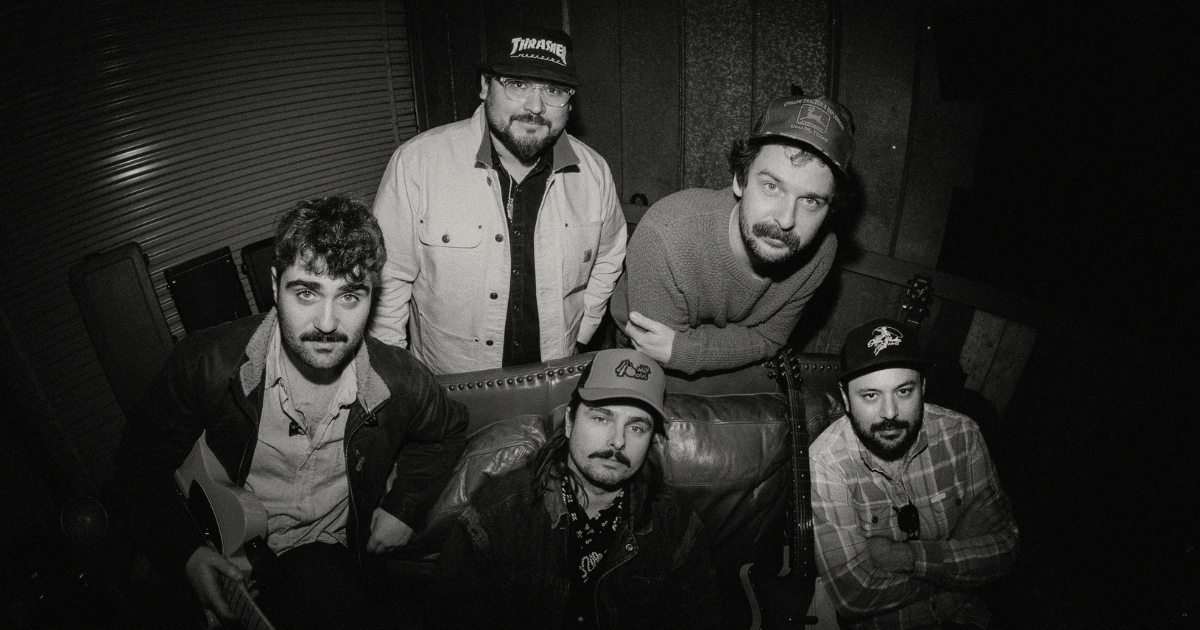
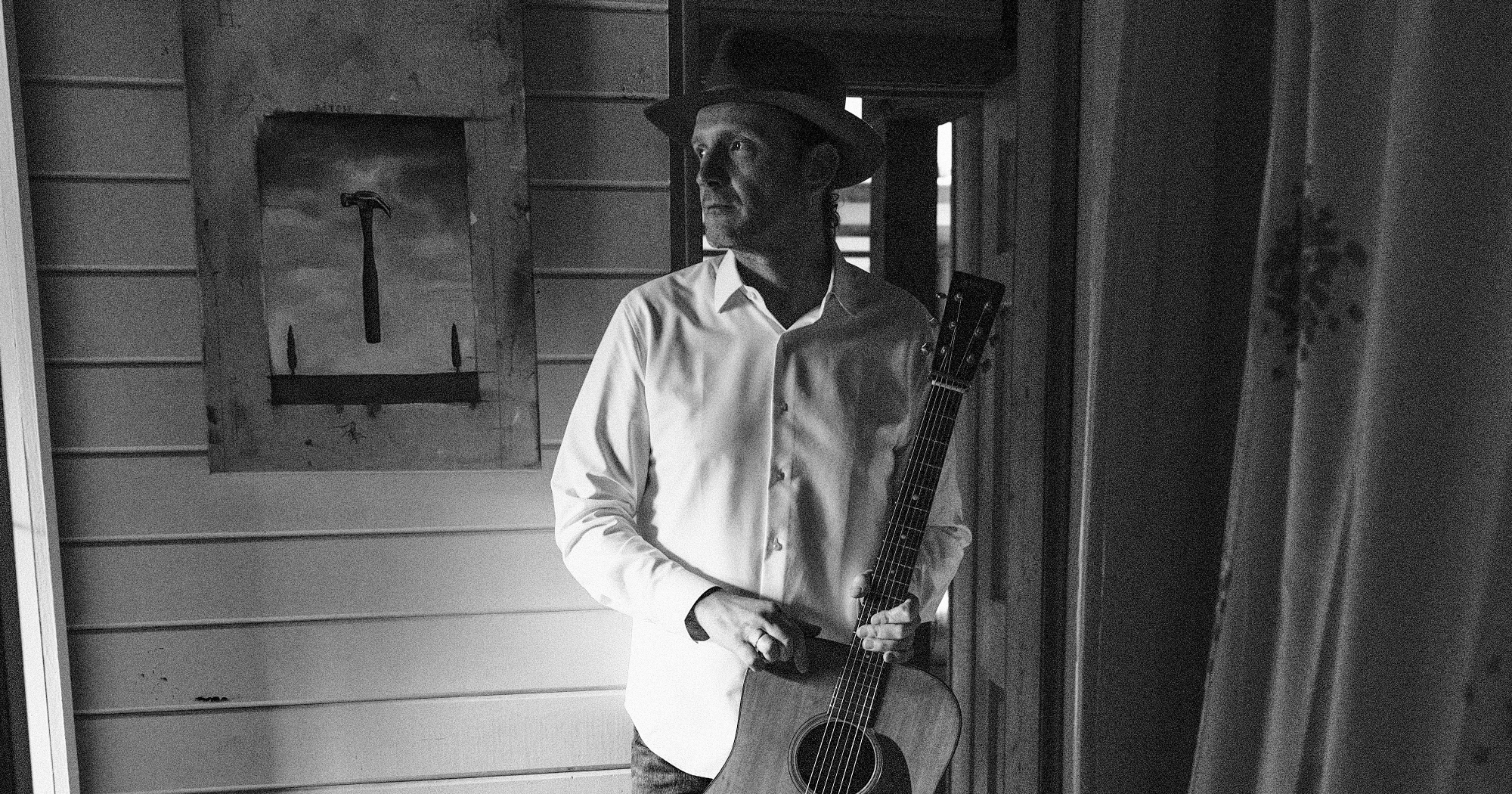
There’s little to no stage banter when the Droptines play a show, with the Austin, Texas-based band sometimes cramming 30 songs into a 90-minute set. However, as their new album, Drought Flower proves, they still have plenty to say. Their original songs touch on broken relationships (“Old Tricks”), family grief (“Mamaw,” featuring Sarah Jarosz), and losing loved ones to addiction (“What Ate My Friend”). As a nod to classic country, there’s often a little bit of clever wordplay to offset the drama, too.
Named for the downturned deer antlers that are prized by hunters, the Droptines (rhymes with “stop signs”) first took shape with an EP release in 2019. Lead singer-songwriter Conner Arthur has since guided the group through indie albums, relentless touring, and now their debut set on Big Loud Texas, the label founded by Miranda Lambert and Jon Randall. The five-piece band hasn’t yet moved into a tour bus, though. Instead, they travel in a retrofitted school bus with upgrades that would impress any road musician. (It sleeps 10 people and has a bathroom, two air conditioners, and a built-in trailer space.)
Growing up in the Texas Hill Country town of Concan, Arthur watched countless musicians play at his family’s venue, House Pasture Cattle Company, during the summer season of city folks floating the Frio River. But the rest of the year, when nothing was really going in town, influenced him just as much.
“I learned how to be alone in Concan,” Arthur says. “I learned how to clear my mind and ignore my hunger pangs. But I would always watch and study people. Especially because if you’re driving through Concan in, say, January, and you see a car that you don’t recognize or someone you don’t recognize, you’re shocked and you want to go talk to them. You’re just caught in your own little village for so long. Having an outside perspective from my little narrow worldview was very, very important to me.”
A few days ahead of a full slate of tour dates (and just before stocking the school bus), Arthur called into Good Country to talk about what inspired the new music.
For people who haven’t been to the Texas Hill Country, how would you describe it?
Conner Arthur: The drama of the limestone bluffs, the crystal clear waters of the Frio River – man, it’s hard not to have a religious experience every other day. Especially when it rains and the floodwaters start moving. Everything there is so dramatic and explosive and chaotic. From the summer to the off-season, you have three months of complete and utter chaos, then the rest of the year is just silent. There are some days where I’d walk out and just sit there looking at River Road waiting for a car to drive by. And I was starting to freak out, thinking that I was the last person on Earth.
More than likely I think that made its way into my personal life. It’s just a large juxtaposition, and a dichotomy of high highs and low lows. But I learned how to handle it, growing up there. We didn’t get internet or cell phone service until 2012, and that’s a great way to grow up. My backyard was 200,000 acres. I could ride horses without hitting a fence line for miles. I wish that more people had that upbringing. I wish that I could provide that for my kids.
If you didn’t get the internet until 2012, then you got to experience live music at your family’s venue before the cell phones in the air and people documenting every show.
Oh yeah. The funny thing about House Pasture is [that] it’s changed hands but it stayed in the family. My biological father and my uncle started it. They failed, so my grandpa bought it from them. And then it was kind of a “break even” type of venue. It was just an addendum for someone who’s gonna go down to Concan and float the Frio anyway. Like, “Oh, we can go see so-and-so.” I mean, I’ve got scars all from being this tall and women ashing cigarettes out on my collarbone. Not on purpose!
I learned more about what I didn’t want to be, seeing the evolution of the Texas country scene come through there. I saw that evolution get commercialized in the mid-2000s, like 2005 and 2006. But when I was a little guy, I got to see the Great Divide. I got to see Gary P. Nunn. I got to see John Conlee. I got to see Earl Thomas Conley. I got to see all these really high-class acts. Reckless Kelly is still one of my favorites from that era. Robert Earl Keen, the list goes on. Even if I didn’t like it, the song’s going to be in my head. It is still red dirt Texas country. I still know every word to all these other musicians’ stuff that I’m not a fan of, because it’s just ingrained in you. You can’t avoid it in that environment.
What were you doing before you jumped into music?
I was in construction throughout high school and I’ve gone back and forth over the years when I needed money. But when I was 18 years old, my mom pretty much gave me an ultimatum. She said, “If you don’t go to college, you’re cut off.” And I was like, “Well, I don’t really care. I don’t like ultimatums.” So I grabbed my banjo and I hitchhiked the country for about a year and a half.
I got back home, and that was like going 90 miles an hour into a brick wall. The fantasies in my head were dashed out by my mom’s disappointment. She said, “You’re gonna have to get a job.” So I went back to construction for a little bit, then I joined up in the oil field. I was an oil field mechanic for about two years, and I said, “I’m not going to die out here in the Eagle Ford Shale.” So I made a decision. Just to give me some more confidence, I went to the bluegrass program in Levelland, Texas, at the [South Plains] College. I did that for two years and went home and knocked out our first EP with David Beck.
I knew you played the banjo, but I didn’t know that you had studied bluegrass.
Dillon [Sampson], our bass player, and I both went to South Plains and he’s way more of a bluegrass cat than I, but my story about how I got into playing banjo is just kind of happenstance. My older brother came into some money when we were young, and I won’t go into the details on how he got it, but it was burning a hole in his pocket. He bought this Deering Goodtime open-back banjo and it was sitting in the back of his truck. I was about 14 and I had plenty of guitars floating around the house. And I had a piano, but I never really broke through on it because it was just an instrument for me to get a song out.
I don’t know if it was the open tuning or just the fact that it’s hard to not have a good time playing banjo, but I broke through on it. I could start developing an understanding of music theory and scales. I don’t know why it made sense in my mind that it was less intimidating than 72 keys or six strings. You go down that road, and then are you a gimmick banjo player or are you good? That’s what led me to South Plains. I’m not going to disrespect the institution of bluegrass or the instrument of banjo. I’m going to do my best to play it. But I need to play more. I need to stay on it, because that is not a bike. Your agility and endurance of playing the banjo collapses if you’re not tickling it once or twice a day.
Is that the same for writing with you? Do you need to consistently write, or can you put that away for a while and come back to writing?
I’m always kind of writing in my head and building concepts, then I’ll scribble it down. I’ll more than likely lose the piece of paper I scribbled it down on, but I’ve always said if it’s worth remembering, then I’ll remember it. But I probably lost a thousand songs that way. It’s like a floodgate. I sit around and I’ll have an idea, and I’ll get a quarter way through it, blah, blah… But it’s not until the band all sits down in a room and we all have the intention to write, and these things just… “Boom!” There goes the dam.
In several of your songs, there are references to pills or addiction. On this record, you have “What Ate My Friend.” That’s a reality for a lot of people. When you’re tackling a heavy topic like that, how do you get into that headspace, knowing you’re going to jump into something serious?
A lot of that, it’s lived in for sure. I’ve had men that came before me that did it so I didn’t have to. Back to, I know what not to do now. And my brother Landry being one of them. I lost him to all that shit a couple years ago. He and I were Irish twins. The same thing happened to my biological dad’s brother. At the same age, the same exact circumstance, and they both died on their birthday.
“What Ate My Friend,” I can’t even remember writing that one, but I know that I showed up with all of it, and that’s rare. I have this band to lean on, but I showed up with every bit of that. This was all here. It’s not just about my brother, but a couple friends I have. Just like, “I know you’re on meth, dude, but why is it making you a liar?” Like, you can be honest with me, just tell me. It’s getting in the way of our friendship if you’re going to turn into a liar.
I thought there was a nuance, kind of, what I refer to as the days of country gold, the wordplay of like, “She’s Acting Single (I’m Drinking Doubles).” That’s so important in country and bluegrass music – that play on words – and that one is like, “Hey man, what’s eating at you?” All right, what’s the extreme of that? “What ate my friend?” I thought it was pretty decent, but yeah, that’s a rough one, you know, but it’s real, unfortunately. It’s real for a lot of people. And I hate that. I hate that anybody has to suffer.
You’ve been around music from the time you’re a kid, and now you’re doing this full time. What has surprised you the most about this career path that you’re on?
The main one is that there’s viability. I said this in an interview before, but I just thought playing music was a good excuse to be a loser. And then to see it all pan out! It starts to feel like work, but work is good, especially if it bears fruit, which it is, and it’s starting to even more so. But to be able to build a foundation for my future family off of the back of these songs, that right there is top tier, number one, the most important thing. I can’t be more grateful for that and the blessings that God’s given us. Just having people come religiously to your shows, and singing words, it gives you faith in live music, for sure. It is a little shocking to me, at the end of the day that I didn’t make all this up.
Want more Good Country? Sign up to receive our monthly email newsletter – and much more music! – direct to your inbox.
Molly Tuttle has shared stages and recorded with Ringo Starr and Billy Strings, yet she still grapples with the unpredictable “ups and downs” of a musician’s schedule and the inherent instability of the road. We talk with the GRAMMY-winning artist – who was also the first woman to win IBMA Guitarist of the Year – about the “baggage” of turning a passion into a profession. We explore the necessity of trusting one’s gut over industry expectations, how she navigates the transition from bluegrass traditionalism to rock-leaning solo projects, and the quiet power of having a partner who understands the nuance of tour routing.
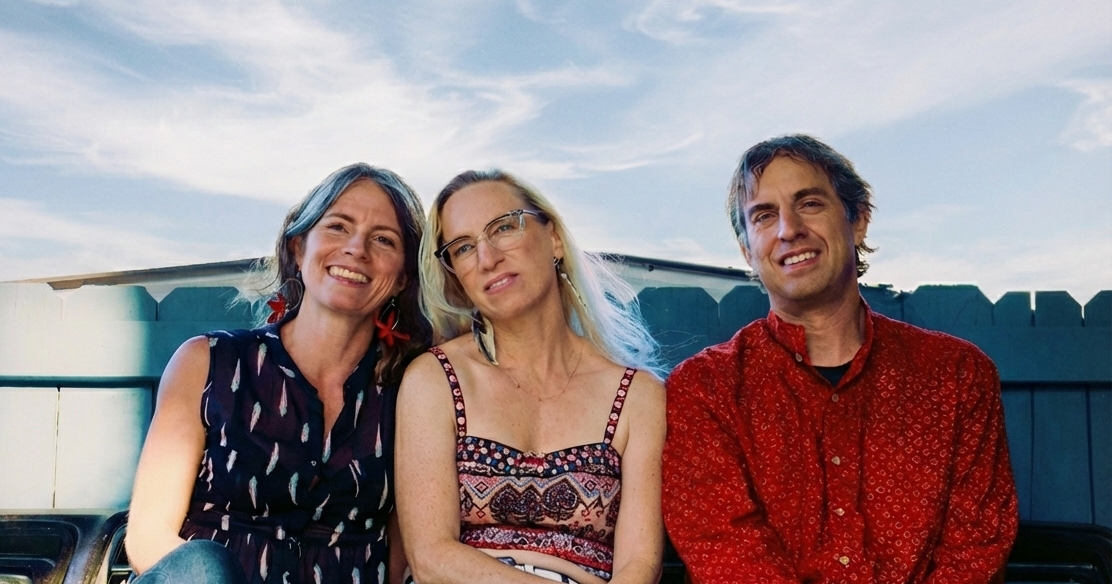
Artist:TANASI Hometown: Asheville, North Carolina Latest Album:TANASI (released May 8, 2026)
What’s the most difficult creative transformation you’ve ever undertaken?
Becoming one third of Tanasi was and continues to be a real challenge for me technically and creatively. Incorporating a lot of different styles into our music from different corners of the globe naturally stretches my comfort zone. Whether playing in odd meters, alternate tunings, providing percussion and even flatfoot dancing while playing my guitar, there is always lot to learn. In addition, being a trio, every moment requires a lot of dynamics from all of us. So we have to work very closely to make each moment count. Luckily we have a lot of years of shared effort that makes it all possible. I am grateful for the opportunity to learn new things. – Anya Hinkle
What has been the best advice you’ve received in your career so far?
I heard that when you are doing the work you are meant to do, it doesn’t feel like work. That is always a great measuring stick for everything we are “working” on. Of course, there is a lot of hard work that goes into being a musician and a lot of it isn’t exactly fun. Bfut at the end of the day, it feels natural and right and I’m grateful for the opportunity to do what I am doing with my life. – AH
What’s your favorite memory from being on stage?
We played together [recently] after having a couple month hiatus from the trio, because of other projects we’ve been working on. It brought me such a ridiculously large amount of joy to be up there creating a moment for the good people of Waleska, Georgia, at the Falany Performing Arts Center. Billy had just gotten back from teaching in England at Sore Fingers. The creative juices were overflowing and Anya was feeding off of it, rockin’ her heart out, and our harmonies were digging into each other. I was so aware of the power of that moment, the happiness that I feel performing music that inspires with these people whom I love, and getting to share that with the sweet folks sitting in their lawn chairs, enjoying a peaceful evening under the trees.
Getting to play at the Ryman with Vassar Clements is also surely a highlight. – Mary Lucey
What would a perfect day as an artist and creator look like to you?
One version of a perfect day would be having an entire day free to do nothing but write, study, and practice. Our German Shepherd sitting at my feet, howling at the occasional D note (he loves them, not sure why), fresh fruit in the fridge, nice tea and coffee – and while we’re at it, might as well be overlooking a beautiful ocean with the occasional break to go surfing.
Other versions of the perfect day involve collaborating with others, hearing original compositions come to life, co-writing something new, and still with the Shepherd, fruit, and ocean or forest. – Billy Cardine
If you didn’t work in music, what would you do instead?
I would either be a veterinarian or working on marine biology projects. – BC
It’s another week where popcorn may be necessary to fully enjoy our weekly new music round-up, with all of the new music videos included below! You Gotta Hear This…
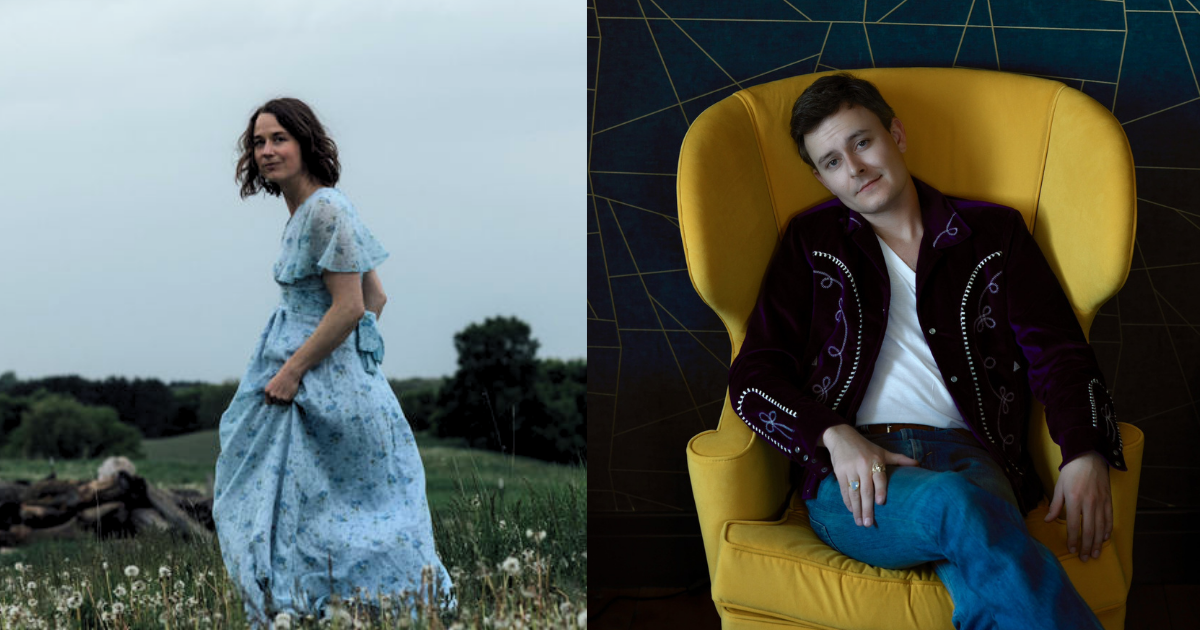
Our first screening is some cosmic California country from Mac Cornish, who’s sharing a music video for the title track of her upcoming album, Wayfaring Woman. The full LP will launch in September, so enjoy this early taste of the project, a song about finding, re-finding, and returning to oneself despite time, geography, and all that comes between.
We have a couple of fun and funny videos you’ll enjoy as well. Nashville-based husband-and-wife roots duo Zaggie (Zach & Maggie White) have a new single and video for “Parking Lot Vacation.” Sometimes a need to unplug, unwind, and relax can be satiated with a good ol’ fashioned sit in a parking lot. The video is witty and hilarious to match the flowing, island-getaway sonics of the song. Plus, Essence & Gold Country have a gut-busting video to tribute Mother’s Day and every “Good Mom” out there. As frontwoman Essence Goldman puts it, it’s all about “the beautiful chaos of motherhood and the truth that we don’t have to lose ourselves to be a good mom.” It’s bluegrassy country that will get your toe tapping while bringing a smile to your face.
Also just in time for Mother’s Day, our old friend Courtney Hartman shares an intimate and tender peformance video for “Honey, Honey,” a song she wrote dripping with love for her young daughter, describing the perfection of her child through her own eyes and building her up for a life built on love, confidence, and strength. It’s gut-wrenching and comforting at the same time, a deft balance that Hartman is well known for in her songwriting and guitar picking. It’s a lovely video for the occasion – and beyond – and announces her upcoming album, With You: From The Garden Shed, set for release June 12.
From bluegrass, Jaelee Roberts has a new single that was written by bluegrass radio personality and songwriter Terry Herd. “I’m Putting You Out of My Misery” pulls inspiration from traditional hard-driving bluegrass and contemporary sounds equally and boasts a stacked roster of pickers rounding out the band behind Jaelee’s gorgeous, crystalline vocals.
Country and Americana powerhouse Dee White has a new song as well, “Green River Rye,” which dropped earlier this week. Check it out below, it’s a pretty stripped-down recording made with just a simple acoustic trio – with Brian Murray and Jimmy Law – that lands somewhere between classic folk, country & western, and bluegrass, aesthetically. With whiskey as its centerpiece, it’s a lonesome and longing song that feels truly timeless – like you could sing along intuitively immediately, even on first listen. And don’t miss singer-songwriter Zach Seabaugh’s “Owes You Nothing,” a song about navigating Nashville, Music Row, and the music industry without losing your sense of self – or comparing yourself to everyone else you meet along the way. It’s a lovely track built on sensitive and brooding modern country sounds.
Celebrate your Mother’s Day weekend by calling your mama (who is definitely a good mom), sipping some Green River Rye, and taking a parking lot vacation – you’ve earned it. And, You Gotta Hear This!
Mac Cornish, “Wayfaring Woman”
Artist:Mac Cornish Hometown: Raised Bay Area, California, based in Nashville, Tennessee Song: “Wayfaring Woman” Album:Wayfaring Woman Release Date: May 8, 2026 (single); September 25, 2026 (album)
In Their Words: “‘Wayfaring Woman’ is a song about a girl who stays moving so her past won’t catch up to her – and so she won’t have to face herself. By the time I finished writing it I realized it was about myself. It was my way of telling myself, ‘It’s alright to cry, but it’s time to remember who you are and stop this cycle.’ So when I sing, ‘Even in yours lows, you can always go home,’ I mean the place and the state of mind.
“Making my way back to myself has always felt connected to the California home of my youth. Those canyon roads and golden hills remind me of who I am and who I always dreamed of being. I might not be able to access those places physically anymore, but the sense of self that I found there is within me and this song is a reminder to myself that I can always go back, I can always go home to myself. ‘Wayfaring Woman’ is the title track and first single off my second record, set to come out in September 25. It’s steeped in cosmic California twang, and I don’t think I’ve ever sounded more like myself.” – Mac Cornish
Track Credits: Mac Cornish – Vocals, acoustic guitar, songwriter Hillary Fretland – Harmony vocals Charlie Fuertsch – Electric guitar Cooper Dickerson – Steel guitar Jack Lawrence – Bass Dave Racine – Drums
Video Credit: Directed and filmed by Janaya Pardo.
Essence & Gold Country, “Good Mom”
Artist:Essence & Gold Country Hometown: San Francisco, California Song: “Good Mom” Album:Father’s Daughter Release Date: May 8, 2026 (video); September 26, 2025 (album) Label: Blue Elan
In Their Words: “This ‘Good Mom’ video is about the beautiful chaos of motherhood and the truth that we don’t have to lose ourselves to be a good mom. It holds that tension between giving everything to our children and still claiming space for our own soul, and taking care of ourselves so we have more to give.
“This song gets the best reaction when I perform it live. I just watch the mothers start laughing and shaking their heads in agreement. It is hard for me not to laugh when I sing it. Any mom out there can relate. We thought it was fun to release this music video as as a gift to all the moms on Mother’s Day. Though in my opinion, every day should be Mother’s Day!” – Essence Goldman
Artist:Courtney Hartman Hometown: Eau Claire, Wisconsin Song: “Honey, Honey” Album:With You: From The Garden Shed Release Date: May 8, 2026 (single); June 12, 2026 (album)
In Their Words: “‘Honey, Honey’ is a love song to my daughter – a collage of daily imagery and truths I want her to hold onto. She has taught me about delight and even as I am the one cradling her and giving her comfort, it is often my own heart being mended by her.
“In the final verse I list a few things I want her to remember when I am not there to hold her, ‘quiet waters, soothe and sway, sunlight and kindness, the cradle of a day. You’re brave as an iris, a bright display, a trumpeter swan lifting up and away.’ Tift Merritt co-wrote this song with me, helping me clear away the debris and uncover within my own days the scenes I most wanted to sing.” – Courtney Hartman
Video Credits: Filmed by Kyle Lehman. Edited by Erik Elstran.
Jaelee Roberts, “I’m Putting You Out of My Misery”
Artist:Jaelee Roberts Hometown: Nashville, Tennessee Song: “I’m Putting You Out of My Misery” Label: Mountain Home Music Company Release Date: May 8, 2026
In Their Words: “‘I’m Putting You Out of My Misery’ is one of those songs that stopped me in my tracks the first time I heard it. Terry Herd wrote an incredible song and I fell in love with it right away. To me, it strikes the perfect balance between that hard-driving traditional sound and a touch of contemporary bluegrass. I absolutely love how everything came together in the studio. I’ve always enjoyed a song with a little bit of attitude and this one definitely delivers.
“I was also fortunate to have some amazing musicians join me on the recording. Alan Bartram on bass, Ron Stewart on banjo, Tony Wray on guitar, Michael Cleveland on fiddle, Justin Moses on mandolin and Dobro, and Zack Arnold adding harmony vocals. Getting to collaborate with such talented players made this project especially meaningful to me. I’m truly proud of how the track turned out, and I’m so thankful to each of them for being part of it. I hope you all enjoy listening to it as much as I enjoyed recording it.” – Jaelee Roberts
Track Credits: Jaelee Roberts – Lead vocal Alan Bartram – Bass Ron Stewart – Banjo Tony Wray – Guitar Michael Cleveland – Fiddle Justin Moses – Mandolin, resonator guitar Zack Arnold – Harmony vocal
Zach Seabaugh, “Owes You Nothing”
Artist:Zach Seabaugh Hometown: Marietta, Georgia & Nashville, Tennessee Song: “Owes You Nothing” Release Date: May 8, 2026 (single) Label: Cloverdale Records
In Their Words: “This song came at a time when I needed to check myself – on where I was in life – and on the people in my life I didn’t want to take for granted. I wrote it with Park Chisolm and Reid Haughton on Music Row. I was talking to them about how hard it is sometimes to show up in Nashville, to be creative for a living. You can fall into the comparison trap when so much of the industry around you is trying to set out for the same thing. But I don’t like feeling sorry for myself. I’m super grateful for what I have and who I get to live life with and at the end of the day, I guess this world owes you nothing. So you gotta make the most with what you got—that’s when you realize you got all you need.” – Zach Seabaugh
Dee White, “Green River Rye”
Artist:Dee White Hometown: Slapout, Alabama Song: “Green River Rye” Release Date: May 6, 2026
In Their Words: “I first discovered Green River Rye Whiskey during a hunting trip to Kentucky. The bottle instantly caught my eye – it was the same one I remembered from an antique lithograph that hung in my childhood home. At the time, my girlfriend had just left me, and the chorus melody had already popped into my head. Later that night, I was hanging out with my buddies Jimmy and Brian and we finalized the music and lyrics. The very next evening, we went into the studio and recorded it as an acoustic trio in Nashville.” – Dee White
Zaggie, “Parking Lot Vacation”
Artist:Zaggie Hometown: Nashville, Tennessee Song: “Parking Lot Vacation” Album:Turpentine Mind Release Date: May 6, 2026 (single); August 26, 2026 (album) Label: Zaggie Records
In Their Words: “‘Parking Lot Vacation’ came from the exact mental-headspace-shift the song is about. I was supposed to be writing. Instead, I was staring at a blank page for long enough that it started staring back. Eventually I just… leaned back, let myself off the hook for a bit, and the song showed up. Turns out vacations are less about where you are and more about the moment you stop letting petty anxieties run the show. A good car seat, a warm breeze, a window cracked just right is sometimes all I need. We’ve seen a lot of beautiful places in the world and a parking lot on the right day is genuinely in the conversation.” – Zach White
Track Credits: Zach White – Vocals, guitar, songwriter Maggie White – Mandolin Dan Needham – Drums Byron House – Bass Chris Walters – Piano
Video Credits: Cast: Annabelle Fox-Tieman, Douglas Waterbury-Tieman, Ollie Fox-Tieman, Huck Fox-Tieman, Emily Rogers, Josée Klein. Directed and edited by Zach White. Location Videography by BAMM Productions.
Photo Credit: Courtney Hartman by Michelle Bennett; Dee White by John Peets.
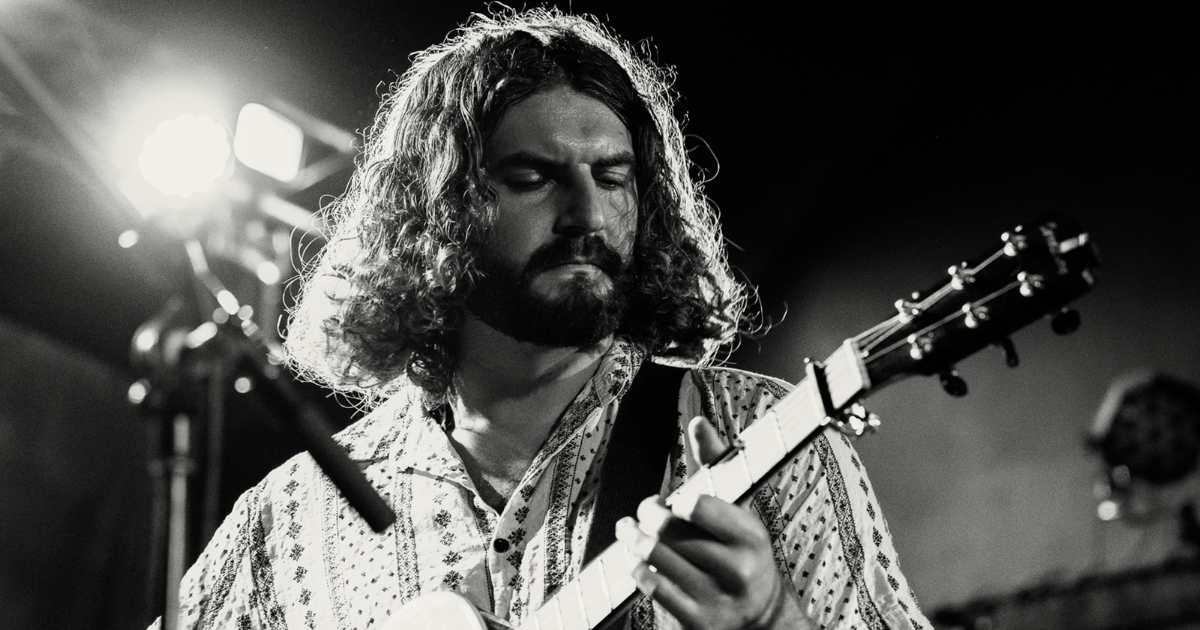
While many young talents, willingly or hesitantly, bow down to music industry boardroom suits who promise stardom if they’ll follow a professionally curated path, Cole Chaney takes a hard pass. He knows exactly who he is, what he does, and how he wants to get there. He creates songs, not content. He’s a career musician, not a brand. And the only thing he hopes to influence, maybe, is someone, somewhere, who wants to make music for all the right reasons.
Chaney grew up in Catlettsburg, Kentucky, surrounded by the legacies and storytelling of his elders. After graduating high school he worked as a welder, uncertain of his career path, but already fueled by his passion for music. Today, he keeps one musical foot in the bluegrass traditions of his Appalachian roots and the other in guitar-centric, amplified bands like Soundgarden, Nirvana, Alice In Chains, and Stone Temple Pilots.
His debut album Mercy and subsequent OurVinyl Sessions reflect his love of acoustic music and showcase his leanings toward introspection and melancholy. In the Shadow of the Mountain, released last fall, takes that darkness to a new place, balances it with moments of light and leans into the aforementioned rock influences, while never losing the origins of his sound. All of this shines at peak level onstage, captured by Western AF on a Live AF Session.
Sitting outside at home on an April morning, drinking coffee and surrounded by the sounds of birds and a breeze, Chaney spent a couple of hours on the phone with Good Country. He spoke candidly about his music, faith, values, mental health, and the intertwining of inner peace and inner turbulence that make all these things uniquely him.
When you were ready to do this professionally, you went to Lexington. Most songwriters would have chosen Nashville. Was yours a deliberate decision or a natural one?
Cole Chaney: To understand that decision, you have to look at who I was looking up to at the time – and still do – and what drove that decision. When I was in high school, probably around my freshman or sophomore year, 2014 or 2015, I started getting into this band called Sundy Best. They’re from Prestonsburg, Kentucky, which is just down the road from me. This was pre-Tyler Childers. At the time, in Eastern Kentucky, these guys were the biggest thing coming and going. They leaned heavily on being from Kentucky, the same way I do, and they moved to Lexington to get a foothold.
That was my early example, watching those guys. I knew they weren’t going about it the traditional way, which was to go to Nashville and pray somebody picks you up. They did it in Lexington. A couple years later, Tyler Childers comes along – another super-influential figure in my musical upbringing. Of course, he’s anti-Nashville – not the city, but the machine, if you will. I’m pretty sure he lived in Lexington, or at least around the area in the scene, for a while. So did Sturgill Simpson. The list goes on.
I was like, “What business model makes more sense to me? Do I go to the place where there’s more songwriters than the rest of the entire planet or somewhere where people will actually understand what I’m saying and I can maybe build myself a little bit of a foundation?”
The way I saw it is if I started building a sort of fan base or if I had enough ticket buyers, places like Nashville or Denver, these big music scene cities, what choice would they have other than to book us? That’s the way I looked at it.
And it worked.
It did work. It’s a simple business model, but the difference between that model and the other is you’re not sitting around waiting for something to happen. It’s on you to go out and make your own connections. It’s a very grassroots and organic way of doing it and that’s the way I like to do things. I’m anti-machine. Even though I work with some bigger companies, I keep it as limited as possible. That’s so I can play pretty much wherever I want, whenever I want, and they understand that.
On the Whiskey Riff Raff Podcast you said, “Music found me.” Would you mind expanding on that just a bit?
It did. I never would have dreamed at 16 years old that I would be doing this as my full-time job at 25. That was never on the horizon for me. I didn’t know what I was going to do. I knew I was going to weld for a little bit, see what happened, and maybe try to start my own business. And I did. But I really didn’t think it was going to end up like this.
I started realizing that people liked to hear me play and sing around the same time that COVID hit really hard. That gave me an opportunity to sit down, write some songs, and think about what I wanted to do with the rest of my life.
I’m very much a subscriber to the Bible, and I think the Lord has a mysterious way of working. He put me on a path without me even realizing it way back then and I do my best to stay on it now. I think my job while I’m here is to create as much good stuff as I can, stuff that means something, get it out to the people, and get out in front of them and play it for them. As somebody who enjoys going to shows in their free time and watching my favorite bands perform live, I know how that feels, and it’s truly a privilege to be able to offer that same service to other people.
There is music in your bloodlines, not professionally, but family members who played in church and at home. You obviously assimilated the sound of the area, and also this wider scope with bands like Alice In Chains and Stone Temple Pilots. When did all of that begin seeping into your songwriting?
We listened to the radio when I was growing up. I didn’t get educated on music or how to play until I started really getting into it. To this day, I’m still being educated and learning how to play on a daily basis. Part of what keeps it so fun to me is how much I don’t know and constantly learning about things.
Mercy was my first album, and I had access to what was around me. I had just moved to Lexington and I was really into bluegrass. There’s a band called the Wooks that, to this day, Glory Bound is one of my top three favorite records of all time. I was infatuated with that sound and that was what I wanted Mercy to sound like, or at least as close to it as I could get. A lot of the Wooks ended up playing on that album, plus Michael Cleveland. It was crazy.
Alice In Chains has been a mainstay in my musical taste since I was probably 15 or 16 years old. Since I first found them, I was very drawn in by the tone of Layne Staley’s voice and the weight of Jerry Cantrell’s guitar. It feels like you could bite it and chew on it. I don’t know how to describe it.
I’ve also always loved bluegrass, so it was [figuring out] how to bridge the gap of what I listen to and where I want to go with my writing without completely abandoning that sound. And bringing the alternative rock sound into the folk realm, where you have mandolin, upright bass, fiddle, acoustic guitars, and drums. The biggest change in the sound has been the addition of drums over the past two years, navigating that and seeing how it fits into the whole equation. It opened up a lot of avenues for me as a songwriter.
You began playing guitar at 13 or 14. Did you always play acoustic?
The thing about electric guitar, for me, is that it’s such a deep realm of gear and a deep dive. I’ve always been attracted to good-sounding acoustic guitars and players like Tony Rice, so I felt my effort was best spent getting really good at playing the acoustic guitar.
That will carry over whenever I decide to pick up an electric guitar, more so than if I only played electric guitar and tried to write some bluegrass-style acoustic lines. It would be a tougher transition to come over from light gauge strings on an electric guitar to .013s on a dreadnought and trying to play “Blue Railroad Train” or something like that.
Do you have an electric guitar?
I have several electric guitars. I’ve got a ’57 reboot Stratocaster, an American Professional Telecaster, my old Paul Reed Smith that I learned how to play electric on, and a nice Vox amp. I don’t know all that much about electric guitars. I still have a lot to learn.
Prior to this interview, you sent over your touring rig: a Gibson J-45 Banner in standard tuning with a K&K Pure Mini pickup, and a Breedlove sitka/rosewood Custom Dreadnought in drop D/double drop D, with an LR Baggs Element VTC pickup. Also two Grace BiX DI’s and a Lampifier Model 711 cardioid mic for lead vocals.
Those are my road guitars. They aren’t the ones I recorded everything with, but those are what you see at the shows.
In addition to the Gibson and Breedlove, do you have other acoustics?
I have two Gary Cotten guitars. [On] OurVinyl [Sessions, that] was my first Cotten I recorded with. On In the Shadow of the Mountain, many of those songs are my newer Cotten, which is sinker mahogany and an Adirondack top. “Alone?,” “In the Shadow of the Mountain,” “Into,” “Feels Like Rain,” and “Spirit” [were all recorded] on the Cotten.
That guitar sounds huge. It’s an outstanding guitar. I don’t tour with it because I’m scared something would happen to it and it’s too special to me. And Gary’s a great dude. He’s always taken really good care of me, and I want that guitar to stick around for a long time.
I don’t have any electronics in it, either. It’s a very traditional style, it’s a dovetail, and I want to keep it as traditional as I can and keep as much weight out of it as I can, because the more weight you add, sometimes it makes them sound worse.
What makes the Gibson and Breedlove right for touring?
They’re super-versatile and they both sound fantastic plugged in. That Breedlove is the longest-standing guitar I have that I’ve consistently played shows with. I got it in 2019 from 4 o’clock Rock Guitar Shop in Ashland [Kentucky]. It’s a custom dreadnought that they shop-ordered and it’s got the LR Baggs VTC Element in it. It has always sounded so good plugged in. I mean, all guitars sound bad plugged in, but it’s a matter of how much of the original sound can you actually preserve when you plug it in.
I’ve gotten to the point where I am almost starting to desire a little bit of that direct input texture. Maybe it’s because I’m listening to too much MTV Unplugged, but I’m starting to desire that kind of cardboard bad sound.
The Gibson, I put a K&K Pure Mini in and it sounds really close to what it sounds like not plugged in. Man, that Gibson is a beast. I love that guitar. It’s been to every show with me since I bought it last year.
I still have a Paul Reed Smith acoustic guitar and it’s a damned good little guitar. I’ll probably end up using it again on some stuff. It’s one of those that you plug in and it sounds great, too. But when I got into the whole bluegrass thing, I knew I needed something with a little more body.
Sometimes you use a pick, sometimes fingers. Either way, your attack is strong. How did your technique develop?
It’s one hundred percent out of necessity. I had a really bad injury in 2015 and I damn near cut my index finger completely off at the knuckle. I can’t wholly bend my index finger and I can’t feel the picking side of that finger. If you watch some of my older videos, my index finger is flailing around all the time. It’s because I’m picking with my thumb and middle finger, and that’s where I’m holding the pick. That took me long enough to learn how to do.
In recent years I’ve learned how to use my middle finger to lock my index in place and be able to hold a pick. It looks normal, but if you could see how the sausage is made, it’s not that pretty. I wish I had that dexterity in my finger. The takeaway message from that is, “Take care of your hands, y’all.”
Let’s talk about the through line from bluegrass to bands like Stone Temple Pilots and Alice In Chains. You blend the genres seamlessly and it all makes sense. Did you always feel that connection?
If you listen to any playlist I’ve had, I’ll go from Ralph Stanley to Chris Cornell in a heartbeat. Obviously the music is different, but there are common themes between the two. Mountain folk music, hard rock, and that era are very dark and brooding, and they can be heavy in their own ways too.
What is heavy? What makes a song heavy? You’ve got people drop-tuning their guitars, but it’s still not as heavy as Pantera or Black Sabbath or something like that. So it’s not necessarily the sound that makes it heavy. It’s the vibe of the song.
I feel like a salesman a little bit, trying to sell this idea that this stuff can be brought together and related in an authentic capacity. Let’s take [Stone Temple Pilots’] “Big Empty,” for example. To do a cover of that and be looked at as a folk artist or an Appalachian artist, or some people will even say country – which I disagree with, but whatever – it always seems like somebody will start into a cover of this great song, but then they’ll get hokey with it and it loses all its purity.
That’s not at all the intended purpose for me. It’s to say, “This is a fantastic song and it fits the vibe that we’re all going for in this realm.” A lot of people probably didn’t know that a mandolin or fiddle sounds great on “Big Empty,” but now they do, because it fits. That’s the way I listen to that kind of stuff. It’s just how to pull that off without being cheesy or coming off in a capitalistic way. More so in a way of, “I love this song and you guys should listen to it.”
Was it challenging to find musicians who understand going from bluegrass to Stone Temple Pilots and back again?
The band, I think through a lot of prayer/manifestation, has come together and, as you hear, they’re fantastic. They can play anything in any style. Ella [Webster] and Kyle [Kleinman] come from a more traditional folk music side of things. Kyle is a bluegrasser and Ella is an old-time fiddle player. Lars [Swanson] and James [Gooding] are jazz cats, so they have infinite vocabulary when it comes to music. If you can play jazz, then you’re going to be all right. If you can pull off that stuff, you don’t have anything to worry about when it comes to my type of music. Stone Temple Pilots is a walk in the park for you.
In our van, the most listened-to bands between us are Soundgarden, Pantera, whatever James’s choice of jazz is, and Alice In Chains MTV Unplugged. That’s a really good piece of music. But yeah, they’re a great band and they can play anything.
Did Lars and James know each other before they joined your band? To lock in a rhythm section…
No, they didn’t. Once you start playing with a jazz drummer, you need somebody who can comprehend the stuff he’s laying out and answer that on the bass. To have those two sit in a room and jam is really something to witness and listen to, because they speak a language to each other that I don’t understand. But I love when they do it, and it’s great to hear.
I’ll be playing onstage, singing and doing my thing, those guys are behind me and I’ll hear them back there, talking to each other while we’re doing this thing, and it’s awesome. They’re special. Those two dudes – they’re incredible. They’re the unsung heroes of music in general. That’s your metaphorical offensive line right there. If you don’t have a Lars and a James, then your quarterback’s getting sacked all the time.
This is you in 2025 on The Western Side, talking about Shadow: “a lot of darkness and an equal amount of joy in other songs. It’s a good depiction of where I’ve been for the past two years. A tumultuous and chaotic time period, but also great. And I’m still here.”
Then, In 2021, on With A View: “I load the pressure on. It’s how I operate. My brain lives in constant turmoil.” In 2020, talking about “Fever Dream,” “a song about trying to keep it all together. … the way I deal with this is isolation. And when you isolate yourself, you don’t have much of a choice but to hash some things out in your head.”
You are no stranger to the dark place.
Hearing those things, I look at that younger version of myself almost as I would look at a younger brother. Part of me wishes I could put an arm around that kid’s shoulders and be like, “You’re going to be all right, buddy.” Times got a little tough, as they probably should for anybody at points in their life. You can’t really enjoy the great parts of your life without having a little bit of adversity to overcome or deal with. The darkest part, for me, was maybe just growing up and gaining a new understanding of the way the world actually operates and how hopeless that can be at times, but also how beautiful it can be in the same stroke.
What I’ve realized is you get out of this world what you pay attention to, because whatever you want to find, you can find it. It’s there and it’s aplenty, whether you want to find the negativity and suffering, or whether you want to find the positive and the good. I don’t have the answer to where folks are supposed to operate and live, but I think it’s good to help people who are in that suffering side of things. But you can’t let that dominate your existence, and for a little while, I was maybe dominated by the darker side of life.
I try to be as empathetic as I can, but with that comes feeling a lot and also accidentally hurting people sometimes. That’s really tough, because then you have this cycle of guilt that you deal with trying to make it right in your head. As I’ve gotten a little older and maybe figured a couple things out, I try to have a lot more grace for myself. What I’ve learned about the pressure is that it’s really just perceived pressure and none of that exists, and you should just care less what people think.
Obviously, music is where you go during those times.
Absolutely. If something is eating at me that I’m having a hard time getting out in a linear fashion, a lot of times I find myself writing about it without even realizing it. My mom is an abstract painter, so I grew up with an understanding of what “abstract” means and abstract concepts. That’s how I materialize a lot of that stuff, because some of it is things I would never come right out and literally write down, for multitudes of reasons, but things you want to indirectly address. That’s when [abstraction] becomes a great tool for addressing those kinds of things. Metaphors.
It seems, when it comes to expressing those things, you’re in the balance between the emotionally open world of Cornell, Cobain, and others and the world of bluegrass, country, hunting, fishing, and those stereotypes of “manly men” – and not so much emotional transparency.
Not necessarily. I don’t know about the whole “alpha male” personality type. It’s always seemed to me that a lot of times the guys who are trying to be perceived as macho are probably the ones who need a hug the most. Now it’s everybody else’s problem because their dad didn’t do it, and that sucks.
As I’ve emotionally developed a little bit, I’ve really started to respect individuals like Chris Cornell. If you look into him as a person and watch some of his interviews, he’s intelligent and seemingly self-aware. I respect the way he conducted himself, especially in interviews, and the way he made sure to pay attention to people and make them feel seen. The only way you can empathize with people like that and make sure of those types of things is if you’ve been on the other end of that stuff and you’ve felt looked over and brushed off.
I may not be the best at answering Instagram DMs, and I definitely don’t stay on the internet because I think it sucks, but if I talk to somebody in person, I always try my best to give them that and be present in the moment. Somebody else that does a fantastic job of that is Nicholas Jamerson, the frontman of Sundy Best, who’s a mentor, friend, and hero of mine.
Have you ever felt any hesitation about publicly ripping off the mental health Band-Aids? Or, conversely, is there a feeling of opening the door to people having these conversations?
Sure, there’s hesitation about a lot of things. There’s a lot of decisions about, “How do you want to portray yourself in a public light?” But my main goal is and has been to just be as authentic as I can, as representative of how I feel about things as I can, and to be accepting of people and understand that they come from different places and have different perspectives.
With that hesitancy, there’s also much more in the way that when we were talking about 20-year-old Cole, the way I want to put my arm around that kid and comfort him, that’s what I want my music to do for people that feel the way I was feeling at that time.
Listening to you, I’m reminded of something Charlie Daniels said to me during an interview years ago: “Music is too precious for me to prostitute it.”
Oh, yeah. Absolutely. And, too, Charlie Daniels is one of the greatest country musicians ever. I want to go on record saying that.
The way I look at it is, could I see my heroes, people I look up to, going online and being like, “Comment what song you think I should release next”? No, I don’t think I could. When I see someone who has musical and artistic integrity, that’s how I’m going to operate. I’m going to try my hardest to uphold my integrity and not do the TikToks and the really cheap stuff.
You absolutely will suffer financially for not playing the game and if you don’t kiss the right ass, but, to me, that suffering is not negative suffering. I’m honored to be able to suffer like this, because if my options are suffer or have to watch Country Central’s “Hot Take Tuesday,” then give me suffering all day long, because I’m not paying attention to that bullshit. It’s ridiculous. I don’t care who’s beefing and I don’t care what dude is playing cowboy this week.
That’s why I’m trying to get out of the country scene. It’s becoming so fake and there’s so many people trying to be carbon copies of other people. There’s no authenticity. Everybody’s full of shit. We went through this period where people like Tyler [Childers] drove the spear through the heart of this mainstream country thing and it was akin to when Nirvana came on the scene and effectively killed hair bands for a while. But then the Nirvana copycats came along and garnered a lot of the same attention.
I’m not saying that just Tyler Childers is responsible for this. People like Sturgill, and a lot of smaller artists in their own scenes, are responsible for the turning over of the dirt, if you will. But it’s getting stale. It’s past getting stale. It is stale and it’s bad. There’s a lot of really shitty music being put out right now and I don’t want any part of that.
If I’ve got to step away and back off and be out of the internet eye, then fantastic. That doesn’t bother me one bit. If it means a few less people know who I am, then so be it. But I hold out hope that people will eventually realize how cheap and bad a lot of the music is that is being promoted right now, and there’ll be another turning of the dirt soon.
Yes, art is subjective, but art is subjective. Not this corporate bullshit that they’re trying to push. That’s not art. That’s six dudes in a room trying to come up with a song that’s going to sell on the radio or sell on the internet, or “We’re going to put thirty tracks on this album” so they can set streaming records. It’s like, “Man, y’all have lost the complete plot of the whole thing.” There’s nothing interesting about that to me. I’m all about authenticity. I want to believe the person on the other side of the microphone from me, and if I don’t believe you, then I’m out.
A fresh batch of roots music has arrived! You Gotta Hear This.
To kick off our weekly roundup of new music, singer-songwriter Jacob Augustine shares a music video for “Halfway to Harlem,” a jangling, twanging, and bluesy roots track with post-apocalyptic vibes – and the video to match. For how forbidding the video and lyrics are in their subject matter, the song is still charming and inviting. You’ll also enjoy a new song from Swedish roots duo Orange Oak. “well, well, well” is tender and contemplative and, as they put it themselves, it “explores the struggles of confronting yourself after a period of avoidance and inner conflict.” Still, there’s ample redemption to be found in the alt-folk track.
For a bit of troubadour storytelling, Pennsylvania’s Jeff Mamett unveils “Like Old Uncle Jim.” With a bit of dark country & western tinge, it’s a story song that pays tribute to larger-than-life figures and finds truth even in fiction and mythology. Mamett’s baritone vocal is rich and engaging. Plus, Irish artist Helen O’Shea, who’s now based in New Jersey, calls on her friends the Carlile Family Band for her new track and lyric video for “There Will Be Days.” It’s Americana with a party vibe, but the subject matter is much more deep and involved, passing on wisdom and considering the many cycles of living life. It’s ripe for a sing along!
In bluegrass, mandolinist and singer-songwriter Darren Nicholson launches his new album, Lonesome Trails and Tall Tales, today. To celebrate, we’re sharing “All Trains Must Come to Pass” for release day. It’s a barn-burning traditional bluegrass number that Nicholson co-wrote with Charles Humphrey III and Thomm Jutz. And don’t miss the latest duo recording from Bryan Sutton, this time featuring guitar wizard Tommy Emmanuel alongside. “Don’t Let Your Deal Go Down” is a common choice by Sutton, but in this arrangement with Emmanuel there are equal infusions of jazz and swing alongside bluegrass and flatpicking.
Also out today is a new tribute album to Guy Clark produced by Dan Knobler and released by Truly Handmade Records. Old No. 1 Revisited features performances by Jade Bird, Erin Rae, Brennen Leigh, Kelsey Waldon, Logan Ledger, and more. For our roundup, we’re sharing Margo Price’s rendition of “Rita Ballou.” Both Price and Knobler tell us their stories of how the track came to be below – it’s an absolutely lovely tribute to a songwriting and Americana legend.
There’s so much to enjoy! You Gotta Hear This…
Jacob Augustine, “Halfway to Harlem”
Artist:Jacob Augustine Hometown: Portland, Maine Song: “Halfway to Harlem” Album:I Love You Forever Release Date: April 29, 2026 (single); May 22, 2026 (album) Label: Team Love Records
In Their Words: “Post-apocalyptic survivor studies. Car alarms serenading the cities of America to dead battery silence.
“What is it to fall in love, raise a child, and save the world all at the same time? This song explores these themes and questions. Questions I don’t really have the answers to. But questions that need to be asked I think.” – Jacob Augustine
Video Credits: Directed by Jacob Augustine. Co-directed, filmed, and edited by Joshua Powers, Wavin AM. Starring Brandon Wardwell. Produced by Wavin AM.
Jeff Mamett, “Like Old Uncle Jim”
Artist:Jeff Mamett Hometown: Central Pennsylvania Song: Like Old Uncle Jim Album:Fortunate Son Release Date: May 1, 2026 (single); August 21, 2026 (album)
In Their Words: “I grew up around people like this – the kind of man whose stories don’t always land the same way depending on who’s listening. With Uncle Jim, I was interested in that gap between what people say about somebody and what you see for yourself. As a kid, you don’t question it the same way, you just take it in.
“The details were important to me – the cigarette, the pony ride, the way he carried himself. Those things felt more honest than trying to explain him. By the end, the truth is there if you’re paying attention, but it doesn’t come out and announce itself. It just sits in the room. I think that’s how a lot of people are. You don’t always know who they are unless you’re looking closely.” – Jeff Mamett
Darren Nicholson, “All Trains Come to Pass”
Artist:Darren Nicholson Hometown: Canton, North Carolina Song: “All Trains Come to Pass” Album:Lonesome Trails and Tall Tales Release Date: May 1, 2026 Label: Mountain Home Music Company
In Their Words: “‘All Trains Come to Pass’ is a barn-burner! It was written by Thomm Jutz, Charles Humphrey III, and myself. The song speaks metaphorically about the passing of time and how important it is to live in every moment. Breathe it in. The band is kicking on this one, and it was so much fun to record! We hope you enjoy listening to it as much as we did creating it.” – Darren Nicholson
Track Credits: Darren Nicholson – Mandolin, lead vocal Kristin Scott Benson – Banjo Mark Fain – Upright bass David Johnson – Acoustic guitar Tony Creasman – Drums Deanie Richardson – Fiddle Kevin Sluder – Harmony vocal Avery Welter – Harmony vocal Jennifer Nicholson – Harmony vocal
Orange Oak, “well, well, well”
Artist:Orange Oak Hometown: Stockholm, Sweden Song: “well, well, well” Album:almost, I thought to myself Release Date: May 1, 2026 (song); September 11, 2026 (album) Label: Nettwerk Music Group
In Their Words: “This song explores the struggles of confronting yourself after a period of avoidance and inner conflict. It moves between self-criticism and a quiet desire for change; realizing escape is no longer sustainable. There’s tension between wanting control and accepting vulnerability. There’s strain in letting go of anger and returning to life with a new sense of honesty. At its core, ‘well, well, well’ is about self-reflection, reconciliation, and finding the courage to begin again and again and again.” – Filippa Frisell and Erik Olsson, Orange Oak
Helen O’Shea, “There Will Be Days”
Artist:Helen O’Shea Hometown: Born in Limerick, Ireland; living in Long Branch, New Jersey Song: “There Will Be Days” Album:Songs In The Key Of O Release Date: May 1, 2026 Label: White Butterfly Music
In Their Words: “The song ‘There Will Be Days’ started out in a conversation between Caroline Carlile and myself. She was starting out as a young artist with tremendous potential and I was telling her that there will be days when she feels the world is against her, but that is exactly when she must let her starlight shine through. First this line became a poem and then Caroline and I decided to write a song about it together, with help from Jay Carlile and Marc Swersky. The result is this beautiful duet between Caroline and myself with Jay on harmonica and the Carlile Family Band on backing vocals against the music of Andrew Carillo (Joan Osborne), Rob Clores (Jesse Malin), and Aaron Comess (Spin Doctors).” – Helen O’Shea
Track Credits: Helen O’Shea – Vocals, songwriter Caroline Carlile – Vocals, songwriter The Carlile Family Band – Background vocals Marc Swersky – Producer, songwriter Andrew Carillo – Guitars Rob Clores – Keys Aaron Comess – Drums Jay Carlile – Harmonica, songwriter
Video Credits: Story & Bone
Margo Price, “Rita Ballou”
Artist: Margo Price Song: “Rita Ballou” Album:Old No. 1 Revisited Release Date: May 1, 2026 Label: Truly Handmade Records
In Their Words: “Many years ago, I was lucky enough to find Guy’s Clark’s perfectly crafted album, Old No. 1, while shuffling through the jukebox at the Devil’s Backbone Tavern in Fischer, Texas. His fingerpicking and storytelling on ‘Rita Ballou’ pulled me in. And I was hooked.
“Guy’s a carpenter in every sense of the word and every song he builds is ornate, solid, and reliable. It’s an honor to interpret his songwriting for this tribute, alongside producer and guitar virtuoso Dan Knobler, harmonies by my talented bandmate Logan Ledger, and the incredible, top-tier musicians that played on this track.” – Margo Price
“Margo Price was the immediate and obvious choice to extol the charms of ‘Rita Ballou.’ These songs do the work, all we have to do is cast them appropriately. So in that spirit I appointed the tracking room at Good Wishes with a proverbial joy carnival of musicians: octopus double drums from Jamie Dick and Dom Billett, powerhouse Jen Gunderman at the keys, the legend Russ Pahl walking into the studio with his steel on his shoulder, Will Honaker holding it down on bass, me strumming and picking. Margo stood out on the floor with us and nailed the song to the wall. Logan Ledger and Nicki Bluhm provided the backup choruses and a good time was had by all.” – Dan Knobler, producer
Track Credits: Margo Price – Vocals Logan Ledger – Harmony vocal Nicki Bluhm – Harmony vocal Maya de Vitry – Additional harmony vocals Rachael Davis – Additional harmony vocals Dan Knobler – Acoustic guitars, electric guitar Jen Gunderman – Piano, organ, Wurlitzer Russ Pahl – Pedal steel Will Honaker – Bass Jamie Dick – Drums, percussion Dom Billett – Drums, percussion
Bryan Sutton, “Don’t Let Your Deal Go Down” with Tommy Emmanuel
Artist:Bryan Sutton with Tommy Emmanuel Hometown: Nashville, Tennessee Song: “Don’t Let Your Deal Go Down” Album:From Roots to Branches Release Date: May 1, 2026 (single) Label: Mountain Home Music Company
In Their Words: “[Tommy is] another guy that’s just been gracious to me over the years… a big pal and he’s a big energy. Every time he sees me, you just get all of his attention … he’s a wonderful friend and a lovely dude. Certainly, the world knows how strong a musician he is, but you know, the choice for that song, something with energy, that sort of comes from more of a bluegrass background. Those chord changes lend a little more to the swing and jazz world, and that’s where he and I have spent a lot of time playing other songs together.
“I was a partner on his duet record some years ago. We did ‘C Jam Blues’ and some other swing music like that. Trying to choose songs that sort of honor a certain angle of our relationship, musically, so that mix of bluegrass and jazz and swing is where Tommy Emmanuel and I find some common ground.” – Bryan Sutton
Track Credits: Bryan Sutton – Acoustic guitar, lead vocal Tommy Emmanuel – Acoustic guitar, vocal
Photo Credit: Margo Price by Yana Yatsuk; Darren Nicholson by Jeff Smith.
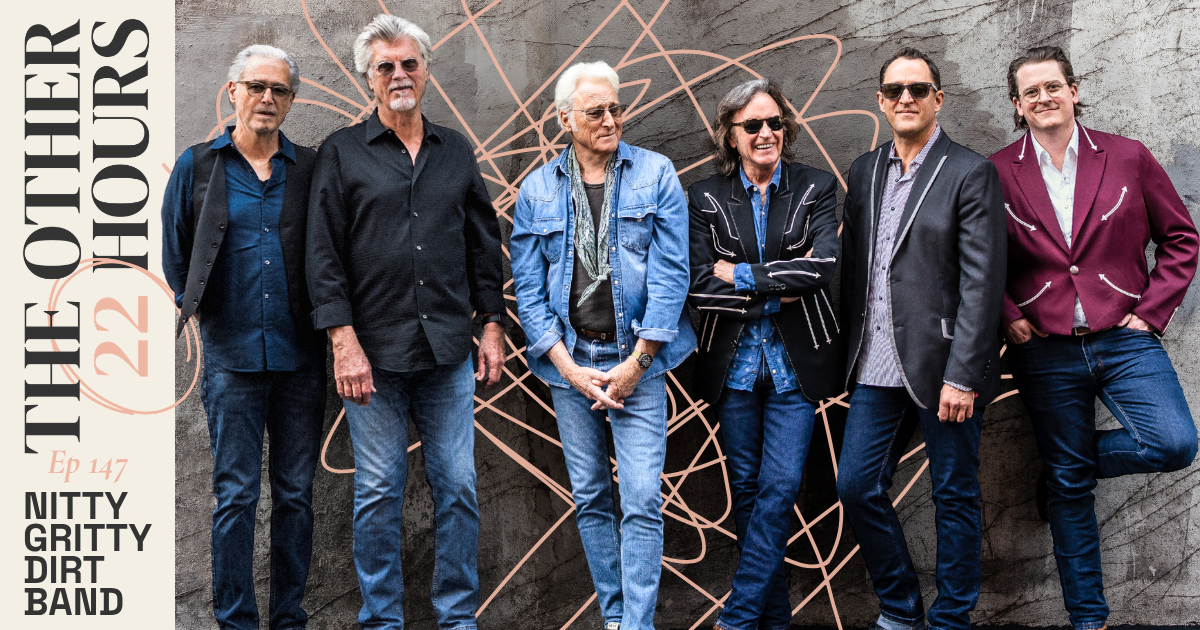
As a founding member of the legendary Nitty Gritty Dirt Band and a three-time GRAMMY winner, JeffHanna has navigated nearly 60 years in the music industry. His resumé includes credits with the likes of Linda Ronstadt, Emmylou Harris, Johnny Cash, and many others. In this episode of the Other 22 Hours we explore the geography of inspiration, from the 1970s Troubadour scene in LA to his 40 years anchored in Nashville’s songwriting community. Jeff reflects on the economy of a perfect line, the creative vitality of a “hard reset,” and why the bedrock of this work has to begin with the simple intention of having fun.
Hating on Nashville – whether Music City, Music Row, Lower Broadway, the tourists, the industry, the traffic, or almost anything and everything else – is a trope and tradition essential to country itself. As long as this town has been a roots music mecca it’s been a curse, too. It’s a maker and breaker of dreams that’s all at once exactly what it is and what it looks like, and a figment of your imagination, too.
On the roots songwriter’s map, it might be the capital city. Flanked by Memphis and “Carolina” and Los Angeles and Malibu and the bluegrass of Kentucky and the “concrete jungle where dreams are made of,” all familiar locales to songsters of all genres referencing places and cities. Places are excellent characters in songs, and we return to our favorite destinations over and over as we relish tracks like “Dublin Blues,” “Eight More Miles to Louisville,” “Big Ball in Brooklyn,” “Take Me Home Country Roads,” and so many more.
But isn’t there just something special about songs that hate Nashville? As a motif, it stands out among songs about places or among places as a trope, in country and outside of it. Songs that hate Nashville can ooze pain or vengeance. They can be aspirational or giving up all hope. But perhaps their real unifier, besides Music City itself, is that each and every song that offers a variation on this theme is really, at its core, declaring a deep love for the town.
In March, country artist, singer, and songwriter Ashley Monroe surprise released an eight-track original album, Dear Nashville. Not quite a concept album – perhaps rather having a concept at its core, instead of as its entirety – it’s an incisive and vulnerable demonstration of Monroe’s love… and hatred of Music City. “I Hate Nashville” opens the album with gauzy pads and a forward-leaning train beat as Monroe sings words that clearly haunt her, and so many like her. Lyrics often uttered by the gatekeepers of the world, the holders of the keys to this city. “They can’t make you a star,” “somethin’ ain’t stickin’,” “pay your dues.”
The rest of the song, though, is something different. It’s exasperated and exhausted, yes. Defeated, almost. But it’s not a hate letter Monroe is writing to her hometown of decades. She sings on the chorus:
Country music Is the reason I’m alive Paul Franklin playin’ steel God knows I love Vince Gill But I hate Nashville
And wouldn’t you know it, that mournful, heart-wrenching pedal steel singing along with Monroe’s beautiful, East Tennessee voice is played by Paul Franklin himself. Because that’s what Nashville is capable of. That’s what it does best. It makes dreams reality, it makes friends of idols. It can be everything you pictured, but wouldn’t let yourself believe is possible.
Wrote a lot of songs Made a lot of friends And if I’m being honest I’d do it all again I remember the first time I saw the skyline shining Sometimes the road to the top’s A lot of downhill climbin’
Verse two captures the duality of songs that hate Nashville perfectly. Monroe is displeased with the industry, with the machinations of a community designed to reap profits and profits and profits, and that isn’t so concerned with art or country anymore. But her dreams have come true. She has paid her dues – and then some – and she’s made records and sung songs with Franklin, Vince Gill, Miranda Lambert, and so many more name-droppable peers, heroes, legends, and virtuosos. And, if she’s being honest, she’d “do it all again.” Who wouldn’t?
In each of these 35 songs, you’ll find artists just like Monroe, from across generations and from a variety of backgrounds and origin points inside and outside Music City. Each grapples with these same essential questions of this place. Of Nashville, Tennessee. Struggling with the industry, or Music Row, or the politics of each. Some demonstrate internal battles, others are so external they itch. There are songs that decry capitalism and that long for acceptance by it. There are songs of love lost and romantic haunts turned sour. You may hear someone writing on the outside looking in, or the inside looking out. It’s all compelling, the same but different.
Whatever you hear across these songs that hate Nashville, you’ll hear excellent music and a country tradition so essential to the format it belongs right next to losing your love, your truck, your dog, your house, your job, your… dream of making it in Nashville. Three chords, the truth, and hating Nashville. It’s as country as it gets.
“Heartbreak Town” – The Chicks
“Square people in a world that’s round.” That’s an indictment, for sure, written as only Darrell Scott could. Scott is well-practiced in songs that hate Nashville whether this magnificent track made even more delicious by the Chicks or “Long Time Gone,” also cut by the Chicks and included on this playlist, or even “Hopkinsville,” a Scott original inspired by longing to be done working on the Shelby Street bridge downtown. The Chicks sold the true heartbreak of Nashville on this number even before the city’s central machine turned its ire toward them. As we all know, they survived being on the receiving end of Music City’s ire more than once – and made millions doing it.
“Kay” – John Wesley Ryles
A story song for the ages, and about Nashville, to boot. “Kay” is sung from the perspective of a depressed taxi driver, “I’m living and I’m dying, staring out at Music City, from my cab.” The singer moved his love, Kay, to town to give her a shot at making it big. He’s hearing her record on the jukebox – it “don’t sound bad.” Woof. Gut punch. (At least if she’s gonna be famous, let her sound bad!) The perspective in the song is dynamic and surprising in a modern context, but reminds of how literary and poetic country story songs in the ‘60s and ‘70s could be. And how narratively dense. “Kay” peaked at No. 9 in the U.S. and is Ryles’ best-known record.
“Nashville Blues” – Billy Strings, Bryan Sutton
Out of so many versions to choose from, we chose this one. Can you blame us? Perhaps Bryan Sutton’s joke at the top is the real reason it belongs on this playlist. He introduces “Nashville Blues,” a classic in the bluegrass and old-time canon, thusly, “Here’s a song about Nashville that Billy wrote on the way here stuck in traffic.” The crowd cheers at the joke and a man can be heard responding, “That’s gonna be a long song.” Everybody at the sold-out American Legion neighboring the famous, coveted 37206 zip code laughs. Hating Nashville unites us.
“Ten Year Town” – Hailey Whitters
Speaking of dues, Ashley Monroe’s “I Hate Nashville” immediately brings to mind Hailey Whitters’ “Ten Year Town.” Released in 2020 on The Dream, it drives to the heart of the strange but usual expectations projected by others and ourselves – onto Nashville, careers, dreams, and music- and art-making. What Whitters is really singing about – and Monroe, too, to a degree – is that country music is a trade. Whitters is asking what else she could do besides this, while noting all she’s had to do besides make music in order to make music her trade. But if, like Monroe and Whitters, the trade you’ve plied your whole life or for decades can’t make you a living, what good is paying dues? In investing 12 years in a “ten year town”?
“Nashville Without You” – Tim McGraw
You know what else is country AF? Referencing country songs in a country song. If roots music is going to be one thing, it’s going to be self-referential. All songs about Nashville do this to a degree, but Tim McGraw’s “Nashville Without You” does it remarkably well. Especially for highly stylized mainstream radio country such as this. As a bonus, this is also an “I Left My Heart in San Francisco” sort of love song, where one’s relationship to a place is entirely colored by another person and your shared connection to that place. Ryles’ “Kay” in another generation!
“Nashville” – Indigo Girls
Let’s not forget the folks who have the most reason to hate Nashville – in the music industry and outside of it – have always been women, queer folks, Black and Brown folks, and disabled folks. That’s certainly part of why so many women have written such excellent songs panning Music City. There’s an added layer of truth, an extra heaping helping of grit. 70 cents on the dollar, 12 years to equal the ten-year town requirement.
As an extension of that theory then, being both women and queer as alt-country indie folk artists in the ‘90s is a huge part of what imbues the Indigo Girls’ “Nashville” with honesty and resonance. It’s artful in its lyricism and for painting as much with absence as presence, fleshing out the story by leaving it out here and there. But it’s the perfect song to leave off with, as you continue your listening to the full 35-song playlist below.
Emily Saliers and Amy Ray touch yet again on the maelstrom of mixed feelings musicians and creatives feel about this place, reminding of the central existential love/hate in Monroe’s “I Hate Nashville.” Saliers sings:
I’m leaving I’ve got all these debts to pay You know we all have our dues I’ll pay ’em some other place I never ask that you pay me back We all arrive with more I left with less than I had
The song is so seemingly over-and-done-with Nashville and yet, there’s a crack under the door. The window is not quite latched. A pathway however slight to wiggle back in. You can see it again elsewhere in the song, “I can’t place no blame/ But if you forget my face/ I’ll never call your name again.” Are they singing to a person? To the industry? To Nashville? To all of the above?
One thing we know for sure, they hate (love) Nashville. Just like Monroe. Because how does she close her album, Dear Nashville? It’s how we decided to close our playlist, too. With “Quittin’.” Another song co-written by Monroe with co-producer Luke Laird. It ends:
So much for quitting I guess I’ll stay on the ride ‘Til the day that I die
We should hope so. There are so many more songs about hating Nashville to write and to enjoy!
Below, sample many more songs that hate Nashville from artists like Marty Stuart, John Anderson, John Hartford, Margo Price, Donovan Woods, Lindi Ortega, Kacey Musgraves, Steve Earle, Kris Kristofferson, Charley Crockett, Dale Watson, Waylon Jennings, and many more.
Additional contributions and curation by Shelby Williamson.
Following instructions for listeners to Get Yourself Outside in 2022 and declaring they’re heading Nowhere Next in in 2024, jamgrass torchbearers Yonder Mountain String Band have reached their zenith on Good As True.
Released March 27, the collection finds the band embracing the skill sets of its newest members Nick Piccininni (mandolin, vocals) and Coleman Smith (fiddle) more than ever, as they dissect the human condition through nine tracks highlighting everything from falling in and out of love (“Brand New Heartache”), to confronting regret (“Blind”), and frustrations with today’s political climate (“The Lie”).
During a recent phone call, bassist Ben Kaufmann spoke with BGS about working Piccininni into the writer’s room, lessons learned from touring, how former band member Jeff Austin’s spirit sticks with him, and more.
This is your third album having Nick in the writer’s room with you, Adam [Aijala], and Dave [Johnston]. What has that evolution of bringing him into the fold there been like?
Ben Kaufmann: Yonder has always had its own special sound. There’s a very specific energy and communal taste with the music that we’ve been tapping into collectively for so long. Nick had already been writing for a while before coming aboard [for 2022’s Get Yourself Outside], so once we got him up to speed with our style we realized how intuitive he is. He has his own understanding of what a Yonder Mountain song is, which has made it fun when it comes to overhearing him workshopping songs or when we swap ideas backstage and on the bus.
We also knew, with recording time on the calendar, that we’d need more material. For most of Yonder’s lifespan we’ve had four writers – going all the way back to the days with Jeff, so it only made sense to give Nick the same opportunity when we saw what he could do. After putting songs from all of us “through committee,” a bunch of his wound up being cut [recorded] these last handful of years.
It’s especially important because Nick is such a wonderful singer. He’s great at everything he does, which is really inspiring to be around. He’s really stepped into his own as a featured vocalist and as a mandolin player. It’s been fun encouraging him to cultivate his own voice while also hearing him take the reins on some of Yonder’s oldest, most beloved songs.
What’s most satisfying for me with this band is writing my own songs, playing them with the band, and having people who are ostensibly there to hear the music enjoying it. There’s no better feeling than that and we wanted Nick to feel it too, since he’s currently in what seems to be a really prolific time of his life for songwriting. He’s the perfect fit for what we do. I’m so grateful he came into our lives and continues to enjoy making music with us. Being in a touring band isn’t for everyone, but everything with Nick has felt very natural from the start.
You just mentioned touring life, which I know the band touches upon with the song “Long Ride.” Do you have any good tips or wisdom you’ve picked up from your 28 years on the road with this band?
It’s like two hours of the greatest time of your life, every day, followed by 22 hours sitting in an airplane. [Laughs] In all seriousness, it’s been very different depending on the time in my life we’re talking about. I’ve handled it really well, but I’ve also handled it terribly. I’ve made mistakes and overcome them, but I’m sure I’ll make even more. When I was young I felt invincible. I’d drink too much and do all the drugs – not to the point of turning disastrous, but I lived that life. Doing that ages you so much faster than otherwise, and touring in general is already not easy.
Because of that I’ve spent so much time, energy, and money working on my personal growth through therapy and reading about ways I am deficient and could improve, to realize my full potential. A massively important part of my life is having a deep curiosity for how to be a better person, which is something I’d like to think I’d still be doing even if I worked in an office or at a place like FedEx. I don’t even know what else I’m qualified to do at this point except survive on the road.
What’s helped me through it all is paying attention to the people around me, investing in myself, and embracing the group dynamic so we can create the highest possible energy state and vibe. Essentially, don’t be a dick! [Laughs]
Lyrically, this record deals a lot with relationships, communication, and the fallout that can occur when those two things break down. With songs like “The Lie” and “One To One Another” this seems to deal partly with politics, but were there any other factors that motivated this direction on the record?
Not in the sense that we spoke about it ahead of time. We didn’t say, “Hey, we’re going to do a record so let’s write about A, B, and C.” A lot of our songwriting is done individually, but there still are some collaborative opportunities for us to get together, as well. As we got closer and closer to our recording dates and the song started being developed, [that] was when we first noticed those common themes. At the same time, I’m not surprised when common themes like this do emerge due to being on the road together and living the same life a lot of the time. When you’re seeing, doing, and talking about the same things regularly it’s easy to have a lot of synchronicity between what we’re writing about and creating.
Ultimately, we’re at our best when we’re writing about our own experiences and what we know. With “The Lie,” I like to think about Jesus, [and] all the bad actors in our world, many of which wield immense power. It makes me feel helpless at times as a bass player and musician – like, what am I supposed to do? It’s an overwhelming predicament, and that song for me speaks to that feeling of, “How did we get here?” It’s also very empowering to sing a song that speaks truth to something like that.
“The Lie” was also one of the songs that got my explicit vote when it came to making the cut for the record. When it came to sequencing, I also wanted that to be one of the first songs you hear when you put the needle down on your vinyl or press play.
“Blind” seems to be a song about regret, mental health, and realizing too late how much someone truly mattered. Have you ever thought about how that tune and what it’s describing relates to your fallout over a decade ago with the late Jeff Austin?
To this point I hadn’t connected that song with how I engage with Jeff’s spirit, but maybe I will now. His spirit and my thinking about him happens at every show. As time has passed, I’ve found that the thoughts I have about him that stick out are all the good times we had together, which wasn’t always the case for us. It was a deeply challenging and complicated relationship we had together and it wasn’t wonderful at the end, which is ultimately why we stopped playing together.
But as time passed, and with his passing – which remains one of the most tragic things I’ve experienced in my life – I became more and more crushed that he didn’t get the help that he needed. I don’t think he knew how important he was to so many people. I think more and more fondly of his spirit, energy, and memory with each passing day.
That original version of the band really changed bluegrass music by building a bridge between it and the jam world. What it did was really powerful, so it’s very interesting trying to think back and conceptualize what it was that we accomplished because we didn’t mean to do anything – we were just trying to play music the best we could.
As I look at it – especially as far down the road as we are now – I see the scene that’s developed from it and all the people doing amazing things with the music as a result. It’s all very humbling, and Jeff was a huge part of that. There’s never going to be anybody else like him, good and bad. We had a pretty complicated relationship – we were the best of friends for a while until we weren’t – but I always have and will love him.
One of my favorite moments on the record is the 17-minute jam on “Barroom Feather.” How did it come about?
One of the things that’s always interested us once we were able to start accessing the data is what our most-streamed song is, for better or worse. [Laughs] What we found is our most-streamed song is a cover of “Dancing In The Moonlight,” which is a good song, but not an original like I wish it was. Then our second most-streamed song is a tune called “Midwest Gospel Radio” that’s an instrumental from our self-titled record. On the album, when we first released it, the song was only two and a half or three minutes long, but along the way someone else released a nine-minute version that’s gotten millions of streams and is now second on our list of top songs.
It got me reflecting on our version and how comfortable we all were in the studio recording it, so when Dave brought us this song we pivoted from doing a shorter, “radio edit” version [that you also hear on Good As True] to something much longer. We recorded a couple takes that way, allowing ourselves to exist in that space and jam a bit, and I couldn’t be happier with the spaces and textures we came up with. It has this time-travel, hypnotic space-time warp thing about it that we were really psyched about. It works really well as both a more streamlined song and as a long jam like what we end the album on, so I’m excited to see how people listen to and engage with it.
You’ve been touring with Yonder for 28 years now. What continues to motivate you nearly three decades in?
First and foremost, I love music. That will never change. I also have a 14-year-old son that I love more than anything in the world. Music is part of the fabric of my flesh, blood, and spirit – I simply don’t know what else I’d be doing if not for it. I’m so blessed that this weird little music project called Yonder Mountain String Band happened, because looking back it doesn’t make much sense. Going from that to seeing what bluegrass music has become, having schools and colleges now devoted to bluegrass music, to [the] elevation of the music’s degree of technicality and musicianship, has been mind-blowing. None of that was the case when we were starting out in the ‘90s. We loved bluegrass music but were a lot more beholden to the spirit of the Grateful Dead than we were Bill Monroe, but we still wanted to play it.
I look at it in the sense of me being good at what I do, but by no means am I the best bass player around. None of us were the best at what we did and when you put it all together it goes against all the laws of physics, mathematics, and common sense. But two plus two equaled five for that one moment in time. I can’t tell you why, but it did and here we are now.
As a result, I get to live this extraordinary musical life that’s navigated some big ebbs and flows. That, along with all the fans who’ve embraced our music through the years and found us in different ways, is what keeps us going.
Photo Credit: Lead image by Robin Vega; alternate images by Mountain Trout Photography, Trent Grogan
Thomm Jutz has worked with a wide cast of characters since moving to Nashville in the early 2000s – John Prine, Nanci Griffith, Todd Snider, Billy Strings, and the SteelDrivers’ Tammy Rogers. But on his latest record, Ring-A-Bellin’, he strived to capture each song with the smallest musical unit possible.
The result of the 18-track album, released April 3, is a distinctly timeless vibe that feels just as much rooted to the present day as it does the mid-1900s or Civil War era, due to its recurring themes of history, mythology, and working with your hands. From self improvement (“Sharpen Your Knife”) to using natural disaster as a metaphor for perseverance (“Holy Mother Mountain”), the mastery that comes with time (“The Hammer And The Anvil”) and becoming more grounded in yourself (“Settle Me Down”), the GRAMMY-nominated transplant from Germany waxes philosophical and takes listeners back to a period long before we walked the Earth.
According to Jutz, the approach – recording with only a small group of people all in the same room not wearing headphones – is his way of replicating the process for how musicians would’ve recorded a century ago.
“This is how I want to make music right now,” he declares. “I don’t want to make a layered record – not because there’s anything wrong with that, it’s just not what I’m feeling at the moment. It’s like saying I don’t want to use red in my paintings right now, because I’ve used enough of it already.”
During a lengthy conversation with BGS at his Belmont office on Music Row, Jutz spoke about his concept of home, how psychology and mythology informed Ring-A-Bellin’, and a companion book that takes listeners even further into the world of his 18 new songs.
You’re releasing this album with a companion book. Tell me a little about what’s inside and why you decided to adopt this approach?
Thomm Jutz: It’s more and more important to create some kind of parallel narrative to the music nowadays. Vinyl has seen a resurgence over the last couple years, but it is not practical for me to take on my one trip to Europe every year. Because of that, I wanted to create something that was still a larger format, fun to hold, and had all the liner notes present without being something so small it’s hard to read.
I’ve also always enjoyed writing and reading – especially during my last 10 years as an instructor at Belmont – so I wanted to articulate some of those thoughts as they relate to the songs on this record in a longer form. When I got to working on it I quickly realized I was in over my head with the graphic design aspect of it, so I consulted my friend Gina Meredith. I just told her what I wanted artwork for and commissioned various folks to create pieces for each song. But rather than tell them what to make, I just sent them the music and had them use the songs as their creative prompts. Because of that I don’t always see the linear connection between the songs and the graphics that were made, but that’s also my favorite part.
A lot of my thoughts on this record revolve around analytic and Jungian psychology, alchemy and things like that, which are difficult to talk about in a tiny CD booklet, so I wanted to do something that allowed for a more longform format.
Overall, this record has a timeless feel – it could be (and is) from 2026, but if I didn’t know any better I wouldn’t second guess if someone told me it was from the mid-1900s or Civil War era as well, especially songs like “Sharpen Your Knife” and “The Hammer And The Anvil.” What are your thoughts on the vibe you were able to conjure up here?
I’m a traditionalist at heart, so everything I do is always trying to bring something new to the way I perceive what came before us, whether that’s lyrically, thematically, or in the recording process – which in this case was mostly all done live. I just think there tends to be more mystery with that music. There’s new music that does that too, but it’s easier for me to find that in old music because the cultural context can be studied since it’s not as close to my own lived experience. No matter how much I listen to or read about Charley Patton, I’ll never understand what he fully experienced because I was never there.
Regarding the songs you mentioned, both talk about people working with their hands, but they’re also metaphors for working on yourself – like you are the hammer, you are the anvil, you are the iron that’s being forged. Those mantras are rooted in human thought and analytical psychology, which is something I’ve dealt with and thought about a lot over the last 15 years. Particularly in terms of how mythology and history go together, and how understood the former is.
On one hand, some people think a myth is a lie and others say a myth is a fact, but both are wrong. A myth is a metaphor and must be understood as one. These songs are an effort to create a mythological framework that is a mirror image of my development as a person and artist. If you ever want to develop as an artist, you must develop as a person first.
With so much of this record wrapped up in concepts like history, psychology, and mythology, what’s the timeline for bringing the 18 songs on it to life?
These songs came from a period of about three years, but when I started I wasn’t setting out to make a record – I just wanted to experiment with a couple things. I had a few songs that I co-wrote with my friend Adam Wright that I wanted to test out with only me singing and playing and Mark Fain on bass. And it worked out really well. As I got fascinated with that process I began looking through my catalog and noticed that the songs which spoke to me the most were all ones that formed a narrative arc.
However, it’s not an autobiographical record that says, “I was born here,” “I did this,” and “This is how it made me feel.” But more so, one that explores spiritual development. I’m not interested in autobiographical songwriting. I find it very claustrophobic how you have to spell everything out to the listener. When you do that you’re shutting them out with nothing to do, which has me opting for a more open approach. A song is only ever truly finished when the listener interprets it for themselves, not with what the person who wrote it intended.
One of the songs on Ring-A-Bellin’ that is tied to more recent events is “Holy Mother Mountain,” which was inspired by the fallout of Hurricane Helene, specifically in Western North Carolina. But it’s also a metaphor for overcoming adversity. Care to explain?
That song is a good example of how writing with someone else – in this case Mando Saenz – can profoundly shape an idea. I remember Helene happening and having this line “Holy Mother Mountain” appear to me out of nowhere. From then on I couldn’t stop thinking about it, so I brought it to a writing session with him and said I didn’t know what to do with it. Then the co-writing dance ensued, with him taking the lead, followed by me for a bit, until it started becoming much clearer that there was no way to move forward without it being about Hurricane Helene somehow.
While it was inspired by that, the song is also about overcoming adversity and understanding that it’s going to happen again. Just because you live through Helene doesn’t mean there’s not another storm coming right behind it. If that storm showed us anything, it’s that perceived climate safety in Appalachia is not true. Also, “mother” and “mountain” are not just a nice alliteration, but there’s also a feminine quality about a mountain. An inverted mountain is a valley – or a place you can seek refuge in – and if you go on top of a mountain, you might find yourself closer to some kind of spiritual awareness.
The song is much more a collection of images that relate to the archetypal images of mother and mountain. Maybe even the word “holy” in the title has something to do with the fact of how little modernity treats nature with respect. Maybe that’s what we need to do – not bring offerings, but bring out attention to it instead of riding around and abusing it like crazy.
On “Too Many Walls” you sing about the idea of home. Given that you moved to the states 25 years ago from Germany, what is “home” to you?
Home and time are two of the biggest themes we write about, and it’s longing that connects the two – longing for home, longing to belong somewhere, longing to live in a different period of time, longing to get over something. Over the last couple years, I’ve also started thinking more about how strange a thing it is to build a house, because you’re just enclosing space that’s been there all along. You’re building and calling it something that wasn’t there before, but the land was always there. It’s a strange construct, and at the same time we need shelter.
From an early age I didn’t feel at home where I was because I longed for a place where music was part of the everyday lived experience. But in Germany after 1945 that was completely out of the picture, because the Nazi regime had completely and absurdly abused any sense of folklore. Since I was longing for an environment where people played music, I went to Ireland for the first time with my wife when I was 18 since it was much closer than coming [to the United States], which we couldn’t afford at the time. I was amazed by the music coming out of the pubs there – it felt so natural, like it was rising out of the Earth.
That fascination carried over into my love of American roots music. In that sense, “home” is where I feel connected to a place through music since that’s my main way of expressing myself. Additionally, southwestern Appalachia and the Black Forest that I’m from in Germany can look astonishingly similar sometimes, so when I go back to visit my parents I occasionally feel like I’m navigating the mountains around Johnson City, [Tennessee]. When I’m in Johnson City I sometimes imagine I’m back in Germany. But Appalachia has more importance to me now because it’s where I live and long to be. If it weren’t for all the writing I do in Nashville and my work at Belmont, I’d be in Appalachia fulltime, because it just speaks to me. When I haven’t been in a while I can start feeling something deep inside me – it’s not a heaviness, but a feeling of “I just really wanna fucking go.” [Laughs]
What has bringing this record to life taught you about yourself?
It’s taught me that I know nothing about graphic design and should always let someone else handle that instead. [Laughs]
In all seriousness, it has taught me that while I don’t consider myself a great singer, I can still enjoy the way I deliver a song if I do it correctly. It’s also taught me that while I have great deficiencies as a guitar player, I do enjoy the way I play guitar and this record, where I’m keenly aware of everything wrong with my playing. Even Tony Rice said that about his playing.
It’s not a sense of having completed my journey as a guitar player, but quite the opposite. It’s more like I’m aware of what’s missing. It’s also taught me that staying on the path of creating and writing a lot. You have to be in it for the long game in today’s environment and be doing it for the right reasons or you’ll run yourself ragged. I already understood that a little bit, but now I understand it even better. Maybe that’s what it’s all about – gaining a little awareness and moving on.
Photo Credit: Don VanCleave
This website uses cookies to improve your experience. We'll assume you're ok with this, but you can opt-out if you wish.AcceptRejectRead More
Privacy & Cookies Policy
Privacy Overview
This website uses cookies to improve your experience while you navigate through the website. Out of these, the cookies that are categorized as necessary are stored on your browser as they are essential for the working of basic functionalities of the website. We also use third-party cookies that help us analyze and understand how you use this website. These cookies will be stored in your browser only with your consent. You also have the option to opt-out of these cookies. But opting out of some of these cookies may affect your browsing experience.
Necessary cookies are absolutely essential for the website to function properly. This category only includes cookies that ensures basic functionalities and security features of the website. These cookies do not store any personal information.
Any cookies that may not be particularly necessary for the website to function and is used specifically to collect user personal data via analytics, ads, other embedded contents are termed as non-necessary cookies. It is mandatory to procure user consent prior to running these cookies on your website.