You, Me, Everybody Grow True Roots in Borrowed Soil

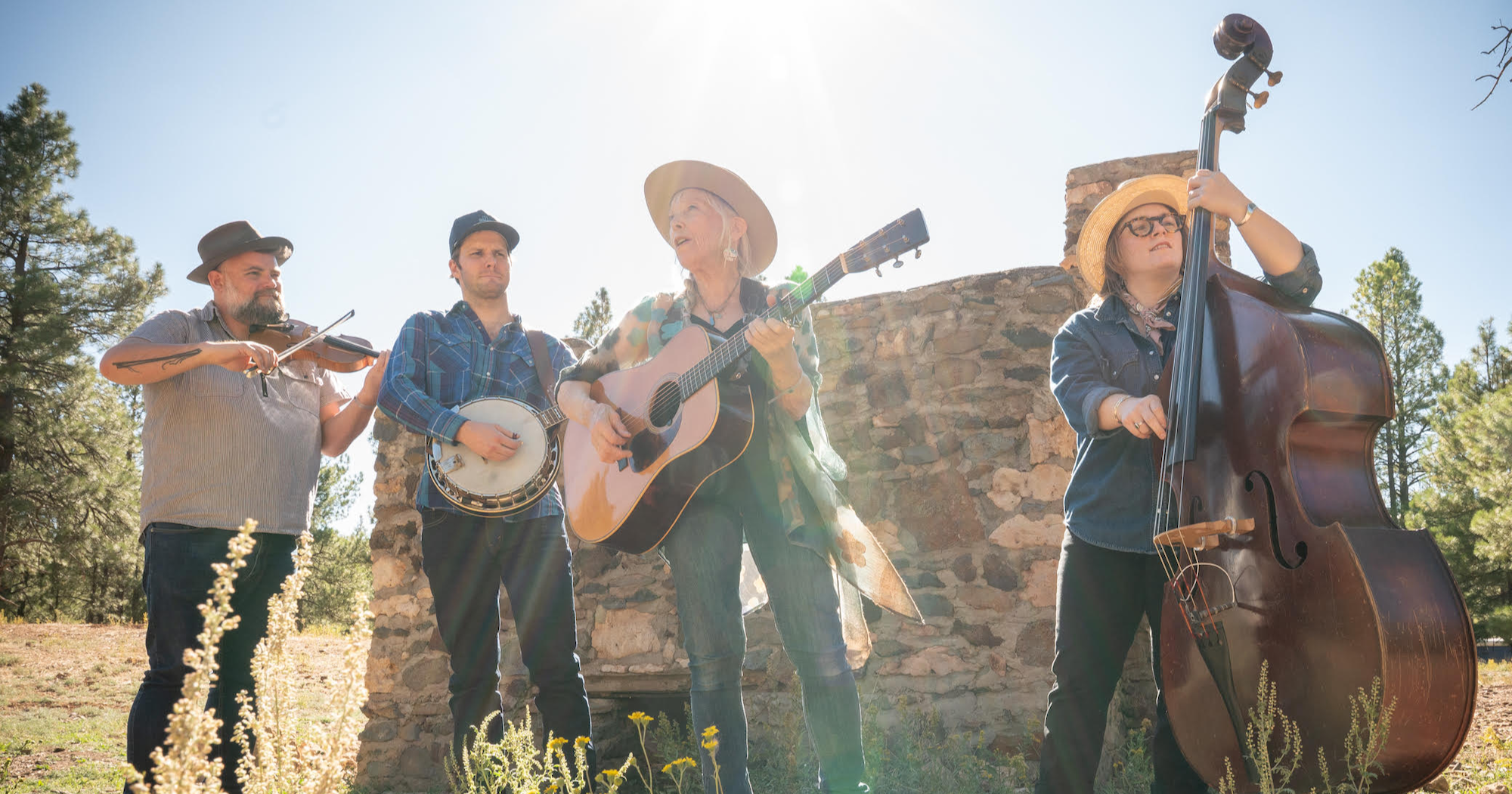
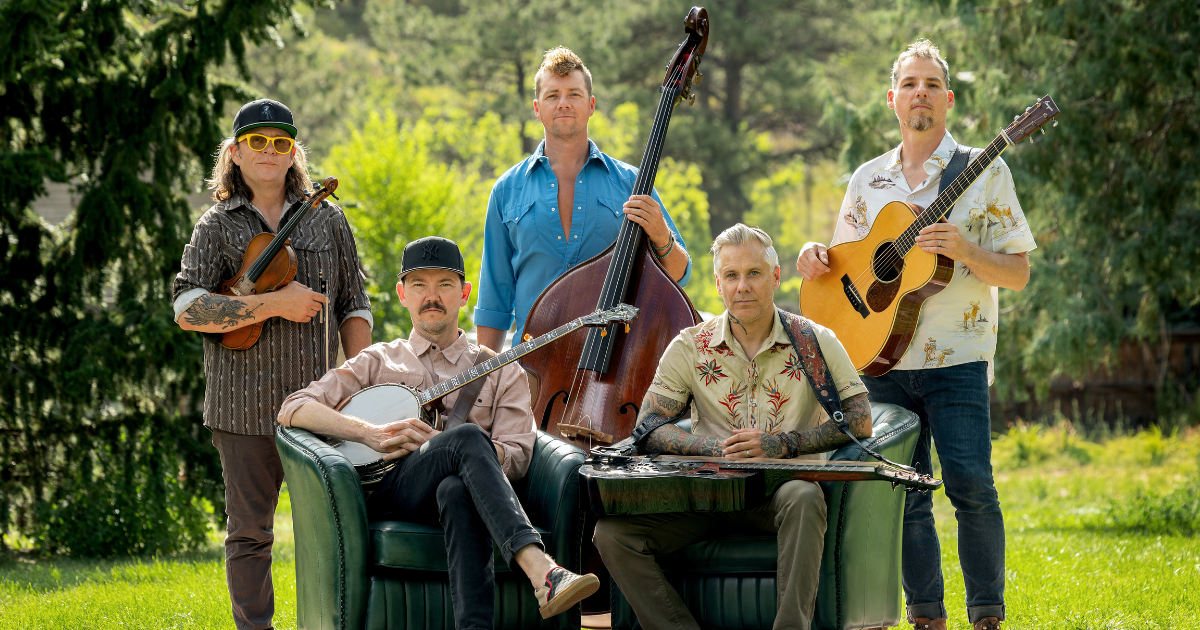
Aotearoa (New Zealand) doesn’t have a strong history of bluegrass bands – except one. If you mention bluegrass to New Zealanders, some will have at least heard of the Hamilton County Bluegrass Band. New Zealand has produced some great players, notably fiddle player George Jackson, banjo player BB Bowness, guitarist/singer Cy Winstanley, and bassist/singer Vanessa McGowan. (Now that we write this, these four would make a great NZ bluegrass band!) But while these names are well known in American bluegrass circles, it is fair to say they aren’t known (outside of folk circles) in Aotearoa.

Many of the songs on our new album, Midnight (out January 30, 2026), are situated within a day, or feature characters who are sitting at the cusp of who they have been before delving into something new. That sense of “in-between” also reflects our place within Aotearoa’s musical landscape, where bluegrass arrives without a long local history, but can be shaped in ways that feel natural to how we live and create here.

“Our Kiwi fans know bluegrass from traditional songs and contemporary artists such as Alison Krauss & Union Station, and Billy Strings. But they are more familiar with the other genres that bluegrass sits alongside. We’re also collectively members of the New Zealand folk, country, and jazz communities,” says our bassist, Rob Henderson.

Midnight starts with bluegrass at its core, but gently widens scope, bringing in different genres with their rhythms, broader chord progressions, and influences drawn from our own environment and lives lived in Aotearoa.

Here are the songs and tunes that anchor us in tradition and inspire us to find our own path as the clock strikes twelve. – You, Me, Everybody

“Ain’t No Grave” – Crooked Still

I love groove and the forward motion in all music, so when I heard this tune for the first time I was naturally inspired by the push of the cello part. This feel was a factor in my own bass playing across the album, especially for up-tempo tunes such as “Misdirection.” – Rob Henderson

“Dorrigo” – George Jackson

George Jackson’s tune “Dorrigo” feels friendly and familiar. It’s one of those tunes that will just keep going around and around the jam circle. When the Dorrigo Challenge did the rounds on the internet a couple years ago, it was a reminder of how a tune can bring people together. I had this in mind while writing “Sam’s Tune” on our album. – Sam Frangos-Rhodes

“Wildfire” – Watchhouse

I find when I sit down to write a song, I usually follow the same template or theme. Of course, there is variation in a lot of my songwriting, but I find rhythmically it’s always much of the same thing. A while back I wanted to break that cycle and try to write a more chilled out, slower tempo song, so I wrote “Heart of Stone,” which leads to “Wildfire” by Watchhouse. I enjoy this song because I think it has a very similar vibe to “Heart of Stone.” For me, it captures the same emotion and feeling I was looking for. I find it’s always nice to find what I was looking for in other people’s writing and relate that back to my own music. – Laurence Frangos-Rhodes

“Heart of Stone” – You, Me, Everybody

Laurence originally wrote this while we were producing our previous album, Southern Sky. I love the backbeat to it, but he also writes great chord progressions; they feel natural and authentic to the song and surprising at the same time. I’ve known Sam and Laurence since they were in their early teens and while our audience love our instrumentation, singing harmonies with them feels like home to me. “Heart of Stone” gives us an opportunity to showcase our vocal blend and milk those beautiful chords Laurence gifts to his songs. – Kim Bonnington

“Railroad” – Béla Fleck & Abigail Washburn

When I try to serve the song with three-finger banjo, I frequently look to Béla Fleck’s work with Abigail Washburn. He plays parts and the two of them fill out the texture of a song so well! Ironically, when we arranged “Silver Spoon,” I was hearing Abigail-like clawhammer behind it, so I did my best to provide that kind of sound with three fingers. – Nat Torkington

“A Hundred and Sixty Acres” – Marty Robbins

Our track, “The Ballad of Bubs and Beautiful,” started when I overheard a conversation between two women shearers in a camp ground in Waipukarau. I knew that I wanted to capture their relationship to each other and their working life, all framed within a day. My Dad’s vinyl collection is 50% Marty Robbins and I remembered the picture that “A Hundred and Sixty Acres” colored of a life well lived. That’s why the first line in “Bubs and Beautiful” is, “Up ‘fore dawn to greet the sun.” There’s a tendency for NZ songwriters to still write about American experiences and places due to an inability to describe ourselves that has been labelled “cultural cringe.” But I knew the description of the women was genuine when I heard someone go, “Oh” as we played the last line live for the first time. – KB

“Orphan Annie” – Tony Rice

As a guitarist, I’ve been heavily influenced by Tony Rice – who hasn’t!? Whenever I listen to the Church Street Blues album it leaves me feeling creative and inspired. I love the minimalism; stripped back to one guitar and vocals telling a story. A lot of the songs on Midnight started in this exact same way, guitar and vocals alone. So it only feels appropriate to give credit to Church Street Blues where credit is due. I cannot pick one track from the album as a favorite because they are all great, but here is “Orphan Annie.” – LFR

“Was It You” – Joy Kills Sorrow

“Was It You” is a song I love for how it drives. That rapid mando chop over a fast rolling banjo held down by a thumping bass is a sure way to make a foot stomper. I took a lot of inspiration from Jacob Jolliff’s mandolin playing in “Was It You” when I put together my part for our song, “Busy Without Me.” – SFR

“Busy Without Me” – You, Me, Everybody

Kim writes wonderful slice-of-life songs. The Midnight album has everything from the plight of an unwed mother to mother/daughter sheep-shearers. “Busy Without Me” is perhaps more #relatable, though: we have a short life with ample temptation for busyness, it says, but it’s important to take moments to “sit and breathe and let the breeze wash over me with nothing in my way.” I love the way the busy-ness of the music reflects the lyrics. – NT

“Caleb Meyer” – Gillian Welch

Country/folk/bluegrass songwriters have always done a great job of writing songs about things we won’t talk about, but make us happy to sing about them. Our song “Silver Spoon” was initially written to an Irish jig. But the joyfulness didn’t eclipse the bleakness of the lyrics. At different times when we were arranging it, different band members would say, “What would Caleb Meyer do?” and our producer Rachel Baiman asked exactly the same question when she arrived for our sessions before we recorded. It’s become the quintessential modern murder ballad. – KB

“Distant Sun” – Crowded House

I grew up in ’90s New Zealand with parents who would play in a country band at the local barn dance while my brother was DJing at the rugby club rooms. So while Marty and Merle would be in one ear, Crowded House was in the other. If you think of great bridges in songwriting, “Distant Sun” has one of them. It also has my favorite line ever in a song: “I don’t pretend to know what you want, but I offer love.” The melody lines in our own track, “The Rest of Us,” hark back to years of admiring Neil Finn as a songwriter. – KB

“The Rest of Us” – You, Me, Everybody

When Kim first brought the concept of “The Rest of Us” to the band I was immediately a fan, and thought it would a great fit on the album. Before we went into the studio we all spent some time together to arrange the new material. As a band I feel like we work uniquely well when it comes to putting a song together and it’s one of our biggest strengths. I think “The Rest of Us” is a great example of Kim’s songwriting and a great example of how we function as a band. – LFR

“Natchez Trace” – Béla Fleck

In my mind, this is the classic G minor banjo instrumental, from Béla Fleck’s landmark album, Drive. Recorded with his B string tuned down to B flat, Fleck often plays it live out without the re-tuning. That was the inspiration for me to write my own Gm instrumental for a banjo tuned to open G major. – NT

“What a Fool Believes” – The Doobie Brothers

I wrote “She’s Alright With Me” a few years ago before I joined You, Me, Everybody. At the time, I had been deep diving into a lot of Doobie Brothers music and the moving parts within their songs. When “She’s Alright With Me” was born, it was originally a heavy keyboard driving tune – having written it on an old 1960s Wurlitizer Piano and styled it on some of the Doobies’ keyboard parts. It’s safe to say it’s transitioned a lot as we don’t have a keyboard part, but you can hear the rhythm now being driven in the same way by Laurence’s guitar. – RH

“Old Train” – Tony Rice Unit

Laurence’s epic album-opening “Misdirection” is a straight-ahead driving bluegrass song, which nonetheless has a few surprise chords in it. For some reason that reminds me of this epic Tony Rice track. – NT

“Misdirection” – You, Me, Everybody

“Misdirection” fits nicely as the opener on our album. It’s a fun example of progressive bluegrass while still staying true to its roots. “Misdirection” is my favorite track on the album and I would like to think the amount of fun we had recording this song is reflected in the final result. – SFR


Photo Credit: Ebony Lamb

Larry Sparks Is a Surprisingly Zen Bluegrass Star

Speaking to Bluegrass Music Hall of Fame inductee and IBMA Award winner Larry Sparks over the phone, you might never guess you’re conversing with a living legend. He’s remarkably humble, down to earth, and plainspoken. And his approach to making bluegrass – as he has professionally for more than 60 years – is surprisingly zen.

His latest album, Way Back When, was released in late October 2025 and the project finds Sparks in exactly the same sonic space as any of his excellent LPs from the last six decades. If you were to take a short audio sample of Way Back When, it would be genuinely difficult to identify from which era of his lauded career it came. The project is warm, lively, and resonant, sounding like you’ve been dropped into a cozy living room with perfect acoustics and a superlative bluegrass string band.

The songs, as well, are timeless and classic, whether fresh tracks, iconic covers, or an old-timey instrumental fiddle tune with familial origins. Like his vocal style, guitar picking, and production preferences, Sparks’ song curation also feels like an intuitive extension of his personality. When he describes how he accomplishes this consistency across eras and executes the timelessness of his albums, it seems as though he becomes a sort of bluegrass guru.

“When songs touch me, they touch my feelings,” he explained to BGS . “When the song touches me, it’s saying something. I’ll take that and see what I can work with, and make it my song.

“The song’s me and I’m the song. And that’s the way that they did it back in the day. They become that song – the older singers, they became those songs. That’s the way that I do it, I try to make that song me and me the song.”

It’s a secret ingredient lacking from too many bluegrass records out there today. Not just his inhabitation of songs so that they can inhabit him, but also treating bluegrass like the forebears of this music did. As a living, breathing, cutting-edge thing that doesn’t need to be built on a foundation of regurgitation and emulation and litmus testing. Like Sparks puts it so simply – and eloquently – in our conversation, bluegrass has mainstream appeal. It requires heart, soul, and being present – becoming the music and becoming each song.

That right there is exactly how Sparks became a Bluegrass Music Hall of Famer and a hero to many – Alison Krauss, Billy Strings, and this writer included. It’s also how he’s maintained a consistent (never boring, stale, or regressive) sound over the course of his 62-year career. And, it’s what keeps him motivated to continue looking forward while inspiring all of us and reaching new audiences.

Let’s start by talking about your excellent new album, Way Back When. When I first listened to it in the fall, when it was released, I was struck by how old-school it sounds. The production style sounds so timeless, it sounds so warm and live – like real bluegrass. It also feels like it could have been pulled from almost any era of your career. with the way that it’s produced and the way that it stands out sonically. I wondered how you accomplished that?

Larry Sparks: I try to do things normal and just go for it. And all of the band– you just feel what you’re doing. You make it real. It’s hard to explain. It’s just, I sing and play from my heart, soul, and mind. Some songs you don’t have to do that, you just – like the old saying – rear back and let it go.

But some songs need attention, and you have to become that song and the song becomes you. That’s the way that I think probably all these songs are, everything I sing is pretty much that way. But, I don’t know, the feel just comes out natural. It’s more of an older feel, the real feel. That’s the way I like things. So much [that’s] added in today’s recording and music and everything, it’s okay – I’m not saying anything about it! But myself, I’d rather keep it pretty real, just like it used to be.

Are you tracking in isolation booths? Or are y’all tracking in the same room and live? It doesn’t sound like you’re putting the music under the microscope, as it were.

No, I don’t like that. You have to [sometimes], but I’d rather [not]. It’s [an] all in the same room deal. Sometimes you’ve gotta do an overdub break or something. You miss your hot lick, you gotta do it over again. Overdubs are good to use, but I don’t like to depend on them. I’d rather do it straight down the line, and if you make a mistake you do it over, you can overdub a spot or something.

Something else that stood out to me listening to the album is how consistent your sound has been over the decades. You have your own way of singing, you have a style that’s really consistent – as well how you pick the songs that go on your recordings. And you certainly have your own guitar-picking style. Almost no one picks like you these days. How do you think it is true, across 60 years in music, that when you listen to Larry Sparks, you know you’re hearing Larry Sparks and Larry Sparks alone?

It’s a natural style for me. I respect the older songs an awful lot. The older music and the older singers, that came along before I did, in the ‘30s, ‘40s, and ‘50s. I was a kid, but I remember the music mighty, mighty well in the ‘60s. All the older country singers were embedded in me, too. Some of the people just stayed in me. They were good singers and their music, their singing was real. It embedded in me.

I still had my own way of singing and playing. I never did wanna copy someone else. And although I respected what they did very much, the older music and the older country and bluegrass [artists] and whatever else – there is other music, too. It just became natural for me to have my own style of singing and playing, and I never really worked on it to do that. It’s just me, and the band pretty well feels what I’m doing.

The whole thing, you gotta keep it natural, real, and feel what you’re doing, from your heart and soul. That’s the way I do it. It’s nothing I plan to do. It just comes out that way.

I think that’s why it works and is so consistent across your entire career, because it’s not a costume that you put on, it’s not affectation, it’s not a target that you’re trying to hit. It’s just you being you.

People can feel that, too. The audience can feel what you feel. Most of ’em, they can feel exactly what you feel, what you do.

Larry Sparks (far left) performs with the Stanley Brothers before Carter Stanley’s death. Circa 1964. Image courtesy of Rebel Records.

I so appreciate that you bring up heart and soul, because I think people make the assumption that bluegrass is not a music that’s based on heart and based on soul. Especially when you listen to some barn burning, shredding bluegrass or jamgrass.

But for me, this music has always been as much about the stories, the heart, and the soul – and the feeling of it. And that’s clearly such an important part of it for you, too, and the storytelling. I think a lot of people don’t realize heart and soul are an important part of the tradition of bluegrass.

Yeah, sure it is. I’ve worked under the bluegrass name for years. Bluegrass is about 80 years old now, and I have been into it 62 of those years.

Wow.

I can’t believe I’ve been into it that long under the bluegrass name. My music is considered bluegrass, but actually a lot of my stuff could go either way. I’m considered bluegrass and that’s fine. I appreciate it. I’m honored, but a lot of my stuff can go into country or some other direction, too.

I just hold to what I’m doing and [what has] been a good business for me over the years. But you have to make it work and look ahead. The music is music, but you gotta make a business out of it. If you don’t, it’s not gonna work. And that’s what I did. It’s worked out for me. A lot of the bluegrass [industry] is not easy. It’s not one of the easiest forms of music to “make it” in.

And, it’s always been set behind [other] forms of music. I’d really like to see it be possible for bluegrass to be played on all stations. To play it [alongside] new country, modern country, rock and roll. Whatever it is, mix it up. But get bluegrass to program directors. If it ever could get played on other stations, with the right songs and the right artist – put in with everything else they’re doing – it would work. I don’t know if it’ll ever come to that or not, but that’s what it’s always been. We’ve always – like the old saying – took the backseat to the other forms of music.

But we got enough fans and that keeps it [going]. … I’m honored and I’m thankful for it. But it takes a lot of years, a lot of hard work. It’s not easy. I’ve done it all myself. I’ve done my own management, my own booking, my own phone calls, my own writing. This, that, this, that, this, that. I’ve done it all. Like I said, I’m gonna keep doing it, it’s working. It’s fine.

Like you mention, these songs really could go both ways. I love how much country is on this album, and you do such a great job of illustrating that bluegrass and country will always be related and that they cross-pollinate.

And I totally agree, bluegrass has mainstream appeal. And always has! I don’t know why we pretend like it doesn’t.

Yeah, we need more promotion on bluegrass. I wanna keep doing everything I can for it, because I respect it very much. Bill Monroe, the Stanley Brothers, and Flatt & Scruggs – these three names put [bluegrass] on the path and all that played bluegrass come after those three names.

Those three names are in you. I never did want to actually copy any one of those three names, but you take those three names – just to give you an idea. Take those three names I said and you put the Osborne Brothers with ‘em. Put Jim & Jesse with ‘em. Put Jimmy Martin, Mac Wiseman and others – and Larry Sparks – all those names. Every one of ’em are different sounds, different style. But they’re still on the same path. That’s what you gotta have. That’s what I knew, “I better stick to that and not be a copy.”

Let’s talk a little bit about your guitar playing style, because I think you’re carrying on a tradition of a particular kind of guitar picking in bluegrass that is rarer and rarer today. So few people who still make records and perform shows pick like you do. I love how front-and-center your guitar is on this album. Could you talk a little bit about your picking style and maybe who your influences were or how you came up in that type of picking?

Other guitar players are really good and there are a few players out there that can. But the way I do things, my playing is like my singing. I play the melody. And I don’t play over the melody. There’s less notes than normal guitar, it’s more of a feel. It’s hard to explain, but I just play the feel of the song and the melody. I try not to overdo it. I play it and when I hit a note or a slide or a backward– or whatever I do, a pull-off, I want it to come from me. I want it to be me and I wanna feel that note I’m doing, feel that slide I’m doing, whatever I’m doing. And [I want to] keep it that way and not overplay the song.

I also wanted to talk about the instrumental on the album, “Sleepin’ Lula.” Speaking of things that are rarer and rarer in bluegrass, having the clawhammer banjo on it is excellent. It feels like no one flogs the banjo anymore. There’s a lot of old-time players, a lot of clawhammer players, but it doesn’t really seem like anybody’s flogging it anymore. Hearing the instrumental, when the clawhammer kicks in, it was reminding me of that era of early bluegrass when you were just as likely to hear frailing banjo as a three-finger in a bluegrass band.

That’s great. Yeah, I thought it turned out pretty good. I was pleased with it. That’s an old tune. My grandpa, I got a recording of him playing that in 1953. Him and some guys, and he’s from Jackson County, Kentucky. Very good fiddle player. Very good. He was one of the best, he could’ve done something with his talent. He was born in 1877. Back in those days, up to the turn of the century, ‘20s, ‘30s, ‘40s, and ‘50s, he just played square dances around locally and stuff. He never did really go out. Stringbean asked him to go out with him some, but he never wanted to leave or go ‘round traveling and stuff. But he could have filled the bill for anything. He was that good.

I heard the tune from him. And I had never heard it before. “Sleepin’ Lula” – that was my grandma’s name, his wife’s name. She died in 1910 in childbirth and I never got to see her, of course. But her name was Lula, and so he recorded that “Sleepin’ Lula.” And I don’t know, I’m not going to say for sure if he wrote it. There’s a couple other fiddle players I heard play that from back in the ‘20s or ‘30s. But all respect to him. There wasn’t a player like my grandpa.

I don’t know who it came from. I don’t know if it came from my grandpa and he put it together because his wife’s name is Lula. Or if “Sleepin’ Lula” was the name [he gave another tune.] Someday I may try to trace that out a little further.

The other fiddlers that you know played it, did they use the same title for it, too?

Yeah!

Interesting. That’s so cool!

Yeah, it’s something else.

You’re a famous bluegrasser. You’ve been famous to me, for instance, my whole life. I was honestly nervous and a little starstruck to have this conversation. [Laughs] But you’re also becoming more famous at this moment, because two of the biggest bluegrass names to ever come out of the genre – Alison Krauss and Billy Strings – they’re such big fans of yours. I feel like both Alison and Billy see your legacy, they see how important it is, and they are translating that importance to people that maybe don’t know who you are or are just learning about you for the first time.

So I’ve just been curious to ask you, how do you feel about having these prominent “fans” – and it’s not just Alison and Billy, obviously. What does it mean to you to be part of that constellation of people that they look to as influences? And, what does it mean to you to see your music reach new audiences thanks to them and others?

It’s a new world. It’s a different world than what I’m used to. Which, there’s nothing wrong with it. I’m very honored that they stand behind what I do and my music. And, for the music, I’m very honored and thankful that they like it and that they maybe have it in their shows sometime or whatever.

But yeah, the new crowds in bluegrass – we have a very good crowd, but it’s bigger than it ever has been, now, bluegrass music is. But we still have that limited crowd [coming] from other forms of music. And that’s why I said, if it ever got to play on the big stations, give us a little room and respect for the bluegrass. It’s very important music and if the big country stations would give us some respect and get bluegrass to their program directors…

Don’t just [throw it out there]. You gotta be careful. Give it the right thing, the right artists, the right songs, and it would really help our music. It really would help.

But if it never happens, we still got a good crowd and we get more people all the time coming in. It’s a kind of a new crowd coming in, a new age group coming in. We still have a lot of the older people, but the younger people are coming into it. Teens to 20 years old, I’m seeing that happen more. That’s good. Bluegrass, it needs more push, it needs more promotion.

Do you see what Billy Strings is doing as that push or as that promotion? Can you tell, with younger fans coming in, that they started as Billy Strings fans and found you that way? I wonder, is there any way you’re measuring the impact of people talking about you and pushing your music?

I can’t really tell on that, for sure. I can’t. I’m just seeing people that’s young – teenagers and stuff – that wants to learn to play the music and are trying to play. And then that age group I was telling you about is. It’s coming in stronger all the time.

I’ll be honest with you. I don’t listen to other music. I don’t listen to anything hardly, music-wise. You gotta keep yourself fresh. But I respect other music. I respect it. All forms of music. I don’t have anything against the big bands and all the new names. But I like that old stuff. Of course, bluegrass and old country. And other things, blues, I like a lot of that.

You seem remarkably humble and so down to earth. You follow the songs, you put heart and soul into ‘em. But you’re literally a Hall of Famer and you’re one of the last of the first big generation of bluegrass makers that are still doing it today. You’re a legend to all of us. Does it feel like you’re a legend? To you, on the inside? Or no?

I would be to a lot of people, a legend, and to a lot of people I would be famous, I would be a star. But when I went into this business, went into music in my teens, I never looked at it as wanting to be a star or to be famous. I never looked at those two things. I wanted to take what talent I had. I knew I had something to offer. I had to put it together and see what I could do [to] make it work.

I don’t know if I’m a star or famous to people. I hope so, because that’d be nice. I’m pretty honored.


Photo Credit: Images courtesy of Rebel Records. Lead image by Michael Wilson.

You Gotta Hear This: New Music From Sweet Petunia, Big Richard, and More

Your weekly dose of new music is here! You Gotta Hear This.

We’ve got a couple of brand new music videos, leading off with Big Richard absolutely smashing a David Olney song, “Millionaire.” To say the track is apropos for this moment in time would be a laughable understatement. The string band/bluegrass supergroup give it their signature impassioned treatment, with energy, conviction, and musicality. Their new music video for the just-released single was shot in and around Salt Lake City. Plus, Boston-based alt-folk duo Sweet Petunia bring us a new music video, as well. Their new, stark indie folk track “Grub” is set to a delightful animated, stop-motion, hand-drawn music video. The song explores identity, embodiment, beauty, and pain, and holds space for solidarity for trans and gender-nonconforming folks.

You’ll also find a music video for Michael Haney’s new cover of a Bruce Springsteen song, “Brilliant Disguise,” rich in Americana rock ‘n’ roll. Haney knew he wanted to record the number because of how it “speaks directly to the heart of the human condition.” Singer-songwriter Kirby Lyle picks up the same mantle on the title track for his brand new EP, Change Is Hard. It’s also a song of solidarity and community, because who is going to save us if we don’t save us? But we are going to save us.

It’s a lovely collection of tracks this week highlighting community, togetherness, and how roots music is built upon both. We hope you enjoy, cause we think You Gotta Hear This!

Big Richard, “Millionaire”

Artist: Big Richard
Hometown: Denver, Colorado
Song: “Millionaire”
Album: Pet
Release Date: January 13, 2026 (single); February 6, 2026 (album)
Label: Signature Sounds

In Their Words: “‘Millionaire’ is a song about the greed and corruption of the rich written by David Olney, originally released in 1991. It is still wildly topical nearly 35 years later, although it might be time to change ‘millionaire’ to ‘billionaire’ at this point.

“We added this song to our setlist just after the inauguration last year and it has become one of the most emotionally charged moments in our sets. For us, this song is a unifying message, because regardless of which side of the line you voted on, we are all on the same side in the great class war. All of us are at the mercy of a very few, who only have their own best interests in mind, and who would never dismantle the systems that hold them in their places of power. It’s up to us to join with our neighbors and tear it down, from the joke that is the insurance industry to the politicians that are openly bought and controlled by corporations.

“We filmed the music video in Salt Lake City, where local fans will recognize many of the landmarks, which include the state capitol building, the offices of the LDS (who currently own more real estate than any other entity in the world), and the fuel refineries that choke the air of that beautiful city.

“We sing this old song with a lot of hope in dark days like these. Our species is brilliant, and more than capable of solving the problems that we have, if we would put the money in the right pockets and put limits on the folks that choose to hoard it.” – Dr. Joy Adams

Video Credit: Wonderstone Films


Michael Haney, “Brilliant Disguise”

Artist: Michael Haney
Hometown: Originally from Columbia, South Carolina; now living in Nashville, Tennessee
Song: “Brilliant Disguise”
Release Date: January 23, 2026
Label: Rock Ridge Music

In Their Words: “I chose to record ‘Brilliant Disguise’ by Bruce Springsteen as an up-tempo rock version, because I’ve always been drawn to the tension and truth in that song. It’s one of his most well-known pieces from a transitional period in his life, and I think it speaks directly to the heart of the human condition — that universal experience of hiding parts of ourselves, even from those we love most. The more you sit with it, the more you realize the song captures something even deeper: how often we don’t truly know who we are in the first place. We walk through life trying to piece together our identities, yet we still build masks on top of that uncertainty — sometimes to protect ourselves, sometimes because we’re afraid of being seen, and sometimes for reasons we don’t fully understand.

“I liked the idea of doing late-’80s Springsteen as if mid-to-late-’70s Springsteen had taken it on, with that raw, energetic edge that defined his early sound. Reimagining it that way let me lean into the emotional conflict at the center of the song — the push and pull between authenticity and self-deception — while giving it the kind of drive that felt truer to my own voice. It’s not a song that’s been covered often, which made it feel like the perfect addition to my catalog: both as a tribute to his songwriting and as a reflection of where I am personally right now, navigating my own questions about identity, honesty, and the parts of ourselves we choose — or struggle — to reveal.” – Michael Haney

Track Credits:
Michael Haney – Vocals
Ben Jackson – Drums, percussion, keys, Hammond B3 organ
Luis Espaillat – Bass
Brian Fechino – Acoustic guitar, electric guitar
Brad Sample – Electric guitar
Kaleb Thomas Jones – BGVs


Kirby Lyle, “Change Is Hard”

Artist: Kirby Lyle
Hometown: Nashville, Tennessee
Song: “Change Is Hard”
Album: Change Is Hard (EP)
Release Date: January 16, 2026

In Their Words: “‘Who’s gonna save us if we don’t save us?’ That’s the line. We are. Us. You and me. Right here in the moment. Every time I play ‘Change Is Hard,’ my soul activates! I’m so full of gratitude that the heart has an infinite capacity when it’s shared, because I can’t express this feeling alone. The music commands a full choir and joyful ruckus of players to lift it up to megaphone level. When the audience engages, our positive energy is ubiquitous! The hope is simple: inspiration toward progress – personal and societal. It’s on us. Be moved. Get better. Make each other better. Together.” – Kirby Lyle

Track Credits:
Kirby Lyle – Lead vocals, guitar, auxiliary percussion, songwriter, background vocals
Kyle Tuttle – Banjo
Keyboard – Jacob Merlin
Erika Nalow – Saxophones
Jordan Perlson – Drums
Background Vocalists: Maya de Vitry, Kyle Tuttle, Ethan Jodziewicz, Anthony Saddic, Brenna, Dana Baker, Emory Major, Noelle McFarland, Rachel Isabella, Sean Donovan, Kimberly Albertson, Laura Stack


Sweet Petunia, “Grub”

Artist: Sweet Petunia
Hometown: Boston, Massachusetts
Song: “Grub”
Album: Foggy Mountain Mental Breakdown
Release Date: January 13, 2026 (single); March 13, 2026 (album)
Label: Righteous Babe

In Their Words: “‘Grub’ is a song about my experience of being trans and the beauty and the pain that come with it. The song came to me almost completely at once. Most of the first verse came out in one fell swoop as you hear it today, but the second verse was inspired by a video of beautiful baby birds crowded into a small nest. I was so jealous of how close and happy they looked — a perfect opposite to reflect the isolation and sense of otherness that I explore in the first half of the song. Maddy and I then spent two hours just playing it over and over and over again until we finally found the perfect duet of banjo and vocals to support the song.

“I feel so lucky to have been able to share this song with so many other trans people through years of performing it live and hear how they connect to it within the context of their own experiences. It feels particularly special to be putting ‘Grub’ out in a time where our rights and lives as trans people are being put in harm’s way in a much more visible way than in the past few years.” – Mairead Guy

Video Credit: Riley Halliday


Photo Credit: Sweet Petunia by JJ Gonson; Big Richard by Rett Rogers.

You Gotta Hear This: New Music From Aaron Burdett, Trey Hedrick, and More

Happy New Year! We’re so excited to bring you our first collection of new music and videos for 2026. We’ve missed you over the past few weeks and, well, You Gotta Hear This…

Kicking us off, our old friend Joshua Britt returns with a new artist project, The Boy The Earth Sings To, and an official video for an original song, “Eyes Of God.” Falling on the continuum between gospel, sacred, and contemporary Christian roots music, the lush alt-folk track is built around the inspiration of a new mandola, tying the tone wood used to build the instrument to the forested visuals of the video. Meanwhile, Western North Carolina-based singer-songwriter Aaron Burdett unveils a new single, “Arthur’s Last Dance,” which pays tribute to folk dancer Arthur Grimes and his final performances at MerleFest before his retirement. It’s driving modern bluegrass appropriately perfect for flatfooting, clogging, and polishing those floorboards.

Then, from just up the mountains, Lonesome River Band also bring their first new single of 2026, “Bernadette,” written by Bob and Ginger Minner. Below, Bob offers his perspective on writing the tune, which he and his wife immediately imagined LRB recording, as soon as they had finished writing it. If you like crooked contemporary bluegrass that’s steeped in old-time mountain music – with a slightly dark, modal tinge – you’ll love this one.

Let’s continue up the mountains now, across Virginia and West Virginia to southeastern Ohio, where we’ll find the music of singer-songwriter Trey Hedrick and this new track, “Shoestring,” which features Tim O’Brien. It’s a testament to Hedrick’s grandpa, his relocation of the family to Ohio, and the way life, love, work, and place are passed down generation to generation.

Rounding out our collection this week, it’s a premiere we published elsewhere on the site this morning, as well. Celebrating his upcoming collaborative album, guitarist Bryan Sutton launches a hilarious and entertaining animated music video for “The Devil Went Down to Deep Gap” featuring Billy Strings, Del McCoury, and more. It’s a delightful reimagining of Charlie Daniels’ “The Devil Went Down to Georgia” that tells a fantastic version of Doc Watson’s origin story, pitting Doc’s style of picking against shredding metal electric guitars played by Sutton and Strings. You won’t want to miss this masterpiece of country, bluegrass, and flatpicking storytelling.

What a great way to kick off the year, right? There’s plenty to hear, love, and enjoy below. You Gotta Hear This!

The Boy The Earth Sings To, “Eyes of God”

Artist: The Boy The Earth Sings To
Hometown: Franklin, Kentucky
Song: “Eyes Of God”
Album: The Quiet Voice Of God
Release Date: November 7, 2025

In Their Words: “Years ago, my band played a show with Sierra Hull in Montana and that’s where she introduced me to mandolin builder Bruce Weber. Visiting his shop was unforgettable – an old schoolhouse where one room was filled with raw, uncarved slabs of wood that he would walk across, knocking on each piece, saying, ‘They all sound different, but some of them sing.’ It felt like he was listening for the mandolin already inside the wood, the way Michelangelo spoke about finding David inside the marble. Bruce built an octave mandolin for me that became the backbone of this album and while I was writing it I came across another Weber mandola. The first night I brought it home, I picked it up and wrote ‘Eyes Of God’ in one pass, as if the words and melody were already waiting inside that piece of wood. My favorite art has always felt more like discovery than invention.

“For the video I was inspired by time I spent in Bolzano, Italy, reading about the singing trees in the high altitude mountain forest – God placing the best wood high in the mountains, starved for air instead of down in the village. A reminder to me that making something great always requires adventure.” – Joshua Britt

Track Credits:
Joshua Britt – Vocals, mandola, other instruments, songwriter
Matt Menefee – Banjo
Neilson Hubbard – Drums
Colter Britt – Harmony vocals
Sarah Drake – Harmony vocals

Video Credits: Filmed on location in the Colorado Rockies.
Directed by Joshua Britt and Quincy Britt.


Aaron Burdett, “Arthur’s Last Dance”

Artist: Aaron Burdett
Hometown: Saluda, North Carolina
Song: “Arthur’s Last Dance”
Release Date: January 9, 2026
Label: Organic Records

In Their Words: “I was first introduced to Arthur Grimes when I lived in Boone, NC, in the ’90s. He’d materialize now and then at many shows I was playing or attending over the years. So when I played a set at MerleFest 2024 with Steep Canyon Rangers and heard that Arthur was going to be there with Old Crow Medicine Show – to do his last dance before largely retiring – my interest was piqued. After our set, I was checking out other performances and, sure enough, got to see Arthur doing his thing on the Watson stage one last time. It was an event that deserved a few songwriting notes. Those notes I took that night are what turned into this song commemorating Arthur’s long career dancing with any and every band or performer who came through the High Country of NC over the past 50 years or so.” – Aaron Burdett

Track Credits:
Aaron Burdett – Lead vocal, acoustic guitar
Kristin Scott Benson – Banjo
Carley Arrowood – Fiddle
Tristan Scroggins – Mandolin
Jon Weisberger – Upright bass
Wendy Hickman – Harmony vocal
Travis Book – Harmony vocal


Trey Hedrick, “Shoestring” (featuring Tim O’Brien)

Artist: Trey Hedrick
Hometown: Wilkesville, Ohio
Song: “Shoestring” featuring Tim O’Brien
Album: Sing, Appalachia
Release Date: January 7, 2026 (single); February 18, 2026 (album)

In Their Words: “‘Shoestring’ is a song about my Papaw, who was an incredible singer and multi-instrumentalist and the engine to the musical life of my immediate and extended family. Through him I came to the writers and songs that I still call on frequently in my own writings. Pap grew up in Parsons, West Virginia, and when work dried up or, more likely, after a need to move on after his brother Skip died in a mining accident, he moved north to southern Ohio. A move that anchored the geography of our family to southern Ohio after many generations in West Virginia and Kentucky. I didn’t try and likely couldn’t have written ‘Shoestring’ from any perspective other than reverent grandson, intentionally setting aside any precise detail. ‘Shoestring’ is about place, love, work, and life passed down, intentionally or not. I was honored to have Tim O’Brien sing and play fiddle on the track – Tim’s music has been an inspiration and has long meant a great deal to me.” – Trey Hedrick

Track Credits:
Trey Hedrick – Lead vocals, acoustic guitar, songwriter
Tim O’Brien – Lead and background vocals, fiddle
Maya de Vitry – Background vocals
John Mailander – Fiddle
Ethan Ballinger – Mandolin
Frank Evans – Banjo
Phillipe Bronchtein – Pedal steel
Jamie Dick – Drums
Rhees Williams – Bass


Lonesome River Band, “Bernadette”

Artist: Lonesome River Band
Hometown: Floyd, Virginia
Song: “Bernadette”
Release Date: January 9, 2026
Label: Mountain Home Music Company

In Their Words: “My wife Ginger and I write a lot of songs together and sometimes the ideas come from the strangest of places. ‘Bernadette’ came from when one of Ginger’s favorite authors, Shawn Inmon, who asked his fans to offer up unique women’s names to be used in his next novel. We were driving around and joking about names like Ethel, Maude, Calry, etc., and I just blurted out ‘How ’bout Bernadette?’ And out of nowhere I sang that name and first line. We got home and sat down and we wrote it in no time. It just fell out, so to speak. Plus, I always wanted to use the word ‘trifling’ in a song, so it seemed fitting for a woman like Bernadette in the story. We did a guitar and vocal demo of it and I sent it right to my buddy Jesse Smathers, because LRB was who we heard in our heads doing it as we wrote it. Thanks to LRB for cutting this one, we’re honored.” – Bob Minner, songwriter

Track Credits:
Sammy Shelor – Banjo
Jesse Smathers – Acoustic guitar, lead vocal, harmony vocal
Mike Hartgrove – Fiddle
Adam Miller – Mandolin
Kameron Keller – Upright bass
Rod Riley – Electric guitar
Bob & Ginger Minner – Songwriters


Bryan Sutton, “Devil Went Down to Deep Gap” with Billy Strings

Artist: Bryan Sutton with Billy Strings
Hometown: Nashville, Tennessee
Song: “The Devil Went Down to Deep Gap”
Album: From Roots to Branches
Release Date: January 9, 2026 (single/video)
Label: Mountain Home Music Company

In Their Words: “It was listening to Charlie Daniels’ original ‘The Devil Went Down to Georgia’ with my youngest daughter, Lily. She has very eclectic and broad musical tastes. I’ve loved sharing music with her and checking out what she has discovered. We found some other covers of the original and one that stuck with me was Jerry Reed’s interpretation, where he makes Johnny a guitarist instead of a fiddler. I have been working on a duets record for some time, collecting recordings here and there with my pals, and knew I wanted to do something different with Billy, as he and I have a whole record of duet playing.

“Billy and I also share a love for heavy metal. I was trying to think of a way he and I could do something connected to this duets project that would allow us to play acoustic and electric. It all kind of came together when I realized this song would allow for that. The Doc [Watson] origin story came about thinking how to make this not just a cover, but more personal and fun. It’s also another subtle tribute to Doc, who would oftentimes change or add lyrics to a song in order to make it fit for him. I fashioned the story, made a little demo, and sent it to Billy. He was into it and we were off.” – Bryan Sutton

Read more here. 


Photo Credit: Aaron Burdett by Sandlin Gaither; Trey Hedrick by Chris Heidl.

WATCH: Bryan Sutton, “The Devil Went Down to Deep Gap” with Billy Strings

Artist: Bryan Sutton with Billy Strings
Hometown: Nashville, Tennessee
Song: “The Devil Went Down to Deep Gap”
Album: From Roots to Branches
Release Date: January 9, 2026 (single/video)
Label: Mountain Home Music Company

In Their Words: How do you see Doc’s playing influencing both yours and Billy’s?

“I think beyond the specific influence of Doc’s guitar playing that informs most every note Billy or I may play, I know that we both are students of Doc’s complete artistry. To say Doc is just the most influential flatpicker ever is limiting. He brought so much to the table in his honest and emotional singing, his song choices and writing, banjo and harmonica playing, and Travis-style fingerpicking. He was not comfortable being labeled or limited within a specific genre. His onstage persona was true to him. Without being a ‘showman,’ he was informational when the song needed it and willing to share whatever emotion he might be experiencing. It’s also important to note that Doc and Merle’s duo playing has been a huge part of the overall focus for things Billy and I have done together. I know for both Billy and I, Doc provides a lifetime of inspiration, influence, and learning.”

How do you pay tribute to that in this song and video?

“First and foremost, this is kind of a silly or fun thing, along with being a somewhat serious tribute to Doc Watson. I wanted to use the song to have fun with the guitar shredding and good versus evil battle, but also imagine an origin story of how Arthel Watson could have become the ‘Doc’ we all have loved. Maybe it’s a gospel song in the way that Doc, even and especially in his blindness, can ‘see’ through the Devil’s lies. Ultimately, Doc carries his triumphant message to the world, and influences us all with wonderful and heartfelt music.”

It sounds like you had this concept before talking with Billy about it. How did the concept and song come to be, from start to finish?

“It was listening to Charlie Daniels’ original ‘The Devil Went Down to Georgia’ with my youngest daughter, Lily. She has very eclectic and broad musical tastes. I’ve loved sharing music with her and checking out what she has discovered. We found some other covers of the original and one that stuck with me was Jerry Reed’s interpretation, where he makes Johnny a guitarist instead of a fiddler. I have been working on a duets record for some time, collecting recordings here and there with my pals, and knew I wanted to do something different with Billy, as he and I have a whole record of duet playing.

“Billy and I also share a love for heavy metal. I was trying to think of a way he and I could do something connected to this duets project that would allow us to play acoustic and electric. It all kind of came together when I realized this song would allow for that. The Doc origin story came about thinking how to make this not just a cover, but more personal and fun. It’s also another subtle tribute to Doc, who would oftentimes change or add lyrics to a song in order to make it fit for him. I fashioned the story, made a little demo, and sent it to Billy. He was into it and we were off.

“I feel fortunate that Del was into playing the Devil. I also am so happy to have T. Michael Coleman and Sam Bush on the track, who played many years on the road and studio with Doc. My pal Jerry Roe, who is Jerry Reed’s grandson, plays the drums, connecting to the Reed version that inspired me. Once I had the concept and demo for the song, I knew it had to be an animated video and discovered Pat Bradley of Springshoe Animation. It was wonderful working with him to take what had been in my head and be able to visualize it. Ultimately, all this came about a little piece at a time, and I’m so happy to share it with the world.” – Bryan Sutton

Track Credits:
Bryan Sutton – Acoustic guitar, electric guitar, vocal
Billy Strings – Acoustic guitar, electric guitar, vocal
Del McCoury – Vocal
T. Michael Coleman – Electric bass, harmony vocal
Sam Bush – Mandolin
Jerry Roe – Drums

Video Credits: Animation by Pat Bradley, Springshoe Animation.


Lead image courtesy of the artist.

Michael Daves Reconstructs R.E.M. Bluegrass Style

Although he lives in New York now, Michael Daves’ Southern roots permeate his music. That characteristic goes further than ever before on the newly released Fables, a six-song EP that reconstructs songs from fellow Georgia band R.E.M.’s 1985 album Fables of the Reconstruction.

In celebration of the record’s 40-year anniversary, Daves enlisted his longtime quartet bandmates – fiddler Alex Hargreaves (Billy Strings), mandolinist Jacob Jolliff (Béla Fleck, Yonder Mountain String Band) and Erik Alvar (Nefesh Mountain, Billy Strings) – and others to reinvent songs like “Green Grow The Rushes,” “Wendell Gee,” and of course, “Driver 8.” Together, they turn each track on its head, fully leaning into their bluegrass prowess while continuing to hold each song and their original formats in high regard. It’s something that Daves has plenty of experience with, having released the dual acoustic and electric bluegrass covers compilation Orchids and Violence in 2016 and Early Morning Sun – an EP of bluegrass and country standards from Ola Belle Reed, Dolly Parton and others – in August 2025.

“It was really important for me to try to make something that would stand on its own, even if people didn’t have any connection with R.E.M. or don’t even like them,” explains Daves. “I tried to make something that just works by its own logic as much as it’s paying homage to the original.”

During a Zoom call with BGS on release day in December, Daves spoke about his motivation for doing this cover EP, how he decided which songs to include on it, the plans for his label Wild Geranium Records, and more.

What motivated you to not only make an EP of R.E.M. covers, but to do it with songs from Fables of the Reconstruction?

Michael Daves: It’s an album I grew up with. R.E.M. was one of my first musical obsessions. I first discovered them in the late ‘80s at summer camp in Toccoa, Georgia, not too far from Athens where R.E.M. was from. All my camp counselors were [University of Georgia] kids, so I fully downloaded their musical tastes, which fortunately were pretty good.

As far as taking on the Fables thing now, there were a couple inspirations. For one, it’s the 40th anniversary of that record and it’s one that I don’t feel like a lot of younger people have heard or appreciated. People seem to know more of R.E.M.’s pop stuff from the ‘90s and beyond, but that ‘80s stuff was so good and weird. I also have this quartet I’ve led since about 2019 with Alex Hargreaves, Jacob Jolliff, and Erik Alvar in New York. They’re all incredible musicians who are very well versed in traditional bluegrass but also very adept at adapting music from outside the fold. We’d done some other projects over the years – like we did a whole mini set of Jimmy Webb songs one time including “MacArthur Park,” “Wichita Lineman,” and “Galveston” – and they learned that stuff in one rehearsal and just rendered it so beautifully. It made me realize that this is a quartet that really can handle a challenge.

The Fables idea came up because of the anniversary, but also because in August I had done a tribute along with Peter Rowan to the 1973 Muleskinner record that he was a part of. Initially he united with Bill Keith, Clarence White, David Grisman, Richard Greene, and Stuart Schulman to share a TV show with Bill Monroe, but Monroe never showed up. His bus broke down, so they ended up having the whole show to themselves and wound up getting an album deal out of it. Then they made this record that didn’t go anywhere because Clarence White died before it came out.

I taught a class about Clarence’s guitar playing on that record and through that became inspired to do a tribute to it with Peter at Vermont’s Green Mountain Bluegrass & Roots Festival this past August. When studying that Muleskinner record I discovered it had the same producer as R.E.M.’s Fables, Joe Boyd, who’s also worked with everyone from Nick Drake to Fairport Convention and Pink Floyd. That strange coincidence led to a Fables tribute show, which is then where the idea for this EP really came to life.

How’d you go about dwindling the original Fables of the Reconstruction down to the six tracks that are on this EP?

It was an interesting process choosing which songs to do. It was a combination of practical considerations, because when the quartet and I worked up this music for that one-off show in Brooklyn I initially picked songs that I thought were achievable on our tight constraints and would translate well to a bluegrass ensemble. There were definitely other songs on the original record that would have worked, but I’m feeling good about the song choices we made because the original record is sort of sprawling with a lot of digressions. There’s a lot of dreamer logic and a Faulknerian non-linearity in the writing, so to pare that down into what I think works as a distillation of the original recording that probably is more of an interesting statement on the original than if I just recorded the whole thing, you know. As my wife put it, we took it from a sprawling Faulknerian epic to more of a Flannery O’Connor gut punch.

Do you have any specific favorites of the six songs making up this project?

As far as song selection, I kept the first and the last songs from the record in their normal position. The record opens with “Feeling Gravity’s Pull” and ends with “Wendell Gee” so I kept those because the beginning and end of the story just felt right.

There’s something about the song “Good Advices” that just always just gets me with its meditations on mortality. It’s classic R.E.M. in the sense that it can be hard to parse the lyrics because they’re based more in dream logic than confessional writing. However, they still carry a lot of emotional weight and a sense of meaning that’s oftentimes hidden. For some reason, that song is the one that just always gets stuck in my head and gives me all the feels.

Part of this is due to the structure of the song, which is repetitive and drony. The bridge is basically four measures of the G chord and then it’s out, which I think is just brilliant how that works in the song. It was those repeated drone lines that Alex played over while the rest of the band had these repeated melody things going on. For me it’s the quintessential song off of the record. I don’t think it was a hit or anything at the time – that goes to “Driver 8” – which I almost didn’t include because it was the best known song off of that record.

The opening track, “Feeling Gravity’s Pull,” is one that was never my favorite track from the original record, but in rendering it I started liking it a lot more. I particularly like what Duncan [Wickel] brought to it on cello as well as the background vocals on it, especially at the end. That’s Jefferson Hamer from The Murphy Beds and Sean Cahill from The Next Great American Novelist. The parts they added took the song in this almost metal-like direction, which felt really good and different from the original, especially considering we’re all acoustic musicians. The whole experience with that song felt really cathartic. There’s an intensity that I always want out of bluegrass but don’t always hear, so I ended up being really happy with how that one came out.

This is the second release on your own label, Wild Geranium Records. What are your plans with that?

This is the second release on Wild Geranium. The first was my EP Early Morning Sun, which came out in August and was just a solo recording. The third one is coming out in March and is a full-length duo record with me and Jacob Jolliff where we’re paying tribute to Jim & Jesse, [who] are part of the first generation bluegrass legends. But most of what I do under Wild Geranium will be EPs and other shorter recordings.

Do you plan to record other folks on the label, or just your own projects?

It’s intended as a platform for various collaborations that I’ve had as well. All of the releases I’ve put out so far have zero original material, but some of that will be coming soon, too.

You’re also releasing Fables on cassette? What’s behind that decision?

The cassettes were part of the concept of Wild Geranium from the beginning. Cassettes first came back within the indie rock world almost 10 years ago, but to my knowledge isn’t something that’s been done much in the bluegrass world. I’ve had people joke with me and say, “Oh gosh, I’ve got to dust off my ‘78 Dodge Charger to play this!” [Laughs] In the age of streaming, I think having a physical item that is a little more affordable, easier to produce and keep in stock than vinyl is more important than ever.

The idea was to also include at least one song on each cassette release that’s not available digitally. On Fables that’s actually two bonus tracks – a duo version of “Green Grow The Rushes” with me and Jacob Jolliff and the other’s a live version of “Can’t Get There From Here,” which was from a full-band show back in August where we debuted the material. I just wanted to offer something unique and special to the listeners who care. If you get the cassette, you’re gonna have something that no one else is gonna have. It’s not bouncing around the internet, you have to have the physical thing. From a production standpoint, it’s an opportunity to tell a slightly different story than the digital release.

Do you have any other cover EP/album ideas up your sleeves?

Aside from the Jim & Jesse project, I also have some original material on the back burner. It’s fully demoed and is all music connected to Ponce de Leon Avenue in Atlanta where I grew up. It includes some stuff that I’ve written and co-written along with songs by family members and friends from that area and era. I’ve been performing music from that project for quite some time now, but haven’t made the record yet. So that’s something I’m hoping to make happen that would be another full-length, full band record.

What has bringing this R.E.M. covers EP to life taught you about yourself?

This R.E.M. stuff was among my first musical obsessions, so for years that’s just been baked into how I hear music in an uncritical way. So to actually get in there and break down what went into this record and think about how to render it in this other context was really interesting for me and fun to make a statement with that’s not based in nostalgia.

I also enjoyed getting to explore my feelings about how I want string band music to work. On my last full-length record Orchids and Violence I utilized a double-record concept where each disc had the same track list, but the first one was a very straightforward bluegrass record and the second disc is like all electric, experimental rock renderings of the thing. Fables was a little bit more like uniting both sides of Orchids and Violence into a string band expression, which is something I’d be open to doing more of in the future.


Photo Credit: Manish Gosalia

Joe Pug’s The Working Songwriter Joins BGS Podcast Network

The BGS Podcast Network is proud to announce our first addition of a new (to us) show in 2026, bringing artist and singer-songwriter Joe Pug‘s hit podcast, The Working Songwriter, on board. Beginning January 9, the Working Songwriter will be distributed exclusively through BGS and available wherever you stream podcasts.

“After ten years and over three hundred episode of doing this podcast independently, we’ve decided to go pro!” Pug says. “[BGS] is the perfect home for our show. They focus on American roots music, but ultimately they celebrate any kind of songwriting as long as it’s of a very high quality. I think that’s pretty similar to the ethos of The Working Songwriter.”

SUBSCRIBE: APPLE • SPOTIFYLIBSYN

Over a decade of work and hundreds of episodes, Pug has explored songwriting, music-making, artfulness, and creative practices with some of the most thoughtful and entrancing voices in Americana, country, roots music, and songwriting as a whole. Over the years, guests have included such luminaries as Jerry Douglas, Charlie Peacock, John Hiatt, ERNEST, Chuck Prophet, Kim Richey, Bonny Light Horseman, Hunter Hayes, Iris Dement, Del McCoury, Keb’ Mo’, Darrell Scott, and countless others. Alongside these songcraft heavy-hitters are just as many fresh discoveries, newcomers, and essential-yet-underrated voices in the space, too.

The overlap between our rootsy BGS purview and Pug’s roster of guests is vast and varied, illustrating how perfect a fit the show will be for the BGS Podcast Network. “With their network,” Pug continues, “we’re gonna be able to get guests that we’ve never had before. We’re gonna be able to produce more content and we’re gonna be able to lean into video quite a bit more. I’d like to thank Cindy Howes and Amy Reitnouer Jacobs for believing in our show and helping to shepherd it to the next level.”

“The Working Songwriter has set the standard for long-form interviews with our favorite songwriters in the roots music world and beyond,” responded Cindy Howes, director of the BGS Podcast Network. “Joe’s ability to open up his guests in relaxing conversations on the craft of writing is endlessly impressive. The fact that a podcast of this caliber that legitimizes the best working songwriters is joining our roster is an honor. We are beyond excited to work with Joe and his team on this wonderful show.”

The latest season of the Working Songwriter will premiere this Friday, January 9, with guest Evan Bartels. Bartels, a singer-songwriter, burst onto the national scene with his 2017 debut, The Devil, God & Me. He has toured with American Aquarium, The White Buffalo, and John Moreland; he records for MCA/Universal; and he’s performed at Mile of Music, Americanafest, and the C2C Festival. We’re looking forward to beginning this new era for The Working Songwriter with Joe Pug, Evan Bartels, and all of you, right here on BGS.

To celebrate the announcement and the upcoming season premiere, listeners can subscribe to the Working Songwriter wherever they listen to podcasts. While you do, revisit and enjoy all past episodes of The Working Songwriter – including these five of our favorite selections below, chosen from over 10 years of superlative work.

Remembering Todd Snider (March 2020, rereleased November 2025)

Joe originally sat down with The Bard of East Nashville back in March of 2020, but after his untimely passing in November 2025 at the age of 59, TWS reissued this beautiful episode in his honor.


Jerry Douglas (June 2025)

An artist who needs little introduction to BGS audiences, GRAMMY-award winner Jerry Douglas is considered the contemporary master of the Dobro. Joe talks to Jerry about his long and storied career, playing alongside everyone from Ray Charles to Billy Strings.


Ashe (September 2024)

TWS covers songwriters of all backgrounds and genres, as demonstrated in this 2024 episode with Ashe.  The Berklee College of Music grad discusses her years writing songs for other artists such as Demi Lovato, only to find her own distinct voice (and a legion of obsessive fans, including the late Diane Keaton) in the last five years.


The Swell Season (October 2025)

The Oscar-winning and decades-spanning musical partnership of Glen Hansard and Marketa Irglová has captivated worldwide audiences, but this conversation with Joe from 2025 celebrated their first album together since 2009 (Forward), and showed their connection and chemistry was as deep as ever.


Bonny Light Horseman (February 2023)

Each member of the folk supergroup trio of Anaïs Mitchell (Hadestown), Eric D. Johnson (Fruit Bats), and Josh Kaufman (The National, Bob Weir, Josh Ritter) could easily deserve their own deep-dive episodes, but put together it’s clear that they are greater than the sum of their parts. Joe digs in with the three GRAMMY nominees to peek behind their magical music-making curtain.


Lead image courtesy of New Frontier Touring.

Watch Molly Tuttle Perform on Jimmy Kimmel Live!

Molly Tuttle kicked off the new year in style, appearing on Jimmy Kimmel Live! on January 5 to perform a GRAMMY-nominated song from her GRAMMY-nominated album. “That’s Gonna Leave a Mark” was released on So Long Little Miss Sunshine in August of 2025. The track was nominated for Best Americana Performance while the LP gained a nomination for Best Americana Album. Featuring her signature clawhammer guitar picking style and impassioned, heart-wrenching vocals, “That’s Gonna Leave a Mark” is a standout track from So Long Little Miss Sunshine, having held the No. 1 slot on the Americana radio charts for four weeks and having climbed to #13 on the AAA charts, as well.

On the Kimmel stage, Tuttle and her band – Ellen Angelico (guitar), Megan Jane (drums), Vanessa McGowan (bass), Mary Meyer (keys) – demonstrate the genre-blending style that’s also a hallmark of her most recent album. Clawhammer guitar builds a rich foundation for pop-steeped Americana, polish and grit combining in intricate and intriguing ways. Tuttle’s percussive right hand reminds of piano key strikes in similar singer-songwriter (but keys-centered), pop and adult contemporary styles. It may be surprising that old-timey and bluegrass textures could fit so well in this musical context, but this is an intersection of styles Tuttle has long been comfortable with.

Molly Tuttle will vie for the Best Americana Performance and Best Americana Album GRAMMYs on February 1, when the awards will be handed out in Los Angeles, before going on tour with Marty Stuart & His Fabulous Superlatives for Molly x Marty: Guitars on Fire — The Cosmic Twang Tour in the South and Northeast in February.


Photo Credit: Lead image courtesy of ABC/Jimmy Kimmel Live!; alternate image courtesy of ABC, shot by Randy Holmes.

Honky-Tonkin’ Country with a Bluegrass Approach

For anyone cheering on the mainstream country return of classic roots musicianship, Spencer Hatcher is a name to remember. Joining the likes of Zach Top and even Billy Strings, he’s a new country artist with some decidedly old-school tendencies and a deep foundation in bluegrass.

Having dropped his debut EP, Honky Tonk Hideaway, in November 2025, the Virginia native planted his flag for two-stepping rhythms and hot-blooded twang. Hatcher got his start in a family bluegrass band; over six tracks, his rich Shenandoah Valley vocal stands center stage, flanked by boundless barn-dance energy and timeless emotional heft. But with a thriving TikTok fanbase and a steamy, slow-dancing debut at country radio (“When She Calls Me Cowboy”), his style goes beyond nostalgia. It marks a shift in possibility, with room for roots artists in the commercial country space.

Speaking with Good Country a few weeks into his first promotional radio tour, Hatcher filled us in on his bluegrass beginnings and why they will always be his baseline. Plus, he opens up about the mainstream return of roots country, TikTok-ing back when it was “a dancing app,” and where he sees his music evolving.

Lately it seems like the foundational stuff from bluegrass and classic country is making a mainstream comeback, and you’re part of that. Do you have any sense of what is driving it?

Spencer Hatcher: I think that it’s like anything, I do believe in a full-circle moment – everything comes back into style. In this case, I’m overjoyed that the traditional sound is coming back. I’ve always called that “real country music,” and that’s just the stuff that all my heroes played. Growing up, I didn’t even know what modern country music was. I thought George Jones was modern. I thought that Johnny Cash and Waylon Jennings were modern, and then I found out that stuff was 30 years old 20 years ago.

You grew up on a farm in Virginia, right? Shenandoah Valley?

Yes, sir.

How did you get your country education?

A lot of it was just literally how I was raised. It’s what I lived by. I don’t know if everybody lives by what they sing, but I certainly do. I remember at a very early age, probably 6 or 7 years old, I learned how to drive a tractor and I’d be out in the fields every day working with my dad and running cows, and we had some goats. That’s just been my lifestyle. It’s what I love, still today. Growing up on a farm in the Shenandoah Valley right there at the Blue Ridge Mountains, and coming from a small town, that’s what home is to me. I had a lot of bluegrass around me, of course, in the Blue Ridge Mountains, and a lot of old-style country music. So that’s what we listened to, and sang, and jammed to on Friday nights.

You had a family bluegrass band. What drew you all into that music? I mean, this would’ve been in the 2000s. It wasn’t really in fashion.

It’s a fair statement to say that, in the 2000s, bluegrass was probably at an all-time low as far as popularity goes. But in my hometown, you wouldn’t really know that. There were jams, and what attracted me to it was definitely my dad. I can remember my dad sitting there watching me and my brothers play, and he’d be either playing the guitar or playing the banjo and singing. Growing up, I wanted to be like my dad, and so I picked up the banjo at 12 years old and started playing that, and I was just absorbed in it. That was the moment that music really took me over.

I just wanted to play the banjo, and so that’s what I did for three years straight. Friday night wasn’t spent with my friends at football games. It was at the local jam session where the average age was probably 75 years old. … Then my younger brother Connor decided to pick up the bass fiddle and that was history. From there, we started a band and we started playing everywhere we could.

@spencerhatcher Burnt It! #foryou #foryoupage #country #bluegrass #music #brother @connor_hatcher00 ♬ original sound – Spencer

Early on, you and Connor made bluegrass and country life seem fun on TikTok and you ended up with a pretty big following. What made you want to start posting?

I’d seen some friends do it in college and I admired their confidence. I was never into social media. I had it, but I didn’t post. It wasn’t an interest I had. But after I graduated college in 2019, I decided to move back home in March as COVID had hit, and I said, “I’m going to go back home and see about just playing country music.” I didn’t really know what I was going to do. I had a business degree. I was maybe going to be a financial advisor or something, but music was what I wanted to do. It’s what I did all through college, too. I was in four bands in college, and I just had this infatuation with becoming a country performer. I wanted to add that into my bluegrass shows.

So, I did the only thing I thought I could, and I decided to turn on a camera and sing a song. It took about six weeks for me to work up the courage to finally post that video. … And the fifth one is the one that went viral. It only took five videos and it was insane.

Wow, that’s pretty fast. And I think it’s cool that something so modern as TikTok can have so much fiddle playing and traditional lifestyle on there.

Back then in 2020, TikTok was still a dancing app, and I hadn’t seen any [country lifestyle] stuff on there yet. I was like, “Well, I’m going to show people how we live around here and just be myself.” I would oftentimes just turn the camera on and just let it roll.

Let’s talk about where you’re at now. You’ve got this country career going and it’s a little different from the bluegrass stuff, right? I mean, do you see a difference?

Yes, sir. There definitely is. But I guess you could say [I take] a very bluegrass, old-fashioned approach. I play as many shows as I can, just like the guys in bluegrass do and always have. … Of course, yes, the music is different, but I do believe that you can hear some bluegrass influence in my country music. It’s real country music. What we do in the studio, we can directly replicate on stage, and that’s how it is in bluegrass music. That’s how I wanted my country music to be.

I’ve got a fiddle, I’ve got a pedal steel, I’ve got guitars. Every single show I still play bluegrass. And maybe the difference between country music and bluegrass is that country is a little bit more polished, a little bit more produced. But I don’t like a tremendous amount of production. I don’t have anything faking my songs like bass loops or autotune or anything like that. If you come to a show, you get what you hear online.

Honky Tonk Hideaway is your debut EP. What did you want it to be like?

There was definitely a lot of thought and planning that went into the EP. And the song itself, “Honky Tonk Hideaway,” was a very exciting song. I’ve been calling it a barn burner. It’s one that makes you want to get up and dance, and that’s one thing that I hold pretty highly at my shows. I want people to just have fun and dance and have a good time. They did back in the day – you watch Urban Cowboy and everybody’s dancing, everybody’s cutting up and having fun. I don’t know if that’s been lost over the years, but I know that at my shows, a lot of people feel like they can get up and be themselves.

Did you have much of a hand in the songwriting, or are these outside cuts that you fell in love with?

All of these songs right now have been outside cuts, because basically I came to [Nashville in] July of 2024 and it was immediately like, “We need to get to the studio, let’s start getting some music.” There have been songs floating around Nashville for 30 years and they’re just stacked up – things people wrote years and years ago. There’s a song that I’ve not released yet, but it was written in 2009, so for 16 years it’s just been laying in a folder and nobody’s cut it until I came to town. And I’m like, “Man, I love this. This is country music.”

That’s a lot of what these first couple songs that people are getting to hear are. But since I’ve been in town, I’ve been doing a lot of writing and we’re very excited about the songs that I’ve gotten to write. I think we’re going to see a lot more Spencer Hatcher songs coming in the future.

There’s a lot of gold out there that’s still yet to be mined, I suppose.

Yeah, I mean, it was amazing. My producers would reach out to some of the really big companies and say, “Hey, we’ve got a new artist in town that’s looking for songs like George Strait would cut, or Joe Diffie or Keith Whitley or Merle Haggard, so send us what you got.” And we would get these folders of 50 songs and you just go through it and listen and listen.

Tell me about the single, “When She Calls Me Cowboy.” It’s got some of that Keith Whitley thing going on, in my opinion. Why did you want that to be the first single at country radio?

To me, that’s a very special song. … If anything, I compare it to maybe a Conway Twitty song, because it’s pretty intimate, but it certainly isn’t a Conway Twitty song. … It’s very country, very traditional. I love the melody, I love the words, and it’s relatable. I would say a lot of people can relate to a song like that.

I was thinking the same about “Cold Beer and Common Sense.” I feel like everybody has been saying they wish for more of that these days. What’s the sentiment behind the song?

Man, that message is just so powerful and it’s one I wish the entire world could listen to and live by – and not necessarily the cold beer part. As far as common sense and everybody getting along, regardless of what side of the fence you stand on, regardless of your political party, that’s one thing a lot of people want – to make it about politics. It’s like, “This is not a political song.” You’ve got to listen to the words. It’s about no matter what your beliefs are, everybody should be able to sit at a table and laugh and have fun and get along. I’ve always believed that there needs to be so much more of that in the world. And that’s honestly why I’m in music, is because music spreads joy. It spreads smiles.


Want more Good Country? Sign up to receive our monthly email newsletter – and much more music! – direct to your inbox.

Photo Credit: Riker Brothers

BGS Class of 2025: The Year in Roots Music

Roots music was everywhere this year. It’s time we decide once and for all: Is roots music enjoying a “moment”? Or are these genres and sonic stylings always this foundational to popular and mainstream music?

Maybe roots is just at the center of everything we do here at BGS, but we’re inclined to the latter option. Roots music, folk music, whatever you want to call it, these styles are at the root – pun intended – of everything we love, not just in our scenes and spaces, but what we love about pop music, radio hits, and the musical mainstream, too. It’s no wonder, then, that roots shows up in albums and offerings by Bad Bunny and Sabrina Carpenter. That roots music finds its way across the globe in the fight for justice. That banjos and fiddles and the blues and bluegrass can be seeds by which entire resplendent artistic universes can be birthed, whether festivals or films or documentaries or albums or songs.

For our final year-end retrospective list of 2025, we asked our BGS contributors to reflect on the roots music and moments that stuck with them over the course of this year. Instead of setting strict criteria for what qualified as “roots music,” we did just the opposite, leaving our year-end “best” prompt as loose, open, and broad as possible. The results reaffirm our central belief that roots music isn’t a niche, it’s everything. There’s no limit to what it can touch on, impact, and transform.

We look forward to continuing to celebrate all things roots music and roots culture with you in 2026. In the meantime, enjoy our BGS Class of 2025. Roots music below, bluegrass here, and Good Country here.

Bad Bunny, DeBÍ TiRAR MáS FOToS

Last year, the most mainstream and far-reaching roots album was most certainly Beyoncé’s Cowboy Carter. The project has amassed billions of streams and listens, millions of sales, and has been certified Platinum by RIAA. This year, the most prominent roots album has received little to none of the controversial discourse of “belonging” and genre and roots-adjacency that Cowboy Carter attracted. Bad Bunny’s 2025 masterpiece, DeBÍ TiRAR MáS FOToS, is perhaps a bit sneakier in its rootsiness – or, being that it was made by a Puertorriqueño and is delivered entirely in Spanish, perhaps the same sorts of racism that put Beyoncé under the crosshairs may have relieved Bad Bunny of such targeting.

DeBÍ TiRAR MáS FOToS is jaw-dropping in its artistic and sonic accomplishments. Reggaeton and pop, hip-hop and house are grounded and contextualized by roots music, which does incredible heavy artistic lifting across the album. Interludes and intros reference many of the Latin and Caribbean folk styles that would birth the genres Bad Bunny currently inhabits. Calls of endemic frogs are mentioned alongside varied sounds of the diaspora, gentrification decried while advocating for self-determination. The album successfully does the work of so many solely folk and/or roots projects, but given its mainstream appeal and A-lister creator, that fact seems to have been lost in the glitz, glamour, and Super Bowl Halftime Show of it all. Make no mistake, though, for all the things that it is, DeBÍ TiRAR MáS FOToS is obviously roots music. – Justin Hiltner


Carsie Blanton

Singer-songwriter Carsie Blanton gave the most fun performances I saw on folk stages this year. Whether solo in the round or with frequent collaborators Sean Trischka, Joe Plowman, and Isa Burke, a Carsie show feels like a block party. People pack in corners to see what she will cook up next: a saucy tale, a power pop-influenced anthem of revolution, a quiet moment that demands reverent attention. Blanton has a gift for translating history into sing-alongs without softening any of her political edges. It takes an expert vocalist and arranger to sing “I guess America’s coming untied/ Half of my neighbors are living outside” without the audience feeling gloomy or preached at.

It helps that Blanton embodies the kind of working-class swagger that only a bad bitch from New Jersey can pull off. An outspoken feminist and member of the Party for Socialism and Liberation, this past October she brought the revolutionary hope of her songs to Global Sumud Flotilla to Gaza, where she risked her life as a member of the humanitarian coalition. Blanton, along with many of her comrades, was detained when the Israeli military intercepted their boats. Her bandmates were waiting at the airport when she got home. – Lizzie No


Brooklyn Folk Festival

Celebrating its 17th year, the Brooklyn Folk Festival is the best of the independent roots music community incarnate. Each November, the festival brings together members of the New York folk music community with musicians from across the country (and sometimes the world) for one weekend of homegrown joy, hosted in the Saint Ann and the Holy Trinity Episcopal church in Brooklyn. Musicians swap instruments and stories and audiences pack church pews and sit cross-legged on the floor to listen, intently.

The festival fosters space both for old-timers and young musicians; each year students from the Jalopy Theatre and School of Music, which hosts the event, perform. This year, the mainstage audience waited patiently, giving grace to 91-year-old folk legend Alice Gerrard (of Hazel & Alice) as she remembered the lyrics to one of her songs. Friends, lovers, and children waltzed together to Black string band New Dangerfield. And when musician Nick Shoulders invoked folk music’s long history of protest and compared old-time music to public lands – dubbing both worthy and precious resources, which should be protected and preserved as free for all – the entire room cheered. Community uplift at its purist and sweetest. – Meredith Lawrence


Sabrina Carpenter’s Sneaky Roots

They say the Germans have a word for everything. Do you think there’s one for how good it feels when roots music sneaks into the pop mainstream? Maybe… Beyoncénfreude? There should be some term for it, because it’s a special kind of satisfaction, and this year the good vibes continued with Ms. Short n’ Sweet herself, Sabrina Carpenter.

The superstar had already shown a genuine appreciation for country when she teamed up with Dolly Parton on “Please, Please, Please” (even changing explicit lyrics to better suit the mild-mannered icon) and with the dreamy country-folk of “Slim Pickins.” But in 2025 two important things happened. 1) She made her Grand Ole Opry debut in October, beaming with pride and lavishing the institution with praise. “Please, Please, Please” and “Slim Pickins” were both part of her set. And, 2) “Man Child.” Beneath the disco pulse ran an undercurrent of country twang, with a rhinestoned electric guitar hook dripping in her signature campiness.

This alone would be a prime case of Beyoncénfreude, but the best part was how Carpenter felt no need to call attention to the matter. It wasn’t a play or statement. She just wanted some country in there and knew her fans would accept it. What that says about roots music and the mainstream is definitely a 2025 highlight. – Chris Parton


Neko Case, “Winchester Mansion of Sound”

The late great Flat Duo Jets guitarist Dexter Romweber, who died at a too-young 57 last year, was an inspirational figure to generations of artists, Neko Case among them. The Americana siren repaid that debt with a cameo on Dex Romweber Duo’s 2009 LP Ruins of Berlin, and goes one better with this eulogy from her latest album, Neon Grey Midnight Green. Over spectral tack piano plinking away, Case paints a picture of kindred spirits bound together by music:

I still think of you
And your wild, recurve guitar
Only you can play so far out of tune
And still kick me in the heart.

By the end, shortly before the full band kicks in for the outro, Case concludes, “Only music is forever.” Perfect.

This has been just one of 2025’s Romweber afterlife artifacts, including posthumous induction into the North Carolina Music Hall of fame and depiction in the teen drama TV series, The Runarounds. But this one is the best of all. – David Menconi


Chatham Rabbits, Be Real With Me

Despite its general lamenting about growing older – something I can relate to all too well – I can’t get enough of husband-wife duo Chatham Rabbits on Be Real With Me. But instead of focusing on the aches, pains, and other changes that come with the passing of time, Sarah and Austin McCombie also reflect on the wisdom that accompanies it as well.

This manifests itself in missives like “Matador,” where Sarah sings about trusting people too fast and ignoring red flags along the way, and “Gas Money,” which touches on overcommitting to relationships with others before first looking after yourself. The duo also navigate everything from falling out with longtime companions (“Childhood Friends”) to wanting freedom while also having desires to build and nurture a family (“Collateral Damage”), painting an understandably complex web of stories in the process.

The result is a very millennial-leaning record that puts a positive spin on aging as a young adult and will leave any 20-something listening ready to do what Austin describes on the album’s lead track, “Facing 29” – “Grabbing 30 by the strap of its boots.” – Matt Wickstrom


Michael Daves, Early Morning Sun

2025 has been a bang-up year for new releases and one at the top of my list is Michael Daves’ five song EP, Early Morning Sun. Daves’ music is always inspiring, but this EP differs from his past releases. Unlike Orchids and Violence, which was a two-part album with one side being bluegrass covers and the other being electric covers of those same bluegrass songs, Early Morning Sun is just Daves and his guitar.

All recorded on a low-tuned Kay guitar in an old church in Brooklyn, the EP has a rough, thrashy bluegrass and somewhat country feel. It’s an album of covers that, if you live in Brooklyn, you’ve probably heard Michael play around town, especially at the Jalopy Theatre or in the old days at Rockwood Music Hall. What’s special about this EP is that you can really feel the energy of how it was recorded. The slight echo of the church compliments the songs in a unique way, bringing a lot of oomph to the songs both in his vocals and his guitar playing. – Emma Turoff


Flock of Dimes, The Life You Save

Feeling weighed down by life? Tired of propping up others who can’t (or won’t) get their act together? Friend, have I got a record for you.

Jenn Wasner has been telling survivors’ stories through exquisite, deeply textured music for two decades. Her third Flock of Dimes LP, The Life You Save, leans into the atmosphere of Wasner’s voice over instrumental theatrics. Its songs find her in the deeply wearying role of reluctant savior, trying her best to heal her little corner of the world – or at least herself. The album’s money shot is “Long After Midnight,” which sounds like it could be about anything – from trying to save a friend from a drug problem or a parent sliding into dementia. The video shows Wasner sitting on the floor singing as every piece of furniture behind her is removed, finally directing attention to herself near the end:

I live my life among the lucky ones
When things are bad I never let them know
When you come from where I come from
There’s only so far you can go…

But if you try some time, you just might find, you get what you need. – David Menconi


Rhiannon Giddens & Justin Robinson, What Did the Blackbird Say to the Crow

Rhiannon Giddens reunites with former Carolina Chocolate Drops bandmate Justin Robinson for what is essentially a crash course in the music of North Carolina. What Did the Blackbird Say to the Crow contains 18 songs – a healthy mix of instrumentals and tracks with lyrics. The music comes alive in the pair’s very capable hands and invites the listener to take a 44-minute stroll through Appalachia and North Carolina’s Piedmont. Their late mentor, Piedmont musician Joe Thompson, taught them all he knew, which is quite evident on selections such as “Hook and Line,” “Little Brown Jug,” and “Old Molly Hare.” Together, it’s like no time has passed between Giddens and Robinson, and they reach new heights in their work with some of the most propulsive and emotive string work of the year.

What Did the Blackbird Say to the Crow demonstrates that learning and growing never end. String work is best served when untethered to strict structures, but rather fluid and gently gliding, they evoke both a sense of whimsy and raw emotion. – Bee Delores


The History of Sound

I was in a cab going up the mountain to see Bugonia, and I was talking to another queer friend about The History of Sound. Specifically, about Josh O’Connor and Paul Mescal singing “Pretty Saro” and “Silver Dagger” to each other as a method of seduction. We talked about other versions of both songs – especially “Silver Dagger” – about how tender the song is in general, how O’Connor makes it softer, and about how his halting, half-good singing was effective in ways that, for example, Joan Baez wasn’t.

I thought a lot about the “Silver Dagger” scene, with a heat and a hunger, more than anything else in that film; a song which was too formalist to fully represent the erotic lives of the main characters. The movie made me sad and aroused, and what else can you ask for from a film? But it also made me worry about what songs we absorb from which traditions, and that the trading of these two famous songs as signifiers of a kind of melancholic, cock-blocked Appalachia only considers one kind of desire, one kind of hunger, and one kind of aesthetic. One marked by loss, and one which never completes except in death.

I wondered what it would mean, instead of “don’t sing love songs,” to sing every possible love song for every possible kind of love. In that too-short scene in the tent, Mescal and O’Connor sing to each other as a mode of seduction, but we get an incomplete song and an incomplete seduction. If we are listening to folk songs for their ardor, then the tradition must allow for all kinds of ardor – all kinds of desire. Sure, we have their version of “Pretty Saro” (the movie convinced me that nothing would be sexier than hearing that song post-coitally), but what about everything from “The Money Comes Rolling In” to “The Wanton Seed” to “The Two Magicians”? – Steacy Easton


I’m With Her, Wild and Clear and Blue

Right from the get-go, 2025 was a hard year. The Los Angeles wildfires ripped through homes and communities in January, displacing thousands of people, including many of my friends and music industry peers. Even for those of us whose homes were unscathed, everything suddenly felt untethered and dangerous, like it could disappear at any second.

For me, nothing captured that unnatural feeling quite like I’m With Her’s “Standing on the Fault Line.” “Is it when the reservoir runs out/ And the birds stop flying south/ Are we gonna know it’s time to flee?,” questions Sara Watkins. Many of us did have to flee, loading our cars with whatever we could grab; evacuating to anywhere that seemed remotely safer. But as climate change and economic and political upheaval continuously flip our world upside down, is anywhere really safe?

The rest of I’m With Her’s beautiful album, Wild and Clear and Blue, has been a soothing balm amidst these strange times. Each song captures a different aspect of womanhood, family, home, and the slipping of time – a testament to the shared songwriting duties of Aoife O’Donovan, Sara Watkins, and Sarah Jarosz. Their harmonies ring out like an old friend offering words of comfort on the other end of the line. – Amy Reitnouer Jacobs


Lilith Fair: Building a Mystery

One of the highlights of the late 1990s was Lilith Fair, a popular music festival co-founded by Sarah McLachlan and featuring the talent of such acts as Fiona Apple, Mary Chapin Carpenter, Sheryl Crow, Bonnie Raitt, and The Chicks over three years (1997-99). Director Ally Pankiw, known for I Used to Be Funny and two episodes of Black Mirror, pulls from a remarkable 600 hours of never-before-seen footage that cuts to the core of what Lilith Fair meant – and continues to mean – for women and female-identifying people. Interviews with Emmylou Harris, Brandi Carlile, and Jewel, among others, give new insight into the landmark festival and the tough-as-nails artists who stormed its stages.

Pankiw pulls back the curtain and offers the audience a peek into the blood, sweat, and tears that festival planners and the talent endured for the sake of the art and proving to the world that women artists were far more valuable than as tokens in a sea of men. Lilith Fair: Building a Mystery is raw, honest, and probing. For any casual music fan, it’s a must-watch of the year. – Bee Delores


Jess Sah Bi, Jesus-Christ Ne Deçoit Pas

Seven years ago, I worked on the reissue of Our Garden Needs Its Flowers (1985) by the West African country, folk, and afro-pop duo Jess Sah Bi & Peter One. Back in the 1980s, they were one of the most popular musical acts in Côte d’Ivoire (Ivory Coast), entertaining stadium-sized audiences at home, and later on, throughout Benin, Burkina Faso, and Togo.

When I first heard it, Jess Sah Bi & Peter One’s music was a revelation. In a sense, it offered a whole new lens through which to view country and folk music, while unlocking an entirely different set of African musical histories to learn from. Afterwards, Peter One scored a deal with Verve Records, culminating in his celebrated comeback album, Come Back to Me (2023).

Earlier this year, Awesome Tapes From Africa, the label that gave Our Garden Needs Its Flowers a second wind, reissued Jess Sah Bi’s rare early-1990s gospel, folk, and country solo album, Jesus-Christ Ne Deçoit Pas (Jesus Christ Does Not Disappoint). Written and recorded after recovering from a mystery illness and relocating from Côte d’Ivoire to the United States, the album’s seven songs, sung in French and Gouro, are soaring, transcendent, and undeniable. – Martyn Pepperell


Caroline Spence, Heart Go Wild

For me, 2025 has been typified by abject, all-encompassing grief. Singer-songwriter Caroline Spence’s past albums are certainly also heartfelt and lean towards tear-jerking and raw emotion-inhabiting, but Heart Go Wild feels particularly primed for a good, cathartic, therapeutic cry. Spence processes quite a few life and career changes within these songs, but the specificity by which these tracks and lyrics were born don’t hem them in or limit their relatability. On the contrary, by Spence opening up her own particular introspections to all of us, yet again, she enables each of her listeners to find our own healing, growth, and redemption in the same way she has. Through song.

Tracks like “Fun at Parties,” “Confront It,” “Why the Tree Loves the Ax,” and “Where the Time Goes” – really, the entire collection – have been remedies I didn’t know I would need so deeply when the album was first announced. Spence never needs to rely on tropes or platitudes to handle these sorts of topics. She rises above gratuitousness or melodrama, even while she acknowledges the sorts of grief, pain, and change she’s reckoning with aren’t aberrations from the human experience, they are the human experience. She’s reminding herself as much as each of us, and I suppose that’s where the magic of her particular skillset truly lies. – Justin Hiltner


Billy Strings at IBMA World of Bluegrass

When it comes to the International Bluegrass Music Association, two big things happened in 2025: the annual conference, festival, and awards show found new digs in Chattanooga, Tennessee, and Billy Strings finally returned to where it all began for the star. Taking home his fourth Entertainer of the Year award this year, Strings made a genuine, heartfelt effort to appear at the IBMA events. Not only to accept his recognition, but also to hang around the festivities all week.

Strings kicked off the conference with a stunning keynote address, only to then perform two shows in Chattanooga (one with his full band, one with guitar wizard and mentor Bryan Sutton). Throughout the week, Strings casually popped up all over the city, either jumping in on jam circles or merely stopping to chat with fans and fellow musicians alike, including a memorable jam with 90-year-old bluegrass icon Paul Williams. Strings’ presence was a well-received thing for a bluegrass community not only indebted to the six-string ace for what he’s brought to the scene, but also to remind everyone he hasn’t abandoned bluegrass — it’ll always be the essence of his melodic core. – Garret K. Woodward


Molly Tuttle, So Long Little Miss Sunshine

Molly Tuttle’s So Long Little Miss Sunshine actually comes loaded with sunshine and it’s evident from all angles. The empowered and fearless lyrics start on the first track, “Everything Burns,” and continue through “No Regrets” and “Story of My So-Called Life,” showing Tuttle standing proudly in feelings, intentions, and reflections that are true to this chapter in her life.

Whether she’s basking in a seemingly perfect headspace (“There’s no valley I can’t cross, or mountain I can’t climb/ I’m in a golden state of mind”) or making a messy choice and owning it without self-abasement (“Don’t try to fix it when you break my heart/ Knew when you hit me with your poison dart”), every moment is deliberate and delivered with confidence. That includes the sonic side of things, too – despite judgmental heat coming from folks who think Tuttle is trading in pickin’ parties for pop(ularity).

First: There’s plenty of Tuttle’s prodigious musicianship shining on this record. Second: take a cue from Tuttle herself and embrace what’s new as we go into the new year! Because for Tuttle, not all the personality on this album is new. It’s just new to us because she’s finally letting it out and letting it breathe. – Kira Grunenberg


Cristina Vane, Hear My Call

The Italian-born, Nashville-based singer and multi-instrumentalist Cristina Vane has long been at home playing bluegrass, country, blues and everything in between, but on Hear My Call she’s finally at home with the most important thing of all — herself.

Across the album’s 13 tracks Vane embraces the cultures and sounds that have shaped her, from finding joy in everywhere she’s been on the rock anthem, “Little Girl From Nowhere,” to relating to the stories of someone born an ocean away on the banjo ballad, “My Mountain.” While many songs on the record lean heavy into introspection and the strength that comes from it, others find power in everything from fun and sensual moments (“Shake It Babe”) to moving on from people who don’t value your presence and time (“You Ain’t Special”).

On top of Vane’s clever songwriting, I also can’t get enough of her playing on this album. Throughout, she moves effortlessly from banjo to slide guitar without skipping a beat, further reinforcing her staying power. This is someone to watch from 2026 onward. – Matt Wickstrom


Lead Image: Justin Robinson & Rhiannon Giddens by Karen Cox; I’m With Her by Alysse Gafkjen; Carsie Blanton by Bobby Bonsey.